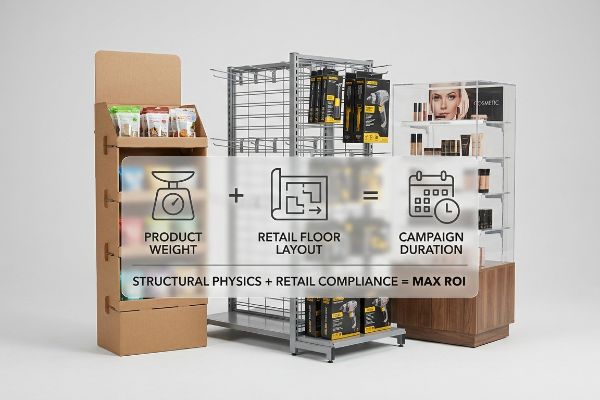
सही रिटेल मर्चेंडाइजर का चुनाव करना सिर्फ सौंदर्यशास्त्र के बारे में नहीं है; यह स्टोर के नियमों का पालन, माल ढुलाई की तर्कसंगतता और आपके भारी इन्वेंट्री को संभालने के भौतिक भौतिकी का एक जटिल गणितीय समीकरण है।
सही डिस्प्ले रैक का चुनाव करने के लिए आपको अपने उत्पाद का कुल वजन, रिटेल स्टोर का लेआउट और बिक्री अवधि का ध्यान रखना होगा। अस्थायी नालीदार गत्ते की इकाइयाँ मौसमी निवेश पर अधिकतम लाभ (ROI) प्रदान करती हैं, जबकि डिज़ाइन किए गए अर्ध-स्थायी मर्चेंडाइज़र भारी-भरकम वातावरण में भी टिके रहते हैं। सही चुनाव संरचनात्मक भौतिकी और बड़े स्टोर के लिए उपयुक्त स्थानिक आवश्यकताओं के बीच सटीक संतुलन बनाता है।.
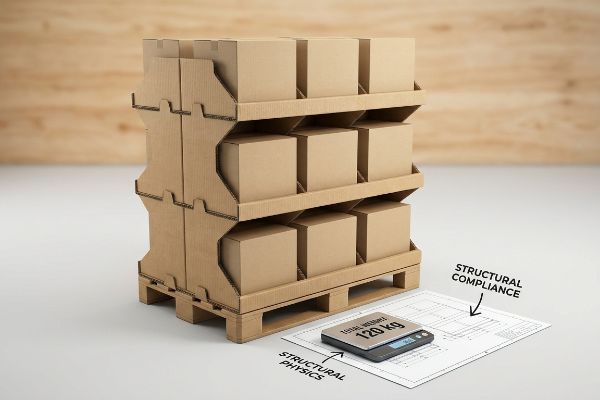
अगर आप गलत आधार सामग्री चुनते हैं, तो आपका अभियान लॉजिस्टिक्स श्रृंखला में ही विफल हो जाएगा, इससे पहले कि कोई ग्राहक उसे देख पाए। आइए वास्तविक खुदरा व्यापार में टिके रहने के लिए आवश्यक भौतिक इंजीनियरिंग पर एक नज़र डालते हैं।.
डिस्प्ले रैक कितने प्रकार के होते हैं?
खुदरा विक्रेता अपने स्टोररूम को कड़ाई से विनियमित क्षेत्रों में विभाजित करते हैं, जिसका अर्थ है कि एक ही आकार सभी वातावरणों के लिए उपयुक्त नहीं होता है।.
डिस्प्ले रैक के विभिन्न प्रकारों में फ्लोर मर्चेंडाइज़र, काउंटरटॉप ट्रे, एंड-कैप, साइडकिक्स और पैलेट स्कर्ट शामिल हैं। सही संरचना का चयन पूरी तरह से खुदरा विक्रेता के अनुपालन क्षेत्रों पर निर्भर करता है। अधिक भीड़भाड़ वाले गलियारे में रखी जाने वाली इकाइयों को चेकआउट रजिस्टर ट्रे की तुलना में अलग आकार की आवश्यकता होती है ताकि आगे की ओर पहुंच की सख्त स्थानिक सीमाओं का कानूनी रूप से पालन किया जा सके।.
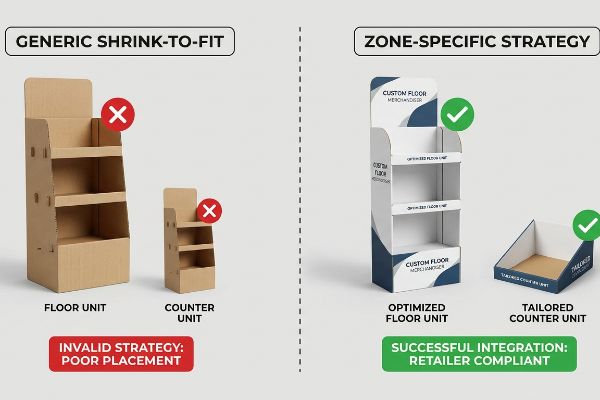
कई ब्रांड सोचते हैं कि वे फ्लोर यूनिट को छोटा करके काउंटर पर फिट कर सकते हैं, लेकिन खरीदारों के व्यवहार और खुदरा दिशा-निर्देशों के लिए अधिक अनुकूलित रणनीति की आवश्यकता होती है।.
आकार छोटा करने की रणनीति का जाल
ब्रांड अक्सर यह मान लेते हैं कि एक सफल बड़े फ्लोर रैक को पचास प्रतिशत तक छोटा करके चेकआउट काउंटर यूनिट के रूप में इस्तेमाल किया जा सकता है। खरीद टीमें इस आसान तरीके को पसंद करती हैं क्योंकि इससे डिज़ाइन का समय बचता है और स्टोर के अलग-अलग हिस्सों में एकरूपता बनी रहती है। वे इस बुनियादी धारणा पर काम करते हैं कि यदि विज़ुअल ग्राफिक्स मेल खाते हैं, तो भौतिक संरचना पूरी तरह से अलग रिटेल वातावरण में भी उतनी ही अच्छी तरह काम करेगी।
रिटेल स्टोर में वास्तविकता यह है कि चेकआउट ज़ोन ग्राहकों की पहुंच संबंधी विशिष्ट नियमों और काउंटर स्पेस की सीमाओं द्वारा सख्ती से नियंत्रित होते हैं। जब आप बिना सोचे-समझे फ्लोर यूनिट का आकार छोटा कर देते हैं , तो नया लेआउट अक्सर बुनियादी पहुंच नियमों का उल्लंघन करता है और काउंटर पर खरीदारी का असहज अनुभव पैदा करता है। मैं इस समस्या को काउंटर यूनिट्स को कम जगह घेरने वाले इंटरैक्शन के लिए विशेष रूप से डिज़ाइन करके हल करता हूं, जबकि फ्लोर यूनिट्स अधिक भीड़-भाड़ वाले गलियारों के लिए अनुकूलित रहती हैं, जिससे स्टोर मैनेजर आपके डिस्प्ले को खुशी-खुशी लगाएंगे।
| मीट्रिक/विशेषता | जेनेरिक श्रिंक-टू-फिट | क्षेत्र-विशिष्ट रणनीति |
|---|---|---|
| काउंटर प्लेसमेंट | मनमाना आकार | खरीदारों की पहुंच से मेल खाता है2 |
| फर्श का क्षेत्रफल | फ्लोटिंग परिधि | मुख्य गलियारों के लिए अनुकूलित3 |
| खुदरा विक्रेता स्वीकृति | अस्वीकृति का उच्च जोखिम4 | निर्बाध स्टोर एकीकरण |
किसी बॉक्स को छोटा करना कोई कारगर खुदरा रणनीति नहीं है; ग्राहकों के साथ सटीक संपर्क क्षेत्रों को ध्यान में रखकर डिज़ाइन करना ही मूल्यवान स्थान सुरक्षित करने का तरीका है। आपके डिस्प्ले को वातावरण के अनुकूल होना चाहिए, न कि उससे टकराव करना चाहिए।.
🛠️ हार्वे का डेस्क: क्या आपके छोटे आकार के चेकआउट ट्रे खुदरा विक्रेताओं के पहुंच क्षेत्र का उल्लंघन कर रहे हैं और स्टोर तक पहुंचने से पहले ही भारी शुल्क वापसी का जोखिम पैदा कर रहे हैं? 👉 निःशुल्क स्थानिक अनुपालन ऑडिट का अनुरोध करें ↗ — मैं 24 घंटों के भीतर प्रत्येक संरचनात्मक फ़ाइल की व्यक्तिगत रूप से समीक्षा करता हूँ।
डिस्प्ले के पाँच प्रकार क्या हैं?
व्यापारियों को वर्गीकृत करना मनमाने आकार के बारे में नहीं है; यह इस बारे में है कि भीड़भाड़ वाले रिटेल फ्लोर पर खरीदार आपके उत्पादों के साथ कैसे बातचीत करेंगे, इसका अनुमान लगाना।.
डिस्प्ले के पाँच प्रकार हैं: फ्लोर स्टैंड, काउंटर यूनिट, पैलेट मर्चेंडाइज़र, साइडकिक्स और इंटरैक्टिव स्पिनर रैक। प्रत्येक श्रेणी एक विशिष्ट उपभोक्ता जुड़ाव क्षेत्र को लक्षित करती है। इन संरचनाओं को डिज़ाइन करने के लिए, उत्पाद की दृश्यता के लक्ष्यों और स्टोर के निर्धारित ट्रैफ़िक प्रवाह के अनुरूप सही लेआउट रणनीति का चयन करना आवश्यक है।.
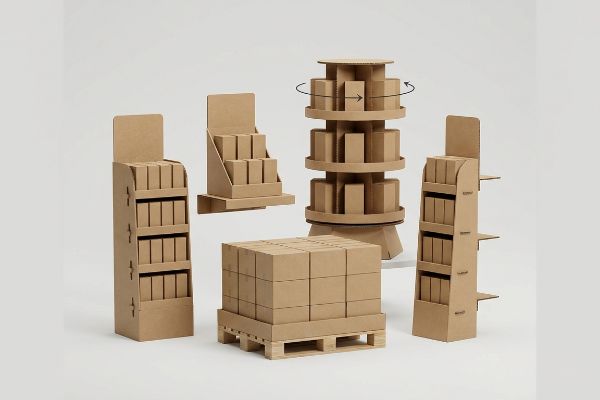
लेकिन जब आप किसी रिटेल प्रेजेंटेशन में गतिशील घटकों को शामिल करते हैं, तो मानक स्थिर योजना पूरी तरह से धराशायी हो जाती है।.
स्थिर बनाम अंतःक्रियात्मक दुविधा
मार्केटिंग टीमें अक्सर प्रारंभिक प्रचार योजना चरणों के दौरान इंटरैक्टिव स्पिनर रैक को स्थिर फ्लोर बिन की तरह ही मानती हैं। वे यह मान लेते हैं कि यदि एक मानक फ्लैट-पैक बेस पिच डेक पर अच्छा दिखता है, तो यह स्वाभाविक रूप से आकर्षक घूमने वाले हार्डवेयर और उच्च उत्पाद मात्रा को संभाल लेगा। 5 आम धारणा यह है कि साधारण नालीदार बॉक्स में लेज़ी सुसान मैकेनिज़्म लगाने से बिना किसी अतिरिक्त रणनीतिक विचार के तुरंत एक आकर्षक, विश्वसनीय ग्राहक संपर्क बिंदु बन जाता है।
खुदरा क्षेत्र की वास्तविकता यह है कि गतिशील पुर्जे ग्राहकों के जटिल व्यवहार को जन्म देते हैं,जिन्हें मानक स्थिर डिस्प्ले को कभी संभालना नहीं पड़ता। जब ग्राहक पूरी तरह से भरी हुई वस्तु-सूची को सक्रिय रूप से घुमाते हैं, तो खराब ढंग से डिज़ाइन किया गया आधार जल्दी खराब हो जाता है, जिससे निराशाजनक उपयोगकर्ता अनुभव होता है और आपके ब्रांड की छवि को नुकसान पहुंचता है। मैं इस समस्या को इंटरैक्टिव इकाइयों के लिए समर्पित स्थिरता क्षेत्र बनाकर हल करता हूं, यह सुनिश्चित करते हुए कि गतिशील सहभागिता सुविधाएँ आपके मौसमी प्रचार।
| मीट्रिक/विशेषता | मानक स्थैतिक दृष्टिकोण | इंटरैक्टिव रणनीति |
|---|---|---|
| खरीदार जुड़ाव | निष्क्रिय गलियारे में ब्राउज़िंग | सक्रिय शारीरिक घुमाव7 |
| डिजाइन फोकस | बुनियादी दृश्य ग्राफिक्स | सुचारू घूर्णन तंत्र |
| अभियान का प्रभाव | मानक दृश्यता | उच्च सहभागिता विश्वसनीयता8 |
खराब योजना के चलते ग्राहकों का उत्साह कम हो जाने पर इंटरैक्टिव मर्चेंडाइजर विफल हो जाते हैं। मैं गतिशील गतिविधियों पर केंद्रित ऐसी रणनीतियाँ बनाता हूँ जिससे आपके उत्पाद की प्रस्तुति त्रुटिहीन बनी रहे।.
🛠️ हार्वे का डेस्क: क्या आपका मौजूदा काइनेटिक काउंटर डिस्प्ले वास्तविक दुनिया के घूर्णी घर्षण के कारण टूटकर बिखरने के खतरे में है? 👉 मुफ़्त काइनेटिक टॉर्क गणना प्राप्त करें ↗ — 100% गोपनीय। आपके अप्रकाशित खुदरा डिज़ाइन मेरे पास सुरक्षित हैं।
स्टोर लेआउट के 4 प्रकार क्या हैं?
ग्रिड, लूप, फ्री-फ्लो और स्पाइन स्टोर लेआउट को समझना ही यह निर्धारित करता है कि बिक्री को अधिकतम करने के लिए आपके मर्चेंडाइजर को ठीक कहाँ पर तैनात किया जाना चाहिए।.
स्टोर लेआउट के चार प्रकार हैं: ग्रिड, लूप, फ्री-फ्लो और स्पाइन डिज़ाइन। प्रत्येक लेआउट गलियारे की चौड़ाई और ग्राहकों के आवागमन को निर्धारित करता है। इन विशिष्ट स्थानों के लिए डिस्प्ले की योजना बनाते समय, आपको अपनी यूनिट के समग्र लेआउट को चुने गए रिटेल वातावरण के विशिष्ट नेविगेशन पैटर्न के अनुरूप ढालना होगा।.
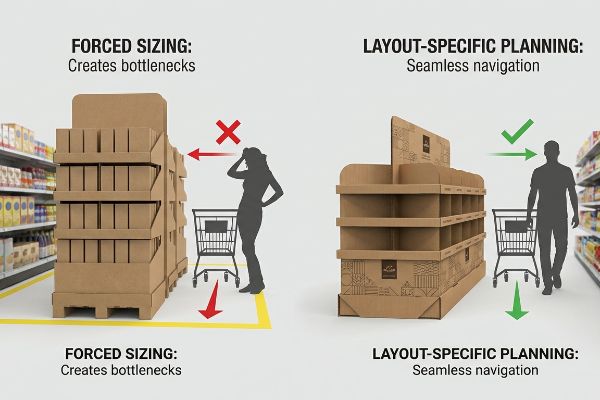
सघन ग्रिड लेआउट ब्रांडों को अपने विस्तार को अनुकूलित करने के लिए मजबूर करते हैं, जिसके लिए ग्राहकों को नाराज करने से बचने के लिए सावधानीपूर्वक रणनीतिक स्थान निर्धारण की आवश्यकता होती है।.
संकरी गलियों में वाहन रखने का जाल
जब ब्रांड तंग ग्रिड या लूप लेआउट में दृश्यता को अधिकतम करने का प्रयास करते हैं, तो वे अक्सर संकरे गलियारों के चौराहों में बड़े आकार की फ्लोर यूनिट्स को जबरदस्ती फिट करने की कोशिश करते हैं। आम धारणा यह है कि एक ऊंचे डिस्प्ले पर अधिकतम उत्पाद प्रदर्शित करने से बिक्री दर स्वतः ही बढ़9।योजनाकार अक्सर मानते हैं कि जब तक यूनिट तकनीकी रूप से स्टोर के निर्धारित माप के भीतर फिट बैठती है, तब तक ग्राहक बिना किसी परेशानी के उसके चारों ओर आसानी से घूम सकेंगे10।
सच तो यह है कि तंग गलियों में ऊंचे और भारी-भरकम डिस्प्ले लगाने से आवागमन में भारी बाधा उत्पन्न होती है और खरीदारी का समग्र अनुभव काफी खराब हो जाता है। भारी-भरकम कार्ट लेकर तंग गलियारों से भागते हुए ग्राहक अक्सर गलत तरीके से रखे गए डिस्प्ले से टकरा जाते हैं, जिससे ग्राहकों में निराशा और स्टोर मैनेजर की शिकायतें होने की संभावना बढ़ जाती है। मैं इस समस्या का समाधान डिस्प्ले के अनुपात को स्टोर के विशिष्ट लेआउट के अनुरूप करके करता हूं, जिससे डिस्प्ले का आकार छोटा और स्थिर रहता है और मुख्य आवागमन मार्गों को बाधित किए बिना उत्पादों के साथ सहज संपर्क को बढ़ावा मिलता है।
| मीट्रिक/विशेषता | बाध्य आकार निर्धारण रणनीति | लेआउट-विशिष्ट योजना |
|---|---|---|
| स्टोर ट्रैफ़िक प्रवाह | इससे गलियारों में भीड़भाड़ पैदा होती है12 | निर्बाध नेविगेशन |
| अनुपात प्रदर्शित करें | भारी और अत्यधिक दखलंदाजी करने वाला | कम प्रचार और सुलभ13 |
| खरीदारी का अनुभव | निराशाजनक पैदल चलने की बाधाएँ14 | उत्पाद के साथ आसान संपर्क |
संकरी गलियों में अव्यवस्थित ढंग से प्रदर्शित सामान संभावित ग्राहकों को दूर भगा देता है। मैं आपकी मर्चेंडाइजिंग रणनीति को स्टोर के लेआउट के अनुरूप बनाता हूँ ताकि आपका ब्रांड बिना किसी बाधा के स्पष्ट रूप से दिखाई दे।.
🛠️ हार्वे का डेस्क: क्या आपके ऊंचे, संकरे क्वार्टर-पैलेट डिस्प्ले टिल्ट टेस्ट में फेल हो रहे हैं और स्टोर में होने वाले महंगे नुकसान की वजह बन रहे हैं? 👉 मुफ़्त सेंटर ऑफ़ ग्रेविटी ऑडिट करवाएं ↗ — बीच में कोई अकाउंट मैनेजर नहीं। आप सीधे स्ट्रक्चरल इंजीनियरों से बात कर सकते हैं।
डिस्प्ले के तीन प्रकार क्या हैं?
व्यापारियों को उनके जीवनकाल के आधार पर समूहित करने से भौतिक सामग्री की स्थायित्व बनाम सतही सौंदर्य संबंधी दिखावे के बारे में एक कठिन बहस छिड़ जाती है।.
डिस्प्ले के तीन प्रकार होते हैं: अस्थायी, अर्ध-स्थायी और स्थायी संरचनाएं। अस्थायी नालीदार इकाइयां कुछ हफ्तों तक चलती हैं, जबकि विशेष रूप से निर्मित अर्ध-स्थायी रैक भारी-भरकम वातावरण में महीनों तक टिके रहते हैं। इनमें से किसी एक को चुनना आपके ब्रांड के फिजिकल बोर्ड ग्रेड और ECT रेटिंग को अनुमानित अभियान अवधि के साथ संरेखित करना है।.
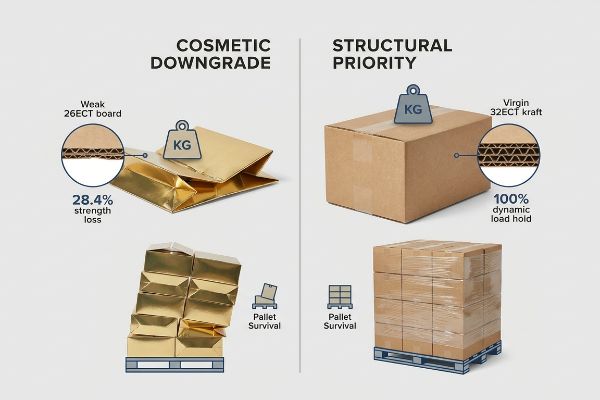
लेकिन खरीदार अक्सर दिखावटी कॉस्मेटिक फिनिशिंग के लिए अपने संरचनात्मक बजट में कटौती कर देते हैं, जिससे विनाशकारी पतन निश्चित हो जाता है।.
कॉस्मेटिक डाउनग्रेड भ्रम
मैं अक्सर देखता हूँ कि खरीद टीमें महंगे कॉस्मेटिक फिनिश, जैसे कि फुल-कवरेज फॉइल लेमिनेशन, को मार्केटिंग के लिए अनिवार्य मानकर चलती हैं। इन उच्च उत्पादन लागतों की भरपाई के लिए, वे चुपके से बेस कोरुगेटेड बोर्ड की रेटिंग कम कर देते हैं ताकि प्रति यूनिट कुछ पैसे बचाए जा सकें। इससे आंतरिक फ्लूटिंग 15 से कोर फाइबर घनत्व कम हो जाता है , जिसके परिणामस्वरूप दिखने में प्रीमियम बॉक्स तो बन जाता है, लेकिन लॉजिस्टिक्स श्रृंखला में मानक पैलेट टॉप-लोड 16 के नीचे भारी दबाव के कारण वह बुरी तरह दब जाता है।
जब मैं अपनी सुविधा में इन क्षतिग्रस्त बोर्डों का माप लेता हूँ, तो परिणाम भयावह होते हैं। मैंने हाल ही में एक RFQ का ऑडिट किया जिसमें भारी प्लास्टिक फ़ॉइल के लिए धन जुटाने के उद्देश्य से 32ECT बोर्ड को अंधाधुंध रूप से कमज़ोर 26ECT में बदल दिया गया था, जिससे समग्र BCT (बॉक्स कम्प्रेशन टेस्ट) क्षमता में 28.4% की भारी17मैंने माइक्रोमीटर रीडिंग निकाली और साबित किया कि हमें महंगी फ़ॉइल फ़िल्मों की आवश्यकता नहीं थी—मुझे केवल सामग्री को मूल 32ECT मानक पर बहाल करने और उच्च-ठोस चमक वाली जलीय कोटिंग लगाने की आवश्यकता थी। अत्यधिक निर्मित कॉस्मेटिक फ़ॉइल को हटाकर और सख्त संरचनात्मक ग्रेडिंग लागू करके, मैंने संरचनात्मक असेंबली समय को कम किया और परिवहन के दौरान होने वाले नुकसान को समाप्त किया, जिससे ग्राहक के मौसमी रोलआउट को माल ढुलाई के दौरान होने वाले पूर्ण नुकसान से बचाया जा सका।
| मीट्रिक/विशेषता | कॉस्मेटिक डाउनग्रेड | संरचनात्मक प्राथमिकता |
|---|---|---|
| कोर सामग्री | कमजोर 26ECT बोर्ड | वर्जिन 32ईसीटी क्राफ्ट18 |
| दृश्य समापन | महंगी पन्नी | ग्लॉस एक्वस कोटिंग |
| पैलेट उत्तरजीविता | 28.4% शक्ति हानि19 | 100% गतिशील भार वहन क्षमता20 |
अगर आपका खूबसूरत डिस्प्ले पूरी तरह से टूटा-फूटा पहुंचे तो आप उसे बेच नहीं सकते। मैं सबसे पहले उसकी संरचनात्मक मजबूती का ध्यान रखता हूं, यह सुनिश्चित करते हुए कि आधुनिक माल ढुलाई की कठिन यात्रा में भी उसकी सुंदरता बरकरार रहे।.
🛠️ हार्वे का डेस्क: क्या आपकी खरीद टीम अनावश्यक दिखावटी फ़ॉइल फ़िल्मों का खर्च उठाने के लिए महत्वपूर्ण बोर्ड की मजबूती को गुपचुप तरीके से कम कर रही है? 👉 मुफ़्त सामग्री ग्रेड विश्लेषण का अनुरोध करें ↗ — मैं 24 घंटों के भीतर हर संरचनात्मक फ़ाइल की व्यक्तिगत रूप से समीक्षा करता हूँ।
निष्कर्ष
चाहे आप स्पिनर के सटीक घूर्णी टॉर्क की गणना कर रहे हों या भारी-भरकम क्वार्टर-पैलेट से अपने चेकआउट मार्जिन को बर्बाद होने से रोक रहे हों, सही डिस्प्ले प्रकार का चयन भौतिक विज्ञान का एक जटिल अभ्यास है। हाल ही में, एक बड़े राष्ट्रीय स्तर पर लॉन्च से पहले किए गए एक सटीक इंजीनियरिंग समीक्षा में 2 मिमी की घातक टॉलरेंस त्रुटि पकड़ी गई। यदि आप यह सुनिश्चित करना चाहते हैं कि आपकी खुदरा संरचनाएं आपूर्ति श्रृंखला में बिना किसी भारी नुकसान के सुरक्षित रहें, तो आज ही मुझे अपनी संरचनात्मक फाइलों की निःशुल्क मास्टर डाइलाइन ऑडिट ↗ ताकि आपके सटीक माल ढुलाई और मजबूती के गणित को सुनिश्चित किया जा सके।
"ADA अपडेट: लघु व्यवसायों के लिए एक परिचय", https://www.ada.gov/resources/title-iii-primer/। एक आधिकारिक बाहरी स्रोत इस दावे का समर्थन कैसे करता है, इसका संक्षिप्त विवरण। साक्ष्य की भूमिका: सत्यापन; स्रोत का प्रकार: नियामक दिशानिर्देश। समर्थन: खुदरा चेकआउट क्षेत्रों में पहुंच और स्थान संबंधी बाधाओं का अस्तित्व। कार्यक्षेत्र संबंधी टिप्पणी: मुख्य रूप से ADA मानकों पर लागू। ↩
"[PDF] खुदरा किराना स्टोरों के लिए दिशानिर्देश – एर्गोनॉमिक्स … – OSHA", https://www.osha.gov/sites/default/files/publications/OSHA3192.pdf। अनुकूलित काउंटर प्लेसमेंट की प्रभावशीलता को साबित करने के लिए एर्गोनॉमिक्स और औसत ग्राहक पहुंच पर पेशेवर खुदरा डिजाइन दिशानिर्देश। साक्ष्य भूमिका: तकनीकी सत्यापन; स्रोत प्रकार: उद्योग मानक/एर्गोनॉमिक्स मैनुअल। समर्थन: मनमानी आकार निर्धारण की तुलना में क्षेत्र-विशिष्ट रणनीति का लाभ। कार्यक्षेत्र नोट: सामान्य वयस्क खुदरा जनसांख्यिकी पर लागू होता है। ↩
"वीडियो एनालिटिक्स के साथ रिटेल स्टोर लेआउट ऑप्टिमाइज़ेशन", https://interfacesystems.com/blog/retail-store-layout/। मुख्य गलियारों में ADA अनुपालन और ग्राहकों की आवाजाही को सुचारू रखने के लिए फुटप्रिंट की गणना और डिस्प्ले की प्लेसमेंट से संबंधित रिटेल मर्चेंडाइजिंग मानक। साक्ष्य की भूमिका: रणनीतिक सत्यापन; स्रोत प्रकार: मर्चेंडाइजिंग हैंडबुक। समर्थन: ज़ोन-विशिष्ट फ्लोर फुटप्रिंट की दक्षता। स्कोप नोट: आवाजाही प्रवाह और सुरक्षा नियमों पर केंद्रित। ↩
"7 रिटेल डिस्प्ले स्टाइल जिन पर कंपनियां भरोसा करती हैं", https://www.packagingcorp.com/resource-hub/industry-insights/7-retail-display-styles-companies-rely-on/। उद्योग रिपोर्ट या रिटेल प्रबंधन अध्ययन इस बात की संभावना पर प्रकाश डालते हैं कि स्टोर प्रबंधक ऐसे सामान्य डिस्प्ले को अस्वीकार कर सकते हैं जो फ्लोर फ्लो को बाधित करते हैं। साक्ष्य की भूमिका: सांख्यिकीय समर्थन; स्रोत प्रकार: रिटेल उद्योग रिपोर्ट। समर्थन: यह दावा कि श्रिंक-टू-फिट रणनीतियों को अक्सर अस्वीकार कर दिया जाता है। स्कोप नोट: जोखिम स्तर रिटेलर के ब्रांड दिशानिर्देशों के आधार पर भिन्न हो सकते हैं। ↩
"इंटरैक्टिव रिटेल के लिए डिस्प्ले स्ट्रक्चरल डिज़ाइन ...", https://www.bcipkg.com/display-structural-design-for-interactive-retail-displays/। स्थिर नालीदार डिब्बों की तुलना में घूर्णनशील रिटेल डिस्प्ले की भार वहन क्षमता और स्थिरता के लिए तकनीकी मानक। साक्ष्य भूमिका: तकनीकी विनिर्देश; स्रोत प्रकार: रिटेल फिक्स्चर इंजीनियरिंग गाइड। समर्थन: यह दावा कि घूर्णनशील हार्डवेयर को मानक फ्लैट-पैक बेस की तुलना में अधिक संरचनात्मक मजबूती की आवश्यकता होती है। कार्यक्षेत्र संबंधी टिप्पणी: नालीदार सामग्री की सीमाओं पर केंद्रित। ↩
"खरीदारी स्थल पर अंतर्दृष्टि: खुदरा पॉप डिस्प्ले का प्रभाव...", https://www.bcipkg.com/point-of-purchase-insights-the-impact-of-retail-pop-displays-on-consumer-behavior/। खुदरा पर्यावरण मनोविज्ञान में अकादमिक शोध दर्शाता है कि स्थिर डिस्प्ले की तुलना में इंटरैक्टिव तत्व खरीदारों के संज्ञानात्मक और शारीरिक नेविगेशन पैटर्न को बदल देते हैं। साक्ष्य की भूमिका: सैद्धांतिक आधार; स्रोत प्रकार: अकादमिक पत्रिका। समर्थन: यह दावा कि इंटरैक्टिविटी जटिल व्यवहारों को जन्म देती है। कार्यक्षेत्र संबंधी टिप्पणी: केवल खरीदारी स्थल पर स्थित भौतिक खुदरा प्रतिष्ठानों तक सीमित। ↩
"इंटरैक्टिव रिटेल डिस्प्ले के साथ उपभोक्ता जुड़ाव बढ़ाएँ - स्टोरफ्लेक्स", https://www.storflex.com/blog/boost-consumer-engagement-with-interactive-retail-displays/। उद्योग अनुसंधान या उपभोक्ता व्यवहार अध्ययन यह दर्शाते हैं कि घूमने वाले डिस्प्ले के साथ भौतिक संपर्क से खरीदारों का ठहरने का समय कैसे बढ़ता है। साक्ष्य की भूमिका: तथ्यात्मक समर्थन; स्रोत प्रकार: उपभोक्ता व्यवहार अध्ययन। समर्थन: इंटरैक्टिव रणनीतियों में निष्क्रिय से सक्रिय जुड़ाव की ओर बदलाव। कार्यक्षेत्र संबंधी टिप्पणी: घूमने वाले मर्चेंडाइज़र के लिए विशिष्ट। ↩
"इंटरैक्टिव रिटेल डिस्प्ले ग्राहकों की सहभागिता को कैसे बढ़ाते हैं", https://tblocks.com/guides/interactive-retail-display/। तुलनात्मक विपणन डेटा दर्शाता है कि स्थिर डिस्प्ले की तुलना में इंटरैक्टिव डिस्प्ले अभियान के प्रमुख प्रदर्शन संकेतकों (KPIs) को पूरा करने में अधिक विश्वसनीय और प्रभावी हैं। साक्ष्य की भूमिका: प्रदर्शन सत्यापन; स्रोत प्रकार: खुदरा विपणन रिपोर्ट। समर्थन: इंटरैक्टिव रणनीतियों के लिए बेहतर अभियान प्रभाव के दावे का। कार्यक्षेत्र संबंधी टिप्पणी: उच्च-यातायात वाले खुदरा वातावरण पर लागू होता है। ↩
"रिटेल डिस्प्ले की सफलता को कैसे मापें - फ्रैंक मेयर", https://www.frankmayer.com/blog/how-to-measure-retail-display-success/। पेशेवर रिटेल एनालिटिक्स और उपभोक्ता व्यवहार अध्ययन इस बात का मूल्यांकन करते हैं कि क्या ऊंचे डिस्प्ले पर उत्पादों की मात्रा बढ़ाने से कन्वर्जन दर बढ़ती है या दृश्य अव्यवस्था पैदा होती है। साक्ष्य की भूमिका: सत्यापन; स्रोत प्रकार: रिटेल उद्योग रिपोर्ट। समर्थन: मात्रा-आधारित मर्चेंडाइजिंग मान्यताओं की आलोचना। स्कोप नोट: परिणाम उत्पाद श्रेणी के अनुसार भिन्न हो सकते हैं। ↩
"जब सामान गलियारों में भीड़ बढ़ा देता है और गाड़ियाँ ग्राहकों के बीच में घुस जाती हैं", https://pmc.ncbi.nlm.nih.gov/articles/PMC13102192/। स्टोर एर्गोनॉमिक्स और पैदल यात्री यातायात प्रवाह पर किए गए अध्ययनों से पता चलता है कि संकरे गलियारों में भौतिक अवरोध किस प्रकार ग्राहकों की आवाजाही और असुविधा को प्रभावित करते हैं। साक्ष्य की भूमिका: तकनीकी सत्यापन; स्रोत प्रकार: व्यवहारिक अनुसंधान। समर्थन: यह दावा कि भौतिक अवरोध आवागमन में बाधा डालते हैं। कार्यक्षेत्र संबंधी टिप्पणी: खुदरा स्थानिक नियोजन पर केंद्रित। ↩
"हाई-इम्पैक्ट रिटेल डिस्प्ले की 7 विशेषताएं – स्मर्फिट वेस्टरोक", https://www.smurfitwestrock.com/blog/7-features-of-a-high-impact-retail-display। रिटेल पर्यावरण मनोविज्ञान और स्टोर डिज़ाइन पर किए गए शोध से पता चलता है कि किस प्रकार बाधक डिस्प्ले अड़चनें पैदा करते हैं और ग्राहकों की संतुष्टि को कम करते हैं। साक्ष्य की भूमिका: तथ्यात्मक समर्थन; स्रोत प्रकार: उद्योग डिज़ाइन मानक; समर्थन: स्टोर नेविगेशन पर भारी-भरकम डिस्प्ले का नकारात्मक प्रभाव। स्कोप नोट: भौतिक ट्रैफ़िक प्रवाह बाधाओं पर केंद्रित। ↩
"खुदरा दुकानों के लेआउट पर एकतरफा गलियारों का प्रभाव – पीएमसी – एनआईएच", https://pmc.ncbi.nlm.nih.gov/articles/PMC8902859/। यह विश्लेषण कि कैसे डिस्प्ले के आकार का अनुकूलन न होने से ग्राहकों की आवाजाही बाधित होती है और खुदरा दुकानों में भीड़भाड़ पैदा होती है। साक्ष्य की भूमिका: कारण-कार्य संबंध; स्रोत का प्रकार: खुदरा प्रबंधन अध्ययन। समर्थन: जबरन आकार निर्धारण रणनीतियों का यातायात प्रवाह पर नकारात्मक प्रभाव। कार्यक्षेत्र संबंधी टिप्पणी: विशेष रूप से अधिक यातायात वाले संकरे गलियारों पर लागू होता है। ↩
"अपने रिटेल डिस्प्ले का अधिकतम लाभ कैसे उठाएं - फ्रैंक मेयर", https://www.frankmayer.com/blog/getting-the-most-out-of-your-retail-display/। यह शोध दर्शाता है कि डिस्प्ले की ऊंचाई कम करने और पहुंच को बेहतर बनाने से उत्पाद के साथ संपर्क की दर में कैसे सुधार होता है। साक्ष्य की भूमिका: अनुकूलन लाभ; स्रोत प्रकार: उपभोक्ता व्यवहार अनुसंधान। समर्थन: डिस्प्ले के अनुपात के लिए लेआउट-विशिष्ट योजना की प्रभावशीलता। कार्यक्षेत्र संबंधी टिप्पणी: दृश्य मर्चेंडाइजिंग मानकों पर केंद्रित। ↩
"रिटेल का मनोविज्ञान: स्टोर लेआउट बिक्री को कैसे प्रभावित करता है - फोर्ब्स", https://www.forbes.com/councils/forbesbusinesscouncil/2025/01/03/the-psychology-of-retail-how-store-layout-impacts-sales/। स्टोर लेआउट में भौतिक बाधाओं के समग्र खरीदारी अनुभव और खरीदारी में बिताए गए समय पर मनोवैज्ञानिक प्रभाव का अध्ययन। साक्ष्य की भूमिका: गुणात्मक परिणाम; स्रोत प्रकार: ग्राहक अनुभव (CX) अध्ययन। समर्थन: जबरन साइजिंग और नकारात्मक खरीदारी अनुभव के बीच संबंध। कार्यक्षेत्र संबंधी टिप्पणी: खरीदारी में लगने वाले प्रयास पर केंद्रित। ↩
"[PDF] नालीदार बोर्ड विनिर्देश - फाइबर बॉक्स एसोसिएशन", https://www.fibrebox.org/assets/2025/09/Walmart_Corrugated-Board_Specifications_Automation_Packaging_Standards.pdf। तकनीकी पैकेजिंग गाइड बताते हैं कि कम बोर्ड रेटिंग का संबंध कम आधार भार और फ्लूटिंग माध्यम में कम फाइबर घनत्व से होता है। साक्ष्य की भूमिका: तकनीकी सत्यापन; स्रोत प्रकार: उद्योग मानक। समर्थन: बोर्ड रेटिंग कम करने का भौतिक प्रभाव। कार्यक्षेत्र संबंधी टिप्पणी: विशेष रूप से नालीदार फाइबरबोर्ड पर लागू होता है। ↩
"नालीदार कार्डबोर्ड पर पैलेट के ऊपरी डेक की कठोरता के प्रभाव की जांच...", https://pmc.ncbi.nlm.nih.gov/articles/PMC8585293/। आईएसटीए जैसे उद्योग मानक गणितीय मॉडल प्रदान करते हैं जो दर्शाते हैं कि अपर्याप्त ईसीटी रेटिंग ऊर्ध्वाधर पैलेट भार के तहत बॉक्स संपीड़न विफलता का कारण कैसे बनती है। साक्ष्य की भूमिका: अनुभवजन्य प्रमाण; स्रोत प्रकार: तकनीकी मानक। समर्थन: शिपिंग में कम रेटिंग वाले बोर्डों के उपयोग का परिणाम। कार्यक्षेत्र संबंधी टिप्पणी: ऊर्ध्वाधर संपीड़न से संबंधित। ↩
"कॉरुगेटेड बोर्ड बॉक्स की संपीडन शक्ति का अनुमान...", https://pmc.ncbi.nlm.nih.gov/articles/PMC9864211/। एज क्रश टेस्ट (ECT) रेटिंग और परिणामी बॉक्स कम्प्रेशन टेस्ट (BCT) शक्ति के बीच गणितीय सहसंबंध का तकनीकी सत्यापन। साक्ष्य भूमिका: तकनीकी सत्यापन; स्रोत प्रकार: पैकेजिंग इंजीनियरिंग मानक। समर्थन: संरचनात्मक अखंडता पर बोर्ड ग्रेड डाउनग्रेड का विशिष्ट प्रभाव। कार्यक्षेत्र संबंधी टिप्पणी: बोर्ड संरचना और फ्लूट प्रकार के अनुसार भिन्न होता है। ↩
"[PDF] पुनर्चक्रित सामग्री के भौतिक गुणों की तुलनात्मक जांच...", https://repository.rit.edu/cgi/viewcontent.cgi?article=1299&context=theses। एज क्रश टेस्ट (ECT) रेटिंग और वर्जिन क्राफ्ट फाइबर की तुलनात्मक मजबूती के लिए उद्योग मानक। साक्ष्य भूमिका: तकनीकी विनिर्देश सत्यापन; स्रोत प्रकार: पैकेजिंग उद्योग मानक। समर्थन: संरचनात्मक प्राथमिकता प्रदर्शन के लिए सामग्री विनिर्देश। कार्यक्षेत्र टिप्पणी: नालीदार पैकेजिंग में मानकीकृत। ↩
"नालीदार बोर्ड बक्सों की संपीडन सामर्थ्य का अनुमान ...", https://pmc.ncbi.nlm.nih.gov/articles/PMC8467740/। पैलेट तनाव के तहत निम्न श्रेणी के नालीदार बोर्डों के लिए संरचनात्मक क्षरण के विशिष्ट प्रतिशत को सत्यापित करने वाला तकनीकी डेटा। साक्ष्य की भूमिका: मात्रात्मक सत्यापन; स्रोत प्रकार: सामग्री विज्ञान रिपोर्ट। समर्थन: कॉस्मेटिक डाउनग्रेड डिस्प्ले के लिए सटीक सामर्थ्य हानि मीट्रिक। कार्यक्षेत्र नोट: 26ECT सामग्री के लिए विशिष्ट। ↩
"अस्थायी खुदरा प्रदर्शन भार वहन क्षमताएँ – यूडी डायरेक्ट", https://www.ud-direct.com/blog/temporary-retail-display-load-bearing-capabilities। परिवहन के दौरान भार बनाए रखने के लिए उच्च-ईसीटी नालीदार सामग्रियों की क्षमता के लिए इंजीनियरिंग मानदंड। साक्ष्य भूमिका: प्रदर्शन सत्यापन; स्रोत प्रकार: लॉजिस्टिक्स परीक्षण रिपोर्ट। समर्थन: पूर्ण गतिशील भार रखरखाव का दावा। कार्यक्षेत्र संबंधी टिप्पणी: मानकीकृत स्टैकिंग ऊंचाई और पैलेट आयामों के अधीन। ↩