खुदरा बिक्री बढ़ाने के लिए, आकर्षक पैकेजिंग ही काफी नहीं है, बल्कि प्रभावी स्थानिक रणनीति का उपयोग करना भी आवश्यक है। इन मूलभूत व्यापारिक तकनीकों में महारत हासिल करना ही यह निर्धारित करता है कि आपका ब्रांड स्टोर में छा जाएगा या पूरी तरह से गायब हो जाएगा।.
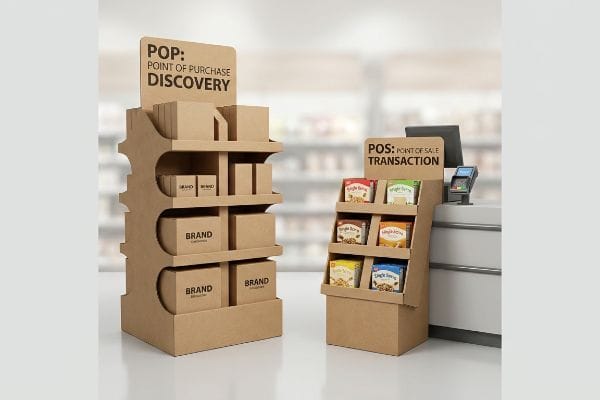
पीओपी और पीओएस बिक्री रणनीतियाँ यह निर्धारित करती हैं कि ब्रांड खुदरा वातावरण में ग्राहकों को किस प्रकार आकर्षित करते हैं। पीओपी का उद्देश्य पूरे स्टोर फ्लोर को कवर करना और ग्राहकों को खरीदारी के लिए प्रेरित करना है, जबकि पीओएस का उद्देश्य केवल अंतिम चेकआउट क्षेत्र को लक्षित करना है ताकि आम खुदरा ग्राहक द्वारा खरीदारी पूरी करने से पहले ही तत्काल और त्वरित लेनदेन सुनिश्चित किया जा सके।.
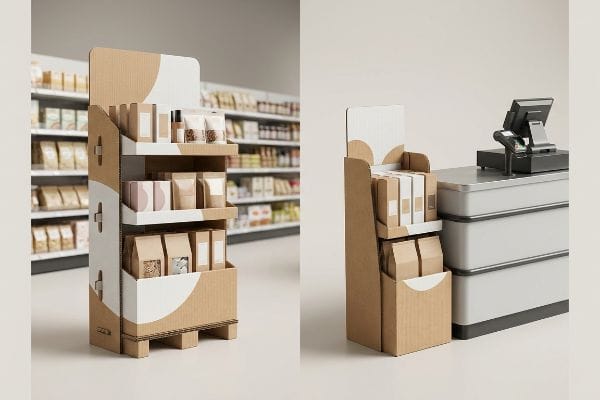
सैद्धांतिक विपणन की इस खाई को भौतिक नालीदार इंजीनियरिंग में पाटना ही वह जगह है जहां अधिकांश अभियान या तो सफल होते हैं या वास्तविक दुनिया की बड़ी-बड़ी दुकानों की बाधाओं के तहत पूरी तरह से विफल हो जाते हैं।.
बिक्री में 3-3-3 नियम क्या है?
अगर आप किसी विशाल, बड़े स्टोर के गलियारे में मानव दृष्टि कैसे काम करती है, इस बात को नज़रअंदाज़ करते हैं, तो आप एक सफल नालीदार डिस्प्ले नहीं बना सकते। स्थानिक जुड़ाव ही भौतिक डिज़ाइन को निर्धारित करता है।.
बिक्री में 3-3-3 नियम के अनुसार, खुदरा प्रदर्शन को तीस फीट की दूरी से दृश्य आकर्षण पैदा करना चाहिए, तीन फीट की दूरी पर ग्राहक की विशेष रुचि को आकर्षित करना चाहिए और ठीक तीन इंच की दूरी पर उत्पाद की बिक्री को बढ़ावा देना चाहिए। यह विशिष्ट स्थानिक ढांचा संरचनात्मक अभियांत्रिकी और ग्राफिक पैमाने को सीधे नियंत्रित करता है।.
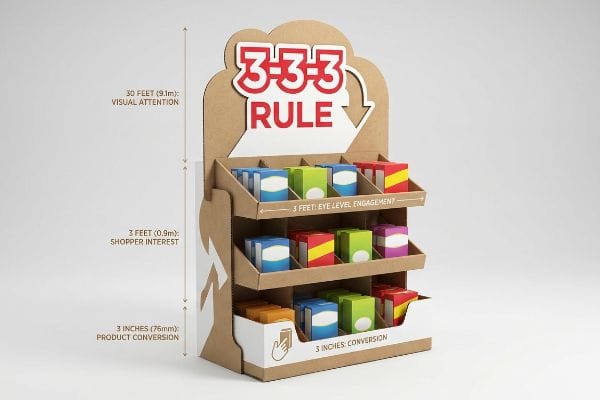
इस संज्ञानात्मक ढांचे को कच्चे कार्डबोर्ड यांत्रिकी में अनुवादित करने के लिए भौतिक स्ट्राइक ज़ोन और दृष्टि रेखा ज्यामिति का कड़ाई से पालन करना आवश्यक है।.
3-3-3 निरंतरता के पीछे की संरचनात्मक यांत्रिकी
इस नियम को लागू करने का अर्थ है नालीदार संरचना को तीन अलग-अलग कार्यात्मक क्षेत्रों में विभाजित करना। वृहद स्तर पर, आक्रामक डाई-कट हेडर प्राथमिक दृश्य अवरोधक 1 के रूप में कार्य करते हैं । जैसे ही ग्राहक पास आता है, मध्य-स्तरीय शेल्फिंग माल को प्रदर्शित करने के लिए पूरी तरह से कैलिब्रेटेड कोणों पर निर्भर करती है, जबकि अंतिम स्पर्श अनुभव के दौरान किसी भी घर्षण 2 को दूर करने के लिए भौतिक रिटेनिंग लिप को न्यूनतम किया जाना चाहिए।
जब मैं फ्लोर मर्चेंडाइज़र , तो मैं गणितीय रूप से प्रत्येक भौतिक तत्व को इन विशिष्ट स्थानिक सीमाओं से जोड़ता हूँ। शीर्ष भाग विशेष रूप से उच्च-कंट्रास्ट, स्पॉट-कलर लोगो के लिए आरक्षित है जो तेज़ फ्लोरोसेंट प्रकाश में भी स्पष्ट रूप से दिखाई देते हैं। मध्य भाग में, हम 50-54 इंच (1,270-1,371 मिमी) का स्ट्राइक ज़ोन3, जिससे यह सुनिश्चित होता है कि प्राथमिक SKU (स्टॉक कीपिंग यूनिट) औसत उपभोक्ता की आँखों के स्तर पर हो। अंत में, सूक्ष्म संपर्क के लिए, हम 85% उत्पाद दृश्यता का सख्त नियम4, जिसके तहत सामने की नालीदार रिटेनिंग लिप को इस तरह से काटा जाता है कि खरीदार का हाथ कच्चे C-फ्लूट किनारों पर अटके बिना आसानी से वस्तु को पकड़ सके।
| जुड़ाव दूरी | सामान्य संरचनात्मक दृष्टिकोण | इंजीनियर्ड फैक्ट्री की वास्तविकता |
|---|---|---|
| 30 फीट (9.1 मीटर) | मानक वर्गाकार शीर्ष | डाई-कट आकार और स्पॉट-कलर फ्लड5 |
| 3 फीट (0.9 मीटर) | समतल क्षैतिज शेल्फिंग | 15 डिग्री के कोण वाली अलमारियां6 |
| 3 इंच (76 मिमी) | गहरे होंठ | 85% उत्पाद दृश्यता वाला कटअवे7 |
शानदार मार्केटिंग ग्राफिक्स भी गलत कोण वाली अलमारियों पर बेकार साबित हो जाएंगे। स्थानिक जुड़ाव के लिए की गई इंजीनियरिंग यह सुनिश्चित करती है कि आपका कार्डबोर्ड एक विशाल गोदाम की बाधा बनने के बजाय एक अथक, मूक विक्रेता के रूप में काम करे।.
🛠️ हार्वे का डेस्क: क्या आपके मौजूदा फ्लोर डिस्प्ले मुख्य गलियारे से ध्यान आकर्षित करने में विफल हो रहे हैं, क्योंकि उनके हेडर स्ट्रक्चर सपाट और नीरस हैं? 👉 मुफ़्त साइटलाइन विश्लेषण प्राप्त करें ↗ — मैं 24 घंटों के भीतर प्रत्येक संरचनात्मक फ़ाइल की व्यक्तिगत रूप से समीक्षा करता हूँ।
पीओएस और पीओपी बिक्री में क्या अंतर है?
इन दो व्यापारिक क्षेत्रों को आपस में मिलाना केवल एक विपणन संबंधी गलती नहीं है; यह उत्तरी अमेरिका के प्रमुख खुदरा विक्रेताओं में बड़े पैमाने पर रसद संबंधी विफलताओं और तत्काल स्टोर-स्तर पर अस्वीकृतियों को जन्म देता है।.
पीओएस और पीओपी बिक्री में मुख्य अंतर स्थान की कमी और लॉजिस्टिक्स संबंधी नियमों का पालन करना है। पीओपी में बड़े पैलेट वाले ढांचों का उपयोग करके स्टोर के चौड़े गलियारों को लक्षित किया जाता है, जबकि पीओएस विशेष रूप से भीड़भाड़ वाले काउंटर लेन को लक्षित करता है, जिसके लिए तत्काल और अंतिम समय में होने वाली खरीदारी के लिए विशेष रूप से डिज़ाइन किए गए कॉम्पैक्ट, अत्यधिक स्थिर ट्रे की आवश्यकता होती है।.
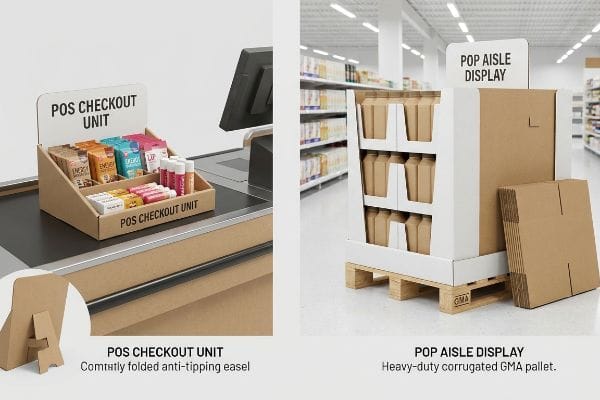
इन अलग-अलग रिटेल ज़ोन में सफलतापूर्वक आगे बढ़ने के लिए, आपको अपनी नालीदार संरचनाओं के लिए इंजीनियरिंग पाइपलाइनों को मौलिक रूप से अलग करना होगा ।
एडीए बनाम जीएमए स्थानिक बाधा ढांचा
पॉइंट-ऑफ-परचेज़ (POP) आर्किटेक्चर पूरी तरह से भारी-भरकम वेयरहाउस लॉजिस्टिक्स द्वारा नियंत्रित होता है, जिसके लिए अधिकतम भार वहन क्षमता की आवश्यकता होती है। इसके अतिरिक्त, नालीदार POP संरचनाएं फ्लैट-पैक लॉजिस्टिक्स का बेहतरीन उदाहरण हैं; क्योंकि इन्हें फ्लैट पैक करके भेजा जाता है, एक ही शिपिंग कंटेनर में पहले से असेंबल किए गए कठोर फिक्स्चर की तुलना में चार गुना अधिक घनत्व होता है , जिससे आपके फ्रेट ROI में तुरंत कई गुना वृद्धि होती है। इसके विपरीत, पॉइंट-ऑफ-सेल (POS) इंजीनियरिंग सख्त भौतिक पहुंच नियमों और रजिस्टर-स्तर के काउंटरटॉप सीमाओं द्वारा निर्देशित होती है । आप किसी विशाल फ्लोर यूनिट को केवल पचास प्रतिशत तक छोटा करके यह उम्मीद नहीं कर सकते कि वह चेकआउट लेन के उच्च घर्षण वाले वातावरण में टिक पाएगी।
मैं लक्षित खुदरा क्षेत्र के आधार पर अपने सीएडी (कंप्यूटर-एडेड डिज़ाइन) प्रोग्रामिंग में सख्त विभाजन लागू करता हूँ। पीओपी अभियानों के लिए, संरचनात्मक गणित को 48×40 इंच (1,219×1,016 मिमी) जीएमए10 पैलेट मानक के, जिसमें डबल-स्टैक्ड माल की स्थिरता सुनिश्चित करने के लिए बीसीटी (बॉक्स कम्प्रेशन टेस्ट) मापदंडों पर विशेष ध्यान दिया जाता है। पीओएस इकाइयों के लिए, ज्यामिति पूरी तरह से एडीए 15-48 इंच (381-1,219 मिमी) फॉरवर्ड रीच विंडो11है। इसका अर्थ है कि काउंटर डिस्प्ले को सटीक गुरुत्वाकर्षण केंद्र गणनाओं और नकली तलों के साथ डिज़ाइन किया जाता है ताकि चेकआउट स्कैनर के ठीक बगल में रखे जाने पर भी वे पूरी तरह से स्थिर और सुलभ रहें।
| खुदरा क्षेत्र | भौतिक बाधा | संरचनात्मक आवश्यकता |
|---|---|---|
| पॉप (गलियारा) | जीएमए पैलेट के आयाम | गतिशील भार वहन आधार |
| पीओएस (चेकआउट) | काउंटरटॉप की सीमाएँ | एंटी-टिपिंग एक्सटेंडेड ईज़ल |
| रसद | पारगमन कंपन | दोहरी दीवार वाले कोने के सपोर्ट |
बुनियादी गणना में पूर्ण अनुपालन को शामिल किया जाना चाहिए। इन दो अलग-अलग खुदरा प्रणालियों की भौतिक सीमाओं का सम्मान करने से महंगे शुल्क वापसी से और आपका अभियान सुचारू रूप से चलता रहेगा।
🛠️ हार्वे का डेस्क: क्या आपके भारी चेकआउट ट्रे, स्टोर तक पहुँचने से पहले ही, आपके शिपिंग ROI को बुरी तरह प्रभावित कर रहे हैं, क्योंकि आपने स्टैंडर्ड POP नालीदार कार्डबोर्ड का इस्तेमाल किया है? 👉 फ्रेट डेंसिटी ऑडिट का अनुरोध करें ↗ — 100% गोपनीय। आपके अप्रकाशित रिटेल डिज़ाइन मेरे पास सुरक्षित हैं।
पीओएस के तीन प्रकार क्या हैं?
चेकआउट लेन को सुचारू रूप से चलाने के लिए उपलब्ध स्थान के अनुसार बिल्कुल सही उपकरण लगाना आवश्यक है। गलत उपकरण चुनने से संरचनात्मक विफलता निश्चित है।.
पीओएस के तीन प्रकार हैं: काउंटरटॉप डिस्प्ले, फ्रीस्टैंडिंग रजिस्टर बिन और स्ट्रक्चरल साइडकिक या एंड-कैप हैंग यूनिट। प्रत्येक मर्चेंडाइजिंग फॉर्मेट रणनीतिक रूप से अधिक भीड़भाड़ वाले चेकआउट ज़ोन का लाभ उठाता है, जिसके लिए विशेष नालीदार सामग्री की इंजीनियरिंग की आवश्यकता होती है ताकि सक्रिय, तेज़ गति वाले बड़े रिटेल स्टोरों में पलटने, फटने और स्थानिक व्यवधान को स्थायी रूप से रोका जा सके।.
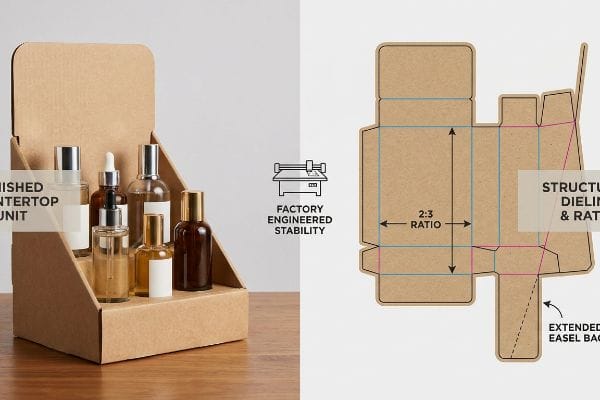
जबकि मार्केटिंग टीमें इन तीनों फॉर्मेट के ग्राफिक्स को लेकर जुनूनी रहती हैं, असली चुनौती काउंटरटॉप की स्थिरता के जटिल भौतिकी नियमों में महारत हासिल करने में ही है।.
काउंटरटॉप स्थिरता अनुपात 2:3
जब मैं काउंटरटॉप पीओएस यूनिट्स, तो मुझे लगातार एक ही गंभीर खामी दिखाई देती है: ऊँचे, संकरे प्रोफाइल जो रोटेशनल टॉर्क के भौतिकी नियमों को12ब्रांड सस्ते, सामान्य नालीदार कार्डबोर्ड का उपयोग करके छोटे से स्थान में उत्पाद की मात्रा को अधिकतम करने का प्रयास करते हैं, जिसके परिणामस्वरूप डिस्प्ले स्वाभाविक रूप से ऊपर से भारी हो जाते हैं। जैसे ही कोई जल्दबाजी में आया ग्राहक काउंटर से टकराता है, पूरी यूनिट आगे की ओर झुक जाती है, जिससे सामान बिखर जाता है और कैशियर को क्षतिग्रस्त कार्डबोर्ड को कचरे में फेंकना पड़ता है।
यह सिर्फ़ सिद्धांत नहीं है—मैंने पिछले साल एक बड़े कॉस्मेटिक्स पीओएस लॉन्च के दौरान इसका कड़वा अनुभव किया। 2022 में, मैंने अपने प्रमुख पैकेजिंग इंजीनियर, मार्क से ग्राहक द्वारा दी गई काउंटर डिस्प्ले फ़ाइल पर एक सिम्युलेटेड रिटेल फ्रिक्शन टेस्ट करने को कहा। ब्रांड ने 18 इंच (457 मिमी) ऊँची और केवल 8 इंच (203 मिमी) गहरी बेस वाली डिस्प्ले बनाने का निर्देश दिया था। मुझे याद है कि मार्क ने ऊपरी हिस्से में भारी कांच की बोतलें रखीं और टेस्टिंग टेबल के किनारे पर टैप किया। पूरी ई-फ्लूट संरचना ज़ोर से आगे की ओर झुक गई, जिससे सामने का रिटेनिंग लिप तुरंत एक ज़ोरदार आवाज़ के साथ मुड़ गया और प्रिंटेड टॉप शीट स्थायी रूप से उखड़ गई। इसका मूल कारण गुरुत्वाकर्षण केंद्र की सीमाओं की उनकी घोर अनदेखी थी। मैंने तुरंत प्रोजेक्ट रोक दिया और कोंग्सबर्ग टेबल पर सीधे डाईलाइन को फिर से स्कोर किया, एक छिपा हुआ विस्तारित ईज़ल बैक बनाया और द्रव्यमान केंद्र को स्थिर करने के लिए 2:3 अनुपात (गहराई बनाम ऊँचाई) नियम 13 का सख्ती से पालन किया। 4.5 इंच (114 मिमी) के इस बेस टॉलरेंस एडजस्टमेंट ने न केवल यूनिट को गिरने से रोका, बल्कि प्रति यूनिट को-पैकिंग असेंबली टाइम को 18 सेकंड तक कम कर दिया, जिससे ग्राहक को हजारों डॉलर की श्रम लागत की बचत हुई और डिस्प्ले को स्टोर स्तर पर होने वाले घर्षण से पूरी तरह सुरक्षित कर दिया गया। मैं अपनी टेस्टिंग लैब में समय और पैसा खर्च करता हूँ ताकि आपको रिटेल स्टोर में मुनाफा गंवाना न पड़े।
| पीओएस प्रारूप | सामान्य संरचनात्मक विफलता | फ़ैक्टरी द्वारा निर्मित समाधान |
|---|---|---|
| countertop | आगे की ओर पलटने का खतरा | 2:3 गहराई-से-ऊंचाई अनुपात14 |
| रजिस्टर बिन | सबसे निचले स्तर की करारी हार | एच-डिवाइडर सुदृढ़ीकरण15 |
| सहायक | लटकते छेद को फाड़ना | यूनिवर्सल मेटल एस-क्लिप16 |
मैं कभी भी ऐसे भारी-भरकम पीओएस डिज़ाइन को मंज़ूरी नहीं दूंगा जो आपके उत्पाद को जोखिम में डालता हो। सीएडी सॉफ़्टवेयर में एक कठोर स्थिरता अनुपात लागू करने से यह सुनिश्चित होता है कि आपका ब्रांड चेकआउट लेन की अव्यवस्था में भी सुरक्षित रहे।.
🛠️ हार्वे का डेस्क: क्या आपके मौजूदा काउंटर डिस्प्ले डिज़ाइन को वास्तविक खुदरा बिक्री के दबाव में पलटने और आपके प्रीमियम उत्पादों को नुकसान पहुंचाने का खतरा है? 👉 मुफ़्त अनुपात कैलकुलेटर ऑडिट का दावा करें ↗ — कोई खाता प्रबंधक बीच में नहीं। आप सीधे संरचनात्मक इंजीनियरों से बात करते हैं।
पॉप रणनीति क्या है?
एक वास्तविक पॉइंट-ऑफ-परचेज़ अभियान केवल गलियारे में बक्से रखने से कहीं अधिक व्यापक होता है। यह उपभोक्ता की स्वचालित खरीदारी प्रक्रिया में एक सुनियोजित, भौतिक व्यवधान होता है।.
पीओपी रणनीति खुदरा स्टोर में भौतिक विपणन संरचनाओं की सुनियोजित तैनाती है जिसका उद्देश्य ग्राहकों को आकर्षित करना, उनकी स्वचालित दिनचर्या को बाधित करना और अनियोजित आवेगपूर्ण खरीदारी को प्रेरित करना है। यह आक्रामक संरचनात्मक आकृतियों, तीव्र कंट्रास्ट वाले स्पॉट रंगों और गणितीय रूप से अनुकूलित गलियारों में ग्राहकों की स्थिति पर बहुत अधिक निर्भर करती है ताकि ब्रांड के साथ पूर्ण जुड़ाव सुनिश्चित किया जा सके।.

इस रणनीति को प्रभावी ढंग से लागू करने का अर्थ है ब्रांड की प्रत्येक जानकारी को नालीदार कार्डबोर्ड पर छापने की इच्छा को त्याग देना।.
संज्ञानात्मक अतिभार उन्मूलन के सात उपाय
एक सफल पीओपी रणनीति का मूल तंत्र तीव्र मनोवैज्ञानिक सक्रियताकेमूल्य प्रस्ताव को समझने के लिए उपभोक्ता को रुककर छोटे अक्षरों में लिखे पैराग्राफ पढ़ने पड़ते हैं, तो रणनीति संरचनात्मक रूप से विफल हो चुकी है।
जब मैं बड़े पैमाने पर पीओपी रोलआउट के लिए प्रीप्रेस फ़ाइलों को कॉन्फ़िगर करता हूँ, तो मैं ऑब्जेक्टिव-आइसोलेशन प्रोटोकॉल का सख्ती से पालन करता हूँ। ब्रांड अक्सर अपने उपभोक्ता व्यवहार अनुसंधान की सभी सात परतों को सीधे साइड पैनल पर प्रिंट करने का प्रयास करते हैं। इससे अत्यधिक संज्ञानात्मक अतिभार होता है। इसके बजाय, मैं द्वितीयक मार्केटिंग सामग्री को हटा देता हूँ और प्राथमिक खरीदारी के अवसर को लक्षित करने के लिए एक विशाल, 3डी डाई-कट तत्व तैयार करता हूँ। संरचना को एक एकल, उच्च-कंट्रास्ट फोकल बिंदु से जोड़कर—और डी50 प्रकाश व्यवस्था 18 के तहत सही रंग घनत्व की गारंटी के लिए भौतिक स्पेक्ट्रोफोटोमीटर स्कैन का उपयोग करके इसे प्रस्तुत करके—हम यह सुनिश्चित करते हैं कि उपभोक्ता का मनोवैज्ञानिक ट्रिगर उस कठोर तीन-सेकंड की भौतिक अंतःक्रिया अवधि 19 के भीतर सफलतापूर्वक सक्रिय हो जाए ।
| रणनीति तत्व | सामान्य त्रुटिपूर्ण निष्पादन | इंजीनियर्ड रिटेल रियलिटी |
|---|---|---|
| संदेश | टेक्स्ट से भरपूर साइड पैनल | एकल 3डी डाई-कट फोकल बिंदु |
| रंग प्रोफाइलिंग | मानक CMYK मिश्रण | पैंटोन स्पॉट कलर फ्लड्स |
| सगाई | जटिल ब्रांड कहानियां | 3-सेकंड आवेग सक्रियण |
मैं डिज़ाइन लाइन से अनावश्यक दृश्य सामग्री को हटाकर आपके मार्केटिंग बजट की रक्षा करता हूँ। वास्तविक POP प्रभुत्व आकर्षक भौतिक सरलता के माध्यम से प्राप्त किया जाता है, न कि खरीदार को टेक्स्ट के विशाल भंडार से अभिभूत करने से।.
🛠️ हार्वे का डेस्क: क्या आपके गलियारे के डिस्प्ले अत्यधिक जटिल हैं और तीस फीट दूर से भी ग्राहकों को आकर्षित करने में विफल हो रहे हैं? 👉 स्ट्रक्चरल डायलाइन ऑडिट करवाएं ↗ — मैं 24 घंटों के भीतर हर स्ट्रक्चरल फाइल की व्यक्तिगत रूप से समीक्षा करता हूं।
निष्कर्ष
रिटेल वातावरण की जटिल भौतिकी को समझना—भारी काउंटर पीओएस ट्रे को पलटने से रोकना, और ऐसे पीओपी डिस्प्ले डिज़ाइन करना जो बिना किसी संज्ञानात्मक बोझ के आकर्षक दृश्य प्रदान करें—यही वह चीज़ है जो सफल अभियानों को महंगे गोदाम संबंधी आपदाओं से अलग करती है। हाल ही में, एक बड़े राष्ट्रीय स्तर पर लॉन्च से पहले, इसी इंजीनियरिंग समीक्षा में 2 मिमी (0.07 इंच) की घातक टॉलरेंस त्रुटि पकड़ी गई। अब यह अनुमान लगाना बंद करें कि आपकी नालीदार संरचनाएं बड़े-बड़े स्टोरों में टिक पाएंगी या नहीं; मुझे व्यक्तिगत रूप से अपनी संरचनात्मक फाइलों की निःशुल्क रिटेल टॉलरेंस ऑडिट ↗ ताकि यह सुनिश्चित हो सके कि आपका अगला अभियान बाज़ार में धूम मचा दे।
"पॉइंट-ऑफ-परचेज़ डिस्प्ले कितने प्रभावी होते हैं? – कस्टम कार्डबोर्ड …", https://popdisplay.me/how-effective-are-point-of-purchase-displays/। [खुदरा दृश्य सामग्री प्रबंधन पर एक प्रामाणिक स्रोत यह समझाएगा कि कैसे गैर-आयताकार डाई-कट हेडर दृश्य कंट्रास्ट पैदा करते हैं जिससे खरीदार दूर से ही आकर्षित हो जाते हैं]। साक्ष्य की भूमिका: तकनीकी औचित्य; स्रोत का प्रकार: उद्योग डिज़ाइन मैनुअल। समर्थन: वृहद स्तर पर दृश्य व्यवधान के दावे का। कार्यक्षेत्र संबंधी टिप्पणी: विशेष रूप से पॉइंट-ऑफ-परचेज़ डिस्प्ले पर लागू होता है। ↩
"[PDF] घर्षण की पहचान और स्पर्श प्रदर्शन पर", http://bdml.stanford.edu/oldweb/touch/publications/richard_thesis.pdf। [खुदरा पैकेजिंग पर किए गए एर्गोनॉमिक अध्ययनों से यह पुष्टि होती है कि निष्कर्षण बिंदु पर संरचनात्मक बाधाओं को कम करने से खरीदार की निराशा कम होती है और रूपांतरण बढ़ता है]। साक्ष्य की भूमिका: एर्गोनॉमिक सत्यापन; स्रोत प्रकार: खुदरा इंजीनियरिंग गाइड। समर्थन: 3-3-3 नियम का स्पर्श निष्कर्षण चरण। कार्यक्षेत्र संबंधी टिप्पणी: अंतिम 3-इंच की अंतःक्रिया पर केंद्रित। ↩
"अध्याय 2: अपने ग्राहकों के लिए डिस्प्ले की ऊंचाई का चयन", https://www.creativedisplaysnow.com/guides/understanding-the-retail-customer/chapter-2-how-to-choose-the-right-display-height-for-your-customers/। [खुदरा व्यापार के लिए उद्योग मानक प्राथमिक उत्पादों की अधिकतम दृश्यता सुनिश्चित करने के लिए इष्टतम नेत्र-स्तर स्ट्राइक ज़ोन निर्दिष्ट करते हैं]। साक्ष्य भूमिका: तकनीकी विनिर्देश; स्रोत प्रकार: खुदरा डिज़ाइन मैनुअल। समर्थन: प्राथमिक SKU की भौतिक स्थिति। स्कोप नोट: लक्षित जनसांख्यिकी के आधार पर ऊंचाई भिन्न हो सकती है। ↩
"कॉरुगेटेड डिस्प्ले ब्रांड की दृश्यता और स्थिरता को बढ़ावा देते हैं", https://www.linkedin.com/posts/bennett_corrugateddisplays-retailmerchandising-packaginginnovations-activity-7411398872272592896-rP8c। [पैकेजिंग इंजीनियरिंग दिशानिर्देश पॉइंट-ऑफ-परचेस डिस्प्ले में उपभोक्ता पहुंच और उत्पाद रूपांतरण को अनुकूलित करने के लिए न्यूनतम दृश्यता सीमा निर्धारित करते हैं]। साक्ष्य भूमिका: उद्योग मानक; स्रोत प्रकार: पैकेजिंग इंजीनियरिंग गाइड। समर्थन: रिटेनिंग लिप का संरचनात्मक डिज़ाइन। कार्यक्षेत्र नोट: विशेष रूप से कॉरुगेटेड फ्लोर मर्चेंडाइज़र पर लागू। ↩
"दृश्य मर्चेंडाइजिंग डिस्प्ले के ये 17 प्रभावी प्रकार आपके स्टोर की बिक्री बढ़ाएंगे...", https://qvalon.com/blog/these-17-effective-types-of-visual-merchandising-displays-will-boost-your-store-traffic/। [रंग सिद्धांत और दृश्य मर्चेंडाइजिंग अनुसंधान बताते हैं कि कैसे स्पॉट-कलर फ्लड और गैर-मानक आकार खुदरा वातावरण में दूरी-आधारित ध्यान बढ़ाते हैं]। साक्ष्य भूमिका: डिजाइन सिद्धांत; स्रोत प्रकार: दृश्य मर्चेंडाइजिंग अध्ययन। समर्थन: 30-फुट एंगेजमेंट डिस्टेंस डिजाइन। स्कोप नोट: उच्च-ट्रैफिक वाले बड़े रिटेल स्टोर वातावरण पर केंद्रित। ↩
"बिक्री और दृश्यता के लिए रिटेल शेल्फ रणनीति गाइड 2026 – फील्डपाई", https://www.fieldpie.com/blog/retail-shelf-strategy-guide/। [रिटेल डिज़ाइन या एर्गोनॉमिक्स पर एक प्रामाणिक स्रोत उत्पाद की दृश्यता और पहुंच में सुधार के लिए विशिष्ट झुकाव कोणों की प्रभावकारिता को सत्यापित करेगा]। साक्ष्य भूमिका: तकनीकी विनिर्देश; स्रोत प्रकार: उद्योग मानक/एर्गोनॉमिक अध्ययन। समर्थन: 3-फुट जुड़ाव दूरी डिज़ाइन। कार्यक्षेत्र नोट: उपभोक्ता पैकेजित वस्तुओं पर लागू। ↩
"प्वाइंट-ऑफ-परचेज़ डिस्प्ले के साथ रिटेल विज़िबिलिटी कैसे बढ़ाएं", https://www.industrialpackaging.com/blog/increased-retail-visibility। [पैकेजिंग इंजीनियरिंग दिशानिर्देश संरचनात्मक अखंडता को बनाए रखते हुए उत्पाद प्रदर्शन को अधिकतम करने के लिए विज़िबिलिटी कटअवे के लिए विशिष्ट प्रतिशत बेंचमार्क प्रदान करते हैं]। साक्ष्य भूमिका: तकनीकी मीट्रिक; स्रोत प्रकार: विनिर्माण विनिर्देश। समर्थन: 3-इंच एंगेजमेंट डिस्टेंस डिज़ाइन। स्कोप नोट: नालीदार प्वाइंट-ऑफ-परचेज़ डिस्प्ले के लिए विशिष्ट। ↩
"पैकेजिंग संबंधी निर्णय घनत्व और आपके बिल को कैसे प्रभावित करते हैं - एनएमएफटीए", https://nmfta.org/news/packaging-and-class-how-packaging-decisions-change-density-and-your-invoice/। [खुदरा डिस्प्ले शिपिंग के लॉजिस्टिक्स विश्लेषण से यह पुष्टि होती है कि फ्लैट-पैक्ड नालीदार सामग्री कठोर संरचनाओं की तुलना में घनत्व गुणक प्रदान करती है]। साक्ष्य की भूमिका: मात्रात्मक सत्यापन; स्रोत प्रकार: उद्योग लॉजिस्टिक्स रिपोर्ट। समर्थन: माल ढुलाई आरओआई दावे। कार्यक्षेत्र संबंधी टिप्पणी: नालीदार पीओपी के लिए विशिष्ट। ↩
"बिक्री और सेवा काउंटर – Access-Board.gov", https://www.access-board.gov/ada/guides/animations/sales-and-service-counters.html। [सुलभ डिज़ाइन के लिए ADA मानक खुदरा बिक्री काउंटरों के लिए विशिष्ट ऊंचाई और पहुंच आवश्यकताओं को अनिवार्य करते हैं]। साक्ष्य भूमिका: नियामक सत्यापन; स्रोत प्रकार: सरकारी विनियमन। समर्थन: पीओएस इंजीनियरिंग बाधाएं। कार्यक्षेत्र टिप्पणी: उत्तरी अमेरिकी क्षेत्राधिकार। ↩
"48×40" जीएमए पैलेट्स | सबसे बड़ा पैलेट निर्माता और आपूर्तिकर्ता", https://www.palletone.com/products/gma-pallets/। [ग्रोसरी मैन्युफैक्चरर्स एसोसिएशन (जीएमए) उत्तरी अमेरिकी खुदरा व्यापार में पैलेटाइज्ड माल ढुलाई के लिए सार्वभौमिक आयाम विनिर्देश प्रदान करता है]। साक्ष्य भूमिका: उद्योग मानक; स्रोत प्रकार: व्यापार संगठन विनिर्देश। समर्थन: पीओपी संरचनात्मक गणित। कार्यक्षेत्र संबंधी टिप्पणी: उत्तरी अमेरिकी लॉजिस्टिक्स के लिए विशिष्ट। ↩
"अध्याय 3: संचालन योग्य भाग", https://www.access-board.gov/ada/guides/chapter-3-operable-parts/। [आधिकारिक ADA मानक गतिहीनता से पीड़ित उपयोगकर्ताओं के लिए सुलभता सुनिश्चित करने हेतु अबाधित अग्रगामी पहुँच के लिए अधिकतम और न्यूनतम पहुँच सीमा निर्दिष्ट करते हैं]। साक्ष्य भूमिका: तकनीकी विनिर्देश; स्रोत प्रकार: नियामक मानक। समर्थन: POS ज्यामितीय अनुपालन। कार्यक्षेत्र संबंधी टिप्पणी: सुलभ डिज़ाइन आवश्यकताओं से संबंधित। ↩
"पीडीक्यू ट्रे और काउंटर डिस्प्ले क्या हैं? – कस्टम कार्डबोर्ड …", https://popdisplay.me/what-are-pdq-trays-and-counter-displays/। [संरचनात्मक पैकेजिंग पर एक इंजीनियरिंग गाइड ऊर्ध्वाधर डिस्प्ले में पलटने से रोकने के लिए आवश्यक घूर्णी टॉर्क और गुरुत्वाकर्षण केंद्र से संबंधित भौतिकी समीकरण प्रदान करेगी]। साक्ष्य भूमिका: तकनीकी सत्यापन; स्रोत प्रकार: इंजीनियरिंग पाठ्यपुस्तक। समर्थन: संकीर्ण प्रोफाइल और संरचनात्मक विफलता के बीच कारण संबंध। कार्यक्षेत्र नोट: नालीदार बोर्ड भौतिकी के लिए विशिष्ट। ↩
"पैकेजिंग डिस्प्ले और कार्डबोर्ड डिस्प्ले के बीच संबंध", https://popdisplay.me/relationship-between-packaging-displays-and-cardboard-displays। [कॉरुगेटेड पैकेजिंग या रिटेल फिक्स्चर इंजीनियरिंग पर एक प्रामाणिक गाइड काउंटरटॉप डिस्प्ले में गुरुत्वाकर्षण केंद्र को बनाए रखने के लिए उपयोग किए जाने वाले मानक स्थिरता अनुपातों को सत्यापित करेगा]। साक्ष्य भूमिका: तकनीकी सत्यापन; स्रोत प्रकार: इंजीनियरिंग मैनुअल। समर्थन: पलटने से रोकने के लिए एक विशिष्ट गहराई-से-ऊंचाई अनुपात का उपयोग। कार्यक्षेत्र नोट: विशेष रूप से ई-फ्लूट जैसी हल्की कॉरुगेटेड सामग्रियों के लिए। ↩
"अपने रिटेल डिस्प्ले की ऊंचाई कैसे चुनें? – पॉपडिस्प्ले", https://popdisplay.me/how-to-choose-your-retail-display-height/। [पॉइंट-ऑफ-परचेज़ डिस्प्ले के लिए उद्योग इंजीनियरिंग मानक, पलटने के खतरों को रोकने के लिए इष्टतम गहराई-से-ऊंचाई अनुपात को परिभाषित करते हैं]। साक्ष्य भूमिका: तकनीकी विनिर्देश; स्रोत प्रकार: इंजीनियरिंग मैनुअल। समर्थन: काउंटरटॉप डिस्प्ले की संरचनात्मक स्थिरता। कार्यक्षेत्र नोट: स्वतंत्र रूप से खड़े होने वाले काउंटरटॉप यूनिटों पर लागू होता है। ↩
"बॉटम माउंट ट्रैश कैन पुल-आउट इंस्टॉलेशन – इनसेट और ओवरले", https://www.youtube.com/watch?v=Hc7z9o7OkiM&vl=en-US। [खुदरा कचरा डिब्बे के निर्माण के लिए तकनीकी दिशानिर्देश भार के तहत संरचनात्मक विफलता और निचले स्तर के फटने से बचाने के लिए एच-डिवाइडर की अनुशंसा करते हैं]। साक्ष्य भूमिका: इंजीनियरिंग समाधान; स्रोत प्रकार: विनिर्माण दिशानिर्देश। समर्थन: भार वहन क्षमता। कार्यक्षेत्र नोट: रजिस्टर बिन प्रारूपों के लिए विशिष्ट। ↩
"कस्टम पेग हुक डिस्प्ले और साइडकिक्स | थोक", https://hspackfactory.com/custom-peg-hook-displays-sidekicks/। [साइडकिक फिक्स्चर के हार्डवेयर विनिर्देशों में बताया गया है कि धातु के एस-क्लिप वजन को वितरित करते हैं ताकि हैंग होल पर टूट-फूट न हो]। साक्ष्य भूमिका: हार्डवेयर विनिर्देश; स्रोत प्रकार: उत्पाद स्थापना मार्गदर्शिका। समर्थन: हैंग होल की मजबूती। कार्यक्षेत्र नोट: साइडकिक पीओएस फिक्स्चर पर लागू होता है। ↩
"वह सक्रियता अंतराल जो ब्रांड रणनीति को शुरू होने से पहले ही बर्बाद कर देता है", https://www.brandingmag.com/marty-marion/the-pre-purchase-fallacy-the-activation-gap-that-dooms-brand-strategy/। [खुदरा मनोविज्ञान पर एक विद्वतापूर्ण स्रोत खरीद के समय मिलने वाले उद्दीपनों के प्रति आवेगी उपभोक्ता प्रतिक्रियाओं को ट्रिगर करने में तीव्र मनोवैज्ञानिक सक्रियता की क्रियाविधि को परिभाषित और मान्य करेगा]। साक्ष्य की भूमिका: सैद्धांतिक आधार; स्रोत का प्रकार: विपणन पाठ्यपुस्तक या सहकर्मी-समीक्षित पत्रिका। समर्थन: खरीद के समय मिलने वाली रणनीति की अंतर्निहित मनोवैज्ञानिक क्रियाविधि। कार्यक्षेत्र संबंधी टिप्पणी: विशेष रूप से उच्च-उद्दीपन वाले खुदरा वातावरण में संज्ञानात्मक प्रसंस्करण गति के संबंध में। ↩
"ग्राफिक आर्ट्स और प्रिंटिंग के लिए D50 क्या है? – वेवफॉर्म लाइटिंग", https://www.waveformlighting.com/color-matching/what-is-d50-for-graphic-arts-printing। [ग्राफिक आर्ट्स के लिए उद्योग मानक, स्पेक्ट्रोफोटोमीटर का उपयोग करके रंग मिलान और सत्यापन के लिए D50 को मानक प्रकाश स्रोत के रूप में निर्दिष्ट करते हैं ताकि एकरूपता सुनिश्चित की जा सके]। साक्ष्य भूमिका: तकनीकी सत्यापन; स्रोत प्रकार: तकनीकी मानक। सहायक: POP उत्पादन में रंग परिशुद्धता। कार्यक्षेत्र नोट: ISO और ANSI में मानक। ↩
"खरीदारों के ब्राउज़िंग व्यवहार और ध्यान स्तर का अन्वेषण...", https://pmc.ncbi.nlm.nih.gov/articles/PMC6895988/। [खुदरा विश्लेषण और न्यूरोमार्केटिंग अध्ययन उस संक्षिप्त समयावधि को मापते हैं जिसमें एक उपभोक्ता अवचेतन रूप से खरीदारी का निर्णय लेने से पहले भौतिक प्रदर्शन का मूल्यांकन करता है]। साक्ष्य की भूमिका: मीट्रिक सत्यापन; स्रोत प्रकार: विपणन अनुसंधान। समर्थन: उपभोक्ता व्यवहार का समय निर्धारण। कार्यक्षेत्र संबंधी टिप्पणी: उच्च-यातायात वाले वातावरण में औसत अवधि। ↩