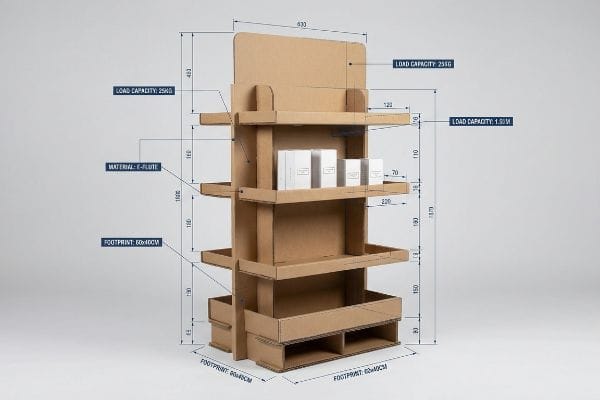
A poorly engineered cardboard stand will easily collapse before the weekend rush. Here is exactly how to build high-performance retail displays that actually convert shoppers.
Key characteristics of POP displays involve strategic placement, high load capacity, rapid visual disruption, and seamless retail compliance. Effective point-of-purchase stands utilize durable corrugated materials, optimized brand visibility, and precise structural engineering to actively intercept shopper foot traffic and drive impulse conversions in fast-paced retail environments.
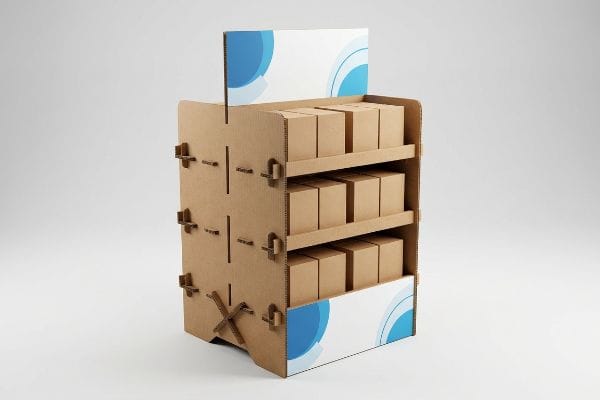
Knowing the basic features is fine, but understanding how they physically survive the retail floor separates a winning campaign from a collapsed pile of cardboard.
What does pop display stand for?
Point-of-purchase seems like a simple marketing acronym, but translating it to the physical retail floor requires strict adherence to spatial engineering rules.
POP display stands for Point of Purchase, referring to localized marketing structures positioned near consumer decision areas. These units physically present products outside standard aisles, utilizing high-contrast graphics and optimized product staging to maximize immediate shopper engagement, impulse buying, and overall brand visibility within retail stores.
It is easy to define the acronym, but deploying these units across big-box retailers introduces severe logistical constraints.
The Spatial Divide: ADA vs. GMA Physical Limits
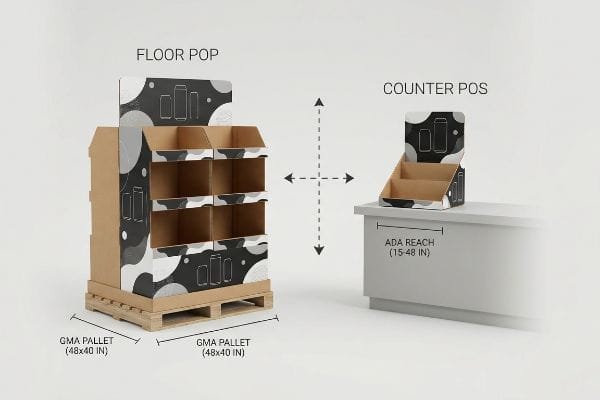
Many brand teams assume they can design a single scalable structure, pitching a large floor unit that simply shrinks down to fit a checkout counter. This approach completely ignores the strict spatial rules governing different retail zones1. A floor unit relies on heavy-duty pallet logistics2, while a counter unit operates under entirely different human-interaction laws.
I frequently see clients try to force a shrink-to-fit crossover, ending up with awkward, unstable POS (Point of Sale) units. The friction happens when a shrunken floor display hits the register zone. A store manager will simply refuse to place it. I once watched a clerk actively tearing the raw paperboard—I could hear the dull rip of the 32ECT testliner—trying to force a shrunken floor tab onto a cramped register shelf. POP files must be strictly anchored to the GMA (Grocery Manufacturers Association) 48×40 inches (121.9×101.6 cm) pallet limit3 for warehouse logistics and dynamic load. Conversely, POS files must anchor strictly to the ADA (Americans with Disabilities Act) 15-48 inches (38.1-121.9 cm)4 forward reach compliance window. By physically separating these engineering pipelines, I eliminate retail-floor friction and ensure your campaign avoids costly store-level rejections.
| Common Rookie Mistake | The Pro Fix | Retail-Floor Benefit |
|---|---|---|
| Scaling floor units to counters | Separating POP and POS engineering | Prevents store manager rejections |
| Ignoring register space limits | Anchoring to ADA reach constraints5 | Ensures legal retail compliance |
| Overhanging the wood pallet | Anchoring to GMA base limits6 | Eliminates shipping transit damage |
I refuse to let a basic spatial error derail your entire rollout. By defining the exact physical boundaries early, I keep your brand off the retailer's blacklist and ensure every structure stands strong.
🛠️ Harvey's Desk: Are your current floor and counter displays engineered to the same flawed template? 👉 Get A Dieline Audit ↗ — Direct access to my desk. Zero automated sales spam, I promise.
What are the advantages and disadvantages of pop displays?
The benefits of retail visibility are obvious, but the hidden drawbacks of material physics can quickly destroy your marketing ROI if left unchecked.
The advantages and disadvantages of POP displays center on their impact versus their vulnerability. High visibility and fast impulse sales are primary benefits. However, physical disadvantages include potential structural failure during humid transit, complex manual assembly requirements, and strict spatial limitations imposed by major big-box retail compliance protocols.
The biggest disadvantage isn't the upfront cost; it is the invisible environmental stress your packaging endures before it even reaches the store.
Defeating the Moisture Swelling Disadvantage
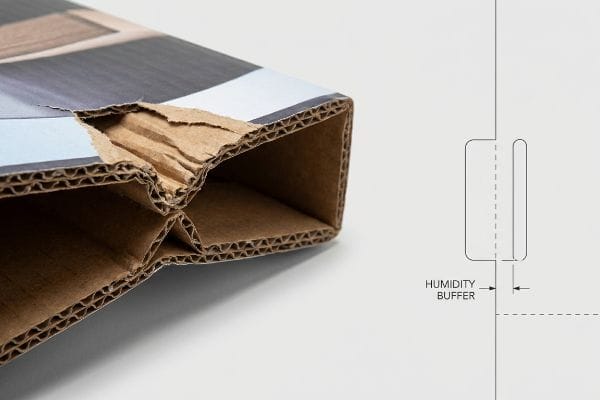
Graphic teams in climate-controlled offices frequently set interlocking slot tolerances based on the absolute dry caliper7 of the board. They assume a slot measuring exactly 0.12 inches (3 mm) will perfectly fit a matching tab when it arrives at the fulfillment center. They fail to account for the physical reality of ocean freight and regional weather changes8.
When flat-packs sit in high-humidity zones like Florida, the porous corrugated testliner acts like a sponge and physically swells. I often receive panicked calls from fulfillment centers where the co-packing team is sweating, struggling to force swollen parts together. You can feel the stiff resistance of the damp paper as the flutes crush under manual pressure, tearing the printed top sheet. I automatically engineer a specific humidity buffer into all my CAD (Computer-Aided Design) dielines. By mathematically adding an extra 0.04 inches (1 mm) of clearance9 to the receiving slots, I account for this moisture expansion. This slight micro-adjustment guarantees the co-packer experiences a completely frictionless assembly, drastically reducing manual labor time and entirely preventing visual damage to your brand graphics.
| Common Rookie Mistake | The Pro Fix | Retail-Floor Benefit |
|---|---|---|
| Using absolute dry tolerances | Adding a 0.04-inch humidity buffer10 | Guarantees frictionless co-packing |
| Ignoring ocean freight moisture11 | Adjusting slot widths in CAD | Prevents top-sheet tearing |
| Forcing tight swollen tabs | Expanding the receiving slots | Cuts labor assembly time |
I engineer displays for the harsh reality of regional humidity, not the perfect conditions of a design studio. This proactive math eliminates the most expensive hidden disadvantage in temporary merchandising.
🛠️ Harvey's Desk: Do your current locking tabs account for the exact moisture absorption rate of your shipping route? 👉 Request A Structural Review ↗ — Download safely. My inbox is open if you have questions later.
What is the purpose of a display stand?
A temporary display is not just a pretty box; it is a highly engineered structural tool designed to elevate, protect, and actively sell your inventory.
The primary purpose of a display stand is to actively disrupt shopper flow and elevate product visibility. These strategic units securely hold retail merchandise while utilizing precise structural angles, vibrant branding, and optimal shelf heights to maximize visual exposure, drive impulse conversions, and build long-term brand equity.

While the overarching goal is simple, executing the physical shelf design requires a strict balance between structural security and visual access.
The 'Product First'Visibility Rule
A common trap brand managers fall into is over-designing the cardboard structure to the point where it eclipses the actual merchandise. They request massive front lips and heavy side-walls to ensure structural stability12, turning the retail display into a dark, impenetrable fortress.
Think of your display like a picture frame; if the frame covers half the painting, it fails its primary purpose. I constantly see beautiful artwork hidden behind a towering 4-inch (10.1 cm) front shelf lip. Shoppers walking down the aisle only see a wall of printed cardboard, completely missing the primary label on the actual bottle or box. I enforce a strict Product First rule in my facility, mandating that at least 85% of the primary packaging must remain visible above the retaining lip. By utilizing higher-density flutes, I can lower the shelf lip13 down to a secure 1.5 inches (3.8 cm) without sacrificing stability. This guarantees maximum visual exposure under harsh store lighting while safely retaining the merchandise, ensuring your brand equity is what actually stops the shopper.
| Common Rookie Mistake | The Pro Fix | Retail-Floor Benefit |
|---|---|---|
| Using high front retaining lips | Enforcing the 85% visibility rule14 | Maximizes primary label exposure |
| Building dark enclosure walls | Lowering lip to 1.5 inches15 | Increases visual disruption speed |
| Hiding product behind cardboard | Upgrading to high-density flutes16 | Maintains structural holding power |
I build structures that push your product forward, not hide it in the shadows. Controlling the exact shelf geometry ensures the merchandise always remains the true hero of the aisle.
🛠️ Harvey's Desk: Is your current shelf lip unintentionally hiding the most important part of your brand label? 👉 Claim Your Template Review ↗ — No forms that trigger endless sales calls. Just pure value.
What are the four most important elements in VM?
Visual Merchandising relies on color, structure, lighting, and placement, but these theoretical concepts fail instantly if they ignore the physical anatomy of the shopper.
The four most important elements in VM include strategic placement, structural integrity, high-contrast color application, and optimized lighting. In physical merchandising, mastering these four core principles ensures that products intercept shopper sightlines efficiently, creating frictionless physical interactions that actively convert aisle traffic into immediate retail sales.
But knowing the theory isn't enough when the machines start running and the physical unit actually hits the store floor.
Why Standard Placement Fails on the Factory Floor
Merchandising teams often draft beautiful full-scale renderings where key product features are spread evenly from the floor up to the header. This perfectly balanced approach looks incredible on a digital screen, but it assumes the human eye naturally scans a 6-foot (1.8 m) object with equal attention from top to bottom.
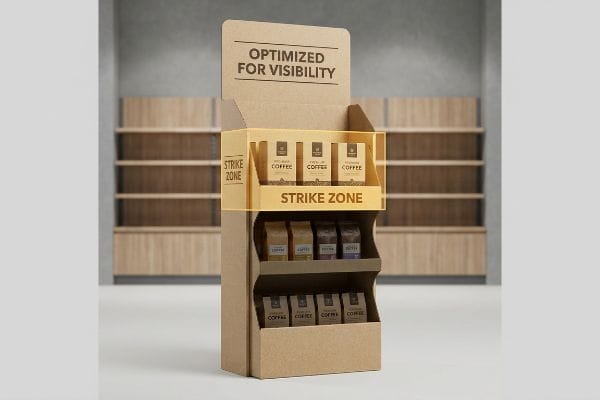
Getting one display to stand up in a lab is easy, but here is the harsh reality when you ship 500 of them into a crowded grocery environment. Shoppers are distracted, moving fast, and physically unwilling to bend down or stretch upwards. I routinely observe failed units where the highest-margin items are placed on a bottom shelf sitting 12 inches (30.4 cm) off the ground. You can literally hear the squeak of a customer's shoes as they pivot and walk away rather than stoop down to read a lower label. In my facility, I engineer around the Human Height Heat Map17, restricting the primary Strike Zone to exactly 50-54 inches18 (127-137.1 cm) from the floor. By physically shifting the structural load-bearing shelves into this hyper-specific vertical window, I force the highest-margin SKU (Stock Keeping Unit) directly into the average shopper's natural sightline. This structural adjustment prevents the campaign from blending into the background, reliably lifting inventory turnover without requiring extra floor space.
| Common Rookie Mistake | The Pro Fix | Retail-Floor Benefit |
|---|---|---|
| Spreading products evenly | Utilizing the 50-54 inch Strike Zone19 | Aligns with natural eye level20 |
| Placing heroes on bottom shelves | Moving key SKUs to the center | Prevents shopper fatigue |
| Ignoring the physical heat map | Engineering targeted height zones | Lifts high-margin turnover21 |
I refuse to let poor shelf placement sabotage a brilliant graphic design. By strictly locking the key merchandising zone to human anatomy, I guarantee your highest-value products never go unnoticed.
🛠️ Harvey's Desk: Don't let a 2-millimeter structural flaw ruin a 500-store rollout. 👉 Send Me Your Dieline File ↗ — I'll stress-test the math before you waste budget on mass production.
Conclusion
You can choose a supplier who ignores the physics of moisture swelling, but when that damp, swollen cardboard causes severe assembly friction at the fulfillment center, you will be slowing down your co-packing line by an estimated 35% and completely erasing your project margins. Over 500 brand managers use my prepress checklist to avoid these exact fatal early-stage mistakes. Stop guessing on structural tolerances and let me personally audit your flat files through my Free Dieline Audit ↗ to guarantee your next retail campaign actually survives the warehouse.
"Chapter 18.58 RETAIL DESIGN GUIDELINES AND STANDARDS", https://www.codepublishing.com/WA/Ferndale/html/Ferndale18/Ferndale1858.html. [Retail design manuals or store operation guides define specific spatial constraints, safety clearances, and accessibility requirements for different zones like checkout and main aisles]. Evidence role: Regulatory standard; source type: Retail management handbook. Supports: The necessity of zone-specific design constraints. Scope note: Standards may vary between big-box and boutique retailers. ↩
"Custom Retail Pallet Displays | Easy Set-Up", https://blingblingpackaging.com/products/custom-pop-displays/custom-pallet-displays/. [An authoritative source on retail logistics or display manufacturing would detail the structural and transport requirements for floor units to be palletized for shipping and stability]. Evidence role: Technical specification; source type: Logistics manual or industry guide. Supports: The operational requirements of floor-standing POP displays. Scope note: Applies primarily to large-scale retail distribution. ↩
"48×40" GMA Pallets | Largest Pallet Manufacturer & Supplier", https://www.palletone.com/products/gma-pallets/. [The Grocery Manufacturers Association establishes a standardized pallet size of 48 by 40 inches to ensure compatibility across warehouse logistics systems]. Evidence role: technical specification; source type: industry standard. Supports: the structural requirements for POP display footprints. Scope note: standard for North American retail logistics. ↩
"Chapter 3: Operable Parts – Access-Board.gov", https://www.access-board.gov/ada/guides/chapter-3-operable-parts/. [The ADA Standards for Accessible Design define the permissible height range for forward reach to ensure retail environments are accessible to individuals in wheelchairs]. Evidence role: legal compliance; source type: government regulation. Supports: the height constraints for POS unit placement. Scope note: applies to forward reach compliance windows. ↩
"ADA Standards for Accessible Design Title III Regulation 28 CFR …", https://www.ada.gov/law-and-regs/design-standards/1991-design-standards/. The ADA Standards for Accessible Design define specific maximum and minimum reach ranges to ensure accessibility for individuals with disabilities. Evidence role: legal verification; source type: government regulation. Supports: the requirement for retail displays to remain within legal accessibility limits. Scope note: Specifically applies to US federal accessibility laws. ↩
"What Is a GMA Pallet? | The Standard Pallet for U.S. Supply Chains", https://www.olyforest.com/pallet-industry-news-blog/gma-pallet. The Grocery Manufacturers Association (GMA) provides standardized specifications for pallet dimensions to ensure stability and compatibility during transit. Evidence role: technical specification; source type: industry standard. Supports: the claim that exceeding these limits causes shipping damage. Scope note: Refers to North American logistics standards. ↩
"[PDF] Volume 1 – Design Guidelines & Technical Sections", https://www.sifacilities.si.edu/sites/default/files/Files/AE/Design/Volume_1_Design_Guidelines_Technical_Sections.pdf. [Industry standards for structural packaging design specify that dry caliper measurements fail to account for hygroscopic expansion in fiber-based boards]. Evidence role: technical validation; source type: industry manual. Supports: the risk of relying on dry measurements for tolerances. Scope note: Applies specifically to paper-based substrates. ↩
"[PDF] Relative Humidity Effects on the Compression … – Clemson OPEN", https://open.clemson.edu/context/all_theses/article/4232/viewcontent/Brown_clemson_0050M_15634.pdf. [Materials science research demonstrates that high humidity during maritime transit causes significant fiber swelling in corrugated board]. Evidence role: causal proof; source type: materials science study. Supports: the claim that shipping conditions alter material dimensions. Scope note: Focuses on moisture-sensitive substrates. ↩
""Relative Humidity Effects on the Compression Strength of …", https://open.clemson.edu/all_theses/3225/. [Industry engineering standards for corrugated packaging provide specific dimensional tolerances to account for hygroscopic expansion of paper fibers in high-humidity environments]. Evidence role: technical specification; source type: material engineering manual. Supports: the precision of the 1mm humidity buffer. Scope note: Specific to porous testliner materials. ↩
"What is relative humidity and how does it affect your boxes? – Billerud", https://www.billerud.com/products/packaging-materials/corrugated-materials/knowledge-center/humidity. [An industry standard for material expansion in corrugated packaging would confirm if 0.04 inches is the recommended tolerance for moisture swelling]. Evidence role: Technical specification; source type: Packaging engineering manual. Supports: Precise buffer measurement for humidity. Scope note: Applicable to cellulose-based substrates. ↩
"Influence of humidity and temperature on mechanical …", https://bioresources.cnr.ncsu.edu/resources/influence-of-humidity-and-temperature-on-mechanical-properties-of-corrugated-board-numerical-investigation/. [Research on hygroscopic material behavior during maritime shipping provides evidence for how moisture absorption leads to dimensional instability and structural failure]. Evidence role: Causal link; source type: Logistics or materials science study. Supports: Impact of ocean freight on material integrity. Scope note: Focuses on long-term humidity exposure. ↩
"How to Plan the Right Shelf Capacity for Custom Cardboard Displays", https://meiyastand.com/post/how-to-plan-the-right-shelf-capacity-for-custom-cardboard-displays. [Technical packaging engineering standards describe how the thickness of side-walls and the height of front lips correlate to the load-bearing capacity and structural integrity of corrugated displays]. Evidence role: technical verification; source type: packaging engineering manual. Supports: structural design requirements. Scope note: specific to corrugated cardboard materials. ↩
"Guide to Understanding Flutes in Corrugated Boxes – Gentlever", https://gentlever.com/flutes-types-sizes-and-thickness-in-corrugated-boxes/. [Technical literature on corrugated packaging engineering provides data on how flute density and material grade impact the structural integrity and load-bearing capacity of retail displays]. Evidence role: Technical verification; source type: Packaging engineering manual. Supports: The claim that increased material density allows for reduced structural height without loss of stability. Scope note: Structural stability depends on the specific weight of the merchandise being held. ↩
"Maximizing Impact: A Complete Guide to Retail Displays", https://medallionretail.com/a-complete-guide-to-retail-displays/. [Industry design standards for point-of-purchase displays specify the minimum visibility percentage required for optimal consumer engagement.] Evidence role: technical standard; source type: retail design guide. Supports: product visibility benchmarks. Scope note: Specifically applies to temporary retail displays. ↩
"Chapter 2: Choosing a Display Height for Your Customers", https://www.creativedisplaysnow.com/guides/understanding-the-retail-customer/chapter-2-how-to-choose-the-right-display-height-for-your-customers/. [Ergonomic and visual standards for retail shelving suggest specific lip heights to ensure product security without obscuring the primary label.] Evidence role: technical specification; source type: merchandising manual. Supports: optimal dimension for visual disruption. Scope note: Effectiveness varies by product height. ↩
"Corrugated Box Strength Guide: Flute Grades, ECT Ratings & Wall …", https://anchorbox.com/corrugated-box-strength/. [Material science specifications for corrugated cardboard indicate that high-density fluting increases the edge crush test (ECT) rating and vertical load capacity.] Evidence role: technical specification; source type: packaging engineering documentation. Supports: structural integrity of cardboard stands. Scope note: Refers to corrugated medium density. ↩
"Inferring Body Measurements from 2D Images – PMC – NIH", https://pmc.ncbi.nlm.nih.gov/articles/PMC12193998/. [Anthropometric research or retail heat mapping data explains how visual attention and physical reach are mapped to optimize product placement]. Evidence role: conceptual framework; source type: anthropometric study. Supports: the use of height-based data to engineer display structures. Scope note: applies primarily to physical retail environments. ↩
"How to Choose Your Retail Display Height?", https://popdisplay.me/how-to-choose-your-retail-display-height/. [An industry-standard retail ergonomics guide or consumer behavior study would validate the specific vertical window for optimal product visibility and reach]. Evidence role: technical specification; source type: retail design manual. Supports: the claim that specific height ranges maximize shopper interaction. Scope note: measurements may vary based on target demographic height averages. ↩
"Why Do Retailers Place Products at Eye Level? – PopDisplay", https://popdisplay.me/why-do-retailers-place-products-at-eye-level/. [An industry manual on retail ergonomics would verify the specific measurements and definition of the 'Strike Zone'for optimal product visibility]. Evidence role: Technical specification; source type: Retail industry guide. Supports: Ideal placement height for maximum visibility. Scope note: Measurements may vary based on target demographic height. ↩
"What Is the Average Eye Level Height? – PopDisplay", https://popdisplay.me/what-is-the-average-eye-level-height/. [Anthropometric data on average adult height and gaze angle would confirm that the 50-54 inch range corresponds to the natural eye level of the general shopping population]. Evidence role: Factual verification; source type: Ergonomic study. Supports: Rationale for the Strike Zone placement. Scope note: Applies to standing adult shoppers. ↩
"alternative measures of output and productivity for retail trade", https://www.bls.gov/opub/mlr/2025/article/sales-versus-margins.htm. [Retail analytics and heat map studies would provide evidence that placing high-margin items in targeted height zones increases their sales velocity]. Evidence role: Causal link; source type: Market research report. Supports: The financial benefit of engineering targeted height zones. Scope note: Effectiveness depends on product category and shopper behavior. ↩