आप एक बड़े रिटेल लॉन्च की तैयारी कर रहे हैं, लेकिन रिटेलर फ्लोर गाइडलाइंस को समझना किसी पहेली को सुलझाने जैसा लग रहा है। आइए, मैं आपको विस्तार से समझाता हूँ कि इस व्यापक मर्चेंडाइजिंग रणनीति में क्या-क्या शामिल है।.
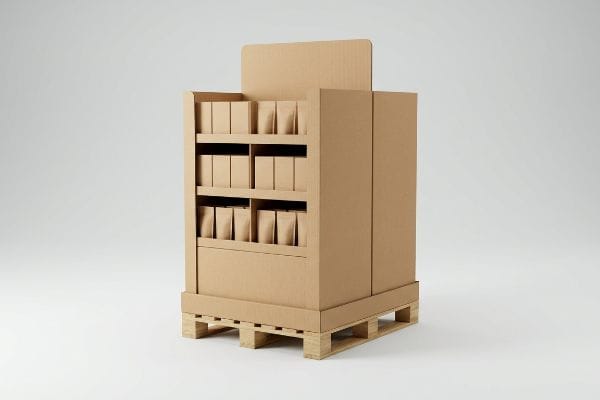
पीडीक्यू पैलेट एक पूर्व-पैक किया हुआ, खुदरा बिक्री के लिए तैयार नालीदार मर्चेंडाइजिंग यूनिट है जिसे सीधे खुदरा बिक्री केंद्रों पर भेजने के लिए डिज़ाइन किया गया है। "प्रीटी डार्न क्विक" का संक्षिप्त रूप, ये मानकीकृत संरचनाएं स्टोर में असेंबली की आवश्यकता को समाप्त कर देती हैं, जिससे क्लर्क तुरंत बड़ी मात्रा में उत्पादों को प्रमुख गलियारे क्षेत्रों में रख सकते हैं ताकि ग्राहकों से तुरंत संपर्क स्थापित किया जा सके।.
बुनियादी परिभाषा को समझना तो बस शुरुआत है। इन संरचनाओं को आपूर्ति श्रृंखला में टिकाऊ बनाने और बिक्री बढ़ाने के लिए, हमें कार्डबोर्ड के भीतर छिपी बारीकियों को समझना होगा।.
पैलेट डिस्प्ले क्या होता है?
कई ब्रांड इन विशालकाय फर्श संरचनाओं को केवल विशाल बक्सों के रूप में मानते हैं, लेकिन यह एक खतरनाक सरलीकरण है जो इन्वेंट्री के पतन की ओर ले जाता है।
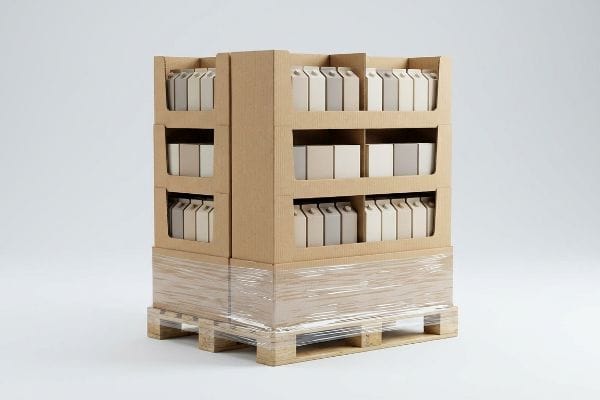
पैलेट डिस्प्ले एक स्वतंत्र, आत्मनिर्भर प्रचार संरचना है जो लकड़ी या प्लास्टिक के आधार पर स्थापित होती है। यह माल ढुलाई के दौरान थोक सामग्री को सुरक्षित रूप से रखती है और खुदरा स्टोर पर रखे जाने के तुरंत बाद, बिना किसी उत्पाद को खोले, एक सुलभ और बहु-आयामी खरीदारी स्थल के रूप में कार्य करती है।.
एक बार जब आपको यह एहसास हो जाता है कि यह संरचना एक शिपिंग पोत और एक बिक्री काउंटर दोनों है, तो इंजीनियरिंग संबंधी आवश्यकताएं पूरी तरह से बदल जाती हैं।.
जीएमए (ग्रोसरी मैन्युफैक्चरर्स एसोसिएशन) पैलेट डिस्प्ले फाउंडेशन का इंजीनियरिंग कार्य
अधिकांश ग्राफिक डिजाइनर इन विशाल फ्लोर यूनिट्स को केवल ब्रांडिंग के लिए खाली बिलबोर्ड के रूप में देखते हैं। वे कलाकृति को परिपूर्ण करने में हफ्तों बिताते हैं, लेकिन उत्तरी अमेरिकी लॉजिस्टिक्स नेटवर्क द्वारा निर्धारित भौतिक स्थान संबंधी आवश्यकताओं को पूरी तरह से अनदेखा कर देते हैं। वे मान लेते हैं कि कोई भी कस्टम बेस साइज जो देखने में आकर्षक लगे, उसे फोर्कलिफ्ट से गोदाम में आसानी से ले जाया जा सकता है।
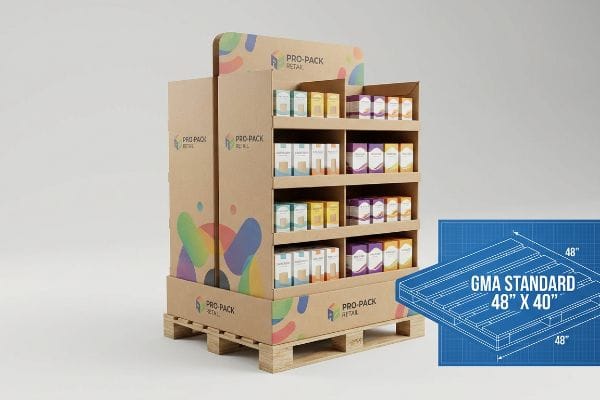
मुझे पता है कि आप इस कार्डबोर्ड के ढांचे असमंजस में हैं, क्योंकि अनुभवी डिज़ाइन टीमें भी अक्सर ऐसे कस्टम फुटप्रिंट बनाती हैं जो मानक 48×40 इंच (121.9×101.6 सेमी) GMA पैलेट2 के नियमों को नज़रअंदाज़ कर देते हैं। वे एक सुंदर 42 इंच (106.6 सेमी) का वर्गाकार आधार डिज़ाइन करते हैं, यह पूरी तरह से भूल जाते हैं कि मानक अमेरिकी खुदरा लॉजिस्टिक्स सख्त मापों पर चलती है। जब स्टोर क्लर्क इसे हिलाने की कोशिश करता है, तो फोर्कलिफ्ट के खुरदुरे दांतों की रगड़ से बिना सहारे वाली निचली ट्रे फट जाती है क्योंकि यह लकड़ी की पट्टियों के साथ संरेखित नहीं होती है।
इस समस्या को हल करने के लिए, मैं हमेशा किसी भी आर्टवर्क को लगाने से पहले स्ट्रक्चरल डाईलाइन को 48×40 इंच (121.9×101.6 सेमी) के जीएमए परिधि3 । यह सरल नियम डिस्प्ले को किनारे से बाहर निकलने और उसकी बीसीटी (बॉक्स कम्प्रेशन टेस्ट) मजबूती4। अपने डिज़ाइन को इस सार्वभौमिक ग्रिड पर स्थिर करके, आप परिवहन के दौरान होने वाले नुकसान को पूरी तरह से खत्म कर देते हैं और सख्त खुदरा विक्रेताओं से अस्वीकृत शिपमेंट के लिए लगने वाले लगभग 15% शुल्क से बचते हैं।
| नौसिखियों की आम गलती | प्रो फिक्स | रिटेल-फ्लोर लाभ |
|---|---|---|
| कस्टम गैर-मानक फुटप्रिंट डिजाइन करना | 48×40 GMA मानकों के अनुसार डाईलाइन को लॉक करना 5 | फोर्कलिफ्ट से होने वाले नुकसान को खत्म करता है |
| पैलेट स्लैट के अंतराल को अनदेखा करना | लकड़ी के रनर के साथ बेस सपोर्ट को संरेखित करना6 | नीचे की ट्रे में छेद होने से रोकता है |
| पैनलों को किनारों से बाहर लटकने देना | शून्य ओवरहैंग परिधि को लागू करना | यह 100% ऊर्ध्वाधर संपीड़न शक्ति बनाए रखता है।7 |
मैंने देखा है कि खराब ज्यामिति के कारण कई खूबसूरत अभियान लोडिंग डॉक पर ही बर्बाद हो जाते हैं। लॉजिस्टिक्स के बुनियादी ढांचे को प्राथमिकता देकर, मैं यह सुनिश्चित करता हूं कि आपका थोक माल ट्रक की यात्रा को सुरक्षित रूप से पार कर ले और सही सलामत पहुंचे।.
🛠️ हार्वे का डेस्क: क्या आप अपनी नई फ्लोर कैंपेन के लिए मानक लॉजिस्टिक्स ग्रिड के अनुरूप निर्णय लेने को लेकर असमंजस में हैं? 👉 डाइलाइन चेक का अनुरोध करें ↗ — सीधे मेरे डेस्क से संपर्क करें। मैं वादा करता हूँ, आपको कोई स्वचालित बिक्री संबंधी स्पैम नहीं मिलेगा।
पैलेटों पर कौन से कोड लिखे होते हैं?
आपके माल पर लगे बारकोड लेबल को समझना बेहद ज़रूरी है। अगर रिसीविंग सेंटर आपके सामान को स्कैन नहीं कर सकते, तो वे उसे स्टॉक में नहीं रखेंगे।.
पैलेटों पर अंकित कोड मानकीकृत रूटिंग और इन्वेंट्री बारकोड हैं, मुख्य रूप से यूसीसी-128 लेबल, जिनका उपयोग वितरण केंद्र आने वाले शिपमेंट को ट्रैक करने के लिए करते हैं। इन विशिष्ट पहचानकर्ताओं में खरीद ऑर्डर, कार्टन की मात्रा और गंतव्य स्टोर से संबंधित एन्क्रिप्टेड डेटा होता है, जिससे मैन्युअल इन्वेंट्री गिनती के बिना निर्बाध स्वचालित छँटाई सुनिश्चित होती है।.
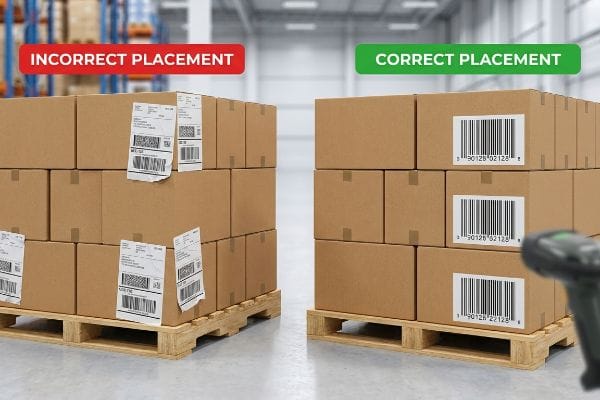
अगर वितरण केंद्र का सॉफ्टवेयर इसे डॉक के दरवाजे पर ही अस्वीकार कर देता है, तो एक उत्तम प्रदर्शन का कोई मतलब नहीं है।.
पैलेट पर यूसीसी-128 (यूनिफॉर्म कोड काउंसिल) लेबल ट्रैप
नए ब्रांड मैनेजर अक्सर शिपिंग लेबल को नज़रअंदाज़ कर देते हैं और अपने थर्ड-पार्टी लॉजिस्टिक्स (3PL) प्रदाता को बाहरी कार्टन पर जहाँ भी खाली जगह मिलती है, वहाँ लेबल चिपकाने देते हैं। वे मान लेते हैं कि जब तक बारकोड स्पष्ट रूप से पढ़ा जा सकता है, रिटेल रिसीविंग मशीनें इन्वेंट्री को सफलतापूर्वक प्रोसेस कर लेंगी।.
मैं अक्सर देखता हूँ कि ग्राहक खूबसूरत रंगीन शिपिंग बॉक्स छपवाते हैं, लेकिन गोदाम कर्मचारी गलती से बॉक्स की तहों पर ही बड़ा सा UCC-128 स्टिकर चिपका देते हैं। जब लेबल किसी खाली जगह पर लग जाता है या किसी कोने से लिपट जाता है,तो सख्त चिपकने वाला कागज सिकुड़ जाता है और स्कैनर की तेज़ बीप से त्रुटि दर्ज हो जाती है। वितरण केंद्र तुरंत इसे अपठनीय बताकर मैन्युअल छँटाई के लिए अलग रख देता है।
आप आर्टवर्क फ़ाइल में सीधे एक निर्दिष्ट, उच्च-कंट्रास्ट वाला सफेद "सुरक्षित क्षेत्र" बनाकर इसे पूरी तरह से टाल सकते हैं, जो फर्श से ठीक 32 इंच (81.2 सेमी) की दूरी पर स्थित हो9।यह सूक्ष्म समायोजन सुनिश्चित करता है कि प्रत्येक लेजर स्कैनर पहली बार में ही सटीक निशाना लगाए। इसे सही करने से भारी रीपैकिंग शुल्क से बचा जा सकता है, जिससे आपको मैनुअल रिटेलर चार्जबैक में प्रति पैलेट 150 डॉलर तक की बचत होती है10 और आपका रोलआउट समय पर पूरा होता है।
| नौसिखियों की आम गलती | प्रो फिक्स | रिटेल-फ्लोर लाभ |
|---|---|---|
| तहों के ऊपर लेबल लगाना | साइड पैनलों पर समतल सुरक्षित क्षेत्रों की छपाई | पहले प्रयास में ही स्कैनर की सफलता की गारंटी देता है |
| कम कंट्रास्ट वाली पृष्ठभूमि का उपयोग करना | सॉलिड व्हाइट प्राइमर बॉक्स लगाना11 | डॉक पर सामान प्राप्त करने का समय बढ़ाता है |
| कोड को बहुत ऊपर या बहुत नीचे रखना | 32 इंच पर मानकीकरण12 | मैन्युअल छँटाई में होने वाली देरी को समाप्त करता है |
मैं फैक्ट्री में लेबल लगाने का काम कभी भी संयोग पर नहीं छोड़ता। शुरुआती प्रीप्रेस फाइलों में सटीक बारकोड ज़ोन को हार्डकोड करना आपके मुनाफे को सुरक्षित रखने का सबसे आसान तरीका है।.
🛠️ हार्वे का डेस्क: क्या आपके शिपिंग बॉक्स अनजाने में महत्वपूर्ण रूटिंग बारकोड छिपा रहे हैं? 👉 अपने लेबल की स्थिति जांचें ↗ — सुरक्षित रूप से डाउनलोड करें। बाद में कोई प्रश्न होने पर आप मुझसे संपर्क कर सकते हैं।
पैलेट कितने प्रकार के होते हैं?
स्थानिक योजना स्टोर की दृश्यता के लिए एक निरंतर संघर्ष है। प्रचार सामग्री के ज्यामितीय उपविभाजनों को समझने से आपको खरीदार बैठकों के दौरान लाभ मिलता है।.
पैलेट तीन प्रकार के होते हैं: फुल पैलेट, हाफ पैलेट और क्वार्टर पैलेट। इन आंशिक विभाजनों की मदद से ब्रांड अपने उत्पादों की मात्रा को रिटेलर के पास उपलब्ध स्थान के अनुसार सटीक रूप से व्यवस्थित कर सकते हैं, जिससे अधिक भीड़-भाड़ वाले गलियारों में कुशल प्लेसमेंट सुनिश्चित होता है और छोटे उत्पादों के लिए मानक प्लेटफॉर्म पर एकाधिकार नहीं हो जाता।.
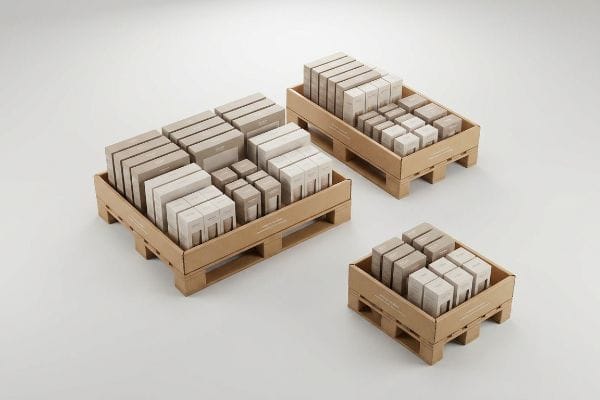
इन तीन आकारों को जानने से आपको तब भी प्रमुख स्थान प्राप्त करने में मदद मिलती है जब स्टोर मैनेजर दावा करते हैं कि गलियारा भरा हुआ है।.
तीन प्रकार के पैलेट फुटप्रिंट को अधिकतम करना
ब्रांड अक्सर बड़े-बड़े स्टोर मालिकों को व्यापक, विस्तृत प्रचार अभियान पेश करते हैं, यह मानते हुए कि व्यापक उपस्थिति से बिक्री की गति स्वतः ही बढ़ जाती है। जब ग्राहक सीमित जगह के कारण प्रस्ताव को अस्वीकार कर देता है, तो ब्रांड मान लेता है कि उसने ग्राहक खो दिया है और प्रचार वापस ले लेता है।.
रिटेल स्टोर के गलियारे की जगह को एक भीड़भाड़ वाले पार्किंग स्थल की तरह समझें; अगर आप सिर्फ़ एक बड़ा ट्रक चलाते हैं, तो आपको कभी जगह नहीं मिलेगी। मैंने देखा है कि ग्राहक सौदे खो देते हैं क्योंकि वे 48×40 इंच (121.9×101.6 सेमी) के13 इंच के ढांचे को ऐसी जगह पर रखने की कोशिश करते हैं जहाँ सिर्फ़ एक चौथाई पैलेट के लिए जगह होती है। जब वे मोटे नालीदार कार्डबोर्ड को काटकर फिट करने की कोशिश करते हैं, तो कार्डबोर्ड के बेतरतीब, टेढ़े-मेढ़े फटने से प्रीमियम लुक पूरी तरह से खराब हो जाता है।
सबसे कारगर रणनीति यह है कि शुरुआत से ही 48×20 इंच (121.9×50.8 सेमी) के मॉड्यूलर हाफ पैलेट या सटीक क्वार्टर पैलेट तैयार किए जाएं। इससे चार अलग-अलग अभियानों को एक ही लकड़ी के आधार पर पहेली के टुकड़ों की तरह आसानी से फिट किया जा सकता है। अपने खरीदार को आंशिक विकल्प प्रस्तुत करके, आप अपनी स्वीकृति दर को काफी हद तक बढ़ा सकते हैं और कच्चे माल की लागत के एक छोटे से हिस्से में ही व्यस्त चौराहों पर अपना ऑर्डर सुरक्षित कर सकते हैं।
| नौसिखियों की आम गलती | प्रो फिक्स | रिटेल-फ्लोर लाभ |
|---|---|---|
| केवल पूर्ण पदचिह्न ही लगाएं | मॉड्यूलर आंशिक आकार उपलब्ध हैं14 | खुदरा विक्रेताओं की स्वीकृति दर में वृद्धि होती है |
| आधारों को मैन्युअल रूप से संशोधित करना | इंजीनियरिंग सटीक क्वार्टर ज्यामिति15 | स्वच्छ और प्रीमियम सौंदर्य को बनाए रखता है |
| गलियारे की जगह बर्बाद करना | एक ही आधार पर कई ब्रांडों को एक साथ रखना16 | प्रति वर्ग फुट बिक्री को अधिकतम करता है |
मैं मॉड्यूलर डिज़ाइन को ध्यान में रखता हूँ क्योंकि लचीलापन सौदेबाजी में सफलता दिलाता है। गणितीय रूप से एकदम सही आंशिक आकार की पेशकश करके खरीदार को यह साबित किया जा सकता है कि आप उनकी सीमित जगह का सम्मान करते हैं।.
🛠️ हार्वेज़ डेस्क: क्या आपको किसी बड़े प्रमोशन को खुदरा विक्रेता द्वारा स्वीकृत छोटे आकार में बदलना है? 👉 कस्टम लेआउट विकल्प प्राप्त करें ↗ — ऐसे फॉर्म नहीं जो अंतहीन बिक्री कॉल को ट्रिगर करें। बस शुद्ध मूल्य।
कॉस्टको में पैलेट डिस्प्ले के लिए क्या आवश्यकताएं हैं?
क्लब स्टोर पूरी तरह से अलग भौतिक नियमों के तहत काम करते हैं। अगर आप उन्हें पारंपरिक सुपरमार्केट की तरह मानेंगे, तो उनकी संरचनाएं भौतिक रूप से ढह जाएंगी।.
कॉस्टको में पैलेट डिस्प्ले के लिए अत्यंत मजबूत संरचनात्मक क्षमता अनिवार्य है, विशेष रूप से 2,500 पाउंड की गतिशील भार वहन क्षमता की मांग की जाती है। इन सख्त दिशानिर्देशों के लिए दोहरी दीवार वाले नालीदार आधार और "शॉप-थ्रू" आर्किटेक्चर की आवश्यकता होती है, जिससे उपभोक्ता समग्र स्थिरता को प्रभावित किए बिना कई कोणों से सामान को देख और महसूस कर सकें।.
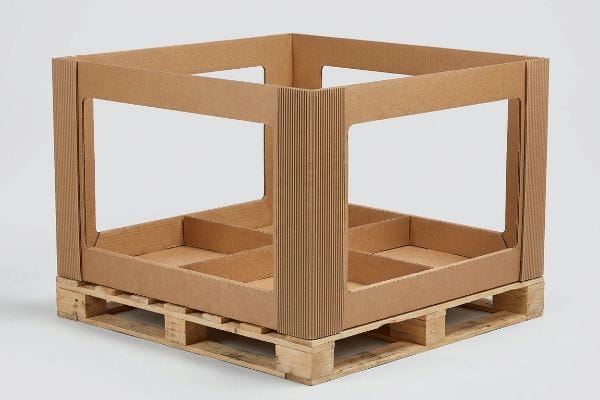
लेकिन जब मशीनें चलने लगती हैं और गोदाम में भारी पैलेट एक के ऊपर एक रखे जाने लगते हैं, तो केवल सिद्धांत जानना ही पर्याप्त नहीं होता।.
फैक्ट्री में स्टैंडर्ड कॉस्टको पैलेट डिस्प्ले कॉरुगेटेड कार्डबोर्ड क्यों विफल हो जाता है?
खरीद टीमें अक्सर क्लब स्टोर की स्पेसिफिकेशन शीट को देखती हैं और मान लेती हैं कि सामान्य डबल-वॉल नालीदार बोर्ड में अपग्रेड करने से अनिवार्य भार क्षमता17।उनका मानना है कि मोटा कागज जोड़ने से समस्या का समाधान हो जाता है, वे संरचनात्मक कोनों द्वारा ऊर्ध्वाधर भार के वितरण के यांत्रिक भौतिकी को पूरी तरह से अनदेखा कर देते हैं।
मेरी फैक्ट्री में, मैं अक्सर देखता हूँ कि ग्राहक ऐसी फाइलें जमा करते हैं जो पूरी तरह से सामग्री की मोटाई पर निर्भर होती हैं, और "शॉप-थ्रू" की कमज़ोरी को पूरी तरह से नज़रअंदाज़ कर देती हैं। जब मैं उनके सैद्धांतिक डिज़ाइन को सटीक मुलेन टेस्टर से जाँचता हूँ, तो विफलता बेहद भयावह होती है। चूंकि कॉस्टको में चारों तरफ खुली खिड़कियाँ ज़रूरी होती हैं ताकि कर्मचारी उत्पाद तक पहुँच सकें, इसलिए ऊर्ध्वाधर कोनों को 2,500 पाउंड (1133.9 किलोग्राम) का भारी भार।उचित सुदृढ़ीकरण के बिना, मैं देखता हूँ कि वे कच्चे सी-फ्लूट कोने दबाव में अंदर की ओर मुड़ जाते हैं, और पूरी संरचना के टूटने से ठीक 0.62 इंच (15.7 मिमी) झुक जाते हैं।
मैंने माइक्रोमीटर रीडिंग निकाली और साबित किया कि हमें महंगे आंतरिक धातु सपोर्ट बार की आवश्यकता नहीं थी—हमें केवल बेस ट्रे 19 के अंदर एक इंजीनियरड एच-डिवाइडर के साथ सख्त ऊर्ध्वाधर ग्रेन ओरिएंटेशन की आवश्यकता थी। नालीदार खांचों को गुरुत्वाकर्षण बल 20 के गणितीय रूप से समानांतर करके , हम ECT (एज क्रश टेस्ट) प्रदर्शन को कई गुना बढ़ा देते हैं। यह कठोर भौतिक समायोजन सुनिश्चित करता है कि डिस्प्ले क्लब स्टोर की वजन सीमा को आसानी से सहन कर सके, जिससे ग्राहक को अस्वीकृत इन्वेंट्री देयता में अनुमानित $4,200 की बचत होती है और BOM (सामग्री बिल) से अनावश्यक प्लास्टिक सुदृढीकरण को हटा दिया जाता है।
| नौसिखियों की आम गलती | प्रो फिक्स | रिटेल-फ्लोर लाभ |
|---|---|---|
| कच्चे माल की मोटाई पर निर्भर करते हुए | बांसुरी के दाने को लंबवत संरेखित करना21 | अत्यधिक गतिशील भारों को सहन करता है |
| बड़ी, बिना सहारे वाली खिड़कियों को काटना | आंतरिक एच-डिवाइडर ट्रे जोड़ना22 | ऊर्ध्वाधर कोनों के मुड़ने को रोकता है |
| क्लब स्टोर के शीर्ष-वजन को अनदेखा करना | 2,500 पाउंड के मानकों के अनुसार इंजीनियरिंग23 | महंगे वेयरहाउस चार्जबैक को समाप्त करता है |
मैं अप्रमाणित संरचनाओं को क्लब स्टोरों में भेजने से इनकार करता हूँ। बड़े पैमाने पर उत्पादन ही एकमात्र तरीका है जिससे मैं यह सुनिश्चित कर सकता हूँ कि आपका माल विशाल गोदाम के वातावरण में सुरक्षित रहे।
🛠️ हार्वे की सलाह: 2 मिलीमीटर की संरचनात्मक खामी को 500 स्टोरों में अपना कारोबार ठप न करने दें। 👉 मुझे अपनी डाइलाइन फ़ाइल भेजें ↗ — बड़े पैमाने पर उत्पादन पर बजट बर्बाद करने से पहले मैं गणितीय गणनाओं की गहन जांच कर लूंगा।
निष्कर्ष
आप मानक सामग्रियों का उपयोग करके क्लब स्टोर के भौतिकी नियमों को दरकिनार करने का प्रयास कर सकते हैं, लेकिन जब 2,500 पाउंड (1133.9 किलोग्राम) के भार के नीचे बिना सहारे वाले कोने मुड़ जाते हैं, जिससे खुदरा विक्रेता द्वारा तत्काल अस्वीकृति होती है और आपका लाभ मार्जिन पूरी तरह से समाप्त हो जाता है, तो नुकसान अपरिवर्तनीय होता है। 500 से अधिक ब्रांड प्रबंधक इन घातक प्रारंभिक चरण की गलतियों से बचने के लिए मेरी प्रीप्रेस चेकलिस्ट का उपयोग करते हैं। अत्यधिक गतिशील भार सीमाओं के साथ जोखिम लेना बंद करें और मुझे अपने निःशुल्क डाइलाइन प्री-फ्लाइट ऑडिट ↗ ताकि यह सुनिश्चित हो सके कि आपकी संरचना फर्श पर टिकी रहे।
"जीएमए अमेरिकन पैलेट। आयाम, प्रकार और बहुत कुछ।", https://acrosslogistics.com/blog/en/american-pallet-gma। [उद्योग मानक, विशेष रूप से ग्रोसरी मैन्युफैक्चरर्स एसोसिएशन (जीएमए) द्वारा स्थापित मानक, पैलेट के लिए आवश्यक सटीक आयामों को परिभाषित करते हैं ताकि वे उत्तरी अमेरिकी माल ढुलाई और भंडारण अवसंरचना के अनुकूल हों]। साक्ष्य की भूमिका: तथ्यात्मक समर्थन; स्रोत प्रकार: उद्योग मानक। समर्थन करता है: यह दावा कि लॉजिस्टिक्स नेटवर्क विशिष्ट पदचिह्न प्रतिबंध लगाते हैं। कार्यक्षेत्र नोट: मुख्य रूप से 48" x 40" जीएमए मानक पर लागू होता है]। ↩
"मानक पैलेट आकार | चार्ट सहित – कैम्प्स पैलेट्स", https://www.kampspallets.com/standard-pallet-sizes-with-chart/। ग्रोसरी मैन्युफैक्चरर्स एसोसिएशन (जीएमए) के तकनीकी दस्तावेज़ में उत्तरी अमेरिकी लॉजिस्टिक्स के लिए मानक पैलेट आकार 48 x 40 इंच परिभाषित किया गया है। साक्ष्य भूमिका: तकनीकी सत्यापन; स्रोत प्रकार: उद्योग मानक। समर्थन: लॉजिस्टिक्स बुनियादी ढांचे के साथ डिस्प्ले फुटप्रिंट के संरेखण की आवश्यकता। कार्यक्षेत्र संबंधी टिप्पणी: यह मानक मुख्य रूप से अमेरिका और कनाडा पर लागू होता है। ↩
"हीट ट्रीटेड वुड जीएमए पैलेट – 48 x 40" H-1260 – यूलाइन", https://www.uline.com/Product/Detail/H-1260/Pallets/Heat-Treated-Wood-GMA-Pallet-48-x-40। ग्रोसरी मैन्युफैक्चरर्स एसोसिएशन के उद्योग मानकों के अनुसार, यूनिवर्सल पैलेट फुटप्रिंट 48×40 इंच है। साक्ष्य की भूमिका: तथ्यात्मक सत्यापन; स्रोत प्रकार: उद्योग मानक; समर्थन: मानक पैलेट आकार। कार्यक्षेत्र संबंधी टिप्पणी: यह मानक मुख्य रूप से उत्तरी अमेरिकी लॉजिस्टिक्स के लिए है। ↩
"[DOC] प्रस्तुत संस्करण (672.09 KB) – VTechWorks", https://vtechworks.lib.vt.edu/bitstreams/359cd5e6-7099-48a8-9a3b-60aeee6db278/download. पैकेजिंग इंजीनियरिंग साहित्य दर्शाता है कि पैलेट ओवरहैंग महत्वपूर्ण दीवार समर्थन को हटाकर नालीदार कंटेनरों की संरचनात्मक अखंडता और BCT मानों को कम करता है। साक्ष्य की भूमिका: तकनीकी सत्यापन; स्रोत प्रकार: इंजीनियरिंग अध्ययन; समर्थन: संरचनात्मक शक्ति हानि। कार्यक्षेत्र नोट: नालीदार कार्डबोर्ड के प्रदर्शन पर केंद्रित। ↩
"48×40" जीएमए पैलेट्स | सबसे बड़ा पैलेट निर्माता और आपूर्तिकर्ता", https://www.palletone.com/products/gma-pallets/। ग्रोसरी मैन्युफैक्चरर्स एसोसिएशन (जीएमए) के उद्योग मानकों के अनुसार, 48×40 इंच का फुटप्रिंट उत्तरी अमेरिकी खुदरा पैलेटों के लिए सार्वभौमिक विनिर्देश है। साक्ष्य भूमिका: तकनीकी विनिर्देश; स्रोत प्रकार: उद्योग मानक। समर्थन: मानक फुटप्रिंट आयाम। कार्यक्षेत्र संबंधी टिप्पणी: मुख्य रूप से उत्तरी अमेरिकी लॉजिस्टिक्स पर लागू। ↩
"पैलेट रनर सिस्टम | एक REBinar – YouTube", https://www.youtube.com/watch?v=RW2YOmVtZzs। पॉइंट-ऑफ-परचेज़ डिस्प्ले के लिए तकनीकी डिज़ाइन गाइड में यह बताया गया है कि पैलेट रनर के साथ संरचनात्मक सपोर्ट को संरेखित करने से डिस्प्ले फ्लोर को झुकने और उसमें छेद होने से रोका जा सकता है। साक्ष्य भूमिका: डिज़ाइन का सर्वोत्तम अभ्यास; स्रोत प्रकार: तकनीकी मैनुअल। सपोर्ट: निचली ट्रे में छेद होने से बचाव। स्कोप नोट: लकड़ी के पैलेट कॉन्फ़िगरेशन के लिए विशिष्ट। ↩
"पैलेट ओवरहैंग के बॉक्स संपीड़न पर प्रभाव का पूर्वानुमान ...", https://vtechworks.lib.vt.edu/items/a44b58f5-f8a2-4e60-b709-23a013411d58। नालीदार बोर्ड के लिए संरचनात्मक अभियांत्रिकी डेटा इंगित करता है कि पैलेट सपोर्ट से परे भार का कोई भी ओवरहैंग दीवारों की ऊर्ध्वाधर भार वहन क्षमता को काफी कम कर देता है। साक्ष्य की भूमिका: तकनीकी प्रमाण; स्रोत प्रकार: अभियांत्रिकी अध्ययन। समर्थन: शून्य ओवरहैंग का संरचनात्मक लाभ। कार्यक्षेत्र नोट: स्थैतिक भार के अधीन नालीदार सामग्रियों पर लागू होता है। ↩
"GS1 रिटेल लेबलिंग: वॉलमार्ट, टारगेट और अन्य के लिए आवश्यकताएँ", https://getproductiv.com/gs1-labeling-retail। [GS1 के उद्योग मानक यह निर्दिष्ट करते हैं कि बारकोड लेबल को समतल सतहों पर लगाया जाना चाहिए ताकि विकृति से बचा जा सके और स्कैन करने की क्षमता सुनिश्चित हो सके]। साक्ष्य भूमिका: तकनीकी सत्यापन; स्रोत प्रकार: उद्योग मानक। समर्थन: स्कैनिंग त्रुटियों का तकनीकी कारण। कार्यक्षेत्र नोट: विशेष रूप से UCC-128 जैसे रैखिक बारकोड पर लागू होता है। ↩
"[PDF] कार्टन पैकिंग, पैकेजिंग, लेबलिंग, शिपिंग और लोडिंग …", https://www.footlocker-inc.com/ns/pdfs/2018/vsm/us_canada/2018_VSM_Section_06_-_Carton_Packing_Packaging_Labeling_Shipping_and_Loading_Requirements.pdf. [वितरण केंद्रों के लिए उद्योग लेबलिंग मानक स्वचालित स्कैनर संरेखण सुनिश्चित करने के लिए बारकोड प्लेसमेंट की सटीक ऊंचाई निर्दिष्ट करते हैं]। साक्ष्य भूमिका: तकनीकी विनिर्देश; स्रोत प्रकार: उद्योग मैनुअल। समर्थन: उचित बारकोड स्थिति। कार्यक्षेत्र संबंधी टिप्पणी: विशिष्ट खुदरा विक्रेता आवश्यकताओं के अनुसार भिन्न हो सकता है। ↩
"रिटेल कंप्लायंस रीपैकेजिंग: वॉलमार्ट, कॉस्टको और बिग-बॉक्स...", https://nautical-direct.com/retail-compliance-repackaging-walmart-costco-and-big-box-requirements-explained/। [सप्लाई चेन ऑडिट डेटा और रिटेलर कंप्लायंस गाइड गैर-अनुपालन लेबल लगाने और उसके बाद मैनुअल हैंडलिंग शुल्क से जुड़ी औसत लागतों को दर्शाते हैं]। साक्ष्य की भूमिका: वित्तीय मीट्रिक; स्रोत प्रकार: लॉजिस्टिक्स रिपोर्ट। समर्थन: लेबलिंग त्रुटियों का वित्तीय प्रभाव। स्कोप नोट: अनुमान औसत उद्योग चार्जबैक पर आधारित हैं। ↩
"बारकोड का रंग कैसा होना चाहिए? – GS1 UK", https://www.gs1uk.org/knowledge-hub/barcodes/what-colour-should-a-barcode-be. [ISO/IEC बारकोड प्रिंट गुणवत्ता मानक, बारकोड और उसकी पृष्ठभूमि के बीच आवश्यक कंट्रास्ट अनुपात को परिभाषित करते हैं ताकि पहली बार में ही उसे पढ़ा जा सके]। साक्ष्य की भूमिका: तकनीकी आवश्यकता; स्रोत प्रकार: अंतर्राष्ट्रीय मानक। सहायक: बारकोड कंट्रास्ट और स्कैन करने की क्षमता। कार्यक्षेत्र संबंधी टिप्पणी: यह विशेष रूप से गैर-सफेद या बनावट वाली पैकेजिंग पर मुद्रित लेबल पर लागू होता है।] ↩
"GS1 लॉजिस्टिक लेबल दिशानिर्देश", https://www.gs1.org/standards/gs1-logistic-label-guideline/current-standard। [उद्योग लॉजिस्टिक्स मानक या खुदरा विक्रेता शिपिंग मैनुअल स्वचालित स्कैनर संरेखण सुनिश्चित करने के लिए लेबल प्लेसमेंट की सटीक ऊंचाई निर्दिष्ट करते हैं]। साक्ष्य भूमिका: तकनीकी विनिर्देश; स्रोत प्रकार: उद्योग मानक। समर्थन: स्वचालित प्राप्ति के लिए इष्टतम लेबल स्थिति। कार्यक्षेत्र नोट: विशिष्ट ऊंचाई आवश्यकताएं गोदाम संचालक के अनुसार थोड़ी भिन्न हो सकती हैं।] ↩
"मानक पैलेट आकार — 48×40 GMA और 6 अन्य सामान्य आयाम", https://www.wearewarp.com/standard-pallet-sizes। [उद्योग लॉजिस्टिक्स मानक पुष्टि करते हैं कि 48×40 इंच उत्तरी अमेरिकी खुदरा व्यापार में उपयोग किए जाने वाले ग्रोसरी मैन्युफैक्चरर्स एसोसिएशन (GMA) पैलेट का मानक आयाम है]। साक्ष्य भूमिका: तकनीकी विनिर्देश; स्रोत प्रकार: उद्योग मानक। समर्थन: पूर्ण पैलेट फुटप्रिंट की परिभाषा। कार्यक्षेत्र संबंधी टिप्पणी: मानक मुख्य रूप से उत्तरी अमेरिकी बाजारों के लिए है। ↩
"हाफ पैलेट का परिचय - पैलेटवन इंक.", https://www.palletone.com/introducing-the-half-pallet/। [खुदरा स्थान प्रबंधन दिशानिर्देश बताते हैं कि लचीले, मॉड्यूलर फुटप्रिंट विकल्प प्रदान करने से खरीदार की स्वीकृति की संभावना बढ़ जाती है]। साक्ष्य की भूमिका: सहायक; स्रोत प्रकार: व्यापार प्रकाशन। समर्थन: अनुमोदन पर आंशिक आकारों का प्रभाव। कार्यक्षेत्र संबंधी टिप्पणी: केवल सीपीजी खुदरा वातावरण तक सीमित। ↩
"आंशिक पैलेट और डिस्प्ले स्कर्ट का उपयोग कब करें - टीपीएच ग्लोबल सॉल्यूशंस", https://www.tphinc.com/custom-point-of-purchase-pop-pos-retail-store-displays-packaging-blog/when-to-use-partial-pallets-display-skirts/। [मॉड्यूलर डिस्प्ले के लिए पैकेजिंग इंजीनियरिंग मानक यह निर्दिष्ट करते हैं कि सटीक ज्यामितीय उपविभाजन संरचनात्मक पतन को रोकते हैं और दृश्य ब्रांडिंग को बनाए रखते हैं]। साक्ष्य भूमिका: तकनीकी; स्रोत प्रकार: इंजीनियरिंग विनिर्देश। समर्थन: ज्यामिति के माध्यम से सौंदर्य संरक्षण। कार्यक्षेत्र नोट: क्वार्टर-पैलेट मॉड्यूलरिटी से संबंधित। ↩
"सबसे ज़्यादा बिकने वाले वेयरहाउस स्क्वायर नए प्लास्टिक पैलेट्स – 9-फीट बेस …", https://www.nelsoncompany.com/pallets.cfm?SizeUse=Square&Type=Plastic&Base=9-Feet&Nest=Y&Best=Y&Warehouse=Y&Reuse=Multi-Trip&Cond=New&Src=VS. [रिटेल डेटा से पता चलता है कि एक ही डिस्प्ले बेस पर कई SKU या ब्रांड्स को समेकित करने से बिक्री घनत्व अनुकूलित होता है]। साक्ष्य की भूमिका: सहायक; स्रोत प्रकार: रिटेल एनालिटिक्स रिपोर्ट। समर्थन: प्रति वर्ग फुट बिक्री में वृद्धि। स्कोप नोट: प्रमोशनल आइल प्लेसमेंट पर लागू होता है। ↩
"कॉस्टको डिस्प्ले केस आवश्यकताएँ | पियर्सन पैकेजिंग सिस्टम्स", https://pearsonpkg.com/es/resources/costco-display-case-requirements-specifications-for-bliss-style-boxes-benefitting-manufacturers-retailers-and-customers/. [एक आधिकारिक विक्रेता अनुपालन मार्गदर्शिका या तकनीकी विनिर्देश पत्र क्लब स्टोर पैलेट डिस्प्ले के लिए आवश्यक विशिष्ट न्यूनतम वजन सीमा को परिभाषित करेगा। साक्ष्य भूमिका: सत्यापन; स्रोत प्रकार: कॉर्पोरेट अनुपालन दस्तावेज़। समर्थन: पैलेट डिस्प्ले के लिए सख्त, अपरिवर्तनीय संरचनात्मक आवश्यकताओं का अस्तित्व। कार्यक्षेत्र नोट: विशिष्ट क्षमताएँ उत्पाद श्रेणी या पैलेट आकार के अनुसार भिन्न हो सकती हैं।] ↩
"कॉस्टको पैकेजिंग विनिर्देश परिशिष्ट | पीडीएफ | पैलेट – स्क्रिब्ड", https://www.scribd.com/document/247897620/Costco-Packaging-Specs-Addendums। [कॉस्टको के पैकेजिंग और डिस्प्ले मानकों से तकनीकी विनिर्देश पैलेट संरचनाओं के लिए आवश्यक गतिशील भार क्षमता को सत्यापित करेंगे]। साक्ष्य भूमिका: तकनीकी मीट्रिक; स्रोत प्रकार: उद्योग मानक। समर्थन: संरचनात्मक अखंडता आवश्यकताएँ। कार्यक्षेत्र नोट: क्लब स्टोर पैलेट डिस्प्ले के लिए मानक। ↩
"कस्टम कोरुगेटेड डिवाइडर्स के साथ पैकेज सुरक्षा को अधिकतम करना", https://www.premier-packaging-products.com/products/corrugated-divider/। [भारी-भरकम डिस्प्ले पैकेजिंग के लिए तकनीकी विनिर्देश, ऊर्ध्वाधर भार क्षमता बढ़ाने और ट्रे को ढहने से रोकने के लिए एच-डिवाइडर्स के उपयोग का दस्तावेजीकरण करते हैं।] साक्ष्य भूमिका: तकनीकी सत्यापन; स्रोत प्रकार: डिज़ाइन मैनुअल। समर्थन: धातु समर्थनों को हटाना। कार्यक्षेत्र नोट: प्रभावशीलता सामग्री के जीएसएम और फ्लूट प्रकार पर निर्भर करती है। ↩
"[PDF] क्या फ्लूट कोण बॉक्स के प्रदर्शन को प्रभावित करता है?", https://mro.massey.ac.nz/bitstreams/d723dab2-67b2-4bc1-813b-4a8570c32977/download. [पैकेजिंग इंजीनियरिंग मानक यह सत्यापित करते हैं कि लोड पथ के समानांतर नालीदार फ्लूट्स को संरेखित करने से ऊर्ध्वाधर संपीड़न शक्ति और ECT मान अधिकतम होते हैं।] साक्ष्य की भूमिका: तकनीकी सत्यापन; स्रोत प्रकार: उद्योग मानक। समर्थन: अभिविन्यास के माध्यम से संरचनात्मक अखंडता। कार्यक्षेत्र नोट: विशेष रूप से अक्षीय संपीड़न पर लागू होता है। ↩
"नालीदार कार्डबोर्ड बक्सों की संपीडन सामर्थ्य का आकलन ...", https://pmc.ncbi.nlm.nih.gov/articles/PMC8467740/। [तकनीकी पैकेजिंग मैनुअल बताते हैं कि ऊर्ध्वाधर फ्लूट अभिविन्यास नालीदार कार्डबोर्ड की स्टैकिंग सामर्थ्य और संपीडन प्रतिरोध को कैसे अधिकतम करता है]। साक्ष्य भूमिका: तकनीकी सत्यापन; स्रोत प्रकार: इंजीनियरिंग मैनुअल। समर्थन: भार वहन के लिए फ्लूट संरेखण। कार्यक्षेत्र नोट: नालीदार पेपरबोर्ड संरचनाओं के लिए विशिष्ट। ↩
"ऊपरी फ्लैप वाली चार कोने वाली ट्रे", https://www.packworld.com/secondary-packaging/video/13360020/four-corner-trays-with-top-flaps। [पैकेजिंग डिज़ाइन मानक बताते हैं कि आंतरिक H-डिवाइडर किस प्रकार ऊर्ध्वाधर भार को वितरित करते हैं ताकि नालीदार डिस्प्ले में संरचनात्मक झुकाव को रोका जा सके]। साक्ष्य की भूमिका: तकनीकी सत्यापन; स्रोत प्रकार: पैकेजिंग डिज़ाइन हैंडबुक। सहायक: संरचनात्मक सुदृढ़ीकरण विधियाँ। कार्यक्षेत्र संबंधी टिप्पणी: भारी-भरकम नालीदार शिपिंग कंटेनरों पर लागू होता है। ↩
"कॉस्टको पैकेजिंग गाइड: संरचनात्मक आवश्यकताएँ और सर्वोत्तम अभ्यास", https://greendotpackaging.com/costco-packaging-requirements/। [क्लब स्टोर के लिए विक्रेता अनुपालन नियमावली सुरक्षा और स्थिरता सुनिश्चित करने के लिए पैलेट डिस्प्ले की न्यूनतम भार वहन क्षमता निर्दिष्ट करती है]। साक्ष्य भूमिका: तथ्यात्मक विनिर्देश; स्रोत प्रकार: विक्रेता आवश्यकता नियमावली। समर्थन: क्लब स्टोर डिस्प्ले के लिए वजन मानक। कार्यक्षेत्र संबंधी टिप्पणी: विशिष्ट SKU वजन और पैलेट आयामों के अनुसार भिन्न होता है। ↩