किसी बड़े रिटेल स्टोर में नियमों का पालन न करने वाली कार्डबोर्ड ट्रे लेकर जाना न केवल शर्मनाक है, बल्कि यह आपके पूरे उत्पाद को गोदाम में वापस भेजने का सबसे तेज़ तरीका भी है।.
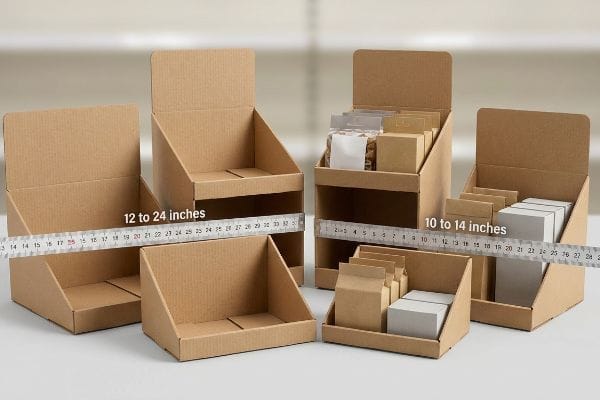
पीडीक्यू (प्रोडक्ट डिस्प्ले क्वार्टर) डिस्प्ले के लिए उपलब्ध आकार आमतौर पर 12 से 24 इंच (30.4 से 60.9 सेमी) चौड़ाई और 10 से 14 इंच (25.4 से 35.5 सेमी) गहराई के होते हैं। ये कॉम्पैक्ट आयाम विश्व स्तर पर मानक खुदरा दुकानों की अलमारियों और काउंटरों पर आसानी से फिट होने के लिए सटीक रूप से डिज़ाइन किए गए हैं।.
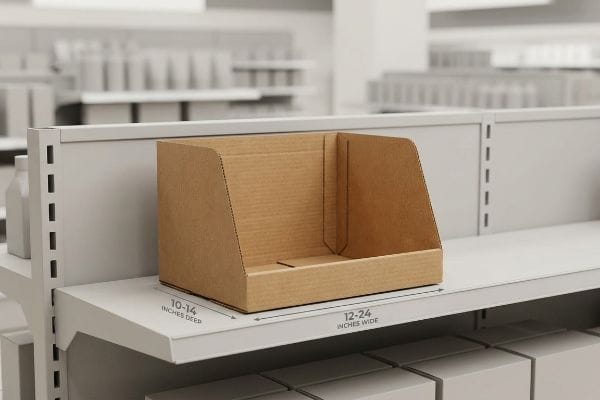
लेकिन किसी पीडीएफ फाइल पर सैद्धांतिक आयामों को जानने का मतलब यह नहीं है कि आपकी ट्रे वास्तव में आपूर्ति श्रृंखला में सुरक्षित रहेगी। आइए विस्तार से समझते हैं कि ये माप वास्तविक खुदरा क्षेत्र की बाधाओं के साथ कैसे मेल खाते हैं।.
पीडीक्यू बॉक्स का आकार क्या होता है?
आप एक खूबसूरत ट्रे डिजाइन कर सकते हैं, लेकिन अगर यह रिटेलर के सख्त स्थानिक ढांचे के अनुरूप नहीं है, तो यह स्टॉक करने वाली टीम के लिए एक लॉजिस्टिकल दुःस्वप्न बन जाता है।.
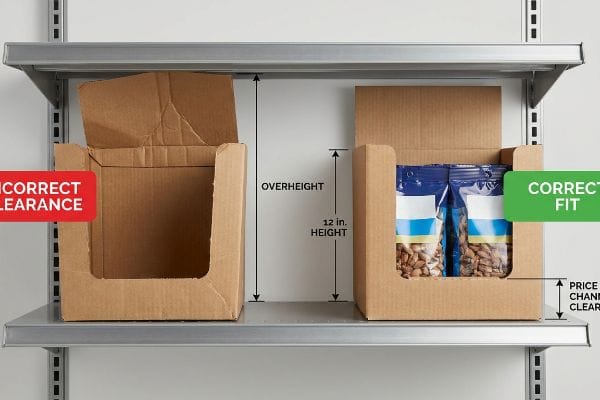
एक मानक पीडीक्यू बॉक्स का आकार खुदरा दुकानों की शेल्फ की गहराई की सीमा का सख्ती से पालन करता है, जो आमतौर पर अधिकतम 14 इंच (35.5 सेमी) गहरा और 12 इंच (30.4 सेमी) ऊंचा होता है। ये विशिष्ट आयाम नालीदार संरचना को स्टोर के मूल्य चैनलों को अवरुद्ध करने या गलियारों के ऊपर लटकने से रोकते हैं।.
अधिकतम सीमा का ज्ञान होना सहायक होता है, लेकिन वास्तविक गलियारे के वातावरण के लिए बॉक्स को डिजाइन करने के लिए केवल आंकड़ों से परे देखने की आवश्यकता होती है।.
पीडीक्यू साइजिंग में शेल्फ-क्लियरेंस ट्रैप
यहां तक कि अनुभवी डिज़ाइनर भी फ्लैट डाईलाइन प्रस्तुत करते समय अक्सर ऊर्ध्वाधर क्लीयरेंस की कमी को नज़रअंदाज़ कर देते हैं। वे अधिकतम बिलबोर्ड स्थान प्राप्त करने के लिए रिटेलर की स्टाइल गाइड द्वारा अनुमत अधिकतम ऊंचाई सीमा तक बैक हेडर को बढ़ाते हैं। हालांकि, वे पूरी तरह से भूल जाते हैं कि स्टोर शेल्फ एक स्थिर 3D बॉक्स है, न कि एक सपाट 2D स्क्रीन।.
मैं अक्सर यह गड़बड़ी देखता हूँ जब ग्राहक अपने हेडर कार्ड को 14 इंच (35.5 सेमी) ऊँचाई तक लगा देते हैं, बिना ऊपर की शेल्फ में खाली जगह का ध्यान रखे। जब क्लर्क पहले से भरे हुए मर्चेंडाइज़र को गोंडोला पर सरकाने की कोशिश करता है, तो कड़ा पेपरबोर्ड ऊपर की धातु की शेल्फ से रगड़ खाता है, जिससे एक कर्कश, घर्षण वाली आवाज़ आती है। क्लर्क को मजबूरी में आपके खूबसूरती से छपे हुए हेडर को पीछे की ओर मोड़ना पड़ता है, जिससे लिथो-लेमिनेशन पर गंभीर सिलवटें पड़ जाती हैं और उसका पूरा दृश्य प्रभाव खराब हो जाता है।
| नौसिखियों की आम गलती | प्रो फिक्स | रिटेल-फ्लोर लाभ |
|---|---|---|
| हेडर की ऊंचाई को अधिकतम करना | 1 इंच (25.4 मिमी) का ऊर्ध्वाधर बफर छोड़ दें।2 | शेल्फों पर घर्षण रहित स्लाइडिंग |
| मूल्य चैनल की अनदेखी करना | सामने के किनारे को 0.5 इंच (12.7 मिमी) अंदर की ओर दबाएँ।3 | स्टोर के प्राइस टैग को स्पष्ट रूप से दिखाई देता रहता है |
| शेल्फ की गहराई का अनुमान लगाना | इंजीनियरिंग में इसे अधिकतम 14 इंच (35.5 सेमी) तक सटीक रूप से करें।4 | खतरनाक गलियारे के ओवरहैंग को रोकता है |
मैं प्रोटोटाइपिंग चरण के दौरान हमेशा एक फिजिकल शेल्फ मॉकअप की मांग करता हूं। इन आयामों की पहले से पुष्टि करने से रिटेल स्टोर पर असेंबली का समय कम हो जाता है और यह सुनिश्चित होता है कि आपका प्रिंटेड ब्रांडिंग पूरी तरह से बरकरार रहे।.
🛠️ हार्वे का डेस्क: क्या आपके हेडर कार्ड के आयाम गोंडोला शेल्फ के ऊपरी हिस्से से बुरी तरह टकरा रहे हैं? 👉 मुफ़्त डाइलाइन ऑडिट प्राप्त करें ↗ — सीधे मेरे डेस्क तक पहुंच। मैं वादा करता हूं, कोई स्वचालित बिक्री संबंधी स्पैम नहीं होगा।
पीडीक्यू प्रारूप क्या है?
यह प्रारूप केवल ट्रे के दिखने के तरीके से संबंधित नहीं है; यह निर्धारित करता है कि उच्च गति वाली सह-पैकिंग प्रक्रियाओं के दौरान सामग्री भौतिक रूप से कैसे कार्य करती है और मुड़ती है।.
कोर पीडीक्यू फॉर्मेट के लिए रिटेल के लिए तैयार, मॉड्यूलर ट्रे सिस्टम की आवश्यकता होती है जिसे शेल्फ पर तुरंत लगाने के लिए डिज़ाइन किया गया हो। इस संरचनात्मक विन्यास में आमतौर पर एक छिद्रित, आसानी से अलग होने वाला शिपर हुड, पहले से चिपकाई गई प्रबलित साइड की दीवारें और सामने से उत्पाद की दृश्यता को अधिकतम करने के लिए डिज़ाइन किया गया एक कोणीय रिटेनिंग लिप शामिल होता है।.
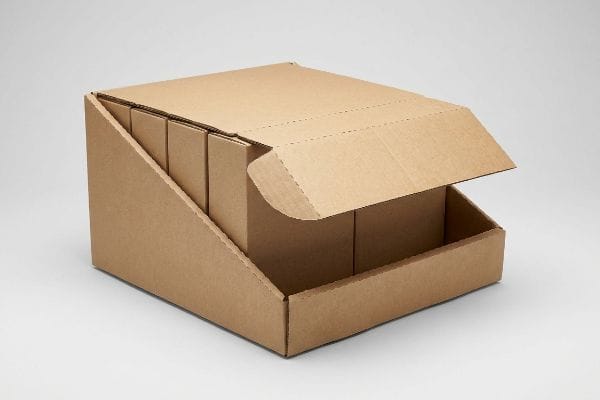
आसानी से फाड़कर अलग करने की सुविधा एक बड़ा विक्रय बिंदु है, लेकिन उस प्रारूप को एक साथ रखने वाली आंतरिक ज्यामिति ही वह जगह है जहां अधिकांश अभियान गुप्त रूप से विफल हो जाते हैं।.
जटिल पीडीक्यू प्रारूप सह-पैकिंग को क्यों बाधित करते हैं?
ब्रांड अक्सर यह मान लेते हैं कि दर्जनों इंटरलॉकिंग नालीदार टैब और फ्लोटिंग डिवाइडर वाली अधिक जटिल ट्रे संरचना भारी वस्तुओं के लिए अधिक मजबूत प्रारूप तैयार करेगी। वे पूरी तरह से अंतिम सौंदर्य पर ध्यान केंद्रित करते हैं, जबकि उन जटिल तंत्रों को मोड़ने के लिए आवश्यक मैन्युअल श्रम को अनदेखा कर देते हैं। उच्च गति वाले कॉन्ट्रैक्ट पैकेजिंग वातावरण में, अत्यधिक जटिल संरचनात्मक प्रारूप दक्षता मार्जिन को नष्ट कर देते हैं और मानवीय त्रुटि को बढ़ावा देते हैं ।
मैं यह अक्सर देखता हूँ जब डिज़ाइनर ऐसे "ओरिगामी-शैली" प्रारूप प्रस्तुत करते हैं जिनमें तंग घर्षण लॉक होते हैं और जिनके लिए हाथों का एकदम सटीक संरेखण आवश्यक होता है। मैंने असेंबली कर्मचारियों को प्रत्येक यूनिट के लिए 45 सेकंड तक संघर्ष करते देखा है, उनकी उंगलियाँ फिसलती रहती हैं क्योंकि वे कच्चे बी-फ्लूट कार्डबोर्ड को उन स्लॉट में जबरदस्ती डालने की कोशिश करते हैं जो 2 मिलीमीटर (0.08 इंच) बहुत संकरे होते हैं6।कन्वेयर को चालू रखने के लिए, वे अंततः दीवारों को एक साथ रखने के लिए सस्ते, चिपचिपे प्लास्टिक टेप का एक रोल पकड़ लेते हैं, जिससे डिस्प्ले की संरचनात्मक अखंडता पूरी तरह से खतरे में पड़ जाती है7।
| नौसिखियों की आम गलती | प्रो फिक्स | रिटेल-फ्लोर लाभ |
|---|---|---|
| जटिल इंटरलॉकिंग टैब | स्वचालित रूप से पहले से चिपकाई गई दीवारों का उपयोग करें | असेंबली का समय 30 सेकंड कम हो जाता है8 |
| संकीर्ण डाई-कट स्लॉट | 1 मिमी (0.04 इंच) का क्लीयरेंस जोड़ें9 | गत्ते को फटने से रोकता है |
| टेप पर निर्भर कोने | ऑटो-लॉकिंग बॉटम फ्लैप लागू करें10 | एक साफ-सुथरा, प्रीमियम लुक प्रदान करता है |
उत्पादन लाइन पर पहुंचने से पहले मैं हर प्रारूप को पूरी तरह से सरल बना देता हूँ। एक स्मार्ट, पहले से चिपकाई गई मॉड्यूलर संरचना असेंबली की दिक्कतों को खत्म कर देती है, जिससे आपके मुनाफे पर को-पैकर के भारी डाउनटाइम के नुकसान का असर नहीं पड़ता।.
🛠️ हार्वे का डेस्क: क्या आपके सह-पैकर भद्दी पारदर्शी टेप का इस्तेमाल कर रहे हैं क्योंकि आपके टैब भौतिक रूप से लॉक नहीं हो रहे हैं? 👉 संरचनात्मक समीक्षा का अनुरोध करें ↗ — सुरक्षित रूप से डाउनलोड करें। बाद में कोई प्रश्न होने पर मेरा इनबॉक्स खुला है।
क्वार्टर पैलेट डिस्प्ले क्या है?
जब आप शेल्फ ट्रे से फ्लोर-स्टैंडिंग यूनिट, तो प्रीमियम गलियारे की जगह सुरक्षित करने के लिए आंशिक आयामों को समझना बेहद महत्वपूर्ण हो जाता है।
एक चौथाई पैलेट डिस्प्ले का माप ठीक 24 इंच (60.9 सेमी) x 20 इंच (50.8 सेमी) होता है, जो एक मानक जीएमए (ग्रोसरी मैन्युफैक्चरर्स एसोसिएशन) लकड़ी के पैलेट का एक चौथाई हिस्सा होता है। यह विशिष्ट आंशिक ज्यामिति ब्रांडों को कम से कम गलियारे की जगह घेरते हुए अत्यधिक दृश्यमान स्टैंडअलोन फ्लोर कैंपेन चलाने की अनुमति देती है।.
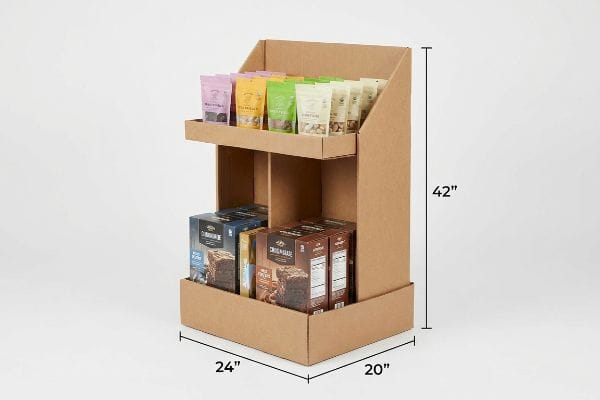
उस व्यस्त कोने को सुरक्षित करना एक बड़ी जीत है, लेकिन इतनी छोटी जगह पर एक ऊंची इमारत खड़ी करने से गंभीर भौतिक जोखिम पैदा होते हैं।.
क्वार्टर पैलेट में गुरुत्वाकर्षण केंद्र का जाल
ब्रांड अक्सर खुदरा विक्रेताओं द्वारा निर्धारित स्थान की सख्त सीमाओं से बचने के लिए अपने विशाल, पूर्ण आकार के स्टोरों को छोटे-छोटे हिस्सों में समेटने का प्रयास करते हैं। वे 50 इंच (127 सेमी) की ऊँचाई तो बरकरार रखते हैं , लेकिन आधार की गहराई को आधा कर देते हैं। इससे गुरुत्वाकर्षण केंद्र में भारी बदलाव आता है, जो भारी सामान के भार के नीचे पेंसिल के इरेज़र पर संतुलन बनाने की कोशिश करने जैसा होता है।
मुझे इस खतरे का सामना तब करना पड़ता है जब ग्राहक गाढ़े तरल उत्पादों से किसी ऊंचे, संकरे यूनिट को ऊपर से भर देते हैं। मेरी फैक्ट्री में किए गए एक साधारण भौतिक झुकाव परीक्षण के दौरान, एक शॉपिंग कार्ट के गुजरने जैसी हल्की सी टक्कर से ही 120 पाउंड (54.4 किलोग्राम) का पूरा ढांचा हिलने लगता है और बुरी तरह पलट जाता है। अगर ऐसा किसी वास्तविक गलियारे में हो जाए, तो यह एक गंभीर कानूनी समस्या बन जाती है, जिससे सफाई में देरी होती है और आपके ब्रांड पर खुदरा विक्रेता द्वारा तत्काल प्रतिबंध लग सकता है।
| नौसिखियों की आम गलती | प्रो फिक्स | रिटेल-फ्लोर लाभ |
|---|---|---|
| ऊपर से भारी माल की लोडिंग | सबसे भारी वस्तुओं को सबसे निचले स्तर पर रखें। | खतरनाक गलियारों में होने वाले पलटने की घटनाओं को रोकता है |
| 50 इंच (127 सेमी) की ऊंचाई बनाए रखते हुए | यूनिट को 42 इंच (106.6 सेमी) तक नीचे करें।13 | गतिज स्थिरता में नाटकीय रूप से सुधार करता है14 |
| खोखले आधार वाली संरचनाएँ | रेत की बोरियों के लिए एक नकली तल बनाएं15 | एक मजबूत आधार बनाता है |
मैं हमेशा इन संकीर्ण सतहों पर एक सख्त घूर्णी झुकाव परीक्षण करता हूँ। द्रव्यमान केंद्र को गणितीय रूप से स्थिर करके, मैं यह सुनिश्चित करता हूँ कि व्यस्त खरीदारी के घंटों के दौरान भी यह इकाई पूरी तरह से स्थिर और दोषमुक्त रहे।.
🛠️ हार्वे का डेस्क: क्या आपका लंबा फ्रैक्शनल डिस्प्ले कारखाने में खतरनाक तरीके से हिल रहा है? 👉 अपनी स्थिरता ऑडिट रिपोर्ट प्राप्त करें ↗ — कोई फॉर्म नहीं जो अंतहीन बिक्री कॉल को ट्रिगर करे। बस शुद्ध मूल्य।
खुदरा प्रदर्शन के मानक क्या हैं?
सामान्य साइजिंग दिशानिर्देशों का पालन करना तो बस शुरुआत है; वास्तविक सफलता के लिए उत्तरी अमेरिकी बॉक्स स्टोरों के कठोर वास्तुशिल्पीय नियमों का पूर्ण अनुपालन आवश्यक है।.
खुदरा प्रदर्शन के सख्त मानक, नालीदार कार्डबोर्ड से बने कंटेनरों के लिए सटीक भौतिक आवश्यकताओं को निर्धारित करते हैं, जिनमें विशिष्ट ADA पहुंच सीमाएं, संरचनात्मक भार क्षमताएं और सटीक GMA पैलेट संरेखण शामिल हैं। इन कठोर लॉजिस्टिक्स नियमों का पालन करने से गोदाम में माल की सुचारू प्राप्ति और बड़े स्टोरों में सहज एकीकरण सुनिश्चित होता है।.
लेकिन जब मशीनें चलना शुरू हो जाती हैं और पैलेट लोडिंग डॉक पर पहुंचते हैं, तो केवल सिद्धांत जानना ही पर्याप्त नहीं होता है।.
सैद्धांतिक मानक परीक्षण के दौरान विफल क्यों हो जाते हैं?
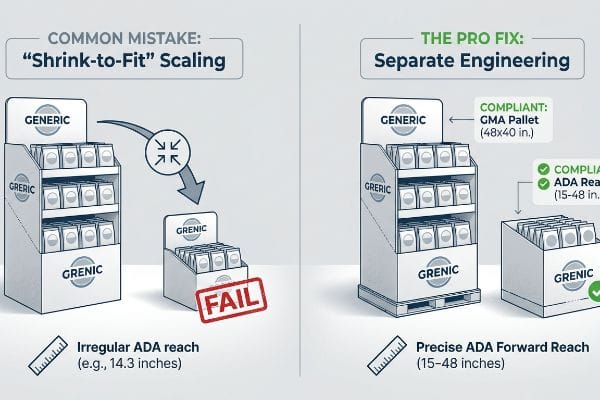
खरीददारों की टीमें अक्सर एक ऐसी स्केलेबल डिज़ाइन रणनीति पेश करती हैं जिसमें एक बड़े पीओपी (पॉइंट-ऑफ-परचेज़) फ्लोर यूनिट को आसानी से 50% तक छोटा करके पीओएस (पॉइंट-ऑफ-सेल) काउंटर ट्रे के रूप में इस्तेमाल किया जा सकता है। वे गलती से यह मान लेते हैं कि छोटा ज्यामितीय आकार स्वतः ही सभी विशिष्ट खुदरा ज़ोनिंग मानकों को16यह "छोटा करके फिट करने" की धारणा इन दो बिल्कुल अलग-अलग भौतिक वातावरणों को नियंत्रित करने वाले सख्त कानूनी और लॉजिस्टिकल नियमों की पूरी तरह से अनदेखी करती है।
मेरे कारखाने में, मैं अक्सर इस समस्या का सामना करता हूँ जब मैं ADA (अमेरिकन्स विद डिसेबिलिटीज एक्ट) के 15 से 48 इंच (38.1 से 121.9 सेमी) के फॉरवर्ड रीच कंप्लायंस विंडो के अनुसार छोटे आकार की फाइलों का परीक्षण करता हूँ। जब मैं परीक्षण बेंच पर लापरवाही से छोटा किए गए POS डाईलाइन को मापता हूँ, तो पाता हूँ कि रिटेनिंग लिप फर्श से अनियमित रूप से 14.3 इंच (36.3 सेमी) नीचे आ जाती है, जिससे उत्पाद अवैध पहुँच क्षेत्र में आ जाता है। मैंने माइक्रोमीटर रीडिंग निकाली और साबित किया कि मुझे ब्रांड के सौंदर्यशास्त्र को फिर से बनाने की आवश्यकता नहीं थी—मुझे केवल इंजीनियरिंग पाइपलाइनों को गणितीय रूप से अलग करने की आवश्यकता थी, फर्श इकाइयों को GMA 48×40 इंच (121.9×101.6 सेमी) पैलेट सीमा 18 के अनुसार सख्ती से स्थापित करना था , जबकि काउंटर इकाइयों को विशेष रूप से ADA एर्गोनॉमिक्स के लिए पुनर्निर्मित करना था। इस पूर्ण स्थानिक अलगाव को लागू करके, मैं सुनिश्चित करता हूँ कि संरचनात्मक लेआउट खुदरा विक्रेता ऑडिट को तुरंत पास कर ले, जिससे ग्राहकों को अस्वीकृति से संबंधित रीवर्क शुल्क में अनुमानित 25% की बचत होती है।
| नौसिखियों की आम गलती | प्रो फिक्स | रिटेल-फ्लोर लाभ |
|---|---|---|
| "सिकुड़कर फिट होने वाला" पैमाना | अलग-अलग POP और POS इंजीनियरिंग | पूर्ण कानूनी अनुपालन सुनिश्चित करता है |
| आगे की पहुंच की सीमाओं को अनदेखा करना | उत्पादों को 15-48 इंच (38.1-121.9 सेमी) के बीच रखें।19 | यह ADA के सख्त पहुंच संबंधी नियमों का पालन करता है। |
| मनमाना पदचिह्न आकार | फर्श इकाइयों को जीएमए पैलेट सीमाओं से लॉक करें20 | यह निर्बाध लॉजिस्टिक्स प्राप्ति को सक्षम बनाता है |
मैं अनुपालन मानकों को पूरा करने के लिए कभी भी मनमानी स्केलिंग पर निर्भर नहीं रहता। खुदरा विक्रेता की लॉजिस्टिकल वास्तविकता से सीधे तौर पर जोड़कर, मैं रिसीविंग डॉक की समस्याओं को दूर करता हूँ और आपके अभियान को विनाशकारी परिचालन संबंधी शुल्क वापसी से बचाता हूँ।.
🛠️ हार्वे का डेस्क: क्या आपको पता है कि आपकी छोटी काउंटर ट्रे, ADA के फॉरवर्ड रीच लिमिट का मात्र आधा इंच उल्लंघन करती है या नहीं? 👉 मुझे अपनी डाइलाइन फ़ाइल भेजें ↗ — बड़े पैमाने पर उत्पादन पर बजट बर्बाद करने से पहले मैं गणितीय गणना की गहन जांच कर लूंगा।
निष्कर्ष
आप आंशिक स्थिरता नियमों को नज़रअंदाज़ कर सकते हैं, लेकिन जब किसी भीड़भाड़ वाले गलियारे में भारी-भरकम चौथाई पैलेट अचानक पलट जाता है, जिससे खुदरा विक्रेता द्वारा तत्काल प्रतिबंध लग जाता है और आपके अभियान का लाभ मार्जिन पूरी तरह से खत्म हो जाता है, तो शुरुआती बचत बेकार हो जाती है। 500 से अधिक ब्रांड प्रबंधक इन घातक शुरुआती गलतियों से बचने के लिए मेरी प्रीप्रेस चेकलिस्ट का उपयोग करते हैं। खुदरा अनुपालन कानूनों के बारे में अनुमान लगाना बंद करें और किसी भी भारी नुकसान से बचने के लिए, मेरे मुफ़्त स्ट्रक्चरल प्री-फ़्लाइट रिव्यू ↗ के माध्यम से मुझे व्यक्तिगत रूप से आपके फुटप्रिंट ज्योमेट्री का ऑडिट करने दें।
"होम डिपो 2025 कार्डबोर्ड डिस्प्ले स्ट्रक्चर की आवश्यकताएं...", https://www.holidaypac.com/holidaypac-Case-solution-Study/holidaypac-Case-solution-Study/home-depot-2025-requirements-for-cardboard-display-structures-and-header-cards.html। खुदरा पैकेजिंग के लिए उद्योग दिशानिर्देश हेडर कार्ड की अधिकतम ऊंचाई निर्दिष्ट करते हैं ताकि यह सुनिश्चित हो सके कि वे मानक गोंडोला शेल्फिंग क्लीयरेंस के भीतर फिट हों। साक्ष्य भूमिका: तकनीकी विनिर्देश; स्रोत प्रकार: खुदरा पैकेजिंग मानक। समर्थन: 14 इंच हेडर ऊंचाई की व्यापकता और शेल्फ गैप के साथ उनका टकराव। स्कोप नोट: अमेरिकी खुदरा गोंडोला मानकों के लिए विशिष्ट। ↩
"मैं एक ऐसा पीडीक्यू कैसे डिज़ाइन करूं जिसे खुदरा विक्रेता और ग्राहक पसंद करें?", https://popdisplay.me/how-do-i-design-a-pdq-that-retailers-and-customers-will-love/। उद्योग पैकेजिंग मैनुअल या रिटेल फिक्स्चर गाइड शेल्फ प्लेसमेंट के लिए अनुशंसित ऊर्ध्वाधर बफर की पुष्टि करेगा। साक्ष्य भूमिका: तकनीकी विनिर्देश; स्रोत प्रकार: उद्योग मैनुअल। समर्थन: ऊर्ध्वाधर क्लीयरेंस मानक। स्कोप नोट: मानक खुदरा शेल्विंग। ↩
"वॉलमार्ट पीडीक्यू डिस्प्ले स्टैंडर्ड गाइड | पीडीएफ | रीसाइक्लिंग – स्क्रिब्ड", https://www.scribd.com/document/867784645/%E6%B2%83%E5%B0%94%E7%8E%9B%E5%B1%95%E6%9E%B6%E8%A6%81%E6%B1%82। मूल्य टैग धारकों के लिए खुदरा शेल्फिंग विनिर्देश लेबल दृश्यता के लिए आवश्यक अवकाश गहराई को परिभाषित करते हैं। साक्ष्य भूमिका: तकनीकी विनिर्देश; स्रोत प्रकार: खुदरा फिक्स्चर दिशानिर्देश। समर्थन: मूल्य चैनल पहुंच। कार्यक्षेत्र नोट: मानक शेल्फ किनारे लेबल। ↩
"रिटेल डिस्प्ले के 14 प्रकार | शिकागो, आईएल - वर्थाइमर बॉक्स", https://wertheimerbox.com/types-of-retail-displays/। रिटेल वातावरण सुरक्षा और लॉजिस्टिक्स मानक, गलियारों में डिस्प्ले के बाहर निकलने से रोकने के लिए, पॉइंट-ऑफ-परचेज़ डिस्प्ले की अधिकतम अनुमत गहराई को परिभाषित करते हैं। साक्ष्य भूमिका: तकनीकी विनिर्देश; स्रोत प्रकार: लॉजिस्टिक्स सुरक्षा मैनुअल। समर्थन: अधिकतम गहराई सीमाएँ। कार्यक्षेत्र नोट: सामान्य रिटेल गलियारे मानक। ↩
"पैकेज डिज़ाइन दवाओं की सटीकता पहचान को प्रभावित करता है - पीएमसी", https://pmc.ncbi.nlm.nih.gov/articles/PMC5570154/। एक आधिकारिक बाहरी स्रोत इस दावे का समर्थन कैसे करता है, इसका संक्षिप्त विवरण। साक्ष्य की भूमिका: तकनीकी सत्यापन; स्रोत का प्रकार: उद्योग श्वेतपत्र या परिचालन अध्ययन। समर्थन: अनुबंध पैकेजिंग में डिज़ाइन की जटिलता और कम उत्पादन क्षमता के बीच सहसंबंध। कार्यक्षेत्र संबंधी टिप्पणी: उच्च गति असेंबली वातावरण पर केंद्रित। ↩
"[PDF] नालीदार बोर्ड विनिर्देश - फाइबर बॉक्स एसोसिएशन", https://www.fibrebox.org/assets/2025/09/Walmart_Corrugated-Board_Specifications_Automation_Packaging_Standards.pdf। बी-फ्लूट टॉलरेंस के लिए पैकेजिंग इंजीनियरिंग दिशानिर्देश पुष्टि करते हैं कि 2 मिमी का विचलन आमतौर पर फ्रिक्शन लॉक के लिए स्वीकार्य फिट सीमा से अधिक होता है, जिससे असेंबली विफल हो जाती है। साक्ष्य भूमिका: तकनीकी सत्यापन; स्रोत प्रकार: इंजीनियरिंग मैनुअल। समर्थन: यह दावा कि बी-फ्लूट स्लॉट के लिए 2 मिमी एक गंभीर त्रुटि है। स्कोप नोट: बोर्ड ग्रेड के अनुसार थोड़ा भिन्न होता है। ↩
"टेप और गोंद आपकी पैकेजिंग की अखंडता को क्यों नुकसान पहुंचा रहे हैं", https://www.idealstitcher.com/blogs/8638/the-weak-link-why-tape-and-glue-are-sabotaging-your-packaging-integrity। पैकेजिंग असेंबली पर किए गए तुलनात्मक अध्ययनों से पता चलता है कि चिपकने वाले टेप में नालीदार डिस्प्ले में इस्तेमाल होने वाले इंजीनियर मैकेनिकल लॉक की तुलना में कतरन और संपीड़न शक्ति की कमी होती है। साक्ष्य की भूमिका: तकनीकी प्रमाण; स्रोत प्रकार: पदार्थ विज्ञान अध्ययन। समर्थन: इस दावे का कि टेप संरचनात्मक अखंडता को कम करता है। कार्यक्षेत्र संबंधी टिप्पणी: भार वहन क्षमता को संदर्भित करता है। ↩
"तेज़ सेटअप और खुदरा बिक्री पर प्रभाव के लिए निर्मित नालीदार पीडीक्यू डिस्प्ले", https://www.abbottaction.com/packaging/corrugated-pdq-displays/। पूर्व-चिपकाए गए घटकों द्वारा मैन्युअल इंटरलॉकिंग टैब की तुलना में प्रदान की गई समय बचत को दर्शाने वाले अनुभवजन्य डेटा या उद्योग मानक। साक्ष्य की भूमिका: मात्रात्मक सत्यापन; स्रोत प्रकार: उद्योग श्वेतपत्र या पैकेजिंग केस स्टडी। समर्थन: स्वचालित पीडीक्यू निर्माण से दक्षता लाभ। स्कोप नोट: विशिष्ट समय बचत डिस्प्ले के आकार के अनुसार भिन्न हो सकती है। ↩
"पैकेजिंग में डाई कटिंग क्या है? डाई कट बॉक्स के लिए एक गाइड", https://gentlever.com/die-cutting-in-packaging/। सामग्री पर तनाव और फटने से बचाव के लिए डाई कटिंग में सहनशीलता और क्लीयरेंस के लिए तकनीकी पैकेजिंग इंजीनियरिंग मानक। साक्ष्य भूमिका: तकनीकी विनिर्देश; स्रोत प्रकार: पैकेजिंग इंजीनियरिंग हैंडबुक। सहायक: टिकाऊ स्लॉट के लिए आवश्यक विशिष्ट क्लीयरेंस। कार्यक्षेत्र नोट: मानक नालीदार कार्डबोर्ड मोटाई पर लागू होता है। ↩
"ऑटो लॉक बॉक्स के उपयोग और लाभ", https://www.accbox.com/blog/the-uses-and-advantages-of-auto-lock-boxes/। पीडीक्यू प्रारूपों में टेप-आधारित कोनों और ऑटो-लॉकिंग तंत्रों के बीच संरचनात्मक अखंडता और असेंबली गति की तुलना। साक्ष्य भूमिका: तकनीकी सर्वोत्तम अभ्यास; स्रोत प्रकार: विनिर्माण मार्गदर्शिका। समर्थन: प्रीमियम सौंदर्य और स्थिरता के लिए ऑटो-लॉकिंग फ्लैप की प्रभावशीलता। कार्यक्षेत्र नोट: खुदरा प्रदर्शन मानकों पर ध्यान केंद्रित। ↩
"क्वार्टर-पैलेट डिस्प्ले: संपूर्ण गाइड – बेनेट पैकेजिंग", https://bpkc.com/blogs/blog/quarter-pallet-display-the-complete-guide। पॉइंट-ऑफ-परचेज़ फ्लोर डिस्प्ले के लिए उद्योग में प्रचलित ऊंचाई मानक का सत्यापन। साक्ष्य की भूमिका: तकनीकी विनिर्देश; स्रोत प्रकार: उद्योग विनिर्माण मानक। सहायक तत्व: फ्रैक्शनल पैलेट डिज़ाइन में उपयोग किए जाने वाले विशिष्ट ऊर्ध्वाधर आयाम। स्कोप नोट: ऊंचाई विशिष्ट खुदरा विक्रेता की आवश्यकताओं के अनुसार भिन्न हो सकती है। ↩
"स्पिनिंग ए लिक्विड पेपरवेट: दो अमिश्रणीय द्रव … – इंस्टाग्राम", https://www.instagram.com/reel/DUBwnJPEk0F/। गुरुत्वाकर्षण केंद्र से संबंधित इंजीनियरिंग और भौतिकी सिद्धांत दर्शाते हैं कि किसी संकीर्ण संरचना में ऊँचाई पर सघन भार रखने से टिपिंग मोमेंट और अस्थिरता बढ़ जाती है। साक्ष्य भूमिका: तकनीकी सत्यापन; स्रोत प्रकार: भौतिकी मैनुअल। समर्थन: शीर्ष-भारित संकीर्ण इकाइयों की अस्थिरता। कार्यक्षेत्र नोट: सामान्य यांत्रिक स्थिरता। ↩
"अध्याय 2: अपने ग्राहकों के लिए डिस्प्ले की ऊंचाई का चयन", https://www.creativedisplaysnow.com/guides/understanding-the-retail-customer/chapter-2-how-to-choose-the-right-display-height-for-your-customers/। खुदरा व्यापार में इस्तेमाल होने वाले सामानों के लिए उद्योग मानक सुरक्षा सुनिश्चित करने और गिरने से बचाने के लिए ऊंचाई संबंधी दिशानिर्देश प्रदान करते हैं। साक्ष्य की भूमिका: तकनीकी विनिर्देश; स्रोत प्रकार: खुदरा डिज़ाइन गाइड। आधार: स्थिरता के लिए अनुशंसित ऊंचाई। कार्यक्षेत्र संबंधी टिप्पणी: अस्थायी कार्डबोर्ड फ्लोर डिस्प्ले के लिए विशिष्ट। ↩
"गुरुत्वाकर्षण केंद्र | भौतिकी वैन - इलिनोइस विश्वविद्यालय", https://van.physics.illinois.edu/ask/listing/74। यांत्रिक अभियांत्रिकी सिद्धांत बताते हैं कि गुरुत्वाकर्षण केंद्र को नीचे करने से पलटने का कोण और स्थिरता कैसे बढ़ती है। प्रमाण की भूमिका: वैज्ञानिक सिद्धांत; स्रोत प्रकार: भौतिकी पाठ्यपुस्तक। समर्थन: ऊँचाई और स्थिरता के बीच संबंध। कार्यक्षेत्र संबंधी टिप्पणी: खुदरा दुकानों में उपयोग होने वाली सामान्य भौतिकी। ↩
"साइन और डिस्प्ले को स्थिर रखने के लिए रेत की बोरियाँ", https://www.sandbagstore.com/collections/signs-and-display?srsltid=AfmBOopc2c9qk4GGCIUgnMbmEOFzqhGArZN6U2Y-MH4UQuKPbcSjW4Rr। पेशेवर पीओपी डिस्प्ले निर्माण तकनीकों में अक्सर ऊपर से पड़ने वाले भारी भार को संतुलित करने के लिए आधार में बैलास्ट (भारी सामग्री) डालना शामिल होता है। साक्ष्य भूमिका: संरचनात्मक तकनीक; स्रोत प्रकार: डिस्प्ले निर्माण मैनुअल। सपोर्ट: एक स्थिर आधार बनाने की विधि। कार्यक्षेत्र नोट: हल्के कार्डबोर्ड यूनिटों पर लागू। ↩
"अस्थायी, अर्ध-स्थायी और स्थायी खुदरा डिस्प्ले", https://www.tphinc.com/custom-point-of-purchase-pop-pos-retail-store-displays-packaging-blog/temporary-semi-permanent-permanent-pallet-displays/। उद्योग दिशानिर्देश और ADA अनुपालन नियमावली दर्शाते हैं कि फर्श पर रखे जाने वाले POP यूनिट और काउंटर-टॉप POS यूनिट अलग-अलग ऊंचाई, पहुंच और सुरक्षा नियमों के अधीन हैं। साक्ष्य की भूमिका: सत्यापन; स्रोत प्रकार: उद्योग मानक। समर्थन: यह दावा कि डिस्प्ले की स्थिति के अनुसार ज़ोनिंग मानक भिन्न होते हैं। कार्यक्षेत्र संबंधी टिप्पणी: मुख्य रूप से उत्तरी अमेरिका के बड़े रिटेल स्टोरों पर लागू होता है। ↩
"अध्याय 3: संचालन योग्य भाग – Access-Board.gov", https://www.access-board.gov/ada/guides/chapter-3-operable-parts/। आधिकारिक ADA मानक व्हीलचेयर पर बैठे व्यक्तियों के लिए उपयोगिता सुनिश्चित करने हेतु सुलभ पहुँच सीमाएँ परिभाषित करते हैं। साक्ष्य की भूमिका: नियामक सत्यापन; स्रोत प्रकार: सरकारी कानून। समर्थन: सुलभ पहुँच के लिए 15-48 इंच की ऊँचाई सीमा। कार्यक्षेत्र संबंधी टिप्पणी: अबाधित आगे की ओर पहुँच पर लागू होता है। ↩
"48×40" जीएमए पैलेट्स | सबसे बड़ा पैलेट निर्माता और आपूर्तिकर्ता", https://www.palletone.com/products/gma-pallets/। ग्रोसरी मैन्युफैक्चरर्स एसोसिएशन उत्तरी अमेरिका में शिपिंग और रिसीविंग के लिए मानक पैलेट आकार निर्धारित करता है। साक्ष्य भूमिका: उद्योग मानक सत्यापन; स्रोत प्रकार: व्यापार संघ दिशानिर्देश। समर्थन: 48×40 इंच की मानक पैलेट सीमा। कार्यक्षेत्र संबंधी टिप्पणी: अधिकांश उत्तरी अमेरिकी बड़े रिटेल स्टोरों के लिए मानक। ↩
"ADA सुलभ डिज़ाइन के लिए मानक शीर्षक III विनियमन 28 CFR …", https://www.ada.gov/law-and-regs/design-standards/1991-design-standards/। वाणिज्यिक खुदरा वातावरण में ADA सुलभता अनुपालन के लिए आवश्यक विशिष्ट पहुँच सीमा ऊँचाई का सत्यापन। साक्ष्य की भूमिका: तकनीकी विनिर्देश; स्रोत प्रकार: सरकारी विनियमन। समर्थन: उत्पाद सुलभता सीमा। कार्यक्षेत्र संबंधी टिप्पणी: उत्तरी अमेरिकी सुलभता मानकों पर लागू होता है। ↩
"पैलेट डिस्प्ले के प्रकार: पूर्ण, आधा और चौथाई – ग्रीनडॉट पैकेजिंग", https://greendotpackaging.com/understanding-pallet-display-types-full-half-and-quarter-pallet-displays/। मानक जीएमए पैलेट आयामों का सत्यापन और खुदरा डिस्प्ले फुटप्रिंटिंग के लिए आधार रेखा के रूप में उनकी भूमिका। साक्ष्य की भूमिका: उद्योग मानक; स्रोत प्रकार: लॉजिस्टिक्स मैनुअल। समर्थन: फुटप्रिंट साइजिंग प्रतिबंध। कार्यक्षेत्र संबंधी टिप्पणी: उत्तरी अमेरिकी लॉजिस्टिक्स के लिए विशिष्ट। ↩