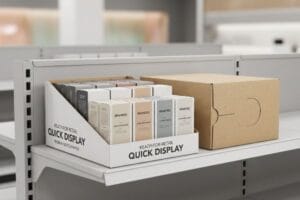
किसी बड़े रिटेलर स्टोर में प्रवेश करना गत्ते के ढेरों से भरी भूलभुलैया में घूमने जैसा लगता है, लेकिन पर्दे के पीछे, प्रत्येक व्यापारी एक अत्यधिक सुनियोजित श्रेणी में आता है जिसे आवेगपूर्ण खरीदारी को बढ़ावा देने के लिए डिज़ाइन किया गया है।.
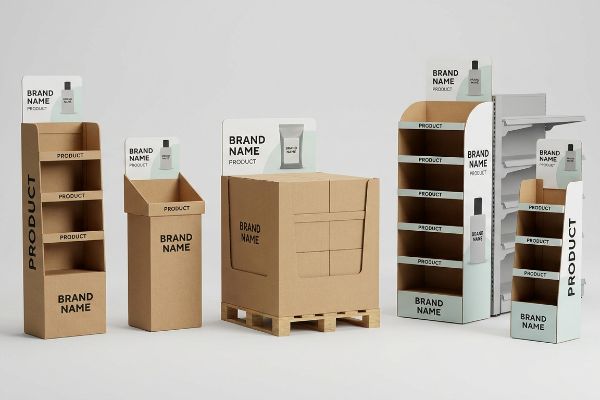
विभिन्न प्रकार के पीओएस (पॉइंट ऑफ सेल) डिस्प्ले में फ्लोर स्टैंड, काउंटरटॉप यूनिट, पैलेट बिल्ड, एंड-कैप और साइडकिक्स शामिल हैं। प्रत्येक भौतिक प्रारूप एक विशिष्ट स्थानिक रणनीति को पूरा करता है, जिसके लिए भारी खुदरा वातावरण में टिके रहने के साथ-साथ उत्पाद की दृश्यता को अधिकतम करने और मापने योग्य ऑफलाइन खुदरा बिक्री को बढ़ाने के लिए विशिष्ट संरचनात्मक इंजीनियरिंग की आवश्यकता होती है।.
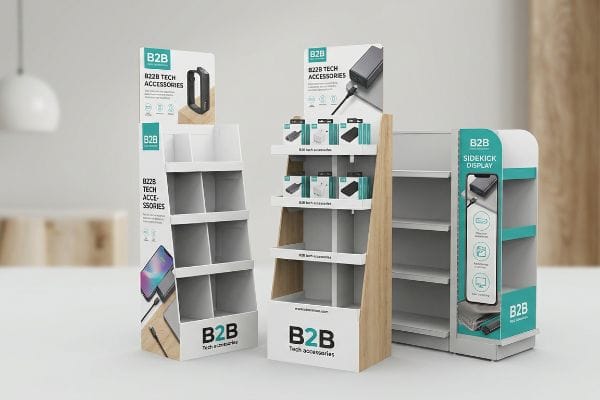
बुनियादी परिभाषाओं को जानना एक अच्छी शुरुआत है, लेकिन यह समझना कि ये संरचनाएं भौतिक खुदरा दबाव के तहत वास्तव में कैसा प्रदर्शन करती हैं, एक लाभदायक अभियान को एक महंगी रसद संबंधी परेशानी से अलग करता है।.
उदाहरणों सहित डिस्प्ले के 5 प्रकार क्या हैं?
ब्रांड्स मुझसे लगातार पूछते हैं कि कौन सा फॉर्मेट ऑफलाइन कन्वर्जन रेट में सबसे अच्छा परिणाम देता है, लेकिन इसका जवाब पूरी तरह से आपके उत्पाद के वजन और उपलब्ध रिटेल स्पेस पर निर्भर करता है।.
डिस्प्ले के पाँच प्रकारों में रजिस्टरों के लिए काउंटरटॉप यूनिट, गलियारों के लिए स्वतंत्र रूप से रखे जाने वाले फ्लोर बिन, क्लब स्टोर के लिए फुल पैलेट मर्चेंडाइज़र, इनलाइन शेल्फ ट्रे और हैंगिंग क्लिप स्ट्रिप्स शामिल हैं। ये विशेष रूप से डिज़ाइन किए गए प्रारूप खुदरा स्थान को व्यवस्थित करते हैं, जिससे ग्राहक मुख्य चेकआउट ज़ोन तक पहुँचने से पहले ही उनका ध्यान आकर्षित हो जाता है।.

किसी कैटलॉग से सबसे छोटा और सबसे सस्ता विकल्प चुनना आकर्षक लग सकता है, लेकिन शुरुआती दौर के ब्रांड यहीं पर अपनी पहली तकनीकी गलती करते हैं।.
काउंटरटॉप पर रखे सामान्य डिस्प्ले क्यों गिर जाते हैं?
यहां तक कि अनुभवी डिज़ाइनर भी छोटे पीडीक्यू ( प्रोडक्ट डिस्प्ले क्विकली 1 ) रजिस्टर यूनिट्स की इंजीनियरिंग करते समय भौतिक संतुलन की कमी को अक्सर नज़रअंदाज़ कर देते हैं । वे मान लेते हैं कि भारी सौंदर्य प्रसाधन या पेय पदार्थों को रखने के लिए एक साधारण मुड़ा हुआ आधार पर्याप्त है , और एक सममित बॉक्स को मंजूरी दे देते हैं जो डिजिटल रेंडरिंग में एकदम सही दिखता है लेकिन उसमें कोई पीछे का एंकरिंग तंत्र 2 नहीं होता है ।
जब ग्राहक भारी सामान से लदे काउंटर यूनिट्स का, तो मुझे यह समस्या अक्सर देखने को मिलती है। जैसे ही कोई ग्राहक सामने की पंक्ति से कोई वस्तु उठाता है, गुरुत्वाकर्षण का केंद्र आगे की ओर खिसक जाता है। मुझे आज भी याद है कि कैसे एक भारी पेय पदार्थ की ट्रे सही संतुलन न होने के कारण मेरे परीक्षण फर्श पर मुंह के बल गिर गई थी, जिससे एक तेज़, खोखली सी आवाज़ आई थी। इस समस्या को दूर करने के लिए, मैं हर काउंटर यूनिट के लिए एक विस्तारित ईज़ल बैक या भारित नकली तल को सख्ती से डिज़ाइन करता हूँ, जिसमें गहराई और ऊँचाई का अनुपात 2:3बनाए। यह गणितीय समायोजन एक गतिज एंकर की तरह काम करता है, जिससे सामान के गिरने से बचाव होता है और खुदरा विक्रेता द्वारा अस्वीकृति का जोखिम पूरी तरह खत्म हो जाता है, जिससे चेकआउट लाइन पर आपके ब्रांड की प्रतिष्ठा सुरक्षित रहती है।
| नौसिखियों की आम गलती | प्रो फिक्स | रिटेल-फ्लोर लाभ |
|---|---|---|
| समतल सममित आधारों का उपयोग करना | विस्तारित ईज़ल बैक जोड़ना4 | आगे की ओर भारी होने के कारण पलटने से रोकता है |
| गुरुत्वाकर्षण केंद्र की अनदेखी करते हुए | गहराई और ऊंचाई का अनुपात 2:3 अनिवार्य करना 5 | रजिस्टर की सख्त स्थिरता सुनिश्चित करता है |
| उत्पाद के वजन पर निर्भर | भारित नकली तल का निर्माण6 | आक्रामक ग्राहक मुठभेड़ों से बच निकलता है |
मैं ऐसे भारी-भरकम डिज़ाइनों को अस्वीकार करता हूँ जो काउंटर पर बोझ बन जाते हैं। सटीक टिपिंग पॉइंट फ़िज़िक्स को सीधे डाईलाइन में शामिल करके, मैं गारंटी देता हूँ कि आपका सामान सीधा खड़ा रहेगा और आसानी से बिकेगा।.
🛠️ हार्वे का डेस्क: क्या रीस्टॉकिंग टेस्ट के दौरान आपकी काउंटरटॉप ट्रे आगे की ओर झुक रही हैं? 👉 मुझे अपनी डाइलाइन चेक करने दें ↗ — सीधे मेरे डेस्क से संपर्क करें। मैं वादा करता हूँ, कोई स्वचालित बिक्री संबंधी स्पैम नहीं होगा।
पीओएस सिस्टम के 5 प्रकार क्या हैं?
कई रिटेल ज़ोन में एक सफल मार्केटिंग अभियान को बड़े पैमाने पर लागू करने के लिए, संरचनात्मक अखंडता से समझौता किए बिना, अपने भौतिक मर्चेंडाइज़र को विभिन्न प्रकार के स्थानिक वातावरण के अनुरूप ढालना आवश्यक है।.
पीओएस सिस्टम के पांच प्रकार हैं: स्वतंत्र गलियारे की संरचना, एंड-कैप अटैचमेंट, रजिस्टर-साइड इंपल्स रैक, मॉड्यूलर शेल्फ इंसर्ट और उच्च क्षमता वाले क्लब पैलेट। खुदरा विक्रेता इन विशिष्ट संरचनात्मक प्रणालियों को कानूनी रूप से विनियमित करते हैं, और सुरक्षित गलियारे संचालन और मानक स्टोर-स्तरीय संचालन में सहज एकीकरण सुनिश्चित करने के लिए सटीक आयामी अनुपालन की मांग करते हैं।.
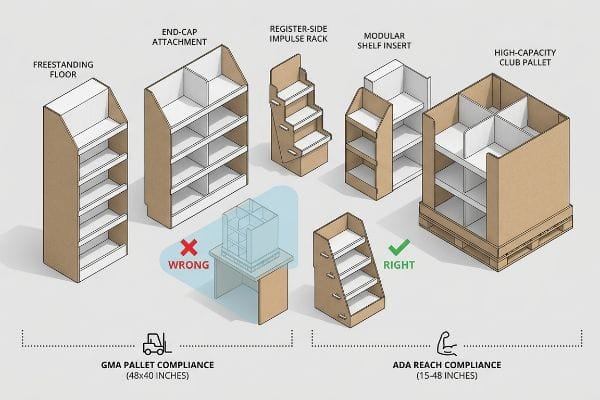
आप किसी बड़े क्लब स्टोर यूनिट को उठाकर उसे आधा छोटा करके फार्मेसी काउंटर पर फिट नहीं कर सकते।
व्यापारियों के विस्तार की कानूनी सीमाएँ
यह एक आम गलती है जो अनुभवी खरीद टीमों को भी फंसा लेती है: वे एक सुंदर, उच्च क्षमता वाला फ्लोर डिस्प्ले डिज़ाइन करते हैं और फिर अपने कारखाने को निर्देश देते हैं कि वेक्टर फ़ाइल को केवल 50% तक छोटा कर दें ताकि यह एक सेकेंडरी रजिस्टर यूनिट के रूप में काम कर सके। वे भौतिक रिटेल आर्किटेक्चर को एक आकार बदलने योग्य डिजिटल छवि की तरह मानते हैं, और एक बड़े स्टोर के विभिन्न ज़ोन 7 को नियंत्रित करने वाले सख्त कानूनी और स्थानिक अनुपालन नियमों की पूरी तरह से अनदेखी करते हैं।
जब आप किसी फ्लोर मॉडल को, तो अनजाने में उत्पाद का प्रदर्शन ग्राहक की स्वाभाविक दृष्टि रेखा से बाहर हो जाता है। मेरी सुविधा में, मैं इंजीनियरिंग प्रक्रियाओं को पूरी तरह से अलग रखता हूँ। फ्लोर यूनिट्स को GMA (ग्रोसरी मैन्युफैक्चरर्स एसोसिएशन) की 48×40 इंच( 121.9×101.6 सेमी) पैलेट सीमा के अनुसार ही रखा जाता है, जबकि चेकआउट POS यूनिट्स को ADA (अमेरिकन्स विद डिसेबिलिटीज एक्ट) के 15-48 इंच( 38.1-121.9 सेमी) फॉरवर्ड रीच कंप्लायंस विंडो के अनुसार ही रखा जाता है। मैंने एक बार एक ब्रांड को हजारों डॉलर के रिफंड का सामना करते देखा, क्योंकि एक स्टोर मैनेजर ने उनके छोटे फ्लोर बिन को तुरंत अस्वीकार कर दिया था, जो व्हीलचेयर के रास्ते को अवरुद्ध कर रहा था। इन प्रणालियों को अलग-अलग संरचनात्मक प्रक्रियाओं के रूप में मानकर, मैं लोडिंग डॉक पर सुचारू रूप से माल की प्राप्ति और बिक्री फ्लोर पर पूर्ण कानूनी अनुपालन सुनिश्चित करता हूँ।
| नौसिखियों की आम गलती | प्रो फिक्स | रिटेल-फ्लोर लाभ |
|---|---|---|
| फ्लोर फाइलों का आकार 50% तक कम करना | पीओएस और फ्लोर इंजीनियरिंग को अलग करना | बड़े पैमाने पर स्टोर चार्जबैक को रोकता है |
| व्हीलचेयर क्लीयरेंस की अनदेखी करना | के अनुसार एंकरिंग 15-48 इंच (38.1-121.9 सेमी) की पहुंच10 | कानूनी तौर पर सही जगह पर रखने की गारंटी देता है |
| पैलेट के आकार का अनुमान लगाना | लागू करना 48×40 इंच (121.9×101.6 सेमी) आधार11 | लोडिंग डॉक पर अस्वीकृतियों को समाप्त करता है |
मैं अपने इंजीनियरिंग तर्क को अलग रखता हूँ क्योंकि खुदरा परिवेश में स्थानिक अनुमान की गुंजाइश नहीं होती। अंतिम स्थान निर्धारण क्षेत्र के लिए स्पष्ट रूप से डिज़ाइन करने से आपका प्रारंभिक निवेश बाद में होने वाली अनुपालन संबंधी विफलताओं से सुरक्षित रहता है।.
🛠️ हार्वे का डेस्क: क्या आप सुनिश्चित नहीं हैं कि आपका छोटा डिस्प्ले ADA के सख्त फॉरवर्ड रीच लिमिट्स का उल्लंघन करता है? 👉 अपने डाइमेंशन्स की पुष्टि यहाँ करें ↗ — सुरक्षित रूप से डाउनलोड करें। बाद में कोई प्रश्न होने पर मेरा इनबॉक्स खुला है।
पीओएसएम डिस्प्ले के प्रकार क्या हैं?
बिक्री स्थल पर रखी जाने वाली सामग्रियां खरीदार की खरीदारी यात्रा को दृश्य रूप से बाधित करने के लिए होती हैं, लेकिन एक ही शेल्फ पर बहुत सारे उत्पादों को रखने से वह मनोवैज्ञानिक जुड़ाव पूरी तरह से नष्ट हो जाता है।.
पॉइंट ऑफ़ सेल मटेरियल्स (पीओएसएम) डिस्प्ले के प्रकारों में अस्थायी नालीदार डिब्बे, अर्ध-स्थायी धातु के रैक, ब्रांडेड शेल्फ टॉकर, मॉड्यूलर स्टैंडी और इंटरैक्टिव डंप बिन शामिल हैं। ये विविध मर्चेंडाइजिंग उपकरण खुदरा उत्पादों के समूहों को भौतिक रूप से व्यवस्थित करते हैं, और आकर्षक दृश्य डिजाइन का उपयोग करके निष्क्रिय ग्राहकों को तत्काल खरीदारी के लिए प्रेरित करते हैं।.
अपनी शेल्फ की क्षमता की सीमा को बढ़ाना स्प्रेडशीट पर तो कुशल प्रतीत हो सकता है, लेकिन यह उन क्लर्कों के लिए एक शारीरिक दुःस्वप्न बन जाता है जिन्हें इसे स्टॉक करने का काम सौंपा गया है।.
रिटेल पीओएसएम में अव्यवस्थित शेल्फ का जाल
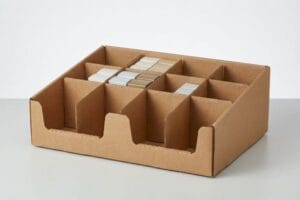
खरीद प्रबंधक अक्सर भारी बोतलों या बक्सों की घनी, पूरी तरह से सममित ग्रिड को एक ही नालीदार ट्रे पर ठूंसकर सामग्री पर अपना रिटर्न अधिकतम करने का प्रयास करते हैं। वे गलत धारणा रखते हैं कि बोर्ड के हर वर्ग इंच को भरने से बिक्री की मात्रा बढ़ जाती है, और वे वास्तविक स्टोर संचालन के दौरान उत्पन्न होने वाले यांत्रिक घर्षण को पूरी तरह से अनदेखा कर देते हैं ।
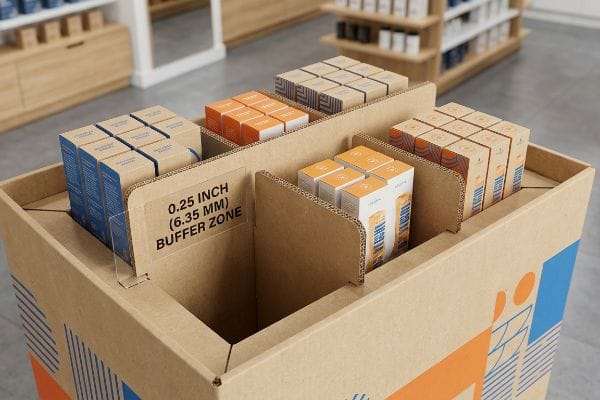
जब उत्पादों को संरचनात्मक रूप से पर्याप्त जगह दिए बिना बहुत कसकर पैक किया जाता है, तो पुनः स्टॉक करना एक विनाशकारी संघर्ष बन जाता है। मैंने खुद उस भयानक आवाज़ को सुनकर सिहरन महसूस की है जब एक जल्दबाज़ी में काम करने वाले रिटेल क्लर्क ने एक बड़े आकार की शैम्पू की बोतल को पूरी तरह से समतल रिटेनिंग लिप से जबरदस्ती अंदर धकेल दिया, जिससे बोतल का अगला कोना टूट गया। इसे रोकने के लिए, मैं मॉड्यूलर फ्लोटिंग डिवाइडर डिज़ाइन करके " 3-5-7 नियम 14 " लागू करता हूँ जो SKU (स्टॉक कीपिंग यूनिट) को विषम संख्या वाले समूहों में स्वाभाविक रूप से अलग करता है। यह सरल कार्डबोर्ड संरचना 0.25 इंच (6.35 मिमी) का भौतिक क्लीयरेंस ज़ोन प्रदान करती है, जिससे स्टोर में आक्रामक रूप से पुनः स्टॉक करते समय कार्डबोर्ड के फटने की समस्या पूरी तरह से समाप्त हो जाती है और दैनिक मर्चेंडाइजिंग समय में लगभग 20% की कमी आती है ।
| नौसिखियों की आम गलती | प्रो फिक्स | रिटेल-फ्लोर लाभ |
|---|---|---|
| सममित ग्रिड लेआउट को ठूंसना | असममित 3-5-7 नियम 16 को लागू करना | मनोवैज्ञानिक दृश्य तनाव उत्पन्न करता है |
| शेल्फ क्लीयरेंस गैप को हटाना | 0.25 इंच (6.35 मिमी) का बफर बनाना17 | कच्चे कागज को फटने से रोकता है |
| ढीले उत्पाद स्टैक पर निर्भर रहना | मॉड्यूलर फ्लोटिंग डिवाइडर का उपयोग करना | दैनिक स्टोर रीस्टॉकिंग प्रक्रिया को गति देता है |
मैं बोर्ड में सख्त भौतिक सीमाएँ बनाता हूँ क्योंकि मानव ऑपरेटर दबाव में जल्दबाजी करते हैं। डाइलाइन में संरचनात्मक क्लीयरेंस को अनिवार्य करने से गणितीय रूप से यह सुनिश्चित होता है कि आपके महंगे ग्राफिक्स पहले ही दिन फट न जाएँ।.
🛠️ हार्वे का डेस्क: क्या सुबह की जल्दबाजी में सामान भरते समय रिटेल क्लर्क आपकी फ्रंट ट्रे के किनारों को फाड़ देते हैं? 👉 मॉड्यूलर डिवाइडर रिव्यू का अनुरोध करें ↗ — कोई फॉर्म नहीं जो अंतहीन सेल्स कॉल को ट्रिगर करें। बस शुद्ध मूल्य।
डिस्प्ले के तीन प्रकार क्या हैं?
जैसे-जैसे ब्रांड अपनी भौतिक उपस्थिति का विस्तार करते हैं, वे स्वाभाविक रूप से अस्थायी, अर्ध-स्थायी और स्थायी खुदरा संरचनाओं के माध्यम से आगे बढ़ते हैं, जिनमें से प्रत्येक को यांत्रिक इंजीनियरिंग के एक पूरी तरह से अलग स्तर की आवश्यकता होती है।.
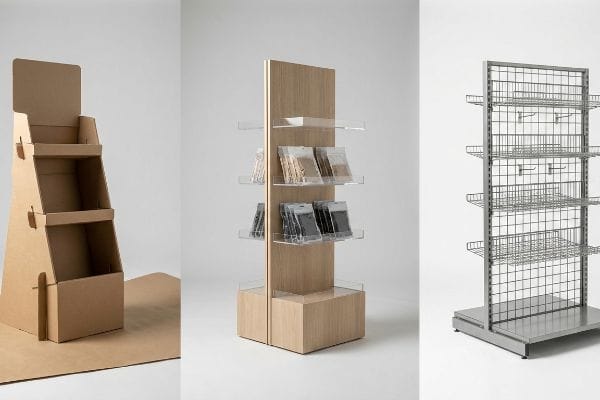
डिस्प्ले के तीन प्रकार हैं: अस्थायी नालीदार फ्लैट-पैक, प्लास्टिक या लकड़ी से बने अर्ध-स्थायी हाइब्रिड संरचनाएं, और मजबूत स्टील और तार से निर्मित स्थायी फिक्स्चर। सही जीवनकाल श्रेणी का चयन विशिष्ट लॉजिस्टिकल आपूर्ति श्रृंखलाओं और दैनिक उपभोक्ता घर्षण को सहन करने के लिए आवश्यक इंजीनियरिंग सहनशीलता को निर्धारित करता है।.
किसी अस्थायी बॉक्स से स्थायी संरचना में परिवर्तन करना एक साधारण भौतिक उन्नयन जैसा लगता है, लेकिन जब मशीनें चलना शुरू हो जाती हैं तो केवल सिद्धांत जानना पर्याप्त नहीं होता है।.
भारी-भरकम स्पिनर फर्श पर क्यों जम जाते हैं?
स्थायी गतिज डिस्प्ले की ओर अग्रसर होने वाले खरीदार अक्सर घूर्णनशील "लेज़ी सुसान" इकाइयों को पूरी तरह से उनके स्थिर नीचे की ओर संपीड़न मापदंडों के आधार पर अनुमोदित करते हैं। वे धातु के खंभे की सैद्धांतिक भार सीमा की जाँच करते हैं और मान लेते हैं कि यह भारी सामान को सुरक्षित रूप से संभाल सकता है, जबकि मानव द्वारा रैक को शारीरिक रूप से घुमाने पर उत्पन्न होने वाले आक्रामक यांत्रिक बल को अनदेखा कर देते हैं ।
मेरी सुविधा में, मैं अक्सर गतिशील तनाव परीक्षण के दौरान इन मानक स्थायी उपकरणों को विफल होते देखता हूँ। जब मैं एक मानक स्पिनर पर असमान भार डालता हूँ और घूर्णी बल को मापता हूँ, तो केंद्रीय पोल में स्थायी रूप से 0.14 इंच (3.5 मिमी) का ऊर्ध्वाधर अक्षीय झुकाव19।आंतरिक बॉल-बेयरिंग हार्डवेयर के जाम होने से धातु पर धातु के घर्षण की कर्कश, घिसने वाली ध्वनि मैं स्पष्ट रूप से सुन सकता हूँ, जिससे पूरा डिस्प्ले रिटेल फ्लोर पर ठप हो जाता है। स्टील हार्डवेयर के विशिष्ट गेज के अनुरूप चौड़े आधार का गणितीय रूप से निर्माण करके, मैं इस घूर्णी बल का प्रतिकार करता हूँ। यह सटीक संरचनात्मक एंकर सुनिश्चित करता है कि ऊर्ध्वाधर अक्ष पूरी तरह से सीधा रहे, जिससे ग्राहकों को टूटे हुए काइनेटिक मर्चेंडाइज़र के कारण होने वाली 100% खुदरा अस्वीकृति दर20।
| नौसिखियों की आम गलती | प्रो फिक्स | रिटेल-फ्लोर लाभ |
|---|---|---|
| केवल स्थिर भार सीमाओं की गणना करना | घूर्णी टॉर्क भौतिकी का गुणनखंडन | केंद्रीय ध्रुव अक्ष के झुकाव को रोकता है21 |
| संकीर्ण स्टॉक बेस प्लेटों का उपयोग करना | एक चौड़े आधार पदचिह्न का निर्माण | आक्रामक गतिज अपरूपण बल को अवशोषित करता है22 |
| लोड वितरण ज्यामिति को अनदेखा करना | हार्डवेयर गेज से सटीक रूप से मिलान करना | धातु के बॉल बियरिंग को जाम होने से रोकता है23 |
मैं घूर्णी भौतिकी का परीक्षण करता हूँ क्योंकि एक स्थायी संरचना जो घूमने से इनकार करती है, वह केवल एक महँगी बाधा है। मानव बल को अवशोषित करने के लिए आधार का निर्माण करना ही गलियारों में दीर्घकालिक प्रभुत्व सुनिश्चित करने का एकमात्र तरीका है।.
🛠️ हार्वे का डेस्क: क्या आपका मौजूदा स्पिनिंग मर्चेंडाइज़र पूरी तरह से सामान से भर जाने पर लड़खड़ाता और आवाज़ करता है? 👉 मुझे अपनी डाइलाइन फ़ाइल भेजें ↗ — बड़े पैमाने पर उत्पादन पर बजट बर्बाद करने से पहले मैं गणितीय गणना की गहन जाँच करूँगा।
निष्कर्ष
आप अपने स्थायी उपकरणों के लिए सस्ता विक्रेता चुन सकते हैं, लेकिन जब भारी घूर्णी बल के कारण केंद्रीय खंभा अपनी ऊर्ध्वाधर धुरी में बुरी तरह झुक जाता है, जिससे खुदरा विक्रेता तुरंत उत्पाद को अस्वीकार कर देता है और हफ्तों तक महंगा मैन्युअल सुधार करना पड़ता है, तो शुरुआती बचत पूरी तरह से बेकार हो जाती है। 500 से अधिक ब्रांड प्रबंधक इन घातक शुरुआती गलतियों से बचने के लिए मेरी प्रीप्रेस चेकलिस्ट का उपयोग करते हैं। संरचनात्मक भौतिकी के बारे में अनुमान लगाना बंद करें और मुझे व्यक्तिगत रूप से अपनी फ़ाइलों को मेरे मुफ़्त डाइलाइन ऑडिट ↗ ताकि बड़े पैमाने पर उत्पादन को मंजूरी देने से पहले घातक यांत्रिक त्रुटियों का पता लगाया जा सके।
"पीडीक्यू पैकेजिंग क्या है और इसका उपयोग किस लिए किया जाता है?", https://www.gprinting.com/blog/what-is-pdq-packaging-and-what-is-it-used-for। पीडीक्यू रिटेल ट्रे के लिए उद्योग-मानक परिभाषा का सत्यापन। साक्ष्य की भूमिका: परिभाषात्मक; स्रोत प्रकार: उद्योग शब्दावली। समर्थन: संक्षिप्त नाम का अर्थ। स्कोप नोट: विभिन्न लॉजिस्टिक्स क्षेत्रों में शब्दावली भिन्न हो सकती है। ↩
"ड्राईवॉल पर भारी सामान कैसे लटकाएं", https://www.youtube.com/watch?v=T_k4WtidlY4। काउंटरटॉप डिस्प्ले में पीछे से एंकरिंग करने से सामान के गिरने से कैसे बचा जा सकता है, इसका तकनीकी विवरण। साक्ष्य की भूमिका: तकनीकी सत्यापन; स्रोत प्रकार: संरचनात्मक अभियांत्रिकी मार्गदर्शिका। समर्थन: सममित बक्सों में भौतिक संतुलन बिगड़ने के दावे का। कार्यक्षेत्र संबंधी टिप्पणी: केवल कार्डबोर्ड और हल्के खुदरा सामानों के लिए। ↩
"अस्थायी डिस्प्ले में स्थिरता और संरचनात्मक समर्थन सुनिश्चित करें", https://www.ud-direct.com/blog/tips-and-tricks-to-ensure-stability-and-structure-support-in-temporary-displays। यह एक इंजीनियरिंग मानक या भौतिकी-आधारित दिशानिर्देश प्रदान करता है जो पुष्टि करता है कि एक विशिष्ट गहराई-से-ऊंचाई अनुपात गुरुत्वाकर्षण केंद्र के विस्थापन और पलटने से रोकता है। साक्ष्य भूमिका: तकनीकी सत्यापन; स्रोत प्रकार: इंजीनियरिंग गाइड या खुदरा डिजाइन मैनुअल। समर्थन: स्थिरता के लिए 2:3 अनुपात। कार्यक्षेत्र नोट: छोटे पैमाने के खुदरा काउंटर इकाइयों के लिए विशिष्ट। ↩
"ईज़ल बैक पॉप काउंटरटॉप डिस्प्ले – एक्सिओम प्रिंट", https://axiomprint.com/product/easel-back-pop-countertop-display-969?srsltid=AfmBOopJc-aLYnfROvymexsnNo5K0npTOOScZL5Ihl4mFGrlOOpBLw5A। खुदरा डिस्प्ले के लिए संरचनात्मक डिज़ाइन सिद्धांतों का सत्यापन, जिसमें दिखाया गया है कि ईज़ल बैक आगे की ओर झुकने से कैसे बचाते हैं। साक्ष्य की भूमिका: तकनीकी सत्यापन; स्रोत प्रकार: औद्योगिक डिज़ाइन गाइड। समर्थन: स्थिरता पर ईज़ल बैक का प्रभाव। कार्यक्षेत्र संबंधी टिप्पणी: हल्के काउंटरटॉप यूनिटों के लिए विशिष्ट। ↩
"रिटेल शेल्फ की औसत ऊंचाई क्या है? – पॉपडिस्प्ले", https://popdisplay.me/what-is-the-average-retail-shelf-height/। स्वतंत्र रूप से खड़े रिटेल डिस्प्ले में पलटने से रोकने के लिए अनुशंसित विशिष्ट ज्यामितीय अनुपात का सत्यापन। साक्ष्य भूमिका: तकनीकी विनिर्देश; स्रोत प्रकार: इंजीनियरिंग मैनुअल। समर्थन: रिटेल फिक्स्चर के लिए स्थिरता मेट्रिक्स। कार्यक्षेत्र नोट: काउंटरटॉप डिस्प्ले के लिए सामान्य अनुमानी विधि। ↩
"सेंटर ऑफ़ ग्रेविटी केस स्टडी: स्थिरता और सुरक्षा के लिए परीक्षण पर प्रकाश", https://www.interfaceforce.com/center-of-gravity-case-study-highlights-testing-for-stability-and-safety/। तकनीकी पुष्टि कि डिस्प्ले के आधार पर भार जोड़ने से गुरुत्वाकर्षण केंद्र नीचे आ जाता है और डिस्प्ले के पलटने से रोकता है। साक्ष्य की भूमिका: भौतिक सिद्धांत का सत्यापन; स्रोत प्रकार: उत्पाद डिज़ाइन पाठ्यपुस्तक। समर्थन: अधिक आवागमन वाले क्षेत्रों में भारित तलों की प्रभावशीलता। कार्यक्षेत्र संबंधी टिप्पणी: स्वतंत्र रूप से रखे जाने वाले पॉइंट-ऑफ-परचेज़ यूनिटों पर लागू होता है। ↩
"ADA अभिगम्यता मानक – Access-Board.gov", https://www.access-board.gov/ada/। एक आधिकारिक स्रोत ADA अभिगम्यता आवश्यकताओं और अग्नि सुरक्षा संहिता का विस्तृत विवरण प्रदान करेगा जो खुदरा दुकानों के स्थान और आकार को निर्धारित करते हैं। साक्ष्य की भूमिका: नियामकीय बाधाओं का सत्यापन; स्रोत का प्रकार: कानूनी/नियामक दिशानिर्देश। समर्थन: खुदरा क्षेत्रों के लिए अनिवार्य स्थानिक नियमों का अस्तित्व। कार्यक्षेत्र संबंधी टिप्पणी: नियम स्थानीय क्षेत्राधिकार के अनुसार भिन्न हो सकते हैं। ↩
"हीट ट्रीटेड वुड जीएमए पैलेट – 48 x 40" H-1260 – यूलाइन", https://www.uline.com/Product/Detail/H-1260/Pallets/Heat-Treated-Wood-GMA-Pallet-48-x-40। ग्रोसरी मैन्युफैक्चरर्स एसोसिएशन पैलेट्स के लिए उद्योग मानक आयामों की पुष्टि। साक्ष्य भूमिका: तकनीकी विनिर्देश; स्रोत प्रकार: उद्योग मानक। समर्थन: फर्श इकाइयों के लिए आयामी बाधाएं। कार्यक्षेत्र नोट: उत्तरी अमेरिकी लॉजिस्टिक्स मानक। ↩
"अध्याय 3: संचालन योग्य भाग – Access-Board.gov", https://www.access-board.gov/ada/guides/chapter-3-operable-parts/। अमेरिकियों के विकलांगता अधिनियम के तहत कानूनी पहुंच सीमा आवश्यकताओं का सत्यापन। साक्ष्य की भूमिका: कानूनी आवश्यकता; स्रोत प्रकार: सरकारी विनियमन। सहायक: चेकआउट इकाइयों के लिए अभिगम्यता अनुपालन। कार्यक्षेत्र संबंधी टिप्पणी: अबाधित आगे की पहुंच पर लागू होता है। ↩
"ADA सुलभ डिज़ाइन के लिए मानक शीर्षक III विनियमन 28 CFR …", https://www.ada.gov/law-and-regs/design-standards/1991-design-standards/। सुलभता के लिए अनुमेय पहुँच सीमा के संबंध में अमेरिकियों के विकलांगता अधिनियम (ADA) मानकों का सत्यापन। साक्ष्य की भूमिका: नियामक अनुपालन; स्रोत प्रकार: सरकारी विनियमन। समर्थन: व्हीलचेयर पहुँच के लिए कानूनी आवश्यकताएँ। कार्यक्षेत्र संबंधी टिप्पणी: अमेरिका स्थित खुदरा वातावरणों पर लागू होता है। ↩
"48×40" जीएमए पैलेट्स | सबसे बड़ा पैलेट निर्माता और आपूर्तिकर्ता", https://www.palletone.com/products/gma-pallets/। उत्तरी अमेरिकी लॉजिस्टिक्स में उपयोग किए जाने वाले ग्रोसरी मैन्युफैक्चरर्स एसोसिएशन (जीएमए) के मानक पैलेट आयामों की पुष्टि। साक्ष्य भूमिका: उद्योग मानक; स्रोत प्रकार: व्यापार संघ दिशानिर्देश। समर्थन: पैलेट फुटप्रिंट विनिर्देश। कार्यक्षेत्र नोट: उत्तरी अमेरिकी खुदरा लॉजिस्टिक्स के लिए मानक। ↩
"[PDF] उत्पाद घनत्व का कथित मूल्य और गुणवत्ता पर प्रभाव", https://aquila.usm.edu/cgi/viewcontent.cgi?article=1258&context=honors_theses। उपभोक्ता मनोविज्ञान और खुदरा विश्लेषण यह कैसे सिद्ध करते हैं कि अलमारियों पर अत्यधिक सामान रखने से बिक्री में कमी आ सकती है, इसका स्पष्टीकरण। साक्ष्य की भूमिका: प्रति-साक्ष्य; स्रोत प्रकार: खुदरा मनोविज्ञान अध्ययन। समर्थन: उच्च-घनत्व वाले मर्चेंडाइजिंग की भ्रांति। विषयवस्तु संबंधी टिप्पणी: विकल्पों की अधिकता के बारे में उपभोक्ता की धारणा पर केंद्रित। ↩
"खुदरा व्यापार का महत्व: अधिकतम लाभ – टी-आरओसी", https://trocglobal.com/retail-merchandising/। उत्पाद विन्यासों की सघनता से पुनः स्टॉक करने का समय और उत्पादों के आकस्मिक विस्थापन में वृद्धि का तकनीकी विश्लेषण। साक्ष्य की भूमिका: परिचालन प्रमाण; स्रोत प्रकार: खुदरा लॉजिस्टिक्स गाइड। समर्थन: सघन उत्पाद ग्रिड की अक्षमता। कार्यक्षेत्र संबंधी टिप्पणी: विशेष रूप से भौतिक अंतःक्रिया को संदर्भित करता है। ↩
"कस्टम रिटेल डिस्प्ले के साथ अलग दिखें - पॉपडिस्प्ले", https://popdisplay.me/standout-with-custom-retail-display/। SKU क्लस्टरिंग और संरचनात्मक संगठन के लिए एक मान्यता प्राप्त रिटेल मर्चेंडाइजिंग मानक के रूप में 3-5-7 नियम का सत्यापन। साक्ष्य भूमिका: तकनीकी सत्यापन; स्रोत प्रकार: उद्योग मैनुअल या रिटेल इंजीनियरिंग गाइड। समर्थन: POSM आर्किटेक्चर में विषम-संख्या वाले क्लस्टरों का अनुप्रयोग। स्कोप नोट: नालीदार कार्डबोर्ड डिस्प्ले के लिए विशिष्ट हो सकता है। ↩
"पॉइंट-ऑफ-परचेज़ (पीओपी) डिस्प्ले: वे कैसे काम करते हैं और खुदरा बिक्री पर उनका प्रभाव...", https://www.optisigns.com/post/point-of-purchase-pop-display-how-they-work-their-retail-impact। बेहतर डिस्प्ले क्लीयरेंस और आर्किटेक्चर के परिणामस्वरूप खुदरा रीस्टॉकिंग में समय की मात्रात्मक बचत के प्रमाण। प्रमाण की भूमिका: मीट्रिक सत्यापन; स्रोत प्रकार: परिचालन केस स्टडी या खुदरा दक्षता रिपोर्ट। समर्थन: श्रम समय में 20% की कमी का दावा। स्कोप नोट: परिणाम उत्पाद श्रेणी और स्टोर के आकार के अनुसार भिन्न हो सकते हैं। ↩
"विज़ुअल मर्चेंडाइजिंग सर्विसेज़ और रणनीति | टी-आरओसी ग्लोबल", https://trocglobal.com/visual-merchandising/। आधिकारिक विज़ुअल मर्चेंडाइजिंग दिशानिर्देश, विज़ुअल तनाव और रुचि पैदा करने के लिए उत्पादों को समूहित करने के 3-5-7 नियम की व्याख्या करते हैं। साक्ष्य की भूमिका: तकनीकी सत्यापन; स्रोत प्रकार: उद्योग पुस्तिका। समर्थन: पीओएसएम में असममित समूहीकरण की प्रभावशीलता। कार्यक्षेत्र संबंधी टिप्पणी: खुदरा क्षेत्र में दृश्य मनोविज्ञान पर लागू होता है। ↩
"कार्डबोर्ड टियर ऑफ डिस्प्ले बॉक्स | वन स्टॉप डिस्प्ले सॉल्यूशन", https://www.holidaypacfactory.com/cardboard-tear-off-display-box-one-stop-display-solution/। नालीदार पेपरबोर्ड डिस्प्ले के लिए विनिर्माण विनिर्देश सामग्री घर्षण और संरचनात्मक टूटन को रोकने के लिए न्यूनतम क्लीयरेंस बफर को परिभाषित करते हैं। साक्ष्य भूमिका: तकनीकी विनिर्देश; स्रोत प्रकार: विनिर्माण मानक। समर्थित: 0.25 इंच बफर मीट्रिक। कार्यक्षेत्र नोट: कच्चे पेपरबोर्ड सामग्रियों के लिए विशिष्ट। ↩
"डायनामिक बनाम स्टैटिक टॉर्क 101 – इंटरफ़ेस", https://www.interfaceforce.com/dynamic-versus-static-torque-101/। यह यांत्रिक इंजीनियरिंग संसाधन बताता है कि कैसे डायनामिक टॉर्क और अपकेंद्री बल, स्टैटिक अक्षीय संपीड़न से अलग तनाव उत्पन्न करते हैं। साक्ष्य की भूमिका: तकनीकी सत्यापन; स्रोत प्रकार: इंजीनियरिंग पाठ्यपुस्तक। समर्थन: यह दावा कि घूर्णी बल, स्टैटिक भार संबंधी विचारों से अधिक है। कार्यक्षेत्र संबंधी टिप्पणी: विशेष रूप से गतिज खुदरा संरचनाओं पर लागू होता है। ↩
"हाइपरजायंट रिटेल डिस्प्ले स्टैंड 7 टियर रोटेटिंग रैक फॉर स्टोर ...", https://us.shein.com/Hypergiant-Retail-Display-Stand-7-Tier-Rotating-Rack-For-Store-Display-Shelves,-Keyring-Socking-Hats,Movable-Shop-Spinner-For-Toys-Show-,Black,Adjustable-Height-p-390878629.html। गतिशील तनाव के तहत रिटेल स्पिनर फिक्स्चर में विशिष्ट विरूपण मापों को मान्य करने वाला तकनीकी इंजीनियरिंग डेटा या केस स्टडी। साक्ष्य की भूमिका: तकनीकी विनिर्देश का सत्यापन; स्रोत प्रकार: इंजीनियरिंग परीक्षण रिपोर्ट। समर्थन: संरचनात्मक विफलता का सटीक माप। कार्यक्षेत्र नोट: मानक स्टील स्थायी फिक्स्चर के लिए विशिष्ट। ↩
"पॉइंट ऑफ़ परचेज़ डिस्प्ले असेंबली की लागत कितनी है?", https://www.industrialpackaging.com/blog/point-of-purchase-display-cost। उद्योग मानक या गुणवत्ता आश्वासन प्रोटोकॉल जो यांत्रिक रूप से दोषपूर्ण मर्चेंडाइजिंग इकाइयों के लिए खुदरा विक्रेता अस्वीकृति सीमा का विवरण देते हैं। साक्ष्य की भूमिका: तथ्यात्मक दावे का समर्थन; स्रोत प्रकार: उद्योग मानक/लॉजिस्टिक्स रिपोर्ट। समर्थन: अत्यधिक अस्वीकृति दरों से संबंधित दावे का। कार्यक्षेत्र संबंधी टिप्पणी: खुदरा विक्रेता अनुबंध की शर्तों के आधार पर भिन्न हो सकता है। ↩
"प्रदर्शन वीडियो", https://oertx.highered.texas.gov/courseware/lesson/3869/student-old/। यह तकनीकी व्याख्या दर्शाती है कि घूर्णी टॉर्क को ध्यान में रखते हुए, घूर्णनशील डिस्प्ले की केंद्रीय धुरी को भार के कारण झुकने से कैसे रोका जा सकता है। साक्ष्य की भूमिका: तकनीकी सत्यापन; स्रोत प्रकार: यांत्रिक अभियांत्रिकी पुस्तिका। समर्थन: टॉर्क भौतिकी और संरचनात्मक स्थिरता के बीच संबंध। कार्यक्षेत्र संबंधी टिप्पणी: विशेष रूप से भारी-भरकम घूर्णनशील खुदरा उपकरणों पर लागू होता है। ↩
"[PDF] संरचनाओं के लचीलेपन, अस्थिरता और विफलता के लिए गतिज तापमान ...", https://dspace.mit.edu/bitstream/handle/1721.1/150310/Keremidis_keremidi_SCD_CEE_2022.pdf?sequence=1&isAllowed=y। इंजीनियरिंग डेटा यह बताता है कि आधार के आकार को बढ़ाने से पार्श्व गतिज अपरूपण बलों का वितरण और अवशोषण कैसे होता है, जिससे पलटने से बचाव होता है। साक्ष्य की भूमिका: यांत्रिक प्रमाण; स्रोत प्रकार: संरचनात्मक इंजीनियरिंग मार्गदर्शिका। समर्थन: भारी डिस्प्ले के लिए चौड़ी आधार प्लेटों की आवश्यकता। कार्यक्षेत्र संबंधी टिप्पणी: फर्श पर खड़ी खुदरा संरचनाओं पर केंद्रित। ↩
"ज्यामितीय संरचना को ध्यान में रखते हुए विभिन्न भार वितरण का प्रभाव...", https://pmc.ncbi.nlm.nih.gov/articles/PMC11053054/। यह विश्लेषण कि कैसे भार वितरण ज्यामिति को हार्डवेयर गेज से मिलाने से बॉल-बेयरिंग सिस्टम में यांत्रिक जाम या लॉकिंग को रोका जा सकता है। साक्ष्य की भूमिका: तकनीकी सत्यापन; स्रोत प्रकार: औद्योगिक हार्डवेयर विनिर्देश। समर्थन: भार मानचित्रण और बेयरिंग कार्यक्षमता के बीच सहसंबंध। कार्यक्षेत्र संबंधी टिप्पणी: उच्च भार वाले घूर्णनशील हार्डवेयर के लिए विशिष्ट। ↩