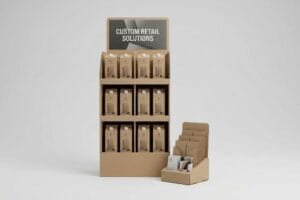
रिटेल स्टोर की अलमारियां युद्धक्षेत्र हैं, और प्रतिष्ठित ब्रांडों को सस्ता दिखने का जोखिम नहीं उठाना चाहिए। घटिया क्वालिटी का कार्डबोर्ड तुरंत ही ब्रांड की प्रतिष्ठा को धूमिल कर देता है, जिससे यह साबित होता है कि संरचनात्मक इंजीनियरिंग उतनी ही महत्वपूर्ण है जितनी कि दृश्य डिजाइन।.
जी हां। प्रीमियम पीओपी डिस्प्ले उच्च घनत्व वाली माइक्रो-फ्लूटेड संरचनाओं, दरार-रहित लेमिनेशन फिल्मों और डायरेक्ट-टू-बोर्ड यूवी पॉलीमराइजेशन का उपयोग करके प्रतिष्ठित ब्रांडों को समर्थन प्रदान करते हैं। ये उन्नत तकनीकें शानदार दृश्य प्रभाव प्रदान करती हैं, साथ ही महंगे स्थायी डिस्प्ले की तुलना में फ्लैट-पैक लॉजिस्टिक्स के भारी शिपिंग लाभ को भी बरकरार रखती हैं।.
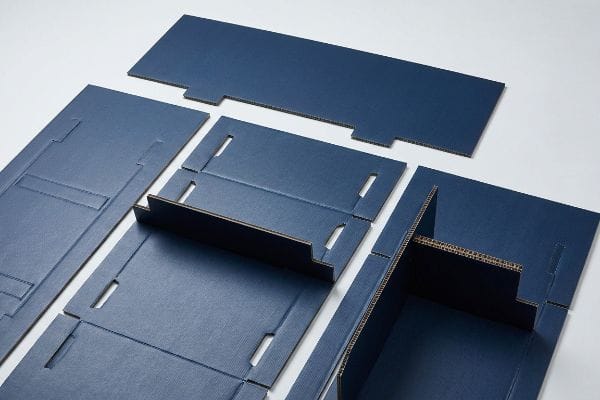
सदियों पुरानी ब्रांड प्रतिष्ठा और आधुनिक खुदरा आपूर्ति श्रृंखलाओं के बीच की खाई को पाटने के लिए गंभीर संरचनात्मक इंजीनियरिंग की आवश्यकता होती है, न कि केवल एक सामान्य बॉक्स पर छपी सुंदर कलाकृति की।.
पीओपी डिस्प्ले के क्या नुकसान हैं?
खराब ढंग से निर्मित डिस्प्ले मार्केटिंग के लिए आकर्षक दिखने के बावजूद एक बोझ बन जाता है। इसकी मुख्य खामी तब सामने आती है जब खरीद प्रक्रिया में संरचनात्मक भौतिकी से सौंदर्यशास्त्र को अलग कर दिया जाता है।.
पीओपी डिस्प्ले की मुख्य कमियां तब सामने आती हैं जब खरीददार टीमें दिखावटी फिनिशिंग के लिए मूल संरचनात्मक मजबूती से समझौता कर लेती हैं। महंगी लेमिनेशन के लिए धन जुटाने के लिए सामग्री के घनत्व को कम करने से समुद्री परिवहन के दौरान निचले स्तर पर गंभीर संपीड़न विफलताएं होती हैं, जिसके परिणामस्वरूप खुदरा विक्रेताओं को भारी जुर्माना भरना पड़ता है।.
अस्थायी व्यापारियों की कथित नाजुकता पूरी तरह से गलत बी2बी बजट संबंधी खामियों के कारण उत्पन्न हुई है।.
"कॉस्मेटिक डाउनग्रेड" कम्प्रेशन ट्रैप
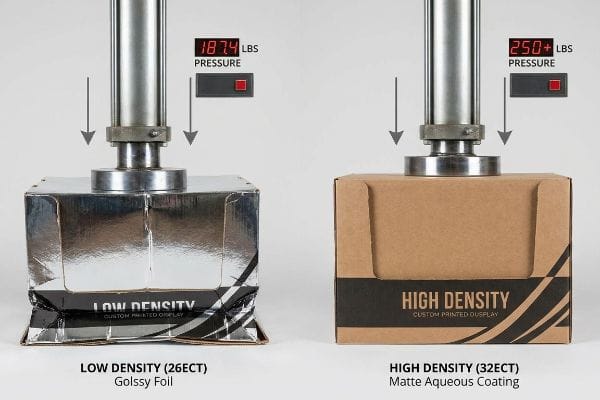
ग्राहकों के डाईलाइन का ऑडिट करते समय, मुझे अक्सर लागत में कटौती के दुष्परिणाम देखने को मिलते हैं। खरीदार एक शानदार, पारंपरिक लुक चाहते हैं, जिसके लिए वे महंगी, पूरी तरह से कवर की गई फ़ॉइल लेमिनेशन की मांग करते हैं। इस दिखावटी खर्च को संतुलित करने के लिए, वे चुपके से अंतर्निहित सब्सट्रेट को मजबूत 32ECT (एज क्रश टेस्ट) बोर्ड से घटाकर कमजोर 26ECT ग्रेड 1 में बदल देते हैं । वे मानते हैं कि चमकदार सतह खोखले कोर की कमी को पूरा कर देगी, जबकि वे बहुस्तरीय भंडारण की कठोर गतिज भौतिकी को अनदेखा कर देते हैं।
यह सिर्फ़ सिद्धांत नहीं है—मैंने परीक्षण के दौरान खुद देखा है कि जब सैद्धांतिक एक्सेल बजट भौतिक वास्तविकता से टकराते हैं। हाल ही में, मैंने अपनी सुविधा में एक प्रीमियम कॉस्मेटिक्स ट्रे का मूल्यांकन किया , जिसमें खरीदार ने हॉट-स्टैम्प्ड फ़ॉइल लगाने के लिए आंतरिक खांचे की सघनता को कम कर दिया था। हाइड्रोलिक कम्प्रेशन प्रेस के तहत, वह कठोर फ़ॉइल ठीक 187.4 पाउंड (85.0 किलोग्राम) के शीर्ष-भार दबाव पर मुड़ गई क्योंकि कोर सेल्युलोज में वजन को वितरित करने के लिए यांत्रिक आर्क शक्ति की कमी थी। मैंने फ़ॉइल को पूरी तरह से हटा दिया और एक नया 32ECT सबस्ट्रेट 2 तैयार किया जिस पर उच्च-ठोस चमक वाली जलीय फ़िनिश 3 की कोटिंग की गई थी । कोंग्सबर्ग सीएनसी (कंप्यूटर न्यूमेरिकल कंट्रोल) टेबल ने साबित किया कि यह मोटा, एकीकृत बोर्ड भारी भार के तहत भी पूरी तरह से वर्गाकार बना रहता है। सामग्री की गतिशील संरचनात्मक अखंडता को बहाल करके, मैंने 8.4% परिवहन विफलता दर को समाप्त कर दिया, जिससे खुदरा विक्रेता का चार्जबैक जोखिम पूरी तरह से खत्म हो गया और साथ ही लक्जरी सौंदर्य भी बरकरार रहा।
| मीट्रिक/विशेषता | सामान्य खरीद | इंजीनियर्ड रियलिटी |
|---|---|---|
| बोर्ड घनत्व | 26ECT को डाउनग्रेड किया गया4 | वर्जिन 32ईसीटी5 |
| सौंदर्यपूर्ण फिनिश | महंगी पन्नी फिल्म | ग्लॉस एक्वस कोटिंग6 |
| माल ढुलाई उत्तरजीविता | उच्च संपीड़न जोखिम | शून्य-क्षति सत्यापन |
मैं दिखावटी सुधारों के लिए संरचनात्मक भार वहन क्षमता से समझौता करने से इनकार करता हूँ। अपने प्रतिष्ठित ब्रांड की रक्षा के लिए एक ऐसा मर्चेंडाइज़र तैयार करना आवश्यक है जो कठिन लॉजिस्टिक्स प्रक्रियाओं को झेल सके, न कि केवल एक ऐसा जो बोर्डरूम में सुंदर दिखे।.
🛠️ हार्वे का डेस्क: क्या आपके भारी चेकआउट ट्रे स्टोर तक पहुंचने से पहले ही आपके शिपिंग ROI को बुरी तरह प्रभावित कर रहे हैं? 👉 मुफ़्त फ्रेट डेंसिटी ऑडिट करवाएं ↗ — मैं 24 घंटों के भीतर हर स्ट्रक्चरल फ़ाइल की व्यक्तिगत रूप से समीक्षा करता हूं।
आमतौर पर पीओपी डिस्प्ले कौन उपलब्ध कराता है?
विक्रेता ढूंढना समस्या नहीं है; समस्या एक एकीकृत विनिर्माण भागीदार है। खंडित आपूर्ति श्रृंखलाएं खुदरा बिक्री में उत्पादों की बिक्री को ठेस पहुंचाने वाली सबसे बड़ी बाधा हैं।
टर्नकी विनिर्माण भागीदार आमतौर पर पीओपी डिस्प्ले प्रदान करते हैं, जो सीएडी (कंप्यूटर-एडेड डिज़ाइन) इंजीनियरिंग से लेकर अंतिम असेंबली तक पूरी प्रक्रिया को नियंत्रित करते हैं। इसके विपरीत, टोलिंग को-पैकर केवल अलग-अलग विक्रेताओं से प्राप्त विभिन्न घटकों को असेंबल करते हैं, जिससे टॉलरेंस में विसंगति के कारण स्वचालित मशीनरी में रुकावट आने पर गंभीर परिचालन संबंधी समस्याएं उत्पन्न होती हैं।.
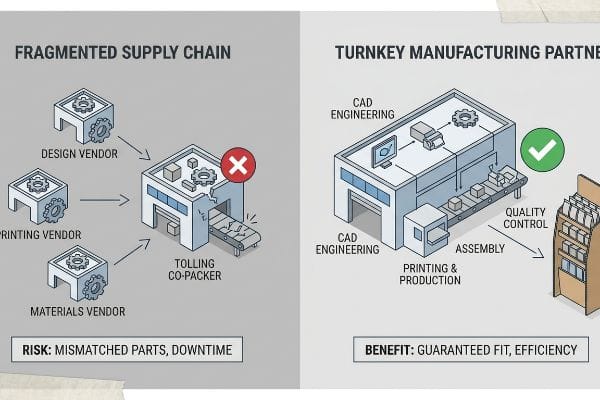
विभिन्न विशिष्ट आपूर्तिकर्ताओं पर निर्भर रहने से छोटी-मोटी गलतियाँ अनिवार्य रूप से बड़े पैमाने पर परियोजना विलंब में बदल जाती हैं।.
टोलिंग देयता का विखंडन जाल
मैं नियमित रूप से उन आपूर्ति श्रृंखलाओं का ऑडिट करता हूँ जहाँ प्रतिष्ठित ब्रांड टुकड़ों में खरीद करके प्रति यूनिट लागत को कृत्रिम रूप से कम करने का प्रयास करते हैं। वे एक वाणिज्यिक प्रिंटर से मुद्रित टॉप-शीट, स्थानीय मिल से कच्ची नालीदार गत्ते की पट्टियाँ खरीदते हैं और इन सबको असेंबली के लिए किसी तीसरे पक्ष के टोलिंग को-पैकर को भेज देते हैं। यह टोलिंग मॉडल दायित्व को पूरी तरह से अलग कर देता है; किसी भी विक्रेता के पास असेंबल की गई यूनिट की अंतिम ज्यामितीय सहनशीलता7 , जिससे पुर्जों के आपस में न जुड़ने की स्थिति में ब्रांड पूरी तरह से असुरक्षित हो जाता है।
बीस वर्षों के कार्य अनुभव ने मुझे सिखाया कि किस प्रकार यह विखंडन समय-सीमा को बाधित करता है। एक ग्राहक मेरे पास एक असफल परियोजना लेकर आया, जहाँ उनके अलग डाई-कटर ने बी-फ्लूट बोर्ड की भौतिक मोटाई (लगभग 0.12 इंच (3.04 मिमी) मोटी)नहींरखा था। जब उनके स्वतंत्र सह-पैकर ने स्लॉट मोड़ने का प्रयास किया, तो कठोर कागज के रेशे तेजी से फट गए, जिससे मशीनरी में भयंकर जाम लग गया और 45 मिनट का भारी डाउनटाइम हो गया। मैंने तुरंत अपनी सुविधा में एक संपूर्ण समेकन प्रोटोकॉल लागू किया। रासायनिक पीवीए (पॉलीविनाइल एसीटेट) गोंद लेमिनेशन,स्वचालित स्ट्रिपिंग मैट्रिक्स और भौतिक पैकिंग को एक ही छत के नीचे लाकर, मैंने नमी की मात्रा और मोड़ने की सीमा को सटीक रूप से नियंत्रित किया। इस निर्बाध सामग्री एकीकरण से उनकी सह-पैकिंग असेंबली का समय प्रति यूनिट लगभग 32 सेकंड कम हो गया, जिससे उनके मौसमी लॉन्च को और उनके लाभ मार्जिन को संरक्षित किया जा सका।
| सोर्सिंग मॉडल | सहनशीलता देयता | आपूर्ति श्रृंखला पर प्रभाव |
|---|---|---|
| टोलिंग असेंबली | ब्रांड को जोखिम उठाना पड़ता है | मशीनरी का उच्च डाउनटाइम10 |
| अलग-अलग विक्रेता | बेमेल कैलिपर्स11 | फटे हुए बोर्ड के रेशे12 |
| टर्नकी पार्टनर | फ़ैक्टरी द्वारा फिट होने की गारंटी | घर्षण रहित सह-पैकिंग |
मैं संपूर्ण इंजीनियरिंग और विनिर्माण प्रणाली को एक ही छत के नीचे समेकित करता हूँ। यदि उत्पादन उत्पादन में ज्यामितीय त्रुटि आती है, तो उसे ठीक करना मेरी ज़िम्मेदारी है, आपको उसका भुगतान नहीं करना पड़ेगा।.
🛠️ हार्वे का डेस्क: क्या आपकी खंडित आपूर्ति श्रृंखला अप्रत्याशित सह-पैकर डाउनटाइम जुर्माने के कारण गुपचुप तरीके से मार्जिन को नुकसान पहुंचा रही है? 👉 एक संपूर्ण समेकन समीक्षा का अनुरोध करें ↗ — 100% गोपनीय। आपके अप्रकाशित खुदरा डिज़ाइन मेरे पास सुरक्षित हैं।
पीओएस और पीओपी डिस्प्ले में क्या अंतर है?
खुदरा विक्रेता मानव एर्गोनॉमिक्स और वेयरहाउस लॉजिस्टिक्स के आधार पर सख्त ज़ोनिंग कानूनों को लागू करते हैं। इन सीमाओं का उल्लंघन करने पर स्टोर स्तर पर तत्काल अस्वीकृति हो जाती है।.
पीओएस और पीओपी डिस्प्ले के बीच मुख्य अंतर स्थान संबंधी सख्त सीमाओं में निहित है। पीओएस (प्वाइंट ऑफ सेल) यूनिट्स को रजिस्टरों के पास 15-48 इंच (38.1-121.9 सेमी) की आगे की पहुंच के लिए एडीए के कड़े नियमों का पालन करना होता है। वहीं, पीओपी (प्वाइंट ऑफ परचेस) फ्लोर मर्चेंडाइजर 48×40 इंच (121.9×101.6 सेमी) के पैलेट लॉजिस्टिक्स के लिए सख्ती से निर्धारित होते हैं।.
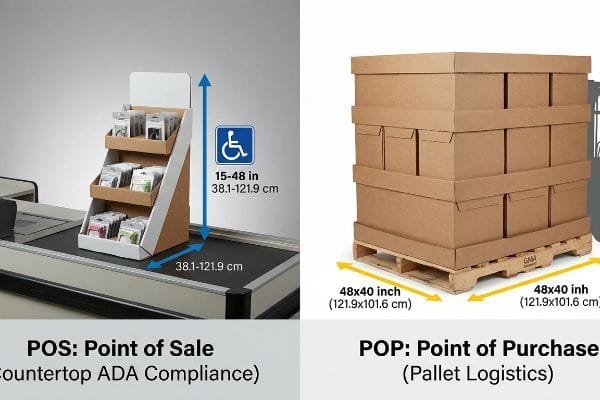
किसी भी संरचनात्मक अभियांत्रिकी कार्य को शुरू करने से पहले इन विशिष्ट यांत्रिक वातावरणों को समझना एक परम आवश्यक शर्त है।.
"एडीए बनाम जीएमए" स्थानिक बाधा
यहां तक कि अनुभवी डिज़ाइन एजेंसियां भी अक्सर स्केलेबल श्रिंक-टू-फिट डिस्प्ले प्रोग्राम पेश करती हैं, यह मानकर कि एक बड़ी बल्क फ्लोर यूनिट को आसानी से 50% तक छोटा करके चेकआउट काउंटर पर रखा जा सकता है। सौंदर्य को प्राथमिकता देने वाला यह दृष्टिकोण अमेरिकी खुदरा वास्तुकला को नियंत्रित करने वाले कठोर, अपरिवर्तनीय कानूनी और लॉजिस्टिकल ढांचों की पूरी तरह से अनदेखी करता है। 13 किसी डिस्प्ले की सफलता पूरी तरह से उस विशिष्ट क्षेत्र के साथ उसके यांत्रिक अनुपालन पर निर्भर करती है जहां उसे रखा जाता है।
एक संरचनात्मक अभियंता के रूप में, मैं इन दोनों वातावरणों के लिए CAD पाइपलाइनों को स्थायी रूप से अलग रखता हूँ क्योंकि इनके मूलभूत भौतिकी सिद्धांत पूरी तरह विपरीत हैं। फर्श पर रखी इकाई को कई टन वजनी फोर्कलिफ्ट की अत्यधिक गतिज ऊर्जा को सहन करना होता है; इसलिए, इसकी आधारभूत संरचना को गणितीय रूप से मानक लकड़ी के पैलेट की सीमा14 ताकि फैलाव और संपीड़न हानि को रोका जा सके। इसके विपरीत, काउंटरटॉप इकाई एक सीमित, उच्च घर्षण वाले लेनदेन क्षेत्र में काम करती है। इसकी ज्यामिति को व्हीलचेयर की पहुँच15 को, जबकि इसकी गहराई-से-ऊंचाई का अनुपात सख्ती से सीमित होता है ताकि जल्दबाजी में खरीदारी करने वाले ग्राहक के गलती से टकराने पर यह पलट न जाए। किसी इकाई को सही ढंग से इंजीनियर करने का अर्थ है उसकी संरचनात्मक गणित को खुदरा विक्रेता की स्थानिक सीमाओं के अनुरूप बनाना।
| मीट्रिक/विशेषता | खरीद के बिंदु | बिक्री केन्द्र |
|---|---|---|
| स्थानिक एंकर | 48×40 इंच पैलेट16 | काउंटरटॉप का आकार |
| कोर अनुपालन | भारी-शुल्क लॉजिस्टिक्स | आगे की पहुँच सीमाएँ17 |
| प्राथमिक बल | वर्टिकल पैलेट लोड | ग्राहक घर्षण |
मैं फर्श और काउंटर यूनिट्स को कभी भी एक समान सौंदर्य अवधारणा के रूप में नहीं देखता। इन रिटेल ज़ोन की विशिष्ट यांत्रिक वास्तविकताओं का सम्मान करने से बड़े स्टोर प्रबंधकों से निर्बाध स्वीकृति सुनिश्चित होती है।.
🛠️ हार्वे का डेस्क: क्या आपके छोटे आकार के काउंटर डिस्प्ले गुप्त रूप से खुदरा विक्रेताओं के स्थानिक अनुपालन संबंधी सख्त नियमों का उल्लंघन कर रहे हैं? 👉 मुफ़्त ADA रीच रेंज ऑडिट का दावा करें ↗ — कोई खाता प्रबंधक बीच में नहीं। आप सीधे संरचनात्मक इंजीनियरों से बात कर सकते हैं।
मैं सही पीओपी डिस्प्ले विक्रेता का चुनाव कैसे करूं?
किसी साझेदार का चयन करना केवल सबसे कम बोली लगाने वाले को चुनने के बारे में नहीं है। यह उनकी उपकरण निर्माण की सटीकता के प्रति समर्पण का मूल्यांकन करने के बारे में है।.
सही पीओपी डिस्प्ले विक्रेता का चयन करने के लिए उनकी भौतिक उपकरण निर्माण प्रक्रियाओं और सामग्री की गुणवत्ता की जांच करना आवश्यक है। एक विश्वसनीय भागीदार प्रत्येक उत्पादन बैच के लिए लेजर-कट स्टील रूल डाई का उपयोग अनिवार्य करता है, जिससे नमी से विकृत लकड़ी के डाई-बोर्डों का पुन: उपयोग करने वाली सस्ती सुविधाओं में होने वाली गलत कटिंग और संरचनात्मक खराबी को रोका जा सके।.
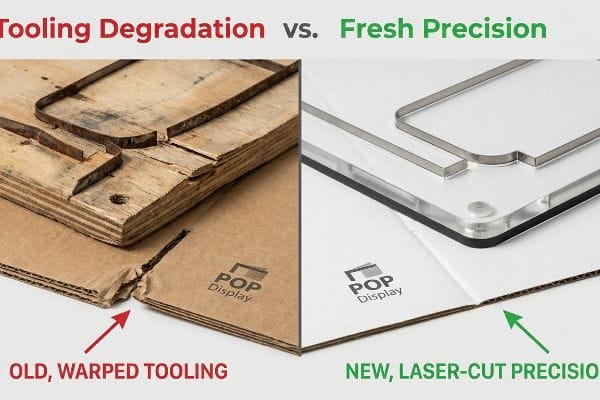
सस्ते आपूर्तिकर्ता की असली कीमत हमेशा आपके दूसरे और तीसरे ऑर्डर की घटिया यांत्रिक गुणवत्ता में छिपी रहती है।.
"टूलिंग डिग्रेडेशन" गुणवत्ता जाल
यहां तक कि अनुभवी खरीद टीमें भी अक्सर संरचनात्मक टूलिंग शुल्क को एक स्थायी, एकमुश्त निवेश के रूप में देखने की गलती कर बैठती हैं। वे मान लेते हैं कि पहले दिन काटा गया डाई-बोर्ड कई वर्षों तक बार-बार होने वाले ऑर्डरों में त्रुटिहीन रूप से काम करेगा। वे कारखाने के वातावरण की वास्तविकता को नजरअंदाज कर देते हैं, जहां मानक कटिंग डाई में अत्यधिक छिद्रयुक्त प्लाईवुड बेस में लगे स्टील ब्लेड होते हैं जो आसपास के वातावरण में होने वाले बदलावों पर तेजी से प्रतिक्रिया करते हैं ।
जब भी ब्रांड खराब हुए रीऑर्डर को मेरी फैक्ट्री में भेजने की कोशिश करते हैं, तो मुझे इस खामी से होने वाला नुकसान साफ दिखाई देता है। एक ग्राहक एक प्रीमियम हेरिटेज डिस्प्ले लेकर आया, जिसकी तीसरी बार असेंबली में गड़बड़ी हो गई क्योंकि इंटरलॉकिंग टैब बुरी तरह से गलत तरीके से लगे हुए थे। मैंने ग्राहक के पुराने टूलिंग को मापा और पाया कि लकड़ी के बेस ने गोदाम में छह महीने तक रखे रहने के दौरान आसपास की नमी सोख ली थी , जिससे बोर्ड 0.14 इंच (3.55 मिमी) मुड़ गया था और उसमें लगी धातु में बुरी तरह जंग लग गई थी। कट टेढ़े-मेढ़े थे, जिससे पेपर लाइनर उखड़ गया था। मैंने तुरंत अपना नया टूलिंग प्रोटोकॉल लागू किया। ऑटोमेटेड CAD लेजर-बर्नर का उपयोग करके, मैंने इस बैच के लिए एक बिल्कुल नया डाई-बोर्ड काटा और एक नया स्टील रूल मोड़ा, जिससे मैन्युअल रीवर्क की अनावश्यक बर्बादी पूरी तरह से खत्म हो गई। सप्लाई चेन की स्वच्छता में इस छोटे से सुधार ने एकदम सटीक काम सुनिश्चित किया, जिससे उनके लेबर असेंबली टाइम में 25 % की भारी कमी आई ।
| टूलिंग प्रोटोकॉल | यांत्रिक वास्तविकता | अनुप्रवाह प्रभाव |
|---|---|---|
| पुन: प्रयुक्त लकड़ी के सांचे | नमी के कारण विकृति21 | टेढ़े-मेढ़े, गलत कट |
| परिवेशीय भंडारण | जंग लगे स्टील के ब्लेड22 | क्षतिग्रस्त कागज के रेशे |
| नए लेजर टूलिंग | पूर्ण सीएनसी परिशुद्धता23 | घर्षण रहित असेंबली |
मैं एक जर्जर प्लाईवुड के टुकड़े पर करोड़ों डॉलर के विरासत ब्रांड के लॉन्च को दांव पर लगाने से इनकार करता हूँ। हर उत्पादन के लिए नए यांत्रिक उपकरणों में निवेश करना ही निर्बाध विस्तारशीलता की गारंटी देने का एकमात्र तरीका है।.
🛠️ हार्वे का डेस्क: क्या पुराने, विकृत कटिंग डाई आपके भारी मौसमी रीऑर्डर की संरचनात्मक अखंडता को गुपचुप तरीके से नष्ट कर रहे हैं? 👉 टूलिंग डिग्रेडेशन रिस्क एनालिसिस प्राप्त करें ↗ — मैं 24 घंटों के भीतर प्रत्येक संरचनात्मक फ़ाइल की व्यक्तिगत रूप से समीक्षा करता हूँ।
निष्कर्ष
भारी, ऊपर से लोड किए गए मर्चेंडाइज़र को लॉजिस्टिकल घर्षण के कारण कुचलने से बचाने के लिए नालीदार कार्डबोर्ड भौतिकी और नए विनिर्माण मानकों का कड़ाई से पालन करना आवश्यक है। हाल ही में एक इंजीनियरिंग समीक्षा में उत्पादन से पहले एक बड़े राष्ट्रीय स्तर पर लॉन्च के दौरान 2 मिमी की घातक त्रुटि पकड़ी गई। यह सुनिश्चित करने के लिए कि आपका प्रतिष्ठित ब्रांड खुदरा आपूर्ति श्रृंखलाओं की चुनौतियों से सुरक्षित रहे, मैं व्यक्तिगत रूप से आपकी संरचनात्मक फाइलों का निःशुल्क संरचनात्मक डायलाइन ऑडिट। बड़े पैमाने पर उत्पादन शुरू होने से बहुत पहले ही अदृश्य ज्यामितीय त्रुटियों को रोककर अपनी खुदरा प्रतिष्ठा की रक्षा करें।
"शिपिंग बॉक्स की मजबूती को समझना – इकोएनक्लोज", https://www.ecoenclose.com/blog/understanding-shipping-box-strength/?srsltid=AfmBOopSSl8fQKqM6ssS22IIpUhcxxzn6XD3lnfEv2QRZvmLouRBOG6e। संरचनात्मक क्षरण के दावे को मान्य करने के लिए 32ECT और 26ECT नालीदार बोर्ड के बीच यांत्रिक मजबूती के अंतर का सत्यापन। साक्ष्य की भूमिका: तकनीकी सत्यापन; स्रोत प्रकार: सामग्री विनिर्देश पत्रक। समर्थन: भार वहन क्षमता पर ECT रेटिंग कम करने का प्रभाव। कार्यक्षेत्र नोट: नालीदार फाइबरबोर्ड मानकों पर लागू होता है। ↩
"[PDF] नालीदार बोर्ड विनिर्देश - फाइबर बॉक्स एसोसिएशन", https://www.fibrebox.org/assets/2025/09/Walmart_Corrugated-Board_Specifications_Automation_Packaging_Standards.pdf। एज क्रश टेस्ट (ECT) के लिए उद्योग मानक नालीदार बोर्ड की स्टैकिंग क्षमता और भार वहन क्षमता पर अनुभवजन्य डेटा प्रदान करते हैं। साक्ष्य भूमिका: तकनीकी सत्यापन; स्रोत प्रकार: पैकेजिंग इंजीनियरिंग मैनुअल। समर्थन: पीओपी डिस्प्ले में संरचनात्मक अखंडता बनाए रखने के लिए 32ECT को आधार रेखा के रूप में उपयोग करना। कार्यक्षेत्र नोट: प्रदर्शन लाइनर और माध्यम ग्रेड के आधार पर भिन्न होता है। ↩
"किस प्रकार की पैकेजिंग के लिए कौन सी कोटिंग का उपयोग करें", https://midatlanticpackaging.com/blog/what-coating-to-use-for-what-type-of-packaging-d66646/?srsltid=AfmBOop12PfljgJ9NQ9RVz3lI-FQFPDzQouIpqj3vc4ktLlXM6L46BFt। जलीय कोटिंग्स के तकनीकी विनिर्देश दर्शाते हैं कि वे कुछ लेमिनेशन से जुड़ी संरचनात्मक कठोरता या वजन बढ़ाए बिना प्रीमियम फिनिश कैसे प्रदान करते हैं। साक्ष्य भूमिका: सामग्री तुलना; स्रोत प्रकार: कोटिंग निर्माता डेटाशीट। समर्थन: यह दावा कि जलीय फिनिश सब्सट्रेट की गतिशील संरचनात्मक अखंडता को बनाए रखती है। स्कोप नोट: अनुप्रयोग प्रक्रिया के आधार पर प्रभाव भिन्न हो सकते हैं। ↩
"नालीदार बोर्ड बक्सों की संपीडन शक्ति का अनुमान ...", https://pmc.ncbi.nlm.nih.gov/articles/PMC8467740/। तकनीकी पैकेजिंग विनिर्देश 26ECT बोर्ड के लिए एज क्रश टेस्ट (ECT) रेटिंग प्रदान करते हैं, जो उच्च रेटिंग की तुलना में इसकी कम संपीडन शक्ति को प्रमाणित करता है। साक्ष्य की भूमिका: तकनीकी विनिर्देश; स्रोत प्रकार: उद्योग मानक। समर्थन: निम्न श्रेणी के बोर्ड की संरचनात्मक भेद्यता। कार्यक्षेत्र संबंधी टिप्पणी: नालीदार फाइबरबोर्ड मानकों के लिए विशिष्ट। ↩
"कॉरुगेटेड बॉक्स स्ट्रेंथ गाइड: फ्लूट ग्रेड, ECT रेटिंग और वॉल...", https://anchorbox.com/corrugated-box-strength/। प्रामाणिक पैकेजिंग इंजीनियरिंग डेटा 26ECT की तुलना में 32ECT वर्जिन फाइबरबोर्ड की बढ़ी हुई ऊर्ध्वाधर भार वहन क्षमता की पुष्टि करता है। साक्ष्य भूमिका: प्रदर्शन मीट्रिक; स्रोत प्रकार: तकनीकी डेटाशीट। समर्थन: इंजीनियर बोर्ड घनत्व की बेहतर संरचनात्मक अखंडता। स्कोप नोट: एज क्रश परीक्षण मूल्यों पर केंद्रित है। ↩
"जलीय और यूवी कोटिंग सेवाएं | प्रीमियम प्रिंट फिनिश", https://thepackagingtree.com/aqueous-coating-and-uv-coating?srsltid=AfmBOooJNSfoU__KRE9nN0pVZ3kkrOjoz7fKbloLBSn-u_Pf3VEqywxx। प्रिंटिंग और फिनिशिंग गाइड खुदरा डिस्प्ले में जलीय कोटिंग्स और फॉइल फिल्मों के संरचनात्मक प्रभाव और लागत-प्रभावशीलता की तुलना करते हैं। साक्ष्य भूमिका: सामग्री तुलना; स्रोत प्रकार: प्रिंटिंग उद्योग मैनुअल। समर्थन: इंजीनियर डिस्प्ले में जलीय कोटिंग्स की प्राथमिकता। कार्यक्षेत्र नोट: वाणिज्यिक प्रिंट फिनिशिंग तक सीमित। ↩
"GD&T: ज्यामितीय आयाम निर्धारण और सहनशीलता की मूल बातें", https://formlabs.com/blog/gdt-geometric-dimensioning-and-tolerancing/। यह तकनीकी सत्यापन दर्शाता है कि कैसे अलग-अलग विक्रेताओं से घटकों की सोर्सिंग करने से गुणवत्ता नियंत्रण और अंतिम असेंबली फिट के लिए जवाबदेही में कमियां पैदा होती हैं। साक्ष्य की भूमिका: तकनीकी सत्यापन; स्रोत प्रकार: विनिर्माण गुणवत्ता आश्वासन मानक। समर्थन करता है: इस दावे का कि टुकड़ों में की गई खरीद से ब्रांड की जवाबदेही बढ़ती है। कार्यक्षेत्र संबंधी टिप्पणी: विशेष रूप से खुदरा डिस्प्ले की भौतिक असेंबली पर लागू होता है। ↩
"कॉरुगेटेड बोर्ड और सामग्री ग्रेड - पैकेजिंग रणनीतियाँ", https://www.packagingstrategies.com/articles/96269-corrugated-board-and-material-grades। एक आधिकारिक पैकेजिंग उद्योग मानक बी-फ्लूट कॉरुगेटेड बोर्ड के लिए विशिष्ट कैलिपर आयामों की पुष्टि करता है। साक्ष्य भूमिका: तकनीकी सत्यापन; स्रोत प्रकार: उद्योग विनिर्देश। समर्थन: वर्णित मशीनरी विफलता में प्रयुक्त सामग्रियों के भौतिक आयाम। स्कोप नोट: निर्माताओं के बीच मामूली भिन्नताएँ हो सकती हैं। ↩
"कागज और कार्डबोर्ड असेंबली के लिए पीवीए विनाइल ग्लू", https://www.mbadhesives.com/en/adhesives-glue-assembly-cardboard-industry। सामग्री विज्ञान संबंधी दस्तावेज़, कागज और बोर्ड निर्माण में लेमिनेशन के लिए मानक चिपकने वाले पदार्थ के रूप में पॉलीविनाइल एसीटेट (पीवीए) के अनुप्रयोग और गुणों को सत्यापित करता है। साक्ष्य की भूमिका: तकनीकी सत्यापन; स्रोत प्रकार: सामग्री विज्ञान पुस्तिका। सहायक तत्व: सामग्री एकीकरण सुनिश्चित करने के लिए उपयोग की जाने वाली विशिष्ट रासायनिक प्रक्रिया। कार्यक्षेत्र संबंधी टिप्पणी: पैकेजिंग में पीवीए के चिपकने वाले गुणों पर केंद्रित। ↩
"असेंबली लाइन और उपकरण डाउनटाइम से कैसे बचें", https://atsindustrialautomation.com/blog-posts/how-to-avoid-assembly-line-and-equipment-downtime/। टोलिंग असेंबली में खंडित सोर्सिंग के कारण कंपोनेंट असंगतता से मशीन डाउनटाइम कैसे बढ़ता है, इसका संक्षिप्त विवरण। साक्ष्य की भूमिका: तकनीकी सत्यापन; स्रोत प्रकार: औद्योगिक इंजीनियरिंग श्वेतपत्र। समर्थन: टोलिंग का आपूर्ति श्रृंखला पर प्रभाव। कार्यक्षेत्र संबंधी टिप्पणी: खुदरा डिस्प्ले असेंबली के लिए विशिष्ट। ↩
"दो अलग-अलग ब्रांड के कैलिपर्स समस्या पैदा कर सकते हैं? – BMW 2002 FAQ", https://www.bmw2002faq.com/forums/topic/124775-two-different-brand-calipers-a-problem/। यह दस्तावेज़ बताता है कि पूरक घटकों के लिए कई विक्रेताओं का उपयोग करने से टॉलरेंस में विचलन और कैलिपर्स में बेमेल होने की समस्या कैसे उत्पन्न होती है। साक्ष्य की भूमिका: तथ्यात्मक प्रमाण; स्रोत का प्रकार: विनिर्माण गुणवत्ता मानक। समर्थन: भिन्न-भिन्न विक्रेताओं से सामग्री खरीदने का जोखिम। कार्यक्षेत्र संबंधी टिप्पणी: सटीक फिटिंग पर केंद्रित। ↩
"कागज और कागज आधारित खाद्य पैकेजिंग सामग्री का अवलोकन", https://pmc.ncbi.nlm.nih.gov/articles/PMC6801293/। तकनीकी विश्लेषण कि कैसे अलग-अलग स्रोतों से प्राप्त सामग्री की खराब फिटिंग के कारण असेंबली के दौरान यांत्रिक तनाव उत्पन्न होता है जिससे बोर्ड के रेशे फट जाते हैं। साक्ष्य की भूमिका: तकनीकी सत्यापन; स्रोत प्रकार: सामग्री विज्ञान रिपोर्ट। समर्थन: सामग्री की अखंडता पर भिन्न विक्रेताओं का प्रभाव। कार्यक्षेत्र संबंधी टिप्पणी: नालीदार बोर्ड पर लागू होता है। ↩
"ADA अभिगम्यता मानक – Access-Board.gov", https://www.access-board.gov/ada/। संघीय ADA अभिगम्यता कानूनों और GMA (ग्रोसरी मैन्युफैक्चरर्स एसोसिएशन) पैलेट लॉजिस्टिक्स मानकों का सत्यापन, जो स्टोर लेआउट और प्लेसमेंट को निर्धारित करते हैं। साक्ष्य की भूमिका: मूलभूत; स्रोत प्रकार: नियामक दिशानिर्देश। समर्थन: अनिवार्य खुदरा स्थानिक बाधाओं का अस्तित्व। कार्यक्षेत्र संबंधी टिप्पणी: विशेष रूप से अमेरिकी वाणिज्यिक वातावरणों पर लागू होता है। ↩
"48×40" जीएमए पैलेट्स | सबसे बड़ा पैलेट निर्माता और आपूर्तिकर्ता", https://www.palletone.com/products/gma-pallets/। आधिकारिक लॉजिस्टिक्स मानकों के अनुसार, खुदरा गोदामों में स्थिरता और अनुकूलता सुनिश्चित करने के लिए 48×40 इंच के पैलेट को उद्योग मानक के रूप में परिभाषित किया गया है। साक्ष्य भूमिका: तकनीकी विनिर्देश; स्रोत प्रकार: उद्योग मानक। सहायक: पीओपी फ्लोर यूनिट बेस आर्किटेक्चर का आधार। कार्यक्षेत्र संबंधी टिप्पणी: मुख्य रूप से उत्तरी अमेरिकी खुदरा लॉजिस्टिक्स पर लागू। ↩
"ADA सुलभ डिज़ाइन मानक शीर्षक III विनियमन 28 CFR …", https://www.ada.gov/law-and-regs/design-standards/1991-design-standards/। ADA सुलभ डिज़ाइन मानक व्हीलचेयर का उपयोग करने वाले व्यक्तियों के लिए सुलभ तत्वों की अधिकतम और न्यूनतम पहुँच सीमाएँ निर्दिष्ट करते हैं। साक्ष्य भूमिका: कानूनी आवश्यकता; स्रोत प्रकार: सरकारी विनियमन। समर्थन: POS काउंटरटॉप इकाइयों के लिए स्थानिक बाधाएँ। कार्यक्षेत्र टिप्पणी: विशेष रूप से ADA धारा 308 को संदर्भित करता है। ↩
"कस्टम रिटेल पैलेट डिस्प्ले | आसान सेटअप", https://blingblingpackaging.com/products/custom-pop-displays/custom-pallet-displays/। पॉइंट-ऑफ-परचेज़ डिस्प्ले के आधार के रूप में उपयोग किए जाने वाले GMA पैलेट के उद्योग-मानक आयामों का सत्यापन। साक्ष्य भूमिका: तकनीकी विनिर्देश; स्रोत प्रकार: लॉजिस्टिक्स मानक। समर्थन: POP डिस्प्ले के लिए स्थानिक एंकर। कार्यक्षेत्र नोट: उत्तरी अमेरिकी खुदरा लॉजिस्टिक्स के लिए मानक। ↩
"बिक्री और सेवा काउंटर – Access-Board.gov", https://www.access-board.gov/ada/guides/animations/sales-and-service-counters.html। ग्राहकों के लिए अधिकतम पहुंच योग्य दूरी के संबंध में तकनीकी दिशानिर्देश, विशेष रूप से पीओएस काउंटरों के लिए एडीए अनुपालन के अंतर्गत। साक्ष्य की भूमिका: नियामक सत्यापन; स्रोत प्रकार: एर्गोनोमिक मानक। समर्थन: पीओएस डिस्प्ले के लिए स्थानिक बाधाएं। कार्यक्षेत्र संबंधी टिप्पणी: अभिगम्यता अनुपालन पर केंद्रित। ↩
"शब्दावली - इंटरस्टेट स्पेशलिटी प्रोडक्ट्स", https://www.interstatesp.com/die-cutting-glossary-terms/। स्टील रूल डाइज़ की सामग्री संरचना और प्लाईवुड बेस की नमी सोखने की क्षमता के संबंध में पैकेजिंग इंजीनियरिंग या डाई-मेकिंग मानकों से तकनीकी सत्यापन। साक्ष्य भूमिका: तकनीकी सत्यापन; स्रोत प्रकार: उद्योग नियमावली। समर्थन: यह तथ्य कि टूलिंग सामग्री पर्यावरणीय विकृति के अधीन होती है। कार्यक्षेत्र संबंधी टिप्पणी: विशेष रूप से पारंपरिक लकड़ी के बेस वाली डाइज़ को संदर्भित करता है। ↩
"लकड़ी में विकृति के 4 प्रकार (वे कहाँ से आते हैं + आप कैसे …", https://www.youtube.com/watch?v=NEHowi-_hvw। डाई-कटिंग बोर्ड में उपयोग की जाने वाली लकड़ी की नमी सोखने की प्रकृति और नमी अवशोषण से होने वाली आयामी विकृति की तकनीकी व्याख्या। साक्ष्य भूमिका: तकनीकी सत्यापन; स्रोत प्रकार: सामग्री विज्ञान पुस्तिका। समर्थन: नमी के कारण औजारों के क्षरण का कारण। कार्यक्षेत्र संबंधी टिप्पणी: गैर-स्थिर लकड़ी के आधारों पर लागू होता है। ↩
"विनिर्माण दक्षता बढ़ाना: टूलिंग गाइड – कास्टेक एल्युमिनियम", https://castekusa.com/blog/boosting-manufacturing-efficiency-a-comprehensive-guide-to-production-tooling/। डाई-कट डिस्प्ले में बेहतर पार्ट टॉलरेंस से असेंबली घर्षण और मैनुअल एडजस्टमेंट समय में कमी कैसे आती है, इसका औद्योगिक इंजीनियरिंग विश्लेषण। साक्ष्य की भूमिका: मीट्रिक सत्यापन; स्रोत प्रकार: विनिर्माण उत्पादकता अध्ययन। 25% दक्षता लाभ के दावे का समर्थन करता है। स्कोप नोट: इंटरलॉकिंग टैब की जटिलता पर आधारित। ↩
"लकड़ी के मुड़ने के कारण और समाधान | बे एंड बेंट | पेंसिल्वेनिया", https://www.bayandbent.com/wood-warping। लकड़ी के डाई की नमी सोखने की प्रकृति के कारण पुन: उपयोग के दौरान आकार में विकृति कैसे आती है, इसका तकनीकी विवरण। साक्ष्य की भूमिका: तकनीकी सत्यापन; स्रोत प्रकार: विनिर्माण पुस्तिका। समर्थन: लकड़ी के डाई के क्षरण की यांत्रिक वास्तविकता। कार्यक्षेत्र संबंधी टिप्पणी: जैविक उपकरण सामग्री से संबंधित। ↩
"…में कट गुणवत्ता पर प्रक्रिया मापदंडों के प्रभाव का मूल्यांकन", https://www.sciencedirect.com/science/article/abs/pii/S1350449521002681। धातुकर्म विश्लेषण कि कैसे कटिंग किनारों पर सतह ऑक्सीकरण घर्षण को बढ़ाता है और कागज के रेशों को फाड़ देता है। साक्ष्य की भूमिका: कारण-और-प्रभाव सत्यापन; स्रोत प्रकार: औद्योगिक इंजीनियरिंग रिपोर्ट। समर्थन: भंडारण स्थितियों और सामग्री विफलता के बीच संबंध। कार्यक्षेत्र संबंधी टिप्पणी: गैर-स्टेनलेस स्टील टूलिंग तक सीमित। ↩
"लेजर कटिंग कितनी सटीक है: मानक लेजर कटिंग टॉलरेंस", https://www.accurl.com/blog/laser-cutting-accuracy/। पारंपरिक मैकेनिकल डाई की तुलना में सीएनसी लेजर सिस्टम के सख्त टॉलरेंस स्तरों के बारे में तुलनात्मक डेटा। साक्ष्य भूमिका: प्रदर्शन बेंचमार्क; स्रोत प्रकार: तकनीकी विनिर्देश। समर्थन: लेजर टूलिंग का सटीक लाभ। कार्यक्षेत्र नोट: कंप्यूटर-नियंत्रित निर्माण पर लागू। ↩