आप एक ऐसा रिटेल मर्चेंडाइज़र चाहते हैं जो सबका ध्यान आकर्षित करे, लेकिन सामान्य ट्रे गलियारों में गुम हो जाती हैं। कस्टमाइज़ेशन के दौरान संरचनात्मक बाधाओं को नज़रअंदाज़ करने से अक्सर महंगी असेंबली विफलताएँ हो जाती हैं।.
जी हाँ। पीडीक्यू (प्रोडक्ट डिस्प्ले क्वार्टर) ट्रे को कस्टमाइज़ करने में सटीक संरचनात्मक आयामों का इंजीनियरिंग करना, ब्रांड-विशिष्ट स्पॉट कलर ग्राफिक्स लगाना और नालीदार सामग्री में बदलाव करना शामिल है। इन यूनिट्स को अनुकूलित करने से खुदरा विक्रेताओं द्वारा नियमों का कड़ाई से पालन सुनिश्चित होता है, साथ ही यह ग्राहकों के दृश्य क्षेत्र को बाधित करके उन्हें भीड़भाड़ वाले चेकआउट क्षेत्रों में आवेगपूर्ण खरीदारी के लिए प्रेरित करता है।.
लेकिन गत्ते के डिब्बे पर लोगो चिपकाना असली इंजीनियरिंग नहीं है। आइए समझते हैं कि कैसे वास्तविक संरचनात्मक अनुकूलन कारखाने से लेकर खुदरा विक्रेता के काउंटर तक की यात्रा को बरकरार रखता है।.
पीडीक्यू डिस्प्ले क्या है?
इन चेकआउट ट्रे की कार्यप्रणाली को समझने से स्टोर स्तर पर आपके क्रियान्वयन के तरीके में बदलाव आता है।.
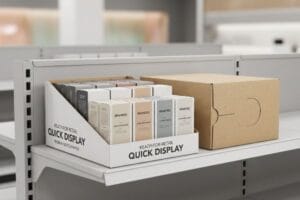
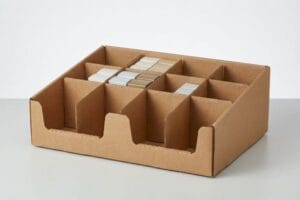
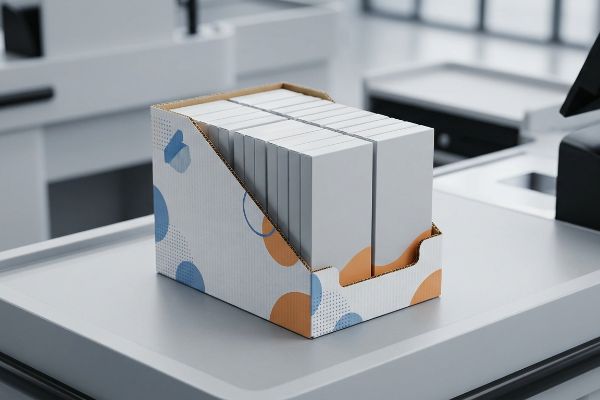
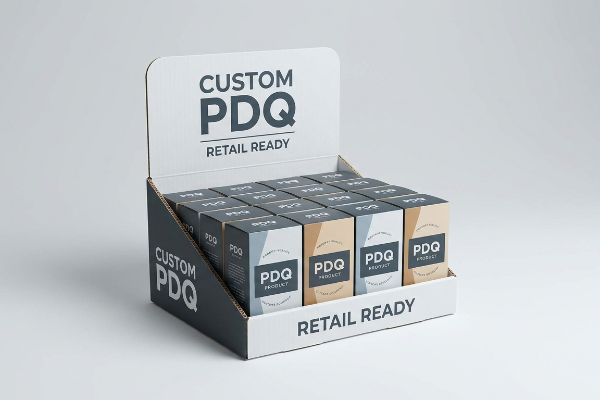
पीडीक्यू डिस्प्ले एक कॉम्पैक्ट, पहले से पैक किया हुआ रिटेल मर्चेंडाइज़र है जिसे शेल्फ या काउंटर पर तुरंत लगाने के लिए डिज़ाइन किया गया है। ये नालीदार गत्ते की संरचनाएं तेजी से बिकने वाले उपभोक्ता सामानों को सुरक्षित रूप से रखती हैं और इनमें सामने से फाड़ने योग्य हिस्से या मॉड्यूलर स्टैकिंग सिस्टम होते हैं, जिससे स्टोर कर्मचारी उत्पादों को शिपिंग कार्टन से निकालकर तुरंत बिक्री के लिए रख सकते हैं।.

परिभाषा जानना आसान है, लेकिन एक ऐसी परिभाषा तैयार करना जिसे एक जल्दबाज़ किशोर आधी रात को बना सके, एक बिल्कुल अलग चुनौती है।.
एक असली पीडीक्यू ट्रे की कार्यप्रणाली
कई ब्रांड इन इकाइयों को साधारण खुले शीर्ष वाले बक्सों के रूप में देखते हैं। वे सपाट टेम्पलेट्स पर विस्तृत ग्राफिक्स तैयार करते हैं, यह मानते हुए कि मानक फोल्डिंग नियम लागू होते हैं। सैद्धांतिक लक्ष्य हमेशा एक सहज अनबॉक्सिंग अनुभव होता है, लेकिन मानक डाई-कट ट्रे उत्पाद के वजन के तहत अपना आकार बनाए रखने के लिए मैन्युअल फोल्डिंग1 और कई इंटरलॉकिंग टैब पर काफी हद तक निर्भर करती हैं।
मुझे पता है कि आप इस कार्डबोर्ड संरचना को देखकर असमंजस में हैं, क्योंकि मैं अक्सर देखता हूं कि ब्रांड जटिल ओरिगामी फोल्ड वाले डिज़ाइन प्रस्तुत करते हैं। असल में, एक थका हुआ स्टोर क्लर्क 15 मिनट तक उस जटिल टैब को खोलने की कोशिश में पसीना बहाता है, और अंत में गंदी पारदर्शी टेप का सहारा लेता है जो आपके ब्रांड को पूरी तरह से ढक देती है। खराब तरीके से छिद्रित किनारे को फाड़ते समय कच्चे कार्डबोर्ड के फटने की तेज़ आवाज़ खुदरा क्षेत्र के लिए रोज़ाना की परेशानी है। इस समस्या को हल करने के लिए, मैंने ऑटो-बॉटम स्टैकिंग सिस्टम2। यह घर्षण को पूरी तरह से खत्म कर देता है, एक निराशाजनक पहेली को एक सहज गति में बदल देता है जिससे प्रति स्टोर मिनटों की मैन्युअल मेहनत बचती है।
| नौसिखियों की आम गलती | प्रो फिक्स | रिटेल-फ्लोर लाभ |
|---|---|---|
| जटिल मल्टी-टैब फोल्डिंग | पहले से चिपकाए गए मॉड्यूलर ऑटो-बॉटम | असेंबली का 25 सेकंड का समय बचाता है3 |
| कमजोर छिद्रित आंसू-रेखाएँ | इंजीनियर किए गए निकिंग अनुपात4 | गत्ते के किनारों को खुरदरा होने से रोकता है |
| बाहरी पारदर्शी टेप पर निर्भर रहना | आंतरिक छिपे हुए लॉकिंग तंत्र5 | प्राथमिक ब्रांडिंग को 100% दृश्यमान रखता है |
मैं खराब फोल्डिंग तकनीक को चेकआउट अभियान को बर्बाद करने नहीं दूंगा। स्टोर क्लर्क से असेंबली का बोझ हटाकर, यह सुनिश्चित किया जा सकता है कि आपका उत्पाद बैक रूम से निकलकर कैश काउंटर तक पहुंचे।.
🛠️ हार्वे का डेस्क: क्या आपको लगता है कि आपकी ट्रे का डिज़ाइन किसी जल्दबाज़ी में काम करने वाले क्लर्क के लिए मोड़ने में बहुत जटिल है? 👉 मुझे अपनी डाइलाइन की समीक्षा करने दें ↗ — सीधे मेरे डेस्क से संपर्क करें। मैं वादा करता हूँ, कोई स्वचालित बिक्री संबंधी स्पैम नहीं आएगा।
डिस्प्ले के पाँच प्रकार क्या हैं?
अपने मर्चेंडाइजिंग विकल्पों को वर्गीकृत करने से आपको स्टोर के भीतर विशिष्ट भौतिक क्षेत्रों पर प्रभुत्व स्थापित करने में मदद मिलती है।.
डिस्प्ले के पाँच प्रकारों में फ्लोर मर्चेंडाइज़र, काउंटरटॉप यूनिट, पैलेट बिल्ड, शेल्फ या पीडीक्यू ट्रे और हैंगिंग क्लिप स्ट्रिप्स शामिल हैं। प्रत्येक संरचनात्मक प्रारूप एक विशिष्ट रिटेल ज़ोन को लक्षित करता है, और विभिन्न गलियारों और चेकआउट परिवेशों में ब्रांड की दृश्यता को अधिकतम करने के लिए विशिष्ट आयामों और भार वहन क्षमता का लाभ उठाता है।.
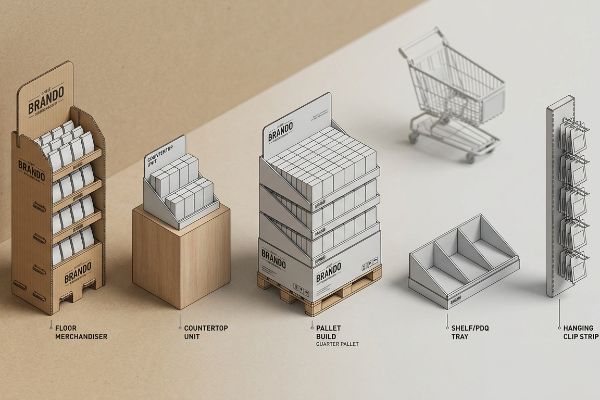
किसी श्रेणी का चयन करना तो केवल पहला कदम है; उस इकाई को अत्यधिक विनियमित बड़े-बड़े स्टोरों के वातावरण में फिट करने के लिए सटीक आयामी गणित की आवश्यकता होती है।.
सही मर्चेंडाइजर फुटप्रिंट का चयन करना
ब्रांड टीमें अक्सर यह मानकर विशाल फ्लोर यूनिट का चयन करती हैं कि बड़ा भौतिक क्षेत्रफल स्वतः ही अधिक बिक्री उत्पन्न करेगा। वे प्रीमियम स्थान हासिल करने की उम्मीद में एंड-कैप्स और मुख्य गलियारों के लिए भव्य डिज़ाइन तैयार करते हैं। इस महत्वाकांक्षा में अक्सर बड़े खुदरा विक्रेताओं द्वारा लागू किए गए सख्त स्थानिक प्रतिबंध को नजरअंदाज कर दिया जाता है , जहां फर्श के हर इंच का मानचित्रण और मुद्रीकरण किया जाता है।
खरीदारों से मुझे अक्सर यह सवाल सुनने को मिलता है कि उनके विशाल 48×40 इंच (1219.2×1016 मिमी) फ्लोर पैलेट डिज़ाइन स्टोर मैनेजरों द्वारा क्यों अस्वीकार कर दिए जाते हैं। अनुभवी डिज़ाइनर भी अक्सर इस कमी को नज़रअंदाज़ कर देते हैं और ऐसे यूनिट डिज़ाइन कर देते हैं जो शॉपिंग कार्ट के आवागमन में बाधा डालते हैं। मैंने स्टोर क्लर्कों को पॉलिश किए हुए स्टोर फ्लोर पर कच्चे नालीदार बेस को घसीटने की भारी परेशानी से परेशान होते देखा है, क्योंकि यह आवंटित मौसमी स्थान में फिट नहीं होता। पूरे GMA (ग्रोसरी मैन्युफैक्चरर्स एसोसिएशन) फुटप्रिंट 7 के लिए संघर्ष करने के बजाय, मैं 24×20 इंच (609.6×508 मिमी) 8 के क्वार्टर पैलेट जैसे आंशिक पैलेट ज्यामिति डिज़ाइन करता हूँ । यह गणितीय विभाजन सुनिश्चित करता है कि आपका उत्पाद अन्य ब्रांडों के साथ आसानी से स्थान साझा कर सके, जिससे संरचनात्मक स्थिरता बनाए रखते हुए आपकी स्वीकृति दर में काफी वृद्धि होती है।
| नौसिखियों की आम गलती | प्रो फिक्स | रिटेल-फ्लोर लाभ |
|---|---|---|
| केवल पूर्ण आकार के फ्लोर यूनिट ही उपलब्ध हैं। | आंशिक चौथाई पैलेटों का उपयोग करना9 | खुदरा विक्रेता प्लेसमेंट अनुमोदन में वृद्धि |
| गलियारे की स्वच्छता संबंधी नियमों की अनदेखी करना | घूर्णीय स्वीप की सख्त सीमाएँ10 | शॉपिंग कार्ट के टकराव को रोकता है |
| फ्लोर और काउंटर गणित को मिलाना | स्थायी एडीए और जीएमए पृथक्करण11 | बड़े पैमाने पर अनुपालन संबंधी शुल्क वापसी से बचा जाता है |
मैं आपके स्ट्रक्चरल फुटप्रिंट को रिटेलर की स्थानिक वास्तविकता के साथ पूरी तरह से संरेखित करता हूँ। एक खूबसूरती से अनुकूलित यूनिट पूरी तरह से बेकार है अगर कोई मैनेजर उसे चालू फ्लोर पर रखने से इनकार कर दे।.
🛠️ हार्वे का डेस्क: क्या आपके मौजूदा फ्लोर डाइमेंशन की वजह से स्टोर मैनेजर आपके ऑर्डर रिजेक्ट कर रहे हैं? 👉 फुटप्रिंट ऑडिट करवाएं ↗ — सुरक्षित रूप से डाउनलोड करें। बाद में कोई सवाल हो तो मेरा इनबॉक्स खुला है।
पॉइंट ऑफ़ परचेज़ डिस्प्ले कैसे बनाएं?
एक फिजिकल मर्चेंडाइजर बनाने के लिए डिजिटल आर्टवर्क को एक कार्यात्मक संरचनात्मक वास्तविकता में बदलना आवश्यक है।.
पॉइंट ऑफ़ परचेज़ डिस्प्ले बनाने के लिए संरचनात्मक सीएडी (कंप्यूटर-एडेड डिज़ाइन) फ़ाइल तैयार करना, उपयुक्त नालीदार खांचे की मोटाई का चयन करना, ग्राफ़िक आर्टवर्क लगाना और लिथो-लेमिनेशन करना आवश्यक है। यह प्रक्रिया स्वचालित डाई-कटिंग और प्री-ग्लूइंग के साथ समाप्त होती है, जिससे यह सुनिश्चित होता है कि फ्लैट-पैक्ड यूनिट त्रुटिहीन रूप से असेंबल हो और गतिशील माल के भार को सहन कर सके।.
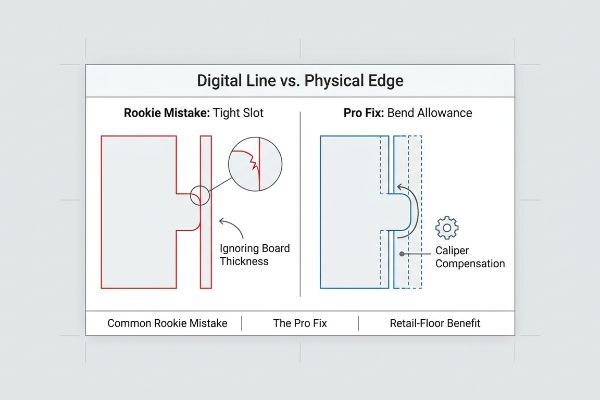
डिजिटल ड्राइंग को सुंदर बनाना तो आसान है, लेकिन मोटे कागज को ठीक 90 डिग्री पर मोड़ने के लिए जटिल गणितीय गणना की आवश्यकता होती है।.
नालीदार बेंड अलाउंस की गणना
कई ग्राफिक कलाकार डिजिटल इलस्ट्रेशन सॉफ़्टवेयर में इंटरलॉकिंग टैब और फोल्डिंग स्लॉट को मिलान पैनल की सटीक चौड़ाई पर बनाते हैं। वे मान लेते हैं कि एक डिजिटल रेखा भौतिक किनारे में पूरी तरह से परिवर्तित हो जाती है। यह सपाट-विश्व मानसिकता प्रिंट और माउंट होने के बाद नालीदार बोर्ड 12 की भौतिक मोटाई को पूरी तरह से अनदेखा करती है।
इसे ऐसे समझें जैसे किसी मोटी किताब को बंद करने की कोशिश करना, जिसके अंदर पेन हो; अतिरिक्त वजन को समायोजित करने के लिए किताब की रीढ़ को फैलना पड़ता है। यह एक आम समस्या है जो अनुभवी खरीद टीमों को भी परेशान कर देती है, जिससे कागज के खांचे गणितीय रूप से बहुत तंग हो जाते हैं। वर्जिन क्राफ्ट बोर्ड का कड़ा प्रतिरोध बहुत कठोर होता है, और जब कोई सह-पैकर 3 मिमी (0.11 इंच) मोटे बी-फ्लूट पैनल13 को 3 मिमी के खांचे में जबरदस्ती डालने की कोशिश करता है, तो आंतरिक खांचे दब जाते हैं और मुद्रित ऊपरी शीट फट जाती है। मैं पैरामीट्रिक डिज़ाइन सॉफ़्टवेयर का उपयोग करके प्रत्येक मोड़14, जिससे मोड़ने के लिए आवश्यक जगह को समायोजित करने के लिए प्राप्त करने वाले खांचे चौड़े हो जाते हैं। यह सूक्ष्म समायोजन एक घर्षणरहित असेंबली लाइन सुनिश्चित करता है, जिससे फटने की समस्या पूरी तरह से समाप्त हो जाती है और श्रम लागत में भारी कमी आती है।
| नौसिखियों की आम गलती | प्रो फिक्स | रिटेल-फ्लोर लाभ |
|---|---|---|
| टैब की सटीक चौड़ाई पर स्लॉट बनाना | पैरामीट्रिक बेंड अलाउंस लागू करना15 | को-पैकर असेंबली घर्षण को समाप्त करता है |
| बोर्ड की मोटाई को अनदेखा करना | कैलिपर क्षतिपूर्ति एल्गोरिदम | आंतरिक बांसुरी के कुचलने को रोकता है16 |
| वेब-आधारित रास्टर टूल का उपयोग करना | लॉक किए गए संरचनात्मक पीडीएफ एकीकरण | 2,500 पाउंड की गतिशील क्षमता बनाए रखता है17 |
कागज का एक भी पन्ना काटे जाने से पहले ही मैं दोषपूर्ण डिजिटल स्लॉट को ठीक कर देता हूँ। संरचनात्मक गणित की सुरक्षा आपकी पूरी उत्पादन प्रक्रिया को सुरक्षित रखती है।.
🛠️ हार्वे का डेस्क: क्या आपके इंटरलॉकिंग टैब असेंबली के दौरान गुप्त रूप से फटने के लिए डिज़ाइन किए गए हैं? 👉 डाइलाइन स्ट्रेस टेस्ट का अनुरोध करें ↗ — कोई ऐसे फॉर्म नहीं जो अंतहीन बिक्री कॉल को बढ़ावा दें। बस शुद्ध मूल्य।
प्रोमो डिस्प्ले क्या है?
प्रचार इकाइयाँ ऐसे उपकरण होते हैं जिन पर भारी ब्रांडिंग की जाती है और जिन्हें अल्पकालिक दृश्य व्यवधान के लिए बनाया जाता है।.
प्रोमो डिस्प्ले एक अस्थायी रिटेल फिक्स्चर है जिसे विशिष्ट मौसमी अभियानों या नए उत्पाद लॉन्च को प्रदर्शित करने के लिए डिज़ाइन किया गया है। स्थायी धातु रैक के विपरीत, ये नालीदार संरचनाएं चटख रंगों, आकर्षक डाई-कट आकृतियों और प्रभावशाली ग्राफिक्स का उपयोग करके खरीदारी के पारंपरिक तरीकों को बाधित करती हैं और तत्काल अल्पकालिक बिक्री को बढ़ावा देती हैं।.
किसी प्रयोगशाला में एक डिस्प्ले को खड़ा करना और उसे जीवंत दिखाना आसान है, लेकिन जब आप उनमें से 500 को भौतिक आपूर्ति श्रृंखला में भेजते हैं तो कठोर वास्तविकता सामने आती है।.
कारखाने में मानक क्रीज़िंग क्यों विफल हो जाती है?
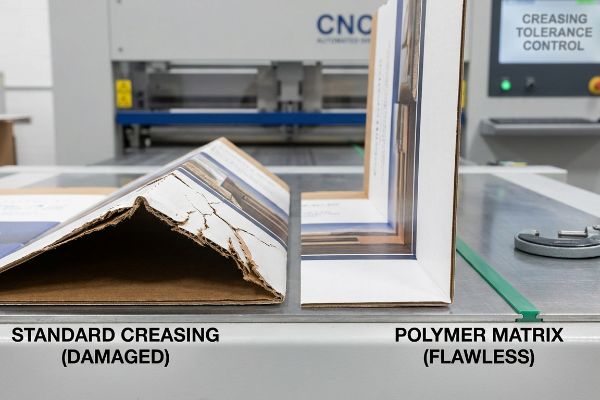
ग्राफिक टीमें अक्सर अपने प्रचार ग्राफिक्स को तेज फ्लोरोसेंट रोशनी में आकर्षक दिखाने के लिए प्रीमियम लिथो-लेमिनेशन 18 अनिवार्य कर देती हैं। वे यूनिट के मुड़े हुए किनारों को नजरअंदाज कर देते हैं, यह मानकर कि डिज़ाइन फ़ाइल पर एक साधारण स्कोर लाइन स्वचालित रूप से एक सही, साफ कोना बना देगी। यह स्वचालित निर्माण चरण के दौरान सामग्री द्वारा झेले जाने वाले तीव्र यांत्रिक आघात 19 को अनदेखा करता है।
मेरी फैक्ट्री में, मैं अक्सर देखता हूँ कि खूबसूरत छपाई वाली टॉप शीटें ऑटोमेटेड कटिंग टेबल पर पहुँचते ही पूरी तरह से खराब हो जाती हैं। जब एक मानक स्टील रूल डाई एक भारी 32ECT (एज क्रश टेस्ट) बोर्ड पर ज़ोर से प्रहार करती है, तो ज़बरदस्त बल के कारण कठोर कागज़ के रेशे मुड़ जाते हैं, जिससे गंभीर लिथो-क्रैकिंग होती है और हर मोड़ पर कच्चा, भद्दा भूरा कार्डबोर्ड दिखाई देने लगता है । डाई-कटिंग की धूल का बारीक एहसास इस बात की याद दिलाता है कि यह सीएनसी (कंप्यूटर न्यूमेरिकल कंट्रोल) प्रक्रिया कितनी आक्रामक है। इस समस्या को हल करने के लिए, मैं माइक्रोमीटर रीडिंग लेता हूँ और कटिंग प्लेट पर विशिष्ट पॉलीमर फीमेल मैट्रिक्स क्रीजिंग चैनल लगाता हूँ । यह प्रहार के दौरान कागज़ के रेशों के 2.4 मिमी (0.09 इंच) तनाव को सटीक रूप से नियंत्रित करता है, जिससे स्याही को नुकसान पहुँचाए बिना एक दोषरहित 90-डिग्री मोड़ सुनिश्चित होता है। इस सख्त क्रीजिंग टॉलरेंस को लागू करके, मैं गारंटी देता हूँ कि आपकी प्रमोशनल ब्रांडिंग बेदाग बनी रहेगी, जिससे क्षतिग्रस्त कॉस्मेटिक सामानों के लिए खुदरा विक्रेताओं द्वारा किए जाने वाले महंगे शुल्क से बचा जा सकेगा ।
| नौसिखियों की आम गलती | प्रो फिक्स | रिटेल-फ्लोर लाभ |
|---|---|---|
| मानक बेयर-स्टील क्रीजिंग | पॉलिमर महिला मैट्रिक्स चैनल22 | भद्दी लिथो-क्रैकिंग को रोकता है |
| गाढ़े कठोर वार्निश को मजबूर करना | लोचदार दरार-रोधी फिल्म लेमिनेशन23 | तह रेखाओं पर सूक्ष्म दरारों को रोकता है |
| CMYK कट लाइनों को छोड़ना | सटीक स्पॉट रंग टूलिंग निर्दिष्ट करना24 | यह सुनिश्चित करता है कि सीएनसी मशीनरी सफाई से कटाई करे। |
मैं सूक्ष्म स्तर पर कागज के रेशों के भौतिक तनाव को नियंत्रित करता हूँ। यदि आपका कारखाना क्रीजिंग मैट्रिक्स का उपयोग नहीं कर रहा है, तो गणितीय रूप से यह तय है कि आपके महंगे ग्राफिक्स में दरार पड़ जाएगी।.
🛠️ हार्वे की सलाह: 2 मिलीमीटर की संरचनात्मक खामी को 500 स्टोरों में अपना कारोबार ठप न करने दें। 👉 मुझे अपनी डाइलाइन फ़ाइल भेजें ↗ — बड़े पैमाने पर उत्पादन पर बजट बर्बाद करने से पहले मैं गणितीय गणनाओं की गहन जांच कर लूंगा।
निष्कर्ष
आप अपने प्रचार संबंधी ग्राफिक्स को प्रिंट करने के लिए किसी सस्ते विक्रेता से संपर्क कर सकते हैं, लेकिन जब अत्यधिक मोड़ने से लिथो-क्रैकिंग के कारण कच्चा कार्डबोर्ड दिखने लगता है, तो सख्त स्टोर प्रबंधकों द्वारा 100% अस्वीकृति और भारी मैनुअल रीवर्क शुल्क का सामना करना पड़ता है। 500 से अधिक ब्रांड प्रबंधक इन शुरुआती चरण की घातक गलतियों से बचने के लिए मेरी प्रीप्रेस चेकलिस्ट का उपयोग करते हैं। बेंड अलाउंस का अनुमान लगाना बंद करें और मुझे अपने बजट के खर्च होने से पहले असेंबली में आने वाली दिक्कतों को गणितीय रूप से दूर करने के लिए अपनी संरचनात्मक फाइलों का निःशुल्क डाइलाइन ऑडिट ↗ करने दें।
"पेपर पैकेजिंग स्ट्रक्चरल डिज़ाइन गाइड", https://greendotpackaging.com/paper-packaging-structural-design-guide/। तकनीकी पैकेजिंग विनिर्देश पुष्टि करते हैं कि मानक डाई-कट नालीदार ट्रे को भार के तहत संरचनात्मक अखंडता बनाए रखने के लिए मैन्युअल असेंबली और टैब-लॉकिंग की आवश्यकता होती है। साक्ष्य भूमिका: तकनीकी सत्यापन; स्रोत प्रकार: पैकेजिंग इंजीनियरिंग गाइड। सहायक: पीडीक्यू ट्रे की संरचनात्मक यांत्रिकी। कार्यक्षेत्र नोट: गैर-पूर्व-संयोजित नालीदार विकल्पों पर लागू होता है। ↩
"तेज़ सेटअप और खुदरा बिक्री पर प्रभाव के लिए निर्मित नालीदार पीडीक्यू डिस्प्ले", https://www.abbottaction.com/packaging/corrugated-pdq-displays/। तकनीकी पैकेजिंग विनिर्देश या खुदरा इंजीनियरिंग गाइड नालीदार डिस्प्ले के त्वरित उपयोग के लिए ऑटो-बॉटम डिज़ाइन की उपयोगिता की पुष्टि करते हैं। साक्ष्य भूमिका: तकनीकी सत्यापन; स्रोत प्रकार: उद्योग मैनुअल। समर्थन: स्टोर स्तर पर असेंबली समय को कम करने में विशिष्ट संरचनात्मक डिज़ाइनों की दक्षता। कार्यक्षेत्र नोट: नालीदार खुदरा पैकेजिंग पर लागू होता है। ↩
"ऑटो बॉटम बॉक्स (क्रैश-लॉक) को आसान बनाएं - पीएम पैकेजिंग", https://pmpackaging.com/product-catalog/boxes-and-cartons/auto-bottom-boxes। मैनुअल फोल्डिंग की तुलना में ऑटो-बॉटम का उपयोग करने पर डिस्प्ले असेंबली में लगने वाले औसत समय में कमी का प्रमाण। प्रमाण की भूमिका: मात्रात्मक माप; स्रोत प्रकार: उद्योग मानक। समर्थन: पहले से चिपकाए गए मॉड्यूलर बॉटम की दक्षता। स्कोप नोट: डिस्प्ले के आयामों के अनुसार समय की बचत भिन्न हो सकती है। ↩
"भार वहन क्षमता पर छिद्रों के प्रभाव की जांच...", https://pmc.ncbi.nlm.nih.gov/articles/PMC11396172/। डाई-कटिंग में विशिष्ट निकिंग अनुपात किस प्रकार छिद्रित कार्डबोर्ड को फाड़ते समय खुरदुरे किनारों को रोकते हैं, इस पर तकनीकी दस्तावेज। साक्ष्य की भूमिका: तकनीकी विनिर्देश; स्रोत प्रकार: पैकेजिंग इंजीनियरिंग मैनुअल। सहायक: फाड़ने वाली रेखाओं की गुणवत्ता। कार्यक्षेत्र संबंधी टिप्पणी: नालीदार कार्डबोर्ड के लिए विशिष्ट। ↩
"रिटेल में पीडीक्यू डिस्प्ले वास्तव में क्या है, और मुझे इसकी परवाह क्यों करनी चाहिए?", https://popdisplay.me/pt/o-que-exatamente-e-um-display-pdq-no-varejo-e-por-que-isso-importa-/. यह सत्यापन कि एकीकृत संरचनात्मक लॉक चिपकने वाली टेप से बाहरी ब्रांडिंग को बाधित किए बिना डिस्प्ले की अखंडता बनाए रखते हैं। साक्ष्य भूमिका: डिज़ाइन मानक; स्रोत प्रकार: रिटेल पैकेजिंग गाइड। सहायक: प्राथमिक ब्रांडिंग की दृश्यता। कार्यक्षेत्र नोट: रिटेल-रेडी पैकेजिंग (आरआरपी) पर लागू। ↩
"रिटेल स्पेस प्लानिंग: प्रक्रिया और सर्वोत्तम अभ्यास – मैटरपोर्ट", https://matterport.com/blog/retail-space-planning?srsltid=AfmBOooQAu0cOofiJjbbPX4Pvlvxw1LryPxfCOWnYnhWPjJ4FKiV-BcB। इसमें बताया गया है कि रिटेल प्लानोग्राम और स्लॉटिंग फीस किस प्रकार फ्लोर स्पेस की व्यवस्थित मैपिंग और मुद्रीकरण को दर्शाते हैं। साक्ष्य की भूमिका: उद्योग मानक सत्यापन; स्रोत प्रकार: रिटेल प्रबंधन मार्गदर्शिका। समर्थन: कॉर्पोरेट रिटेल में सख्त स्थानिक नियंत्रण के संबंध में दावा। कार्यक्षेत्र संबंधी टिप्पणी: मुख्य रूप से बिग-बॉक्स और चेन रिटेलर्स पर लागू। ↩
"[PDF] 40-इंच GMA-शैली के लकड़ी के पैलेट - दक्षिणी अनुसंधान केंद्र", https://www.srs.fs.usda.gov/pubs/VT_Publications/05t10.pdf। GMA के उद्योग लॉजिस्टिक्स मानक 48×40 इंच के पैलेट फुटप्रिंट की पुष्टि करते हैं। साक्ष्य भूमिका: परिभाषा; स्रोत प्रकार: उद्योग मानक। समर्थन: मानक फ्लोर डिस्प्ले साइजिंग। कार्यक्षेत्र संबंधी टिप्पणी: मुख्य रूप से उत्तरी अमेरिकी खुदरा क्षेत्र पर लागू होता है। ↩
"पैलेट डिस्प्ले के प्रकार: पूर्ण, आधा और चौथाई – ग्रीनडॉट पैकेजिंग", https://greendotpackaging.com/understanding-pallet-display-types-full-half-and-quarter-pallet-displays/। पॉइंट-ऑफ-परचेज़ डिस्प्ले के लिए तकनीकी विनिर्देश मानक पैलेट के गणितीय उपविभाजन के रूप में एक चौथाई पैलेट के आयामों की पुष्टि करते हैं। साक्ष्य भूमिका: तकनीकी विनिर्देश; स्रोत प्रकार: विनिर्माण मार्गदर्शिका। समर्थन: आंशिक पैलेट के लिए विशिष्ट आयाम। कार्यक्षेत्र नोट: नालीदार डिस्प्ले मानक। ↩
"क्लब स्टोर डिस्प्ले: थोक माल के लिए एंडकैप, पैलेट और अन्य सामग्री", https://www.qpack.com/retail-displays/pallet/club-store। खुदरा व्यापार संबंधी उद्योग मार्गदर्शिकाएँ बताती हैं कि छोटे डिस्प्ले फुटप्रिंट से खुदरा विक्रेता द्वारा प्लेसमेंट की स्वीकृति मिलने की संभावना कैसे बढ़ जाती है। साक्ष्य की भूमिका: सहायक तथ्य; स्रोत प्रकार: उद्योग मार्गदर्शिका। समर्थन: अधिक प्लेसमेंट के लिए छोटे पैलेट के उपयोग का लाभ। स्कोप नोट: परिणाम व्यक्तिगत खुदरा विक्रेता की नीतियों के अनुसार भिन्न हो सकते हैं। ↩
"6 प्रभावी स्टोर लेआउट उदाहरण – टैंगो एनालिटिक्स", https://tangoanalytics.com/blog/store-layout-examples/। स्टोर नियोजन और सुरक्षा नियमावली में शॉपिंग कार्ट के लिए सुगम मार्ग सुनिश्चित करने और दुर्घटनाओं को रोकने के लिए रोटेशनल स्वीप आवश्यकताओं को परिभाषित किया गया है। साक्ष्य भूमिका: तकनीकी विनिर्देश; स्रोत प्रकार: खुदरा लेआउट नियमावली। समर्थन: यह दावा कि स्वीप सीमाएं टकराव को रोकती हैं। कार्यक्षेत्र संबंधी टिप्पणी: भौतिक स्टोर लेआउट पर लागू। ↩
"रिटेल डिस्प्ले में ADA अनुपालन: गोल्फ की दुकानों को क्या जानना चाहिए", https://agmgolf.org/ada-compliance-in-retail-displays-what-golf-shops-need-to-know-2/। अमेरिकन विद डिसेबिलिटीज एक्ट (ADA) और ग्रोसरी मैन्युफैक्चरर्स एसोसिएशन (GMA) के लिए विनियामक दिशानिर्देश कानूनी दंड और विक्रेता शुल्क वापसी से बचने के लिए आवश्यक स्वीकृतियों को निर्दिष्ट करते हैं। साक्ष्य की भूमिका: विनियामक आवश्यकता; स्रोत प्रकार: कानूनी/उद्योग मानक। समर्थन: अनुपालन शुल्क वापसी से बचाव। कार्यक्षेत्र संबंधी टिप्पणी: मुख्य रूप से अमेरिकी खुदरा बाजारों पर लागू। ↩
"परिवहन के दौरान बेहतर टिकाऊपन के लिए अभिनव डिजाइन वाली नालीदार बोर्ड पैकेजिंग ...", https://bioresources.cnr.ncsu.edu/resources/corrugated-board-packaging-with-innovative-design-for-enhanced-durability-during-transport/। तकनीकी इंजीनियरिंग दस्तावेज़ यह बताता है कि सामग्री की मोटाई (कैलिपर) तहों और जोड़ों में विस्थापन कैसे पैदा करती है, जिसके लिए इंटरलॉकिंग भागों के लिए डिज़ाइन ऑफसेट की आवश्यकता होती है। साक्ष्य की भूमिका: तकनीकी औचित्य; स्रोत प्रकार: पैकेजिंग इंजीनियरिंग मैनुअल। समर्थन: यह दावा कि भौतिक फिट सुनिश्चित करने के लिए CAD में सामग्री की मोटाई को ध्यान में रखा जाना चाहिए। कार्यक्षेत्र नोट: नालीदार बोर्ड ग्रेड पर लागू होता है। ↩
"कॉरुगेटेड बोर्ड और सामग्री ग्रेड - पैकेजिंग रणनीतियाँ", https://www.packagingstrategies.com/articles/96269-corrugated-board-and-material-grades। कॉरुगेटेड पैकेजिंग मानकों पर एक तकनीकी मैनुअल बी-फ्लूट बोर्ड के लिए नाममात्र मोटाई प्रदान करता है। साक्ष्य भूमिका: तकनीकी विनिर्देश; स्रोत प्रकार: उद्योग मानक। समर्थन: मानक सामग्री मोटाई। स्कोप नोट: निर्माता के अनुसार नाममात्र मान थोड़ा भिन्न हो सकते हैं। ↩
"पांच-परत वाली सामग्री की बेंडिंग कठोरता का विश्लेषणात्मक निर्धारण...", https://pmc.ncbi.nlm.nih.gov/articles/PMC8777652/। पेशेवर CAD/CAM पैकेजिंग मैनुअल संरचनात्मक विफलता को रोकने के लिए तह गणना में सामग्री की मोटाई को ध्यान में रखने हेतु कैलिपर क्षतिपूर्ति के उपयोग का वर्णन करते हैं। साक्ष्य भूमिका: तकनीकी कार्यप्रणाली; स्रोत प्रकार: इंजीनियरिंग गाइड। समर्थन: तहों की संरचनात्मक अखंडता। कार्यक्षेत्र नोट: विशेष रूप से नालीदार और भारी-वजन वाले सब्सट्रेट पर लागू होता है। ↩
"फ्री शीट मेटल बेंड अलाउंस कैलकुलेटर | FIRGELLI इंजीनियरिंग", https://www.firgelliauto.com/blogs/engineering-calculators/sheet-metal-bend-allowance-calculator?srsltid=AfmBOoqCm46XjAxBGtzRAggyRIs-pxsboskvn7OdIE6kB7v4C4J8n9nB। संरचनात्मक पैकेजिंग के लिए उद्योग डिजाइन गाइड सटीक फोल्डिंग सुनिश्चित करने के लिए पैरामीट्रिक अलाउंस के लिए गणितीय आधार प्रदान करते हैं। साक्ष्य भूमिका: कार्यप्रणाली सत्यापन; स्रोत प्रकार: उद्योग मानक। समर्थन: असेंबली घर्षण को दूर करने के लिए पैरामीट्रिक अलाउंस का उपयोग। कार्यक्षेत्र नोट: उपयोग किए गए विशिष्ट फोल्डिंग सॉफ़्टवेयर के आधार पर भिन्न होता है। ↩
"नालीदार बोर्ड के बक्सों की संपीडन शक्ति का अनुमान ...", https://pmc.ncbi.nlm.nih.gov/articles/PMC8467740/। नालीदार सतहों पर सामग्री विज्ञान संबंधी दस्तावेज़ बताता है कि बोर्ड की मोटाई (कैलिपर) की गणना करके आंतरिक माध्यम को कुचलने से कैसे रोका जा सकता है। साक्ष्य की भूमिका: तकनीकी सत्यापन; स्रोत प्रकार: सामग्री विज्ञान की पाठ्यपुस्तक। समर्थन: इस दावे का कि कैलिपर क्षतिपूर्ति से फ्लूट की विफलता को रोका जा सकता है। कार्यक्षेत्र संबंधी टिप्पणी: मुख्य रूप से भारी-भरकम नालीदार बोर्ड पर लागू। ↩
"[PDF] नालीदार बोर्ड विनिर्देश - फाइबर बॉक्स एसोसिएशन", https://www.fibrebox.org/assets/2025/09/Walmart_Corrugated-Board_Specifications_Automation_Packaging_Standards.pdf। पैकेजिंग इंजीनियरिंग मानकों से तकनीकी विनिर्देश संरचनात्मक नालीदार डिस्प्ले के लिए प्राप्त की जा सकने वाली अधिकतम भार सीमा को सत्यापित करेंगे। साक्ष्य भूमिका: तथ्यात्मक सत्यापन; स्रोत प्रकार: इंजीनियरिंग मैनुअल। समर्थन: संरचनात्मक PDF एकीकरण के लिए विशिष्ट गतिशील क्षमता का दावा। कार्यक्षेत्र नोट: क्षमता बोर्ड ग्रेड और फ्लूट प्रकार के अनुसार भिन्न होती है। ↩
"लिथो लैमिनेटेड पैकेजिंग को समझना", https://pmpackaging.com/posts/2025/03/understanding-litho-laminated-packaging। खुदरा दुकानों में फ्लोरोसेंट लाइटिंग के नीचे लिथो-लैमिनेशन से रंग संतृप्ति और दृश्य प्रभाव कैसे बढ़ता है, इसका स्पष्टीकरण। साक्ष्य की भूमिका: तकनीकी औचित्य; स्रोत प्रकार: मुद्रण उद्योग मानक। समर्थन: दृश्य प्रभाव के लिए प्रीमियम लैमिनेशन का उपयोग। कार्यक्षेत्र संबंधी टिप्पणी: उच्च-स्तरीय नालीदार पैकेजिंग पर केंद्रित। ↩
"आर्द्रता और तापमान का ... के यांत्रिक गुणों पर प्रभाव", https://bioresources.cnr.ncsu.edu/resources/influence-of-humidity-and-temperature-on-mechanical-properties-of-corrugated-board-numerical-investigation/। स्वचालित डाई-कटिंग और फोल्डिंग मशीनों द्वारा नालीदार तख्ते पर उत्पन्न भौतिक तनाव और सामग्री विरूपण का विश्लेषण। साक्ष्य भूमिका: पदार्थ विज्ञान; स्रोत प्रकार: पैकेजिंग इंजीनियरिंग अध्ययन। समर्थन: यह दावा कि साधारण स्कोर लाइनें अपर्याप्त हैं। कार्यक्षेत्र टिप्पणी: उच्च मात्रा वाले स्वचालित विनिर्माण पर लागू। ↩
"यांत्रिक गुणों पर एनालॉग और डिजिटल क्रीज लाइनों का प्रभाव… – पीएमसी", https://pmc.ncbi.nlm.nih.gov/articles/PMC9268991/। डाई-कटिंग के दौरान यांत्रिक तनाव के कारण लिथोग्राफ्ड नालीदार बोर्ड पर स्याही की परत के टूटने की विस्तृत व्याख्या। साक्ष्य की भूमिका: तकनीकी तंत्र; स्रोत प्रकार: पैकेजिंग इंजीनियरिंग गाइड। समर्थन: यह दावा कि मानक डाई-कटिंग से कॉस्मेटिक दोष होते हैं। कार्यक्षेत्र संबंधी टिप्पणी: लिथो-लेमिनेटेड सामग्रियों के लिए विशिष्ट। ↩
"क्रीजिंग मैट्रिक्स – CITO PLAST", https://www.cito.de/en/US/printline/creasing_matrix/। क्रीजिंग प्रक्रिया के दौरान फाइबर संपीड़न को नियंत्रित करने और सतह पर दरारें पड़ने से रोकने के लिए पॉलिमर चैनलों के उपयोग पर तकनीकी दस्तावेज। साक्ष्य भूमिका: इंजीनियरिंग समाधान; स्रोत प्रकार: औद्योगिक टूलिंग विनिर्देश। समर्थन: प्रिंट अखंडता को बनाए रखने में मैट्रिक्स क्रीजिंग की प्रभावकारिता। कार्यक्षेत्र नोट: उच्च परिशुद्धता वाले खुदरा डिस्प्ले निर्माण पर केंद्रित। ↩
"टी-शर्ट पर स्याही के फटने और प्लास्टिक जैसा महसूस होने से कैसे बचाएं", https://www.youtube.com/watch?v=FD5vZK3t-io। यह वीडियो बताता है कि कैसे पॉलिमर-आधारित टूलिंग प्रिंटेड सतहों पर यांत्रिक तनाव को कम करके क्रीज़िंग के दौरान स्याही के फटने को रोकती है। प्रमाण की भूमिका: तकनीकी सत्यापन; स्रोत प्रकार: औद्योगिक विनिर्माण मैनुअल। समर्थन: स्टील की तुलना में पॉलिमर मैट्रिक्स की प्रभावकारिता। कार्यक्षेत्र संबंधी टिप्पणी: विशेष रूप से उच्च गेज वाले प्रचार कार्डबोर्ड के लिए। ↩
"[PDF] लोचदार पतली फिल्मों का विखंडन, परत-विखंडन और बकलिंग...", https://sites.utexas.edu/ruihuang/wp-content/uploads/sites/6034/2021/03/IEEE2008b.pdf। इस बात का विश्लेषण कि लचीली लेमिनेशन फिल्में कठोर वार्निश में तनाव सांद्रता को कम करके सतह के विखंडन को कैसे रोकती हैं। साक्ष्य भूमिका: सामग्री विनिर्देश; स्रोत प्रकार: पैकेजिंग इंजीनियरिंग गाइड। सहायक: तह रेखाओं पर सूक्ष्म विखंडन की रोकथाम। कार्यक्षेत्र नोट: भारी-भरकम कठोर कोटिंग्स पर लागू। ↩
"स्पॉट कलर बनाम CMYK कलर: मुख्य अंतरों की व्याख्या", https://unicopacking.com/en/new/spot-color-vs-process-color.html। यह तकनीकी दस्तावेज़ बताता है कि CNC कटिंग प्लॉटर प्रिंट से कट लाइनों को अलग करने के लिए विशिष्ट स्पॉट कलर आइडेंटिफ़ायर (जैसे, CutContour) का उपयोग कैसे करते हैं। साक्ष्य की भूमिका: प्रक्रिया सत्यापन; स्रोत प्रकार: CNC सॉफ़्टवेयर दस्तावेज़ीकरण। सहायक: CNC कट की सफ़ाई और सटीकता। कार्यक्षेत्र संबंधी टिप्पणी: डिजिटल प्री-प्रेस वर्कफ़्लो पर केंद्रित। ↩