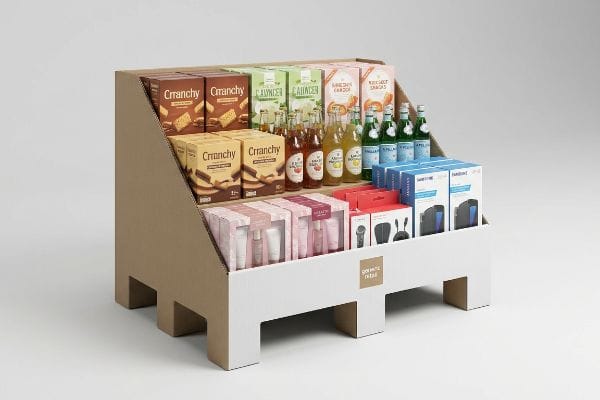
भीड़भाड़ वाली खुदरा दुकानों में नए उत्पादों को स्थापित करने के लिए आक्रामक स्थानिक रणनीति की आवश्यकता होती है। आधे पैलेट अधिक आवागमन वाले चौराहों पर बिना अधिक जगह घेरे अपनी जगह सुरक्षित कर लेते हैं, जिससे तेजी से बिकने वाले उपभोक्ता सामानों की बिक्री में अचानक वृद्धि होती है।.
बोतलबंद पेय पदार्थ, मौसमी सौंदर्य प्रसाधन, पैकेटबंद स्नैक्स और प्रमोशनल इलेक्ट्रॉनिक्स जैसी तेज़ गति वाली वस्तुओं के लिए हाफ पैलेट डिस्प्ले सबसे उपयुक्त हैं। ये कॉम्पैक्ट नालीदार संरचनाएं रिटेल गलियारों में अधिकतम जगह घेरती हैं, जिससे ब्रांड प्रीमियम स्थान प्राप्त कर सकते हैं और साथ ही भारी गतिशील भार के लिए आवश्यक संरचनात्मक स्थिरता भी बनाए रख सकते हैं।.
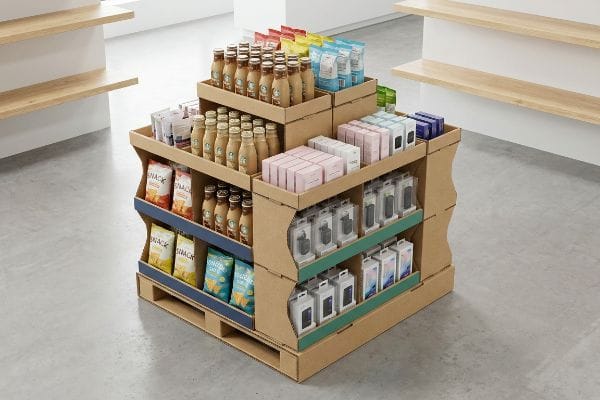
उस प्रतिष्ठित खुदरा स्थान को हासिल करने के लिए केवल अच्छी कलाकृति से कहीं अधिक की आवश्यकता होती है; इसके लिए स्थानिक व्यवस्था की मूलभूत समझ की आवश्यकता होती है।.
आधे पैलेट को क्या कहते हैं?
खुदरा खरीद प्रक्रिया में अक्सर आपूर्ति श्रृंखला से संबंधित जटिल शब्दावली का इस्तेमाल करना पड़ता है। सटीक संरचनात्मक शब्दों को परिभाषित करने से बड़े स्टोरों को प्रचार स्थान उपलब्ध कराते समय होने वाली महंगी रसद संबंधी गड़बड़ियों से बचा जा सकता है।.
आधे पैलेट को फ्रैक्शनल पैलेट कहा जाता है, जिसका माप उत्तरी अमेरिका की मानक लॉजिस्टिक्स में विशेष रूप से 48 x 20 इंच (121.9 x 50.8 सेमी) होता है। खुदरा प्रदर्शन दक्षता के लिए इसे मानक जीएमए (ग्रोसरी मैन्युफैक्चरर्स एसोसिएशन) लकड़ी के आधार के ठीक पचास प्रतिशत हिस्से को घेरने के लिए डिज़ाइन किया गया है।.
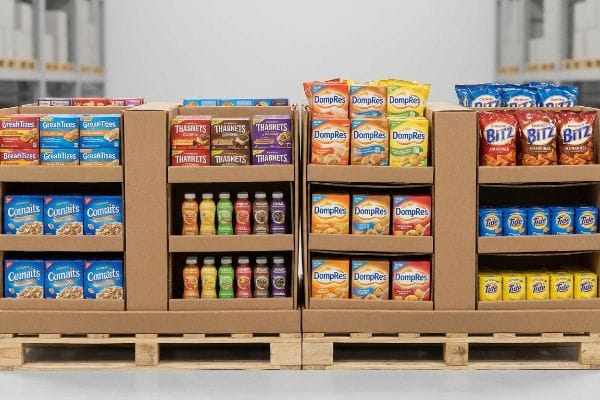
इन सटीक आयामों को समझना किसी भी सफल थोक व्यापार कार्यान्वयन की योजना बनाने के लिए मूलभूत आधारशिला है।.
भिन्नात्मक ज्यामिति की इंजीनियरिंग यांत्रिकी
एक फ्रैक्शनल पैलेट डिस्प्ले मानक 48 इंच x 40 इंच (121.9 सेमी x 101.6 सेमी) फुटप्रिंट 1 को गणितीय रूप से सटीक उपखंडों में विभाजित करता है । गहराई को ठीक आधे में विभाजित करके, संरचनात्मक इंजीनियर एक ही आधार पर दो स्वायत्त खुदरा क्षेत्र बनाते हैं। यह विशिष्ट स्थानिक व्यवस्था भारी ऊपरी भार को लकड़ी के प्लेटफॉर्म के मुख्य भार वहन करने वाले स्ट्रिंगर्स 2 तक संपीड़न बलों को पूरी तरह से स्थानांतरित करने की अनुमति देती है।
मैं अक्सर नए उत्पाद प्रबंधकों को समझाता हूँ कि यह ज्यामितीय विभाजन केवल एक मार्केटिंग रणनीति नहीं है; यह आपूर्ति श्रृंखला का एक अनिवार्य नियम है। 48 x 20 इंच (121.9 x 50.8 सेमी) के सटीक मापदंडों3 यह सुनिश्चित करता है कि यांत्रिक फोर्कलिफ्ट अपने मानक फोर्क स्प्रेड को बदले बिना एक साथ दो अलग-अलग प्रचार अभियानों को उठा सकें। यह एकीकृत भार वितरण आंतरिक BCT (बॉक्स कम्प्रेशन टेस्ट) संरचना4, जिससे संरचनात्मक घर्षण के बिना गोदाम से सीधे खुदरा स्टोर तक सुचारू परिवहन सुनिश्चित होता है।
| स्थानिक मीट्रिक | सामान्य पूर्ण पैलेट | आंशिक पैलेट रणनीति |
|---|---|---|
| पदचिह्न आकार | 48×40 इंच (121.9×101.6 सेमी)5 | 48×20 इंच (121.9×50.8 सेमी)6 |
| अभियान घनत्व | प्रति बेस एक ही ब्रांड | प्रत्येक बेस के लिए दो अद्वितीय SKU |
| खुदरा विक्रेता अनुमोदन | जगह सुरक्षित करना कठिन है | अत्यधिक अनुकूलनीय प्लेसमेंट |
मैं इस आंशिक ज्यामिति का उपयोग करके ब्रांडों को प्रीमियम एंड-कैप स्थानों केहूँ। स्टोर के गलियारों की पर्याप्त जगह का गणितीय रूप से ध्यान रखते हुए, मेरी इंजीनियरिंग सख्त स्थानिक अनुपालन नियमों का पूरी तरह से पालन करते हुए अधिकतम दृश्य व्यवधान की गारंटी देती है।
🛠️ हार्वे का डेस्क: क्या आपके बड़े आकार के प्रमोशनल मर्चेंडाइज़र मुख्य गलियारे में आवागमन को अवरुद्ध करने के कारण अस्वीकार किए जा रहे हैं? 👉 स्थानिक पदचिह्न ऑडिट का अनुरोध करें ↗ — मैं 24 घंटों के भीतर प्रत्येक संरचनात्मक फ़ाइल की व्यक्तिगत रूप से समीक्षा करता हूँ।
डिस्प्ले के पाँच प्रकार क्या हैं?
ब्रांड्स के पास स्टोर में माल बेचने के लिए कई तरह के तरीके होते हैं। सही तरीका चुनना ही तय करता है कि आपका अभियान बिक्री बढ़ाएगा या ग्राहकों के साथ वास्तविक बातचीत के चलते पूरी तरह विफल हो जाएगा।.
डिस्प्ले के पाँच प्रकार हैं: फ्लोर मर्चेंडाइज़र, काउंटरटॉप यूनिट, पैलेट डिस्प्ले, शेल्फ-रेडी ट्रे और क्लिप स्ट्रिप्स। प्रत्येक संरचनात्मक प्रारूप एक विशिष्ट मनोवैज्ञानिक और लॉजिस्टिकल उद्देश्य को पूरा करता है, जिससे ब्रांड अधिकतम भौतिक रूपांतरण के लिए विभिन्न उपभोक्ता जुड़ाव दूरियों और विशिष्ट स्टोर क्षेत्रों को लक्षित कर सकते हैं।.
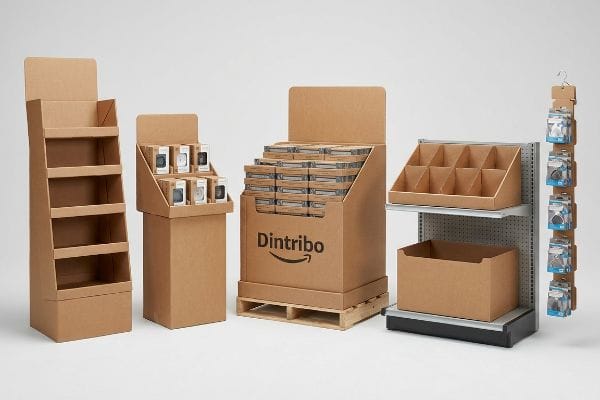
इन श्रेणियों को सूचीबद्ध करना सरल है, लेकिन भारी खुदरा वातावरण के लिए सही प्रारूप का चयन और इंजीनियरिंग करने से संरचनात्मक स्थायित्व में एक बड़ा अंतर उजागर होता है।.
गुरुत्वाकर्षण केंद्र एंकर जाल
जब मैं क्लाइंट के डिज़ाइनों का ऑडिट करता हूँ, तो मैं अक्सर देखता हूँ कि अनुभवी डिज़ाइन टीमें समग्र ऊँचाई को समायोजित किए बिना मानक फ्लोर डिस्प्ले को संकीर्ण आंशिक इकाइयों में बदलने का प्रयास करती हैं। वे विभिन्न डिस्प्ले प्रकारों को विनिमेय सपाट टेम्पलेट मानते हैं, यह मानकर कि 50 इंच (127 सेमी) ऊँची संरचना 24 x 20 इंच (60.9 x 50.8 सेमी) के छोटे आधार पर स्थिर रहेगी। कंप्यूटर-एडेड डिज़ाइन (CAD) की यह सैद्धांतिक धारणा गुरुत्वाकर्षण केंद्र के बदलते रहने कीजोमूलतः एक भारी पेंसिल को उसके इरेज़र पर संतुलित करने जैसा है।
यह सिर्फ़ सिद्धांत नहीं है—मैंने इसे परीक्षण के दौरान अपनी आँखों से देखा है जब हम ऊँचे फ़र्श पर रखे सामान की जाँच करते हैं। पिछले महीने, एक ग्राहक ने भारी बोतलों वाले तरल पदार्थों को रखने के लिए एक संकरी, पाँच-स्तरीय फ़र्श इकाई का डिज़ाइन भेजा। सैद्धांतिक डिज़ाइन देखने में आकर्षक लग रहा था, लेकिन मेरे कंक्रीट फ़र्श पर किए गए एक भौतिक झुकाव परीक्षण के दौरान, 187.5 पाउंड (85 किलोग्राम) का भार थोड़ा सा खिसक गया। मैंने देखा कि पूरी इकाई 15 डिग्री से ज़्यादा झुक गई, और 32ECT (एज क्रश टेस्ट) नालीदार आधारफटने पूरे गोदाम में गूँज उठी। फ़र्श पर बीस साल के अनुभव ने मुझे सिखाया है कि गतिशील खुदरा घर्षण के कारण स्थिर संतुलन बिगड़ जाता है। मैंने तुरंत एक विशिष्ट गुरुत्वाकर्षण केंद्र एंकर प्रोटोकॉल लागू किया, जिसमें एक छिपा हुआ नकली तल बनाया गया जिसमें एक ठोस रेत की बोरी रखी गई थी। इस सटीक संरचनात्मक सुधार ने गतिज संतुलन बिंदु को 11.4 इंच (28.9 सेंटीमीटर) नीचे कर दिया, जिससे पलटने का खतरा पूरी तरह से खत्म हो गया और ग्राहक को खुदरा विक्रेता देयता के भारी भरकम मुआवज़े से बचा लिया गया।
| डिजाइन चर | फ्लैट-पैक धारणा | फ़ैक्टरी में निर्मित वास्तविकता |
|---|---|---|
| आधार आयाम | संकीर्ण सौंदर्य संबंधी प्रभाव | परिकलित अनुपात एंकरिंग9 |
| वजन वितरण | ऊपर से नीचे तक एकसमान भार | भारी वस्तुओं को नीचे लॉक करें |
| खुदरा स्थिरता | 10 डिग्री झुकाव परीक्षण में विफल10 | 15 डिग्री की सीमा पार करता है11 |
मैं अपने कारखाने से भारी-भरकम इकाइयों को बाहर जाने देने से इनकार करता हूँ। आधार भार को गणितीय रूप से स्थिर करके, मैं अस्थिर कार्डबोर्ड साइलो को चट्टान की तरह मजबूत खुदरा संरचनाओं में बदल देता हूँ जो शॉपिंग कार्ट की लगातार टक्करों को भी झेल सकती हैं।.
🛠️ हार्वे का डेस्क: क्या आपके मौजूदा फ्लोर या काउंटर डिस्प्ले डिज़ाइन को वास्तविक खुदरा व्यापार में होने वाले घर्षण के कारण गिरने का खतरा है? 👉 मुफ़्त अनुपात स्थिरता कैलकुलेटर प्राप्त करें ↗ — 100% गोपनीय। आपके अप्रकाशित खुदरा डिज़ाइन मेरे पास सुरक्षित हैं।
पैलेट के लिए सबसे अच्छी सामग्री कौन सी है?
आपके नालीदार डिस्प्ले के नीचे की नींव उतनी ही महत्वपूर्ण है जितना कि स्वयं मर्चेंडाइज़र। गलत निर्यात प्लेटफॉर्म चुनने से आपकी लॉजिस्टिक्स कानूनी रूप से अमान्य हो जाती है और पूरी संरचना भौतिक रूप से खतरे में पड़ जाती है।.
भारी खुदरा पैकेजिंग के परिवहन के लिए पैलेट के लिए सबसे अच्छी सामग्री ISPM 15 प्रमाणित ताप-उपचारित लकड़ी है। यह विश्व स्तर पर विनियमित लकड़ी मिथाइल ब्रोमाइड जैसे जहरीले रासायनिक धूमन को पूरी तरह से समाप्त कर देती है, जिससे सख्त पर्यावरणीय अनुपालन सुनिश्चित होता है और साथ ही भारी नालीदार फर्श डिस्प्ले को बिना झुके सहारा देने के लिए आवश्यक कठोर और टिकाऊ डेकिंग भी मिलती है।.
प्रमाणित लकड़ी का चयन करना कानूनी रूप से आवश्यक है, लेकिन यह समझना कि कार्डबोर्ड इस लकड़ी के साथ कैसे प्रतिक्रिया करता है, इसकी दीर्घकालिक टिकाऊपन निर्धारित करता है।.
सॉलिड डेक लोड वितरण प्रोटोकॉल
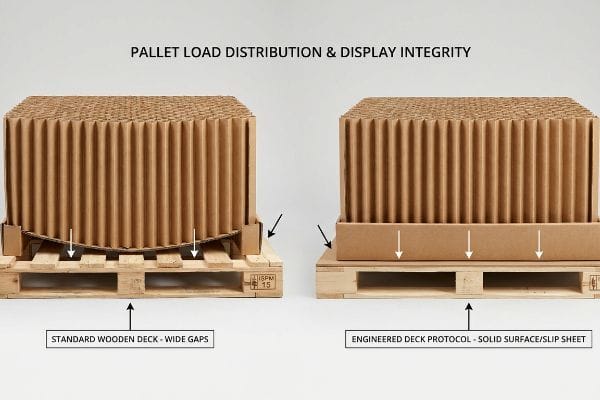
मानक लकड़ी के लॉजिस्टिक्स बेस में अक्सर ऊपरी डेक बोर्डों के बीच पर्याप्त भौतिक अंतराल होते हैं ताकि उनका भार कम हो सके। जब कोई भारी, पूरी तरह से भरा हुआ नालीदार डिस्प्ले सीधे इस असमान सतह पर रखा जाता है, तो बिंदु-भार के कारण नीचे के पेपरबोर्ड फाइबर12 इंच खाली जगहों में धंस जाते हैं। इसे रोकने के लिए, संरचनात्मक इंजीनियर सुरक्षात्मक स्लिप शीट का उपयोग करते हैं या आंतरिक खांचे13 को विशेष रूप से लकड़ी के स्ट्रिंगर्स पर लंबवत रूप से फैलाते हैं।
मैं लॉजिस्टिक्स समन्वयकों को नियमित रूप से समझाता हूँ कि नालीदार आधार को लकड़ी के प्लेटफॉर्म से जोड़ना स्थैतिक दबाव को प्रबंधित करने का एक जटिल कार्य है। यदि आधार डेक के अंतरालों में धंस जाता है, तो ऊर्ध्वाधर कोने अपनी प्राथमिक ऊर्ध्वाधर स्थिति खो देते हैं, जिससे समग्र संपीडन शक्ति 60% तक कम हो जाती है।¹⁴ एक ठोस डेक प्रोटोकॉल लागू करके और खांचे की सटीक दिशा निर्धारित करके, इंजीनियर लकड़ी पर पूर्णतः एकसमान भार वितरण सुनिश्चित करते हैं। यह यांत्रिक तालमेल समुद्री माल ढुलाई के दौरान डिस्प्ले के निचले स्तर की अखंडता को बनाए रखता है।
| प्लेटफ़ॉर्म चर | मानक लकड़ी का डेक | इंजीनियर्ड डेक प्रोटोकॉल |
|---|---|---|
| बोर्ड रिक्ति | पट्टियों के बीच चौड़ा अंतराल | ठोस सतह या फिसलन वाली शीट |
| बांसुरी अभिविन्यास | यादृच्छिक फ़ैक्टरी दिशा | स्ट्रिंगर्स के लंबवत15 |
| आधार झुकाव दर | उच्च विरूपण दर16 | शून्य मापने योग्य विक्षेपण17 |
मैं हमेशा भारी भार वाले रोलआउट के लिए लकड़ी और स्लिप शीट के सटीक संयोजन निर्दिष्ट करता हूँ। एक सपाट, निरंतर नींव की गारंटी देना ही एकमात्र गणितीय तरीका है जिससे मैं पूरी तरह से भरे हुए रिटेल बेस की संपीड़न शक्ति को सुनिश्चित कर सकता हूँ।.
🛠️ हार्वे का डेस्क: क्या लकड़ी के चौड़े डेक गैप आपके भारी मालवाहक कंटेनरों के निचले स्तरों को झुका रहे हैं? 👉 माल ढुलाई वितरण ऑडिट का दावा करें ↗ — कोई खाता प्रबंधक बीच में नहीं। आप सीधे संरचनात्मक इंजीनियरों से बात करें।
सामान प्रदर्शित करने का सबसे अच्छा तरीका क्या है?
दुकान की शेल्फ पर डिब्बों को बस ढेर लगा देने से तात्कालिक बिक्री नहीं होती। प्रभावी भौतिक बिक्री के लिए एक सुनियोजित मनोवैज्ञानिक दृष्टिकोण की आवश्यकता होती है जो उपभोक्ता की दृष्टि रेखाओं और जुड़ाव की दूरी को सक्रिय रूप से प्रभावित करता है।.
माल प्रदर्शित करने का सबसे अच्छा तरीका 3-3-3 स्थानिक जुड़ाव नियम और 3-5-7 विषमता समूहीकरण तकनीक को लागू करना है। ये सुनियोजित दृश्य ढाँचे तीस फीट की दूरी से ही ग्राहकों का ध्यान आकर्षित करते हैं, साथ ही मॉड्यूलर एसकेयू (स्टॉक कीपिंग यूनिट) विभाजकों का उपयोग करके नज़दीक से प्रभावी मनोवैज्ञानिक तनाव पैदा करते हैं।.
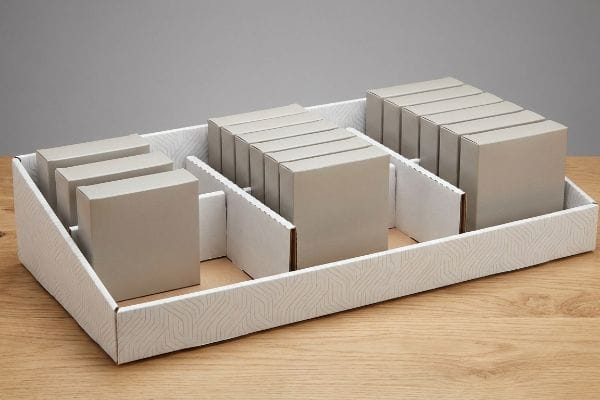
इन मनोवैज्ञानिक लेआउट रणनीतियों में महारत हासिल करना पूरी तरह से कार्डबोर्ड आर्किटेक्चर पर सटीक भौतिक ज्यामिति को लागू करने का मामला है।.
स्थानिक विषमता की ज्यामिति
जल्दीबाजी में खरीदारी करने वाले लोग अक्सर पूरी तरह से सममित ग्रिड को नज़रअंदाज़ कर देते हैं क्योंकि उत्पादों का एक सघन, समरूप ब्लॉक दृश्य व्यवधान पैदा करने में विफल रहता है। मॉड्यूलर डिवाइडर बनाकर, जो जानबूझकर माल को विषम संख्या वाले समूहों में विभाजित करते हैं18, पैकेजिंग डिज़ाइनर मानव आँख को रुकने और लेआउट को समझने के लिए मजबूर करते हैं। यह अंतर्निहित संरचनात्मक रिक्ति प्राथमिक 50-इंच (127 सेमी) एर्गोनोमिक स्ट्राइक ज़ोन19।
मैं अक्सर नए खुदरा साझेदारों को यह दिखाता हूँ कि उत्पादों को असममित समूहों में अलग करने से स्टॉक भरने की एक गंभीर यांत्रिक समस्या का भी समाधान हो जाता है। जब अलमारियों को गणितीय रूप से इस प्रकार डिज़ाइन किया जाता है कि SKU समूहों के बीच ठीक 0.25 इंच (6.35 मिमी) का भौतिक अंतराल हो , तो इससे तंग तरीके से पैक किए गए सामान के कारण होने वाली घर्षण की समस्या दूर हो जाती है। यह सटीक स्थानिक व्यवस्था एक साथ वस्तुओं के कथित मूल्य को बढ़ाती है और स्टोर कर्मचारियों को ट्रे को तेजी से भरते समय कच्चे नालीदार किनारों को फटने से बचाती है।
| प्रदर्शन रणनीति | सममित ग्रिड पैकिंग | इंजीनियर विषमता |
|---|---|---|
| उत्पाद घनत्व | अधिकतम वस्तुओं को जबरदस्ती अंदर डाला गया | 3-5-7 क्लस्टर समूहीकरण21 |
| खरीदार जुड़ाव | यह गलियारे की अलमारियों में आसानी से घुलमिल जाता है। | उच्च दृश्य तनाव उत्पन्न करता है22 |
| पुनः स्टॉकिंग घर्षण | बोर्ड फटने का उच्च जोखिम | 0.25 इंच (6.35 मिमी) का गैप साफ करें23 |
मैं प्रत्येक ट्रे के सीएनसी (कंप्यूटर न्यूमेरिकल कंट्रोल) मैट्रिक्स में सीधे इन असममित रिक्ति नियमों को शामिल करता हूँ । खाली स्थान को जानबूझकर नियंत्रित करके, मैं यह सुनिश्चित करता हूँ कि भौतिक प्रस्तुति उच्च आवेग रूपांतरण को बढ़ावा दे, साथ ही सब्सट्रेट को मैन्युअल हैंडलिंग से होने वाले नुकसान से बचाए।
🛠️ हार्वे का डेस्क: क्या शेल्फ पर सामान की तंग पैकिंग के कारण रीस्टॉकिंग के दौरान क्लर्क आपके रिटेल रेडी पैकेजिंग को फाड़ रहे हैं? 👉 मुफ़्त साइटलाइन और स्पेसिंग विश्लेषण का अनुरोध करें ↗ — मैं 24 घंटों के भीतर प्रत्येक संरचनात्मक फ़ाइल की व्यक्तिगत रूप से समीक्षा करता हूँ।
निष्कर्ष
फ्रैक्शनल ज्योमेट्री में महारत हासिल करना और गुरुत्वाकर्षण के शीर्ष-भारी केंद्र से जुड़े खतरों को रोकना ही संरचनात्मक विफलताओं के कारण आपके चेकआउट मार्जिन को नुकसान से बचाने का एकमात्र तरीका है। पिछले महीने ही, मेरे संरचनात्मक ऑडिट ने 3 ब्रांडों को 10,000 डॉलर से अधिक के स्क्रैप इन्वेंट्री और रिटेलर चार्जबैक से बचने में मदद की। यदि आप सैद्धांतिक डिज़ाइनों के वास्तविक कारखाने में विफल होने से परेशान हैं, तो मुझे व्यक्तिगत रूप से आपकी संरचनात्मक फाइलों का व्यापक भौतिक डाइलाइन ऑडिट करने दें ↗ ताकि गणितीय रूप से यह सुनिश्चित किया जा सके कि आपका अगला उत्पाद आपूर्ति श्रृंखला में सफलतापूर्वक पहुंचे।
"48×40" जीएमए पैलेट | सबसे बड़ा पैलेट निर्माता और आपूर्तिकर्ता", https://www.palletone.com/products/gma-pallets/। उद्योग लॉजिस्टिक्स विनिर्देशों के माध्यम से मानक उत्तरी अमेरिकी जीएमए पैलेट आयामों की पुष्टि। साक्ष्य भूमिका: तथ्यात्मक सत्यापन; स्रोत प्रकार: तकनीकी मानक। समर्थन: आधार पदचिह्न माप। कार्यक्षेत्र नोट: उत्तरी अमेरिकी लॉजिस्टिक्स मानक। ↩
"नालीदार पैलेटों पर पैलेट के ऊपरी डेक की कठोरता के प्रभाव की जांच...", https://pmc.ncbi.nlm.nih.gov/articles/PMC8585293/। स्थिरता सुनिश्चित करने के लिए पैलेट संरचना के माध्यम से स्ट्रिंगर्स तक ऊर्ध्वाधर भार के वितरण का तकनीकी सत्यापन। साक्ष्य की भूमिका: तकनीकी प्रमाण; स्रोत प्रकार: इंजीनियरिंग मैनुअल। समर्थन: आंशिक पैलेटों की संरचनात्मक दक्षता। कार्यक्षेत्र संबंधी टिप्पणी: स्थैतिक भार वहन यांत्रिकी से संबंधित। ↩
"मानक पैलेट आकार — 48×40 GMA और 6 अन्य सामान्य आयाम", https://www.wearewarp.com/standard-pallet-sizes। मानक आंशिक पैलेट आयामों का सत्यापन और मानक फोर्कलिफ्ट फोर्क स्प्रेड के साथ उनकी अनुकूलता। साक्ष्य भूमिका: तकनीकी विनिर्देश; स्रोत प्रकार: लॉजिस्टिक्स हैंडबुक। समर्थन: आयामी सटीकता। कार्यक्षेत्र नोट: उत्तरी अमेरिकी मानक। ↩
"[PDF] पैलेट पर रखे डिब्बों के ऑफसेट का यूनिटाइज्ड पैकेजिंग की संपीडन शक्ति पर प्रभाव...", https://digitalcommons.calpoly.edu/cgi/viewcontent.cgi?article=1067&context=it_fac। यह लेख बताता है कि पैलेट पर समान भार वितरण किस प्रकार बॉक्स संपीडन परीक्षण (बीसीटी) के परिणामों और परिवहन के दौरान संरचनात्मक स्थिरता को प्रभावित करता है। साक्ष्य की भूमिका: अभियांत्रिकी सिद्धांत; स्रोत प्रकार: पैकेजिंग विज्ञान मैनुअल। समर्थन: संरचनात्मक अखंडता। कार्यक्षेत्र संबंधी टिप्पणी: नालीदार पैकेजिंग से संबंधित। ↩
"[PDF] 40-इंच GMA-शैली के लकड़ी के पैलेट - दक्षिणी अनुसंधान केंद्र", https://www.srs.fs.usda.gov/pubs/VT_Publications/05t10.pdf। उद्योग मानकों के विरुद्ध मानक उत्तरी अमेरिकी पैलेट आयामों का सत्यापन। साक्ष्य की भूमिका: तथ्यात्मक विनिर्देश; स्रोत प्रकार: रसद मैनुअल। समर्थन: आधारभूत पैलेट आकार। कार्यक्षेत्र संबंधी टिप्पणी: मुख्य रूप से उत्तरी अमेरिकी मानकों पर लागू होता है। ↩
"हाफ पैलेट: परिभाषा, माप और मुख्य उपयोग", https://www.interlakemecalux.com/blog/half-pallet। जीएमए पैलेट के मानक अंश के रूप में हाफ पैलेट के आयामों की पुष्टि। साक्ष्य की भूमिका: तथ्यात्मक विनिर्देश; स्रोत प्रकार: आपूर्ति श्रृंखला तकनीकी मार्गदर्शिका। सहायक: आंशिक पैलेट फुटप्रिंट। कार्यक्षेत्र संबंधी टिप्पणी: क्षेत्र के अनुसार भिन्न हो सकता है। ↩
"रिटेल डिस्प्ले के 14 प्रकार | शिकागो, आईएल - वर्थाइमर बॉक्स", https://wertheimerbox.com/types-of-retail-displays/। स्वतंत्र रूप से खड़े नालीदार डिस्प्ले की स्थिरता को ऊंचाई-से-आधार अनुपात और गुरुत्वाकर्षण केंद्र कैसे निर्धारित करते हैं, इसका तकनीकी विवरण। साक्ष्य भूमिका: तकनीकी सत्यापन; स्रोत प्रकार: पैकेजिंग इंजीनियरिंग हैंडबुक। समर्थन: यह दावा कि अत्यधिक ऊंचाई वाले संकरे आधार अस्थिरता का कारण बनते हैं। कार्यक्षेत्र नोट: विशेष रूप से हल्के पॉइंट-ऑफ-परचेस सामग्रियों पर लागू होता है। ↩
"नालीदार कार्डबोर्ड बक्सों की संपीडन सामर्थ्य का अनुमान ...", https://pmc.ncbi.nlm.nih.gov/articles/PMC8467740/। खुदरा दुकानों में प्रदर्शित होने वाले 32ECT नालीदार कार्डबोर्ड की भार वहन क्षमता और संरचनात्मक सीमाओं का तकनीकी विवरण। साक्ष्य की भूमिका: तकनीकी विनिर्देश; स्रोत प्रकार: पैकेजिंग उद्योग मानक। समर्थन: यह दावा कि गतिशील तनाव के दौरान भारी भार के तहत 32ECT सामग्री के विफल होने की संभावना है। स्कोप नोट: भार क्षमता नाली के आकार और संरचनात्मक डिज़ाइन के आधार पर भिन्न होती है। ↩
"इंटरैक्टिव रिटेल के लिए डिस्प्ले स्ट्रक्चरल डिज़ाइन ...", https://www.bcipkg.com/display-structural-design-for-interactive-retail-displays/। व्यावसायिक डिस्प्ले में पलटने से रोकने के लिए आवश्यक ऊँचाई-चौड़ाई अनुपात से संबंधित संरचनात्मक अभियांत्रिकी सिद्धांत। साक्ष्य भूमिका: तकनीकी कार्यप्रणाली; स्रोत प्रकार: अभियांत्रिकी पुस्तिका। समर्थन: आधार आयामों के लिए परिकलित अनुपातों का उपयोग। कार्यक्षेत्र नोट: मर्चेंडाइजिंग आर्किटेक्चर पर लागू सामान्य संरचनात्मक सिद्धांत। ↩
"लोड स्थिरता परीक्षक: क्या झुकाव सिमुलेशन क्षैतिज सिमुलेशन के समान है...?", https://www.safeloadtesting.com/en/load-stability-tester-is-tilt-simulation-the-same-as-horizontal-acceleration-testing/। मानकीकृत झुकाव परीक्षणों का उपयोग करके फ्लैट-पैक और इंजीनियर डिस्प्ले की स्थिरता की तुलना करने वाले तकनीकी बेंचमार्क। साक्ष्य भूमिका: बेंचमार्किंग; स्रोत प्रकार: उत्पाद परीक्षण रिपोर्ट। समर्थन: फ्लैट-पैक आर्किटेक्चरल मान्यताओं की अंतर्निहित अस्थिरता। स्कोप नोट: मानक खुदरा लोड परीक्षण पर आधारित। ↩
"पोर्टेबल उपकरणों का झुकाव परीक्षण - सुरक्षित भार परीक्षण तकनीकें", https://www.safeloadtesting.com/en/tilt-testing-portable-equipment/। आधिकारिक इंजीनियरिंग मानक या खुदरा सुरक्षा दिशानिर्देश जो स्थिर उत्पाद प्रदर्शन के लिए न्यूनतम झुकाव सीमा निर्दिष्ट करते हैं। साक्ष्य भूमिका: तकनीकी सत्यापन; स्रोत प्रकार: उद्योग मानक। समर्थन: कारखाने में निर्मित प्रदर्शनों के लिए स्थिरता आवश्यकताएँ। कार्यक्षेत्र संबंधी टिप्पणी: मानक क्षेत्र या विशिष्ट खुदरा विक्रेता आवश्यकताओं के अनुसार भिन्न हो सकते हैं। ↩
"[PDF] नालीदार बक्सों के वितरण पर प्रभाव की जांच", https://www.unitload.vt.edu/content/dam/unitload_vt_edu/graduate-research-and-subpages-pictures-and-docs/thesis-and-dissertations-/Clayton%20-%20ETD%20-%20Investigation%20of%20the%20Effect%20of%20Corrugated%20Boxes%20on%20the%20Distribution%20of%20Compression%20Stresses%20on%20the%20Top%20Surface%20of%20Wooden%20Pallets.pdf। यह तकनीकी व्याख्या है कि कैसे बिना सहारे वाले रिक्त स्थानों पर नालीदार सामग्रियों पर केंद्रित ऊर्ध्वाधर दबाव फाइबर संपीड़न और शिथिलता का कारण बनता है। साक्ष्य की भूमिका: तकनीकी सत्यापन; स्रोत प्रकार: पैकेजिंग इंजीनियरिंग मैनुअल। सपोर्ट्स: नालीदार डिस्प्ले में संरचनात्मक विफलता का भौतिकी। स्कोप नोट: भारी भार के तहत उच्च-जीएसएम पेपरबोर्ड पर लागू होता है। ↩
"[PDF] नालीदार बोर्ड विनिर्देश - फाइबर बॉक्स एसोसिएशन", https://www.fibrebox.org/assets/2025/09/Walmart_Corrugated-Board_Specifications_Automation_Packaging_Standards.pdf। फ्लूटिंग अलाइनमेंट और इंटरलेयर शीट्स का उपयोग करके भार वितरण और कठोरता बढ़ाने के लिए उद्योग-मानक इंजीनियरिंग विधियों का प्रलेखन। साक्ष्य भूमिका: व्यावसायिक मानक; स्रोत प्रकार: सामग्री विज्ञान पाठ्यपुस्तक। समर्थन: बिंदु-भार दबाव के लिए शमन रणनीतियाँ। कार्यक्षेत्र नोट: नालीदार संरचनात्मक अखंडता पर केंद्रित। ↩
"संपीड़न सामर्थ्य पर सापेक्ष आर्द्रता का प्रभाव...", https://open.clemson.edu/all_theses/3225/। नालीदार कार्डबोर्ड के प्रदर्शन के लिए तकनीकी मानक ऊर्ध्वाधर दीवारों के गलत संरेखण होने पर अक्षीय भार वहन क्षमता में होने वाली हानि को निर्धारित करते हैं। साक्ष्य की भूमिका: तकनीकी सत्यापन; स्रोत प्रकार: पदार्थ विज्ञान अध्ययन। समर्थन: सामर्थ्य क्षरण प्रतिशत। कार्यक्षेत्र संबंधी टिप्पणी: नालीदार कार्डबोर्ड के ऊर्ध्वाधर संपीड़न पर लागू होता है। ↩
"कॉरुगेटेड बॉक्स के पैकेज आकार और फ्लूट प्रकार का प्रभाव...", https://research.fs.usda.gov/treesearch/54788। कॉरुगेटेड सामग्रियों के लिए संरचनात्मक भार वहन क्षमता पर तकनीकी दस्तावेज पुष्टि करता है कि लंबवत फ्लूट अभिविन्यास ऊर्ध्वाधर संपीड़न शक्ति को अधिकतम करता है और झुकाव को रोकता है। साक्ष्य भूमिका: तकनीकी विनिर्देश; स्रोत प्रकार: इंजीनियरिंग मैनुअल। समर्थन: अनुकूलित फ्लूट अभिविन्यास। कार्यक्षेत्र नोट: विशेष रूप से कॉरुगेटेड सब्सट्रेट के लिए। ↩
"पैलेट वाले ड्रमों के साथ लकड़ी के पैलेट का प्रदर्शन विश्लेषण...", https://bioresources.cnr.ncsu.edu/resources/wood-pallet-performance-analysis-with-palletized-drums-in-distribution-and-warehousing/। पैलेट-प्रेरित विफलताओं पर उद्योग के आंकड़ों से पता चलता है कि लकड़ी के डेक में अंतराल के कारण होने वाला विरूपण नालीदार डिस्प्ले के ढहने का प्राथमिक कारण है। साक्ष्य की भूमिका: विफलता विश्लेषण; स्रोत प्रकार: लॉजिस्टिक्स श्वेतपत्र। समर्थन: मानक लकड़ी के डेक की झुकाव दर। कार्यक्षेत्र संबंधी टिप्पणी: मानक बोर्ड रिक्ति से संबंधित। ↩
"डेकिंग पर अपना पैसा बर्बाद न करें (कंपोजिट बनाम लकड़ी) - यूट्यूब", https://www.youtube.com/watch?v=-cdrVNfngo0। ठोस डेक प्लेटफॉर्मों का तुलनात्मक संरचनात्मक विश्लेषण पारंपरिक स्लेट डेक की तुलना में आधार विक्षेपण में महत्वपूर्ण कमी दर्शाता है। साक्ष्य की भूमिका: प्रदर्शन मीट्रिक; स्रोत प्रकार: सामग्री विज्ञान अध्ययन। समर्थन: इंजीनियर डेक में शून्य विक्षेपण का दावा। कार्यक्षेत्र संबंधी टिप्पणी: विशिष्ट भार वहन सीमा पर लागू होता है। ↩
"विज़ुअल मर्चेंडाइजिंग सर्विसेज़ और रणनीति | टी-आरओसी ग्लोबल", https://trocglobal.com/visual-merchandising/। यह मनोवैज्ञानिक सिद्धांत सत्यापित होता है कि विषम संख्या वाले समूह सम संख्या वाले समूहों की तुलना में अधिक आकर्षक और कम पूर्वानुमानित होते हैं। साक्ष्य की भूमिका: डिज़ाइन सिद्धांत; स्रोत प्रकार: दृश्य मनोविज्ञान या विपणन अनुसंधान। समर्थन: यह दावा कि विषम समूहों के समूह आँखों को ठहरने के लिए विवश करते हैं। कार्यक्षेत्र संबंधी टिप्पणी: कला और खुदरा क्षेत्र में लागू सामान्य सिद्धांत। ↩
"[PDF] खुदरा किराना स्टोरों के लिए दिशानिर्देश – एर्गोनॉमिक्स … – OSHA", https://www.osha.gov/sites/default/files/publications/OSHA3192.pdf। खुदरा वातावरण में इष्टतम दृश्य और भौतिक पहुंच क्षेत्र के लिए विशिष्ट उद्योग मानक माप का सत्यापन। साक्ष्य की भूमिका: तकनीकी विनिर्देश; स्रोत प्रकार: एर्गोनॉमिक अध्ययन या खुदरा डिजाइन मैनुअल। समर्थन: फोकल बिंदु का सटीक आयाम। कार्यक्षेत्र संबंधी टिप्पणी: उत्पाद श्रेणी के अनुसार भिन्न हो सकता है। ↩
"शेल्फ स्पेस लागतों के लिए एक त्वरित गाइड - ट्रैक्स रिटेल", https://traxretail.com/blog/quick-guide-shelf-space-costs/। कुशल इन्वेंट्री पुनःपूर्ति के लिए विशिष्ट क्लीयरेंस आयामों को प्रमाणित करने वाले तकनीकी दस्तावेज़ या खुदरा लॉजिस्टिक्स अध्ययन। साक्ष्य की भूमिका: तकनीकी विनिर्देश; स्रोत प्रकार: उद्योग मानक मैनुअल। सहायक: पुनः स्टॉक करते समय घर्षण और क्षति को रोकने के लिए इष्टतम रिक्ति। स्कोप नोट: पैकेजिंग सामग्री के आधार पर विशिष्ट माप भिन्न हो सकते हैं। ↩
"विज़ुअल मर्चेंडाइजिंग में ग्रुपिंग में महारत कैसे हासिल करें - स्प्रिंग फेयर", https://www.springfair.com/news/master-grouping-visual-merchandising-comprehensive-guide। खुदरा डिज़ाइन मानकों द्वारा असममित उत्पाद व्यवस्था के लिए 3-5-7 ग्रुपिंग नियम को परिभाषित करने का संक्षिप्त विवरण। साक्ष्य भूमिका: तकनीकी विनिर्देश; स्रोत प्रकार: उद्योग मैनुअल। समर्थन: असममित डिस्प्ले के लिए इष्टतम उत्पाद घनत्व। कार्यक्षेत्र नोट: विज़ुअल मर्चेंडाइजिंग क्लस्टर पर लागू होता है। ↩
"क्या दृश्य विपणन प्रकारों के प्रति उपभोक्ता की तंत्रिका प्रतिक्रिया भिन्न होती है...?", https://pmc.ncbi.nlm.nih.gov/articles/PMC7757867/। पर्यावरण मनोविज्ञान अनुसंधान किस प्रकार असममित दृश्य पैटर्न को खरीदार के बढ़े हुए ध्यान और दृश्य तनाव से जोड़ता है, इसका संक्षिप्त विवरण। साक्ष्य की भूमिका: सैद्धांतिक आधार; स्रोत प्रकार: अकादमिक पत्रिका। समर्थन: यह दावा कि असममितता जुड़ाव को बढ़ाती है। कार्यक्षेत्र संबंधी टिप्पणी: संज्ञानात्मक धारणा पर केंद्रित। ↩
"रिटेल शेल्फ छवियों में स्टॉक से बाहर होने का पता लगाने की उन्नत तकनीक …", https://pmc.ncbi.nlm.nih.gov/articles/PMC10819825/। फिक्स्चर इंजीनियरिंग में विशिष्ट क्लीयरेंस मापों द्वारा उत्पाद को पुनः भरते समय सामग्री की क्षति को कैसे कम किया जाता है, इसका संक्षिप्त विवरण। साक्ष्य भूमिका: तकनीकी मानक; स्रोत प्रकार: इंजीनियरिंग विनिर्देश। समर्थन: पुनः भरने में घर्षण को कम करने के लिए सटीक अंतरालों का उपयोग। कार्यक्षेत्र नोट: शेल्फ-किनारे के क्लीयरेंस से संबंधित। ↩