संरचनात्मक पैकेजिंग को समझना बेहद जटिल लग सकता है। आपको एक विश्वसनीय ढांचा चाहिए, अन्यथा उत्पाद क्षतिग्रस्त हो सकते हैं और शिपिंग बजट बर्बाद हो सकता है। आइए एक मजबूत नींव बनाएं।.
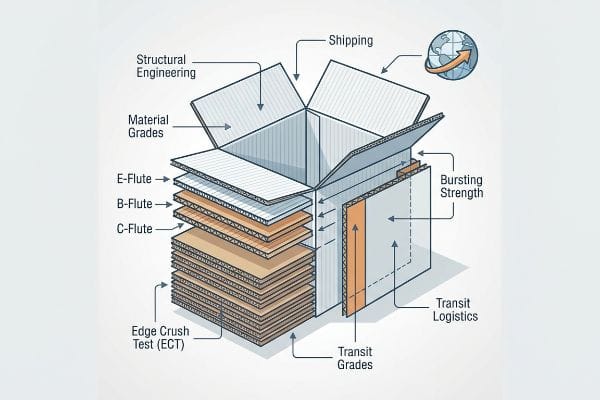
कार्डबोर्ड बॉक्स के लिए यह गाइड एक व्यापक ढांचा है जो खुदरा बिक्री के लिए तैयार पैकेजिंग के निर्माण हेतु आवश्यक संरचनात्मक इंजीनियरिंग, सामग्री ग्रेड और भौतिक लॉजिस्टिक्स का विस्तृत विवरण प्रदान करता है। इसमें फ्लूट के प्रकार, बोर्ड की मजबूती के परीक्षण और अनुपालन मापदंड जैसे तत्व शामिल हैं, ताकि यह सुनिश्चित हो सके कि आपका उत्पाद परिवहन के दौरान सुरक्षित रहे और वैश्विक स्तर पर शेल्फ पर उसकी दृश्यता अधिकतम हो।.
मेरी जैसी किसी सुविधा से भारी मात्रा में कंटेनर भरकर माल मंगवाने से पहले, आपको उन भौतिक वास्तविकताओं को समझना होगा जो यह निर्धारित करती हैं कि वास्तविक दुनिया के दबाव में ये संरचनाएं कैसा प्रदर्शन करती हैं।.
RSC और HSC बॉक्स में क्या अंतर है?
इन दो मूलभूत शैलियों में से किसी एक को चुनना आपकी संपूर्ण आपूर्ति श्रृंखला के प्रवाह और संरचनात्मक भार वहन क्षमता को निर्धारित करता है।.
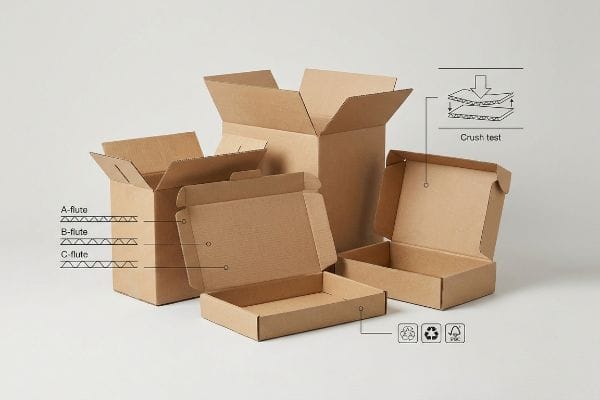
RSC और HSC बॉक्स के बीच का अंतर उनके ऊपरी फ्लैप की बनावट पर आधारित है। RSC (रेगुलर स्लॉटेड कंटेनर) में फ्लैप बिल्कुल बीच में मिलते हैं जिससे पूरी तरह से सील हो जाता है, जबकि HSC (हाफ स्लॉटेड कंटेनर) में ऊपरी फ्लैप नहीं होते हैं, जिससे यह एक खुला ऊपरी ढांचा बन जाता है जो खुदरा बिक्री के लिए तैयार शेल्फ तक आसान पहुंच के लिए आदर्श है।.
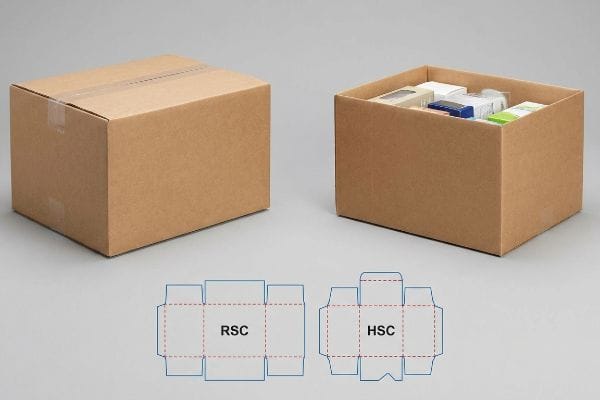
इस यांत्रिक अंतर को समझना आपकी पैक-आउट लाइनों को अनुकूलित करने और कारखाने में अनावश्यक सामग्री की बर्बादी को रोकने की दिशा में पहला कदम है।.
फ्लैप संरचनाओं के पीछे की इंजीनियरिंग यांत्रिकी
संरचनात्मक मजबूती काफी हद तक निरंतर ऊर्ध्वाधर सतहों पर निर्भर करती है। एक आरएससी (RSC) 360 डिग्री का पूर्ण घेरा प्रदान करता है, जो पैलेट पर दोहरी स्टैकिंग किए जाने पर शीर्ष भार के दबाव को चारों ऊर्ध्वाधर दीवारों पर समान रूप से वितरित करता है। इसके विपरीत, एक एचएससी (HSC) उस शीर्ष घेरे को हटाकर स्लाइड-ओवर कवर या तत्काल डिस्प्ले बिन, जिससे अनाज की दिशा द्वारा नीचे की ओर लगने वाले संपीडन बल को संभालने का तरीका मौलिक रूप से बदल जाता है।
एक संरचनात्मक अभियंता के रूप में, मैं इस अंतर को पूरी तरह से सामग्री की उपज और पैक-आउट गति के परिप्रेक्ष्य से देखता हूँ। चूंकि एचएससी में ऊपरी फ्लैप नहीं होते, इसलिए प्रति इकाई कम कच्चे नालीदार बोर्ड की खपत होती है, जिससे कुल वजन तुरंत कम हो जाता है। हालांकि, इस निरंतर ऊपरी सतह के न होने का मतलब है कि यदि भार वहन करने के लिए कोई कठोर आंतरिक उत्पाद न हो, तो खुले किनारे सीधे ऊर्ध्वाधर बल के संपर्क में आने पर कुचलने के लिए अत्यधिक संवेदनशील होते हैं। इसलिए, जब मैं किसी ग्राहक की शेल्फ-रेडी ट्रे के लिए एचएससी निर्दिष्ट करता हूँ, तो मुझे यह सुनिश्चित करना होता है कि आंतरिक नालीदार खांचे पूरी तरह से लंबवत संरेखित हों ताकि ईसीटी (एज क्रश टेस्ट) की मजबूती को अधिकतम किया जा सके, जिससे स्थिर करने वाले ऊपरी फ्लैप की कमी की भरपाई हो सके।.
| विशेषता | आरएससी पैकेजिंग | एचएससी इंजीनियरिंग वास्तविकता |
|---|---|---|
| शीर्ष संलग्नक | पूर्ण केंद्र-मिलन फ्लैप | खुला हुआ या अलग ढक्कन वाला कवर |
| सामग्री उपज | मानक बोर्ड की खपत | प्रति यूनिट कम वर्ग फुट1 |
| संरचनात्मक भार | ऊपरी फ्लैप कोनों को स्थिरता प्रदान करते हैं।2 | आंतरिक उत्पाद पर अत्यधिक निर्भर करता है3 |
मैं कभी भी केवल दिखावट के आधार पर बॉक्स के प्रकार तय नहीं करता। आपके विशिष्ट को-पैकिंग वर्कफ़्लो के अनुसार सटीक क्लोज़र मैकेनिज़्म का चयन यह सुनिश्चित करता है कि आप ऐसी सामग्री के लिए भुगतान न करें जिसे आप रिटेल शेल्फ पर आसानी से फाड़ देंगे।.
🛠️ हार्वे का डेस्क: क्या आपके भारी चेकआउट ट्रे स्टोर तक पहुंचने से पहले ही आपके शिपिंग ROI को बुरी तरह प्रभावित कर रहे हैं? 👉 मुफ़्त स्ट्रक्चरल डायलाइन ऑडिट करवाएं ↗ — मैं 24 घंटों के भीतर हर स्ट्रक्चरल फ़ाइल की व्यक्तिगत रूप से समीक्षा करता हूं।
तीन प्रकार के बक्से कौन-कौन से हैं?
पैकेजिंग को वर्गीकृत करने का मूल आधार कागज की वे भौतिक परतें हैं जो आपके उत्पाद को आपूर्ति श्रृंखला में होने वाली क्षति से बचाती हैं।.
तीन प्रकार के बक्से होते हैं: सिंगल-वॉल, डबल-वॉल और ट्रिपल-वॉल नालीदार बक्से। ये वर्गीकरण सीधे तौर पर फ्लैट लाइनरबोर्ड के बीच चिपकाए गए नालीदार कागज़ के टुकड़ों की संख्या को दर्शाते हैं, जो अंतरराष्ट्रीय स्तर पर माल ढुलाई के दौरान समग्र फटने की क्षमता, स्टैकिंग क्षमता और झटके को सोखने की क्षमता को निर्धारित करते हैं।.
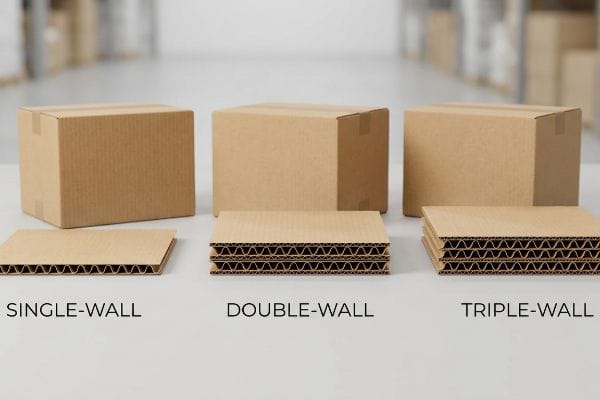
जब आप सैद्धांतिक श्रेणियों से वास्तविक कारखाने के स्तर पर जाते हैं, तो गलत बोर्ड प्रोफाइल का चयन परिवहन के दौरान होने वाले नुकसान के कारण आपके लाभ मार्जिन को तुरंत खत्म कर देता है।.
पैलेट ओवरहैंग संपीड़न विफलता
जब मैं ग्राहकों की डाईलाइन का ऑडिट करता हूँ, तो मैं अक्सर देखता हूँ कि खरीद टीमें भारी फ्लोर डिस्प्ले के लिए मानक सिंगल-वॉल बॉक्स का इस्तेमाल करती हैं ताकि प्रति यूनिट कुछ सेंट बचाए जा सकें। वे मान लेते हैं कि अगर कच्चा माल बुनियादी बर्स्ट टेस्ट पास कर लेता है, तो वह छत तक भरे होने पर भी 6,000 मील (9656 किमी) की समुद्री यात्रा को किसी तरह पार कर लेगा। यह विशुद्ध सैद्धांतिक कागजी कार्रवाई गोदाम में होने वाले घर्षण की कठोर वास्तविकता को नज़रअंदाज़ करती है, जहाँ सिंगल-वॉल के कोने पैलेट के भारी गतिशील भार के नीचे आसानी से मुड़ जाते हैं ।
मेरी फैक्ट्री में, प्री-प्रोडक्शन बीसीटी (बॉक्स कम्प्रेशन टेस्ट) मूल्यांकन के दौरान मुझे अक्सर इन कमज़ोर स्पेसिफिकेशन्स के दुष्परिणाम देखने को मिलते हैं। हाल ही में एक ग्राहक ने एक भारी-भरकम फ्लोर डिस्प्ले फाइल जमा की, जो पूरी तरह से सस्ते, सिंगल-वॉल वाले सामान्य नालीदार कार्डबोर्ड पर टिकी थी। जब मैंने उनके सैंपल को मुलेन टेस्टर के नीचे रखा, तो 0.11 इंच (2.79 मिमी) का सिंगल बी-फ्लूट केवल 187.5 पाउंड (85 किलोग्राम) के अधिकतम दबाव पर पूरी तरह से मुड़ गया। बिना जगह बढ़ाए इसे ठीक करने के लिए, फ्लोर पर बीस साल के अनुभव ने मुझे सिखाया कि तुरंत एक इंजीनियर डबल-वॉल प्रोफाइल का इस्तेमाल करना चाहिए। यह बदलाव काफी असरदार साबित हुआ—नया बोर्ड कठोर था और प्रेशर प्लेट को आसानी से झेल रहा था। इस मटेरियल अपग्रेड को लागू करके, मैंने यह सुनिश्चित किया कि स्ट्रक्चरल कॉर्नर अपनी भार वहन क्षमता बनाए रखें, जिससे उनके अनुमानित ट्रांजिट डैमेज रेट में 14% से अधिक की कमी आई और एक स्टैंडर्ड क्लब स्टोर रन पर हफ्तों की मैनुअल सॉर्टिंग से भी बच गए।
| दीवार प्रोफ़ाइल | सामान्य धारणा | इंजीनियर्ड टीसीओ वास्तविकता |
|---|---|---|
| एकल-दीवार | सस्ता, सर्वव्यापी समाधान | भार पड़ने पर बकलिंग का उच्च जोखिम5 |
| दोहरी दीवार | अनावश्यक अति-इंजीनियरिंग | कंटेनर स्टैकिंग के लिए अधिकतम बीसीटी6 |
| ट्रिपल दीवार | केवल भारी औद्योगिक | क्लब स्टोर के भारी पैलेटों के लिए आवश्यक7 |
मैं ऐसे उत्पाद बनाने से इनकार करता हूँ जो वास्तविक गुरुत्वाकर्षण के कारण निश्चित रूप से विफल हो जाएँगे। अपनी दीवार की संरचना को अपग्रेड करना कंटेनर के ढहने जैसी किसी भी भयावह घटना से बचाव का सबसे सस्ता उपाय है।.
🛠️ हार्वे का डेस्क: क्या आपके मौजूदा काउंटर डिस्प्ले डिज़ाइन को वास्तविक खुदरा बिक्री की चुनौतियों का सामना करना पड़ रहा है? 👉 मुफ़्त अनुपात कैलकुलेटर का अनुरोध करें ↗ — 100% गोपनीय। आपके अप्रकाशित खुदरा डिज़ाइन मेरे पास सुरक्षित हैं।
गत्ते के डिब्बों को रीसायकल करने पर आपको कितने पैसे मिलते हैं?
अपशिष्ट पदार्थों के निपटान के लिए प्रमाणित सोर्सिंग मानकों और वैश्विक पुनर्प्राप्ति अवसंरचना का कड़ाई से पालन करना आवश्यक है।.
कार्डबोर्ड बॉक्स रीसाइक्लिंग से आपको कितना पैसा मिलेगा, यह पूरी तरह से स्थानीय बाजार, गांठों की घनत्व और प्रदूषण के स्तर पर निर्भर करता है। व्यावसायिक प्रतिष्ठान आमतौर पर मामूली टन भार दर अर्जित करते हैं, लेकिन असली वित्तीय लाभ सड़क किनारे रीसाइक्लिंग योग्य कार्डबोर्ड का उपयोग करके खुदरा विक्रेताओं द्वारा लगाए जाने वाले भारी निपटान जुर्माने से पूरी तरह बचने में निहित है।.

नालीदार कार्डबोर्ड के स्क्रैप मूल्य को समझना उतना महत्वपूर्ण नहीं है जितना कि उन सख्त अनुपालन आवश्यकताओं में महारत हासिल करना जो वास्तव में आपके अभियान की लाभप्रदता को निर्धारित करती हैं।.
जीवन के अंत में शव निपटान पर जुर्माने का दबाव
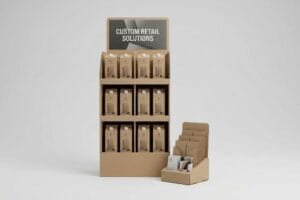
व्यापारिक कंपनियाँ अक्सर प्रीमियम सौंदर्यबोध के नाम पर भारी प्लास्टिक क्लिप या ऐक्रेलिक हेडर वाले मिश्रित सामग्री डिस्प्ले बेचती हैं। वे अमेरिका के बड़े-बड़े रिटेल स्टोरों द्वारा लागू किए गए सख्त EOL (एंड-ऑफ-लाइफ) नियमों की पूरी तरह अनदेखी करती हैं , जहाँ पुनर्चक्रण योग्य न होने वाली संरचनाओं पर तुरंत भारी निपटान जुर्माना लगाया जाता है। जब मैं इन मिश्रित सामग्री इकाइयों का ऑडिट करता हूँ, तो मुझे आपूर्ति श्रृंखला में छिपी गंभीर वित्तीय देनदारी लगातार दिखाई देती है, क्योंकि खुदरा विक्रेता प्लास्टिक को पेपरबोर्ड से मैन्युअल रूप से अलग करने के लिए स्टोर कर्मचारियों द्वारा किए जाने वाले श्रम के लिए ब्रांड से अतिरिक्त शुल्क वसूलते हैं ।
यह सिर्फ़ सिद्धांत नहीं है—मैंने पिछले महीने एक नए ग्राहक के प्रस्तावित डिस्प्ले के लिए आंतरिक संरचनात्मक ऑडिट करते समय इसका कड़वा अनुभव किया। 2023 में, मैंने अपने प्रमुख पैकेजिंग इंजीनियर, मार्क से एक तथाकथित प्रीमियम फ़्लोर यूनिट का परीक्षण करने के लिए कहा, जो गैर-पुनर्चक्रणीय धातु पन्नी लेमिनेशन पर अत्यधिक निर्भर थी। मुझे विशेष रूप से याद है कि मार्क 32ECT वर्जिन क्राफ़्ट लाइनर से पन्नी को फाड़ने की कोशिश कर रहे थे; कागज़ के रेशों के फटने की तेज़ आवाज़ हमारे अनुसंधान एवं विकास प्रयोगशाला की कंक्रीट की दीवारों से टकराकर गूंज उठी, क्योंकि पूरा सब्सट्रेट बेकार, दूषित टुकड़ों में बिखर गया। यह जानते हुए कि इससे मानक अमेरिकी खुदरा पुनर्चक्रण केंद्रों पर तुरंत अस्वीकृति हो जाएगी, हमने पन्नी को फेंक दिया और बोर्ड को फिर से बनाया, और प्लास्टिक क्लिप के बजाय ओरिगामी-शैली के कागज़ के जोड़ों से जुड़े 100% FSC (वन प्रबंधन परिषद) के अनुरूप कर्बसाइड-पुनर्चक्रणीय संरचना हो गए। मैं अपनी परीक्षण प्रयोगशाला में समय और पैसा लगाता हूँ ताकि आपको खुदरा बाज़ार में मुनाफ़ा न गंवाना पड़े। इस पर्यावरण-अनुकूल बदलाव ने न केवल स्थिरता की विफलता को रोका; इससे मैनुअल स्टोर डिसअसेंबली का समय घटकर शून्य हो गया, जिससे ग्राहक को भारी खुदरा विक्रेता अस्वीकृति शुल्क और हफ्तों के सुधारात्मक श्रम से पूरी तरह से मुक्ति मिल गई।
| पुनर्चक्रण योग्यता कारक | सामान्य दृष्टिकोण | इंजीनियर्ड रियलिटी |
|---|---|---|
| सामग्री सोर्सिंग | अप्रमाणित यादृच्छिक पेपर | ट्रेस करने योग्य नालीदार बोर्ड10 |
| संरचनात्मक जोड़ | प्लास्टिक क्लिप और टेप | ओरिगामी शैली के पेपर लॉकिंग टैब11 |
| EOL दंड जोखिम | डिजाइन चरण के दौरान अनदेखी की गई | एकल-सामग्री इंजीनियरिंग के माध्यम से कम किया गया12 |
मैं सिर्फ उद्घाटन दिवस के लिए नहीं, बल्कि अंतिम गंतव्य के लिए इंजीनियरिंग करता हूँ। एक ऐसा डिस्प्ले जिसे सीधे मानक रीसाइक्लिंग मशीन में नहीं डाला जा सकता, वह एक वित्तीय बोझ है जो कभी भी विस्फोट का कारण बन सकता है।.
🛠️ हार्वे का डेस्क: क्या आपके मिश्रित सामग्री वाले घटक अभियान शुरू होने से पहले ही खुदरा विक्रेताओं से लिए जाने वाले निपटान शुल्क को गुपचुप तरीके से बढ़ा रहे हैं? 👉 मुफ़्त EOL अनुपालन ऑडिट का दावा करें ↗ — कोई खाता प्रबंधक बीच में नहीं। आप सीधे संरचनात्मक इंजीनियरों से बात करते हैं।
कार्डबोर्ड बॉक्स का व्यवसाय कैसे शुरू करें?
इस उद्योग में प्रवेश करने के लिए स्वचालित औद्योगिक मशीनरी की सख्त गणितीय सहनशीलता में महारत हासिल करना आवश्यक है।.
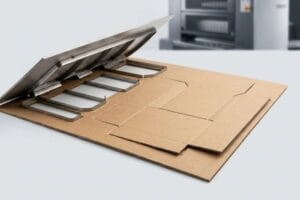
कार्डबोर्ड बॉक्स का व्यवसाय शुरू करने के लिए स्वचालित सीएडी (कंप्यूटर-एडेड डिज़ाइन) रूटिंग टेबल, डाई-कटिंग मशीनरी और सख्त प्रीप्रेस परिचालन प्रोटोकॉल में पर्याप्त पूंजी निवेश की आवश्यकता होती है। सफलता भौतिक संरचनात्मक इंजीनियरिंग में महारत हासिल करने, प्रमाणित आपूर्ति श्रृंखलाओं को सुरक्षित करने और वैश्विक खुदरा विक्रेताओं के गुणवत्ता मानकों को लगातार पूरा करने के लिए दोषरहित विनिर्माण वातावरण स्थापित करने पर निर्भर करती है।.
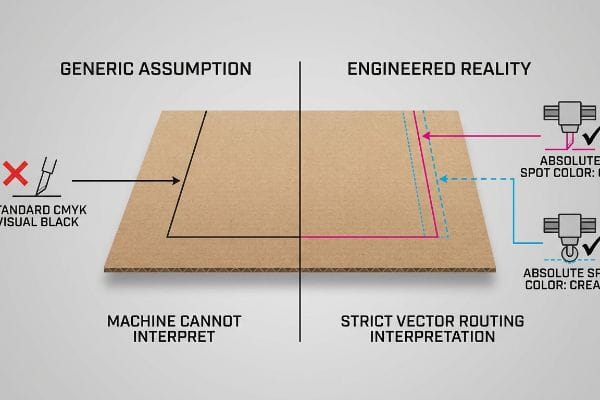
किसी मशीन को चालू करने के बारे में सोचने से पहले, आपको यह समझना होगा कि डिजिटल डिजाइन की खामियां भारी औद्योगिक उपकरणों को शारीरिक रूप से कैसे नुकसान पहुंचाती हैं।.
स्पॉट कलर मशीन ओवरराइड प्रोटोकॉल
जब मैं ग्राहकों के वर्कफ़्लो का ऑडिट करता हूँ, तो पैकेजिंग क्षेत्र में नए प्रवेशकों को भौतिक डाई-कटिंग टेबल को मानक डेस्कटॉप प्रिंटर की तरह इस्तेमाल करते हुए देखता हूँ। वे मानते हैं कि अगर वे इलस्ट्रेटर में एक साधारण CMYK (सियान, मैजेंटा, येलो, की) काली रेखा खींच दें, तो औद्योगिक ब्लेड जादुई रूप से जान जाएगा कि कहाँ काटना है। मशीन भाषा की यह मूलभूत गलतफहमी उत्पादन को पूरी तरह से रोक देती है, क्योंकि CNC (कंप्यूटर न्यूमेरिकल कंट्रोल) उपकरण दृश्य रंगों को समझ नहीं सकते हैं—इसके लिए विशिष्ट टूलिंग कमांड के लिए निर्धारित सटीक गणितीय वैक्टर की आवश्यकता होती है।
मेरी फैक्ट्री में, मैं अक्सर उत्पादन स्थल पर ही बिना जाँचे-परखे भेजी गई फाइलों के दुष्परिणाम देखता हूँ । हाल ही में एक नए ग्राहक ने एक RFQ (कोटेशन के लिए अनुरोध) भेजा, जिसमें एक बेहद जटिल डिस्प्ले डाईलाइन थी, जो पूरी तरह से मानक काले स्ट्रोक से बनी थी। ग्राहक को लगा कि हमारी कोंग्सबर्ग सी-सीरीज़ कटर मशीन इसे आसानी से काट लेगी। शुरुआती परीक्षण के दौरान, मशीन के RIP (रास्टर इमेज प्रोसेसर) सॉफ़्टवेयर ने कट लाइनों को सीधे आर्टवर्क लेयर में मिला दिया, जिसके परिणामस्वरूप ब्लेड का भौतिक जुड़ाव 0.00 इंच (0.00 मिमी) रहा—राउटर बोर्ड के ऊपर बेकार ही मंडराता रहा। मैंने डेटा निकाला और साबित किया कि हमें पूरी तरह से रीडिज़ाइन करने की ज़रूरत नहीं थी; हमें बस एक सख्त मैकेनिकल स्पॉट कलर प्रोटोकॉल की ज़रूरत थी। प्रीप्रेस टीम द्वारा लेयर्स को अलग करने और स्ट्रोक को सटीक स्पॉट रंगों में बदलने की अनुमति मिलने के बाद— कट के लिए 100% मैजेंटा और क्रीज़ 14 के लिए 100% सियान —मशीन ने एकदम सही ढंग से काम करना शुरू कर दिया। इस प्रीप्रेस ट्रांसलेशन को लागू करके, मैंने यह सुनिश्चित किया कि हमारी डाई-कटिंग यील्ड दर में 18% की वृद्धि हो, जिससे ग्राहकों को प्रीप्रेस में लगने वाली 48 घंटे से अधिक की देरी से बचाया जा सके और प्रोटोटाइप स्क्रैप को समाप्त किया जा सके।
| प्रीप्रेस एलिमेंट | सामान्य धारणा | इंजीनियर्ड रियलिटी |
|---|---|---|
| डाइलाइन फॉर्मेटिंग | मानक CMYK दृश्य काला | एब्सोल्यूट स्पॉट कलर टूलिंग पथ15 |
| सीएनसी मशीन लॉजिक | मशीन दृश्य रेखाओं को पढ़ती है | सख्त वेक्टर रूटिंग व्याख्या16 |
| प्रोटोटाइपिंग गति | फ़ाइल में लगातार मैन्युअल बदलाव करना | निर्बाध कटिंग प्रक्रियाएं |
मैं अपने कटिंग टेबल पर गलत डेटा को आने नहीं देता। प्रीप्रेस चरण में मशीन-भाषा के सख्त अनुपालन को लागू करने से कारखाने में होने वाली महंगी भौतिक बर्बादी को रोका जा सकता है।.
🛠️ हार्वे का डेस्क: क्या डिजिटल डाईलाइन की त्रुटियाँ चुपचाप आपके उत्पाद को बाज़ार में लाने की गति को धीमा कर रही हैं और आपके सैंपलिंग खर्चों को बढ़ा रही हैं? 👉 मुफ़्त प्रीप्रेस टूलिंग समीक्षा प्राप्त करें ↗ — मैं प्रत्येक संरचनात्मक फ़ाइल की व्यक्तिगत रूप से 24 घंटों के भीतर समीक्षा करता हूँ।
निष्कर्ष
चाहे खराब सीएडी पाथ पर सीएनसी राउटर के रुकने को रोकना हो, सिंगल-वॉल बीसीटी बकलिंग को रोकना हो, या भारी ईओएल पेनल्टी फीस को कम करना हो, नालीदार कार्डबोर्ड की भौतिकी में महारत हासिल करना आपकी सप्लाई चेन को सुरक्षित रखता है। अकेले पिछले महीने, मेरे स्ट्रक्चरल ऑडिट ने 3 ब्रांडों को 10,000 डॉलर से अधिक के स्क्रैप इन्वेंट्री और रिटेलर चार्जबैक से बचने में मदद की। यदि आप स्ट्रक्चरल विफलताओं को अपने अभियानों को बर्बाद करने से रोकना चाहते हैं, तो मुझे व्यक्तिगत रूप से आपकी स्ट्रक्चरल फाइलों का निःशुल्क स्ट्रक्चरल फ्रेट और डेंसिटी ऑडिट करने दें ↗ ताकि यह सुनिश्चित हो सके कि प्रत्येक वर्ग इंच आपके लॉजिस्टिकल आरओआई को अधिकतम करे।
"आरएससी बनाम डाई कट: आपके लिए कौन सा बॉक्स स्टाइल सही है? – पाकफैक्ट्री", https://pakfactory.com/blog/what-is-rsc-box-vs-die-cut-boxes/?srsltid=AfmBOoqGSRUFr7t96l8TfiA46zZR_sai7qnOOt8vV_kP-meLzt6xzp3W। [बॉक्स स्टाइल के तुलनात्मक विश्लेषण से पता चलता है कि ऊपरी फ्लैप न होने के कारण हाफ-स्लॉटेड कंटेनरों में कम नालीदार बोर्ड की आवश्यकता होती है]। साक्ष्य भूमिका: मीट्रिक सत्यापन; स्रोत प्रकार: उद्योग सामग्री विनिर्देश। समर्थन: एचएससी सामग्री उपज दक्षता। स्कोप नोट: समान आधार आयामों वाले मानक आरएससी की तुलना में। ↩
"बेसिक बॉक्स स्टाइल | पैकेजिंग कॉर्पोरेशन ऑफ अमेरिका", https://www.packagingcorp.com/resource-hub/beyond-the-box/basic-box-styles/। [नालीदार पैकेजिंग पर एक इंजीनियरिंग गाइड बताती है कि कैसे सेंटर-मीटिंग फ्लैप ऊर्ध्वाधर सपोर्ट प्रदान करते हैं और कोनों को ढहने से रोकते हैं]। साक्ष्य भूमिका: तकनीकी सत्यापन; स्रोत प्रकार: पैकेजिंग इंजीनियरिंग हैंडबुक। सपोर्ट: आरएससी संरचनात्मक भार क्षमता। स्कोप नोट: विशेष रूप से पूर्ण आरएससी क्लोजर पर लागू होता है। ↩
"एचएससी बनाम आरएससी बॉक्स: संरचनात्मक विश्लेषण और बी2बी खरीद मार्गदर्शिका", https://innorhino.com/blog/packaging-guide/structural-design/hsc-vs-rsc-corrugated-boxes?srsltid=AfmBOoqcDyL9Ya0tp_X12pEIN0sgA5RZ0H9vxXM-bAxzJarxZRswUHxc। [खुले शीर्ष वाले कंटेनरों का संरचनात्मक विश्लेषण दर्शाता है कि शीर्ष फ्लैप के बिना, बॉक्स की संपीडन शक्ति आंतरिक भार की कठोरता पर काफी हद तक निर्भर करती है]। साक्ष्य की भूमिका: तकनीकी सत्यापन; स्रोत प्रकार: पैकेजिंग विज्ञान पत्रिका। समर्थन: एचएससी संरचनात्मक भार की वास्तविकता। कार्यक्षेत्र संबंधी टिप्पणी: ऊर्ध्वाधर संपीडन शक्ति से संबंधित। ↩
"पैलेट के ऊपरी डेक की कठोरता के नालीदार कार्डबोर्ड पर प्रभाव की जांच...", https://pmc.ncbi.nlm.nih.gov/articles/PMC8585293/। [तकनीकी पैकेजिंग इंजीनियरिंग मानक दर्शाते हैं कि एकल-दीवार वाले नालीदार कार्डबोर्ड में परिवहन के दौरान गतिशील भार को सहन करने के लिए ऊर्ध्वाधर संपीड़न शक्ति की कमी होती है]। साक्ष्य की भूमिका: तकनीकी सत्यापन; स्रोत प्रकार: इंजीनियरिंग मैनुअल। समर्थन: भारी शिपिंग के लिए एकल-दीवार वाले बक्सों की संरचनात्मक अपर्याप्तता। कार्यक्षेत्र नोट: विशेष रूप से गतिशील बनाम स्थिर भार विफलता को संबोधित करता है। ↩
"दोहरी दीवार वाले नालीदार बोर्ड पैकेजिंग का इष्टतम डिज़ाइन - पीएमसी", https://pmc.ncbi.nlm.nih.gov/articles/PMC8950760/। [तकनीकी पैकेजिंग इंजीनियरिंग गाइड में बताया गया है कि विशिष्ट संपीड़न भार के तहत एकल-दीवार वाले नालीदार बोर्ड में ऊर्ध्वाधर झुकाव होने की संभावना कैसे होती है।] साक्ष्य की भूमिका: तकनीकी सत्यापन; स्रोत प्रकार: इंजीनियरिंग मैनुअल। समर्थन: एकल-दीवार संरचनात्मक भेद्यता। कार्यक्षेत्र संबंधी टिप्पणी: नाली के आकार और सामग्री श्रेणी पर निर्भर करता है। ↩
"डबल वॉल कार्डबोर्ड बॉक्स कितने मजबूत होते हैं, और कितना भार सहन कर सकते हैं...", https://www.theboxery.com/blog/how-strong-are-double-wall-cardboard-boxes-and-what-weight-can-they-hold/?srsltid=AfmBOop0IBWe7NRCkwlnVZ43M4nFuSIWXA4rTlVlo7kPRhjnfbHnQFCb. [ASTM या TAPPI जैसे उद्योग मानक यह डेटा प्रदान करते हैं कि डबल-वॉल निर्माण स्टैक्ड कंटेनरों के लिए बॉक्स कम्प्रेशन टेस्ट (BCT) परिणामों को कैसे बेहतर बनाता है।] साक्ष्य की भूमिका: मीट्रिक सत्यापन; स्रोत प्रकार: उद्योग मानक। समर्थन: डबल-वॉल बॉक्स का BCT प्रदर्शन। स्कोप नोट: सिंगल-वॉल विकल्पों के सापेक्ष। ↩
"[PDF] नालीदार बोर्ड विनिर्देश - फाइबर बॉक्स एसोसिएशन", https://www.fibrebox.org/assets/2025/09/Walmart_Corrugated-Board_Specifications_Automation_Packaging_Standards.pdf. [बड़े रिटेल स्टोरों के लिए लॉजिस्टिक्स और सप्लाई चेन मैनुअल में आमतौर पर उच्च घनत्व वाले पैलेटाइज्ड शिपमेंट के लिए स्थिरता सुनिश्चित करने हेतु ट्रिपल-वॉल नालीदार पैकेजिंग अनिवार्य होती है।] साक्ष्य भूमिका: उद्योग की आवश्यकता; स्रोत प्रकार: लॉजिस्टिक्स गाइड। समर्थन: क्लब-स्टोरों में ट्रिपल-वॉल का उपयोग। कार्यक्षेत्र नोट: भारी-भरकम औद्योगिक अनुप्रयोगों के लिए विशिष्ट। ↩
"पैकेजिंग नीति में नया क्या है? पैकेजिंग नीति का सारांश", https://sustainablepackaging.org/2026/04/29/packaging-policy-news/। [खुदरा विक्रेता स्थिरता दिशानिर्देश और विक्रेता अनुपालन नियमावली में गैर-पुनर्चक्रण योग्य प्रदर्शन सामग्री के लिए विशिष्ट आदेशों और वित्तीय दंडों का दस्तावेजीकरण किया जाएगा]। साक्ष्य की भूमिका: तथ्यात्मक सत्यापन; स्रोत प्रकार: कॉर्पोरेट नीति/विक्रेता नियमावली। समर्थन: गैर-अनुपालन EOL सामग्री के लिए वित्तीय दंडों का अस्तित्व। कार्यक्षेत्र संबंधी टिप्पणी: दंड विशिष्ट खुदरा विक्रेता और क्षेत्र के अनुसार भिन्न हो सकते हैं। ↩
"कोका-कोला ने स्टोर डिस्प्ले के लिए क्लोज्ड-लूप रीसाइक्लिंग प्रोग्राम शुरू किया", https://www.packagingdigest.com/sustainability/coca-cola-starts-closed-loop-recycling-program-for-in-store-displays। [खुदरा लॉजिस्टिक्स और विक्रेता समझौतों पर उद्योग रिपोर्टें रीसाइक्लिंग के लिए मिश्रित सामग्रियों को अलग करने के लिए आवश्यक मैनुअल श्रम के लिए ब्रांडों से शुल्क लेने की प्रथा को सत्यापित करेंगी]। साक्ष्य की भूमिका: प्रक्रिया सत्यापन; स्रोत प्रकार: उद्योग लॉजिस्टिक्स रिपोर्ट। समर्थन: मिश्रित सामग्री डिस्प्ले इकाइयों द्वारा उत्पन्न वित्तीय दायित्व। कार्यक्षेत्र नोट: विशेष रूप से गैर-अनुपालन वाले पीओपी डिस्प्ले पर लागू होता है। ↩
"नालीदार पैकेजिंग का पर्यावरणीय प्रभाव", https://www.internationalpaper.com/resources/blog/environmental-impact-corrugated-packaging-why-balanced-fiber-approach-best। [सतत पैकेजिंग पर एक प्रामाणिक स्रोत यह सत्यापित करेगा कि पता लगाने की क्षमता सामग्री पुनर्प्राप्ति दरों और प्रमाणित सोर्सिंग मानकों के अनुपालन में कैसे सुधार करती है]। साक्ष्य की भूमिका: तकनीकी विनिर्देश; स्रोत प्रकार: उद्योग मानक। समर्थन: सामग्री सोर्सिंग दक्षता। कार्यक्षेत्र संबंधी टिप्पणी: प्रमाणित आपूर्ति श्रृंखलाओं पर लागू होता है। ↩
"[PDF] कागज और गत्ता: क्या पुनर्चक्रित किया जा सकता है (और क्या नहीं)", https://www.scarsdale.gov/DocumentCenter/View/4016/CAC-Sustainability-Articles—Recycling-Part-II-Paper-and-Cardboard—Dec-2018। [पैकेजिंग इंजीनियरिंग पर तकनीकी दस्तावेज दर्शाता है कि कैसे कागज लॉकिंग तंत्र प्लास्टिक संदूषकों को हटाकर गत्ता पुनर्चक्रण को आसान बनाते हैं]। साक्ष्य भूमिका: इंजीनियरिंग विधि; स्रोत प्रकार: तकनीकी मैनुअल। समर्थन: संरचनात्मक जोड़ स्थिरता। कार्यक्षेत्र टिप्पणी: चिपकने वाले या प्लास्टिक घटकों को हटाने पर केंद्रित है। ↩
"प्लास्टिक का सतत जीवन-समाप्ति प्रबंधन – ईपीए नेपीआईएस", https://nepis.epa.gov/Exe/ZyPURL.cgi?Dockey=P101C0IO.TXT। [चक्रीय अर्थव्यवस्था पर शोध से पुष्टि होती है कि एकल-सामग्री निर्माण से छँटाई लागत और दूषित अपशिष्ट धाराओं से जुड़े वित्तीय दंड कम होते हैं]। साक्ष्य की भूमिका: आर्थिक प्रभाव; स्रोत प्रकार: अकादमिक अध्ययन। समर्थन: जीवन-समाप्ति दंड जोखिम में कमी। कार्यक्षेत्र संबंधी टिप्पणी: औद्योगिक अपशिष्ट प्रबंधन से संबंधित। ↩
"एडोब इलस्ट्रेटर - कट लाइनों के लिए कौन सा रंग नमूना इस्तेमाल करें?", https://graphicdesign.stackexchange.com/questions/83118/what-color-swatch-to-use-for-cut-lines। औद्योगिक सीएनसी मशीनरी के लिए तकनीकी दस्तावेज़ पुष्टि करता है कि उपकरण टूल पाथ के लिए CMYK/RGB रंग मानों की व्याख्या करने के बजाय G-कोड या विशिष्ट वेक्टर निर्देशांकों के माध्यम से संचालित होते हैं। साक्ष्य भूमिका: तकनीकी सत्यापन; स्रोत प्रकार: औद्योगिक मशीनरी मैनुअल। समर्थन: दृश्य रंग मार्करों के बजाय गणितीय वैक्टर की आवश्यकता। कार्यक्षेत्र नोट: मानक सीएनसी रूटिंग और डाई-कटिंग हार्डवेयर तक सीमित। ↩
"स्पॉट बनाम प्रोसेस कलर – सिएटल प्रिंटवर्क्स", https://seattleprintworks.com/prepress/how-to-build-professional-files-with-spot-colors/। [सीएनसी कटिंग टेबल के लिए उद्योग तकनीकी गाइड कटिंग और क्रीजिंग पथों के बीच अंतर करने के लिए निर्दिष्ट स्पॉट रंगों के उपयोग को निर्दिष्ट करते हैं]। साक्ष्य भूमिका: तकनीकी सत्यापन; स्रोत प्रकार: तकनीकी मैनुअल। समर्थन: डाई-कटिंग मशीनरी को स्वचालित करने के लिए विशिष्ट स्पॉट कलर प्रोटोकॉल का उपयोग। स्कोप नोट: विशिष्ट रंग असाइनमेंट मशीन ब्रांड या सॉफ़्टवेयर कॉन्फ़िगरेशन के अनुसार भिन्न हो सकते हैं। ↩
"पैकेजिंग और प्रिंटिंग में डाइलाइन क्या है? – डॉक्सिन", https://www.dauxin.com/blog/what-is-a-dieline/। [प्रामाणिक प्रीप्रेस मैनुअल बताते हैं कि विशिष्ट स्पॉट रंगों का उपयोग सीएनसी मशीन को कटिंग और क्रीजिंग टूल के बीच स्विच करने का संकेत देने के लिए कैसे किया जाता है]। साक्ष्य भूमिका: तकनीकी विनिर्देश; स्रोत प्रकार: उद्योग मानक मैनुअल। समर्थन: टूलपाथिंग के लिए स्पॉट रंगों का उपयोग। कार्यक्षेत्र नोट: स्वचालित कटिंग टेबल सॉफ़्टवेयर तक सीमित। ↩
"वेक्टर बनाम रास्टर लेजर कटिंग | संचालन – कॉलेज ऑफ डिज़ाइन", https://design.ncsu.edu/operations/510/laser-cutter-vector-vs-raster-laser-cutting/। [सीएनसी नियंत्रण प्रणालियों पर तकनीकी दस्तावेज़ यह सत्यापित करता है कि मशीनरी दृश्य रास्टर छवियों के बजाय गणितीय वेक्टर निर्देशांकों की व्याख्या करती है]। साक्ष्य की भूमिका: तकनीकी तंत्र; स्रोत प्रकार: इंजीनियरिंग पाठ्यपुस्तक। समर्थन: सीएनसी रूटिंग का परिचालन तर्क। कार्यक्षेत्र संबंधी टिप्पणी: वेक्टर-आधारित औद्योगिक मशीनरी के लिए सामान्य। ↩