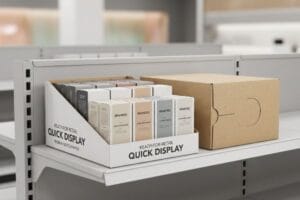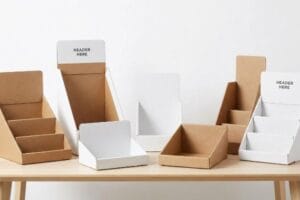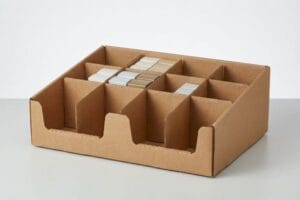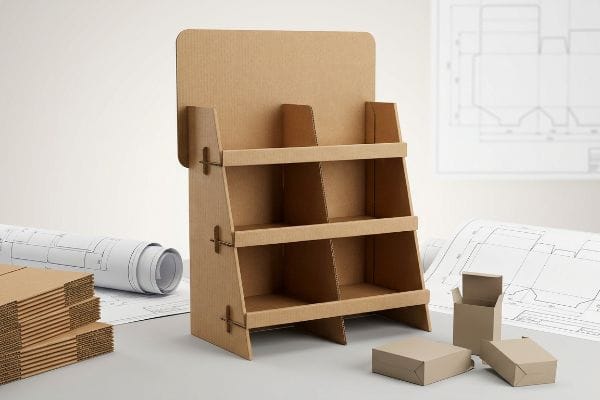
रिटेल के लिए तैयार मर्चेंडाइज़र डिज़ाइन करना सिर्फ़ कागज़ मोड़ने का काम नहीं है; यह गतिशील भार वहन क्षमता को संभालने की इंजीनियरिंग से जुड़ा है। अगर आप भौतिकी के नियमों में गलती करते हैं, तो आपका सारा सामान ज़मीन पर गिर जाएगा।
कार्डबोर्ड डिस्प्ले स्टैंड बनाने के लिए नालीदार कार्डबोर्ड को संरचनात्मक रूप से सुदृढ़ त्रि-आयामी इकाई में ढालना आवश्यक है। इसमें सटीक डाई-कटिंग, स्वचालित स्कोरिंग और रणनीतिक इंटरलॉकिंग तंत्र शामिल हैं, जिन्हें विशिष्ट माल भार को संभालने के साथ-साथ बाहरी चिपकने वाले पदार्थों पर निर्भर किए बिना खुदरा बिक्री पर अधिकतम प्रभाव डालने के लिए डिज़ाइन किया गया है।.
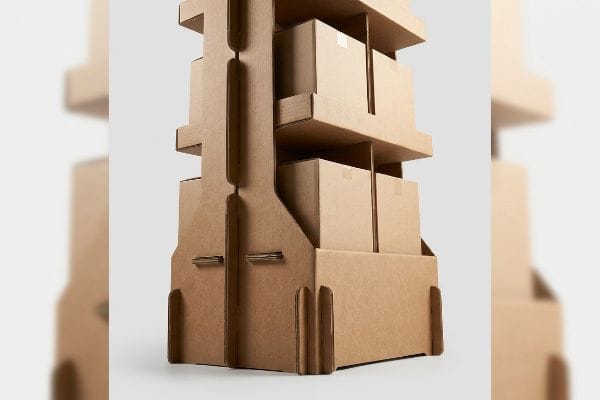
प्रयोगशाला के लिए बुनियादी परिभाषाओं का ज्ञान होना ठीक है, लेकिन वास्तविक कारखाने में पदार्थ विज्ञान की कहीं अधिक गहन समझ की आवश्यकता होती है।.
कार्डबोर्ड से डिस्प्ले स्टैंड कैसे बनाएं?
सॉफ्टवेयर उपकरण आसान टेम्पलेट का वादा करते हैं, लेकिन स्क्रीन पर सपाट रेखाएं खींचने से असेंबली के दौरान कच्चे माल की मोटाई की कठोर भौतिक वास्तविकता की अनदेखी होती है।.
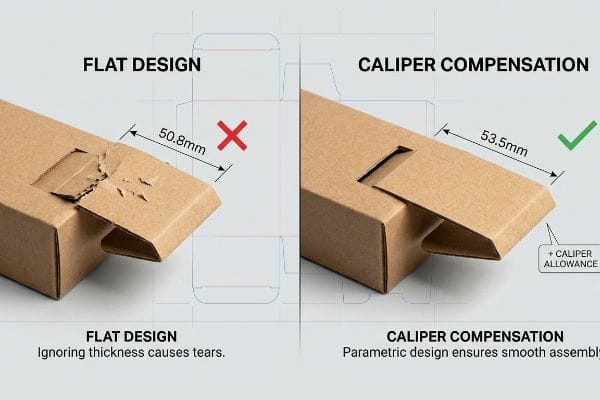
डिस्प्ले स्टैंड बनाने के लिए स्ट्रक्चरल डिज़ाइन सॉफ़्टवेयर का उपयोग यह सुनिश्चित करता है कि भौतिक सामग्री की मोटाई की गणना गणितीय रूप से की जाए। 90 डिग्री के मोड़ के दौरान नालीदार खांचे के कैलिपर को समायोजित करने के लिए सपाट वेक्टर रेखाओं को गतिशील रूप से चौड़ा किया जाना चाहिए, जिससे पूरी तरह से असेंबल होने पर कागज के रेशों को फटने या मुड़ने से रोका जा सके।.
लेकिन जब डाई-कटर सैकड़ों यूनिट्स की ढलाई शुरू कर देता है, तो केवल सिद्धांत का ज्ञान होना ही पर्याप्त नहीं होता।.
फ्लैट डाइलाइन असेंबली के समय को क्यों बर्बाद कर देती हैं?
ग्राफिक डिज़ाइनर अक्सर इंटरलॉकिंग टैब और फोल्डिंग स्लॉट को मिलान पैनल की चौड़ाई के बिल्कुल बराबर बनाते हैं। वे नालीदार बोर्ड को एक मानक प्रिंटर पेपर की तरह मानते हैं, यह मानकर कि 2 इंच (50.8 मिमी) का टैब आसानी से 2 इंच (50.8 मिमी) के स्लॉट में फिट हो जाएगा। यह सरल गणितीय दृष्टिकोण देखने में तो बिल्कुल सही लगता है, लेकिन मुड़े हुए बी-फ्लूट1।
जब आप 0.11 इंच (2.7 मिमी) मोटी तख्ती को 90 डिग्री पर मोड़ते हैं, तो उस मोड़ में भौतिक रूप से सामग्री की खपत होती है²।मैं अक्सर असेंबली फ्लोर पर नए खरीदारों को पसीना बहाते हुए देखता हूँ, जो एक मोटी पट्टी को उस खांचे में जबरदस्ती डालने की कोशिश करते हैं जिसे मोड़ के बाहरी त्रिज्या के लिए चौड़ा नहीं किया गया है। आपको ऊपरी शीट के जोड़ से फटने की तेज़, कर्कश आवाज़ सुनाई देती है, जिससे उन्हें उसे बचाने के लिए पारदर्शी टेप का सहारा लेना पड़ता है। हम इस समस्या को पैरामीट्रिक सीएडी (कंप्यूटर-एडेड डिज़ाइन) सॉफ़्टवेयर का उपयोग करके हल करते हैं, जो प्रत्येक क्रीज़ में सटीक कैलिपर क्षतिपूर्ति एल्गोरिदम को स्वचालित रूप से डालता है, जिससे यह सुनिश्चित होता है कि खांचे गणितीय रूप से चौड़े हों। इससे घर्षण समाप्त हो जाता है, जिससे प्रति यूनिट लगभग 25 सेकंड की मैन्युअल मेहनत बचती है³और सह-पैकिंग शुल्क में भारी कमी आती है।
| नौसिखियों की आम गलती | प्रो फिक्स | रिटेल-फ्लोर लाभ |
|---|---|---|
| टैब और स्लॉट की चौड़ाई का 1:1 का मिलान। | कैलिपर फोल्ड क्षतिपूर्ति जोड़ना4 | ऊपरी शीट को फटने से रोकता है |
| नालीदार बांसुरी की मोटाई को अनदेखा करना | पैरामीट्रिक बेंड अलाउंस5 | असेंबली का समय कम करता है |
| फटे हुए कोने के जोड़ पर टेप लगाना | घर्षण रहित इंटरलॉकिंग जोड़ | प्रीमियम ब्रांड की सुंदरता को बनाए रखता है |
मैं बिना बेंड अलाउंस की स्ट्रेस-टेस्टिंग किए कभी भी फ्लैट वेक्टर फाइल्स स्वीकार नहीं करता। फ्रिक्शन पॉइंट से बस एक मिलीमीटर का एक छोटा सा हिस्सा कम करने से टेप की झंझट पूरी तरह खत्म हो जाती है और यह सुनिश्चित हो जाता है कि आपका कैंपेन बिल्कुल सीधा खड़ा रहे।.
🛠️ हार्वे का डेस्क: क्या आपके इंटरलॉकिंग टैब बांसुरी की मोटाई के अनुसार गणितीय रूप से समायोजित हैं? 👉 मुफ़्त डाइलाइन ऑडिट प्राप्त करें ↗ — सीधे मेरे डेस्क से संपर्क करें। मैं वादा करता हूँ, कोई स्वचालित बिक्री संबंधी स्पैम नहीं होगा।
कार्डबोर्ड स्टैंड कैसे बनाएं (खुद से बनाएं)?
बुनियादी ग्राफिक वेब टूल्स में जटिल संरचनाओं को डिजाइन करके अपनी पैकेजिंग को शुरू से तैयार करने का प्रयास अक्सर रिटेल स्टोर में विनाशकारी संरचनात्मक अखंडता की ओर ले जाता है।.
खुद से कार्डबोर्ड स्टैंड बनाने के लिए, आपको अपने सरफेस ग्राफिक डिज़ाइन सॉफ़्टवेयर में एक पेशेवर रूप से डिज़ाइन किया गया स्ट्रक्चरल टेम्प्लेट इम्पोर्ट करना होगा। आपको पहले से गणना की गई वेक्टर फोल्ड लाइनों को निचली परत पर लॉक करना होगा, जिससे यह सुनिश्चित हो सके कि आपका कस्टम आर्टवर्क मूल भार वहन गणित को बदले बिना भौतिक ज्यामिति को सटीक रूप से लपेटे।.
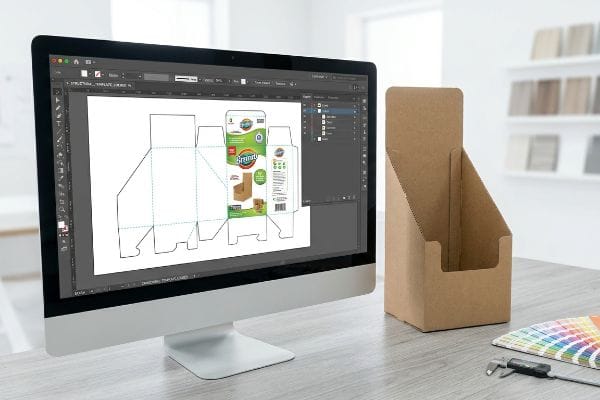
लोगो को ड्रैग और ड्रॉप करना सुनने में तो काफी सरल लगता है, लेकिन क्रियान्वयन के चरण में एक भारी परिचालन संबंधी खामी सामने आती है।.
अनलॉक किए गए वेब टूल टेम्प्लेट का खतरा
उभरते ब्रांड वेब-आधारित लेआउट प्रोग्रामों का उपयोग करके जूनियर डिज़ाइनरों को जटिल संरचनात्मक टेम्पलेट सौंपकर शुरुआती खर्चों को कम करने का लगातार प्रयास करते हैं। मानक दृष्टिकोण में कलाकृति परतों के साथ-साथ भौतिक डाई-कट लाइनों को सीधे समायोजित करना शामिल है। वे संरचनात्मक सीमाओं को कठोर भार-वहन गणित 6 के बजाय लचीले सुझावों के रूप में मानते हैं ।
मैंने यह तब देखा जब एक ग्राहक मुझसे पूछता है कि कार्डबोर्ड स्टैंड को खुद कैसे बनाया जाए और मुझे एक असंबद्ध रास्टर फ़ाइल देता है जिसमें लॉकिंग टैब को लापरवाही से खींचकर एक लंबे वाक्य को फिट किया गया होता है। वेब टूल स्वचालित बेंड अलाउंस7 को, जिससे मुझे एक टेढ़ा-मेढ़ा, बेकार सा आकार मिलता है। आप प्रोटोटाइप को जोड़ने की कोशिश करते हैं, और पिक्सेल हेरफेर के कारण लोड-बेयरिंग ज्योमेट्री ओवरराइट हो जाने से पूरा बेस मात्र 20 पाउंड (9.07 किलोग्राम) के भार के नीचे बुरी तरह झुक जाता है। मैं एक लॉक की हुई, पहले से तैयार की गई PDF एंकर फ़ाइल जारी करके इसे रोकता हूँ; आप अपने ग्राफ़िक्स को ऊपरी परत पर सख्ती से लागू करते हैं जबकि संरचनात्मक गणित नीचे स्थिर रहता है। यह सरल कार्यप्रणाली शौकिया रेंडरिंग को 2,500 पाउंड (1133.9 किलोग्राम) की गतिशील भार क्षमता8 को, जिससे आपकी लॉजिस्टिक्स बरकरार रहती है।
| नौसिखियों की आम गलती | प्रो फिक्स | रिटेल-फ्लोर लाभ |
|---|---|---|
| वेब टूल्स में कट लाइनों को बदलना | लॉक किए गए संरचनात्मक पीडीएफ का उपयोग करना | गतिशील भार क्षमता को बरकरार रखता है9 |
| असंबद्ध रास्टर टैब सबमिट करना | वैक्टर को जमी हुई परत पर रखना | आधार के मुड़ने से रोकता है10 |
| कलाकृति के आकार के अनुसार स्लॉट को फैलाना | ग्राफिक्स को डाईलाइन के अनुसार अनुकूलित करना | त्रुटिहीन स्टोर सेटअप सुनिश्चित करता है |
मैं संरचनात्मक रेखाओं को कंक्रीट की नींव की तरह मानता हूँ। आप दीवारों को किसी भी रंग से रंग सकते हैं, लेकिन जैसे ही आप अपने वेब ब्राउज़र में भार वहन करने वाले स्तंभों को हिलाना शुरू करेंगे, पूरा रिटेल रोलआउट ठप हो जाएगा।.
🛠️ हार्वे का डेस्क: क्या आपके वेब डिज़ाइनर गलती से आपके डिस्प्ले की संरचनात्मक ज्यामिति को बिगाड़ रहे हैं? 👉 लॉक्ड CAD टेम्पलेट का अनुरोध करें ↗ — सुरक्षित रूप से डाउनलोड करें। बाद में कोई प्रश्न होने पर आप मुझसे संपर्क कर सकते हैं।
अपना खुद का डिस्प्ले स्टैंड कैसे बनाएं?
कस्टम मर्चेंडाइज़र बनाने का मतलब है सप्लाई चेन की अनिश्चित परिस्थितियों से निपटना। आपका आदर्श ऑफिस प्रोटोटाइप नमी वाले गोदाम के वातावरण में बिल्कुल अलग तरह से व्यवहार करता है।
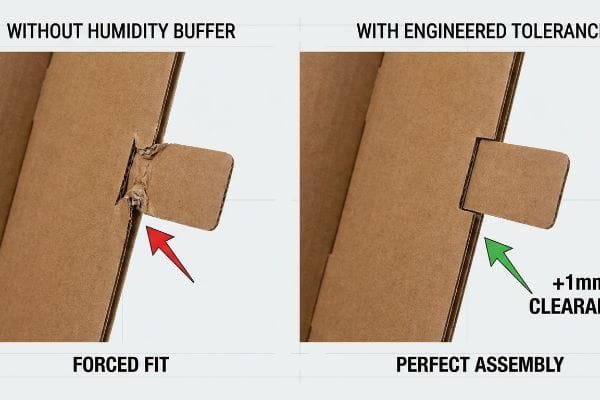
अपना डिस्प्ले स्टैंड बनाते समय, डाई-कटिंग प्रक्रिया में पर्यावरणीय कारकों को ध्यान में रखना आवश्यक होता है। इंजीनियरों को इंटरलॉकिंग पेपरबोर्ड स्लॉट में सूक्ष्म स्तर के विशिष्ट क्लीयरेंस बफर जोड़ने होते हैं ताकि परिवेशीय नमी अवशोषण को गणितीय रूप से ध्यान में रखा जा सके और यह सुनिश्चित किया जा सके कि गंतव्य की जलवायु कैसी भी हो, सभी घटक निर्बाध रूप से एक साथ फिट हो जाएं।.
आप दृश्य सौंदर्यशास्त्र में तो महारत हासिल कर सकते हैं, लेकिन पैकेजिंग के मामले में पर्यावरणीय भौतिकी ही अंतिम निर्णय लेती है।.
नम गोदामों में ऑफिस प्रोटोटाइप क्यों विफल हो जाते हैं?
जब मार्केटिंग टीमें वातानुकूलित कॉर्पोरेट कार्यालय में अपनी संरचनाएँ तैयार करती हैं, तो वे स्लॉट की सहनशीलता को पूरी तरह से टेस्टलाइनर बोर्ड 11 के पूर्ण शुष्क कैलिपर पर आधारित करती हैं। वे मान लेते हैं कि पूरी तरह से कटा हुआ 0.125 इंच (3.17 मिमी) का स्लॉट स्थायी रूप से उसी सटीक आकार का रहेगा। यह अनियमित आपूर्ति श्रृंखलाओं 12 के माध्यम से यात्रा करने वाले छिद्रपूर्ण कागज के रेशों की वास्तविकता को पूरी तरह से अनदेखा करता है ।
नालीदार कार्डबोर्ड को एक सूखे स्पंज की तरह समझें; यह आसपास की नमी को सोख लेता है। मैं अक्सर टेक्सास या फ्लोरिडा की उमस भरी फैक्ट्रियों में काम करने वाली पैकिंग टीमों को संघर्ष करते देखता हूँ, क्योंकि लंबी समुद्री यात्राओं के दौरान सूखे के लिए बनाए गए खांचे फूल जाते हैं। जब कर्मचारी फूले हुए टैब को सिकुड़े हुए छेदों में ठोकने की कोशिश करते हैं, तो मुझे फूले हुए कार्डबोर्ड का गीला, कड़ा प्रतिरोध महसूस होता है। मेरा नियम है कि लंबी दूरी की शिपमेंट के लिए कटे हुए कार्डबोर्ड में ही नमी का बफर बनाया जाए। रिसीविंग स्लॉट में सीधे 0.04 इंच (1 मिमी) की अतिरिक्त जगह छोड़कर , हम कागज के फैलाव को गणितीय रूप से सोख लेते हैं। इससे असेंबली में होने वाली परेशानी पूरी तरह खत्म हो जाती है और जबरदस्ती जोड़े गए कार्डबोर्ड के कारण खुदरा विक्रेताओं द्वारा अस्वीकृति की दर में भारी कमी आती है।
| नौसिखियों की आम गलती | प्रो फिक्स | रिटेल-फ्लोर लाभ |
|---|---|---|
| टाइट ड्राई-कैलिब्रेटेड स्लॉट का ड्राफ्टिंग | परिकलित आर्द्रता बफर जोड़ना14 | किसी भी मौसम में बिना किसी टूट-फूट के आसानी से असेंबल हो जाता है। |
| गोदाम में मौजूद परिवेशीय नमी को अनदेखा करना | इंजीनियरिंग सूक्ष्म निकासी15 | जबरन शामिल किए जाने से होने वाले नुकसान को रोकता है |
| फूली हुई पट्टियों को छेदों में जबरदस्ती डालना 16 | घर्षण रहित टैब सम्मिलन | को-पैकिंग में होने वाली देरी को समाप्त करता है |
मैंने कई शानदार विज़ुअल कैंपेन को कागज़ के फैलाव को ध्यान में न रखने के कारण तुरंत ही असफल होते देखा है। एक सूक्ष्म मिलीमीटर की जगह का इस्तेमाल यह सुनिश्चित करता है कि आपका कस्टम बिल्ड पूरी तरह से फिट हो जाए, चाहे इसे शुष्क एरिजोना में असेंबल किया जाए या आर्द्र फ्लोरिडा में।.
🛠️ हार्वे का डेस्क: क्या आपके स्ट्रक्चरल इंजीनियर ने आपके समुद्री माल ढुलाई के लिए नमी से होने वाले फैलाव की सहनशीलता की गणना करना भूल गए? 👉 अपना स्ट्रक्चरल स्ट्रेस टेस्ट करवाएं ↗ — कोई फॉर्म नहीं जो अंतहीन बिक्री कॉल को बढ़ावा दे। बस शुद्ध मूल्य।
कार्ड डिस्प्ले स्टैंड कैसे बनाएं?
छोटे आकार के मर्चेंडाइज़र हल्की वस्तुओं को रखने के लिए उपयुक्त होते हैं, लेकिन इनमें गुरुत्वाकर्षण केंद्र की गंभीर समस्या होती है। ग्राहक के हल्के से धक्के से भी पूरा यूनिट गिर सकता है।.
कार्ड डिस्प्ले स्टैंड बनाने के लिए, ऊर्ध्वाधर उत्पाद स्तरों को स्थिर करने हेतु एक संतुलित आधार संरचना की आवश्यकता होती है। इसमें गुरुत्वाकर्षण केंद्र को नीचे की ओर स्थानांतरित करने के लिए एक विस्तारित ईज़ल बैक या एक छिपा हुआ नकली तल शामिल होता है, जिससे उपभोक्ताओं द्वारा भारी सामान के साथ बातचीत करते समय स्टैंड के आगे की ओर झुकने से रोका जा सके।.
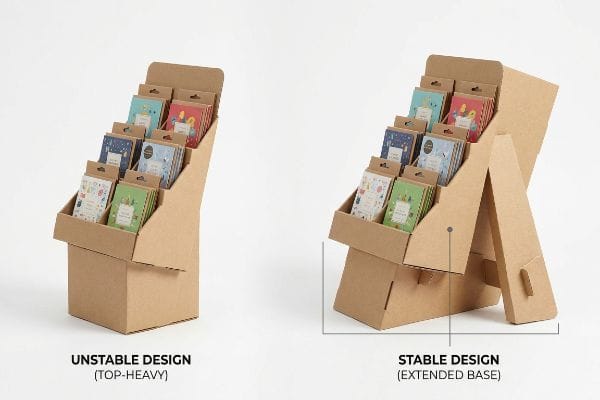
लेकिन जब मशीनें चलने लगती हैं और अधीर खरीदार ऊपरी स्तर से उत्पादों को हथियाने लगते हैं, तो केवल सिद्धांत जानना ही पर्याप्त नहीं होता है।.
ऊपर से भारी काउंटर ट्रे की छिपी हुई खामी
जब डिज़ाइनर हल्के कार्ड या छोटे सौंदर्य प्रसाधनों के लिए बहुस्तरीय काउंटर मर्चेंडाइज़र का डिज़ाइन बनाते हैं , तो वे आधार को सबसे नीचे वाली पंक्ति की चौड़ाई के बराबर ही बनाते हैं। वे मान लेते हैं कि चूंकि व्यक्तिगत वस्तुएं हल्की हैं, इसलिए पूरी इकाई स्वाभाविक रूप से स्थिर रहेगी। यह उस तीव्र घूर्णी बल को अनदेखा करता है जो तब लगता है जब कोई जल्दबाजी में आया ग्राहक ऊपरी शेल्फ से टकरा जाता है ।
मेरे कारखाने में, मैं अक्सर देखता हूँ कि ये पूरी तरह से समतल डिज़ाइन शुरुआती झुकाव परीक्षण के दौरान तुरंत विफल हो जाते हैं। जब मैं गतिज पलटने की सीमा मापता हूँ, तो मानक खुदरा सामान से भरी एक समतल ट्रे मात्र 12 डिग्री के झुकाव पर ही तेज़ी से आगे की ओर झुक जाती है । पूरी संरचना मुंह के बल गिरती है, कार्ड चारों ओर बिखर जाते हैं, जिससे यह तय है कि गुस्से में आया स्टोर मैनेजर उसे कचरे में फेंक देगा। मैंने माइक्रोमीटर रीडिंग ली और साबित किया कि मुझे भारी प्लास्टिक एंकर की आवश्यकता नहीं थी; मुझे बस डाईलाइन को समायोजित करके उसमें गणितीय रूप से विस्तारित ईज़ल बैक को शामिल करना था। उत्पाद के आधार से ठीक 2.5 इंच (63.5 मिमी) अधिक गहराई तक पीछे के सपोर्ट को खिसकाकर , हम पलटने के बिंदु को काफी कम कर देते हैं। यह सूक्ष्म समायोजन आक्रामक खरीदारी के दौरान पलटने से रोकता है, रजिस्टर में उच्च दृश्यता सुनिश्चित करता है और परियोजना की प्रतिस्थापन देयता लागत को पूरी तरह से समाप्त कर देता है।
| नौसिखियों की आम गलती | प्रो फिक्स | रिटेल-फ्लोर लाभ |
|---|---|---|
| समतल आधार बनाना | विस्तारित ईज़ल बैक को एकीकृत करना20 | आक्रामक खरीदारी धक्कों से बच जाता है |
| बहुस्तरीय घूर्णीय टॉर्क की अनदेखी करना | गुरुत्वाकर्षण केंद्र को नीचे करना21 | रजिस्टर में उच्च स्थान सुनिश्चित करता है |
| स्थिरता के लिए उत्पाद के वजन पर निर्भर रहना | एक छिपा हुआ नकली तल बनाना22 | उत्पाद रिसाव से होने वाली देनदारियों को रोकता है |
झुकाव माप की जांच किए बिना मैं संकीर्ण आधार वाली काउंटर ट्रे को मंजूरी देने से इनकार करता हूँ। स्मार्ट कार्डबोर्ड इंजीनियरिंग के माध्यम से गुरुत्वाकर्षण केंद्र को नीचे लाना ही आपके ब्रांड को खुदरा फर्श पर होने वाले गंदे और महंगे रिसाव से बचाने का एकमात्र तरीका है।.
🛠️ हार्वे की सलाह: 2 मिलीमीटर की संरचनात्मक खामी को 500 स्टोरों में अपना कारोबार ठप न करने दें। 👉 मुझे अपनी डाइलाइन फ़ाइल भेजें ↗ — बड़े पैमाने पर उत्पादन पर बजट बर्बाद करने से पहले मैं गणितीय गणनाओं की गहन जांच कर लूंगा।
निष्कर्ष
आप सस्ता विक्रेता चुन सकते हैं, लेकिन जब आपकी सूखी कैलिब्रेटेड नालीदार कार्डबोर्ड नमी वाले गोदाम में समुद्री नमी सोखकर फूल जाती है, तो इससे उत्पन्न घर्षण के कारण को-पैकिंग लाइन की गति लगभग 30% तक धीमी हो जाती है, जिससे आपका लाभ मार्जिन पूरी तरह से नष्ट हो जाता है। 500 से अधिक ब्रांड प्रबंधक इन घातक शुरुआती गलतियों से बचने के लिए मेरी प्रीप्रेस चेकलिस्ट का उपयोग करते हैं। पर्यावरणीय सहनशीलता के बारे में अनुमान लगाना बंद करें और मुझे व्यक्तिगत रूप से अपनी फाइलों को मेरे निःशुल्क डाइलाइन ऑडिट ↗ ताकि बड़े पैमाने पर उत्पादन से पहले ही विनाशकारी संरचनात्मक विफलताओं का पता लगाया जा सके।
"पांच-परत वाली सामग्री की बेंडिंग कठोरता का विश्लेषणात्मक निर्धारण...", https://pmc.ncbi.nlm.nih.gov/articles/PMC8777652/। नालीदार सामग्री की मोटाई (कैलिपर) और बी-फ्लूट बोर्ड में संरचनात्मक अखंडता के लिए आवश्यक परिणामी फोल्ड अलाउंस के लिए एक उद्योग मानक। साक्ष्य भूमिका: तकनीकी विनिर्देश; स्रोत प्रकार: पैकेजिंग इंजीनियरिंग मैनुअल। समर्थन: यह दावा कि असेंबली सुनिश्चित करने के लिए डाई-लाइन आयामों में सामग्री की मोटाई को ध्यान में रखा जाना चाहिए। कार्यक्षेत्र नोट: विशेष रूप से नालीदार बी-फ्लूट सामग्री पर लागू होता है। ↩
"फ्री शीट मेटल बेंड अलाउंस कैलकुलेटर | FIRGELLI इंजीनियरिंग", https://www.firgelliauto.com/blogs/engineering-calculators/sheet-metal-bend-allowance-calculator?srsltid=AfmBOooWNJC60F5u_c4iZjbBzflg5mmEk28eMcxke2lSwAcaM-4ct6QT। नालीदार बोर्ड के लिए बेंड अलाउंस पर तकनीकी दस्तावेज, फोल्डिंग के दौरान सामग्री के विस्थापन और क्षतिपूर्ति की आवश्यकता की पुष्टि करता है। साक्ष्य भूमिका: तकनीकी सत्यापन; स्रोत प्रकार: पैकेजिंग इंजीनियरिंग मैनुअल। समर्थन: सामग्री की मोटाई के लिए डाईलाइन को समायोजित करने की भौतिक आवश्यकता। कार्यक्षेत्र नोट: विशेष रूप से नालीदार फ्लूट्स पर लागू होता है। ↩
"पैकेजिंग में डाइलाइन: परिभाषा, डिज़ाइन, प्रिंट और टेम्पलेट", https://packhit.co.uk/packaging/dieline/। सटीक पैकेजिंग असेंबली पर उद्योग केस स्टडी गणितीय रूप से अनुकूलित सहनशीलता (टॉलरेंस) के साथ मैनुअल श्रम में मात्रात्मक कमी दर्शाती हैं। साक्ष्य की भूमिका: मीट्रिक सत्यापन; स्रोत प्रकार: परिचालन दक्षता रिपोर्ट। समर्थन: यह दावा कि कैलिपर क्षतिपूर्ति असेंबली घर्षण और समय को कम करती है। स्कोप नोट: वास्तविक समय की बचत डिस्प्ले स्टैंड की जटिलता पर निर्भर करती है। ↩
"यांत्रिक गुणों पर एनालॉग और डिजिटल क्रीज लाइनों का प्रभाव… – पीएमसी", https://pmc.ncbi.nlm.nih.gov/articles/PMC9268991/। पैकेजिंग डिज़ाइन के लिए तकनीकी दिशानिर्देश निर्दिष्ट करते हैं कि सामग्री की मोटाई को समायोजित करने से तहों के दौरान बाहरी परत पर तनाव को रोका जा सकता है। साक्ष्य भूमिका: तकनीकी सत्यापन; स्रोत प्रकार: इंजीनियरिंग हैंडबुक। सहायक: ऊपरी शीट के फटने की रोकथाम। कार्यक्षेत्र संबंधी टिप्पणी: नालीदार कार्डबोर्ड सामग्री के लिए विशिष्ट। ↩
"कॉरुगेटेड बॉक्स के नुकसान क्या हैं? – पॉपडिस्प्ले", https://popdisplay.me/what-about-the-disadvantages-of-corrugated-boxes/। संरचनात्मक पैकेजिंग के लिए विनिर्माण मानक दर्शाते हैं कि सटीक बेंड अलाउंस की गणना करने से मैनुअल असेंबली के दौरान घर्षण और फिटिंग त्रुटियां कम हो जाती हैं। साक्ष्य भूमिका: दक्षता सत्यापन; स्रोत प्रकार: औद्योगिक डिजाइन मैनुअल। समर्थन: असेंबली समय में कमी। कार्यक्षेत्र नोट: पैरामीट्रिक सीएडी सॉफ्टवेयर वर्कफ़्लो पर लागू होता है। ↩
"संरचनात्मक पैकेजिंग डिज़ाइन: प्रमुख तत्व और प्रक्रिया", https://www.arkay.com/resources/structural-packaging-design। संरचनात्मक पैकेजिंग डिज़ाइन किस प्रकार सटीक ज्यामितीय गणनाओं पर निर्भर करता है, जिससे भार वितरण और स्थिरता सुनिश्चित होती है, इसका संक्षिप्त विवरण। साक्ष्य की भूमिका: तकनीकी सत्यापन; स्रोत प्रकार: इंजीनियरिंग पाठ्यपुस्तक। समर्थन: अपरिवर्तित डाई-लाइनों को बनाए रखने की महत्वपूर्ण प्रकृति। कार्यक्षेत्र संबंधी टिप्पणी: नालीदार कार्डबोर्ड खुदरा डिस्प्ले के लिए विशिष्ट। ↩
"फ्री शीट मेटल बेंड अलाउंस कैलकुलेटर | FIRGELLI इंजीनियरिंग", https://www.firgelliauto.com/blogs/engineering-calculators/sheet-metal-bend-allowance-calculator?srsltid=AfmBOoozwvshqGt8SLDjSG04gzVb6S8k9mCIR5-yFQqWQo5OWehixyxv। प्रोफेशनल पैकेजिंग सॉफ्टवेयर में सटीक फोल्डिंग और संरचनात्मक अखंडता सुनिश्चित करने के लिए बेंड अलाउंस की गणना कैसे की जाती है, इसका संक्षिप्त विवरण। साक्ष्य भूमिका: तकनीकी परिभाषा; स्रोत प्रकार: इंजीनियरिंग मैनुअल। समर्थन: सटीक फोल्ड लाइनों की आवश्यकता। कार्यक्षेत्र नोट: नालीदार बोर्ड के लिए विशिष्ट। ↩
"[PDF] नालीदार कार्डबोर्ड विनिर्देश - फाइबर बॉक्स एसोसिएशन", https://www.fibrebox.org/assets/2025/09/Walmart_Corrugated-Board_Specifications_Automation_Packaging_Standards.pdf। औद्योगिक स्तर के इंजीनियर किए गए नालीदार कार्डबोर्ड संरचनाओं के लिए मानक भार वहन क्षमता का सत्यापन। साक्ष्य भूमिका: मीट्रिक सत्यापन; स्रोत प्रकार: उद्योग विनिर्देश पत्रक। समर्थन: यह दावा कि पेशेवर इंजीनियरिंग उच्च भार क्षमता की अनुमति देती है। कार्यक्षेत्र संबंधी टिप्पणी: नाली के आकार और सामग्री श्रेणी पर निर्भर। ↩
"कार्डबोर्ड पैकेजिंग का सरलीकृत गतिशील शक्ति विश्लेषण...", https://pmc.ncbi.nlm.nih.gov/articles/PMC10385285/। यह तकनीकी दस्तावेज़ बताता है कि संरचनात्मक PDF में सटीक कट-लाइन आयाम नालीदार खुदरा डिस्प्ले की भार वहन क्षमता और गतिशील भार क्षमता को कैसे बनाए रखते हैं। साक्ष्य की भूमिका: तकनीकी सत्यापन; स्रोत प्रकार: पैकेजिंग इंजीनियरिंग मैनुअल। समर्थन: संशोधित वेब टेम्प्लेट के बजाय लॉक किए गए PDF का उपयोग करने का लाभ। कार्यक्षेत्र संबंधी टिप्पणी: विशेष रूप से भार वहन करने वाली कार्डबोर्ड संरचनाओं पर लागू होता है। ↩
"संपीड़न सामर्थ्य के आकलन में बकलिंग की भूमिका...", https://pmc.ncbi.nlm.nih.gov/articles/PMC7602429/। औद्योगिक डिज़ाइन दिशानिर्देश दर्शाते हैं कि वेक्टर-परिभाषित टैब सटीक इंटरलॉकिंग सुनिश्चित करते हैं, जो रास्टर-आधारित अनुमानों में आम तौर पर होने वाली आधार बकलिंग जैसी संरचनात्मक विफलता को रोकता है। साक्ष्य की भूमिका: कारण संबंध; स्रोत प्रकार: औद्योगिक डिज़ाइन मार्गदर्शिका। समर्थन: जमे हुए स्तरों पर संरचनात्मक वैक्टर रखने की आवश्यकता। कार्यक्षेत्र संबंधी टिप्पणी: कार्डबोर्ड स्टैंड के आधार की स्थिरता पर केंद्रित। ↩
"कैलिपर: सबसे कम प्रभावी गुणवत्ता नियंत्रण माप – एआईसीसी नाउ", https://now.aiccbox.org/caliper-the-least-effective-quality-control-measurement/। डाई-कट विनिर्देशों को निर्धारित करने के लिए शुष्क परिस्थितियों में बोर्ड की मोटाई मापने के उद्योग मानक की पुष्टि। साक्ष्य भूमिका: तकनीकी परिभाषा; स्रोत प्रकार: पैकेजिंग उद्योग हैंडबुक। समर्थन: स्लॉट सहनशीलता निर्धारित करने के लिए आधारभूत कार्यप्रणाली। कार्यक्षेत्र नोट: नालीदार और पेपरबोर्ड सब्सट्रेट पर लागू। ↩
"आर्द्रता और तापमान का यांत्रिक गुणों पर प्रभाव...", https://bioresources.cnr.ncsu.edu/resources/influence-of-humidity-and-temperature-on-mechanical-properties-of-corrugated-board-numerical-investigation/। सेल्युलोज फाइबर की आर्द्रता-शोषक प्रकृति के कारण नमी के संपर्क में आने पर उनके आकार में होने वाली वृद्धि का तकनीकी स्पष्टीकरण। साक्ष्य की भूमिका: कारण तंत्र; स्रोत प्रकार: पदार्थ विज्ञान अनुसंधान। समर्थन: यह दावा कि पर्यावरणीय आर्द्रता कटे हुए स्लॉट के भौतिक आकार को बदल देती है। कार्यक्षेत्र संबंधी टिप्पणी: कागज आधारित पैकेजिंग के भौतिक गुणों पर केंद्रित। ↩
"नालीदार कार्डबोर्ड बक्सों की संपीडन सामर्थ्य का अनुमान ...", https://pmc.ncbi.nlm.nih.gov/articles/PMC8467740/। पैकेजिंग डिज़ाइन के लिए एक इंजीनियरिंग मैनुअल या उद्योग मानक नालीदार कार्डबोर्ड में आर्द्रता-संक्रमण को संतुलित करने के लिए आवश्यक विशिष्ट सहनशीलता भत्ते को मान्य करेगा। साक्ष्य भूमिका: तकनीकी विनिर्देश; स्रोत प्रकार: इंजीनियरिंग हैंडबुक। समर्थन: आर्द्रता बफर के लिए विशिष्ट 1 मिमी क्लीयरेंस माप। कार्यक्षेत्र नोट: उच्च आर्द्रता वाले वातावरण में नालीदार कार्डबोर्ड पर केंद्रित। ↩
“संपीड़न सामर्थ्य पर सापेक्ष आर्द्रता का प्रभाव…”, https://open.clemson.edu/all_theses/3225/। पैकेजिंग इंजीनियरिंग पर तकनीकी दस्तावेज़ बताता है कि नमी अवशोषण के कारण नालीदार कार्डबोर्ड फैलता है, जिससे फटने से बचाने के लिए एक परिकलित बफर की आवश्यकता होती है। साक्ष्य की भूमिका: तकनीकी सत्यापन; स्रोत प्रकार: इंजीनियरिंग हैंडबुक। समर्थन: संयोजन के लिए आर्द्रता बफर की आवश्यकता। कार्यक्षेत्र संबंधी टिप्पणी: सेल्युलोज-आधारित सामग्रियों के लिए विशिष्ट। ↩
"शीट मेटल पार्ट असेंबली के लिए टैब और स्लॉट डिज़ाइन के लिए शीर्ष सुझाव", https://www.youtube.com/watch?v=DHcrX_ZnByA। कार्डबोर्ड असेंबली के लिए उद्योग मानक नम वातावरण में असेंबली के दौरान घर्षण से होने वाले नुकसान को रोकने के लिए सटीक सहनशीलता निर्दिष्ट करते हैं। साक्ष्य भूमिका: तकनीकी विनिर्देश; स्रोत प्रकार: विनिर्माण मार्गदर्शिका। समर्थन: जबरन जोड़ने से होने वाले नुकसान को रोकने के लिए क्लीयरेंस का उपयोग। कार्यक्षेत्र नोट: टैब और स्लॉट संरचनात्मक डिज़ाइनों पर लागू होता है। ↩
"कॉरुगेटेड बोर्ड नमी के प्रति कितना प्रतिरोधी है और यह गुण कैसे बेहतर हो सकता है...", https://www.labelprint24.com/en/magazine/how-wetness-resistant-is-corrugated-board-and-how-can-this-property-be-improved-1212। सेल्युलोज-आधारित उत्पादों पर किए गए पदार्थ विज्ञान अनुसंधान से पुष्टि होती है कि उच्च आर्द्रता में हाइग्रोस्कोपिक विस्तार के कारण कार्डबोर्ड घटकों के आयाम बढ़ जाते हैं। प्रमाण की भूमिका: वैज्ञानिक सिद्धांत; स्रोत प्रकार: पदार्थ विज्ञान पत्रिका। समर्थन: यह दावा कि नम गोदाम स्थितियों में टैब फूल जाते हैं। विषयवस्तु नोट: कागज उत्पादों में हाइग्रोस्कोपी पर केंद्रित। ↩
"स्पिनिंग टॉप का प्रीसेशन – हाइपरफिजिक्स", http://hyperphysics.phy-astr.gsu.edu/hbase/top.html। धुरी बिंदु से दूरी पर लगाया गया बल किस प्रकार एक टिपिंग मोमेंट उत्पन्न करता है, इसका तकनीकी स्पष्टीकरण। साक्ष्य भूमिका: तकनीकी सत्यापन; स्रोत प्रकार: इंजीनियरिंग पाठ्यपुस्तक; समर्थन: संकीर्ण आधार स्थिरता पर टॉर्क का प्रभाव। कार्यक्षेत्र टिप्पणी: खुदरा फिक्स्चर पर लागू सामान्य भौतिकी सिद्धांत। ↩
"अस्थायी डिस्प्ले में स्थिरता और संरचनात्मक समर्थन सुनिश्चित करें", https://www.ud-direct.com/blog/tips-and-tricks-to-ensure-stability-and-structure-support-in-temporary-displays। संरचनात्मक विफलता के लिए एक आधार रेखा स्थापित करने हेतु शीर्ष-भारी खुदरा डिस्प्ले के लिए विशिष्ट टिपिंग थ्रेशहोल्ड का सत्यापन। साक्ष्य की भूमिका: आधार रेखा सत्यापन; स्रोत प्रकार: भौतिकी या पैकेजिंग इंजीनियरिंग अध्ययन। समर्थन: फ्लश-बैक डिज़ाइन की उच्च विफलता दर। स्कोप नोट: थ्रेशहोल्ड इकाई के ऊंचाई-से-चौड़ाई अनुपात पर निर्भर करते हैं। ↩
"दीर्घकालिक पीठ दर्द के लिए स्थिर कोर स्थिरता बनाम विस्तार व्यायाम ...", https://clinicaltrials.gov/study/NCT06751173। कार्डबोर्ड डिस्प्ले में गुरुत्वाकर्षण केंद्र को स्थानांतरित करने के लिए आवश्यक विशिष्ट ऑफसेट दूरी का तकनीकी सत्यापन, ताकि आगे की ओर पलटने से रोका जा सके। साक्ष्य की भूमिका: तकनीकी विनिर्देश; स्रोत प्रकार: पैकेजिंग इंजीनियरिंग मैनुअल। समर्थन: पलटने के बिंदु को कम करने में 2.5 इंच के विस्तार की प्रभावकारिता। कार्यक्षेत्र संबंधी टिप्पणी: मानक खुदरा काउंटर-टॉप फुटप्रिंट पर लागू होता है। ↩
"8 1/2 x 11 कार्डबोर्ड ईज़ल स्टैंड: क्राफ्ट डबल विंग", https://www.affordabledisplayproducts.com/ED11DWK-Cardboard-Easel-Displays-Kraft?srsltid=AfmBOoqTL8oZ7TbjJ1MVdkbxx3qrU5eKZuUHY7jkkZkHHv8CX2tpvBZS। ईज़ल बैक के माध्यम से सपोर्ट बेस की गहराई बढ़ाने से काउंटरटॉप डिस्प्ले के टिपिंग एंगल में कैसे सुधार होता है, इसका तकनीकी विवरण। साक्ष्य भूमिका: तकनीकी सत्यापन; स्रोत प्रकार: औद्योगिक डिज़ाइन मैनुअल। सपोर्ट: ईज़ल बैक के स्थिरता लाभ। स्कोप नोट: विशेष रूप से हल्के मर्चेंडाइज़र के लिए। ↩
"[PDF] गुरुत्वाकर्षण केंद्र – वेस्ट वर्जीनिया विश्वविद्यालय", https://community.wvu.edu/~stmcwilliams/Sean_McWilliams/SP19_PHYS_101_files/Lecture%2027%20%28Mar%2028th%29.pdf। भौतिकी का सिद्धांत जो दर्शाता है कि द्रव्यमान को नीचे की ओर स्थानांतरित करने से घूर्णी बल का आघूर्ण (moment arm) कम हो जाता है और पलटने से रोकता है। प्रमाण की भूमिका: वैज्ञानिक सिद्धांत; स्रोत का प्रकार: भौतिकी या इंजीनियरिंग पाठ्यपुस्तक। समर्थन: गुरुत्वाकर्षण केंद्र और स्थिरता के बीच संबंध। कार्यक्षेत्र संबंधी टिप्पणी: बहुस्तरीय संरचनाओं पर लागू। ↩
"रिटेल डिस्प्ले के 14 प्रकार | शिकागो, आईएल - वर्थाइमर बॉक्स", https://wertheimerbox.com/types-of-retail-displays/। भारी भार वितरण को संतुलित करने के लिए छिपे हुए भारित आधारों के उपयोग हेतु औद्योगिक डिज़ाइन मानक। साक्ष्य भूमिका: डिज़ाइन का सर्वोत्तम अभ्यास; स्रोत प्रकार: मर्चेंडाइजिंग हार्डवेयर विनिर्देश। सहायक: उत्पाद रिसाव से होने वाली देनदारियों की रोकथाम। कार्यक्षेत्र संबंधी टिप्पणी: बैलास्ट एकीकरण पर केंद्रित। ↩