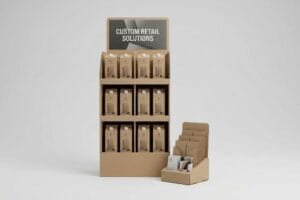
Choisir le bon matériau pour les présentoirs suspendus en magasin fait toute la différence entre une campagne de merchandising à fort taux de conversion et un effondrement structurel catastrophique dans les allées.
Les présentoirs suspendus utilisent du carton ondulé, du fil métallique et des polymères à haute résistance aux chocs. Dans les circuits de distribution nord-américains, le carton ondulé de type B et E est privilégié pour les campagnes temporaires grâce à sa résistance à la traction supérieure, son conditionnement à plat optimisé et sa conformité stricte aux normes internationales de recyclage en porte-à-porte.
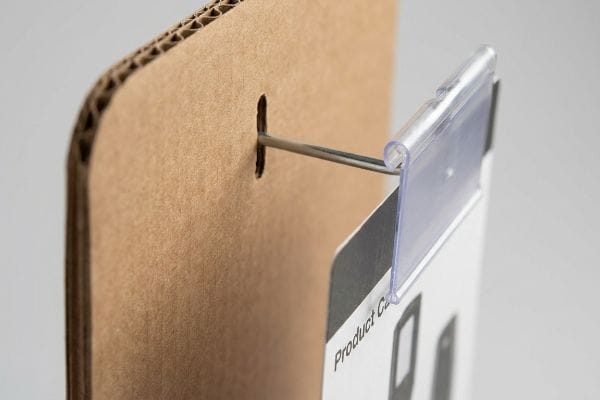
Pour dépasser le stade des listes abstraites de matériaux, il est nécessaire de comprendre les contraintes logistiques brutales et les frictions cinétiques auxquelles ces structures sont confrontées dans les usines du monde entier.
Quels matériaux sont utilisés pour les présentoirs ?
L'évaluation des matériaux de base nécessite d'aller au-delà des simples planches d'inspiration esthétiques pour comprendre comment les supports physiques s'alignent sur le calendrier promotionnel de votre marque.
Les présentoirs utilisent généralement du carton ondulé, des structures métalliques fixes ou des matériaux acryliques. Pour la plupart des opérations promotionnelles temporaires en magasin, le carton ondulé technique reste le choix privilégié, alliant avec succès des possibilités d'impression variées et une optimisation des coûts de transport à plat à l'échelle mondiale.
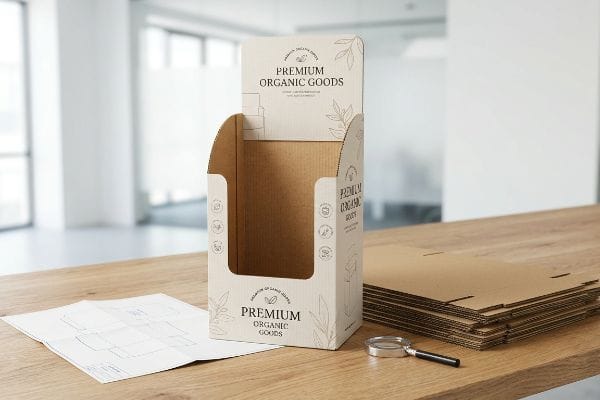
Les objectifs théoriques de développement durable empêchent souvent les équipes marketing de prendre en compte les contraintes pratiques du commerce de détail et les limites d'adaptabilité saisonnière.
L'équilibre stratégique des supports de vente temporaires
De nombreuses marques émergentes abordent leur stratégie de vente au détail en partant du principe qu'elles ont besoin d'agencements permanents et robustes en métal ou en bois pour communiquer une image de qualité supérieure au consommateur. Elles considèrent le choix des matériaux comme une décision purement esthétique, ignorant totalement l'importance stratégique de la durée de vie d'une campagne. Partant du principe que des matériaux plus lourds garantissent automatiquement de meilleurs résultats en matière de merchandising, elles incitent les équipes marketing à surinvestir dans des supports coûteux qui limitent considérablement leur capacité à renouveler les visuels saisonniersou à s'adapter à l'évolution de la configuration des magasins.
Dans le contexte actuel du commerce de détail, l'agilité est essentielle, faisant du carton ondulé le matériau idéal pour les déploiements temporaires. Au lieu d'immobiliser leur budget dans des présentoirs permanents rigides, les marques peuvent s'appuyer sur des supports papier pour diffuser de nouveaux visuels promotionnels chaque trimestre. Cette approche légère réduit considérablement les frais d'expédition²tout en permettant aux équipes de merchandising visuel de repositionner facilement les présentoirs dans les allées des magasins. Le passage des supports métalliques permanents aux supports temporaires en carton ondulé permet aux marques de mener plusieurs campagnes ciblées chaque année sans faire exploser leur budget d'affichage global.
| Métrique/Fonctionnalité | Approche générique | Réalité stratégique |
|---|---|---|
| Focus sur les matériaux | installations lourdes permanentes | carton ondulé léger3 |
| Agilité de la campagne | Enfermé dans une seule esthétique | Facilement actualisable trimestriellement4 |
| Allocation budgétaire | Coûts d'outillage initiaux élevés | Adaptabilité saisonnière rentable5 |
Le choix stratégique des supports ne se limite pas à l'esthétique ; il s'agit aussi d'optimiser la flexibilité financière de votre campagne. En harmonisant vos supports avec votre calendrier promotionnel, vous garantissez un impact visuel maximal sans grever votre budget transport.
🛠️ Le bureau d'Harvey : Vos choix de matériaux écologiques réduisent-ils insidieusement la capacité de charge de votre présentoir avant même le début du transport maritime ? 👉 Demandez votre audit gratuit des matériaux de structure ↗ — J'examine personnellement chaque dossier de structure sous 24 heures.
Quels sont les différents types de rayonnages utilisés dans les magasins de détail ?
Naviguer dans l'écosystème diversifié des rayonnages de vente au détail implique de comprendre comment les catégories structurelles dictent des stratégies de marchandisage distinctes et des contraintes spatiales au sein d'un magasin.
Les présentoirs de vente au détail se déclinent en plusieurs types : présentoirs sur pied, plateaux de comptoir, têtes de gondole et présentoirs latéraux suspendus. Chaque catégorie requiert des dimensions spécifiques afin d’optimiser la visibilité des produits, tout en respectant scrupuleusement les règles d’agencement des allées des grandes surfaces et les flux de circulation des clients.
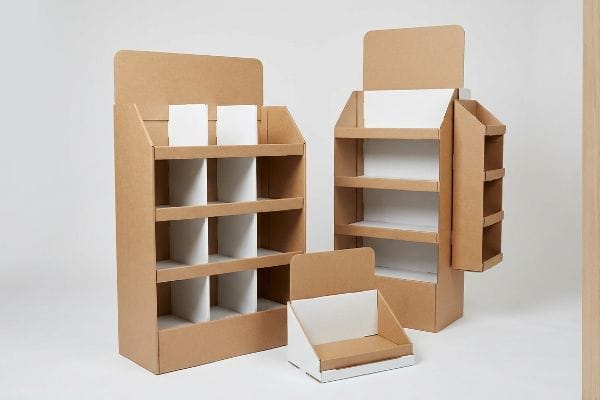
Choisir une catégorie de rayonnages est simple sur le papier, mais traduire ce choix en un plan d'aménagement réel nécessite un alignement stratégique.
Aligner l'architecture des présentoirs avec la psychologie du consommateur
Les responsables de marques conçoivent souvent leurs présentoirs promotionnels de manière isolée, partant du principe qu'un présentoir de sol imposant est systématiquement la meilleure solution pour stimuler les ventes. Ils considèrent les différents types de présentoirs comme des supports interchangeables pour leurs produits, négligeant totalement l'influence de leur emplacement sur le comportement des consommateurs. Cette approche théorique conduit à entasser de force des présentoirs de sol surdimensionnés dans des allées étroites, ce qui frustre les clients et enfreint fréquemment les règles strictes d'agencement des enseignes .
Une stratégie commerciale performante repose sur l'adaptation du format de présentation aux habitudes d'achat impulsif de votre clientèle cible. Pour les articles à fort volume et à bas prix, le placement stratégique de présentoirs près des caisses garantit un flux de clients régulier sans nécessiter une surface de vente importante. À l'inverse, des présentoirs latéraux permettent aux produits complémentaires de profiter du passage dans les allées, transformant ainsi les espaces inutilisés en zones de vente dynamiques. L'adéquation du type de présentoir à l'environnement d'achat prévu permet de convertir le flux de clients passifs en taux de conversion mesurables.
| Métrique/Fonctionnalité | Approche générique | Réalité stratégique |
|---|---|---|
| Afficher la sélection | Unités de sol universelles | Format adapté au type de produit6 |
| Aménagement du territoire | Restrictions d'allée ignorées | Optimisation de l'empreinte conforme7 |
| Engagement des acheteurs | Perturbation forcée du trafic | Positionnement naturel d'achat impulsif8 |
Imposer un format d'affichage inadapté en point de vente risque de rebuter aussi bien les clients que les commerçants. Choisir la bonne architecture de présentoir permet d'intégrer harmonieusement votre marque au flux naturel des consommateurs.
🛠️ Le bureau de Harvey : Votre gabarit de suspension actuel masque-t-il des points de friction microscopiques qui grèvent votre budget de conditionnement ? 👉 Demandez une analyse de tolérance de gabarit ↗ — Confidentialité garantie. Vos maquettes non commercialisées sont en sécurité.
Quels sont les éléments constitutifs d'un présentoir de marchandises ?
L'analyse d'un présentoir de vente au détail révèle une matrice fondamentale d'éléments visuels et structurels conçus pour organiser les produits et capter l'attention du consommateur.
Les éléments essentiels d'un présentoir de marchandises comprennent la structure de base, les panneaux latéraux, les étagères internes, les séparateurs modulaires et les étiquettes imprimées. Les points de vente performants intègrent stratégiquement ces éléments afin de segmenter correctement les références, de valoriser l'image de marque et de présenter les produits en toute sécurité au consommateur.
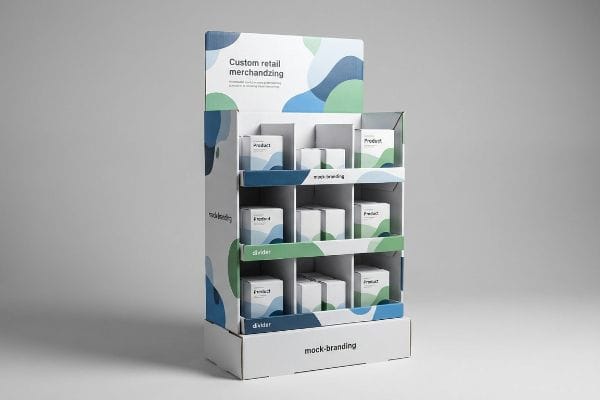
Si les éléments pris individuellement semblent simples, leur intégration collective détermine l'efficacité globale de votre stratégie de merchandising.
Le rôle stratégique des en-têtes et des intercalaires
Les équipes marketing considèrent souvent les éléments d'un présentoir comme de simples supports fonctionnels pour maintenir les boîtes de produits en position verticale. Elles partent du principe que le consommateur est déjà informé sur le produit et considèrent l'en-tête comme un détail secondaire plutôt que comme un outil de conversion essentiel. Cette négligence laisse les panneaux latéraux et les séparateurs du présentoir visuellement vides, empêchant ainsi la communication des arguments de vente clés pendant les trois secondes cruciales que consacre un client à parcourir l'allée.
En réalité, chaque élément d'un présentoir doit contribuer à la cohérence de l'ensemble pour informer et convaincre le consommateur. L' en-tête, véritable panneau d'affichage à haute visibilité, communique instantanément l'identité de la marque, tandis que les séparateurs internes modulaires organisent les différentes saveurs ou taillesainsiune expérience d'achat chaotique. En imprimant stratégiquement des messages ciblés directement sur les panneaux latéraux et les éléments de base, les marques créent un outil marketing unifié et multicanal. L'optimisation de l'espace visuel sur tous les éléments du présentoir garantit que celui-ci joue le rôle d'un vendeur actif et discret en rayon.
| Métrique/Fonctionnalité | Approche générique | Réalité stratégique |
|---|---|---|
| Fonction du composant | Maintenir la marchandise à la verticale | Outils intégrés de narration visuelle12 |
| Exécution de l'en-tête | Marque vierge ou minimale | Panneau d'affichage à fort impact pour la conversion13 |
| Organisation SKU | Bacs de produits mélangés chaotiques | Séparateurs modulaires pour une segmentation claire14 |
Considérez chaque panneau et chaque séparateur comme une opportunité publicitaire de premier ordre. Une coordination experte de ces éléments de présentation transforme une simple boîte en carton en une destination commerciale irrésistible pour les consommateurs.
🛠️ Le bureau de Harvey : Vos composants suspendus, lourds et fragiles, menacent-ils de déchirer leurs supports d'affichage et de provoquer un effondrement en pleine campagne ? 👉 Obtenez votre test de résistance matériel gratuit ↗ — Pas d'intermédiaires. Vous échangez directement avec des ingénieurs en structure.
Quel est le meilleur matériau pour une vitrine ?
Définir le substrat optimal nécessite d'aller au-delà des finitions esthétiques et d'examiner de manière approfondie l'architecture géométrique de base de la carte elle-même sous contrainte cinétique.
Le matériau idéal pour une vitrine temporaire est le carton ondulé micro-cannelé, notamment les structures de type E ou B. Contrairement au carton compact non cannelé, ces cannelures travaillées forment une structure interne en forme d'arche, offrant une capacité de charge dynamique exceptionnelle, une absorption des chocs cinétiques supérieure et une densité logistique optimale pour l'expédition à plat.
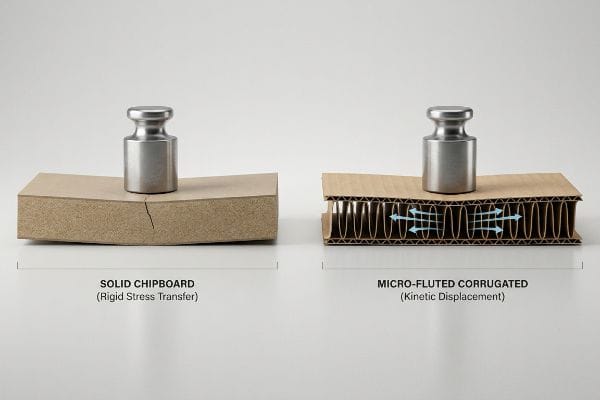
Pour comprendre véritablement pourquoi les matériaux cannelés sont plus performants que les substrats plats, il faut examiner les mécanismes cachés du déplacement de l'énergie cinétique.
Facteur de déplacement de charge géométrique
L'évaluation des substrats d'affichage exige de distinguer rigoureusement la densité statique de l'absorption des chocs dynamiques. De nombreuses équipes d'approvisionnement privilégient, à tort, les panneaux de particules massifs en raison de leur surface lisse et dense, agréable au toucher, assimilant ainsi, à tort, densité et robustesse structurelle. Cette hypothèse théorique ignore les lois de la physique : les panneaux non cannelés sont fondamentalement dépourvus de mécanisme interne pour gérer les contraintes vibratoires liées au transport<sup>15. Sans canaux internes arqués, toutes les pressions verticales et les impacts latéraux sont directement transmis au matériau rigide, contraignant l'écran plat soit à se courber violemment vers l'extérieur sous la pression exercée, soit à se rompre brutalement le long des lignes de pliage<sup>16</sup>.
La mécanique du carton ondulé repose sur un principe physique totalement différent, similaire à celui des arcs structurels utilisés dans la construction de ponts. Au lieu de se baser uniquement sur l'épaisseur du matériau, un substrat de type cannelure E ou B utilise une structure continue d'arcs de papier pris en sandwich entre deux feuilles de kraft plates. Lorsqu'une charge importante ou des vibrations soudaines dues au transport affectent la surface extérieure, ces cannelures internes se compriment dynamiquement, répartissant instantanément le choc cinétique sur une plus grande surface. Ce déplacement géométrique empêche toute rupture localisée due à une charge ponctuelle et garantit des angles parfaitement droits , même sous d'immenses charges empilées en entrepôt.
| Métrique/Fonctionnalité | Approche générique | Réalité artificielle |
|---|---|---|
| Type de substrat | Panneau de particules massif non cannelé | Carton ondulé micro-cannelé19 |
| Physique des impacts | transfert direct de contrainte rigide | déplacement cinétique dynamique20 |
| Profil d'empilement | Arcs sous charge verticale | Conserve une géométrie carrée parfaite21 |
J'évalue les matériaux exclusivement en fonction de leur comportement face aux chocs, et non de leur aspect sur un rendu. La structure interne en arc ondulé demeure la solution incontestée et mathématiquement prouvée de référence pour l'absorption des chocs dans les emballages de vente au détail.
🛠️ Le bureau de Harvey : Votre vitrine actuelle repose-t-elle sur la densité des matériaux bruts plutôt que sur une absorption des chocs cinétique optimisée ? 👉 Demandez une évaluation de la densité des cannelures ↗ — J’examine personnellement chaque dossier de structure sous 24 heures.
Conclusion
Pour éviter les déchirures des en-têtes d'affichage, l'épuisement des fibres de papier et les frottements catastrophiques sur la ligne de conditionnement, il est indispensable de remplacer les hypothèses génériques sur les matériaux par une analyse rigoureuse des structures, adaptée au contexte industriel. Le mois dernier seulement, mon audit structurel a permis à trois marques d'éviter plus de 10 000 $ de pertes liées aux stocks mis au rebut et aux refacturations des détaillants. Afin de garantir le succès de votre prochain lancement tout au long de la chaîne d'approvisionnement, je vous propose d'analyser personnellement vos fichiers structurels grâce à un audit gratuit de densité de transport des cartons maîtres ↗ avant même d'investir le moindre centime dans l'outillage de production de masse.
« Présentoirs PLV temporaires vs permanents : avantages et inconvénients », https://brownpackaging.com/temporary-vs-permanent-pop-displays-pros-and-cons/ . Les normes opérationnelles du secteur du merchandising en point de vente détaillent les coûts et les délais logistiques plus élevés liés à la modification des présentoirs permanents par rapport aux présentoirs temporaires. Niveau de preuve : à l’appui ; type de source : publication professionnelle. Argument avancé : le manque de flexibilité inhérent aux supports d’affichage permanents. Précision: s’applique principalement au secteur des biens de consommation courante (FMCG).
« Planification de l’emballage et de la logistique pour les présentoirs de vente au détail – Frank Mayer », https://www.frankmayer.com/blog/packaging-and-logistics-planning-for-retail-displays/ . Données faisant autorité comparant les coûts de transport et de logistique des matériaux ondulés légers et des supports permanents lourds. Rôle de la preuve : vérification technique ; type de source : analyse de la chaîne d’approvisionnement. Confirme : l’affirmation selon laquelle la réduction du poids des matériaux diminue les frais d’expédition. Note sur la portée : se concentre sur la distribution à grande échelle.
« Présentoirs en carton sur mesure | Fabrication interne aux États-Unis », https://www.creativedisplaysnow.com/displays/ . Source faisant autorité confirmant les propriétés techniques et l'utilisation répandue du carton ondulé pour les présentoirs temporaires sur le lieu de vente (PLV). Rôle de la preuve : spécification technique ; type de source : guide de fabrication. Aide à : choix des matériaux pour les présentoirs temporaires stratégiques. Note de portée : Spécifique aux supports temporaires.
« À quelle fréquence faut-il changer les présentoirs en magasin ? – PopDisplay », https://popdisplay.me/how-often-should-retail-displays-be-changed/. Étude sectorielle détaillant la fréquence standard de mise à jour des présentoirs saisonniers afin de maintenir l’intérêt des consommateurs. Valeur probante : référence sectorielle ; type de source : rapport de marketing de détail. Données prises en charge : indicateurs d’agilité des campagnes. Remarque : principalement applicable aux biens de consommation courante (FMCG) .
« Présentoirs permanents vs temporaires : lequel est le plus performant ? », https://www.theglobaldisplaysolution.com/blog/permanent-vs-temporary-retail-displays-which-one-works-best/?srsltid=AfmBOor7qhrSufUtoF-kqZFQh9o3H7FFN7_uBs0hIAI4dc-puLAYBAF4. Analyse économique comparant les coûts initiaux élevés d'outillage pour les présentoirs permanents au coût unitaire plus faible des matériaux temporaires saisonniers. Type de preuve : comparaison financière ; source : analyse de la chaîne d'approvisionnement. Appui : stratégies d'allocation budgétaire. Note de portée : analyse des dépenses d'investissement (CAPEX) par rapport aux dépenses d'exploitation (OPEX) dans le secteur du mobilier commercial .
« 7 types de vitrines : des idées créatives pour les concepteurs de magasins », https://unibox.co.uk/blog/7-types-of-window-display. Ce guide de référence en matière de conception de vitrines explique comment adapter le format de présentation à la catégorie de produits pour optimiser la visibilité et les ventes. Niveau de preuve : validation technique ; type de source : manuel sectoriel. Aide à : la sélection stratégique des vitrines. Note sur le champ d’application : s’applique au commerce de détail en général .
« Optimisation de l'agencement des points de vente : des magasins plus performants grâce aux jumeaux numériques | Matterport », https://matterport.com/blog/retail-layout-optimization?srsltid=AfmBOoqt4NKo85Dxl_KW7a7fPevBb7_wmpnXv0YVRVpibXF2CsYiib3b. Les normes légales et de sécurité, telles que l'accessibilité aux personnes handicapées (ADA) ou les codes de sécurité incendie, imposent des largeurs minimales d'allées et des restrictions d'emprise au sol pour les rayonnages. Rôle de la preuve : vérification réglementaire ; type de source : code gouvernemental. Conformité à la planification spatiale. Remarque sur la portée : varie selon la juridiction .
« Placement des produits pour les achats impulsifs – LinkedIn », https://www.linkedin.com/top-content/retail-merchandising/retail-space-utilization/impulse-purchase-placement/ . Les études sur le comportement des consommateurs démontrent que le placement stratégique des présentoirs dans les zones de passage à fort trafic augmente les achats impulsifs. Type de preuve : validation psychologique ; source : étude académique. Appui : stratégie d’engagement client. Précision: analyse du comportement en point de vente.
« Exploration du comportement de navigation et du niveau d'attention des acheteurs avec… », https://pmc.ncbi.nlm.nih.gov/articles/PMC6895988/ . Les études de marketing de détail ou les études comportementales des consommateurs, qui font autorité, quantifient généralement le temps limité que les acheteurs consacrent à l'évaluation d'un présentoir . Rôle des données probantes : vérification des indicateurs ; type de source : livre blanc sectoriel ou étude universitaire. Affirme : l'importance de la communication visuelle sur les présentoirs de points de vente. Remarque sur la portée : la durée varie selon la catégorie de produits.
« Efficacité des présentoirs sur le lieu de vente : quels sont les avantages de… », https://www.vanguardpkg.com/point-of-purchase-display-effectiveness-what-are-the-benefits-of-pop-displays/ . Guide de référence sur la conception de présentoirs sur le lieu de vente, confirmant le rôle des en-têtes de page pour attirer l’attention et communiquer le message de la marque. Preuve : validation fonctionnelle ; type de source : manuel de marketing de détail. Sujet : l’utilité des en-têtes de page. Champ d’application : commerce de détail général.
« Optimiser l’espace grâce à des rayons de supermarché optimisés », https://danaindustries.com/maximizing-space-with-optimized-grocery-store-shelves/ . Normes sectorielles de merchandising confirmant que les séparateurs maintiennent la séparation des produits et préviennent la confusion des consommateurs. Rôle de la preuve : validation fonctionnelle ; type de source : guide des meilleures pratiques de merchandising. Appuie : le rôle organisationnel des séparateurs. Note de portée : spécifique aux présentoirs multi-références.
« Le pouvoir du storytelling de marque dans le merchandising visuel | CDN », https://www.creativedisplaysnow.com/power-of-brand-storytelling-visual-merchandising/. La théorie du design appliquée au merchandising de détail explique la transition des éléments de présentation, d'outils utilitaires à de véritables vecteurs narratifs de marque. Niveau de preuve : soutien conceptuel ; type de source : manuel de design. Sujet abordé : l'évolution de la fonction des éléments. Précision : s'applique au merchandising visuel stratégique .
« Élaboration d’un cadre d’optimisation du taux de conversion pour le numérique… », https://pmc.ncbi.nlm.nih.gov/articles/PMC8864459/. Une étude de référence en marketing de détail confirme l’efficacité des en-têtes de page stratégiques comme leviers de conversion sur le lieu de vente. Rôle des preuves : validation de l’efficacité ; type de source : livre blanc sectoriel. Arguments : rôle stratégique des en-têtes de page. Précision : l’étude porte sur les présentoirs sur le lieu de vente .
« Sacs, bacs et séparateurs pour une meilleure gestion des stocks – Kardex », https://www.kardex.com/en-us/blog/totes-bins-inventory-management . Les normes de merchandising visuel décrivent l’utilisation de séparateurs modulaires pour réduire la charge cognitive et améliorer l’accessibilité des références. Preuve : validation technique ; source : manuel d’exploitation de vente au détail. Objectif : optimiser l’organisation des références. Remarque : applicable aux présentoirs de rayon et aux présentoirs autoportants.
« [PDF] Emballages en carton ondulé : conception innovante pour une durabilité accrue… », https://bioresources.cnr.ncsu.edu/wp-content/uploads/2026/01/BioRes_21_1_2229_Tworzydlo_PSMPGG_Corrugated_Packaging_Design_Durability_Transport_25399.pdf . Recherche en science des matériaux comparant les propriétés d’amortissement des vibrations des supports cannelés et des cartons pleins. Rôle de la preuve : vérification technique ; type de source : étude académique. Confirme l’affirmation selon laquelle les cartons non cannelés ne permettent pas une bonne gestion des vibrations. Note sur la portée : axée sur la logistique de l’emballage.
« Détermination du mécanisme de rupture et du mode II… – PMC – NIH », https://pmc.ncbi.nlm.nih.gov/articles/PMC13027756/. Rapports d’essais mécaniques détaillant les points de rupture des panneaux de fibres non cannelés sous contrainte de charge axiale. Rôle de la preuve : preuve factuelle ; type de source : rapport d’ingénierie industrielle. Arguments : la tendance des panneaux massifs à se rompre au niveau des plis. Note relative à la portée : spécifique aux géométries des présentoirs de vente au détail .
« Résistance à la compression des emballages en carton ondulé avec… », https://pmc.ncbi.nlm.nih.gov/articles/PMC10054506/ . Explication technique de la manière dont les cannelures du carton ondulé dissipent l’énergie et répartissent les charges d’impact. Preuve : vérification mécanique ; type de source : revue scientifique sur les matériaux. Éléments à prendre en compte: efficacité d’absorption des chocs. Remarque sur le champ d’application : s’applique aux substrats à cannelures E et B.
« [PDF] Étude des propriétés mécaniques des emballages en carton… », https://repository.rit.edu/cgi/viewcontent.cgi?article=1066&context=japr. Analyse technique comparant les seuils de rupture structurelle des cartons cannelés et non cannelés sous compression verticale. Type de preuve : validation structurelle ; source : manuel d’ingénierie de l’emballage. Objectif : prévention des ruptures par charges ponctuelles. Précision : étude axée sur les charges d’empilage en entrepôt .
« Évaluation des configurations ondulées dans les cartons ondulés par… – PMC », https://pmc.ncbi.nlm.nih.gov/articles/PMC10126572/ . Spécification technique relative à la capacité de charge et à l’intégrité structurelle des substrats micro-cannelés comparés aux panneaux de particules massifs. Type de preuve : spécification technique ; type de source : manuel de science des matériaux. Apport : sélection de la micro-cannelure pour les substrats techniques. Note de portée : étude axée sur la compression verticale.
« Analyse simplifiée de la résistance dynamique des emballages en carton… », https://pmc.ncbi.nlm.nih.gov/articles/PMC10385285/ . Analyse de la manière dont la structure cannelée des cartons ondulés dissipe l'énergie cinétique pour prévenir les ruptures structurelles. Rôle de la preuve : principe physique ; type de source : revue technique. Appuie : l' affirmation selon laquelle les substrats techniques exploitent le déplacement dynamique. Note de portée : spécifique à la physique des impacts.
« Estimation de la résistance à la compression des boîtes en carton ondulé… », https://pmc.ncbi.nlm.nih.gov/articles/PMC8467740/ . Données empiriques démontrant la résistance des cartons ondulés à la déformation sous charges de compression verticales. Rôle de la preuve : indicateur de performance ; type de source : rapport d’essais structurels. Appuie : l’affirmation selon laquelle les supports techniques conservent leur intégrité géométrique. Note de portée : comparaison des profils d’empilement.