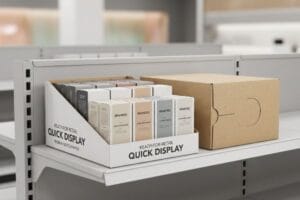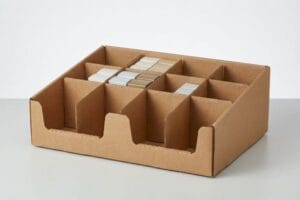
Vous avez besoin d'une visibilité percutante en point de vente sans épuiser votre budget marketing. Si les présentoirs métalliques permanents sont très coûteux, des présentoirs temporaires en carton, conçus sur mesure, offrent une alternative rentable et évolutive.
Les solutions de merchandising économiques privilégient les présentoirs en carton ondulé pour maximiser l'impact visuel immédiat en magasin. En concevant des structures robustes à partir de matériaux légers et recyclables, les marques peuvent réduire considérablement leurs coûts de fabrication et de transport, tout en respectant scrupuleusement les directives complexes des grandes enseignes.
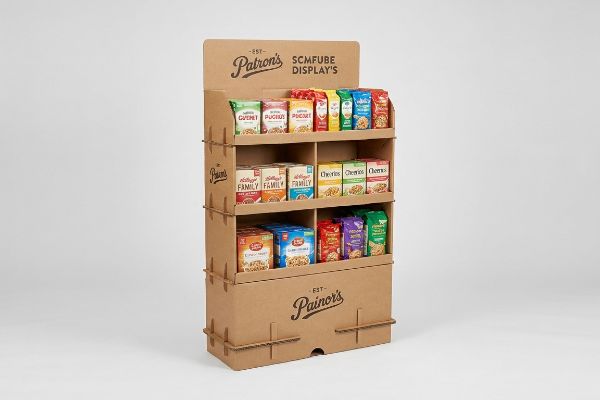
Mais parvenir à une rentabilité optimale ne se résume pas à choisir la matière première la moins chère ; cela exige une ingénierie structurelle précise pour garantir que votre présentoir physique résiste aux aléas de la chaîne d'approvisionnement du commerce de détail.
Quels sont les quatre types d'écrans de base ?
Le choix du format structurel adéquat détermine l'ensemble de votre espace de vente.
Les quatre types de présentoirs de base sont les unités de sol temporaires, les présentoirs de comptoir, les configurations de palettes fractionnées et les plateaux prêts à la vente. Chaque format distinct répond à un besoin fonctionnel spécifique au sein d'un point de vente physique, nécessitant une conception spatiale et un agencement adaptés pour respecter les normes légales de hauteur et d'accessibilité.
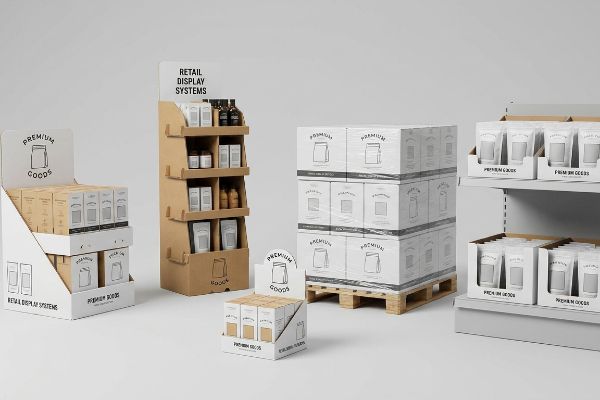
Connaître les catégories de base est facile, mais transposer aveuglément un design à travers ces formats crée un véritable casse-tête en matière de conformité.
Naviguer entre les contraintes spatiales de l'ADA et de la GMA
Même les concepteurs les plus expérimentés tentent souvent une approche « modulable », partant du principe qu'il suffit de réduire de moitié un grand présentoir de point de vente pour l'utiliser comme présentoir. Cette méthode standardisée semble très économique sur un écran d'ordinateur. Cependant, elle ignore totalement les règles juridiques et logistiques strictesqui régissent ces deux zones de vente distinctes.
Je constate constamment ce problème récurrent lors de l'examen des gabarits. Un client tente de réduire un présentoir de sol à un format comptoir sans ajuster les dimensions. Or, les présentoirs de sol sont strictement soumis aux dimensions maximales des palettes GMA (Grocery Manufacturers Association) de 1219 × 1016 mm (48 × 40 pouces) pour la logistique d'entrepôt, tandis que les présentoirs de comptoir doivent respecter la stricte plage de portée avant de 381 à 1219 mm (15 à 48 pouces) imposée par l'ADA (Americans with Disabilities Act). Lorsque je teste ces présentoirs de comptoir « réduits » au sol, le poids de la base provoque la déchirure du rebord de retenue avant sous la résistance du carton ondulé brut. On entend même les fibres de papier épais craquer sous la tension. Si vous ne séparez pas définitivement vos processus d'ingénierie pour ces deux types de produits, les responsables de magasin refuseront immédiatement les produits non conformes, entraînant un important retard logistique.
| Erreurs courantes des débutants | La solution pro | Avantage du magasin |
|---|---|---|
| Rétrécissement des présentoirs de sol pour utilisation en comptoir | Séparation des processus d'ingénierie ADA et GMA | Empêche les refus immédiats des détaillants |
| Ignorer les limites de portée avant de l'ADA2 | Ancrez les designs de points de vente à la fenêtre de 15 à 48 pouces3 | Garantit un engagement accessible des acheteurs |
| Imposer des dimensions surdimensionnées aux comptoirs | Repenser les calculs structurels des zones de points de vente | Élimine les lèvres ondulées déchirées |
Dès le départ, je sépare rigoureusement les circuits techniques pour les présentoirs de sol et de comptoir. En tenant compte des contraintes spatiales spécifiques à chaque point de vente, je garantis un assemblage impeccable de vos présentoirs et un emplacement optimal en caisse, sans engendrer de frais supplémentaires liés à la conformité.
🛠️ Le bureau d'Harvey : Vous vous demandez si votre nouvel présentoir de comptoir respecte les limites de présence en magasin ? 👉 Obtenez un audit spatial gratuit ↗ — Accès direct à mon bureau. Zéro spam commercial automatisé, promis.
Quelle est la meilleure façon de présenter la marchandise ?
Le merchandising ne se résume pas à empiler des produits ; il s'agit de contrôler l'impact visuel dans les allées.
La meilleure façon de présenter des produits consiste à utiliser une stratégie spatiale étagée précise afin de capter l'attention visuelle, de susciter l'intérêt des clients et de les inciter à l'achat. Les présentoirs en carton les plus efficaces tirent parti d'un contraste élevé pour perturber visuellement la visibilité à distance, tout en garantissant une accessibilité optimale des produits et une stabilité structurelle ergonomique de près.
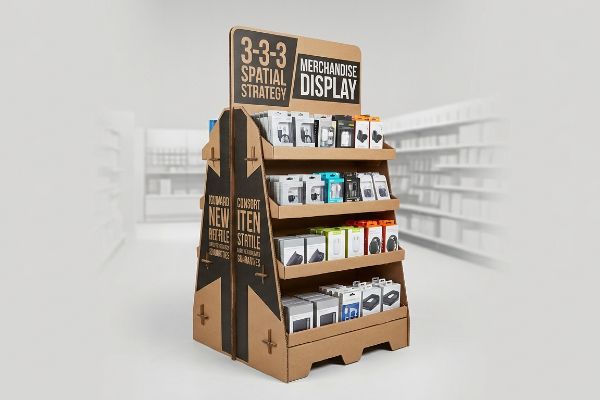
Vous pouvez avoir le meilleur produit au monde, mais si votre architecture d'exposition physique n'attire pas de clients, il devient un stock invisible.
La stratégie d'engagement spatial 3-3-3
Les équipes marketing conçoivent souvent leurs présentoirs en magasin exclusivement pour une visualisation rapprochée sur des écrans CAO (Conception Assistée par Ordinateur) à rétroéclairage lumineux. Elles privilégient la lisibilité des petits caractères et des dégradés subtils, partant du principe que les clients se placeront face au présentoir et l'examineront comme une brochure. Cette approche ignore totalement la réalité chaotique de la façon dont les consommateurs pressés circulent dans les allées des grandessurfaces.
Imaginez un rayon de magasin comme un panneau publicitaire en bord d'autoroute : vous n'avez que quelques secondes pour marquer les esprits. Je me base sur la « règle du 3-3-3 » pour capter l'attention en magasin : votre présentoir doit attirer le regard à 9,1 mètres (3,1 pieds), susciter l'intérêt du client à 0,9 mètre (3 pieds) et inciter à l'achat à 7,6 cm (3 pouces). J'ai vu des présentoirs magnifiquement imprimés échouer complètement à cause de l'éclairage fluorescent agressif qui masque les couleurs subtiles au fond du rayon. Lorsque je visite l'atelier et que j'évalue un prototype, je prends du recul de 9,1 mètres (30 pieds). Si les couleurs Pantone et les formes découpées avec précision ne ressortent pas immédiatement, le présentoir se fond dans le décor. C'est un piège courant, mais en optimisant l'ergonomie de l'étagère pour une zone de visibilité de 1 270 mm (50 pouces) et en découpant le bord avant pour une visibilité du produit de 85 % , nous augmentons considérablement les achats impulsifs.
| Erreurs courantes des débutants | La solution pro | Avantage du magasin |
|---|---|---|
| Conçu uniquement pour une lecture de près | Appliquer la règle d'engagement spatial 3-3-37 | Capture le flux de piétons depuis l'allée |
| Utilisation de graphismes subtils et à faible contraste | Inonder les fonds avec des couleurs Pantone d'accompagnement audacieuses | Crée une perturbation visuelle immédiate de 9 mètres (30 pieds)8 |
| Dissimuler les produits derrière les hauts rebords des plateaux | Découper les lèvres de retenue à 85 % de visibilité9 | Entraîne des conversions tactiles sans friction de 3 pouces |
J'impose des éléments structurels découpés avec précision, conçus spécifiquement pour une vision à distance. En optimisant mathématiquement ce continuum spatial, je garantis que votre campagne se démarque visuellement et capte immédiatement l'attention.
🛠️ Le bureau d'Harvey : Votre mise en page graphique actuelle est-elle illisible à 9 mètres ? 👉 Demandez un plan spatial ↗ — Téléchargement sécurisé. Ma boîte de réception reste ouverte si vous avez des questions.
Comment attirer des clients grâce à mon présentoir ?
Perturber le paysage visuel exige plus que de simples couleurs vives ; cela requiert une asymétrie structurelle délibérée.
Pour attirer les clients grâce à une présentation, il est nécessaire de jouer sur l'asymétrie structurelle afin de créer une tension visuelle psychologique. En évitant les grilles parfaitement uniformes et en utilisant des séparateurs modulaires pour regrouper les produits en nombre impair, les marques peuvent capter activement le regard tout en facilitant le réapprovisionnement.
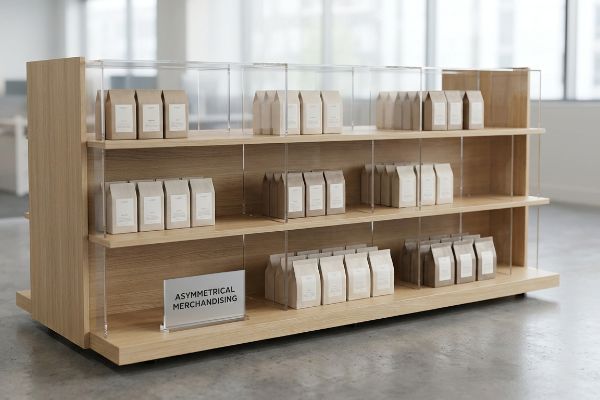
Entasser autant de marchandises que possible sur une étagère peut sembler logique, mais cela a pour effet de repousser les clients.
Créer une tension visuelle grâce à la règle de l'asymétrie
Il est courant que les concepteurs disposent à plat une grille dense et parfaitement symétrique de produits sur une seule étagère, partant du principe qu'une densité de stock maximale génère des ventes plus importantes. Ils créent des rendus structurels qui ressemblent à un mur parfaitement carrelé. Cependant, ils ignorent la réalité psychologique du merchandising visuel, où des blocs de produits parfaitement réguliers ne parviennent pas à créer de tension visuelle<sup>10.
C'est comme fixer un mur de briques nu : le regard glisse sans s'arrêter. Je conseille systématiquement à mes clients d'appliquer la « règle du 3-5-7 » à l'aide de séparateurs modulaires dédiés. Lorsque les produits sont regroupés en ensembles asymétriques impairs( trois, cinq ou sept articles), cela crée une rupture psychologique qui oblige les clients pressés à s'arrêter et à regarder. J'ai constaté le problème inverse en magasin : un encombrement symétrique excessif provoque d'importantes frictions lors du réapprovisionnement. Les vendeurs s'énervent en essayant de faire rentrer les articles serrés dans les bacs, et on sent littéralement la résistance du carton ondulé brut qui se déchire sous la pression. En prévoyant un jeu structurel précis de 6,3 mm (0,25 pouce)complètement le risque de déchirure du carton et je réalise un gain de temps considérable.
| Erreurs courantes des débutants | La solution pro | Avantage du magasin |
|---|---|---|
| Empiler les étagères en grilles serrées et régulières | Utilisez la règle d'asymétrie 3-5-7 | Crée une tension visuelle psychologique |
| Ignorer le déstockage des produits | Ingénieur des séparateurs modulaires d'UGS | Empêche les bords ondulés des plateaux de se déchirer |
| Surcharge pour un stock maximal | Regroupez les éléments en nombres impairs distincts | Augmente l'engagement des consommateurs et les achats impulsifs |
Je répartis vos produits de manière optimale grâce à des séparateurs flottants conçus pour rompre la monotonie visuelle. Cet espacement structurel intégré attire l'attention du client et facilite grandement le réapprovisionnement pour les vendeurs.
🛠️ Le bureau de Harvey : Vos présentoirs de produits trop denses abîment-ils les bords des étagères lors des réapprovisionnements ? 👉 Commandez votre séparateur personnalisé (format CAO) ↗ — Pas de formulaires interminables qui vous obligent à passer des appels commerciaux à n'en plus finir. Uniquement de la valeur ajoutée.
Quels sont les différents types de présentoirs de marchandisage ?
Dépassant les plateaux et palettes, les présentoirs cinétiques introduisent des forces physiques entièrement nouvelles sur la surface de vente.
Les présentoirs de merchandising se déclinent en différents types : bacs de sol fixes, plateaux de comptoir modulaires et présentoirs rotatifs. Chaque format nécessite une ingénierie d’emballage hautement spécialisée afin de gérer en toute sécurité les variations de forces physiques, les charges dynamiques imprévisibles et les mouvements logistiques complexes inhérents à la distribution dans la chaîne d’approvisionnement du commerce de détail.
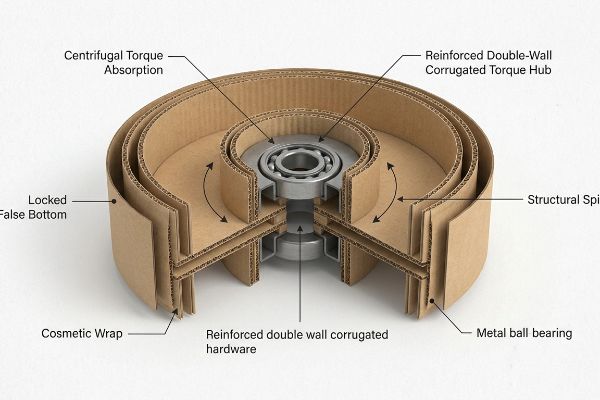
Il est facile de faire tenir debout une boîte statique standard dans un laboratoire, mais voici la dure réalité lorsqu'on introduit un mouvement cinétique et qu'on en expédie des centaines à un magasin de sport.
Pourquoi les toupies rotatives standard tombent-elles en panne en usine ?
Les équipes marketing demandent souvent des présentoirs rotatifs de type « Lazy Susan » ou des présentoirs motorisés, partant du principe que les socles plats en carton ondulé standard peuvent supporter des roulements à billes génériques. Elles traitent le socle comme un présentoir statique, en boulonnant directement des composants métalliques lourds sur support pliable en carton ondulé 32ECT13.Cette conception simpliste ignore totalement le couple centrifuge important14 généré par un présentoir rotatif chargé.
Il ne s'agit pas d'une simple théorie : j'observe ce piège systémique se manifester lors des tests cinétiques. Lorsque les clients font tourner un présentoir lourdement chargé, le couple centrifuge se transmet directement à la structure de base15 sous forme de force de cisaillement cinétique. Sans système d'ancrage interne indépendant, je constate que ce frottement de rotation déchire rapidement les coutures d'angle des rabats ondulés pliés standard, provoquant le flambage et l'effondrement violent de l'ensemble. J'ai effectué des mesures micrométriques sur un prototype défectueux et prouvé que l'utilisation d'une base à paroi simple pour un présentoir cinétique constitue une erreur fatale. En concevant un « pivot de couple isolé » doté d'une structure ondulée à double paroi sous un faux fond verrouillé, j'ancre solidement la charge utile de 85 kg et absorbe la force de cisaillement. Cette amélioration structurelle spécifique de 3,2 mm isole complètement la contrainte cinétique16 des parois extérieures, réduisant à zéro le taux de défaillance structurelle et permettant aux clients d'économiser des milliers d'euros en frais de responsabilité civile.
| Erreurs courantes des débutants | La solution pro | Avantage du magasin |
|---|---|---|
| Fixation des éléments de boulonnage sur tôle ondulée standard | Concevoir un moyeu de couple isolé | Absorbe les forces de cisaillement centrifuges extrêmes |
| En négligeant le couple de rotation cinétique | Renforcé par une colonne vertébrale à double paroi | Prévient la déchirure des coutures d'angle structurelles |
| Traiter les spinners comme des écrans statiques | Charge utile d'ancrage sous un faux fond | Élimine les risques d'effondrement des sols commerciaux |
J'isole rigoureusement les contraintes cinétiques grâce à la conception de structures internes à double paroi capables de résister à des couples de rotation importants. En éliminant les bases statiques classiques, je garantis à vos présentoirs rotatifs une rotation fluide et stable tout au long de votre campagne marketing.
🛠️ Conseils d'Harvey : Un défaut structurel de 2 millimètres ne doit pas compromettre le déploiement dans 500 magasins. 👉 Envoyez-moi votre fichier de gabarit ↗ — Je vérifierai la robustesse des calculs avant que vous n'investissiez votre budget dans une production de masse.
Conclusion
Vous pouvez opter pour un support en carton standard, mais si une force de cisaillement cinétique non maîtrisée provoque l'effondrement brutal de ce présentoir dans un magasin, cela entraînera des refus immédiats de la part du détaillant et une perte catastrophique de 100 % du retour sur investissement de votre campagne. Voici la fiche technique exacte que mes 10 principaux clients du secteur de la distribution utilisent pour garantir zéro rejet d'impression. Cessez de vous fier à des tolérances théoriques et laissez-moi identifier personnellement vos points faibles structurels grâce à mon audit de découpe gratuit ↗ afin de garantir une stabilité cinétique irréprochable.
« Normes ADA pour la conception accessible », https://www.ada.gov/law-and-regs/design-standards/. [Les directives faisant autorité sur l’accessibilité selon l’ADA et les normes GMA définissent les exigences légales en matière d’espace et les contraintes de sécurité pour différentes zones d’exposition en magasin]. Rôle de la preuve : validation ; type de source : directive réglementaire. Appuie : l’existence de règles distinctes pour les zones de vente au détail. Note sur la portée : s’applique principalement aux normes de vente au détail américaines .
« Normes ADA pour la conception accessible, Titre III du Règlement… », https://www.ada.gov/law-and-regs/design-standards/1991-design-standards/. [Les normes ADA pour la conception accessible définissent des exigences spécifiques concernant les portées maximales et minimales afin de garantir l’accessibilité aux personnes en fauteuil roulant]. Rôle de la preuve : vérification des normes réglementaires ; type de source : réglementation gouvernementale. Appui : la nécessité de respecter les limites de portée dans la conception des présentoirs. Note sur la portée : applicable principalement aux environnements de vente au détail situés aux États-Unis .
« Chapitre 3 : Éléments utilisables – Access-Board.gov », https://www.access-board.gov/ada/guides/chapter-3-operable-parts/. [Les directives réglementaires relatives à la conception accessible précisent la plage de hauteurs pour une portée dégagée afin de garantir que les éléments soient utilisables par tous les consommateurs]. Rôle de la preuve : spécification technique ; type de source : guide d’accessibilité. Appuie : la recommandation spécifique de hauteur de 15 à 48 pouces pour les présentoirs de point de vente. Note de portée : se concentre sur la portée dégagée vers l’avant .
« Stratégies d’engagement visuel pour stimuler les ventes dans les grandes surfaces… », https://thelookcompany.com/blog/visual-engagement-tactics-that-drive-sales-for-big-box-retail/. [Des études empiriques en anthropologie du commerce de détail et en cartographie thermique des comportements des consommateurs démontrent que ces derniers parcourent généralement les allées rapidement et scrutent les présentoirs à distance avant de s’y intéresser]. Type de données : données comportementales ; source : étude de marché sur le commerce de détail. Conclusion : privilégier une perturbation visuelle à distance plutôt que des détails rapprochés. Précision : étude portant sur les environnements de vente au détail à fort volume et à rythme soutenu .
« Conception des espaces de vente au détail pour des présentoirs efficaces et une circulation client optimale », https://www.business.qld.gov.au/industries/manufacturing-retail/retail-wholesale/retail-displays . [Une source faisant autorité en matière de conception de points de vente ou d'ergonomie humaine permettrait de valider la hauteur verticale optimale pour le placement des produits afin de maximiser leur impact visuel]. Rôle de la preuve : spécification technique ; type de source : manuel sectoriel. Sujets abordés : ergonomie de la hauteur optimale des étagères. Remarque concernant la portée : peut varier en fonction de la taille de la clientèle cible.
« Les meilleurs types de présentoirs pour le marketing de placement de produits en point de vente », https://popdisplay.me/the-best-types-of-displays-for-product-placement-marketing-in-retail/ . [Des études sur le merchandising visuel et le comportement du consommateur permettraient de corréler des pourcentages spécifiques de visibilité des produits avec l'augmentation des taux d'achats impulsifs ] . Rôle de la preuve : indicateur de performance ; type de source : étude de marché. Appui : impact de la visibilité sur la conversion. Note de portée : spécifique aux présentoirs en carton sur le lieu de vente.
« L’importance de la règle des 3 pour vos présentoirs personnalisés », https://mcintyredisplays.com/blog/custom-store-displays/. [Les guides de référence en merchandising visuel définissent les repères de distance et les éléments déclencheurs d’engagement spécifiques de la règle des 3-3-3]. Niveau de preuve : définition ; type de source : manuel sectoriel. Appui : stratégie d’engagement spatial. Remarque : Spécifique à l’agencement des surfaces de vente .
« Chapitre 3 : La psychologie des couleurs dans l’affichage en magasin », https://www.creativedisplaysnow.com/guides/understanding-the-retail-customer/chapter-3-the-psychology-behind-retail-display-colors/. [Des études sur la perception visuelle du consommateur quantifient la distance à laquelle les couleurs à fort contraste captent l’attention dans un environnement de vente au détail]. Type de preuve : mesure empirique ; type de source : étude psychologique. Conclusion : efficacité des couleurs vives. Remarque : varie selon l’éclairage ambiant .
« [PDF] NORMES D'ACCESSIBILITÉ DU TEXAS (TAS) », https://www.tdlr.texas.gov/ab/tas/tasappendix.pdf . [Les recherches ergonomiques sur l'accessibilité des produits montrent comment la hauteur du rebord d'un plateau influence la probabilité qu'un consommateur touche un produit]. Rôle de la preuve : spécification technique ; type de source : étude UX/ergonomique. Contribue à : l'amélioration de la conversion tactile. Remarque sur la portée : spécifique aux produits présentés sur plateau.
« Évaluation de l’attention et de l’excitation du consommateur par suivi oculaire… », https://pmc.ncbi.nlm.nih.gov/articles/PMC8380820/. [Des recherches en merchandising visuel et en psychologie cognitive démontrent que les motifs symétriques sont traités rapidement et ignorés, tandis que l’asymétrie crée une dissonance cognitive qui attire l’attention. Rôle des preuves : validation ; type de source : étude psychologique évaluée par les pairs ou manuel de merchandising du secteur. Appuie : la nécessité d’une asymétrie structurelle pour l’engagement visuel. Note de portée : s’applique spécifiquement aux signaux visuels de l’environnement de vente au détail.] ↩
« Services et stratégie de merchandising visuel | T-ROC Global », https://trocglobal.com/visual-merchandising/. [Des recherches en psychologie visuelle et en design de points de vente démontrent que les compositions à nombre impair d'éléments créent une tension visuelle qui attire l'attention plus efficacement que les agencements symétriques]. Rôle des preuves : validation théorique ; type de source : revue de psychologie du design. Appui : perturbation psychologique des consommateurs. Note de portée : applicable aux modèles de merchandising visuel .
« Estimation de la résistance à la compression des boîtes en carton ondulé… », https://pmc.ncbi.nlm.nih.gov/articles/PMC8467740/ . [Les normes d’ingénierie de l’emballage spécifient les tolérances de jeu des séparateurs en carton ondulé afin de prévenir les contraintes mécaniques et la rupture du matériau lors du chargement ] . Rôle de la preuve : spécification technique ; type de source : manuel d’ingénierie industrielle. Objectif : élimination des déchirures du carton. Note relative à la portée : spécifique aux matériaux en carton ondulé.
« [PDF] Spécifications du carton ondulé – Fibre Box Association », https://www.fibrebox.org/assets/2025/09/Walmart_Corrugated-Board_Specifications_Automation_Packaging_Standards.pdf. [Les normes de l’industrie de l’emballage relatives à l’essai de résistance à l’écrasement des bords (ECT) définissent la résistance à la compression et les limites de charge spécifiques aux matériaux ondulés 32ECT]. Rôle de la preuve : spécification technique ; type de source : norme industrielle. Justifie : l’inadéquation structurelle des bases en carton ondulé standard pour les composants métalliques lourds. Note de portée : se réfère spécifiquement à la résistance à la compression verticale .
« Mécanique des matériaux : Torsion – Université de Boston », https://www.bu.edu/moss/mechanics-of-materials-torsion/. [Les principes de génie mécanique relatifs à la dynamique de rotation expliquent comment la rotation d'un système chargé génère une force centrifuge et un couple sur sa base porteuse]. Rôle de la preuve : principe physique ; type de source : manuel d'ingénierie. Appuie : l'affirmation selon laquelle les dispositifs cinétiques induisent des forces absentes des dispositifs statiques. Note de portée : applicable aux dispositifs rotatifs asymétriques ou à pleine charge .
« Corps en rotation – Contraintes – The Engineering ToolBox », https://www.engineeringtoolbox.com/stress-rotation-disc-ring-body-d_1752.html. [Une source de génie mécanique ou de physique explique comment le couple de rotation dans les présentoirs cinétiques se convertit en force de cisaillement sur la base de support]. Rôle de la preuve : validation technique ; type de source : manuel d’ingénierie. Appui : mécanisme de rupture structurelle. Note de portée : s’applique au couple de rotation dans les structures en carton utilisées dans la vente au détail .
« Guide pour comprendre les cannelures des boîtes en carton ondulé – Gentlelever », https://gentlever.com/flutes-types-sizes-and-thickness-in-corrugated-boxes/. [Un manuel d'ingénierie de l'emballage spécifie les propriétés de résistance à la charge et d'isolation des contraintes du carton ondulé double cannelure de 3,2 mm]. Rôle de la preuve : spécification technique ; type de source : norme d'emballage industriel. Appui : efficacité de l'épaisseur du matériau pour prévenir les défaillances. Note de portée : spécifique aux présentoirs cinétiques à charge utile élevée .