De nombreuses marques utilisent du carton standard pour l'entreposage, partant du principe qu'une boîte n'est qu'une boîte. Mais lors d'un stockage prolongé en entrepôt, les lois de la physique changent complètement la donne.
Oui. Les boîtes en carton sont parfaitement adaptées à une utilisation à long terme lorsqu'elles sont conçues pour des conditions spécifiques. Alors que les cartons standards absorbent l'humidité et s'affaissent, le carton haute densité renforcé par des barrières anti-humidité conserve son intégrité structurelle et sa capacité de charge élevée pendant plusieurs années en environnement contrôlé.
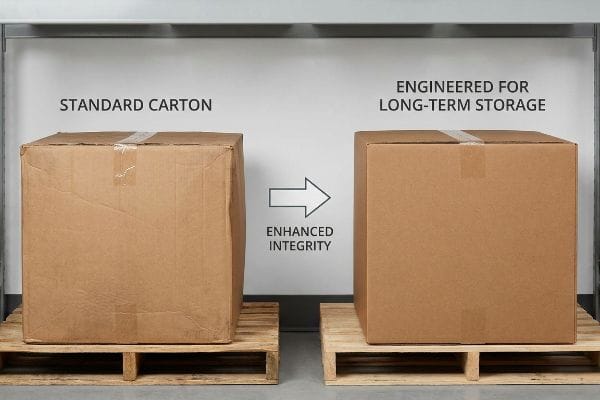
Avant de déployer des stocks massifs dans les chaînes d'approvisionnement mondiales, il est indispensable de comprendre les dures réalités de la fatigue des matériaux et du cycle de vie des structures.
Combien de temps peuvent durer les boîtes en carton ?
La véritable durée de vie d'un carton ondulé ne se mesure pas en jours calendaires statiques, mais en fonction des chocs cinétiques qu'il subit tout au long de son cycle de vie opérationnel.
La durée de vie des cartons dépend entièrement de leur limite de résistance à la compression. Un carton kraft vierge standard peut supporter jusqu'à six mois de transport intensif, tandis que les emballages recyclés perdent rapidement une grande partie de leur résistance à la compression et cèdent sous le poids des palettes après quelques semaines de réutilisation.
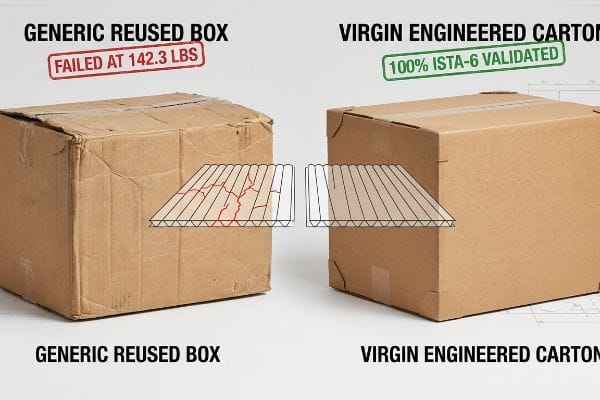
De nombreuses équipes d'approvisionnement tentent de réduire leurs coûts logistiques en réutilisant les cartons B2C (Business-to-Consumer) entrants pour l'expédition vers les points de vente, ignorant complètement la détérioration microscopique des cannelures du papier.
Le piège à fatigue des enveloppes recyclées
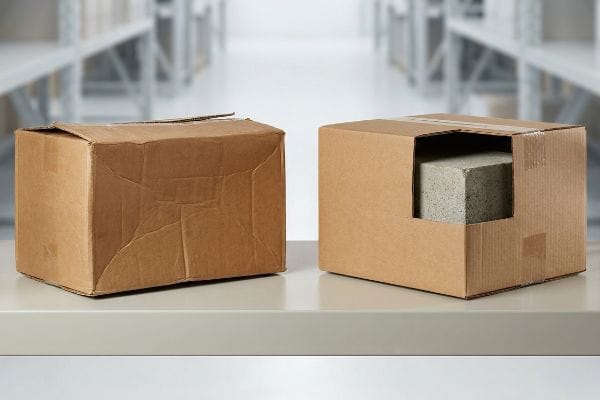
Même les équipes d'approvisionnement les plus expérimentées considèrent souvent les emballages e-commerce d'apparence intacte comme des contenants structurellement solides pour le transport secondaire. Elles font l'erreur de considérer l'extérieur d'un carton comme le principal indicateur de sa durée de vie restante. Je vois constamment des marques supposer qu'un carton ayant résisté à un transport peut facilement en supporter un second. Elles ne comprennent pas que les cannelures du carton ondulé agissent comme des amortisseurs mécaniques¹etqu'une fois que ces fibres de papier subissent les vibrations initiales du transport, leur structure interne est irrémédiablementcompromise².
Dans mon atelier, je constate régulièrement que ce travail théorique, mené en théorie, provoque des ruptures catastrophiques de la chaîne d'approvisionnement lorsque les clients fournissent leurs propres emballages réutilisés pour le conditionnement. Ce n'est pas qu'une simple théorie : je le constate en testant sur le terrain lorsqu'un lot d' enveloppes 32ECT réutilisées passe sous notre presse à compression hydraulique. Ces boîtes, visuellement « parfaites », subissent instantanément des microfissures invisibles et se déforment sous une pression de seulement 64,5 kg (142,3 lb), bien en deçà de leur charge nominale d'origine. Pour remédier à ce problème, j'impose un test de référence strict ISTA 6-Amazon SIOC (Ships In Own Container) qui interdit définitivement l'utilisation de cartons structurellement endommagés. En appliquant rigoureusement l'exigence de matériaux vierges et en repensant les plis de soutien internes du carton principal avec du carton cannelé de 3,17 mm (0,125 pouce) d'épaisseur , ma table de découpe CNC (Commande Numérique par Calculateur) a prouvé que nous pouvions isoler complètement la pression dynamique exercée par le haut. En imposant cette géométrie vierge stricte, je garantis que nos cartons maîtres sortants conservent 100 % de leur résistance dynamique, éliminant totalement les dommages liés au transport et permettant aux clients d'économiser jusqu'à 4 500 $ en refacturations des détaillants par trajet de fret LTL (Less-Than-Truckload) lourd.
| Métrique/Fonctionnalité | Boîte générique réutilisée | Carton vierge conçu par Virgin |
|---|---|---|
| Intégrité de la flûte | Fibres microfracturées | résistance cinétique à 100 % |
| Limite de compression | Échec à 142,3 lbs (64,5 kg)5 | Survit à plus de 1134 kg (2500 lbs)6 |
| Conformité des détaillants | Risque élevé de rétrofacturation | Validé à 100 % selon la norme ISTA-67 |
Je refuse que des emballages secondaires de mauvaise qualité anéantissent la marge bénéficiaire de votre produit principal. Réutiliser des fibres de papier épuisées est une fausse économie qui provoque inévitablement des défaillances massives lors du transport et compromet totalement la confiance durement acquise de vos détaillants.
🛠️ Le bureau de Harvey : Vos cartons réutilisés réduisent-ils considérablement votre retour sur investissement en matière d'expédition avant même qu'ils n'atteignent le quai du détaillant ? 👉 Demandez un audit gratuit de densité de fret ↗ — J'examine personnellement chaque fichier structurel sous 24 heures.
Quelles sont les meilleures boîtes de stockage à long terme ?
Garantir une protection fiable des stocks sur de longues périodes exige bien plus que du carton double paroi standard ; cela requiert une ingénierie chimique et des matériaux précis pour lutter contre la dégradation atmosphérique.
Les meilleures caisses de stockage longue durée utilisent une matrice de matériaux hybrides, combinant stratégiquement du testliner recyclé haute densité avec au moins 30 % de kraft vierge injecté. Ce dosage précis prévient l'épuisement microscopique des fibres et garantit le maintien de la résistance à la compression dynamique des cannelures, même lors de longs stockages en entrepôt.
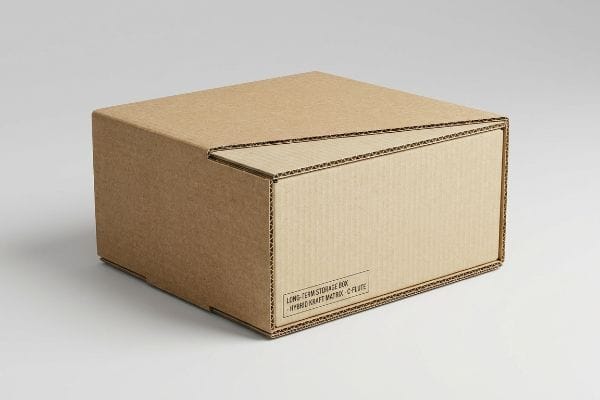
Les acheteurs qui insistent sur des normes écologiques strictes en matière de recyclage finissent souvent par saboter leurs propres opérations d'entrepôt lorsque leurs cartons vieillissants commencent à s'effondrer mystérieusement des mois plus tard.
Le piège de la durabilité lié à « l’épuisement des fibres »
Je constate régulièrement que des marques exigent systématiquement l'utilisation de papier testliner entièrement recyclé pour les présentoirs de vente au détail à usage intensif, afin de satisfaire à des critères de développement durable très stricts. Elles partent du principe erroné que le carton fortement repulpé possède exactement la même durée de vie physique que le carton ondulé neuf. Ce qu'elles ne prennent pas en compte, c'est la réalité mécanique microscopique du processus de recyclage du papier lui-même. Après cinq à sept cycles de recyclage, les fibres de cellulose brutes se raccourcissent , perdent leur élasticité et s'affaiblissent structurellement lorsqu'elles sont soumises à un poids statique prolongé .
Il ne s'agit pas que de théorie : je le constate sur le terrain lorsque nous soumettons des palettes entièrement recyclées et vieillissantes à un test de compression des bords TAPPI T811 standard après une exposition simulée à l'humidité. Les fibres courtes, trop recyclées, manquent de rigidité, ce qui provoque la rupture et le délaminage des cannelures, laissant une déchirure creuse et poussiéreuse, sous une pression de seulement 5,07 kg/cm (28,4 lb/po). Mes vingt ans d'expérience sur le terrain m'ont appris qu'on ne peut pas tricher avec les lois de la science des matériaux. Pour résoudre ce problème, j'effectue une amélioration ciblée du matériau en injectant précisément 30 % de kraft vierge10 directement dans la structure porteuse des cannelures en C. La différence est perceptible : le panneau hybride amélioré résiste à la compression avec une tension rigide et inflexible, contrairement à la déformation molle et spongieuse du matériau purement recyclé. En améliorant la matrice de fibres centrales, j'augmente le taux de survie global du BCT (Box Compression Test) de plus de 40 %11, garantissant ainsi que les cartons survivent au transport maritime à double empilement et permettant aux clients d'économiser des milliers de dollars en pertes sur les stocks écrasés.
| Métrique/Fonctionnalité | Testliner 100 % recyclé | Matrice vierge hybride |
|---|---|---|
| Élasticité des fibres | Épuisé et raccourci12 | Long et très rigide |
| Performances ECT | Se casse sous une charge soutenue13 | Absorbe les chocs cinétiques |
| Durée de vie du stockage | Des mois avant l'effondrement de la base | Des années de stabilité structurelle14 |
Je privilégie une analyse rigoureuse des matériaux plutôt que des prévisions optimistes sur les approvisionnements pour protéger les stocks à long terme. L'intégration de papier kraft vierge dans votre chaîne d'approvisionnement est le seul moyen mathématiquement prouvé d'enrayer la dégradation progressive des entrepôts.
🛠️ Le bureau d'Harvey : Votre boîte de rangement écologique risque-t-elle de se déformer sous l'effet de l'humidité ambiante des entrepôts ? 👉 Demandez un audit structurel gratuit ↗ — Confidentialité garantie. Vos prototypes non commercialisés sont en sécurité.
Quels objets ne doivent jamais être stockés dans des boîtes en carton ?
L’emballage en carton ondulé offre d’énormes avantages logistiques, mais certains composés organiques volatils attaquent agressivement les fibres de papier et les adhésifs industriels au niveau moléculaire.
Les produits très volatils ne doivent jamais être stockés dans des boîtes en carton standard, en particulier ceux contenant des huiles essentielles concentrées, des parfums de synthèse ou des solvants actifs. Ces composés organiques dégagent rapidement des gaz dans les environnements chauds, s'infiltrant directement dans les fibres poreuses du papier et dissolvant chimiquement les adhésifs à base d'eau classiques, ce qui provoque une rupture immédiate de la structure.
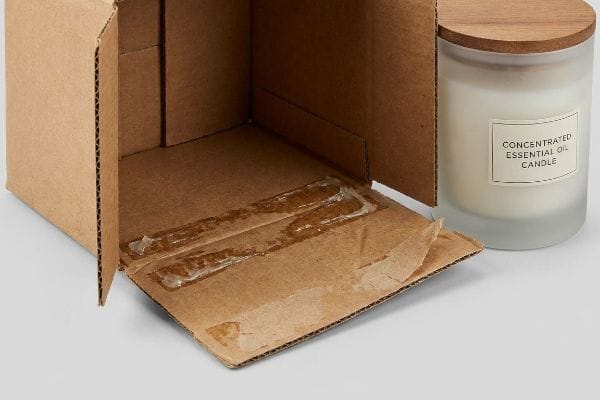
Les marques haut de gamme choisissent souvent du carton brut non doublé pour leurs bougies lourdes ou leurs cosmétiques, sans se rendre compte que leur propre produit ronge activement l'emballage.
La réalité de la « migration des solvants de parfum »
Même les équipes d'approvisionnement les plus expérimentées prescrivent fréquemment des adhésifs standard à base d'eau pour les emballages de bougies et de cosmétiques haut de gamme. Elles partent du principe qu'une de conformité générique destinée aux détaillants constitue la vérité absolue en matière d'ingénierie pour tous les produits de grande consommation. Or, elles ignorent les solvants chimiques très actifs présents dans les parfums concentrés. Dans les environnements logistiques chauds, ces huiles volatiles se dégagent, imprègnent le carton poreux et créent une interaction chimique très destructrice avec les joints de colle standard<sup>15.
Ce n'est pas qu'une théorie : j'en ai fait l'amère expérience le mois dernier lorsqu'un nouveau client a exigé une structure non doublée et écologique pour le lancement de ses bougies en verre épais. En 2022, j'ai demandé à Mark, mon ingénieur packaging principal, de réaliser un test de résistance thermique de 48 heures sur le gabarit fourni par le client. À l'ouverture de la chambre de conditionnement, une forte odeur d'huiles essentielles nous a immédiatement saisis, accompagnée du bruit distinct et collant des rabats du fond qui se brisaient littéralement. La migration du solvant avait dissous de manière agressive l'adhésif PVA (acétate de polyvinyle) en une pâte gluante et inutilisable,et les lourds pots en verre sont tombés à travers le fond, se brisant sur le sol en acier du laboratoire. Je consacre du temps et de l'argent à mes tests en laboratoire pour que vous ne perdiez pas de profits en magasin. Nous avons immédiatement procédé à la correction des problèmes liés à l'outillage et au calibrage des machines, en remplaçant les lignes de collage standard par une plieuse-colleuse automatisée capable d'utiliser des adhésifs thermofusibles EVA (acétate d'éthylène-vinyle) à une température précise de 174 °C (345 °F). Cette matrice synthétique est chimiquement imperméable à la migration des solvants organiques<sup>17</sup>. Grâce à la conception de ce système de verrouillage mécanique par friction avec une colle résistante aux solvants, nous avons ramené à zéro le taux de rebuts sur la chaîne de montage, éliminant ainsi le risque de dommages de 12 500 $ lié à la présence de verre brisé dans le magasin.
| Métrique/Fonctionnalité | Colle PVA standard | Adhésif thermofusible EVA |
|---|---|---|
| Résistance aux solvants | Se dissout en pâte gélatineuse18 | 100% chimiquement imperméable19 |
| Limite de température | Échoue lors du transport à chaud20 | Résiste à la chaleur intense |
| Sécurité du chargement | Risque élevé de choc de chute | Verrouillage inférieur sans friction |
Je conçois des systèmes d'emballage capables de résister aux agents chimiques agressifs des produits qu'ils contiennent. Négliger le dégazage des solvants, c'est s'exposer directement à des ruptures catastrophiques du fond de l'emballage et à des poursuites judiciaires massives en matière de responsabilité du fait des produits.
🛠️ Le bureau d'Harvey : Vos produits fortement parfumés dissolvent-ils insidieusement les adhésifs de vos emballages avant même leur mise en rayon ? 👉 Obtenez une consultation gratuite sur les adhésifs ↗ — Pas d'intermédiaires. Vous échangez directement avec des ingénieurs en structure.
Quelle est la durée de vie moyenne d'une boîte en carton ?
L'établissement d'un calendrier prévisible pour la durabilité des emballages nécessite de dissocier les spécifications des matières premières des dures réalités des frictions dynamiques de la chaîne d'approvisionnement.
La durée de vie moyenne d'une boîte en carton varie de trois à six mois dans les chaînes d'approvisionnement actives, mais peut dépasser plusieurs années en stockage statique et contrôlé. Cette durée de vie est strictement déterminée par l'humidité ambiante, les contraintes liées à la manutention et le coefficient de sécurité spécifique intégré à la géométrie interne des cannelures.
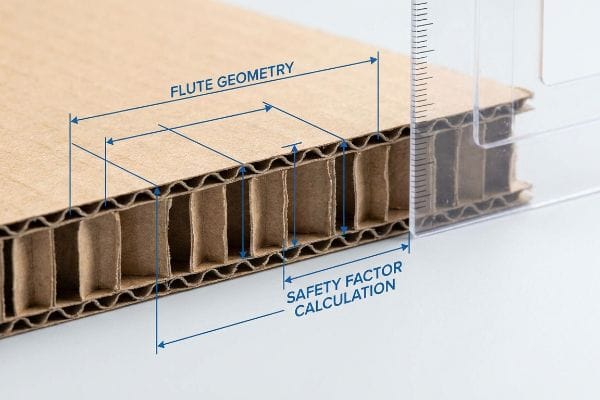
Alors que les fiches techniques théoriques des matériaux suggèrent une durabilité quasi permanente en conditions sèches, les forces cinétiques et les changements atmosphériques dictent la véritable limite opérationnelle des fibres de papier.
Les mécanismes d'ingénierie à l'origine de la fatigue liée à l'humidité
La durée de vie structurelle de tout produit en carton ondulé est fondamentalement déterminée par sa résistance aux contraintes mécaniques et environnementales continues. En ingénierie, on évalue la longévité du carton en mesurant l'efficacité avec laquelle la géométrie des cannelures arquées disperse les chocs cinétiquesau fil du temps. Lorsque l'humidité ambiante s'infiltre dans le support poreux, les fibres de cellulose rigides s'assouplissent progressivement et perdent leur résistance critique à l'écrasement des bords.Cette dégradation lente nous oblige à calculer une limite de durabilité de référence bien avant la production en série du carton.
Pour prévoir avec précision la durée de vie d'un présentoir, les ingénieurs en structure utilisent un coefficient multiplicateur mathématique appelé « facteur de sécurité ». Si un plateau prêt à la vente doit supporter une charge dynamique de 22,6 kg (50 lb) pendant six mois dans un environnement à forte humidité comme en Floride, concevoir la boîte pour résister exactement à 22,6 kg (50 lb) garantit une défaillance prématurée due au fluage invisible du matériau<sup>23. C'est pourquoi nous concevons la structure avec un facteur de sécurité strict de 3,5<sup>24</sup>, assurant ainsi une charge initiale de 79,3 kg (175 lb). Au cours d'une campagne de vente classique de 12 semaines, le carton absorbe naturellement l'humidité ambiante et les cannelures internes subissent une fatigue microscopique, réduisant ainsi progressivement cette importante marge de sécurité. En surdimensionnant mathématiquement la structure initiale, nous garantissons que même après 90 jours d'exposition à des conditions environnementales extrêmes, le carton conserve une résistance résiduelle largement suffisante pour supporter la marchandise en toute sécurité, sans se déformer, se déchirer ni compromettre la sécurité du consommateur.
| Métrique/Fonctionnalité | Limite théorique du laboratoire | Coefficient de sécurité 3,5 (Mathématiques) |
|---|---|---|
| Tolérance de charge | Correspondance exacte de la charge utile | surdimensionnement structurel de 350 %25 |
| Réponse à l'humidité | Perte de compression immédiate26 | Le tampon absorbe le fluage à long terme27 |
| Durée de vie opérationnelle | Semaines sous stress dynamique | Des mois de stabilité inébranlable |
Je suis convaincu que la longévité des emballages repose entièrement sur une sur-ingénierie mathématique proactive. Le calcul du coefficient de sécurité adéquat est le fondement absolu d'une chaîne d'approvisionnement fiable et prévisible.
🛠️ Bureau Harvey : Vos lourds plateaux de caisse perdent-ils de leur intégrité structurelle à cause d’une fatigue invisible due à l’humidité ? 👉 Demandez un calcul gratuit du coefficient de sécurité ↗ — J’examine personnellement chaque dossier structurel sous 24 h.
Conclusion
Qu'il s'agisse de lutter contre la migration des solvants des cosmétiques ou contre les effets néfastes de l'humidité lors du stockage longue durée en entrepôt, la longévité des emballages exige une conception physique rigoureuse. C'est précisément ce type d'analyse technique qui a récemment permis de déceler une erreur de tolérance critique de 2 mm avant la production d'un important lancement national. Ne vous fiez plus à des gabarits théoriques et précis pour optimiser votre retour sur investissement logistique ; confiez-moi l'analyse complète de vos fichiers de structure grâce à un audit de gabarits ↗ afin de garantir la résistance de vos emballages aux aléas de la chaîne d'approvisionnement mondiale.
« Évaluation expérimentale des configurations d'ondes dans les cartons ondulés… », https://pmc.ncbi.nlm.nih.gov/articles/PMC10126572/ . Explication technique du rôle d'amortissement et de la structure des cannelures dans les cartons ondulés. Type de preuve : mécanisme ; type de source : revue scientifique sur les matériaux. Sujet : fonction des cannelures dans l'absorption des chocs. Remarque : s'applique aux cannelures standard C et B.
« [PDF] Étude des propriétés mécaniques des emballages en carton… », https://repository.rit.edu/cgi/viewcontent.cgi?article=1066&context=japr. Données d'ingénierie montrant la perte de résistance à la compression et la fatigue des fibres dans les boîtes en carton ondulé réutilisées après contrainte mécanique. Rôle de la preuve : lien de causalité ; type de source : étude d'ingénierie de l'emballage. Arguments : dégradation permanente des fibres après le transport initial. Note de portée : spécifique au carton ondulé .
« Estimation de la résistance à la compression des boîtes en carton ondulé pour… », https://pmc.ncbi.nlm.nih.gov/articles/PMC9864211/. Données techniques confirmant la dégradation de la résistance à la compression (test d'écrasement des bords) du carton ondulé recyclé ou réutilisé. Type de preuve : indicateur de performance ; type de source : étude d'ingénierie. Confirme : l'affirmation selon laquelle les enveloppes réutilisées perdent en résistance à la compression. Remarque : les résultats varient selon la qualité des fibres .
« Carton ondulé et qualités de matériaux | 30/06/2021 », https://www.packagingstrategies.com/articles/96269-corrugated-board-and-material-grades . Vérification des mesures d'épaisseur de la cannelure B standard afin de garantir la précision technique du calibre spécifié. Rôle de la preuve : spécification ; type de source : manuel technique. Supports : dimensions des matériaux d'emballage. Remarque : les tolérances industrielles standard peuvent s'appliquer.
« Estimation de la résistance à la compression du carton ondulé… », https://pmc.ncbi.nlm.nih.gov/articles/PMC8467740/. Données techniques issues d’essais d’ingénierie d’emballage démontrant la dégradation de la capacité de charge des fibres ondulées réutilisées. Rôle de la preuve : validation quantitative ; type de source : étude d’ingénierie. Appui : le seuil de rupture par compression spécifique des boîtes recyclées. Remarque : les valeurs dépendent de la qualité de la boîte d’origine et du nombre de cycles .
« Résistance à la compression des emballages en carton ondulé à faible… », https://pmc.ncbi.nlm.nih.gov/articles/PMC10054506/ . Spécifications techniques du fabricant pour les cartons haute performance en fibres vierges soumis à des essais de charge statique. Type de preuve : validation quantitative ; source : fiche technique. Conclusion : intégrité structurelle supérieure des cartons techniques. Remarque : conditions d’empilage optimales.
« Comment maîtriser les normes d'emballage ISTA 6 d'Amazon.com pour… », https://ngocdonghandicrafts.com/resources-blog/how-to-master-ista-6amazoncom-packaging-standards-for-sustainable-handicrafts.html. Documentation de l'International Safe Transit Association détaillant le protocole de test ISTA-6 pour l'évaluation des performances d'emballage. Rôle de la preuve : vérification de la norme ; type de source : organisme de certification sectoriel. Appuie : la déclaration de conformité au commerce de détail grâce à des tests standardisés. Note sur la portée : se réfère à des catégories spécifiques d'expédition et de manutention .
« Impact du recyclage mécanique sur les fibres lignocellulosiques… », https://pmc.ncbi.nlm.nih.gov/articles/PMC11945113/. Données techniques issues de la science des matériaux quantifiant la diminution de la longueur et du rapport d’aspect des fibres lors de cycles de repulpage répétés. Rôle de la preuve : vérification factuelle ; type de source : revue scientifique. Attentes : dégradation physique des fibres au cours des cycles de recyclage. Remarque : les résultats peuvent varier en fonction des produits chimiques utilisés pour la mise en pâte .
« [PDF] Emballages en carton ondulé : conception innovante pour une durabilité accrue… », https://bioresources.cnr.ncsu.edu/wp-content/uploads/2026/01/BioRes_21_1_2229_Tworzydlo_PSMPGG_Corrugated_Packaging_Design_Durability_Transport_25399.pdf . Analyse technique de l’impact de la réduction de la longueur des fibres sur la capacité de charge et la résistance au fluage du carton sous pression soutenue. Type de preuve : explication du mécanisme ; type de source : étude d’ingénierie de l’emballage. Appui : le lien entre le raccourcissement des fibres et la rupture structurelle. Note de portée : se concentre sur les conditions de stockage à long terme en entrepôt.
« [PDF] Examen comparatif des propriétés physiques du carton ondulé recyclé à haute teneur en fibres… », https://repository.rit.edu/cgi/viewcontent.cgi?article=1299&context=theses . Vérification du pourcentage précis de fibres kraft vierges nécessaire pour limiter l’ épuisement des fibres dans le carton ondulé recyclé. Rôle de la preuve : validation technique ; type de source : étude des sciences des matériaux. Éléments justifiant l’intégrité structurelle : proportion de matériaux. Remarque : peut varier selon le type de cannelure.
« Aperçu des études récentes menées à l’IPST sur le flambage des bords de carton ondulé… », https://bioresources.cnr.ncsu.edu/resources/overview-of-recent-studies-at-ipst-on-corrugated-board-edge-compression-strength-testing-methods-and-effects-of-interflute-buckling/ . Données empiriques démontrant l’augmentation en pourcentage des performances de flambage des bords de carton ondulé (BCT) lors de l’ intégration de kraft vierge dans des matrices de fibres recyclées. Type de preuve : preuve quantitative ; type de source : rapport d’essais industriels. Appui : efficacité de l’amélioration du matériau. Remarque sur la portée : dépend du poids total du carton.
« Évolution de la qualité des matériaux fibreux recyclés. Partie 1. Facteurs influençant… », https://bioresources.cnr.ncsu.edu/resources/changing-quality-of-recycled-fiber-material-part-1-factors-affecting-the-quality-and-an-approach-for-characterisation-of-the-strength-potential/. La documentation technique sur la science des pâtes et papiers explique comment les cycles de recyclage répétés raccourcissent les fibres de cellulose, réduisant ainsi leur intégrité structurelle. Rôle de la preuve : Validation technique ; type de source : Revue de science des matériaux. Appuie : L’affirmation selon laquelle les fibres recyclées perdent en élasticité et en longueur. Note de portée : Spécifique aux procédés de recyclage mécanique .
« Comprendre les tests d’écrasement des bords et les profils de cannelures des boîtes en carton ondulé », https://www.paperindex.com/academy/why-burst-strength-isnt-enough-understanding-corrugated-box-ect-and-flute-profiles/ . Les normes d’ingénierie de l’emballage relatives aux tests d’écrasement des bords (ECT) mettent en évidence les points de rupture des cartons recyclés à faible résistance des fibres sous compression. Rôle de la preuve : Vérification des performances ; type de source : Norme d’ ingénierie de l’emballage. Sujet : Tendance des revêtements recyclés à subir une rupture structurelle soudaine. Remarque sur la portée : Varie selon la qualité du carton et l’humidité.
« Évaluation de la qualité des matériaux de boîtes pour l’archivage à long terme », https://pmc.ncbi.nlm.nih.gov/articles/PMC12807557/ . Des études comparatives sur la cellulose vierge et les fibres recyclées indiquent une capacité portante et une résistance au fluage nettement supérieures sur le long terme. Type de preuve : Analyse comparative ; type de source : Étude de durabilité. Arguments : Durée de vie prolongée des matériaux hybrides à matrice vierge. Remarque : Conditions d’archivage standard.
« Les parfums de synthèse dans les produits de soins personnels et ménagers… », https://pmc.ncbi.nlm.nih.gov/articles/PMC10051690/. Preuves techniques issues de l’ingénierie de l’emballage ou de la recherche chimique démontrant comment les composés organiques volatils contenus dans les parfums dégradent les adhésifs à base d’eau. Rôle de la preuve : validation technique ; type de source : manuel d’ingénierie industrielle ou revue scientifique. Appuie : l’affirmation selon laquelle le dégazage des parfums provoque la défaillance structurelle des adhésifs. Note de portée : compare spécifiquement les adhésifs à base d’eau à des alternatives résistantes aux solvants .
« Peintures à base de poly(acétate de vinyle) : revue de la littérature sur les propriétés des matériaux… », https://pmc.ncbi.nlm.nih.gov/articles/PMC10675057/ . Vérification de la vulnérabilité chimique des adhésifs PVA aux solvants organiques et aux huiles essentielles. Type de preuve : validation technique ; source : revue scientifique des matériaux ou fiche technique d'adhésif. Éléments étayés : mécanisme de rupture de l'adhésif. Précision : spécifique aux colles PVA à base d'eau.
« Adhésifs thermofusibles – un aperçu | ScienceDirect Topics », https://www.sciencedirect.com/topics/materials-science/hot-melt-adhesives . Analyse comparative confirmant la résistance de l'EVA (acétate d'éthylène-vinyle) aux solvants parfumés. Rôle de la preuve : validation technique ; type de source : référence en science des polymères ou spécification du fabricant d'adhésifs. Appuie : l'efficacité du changement de matériau proposé. Note de portée : concerne les matrices thermofusibles synthétiques.
« Produits parfumés et COV – PMC – NIH », https://pmc.ncbi.nlm.nih.gov/articles/PMC3094433/. Vérification de la dégradation chimique des adhésifs en acétate de polyvinyle (PVA) exposés à des solvants parfumés spécifiques. Type de preuve : vérification technique ; type de source : étude chimique des matériaux. Constat : instabilité de la colle PVA dans les milieux riches en solvants. Remarque : s’applique aux formulations PVA standard .
« Types d’adhésifs thermofusibles : Guide et utilisations | Blog ConRo », https://www.conro.com/Blog/Types-of-Hot-Melt-Adhesives/. Vérification de la résistance chimique des adhésifs à base d’éthylène-acétate de vinyle (EVA) aux composés organiques volatils. Rôle de la preuve : vérification technique ; type de source : fiche technique de science des matériaux. Confirme : la supériorité de l’EVA sur le PVA pour le stockage de solvants. Note de portée : Vérifie le degré d’imperméabilité aux solvants de parfums courants .
« Comportement thermique du poly(alcool vinylique) sous forme de… – PMC », https://pmc.ncbi.nlm.nih.gov/articles/PMC10145932/. Vérification des seuils de température auxquels les colles PVA standard perdent leur intégrité structurelle pendant le transport. Type de preuve : vérification technique ; source : spécifications techniques des adhésifs. Sujet : vulnérabilité thermique de la colle PVA. Précision : étude axée sur les températures courantes des environnements d’expédition .
« Évaluation et modélisation de la dynamique du carton ondulé… », https://www.sciencedirect.com/science/article/pii/S2590123023001998. Explication technique de la relation entre l’architecture des cannelures et l’absorption d’énergie d’impact. Rôle de la preuve : vérification du mécanisme ; type de source : manuel technique. Supports : dispersion des chocs cinétiques. Note sur le champ d’application : s’applique aux qualités de carton ondulé standard .
« Estimation de la résistance à l’écrasement des bords du carton ondulé… », https://pmc.ncbi.nlm.nih.gov/articles/PMC9961700/ . Données scientifiques démontrant la corrélation entre les niveaux d’humidité relative et la réduction des valeurs du test d’écrasement des bords (ECT) des revêtements à base de cellulose. Type de preuve : preuve empirique ; type de source : revue de science des matériaux. Facteurs étudiés : dégradation de la résistance à l’écrasement induite par l’humidité. Remarque : spécifique à la porosité du revêtement testé.
« Fluage mécano-sorptif du papier – influence du séchage… », https://bioresources.cnr.ncsu.edu/wp-content/uploads/2020/03/1993.1.547.pdf. Brève explication de la manière dont une source externe faisant autorité appuie cette affirmation. Rôle de la preuve : mécanisme causal ; type de source : étude en science des matériaux. Appuie : le phénomène de déformation en fonction du temps dans les structures à base de papier sous charge constante. Note de portée : porte sur l’interaction entre l’absorption d’humidité et la limite d’élasticité structurelle .
« Quels sont les inconvénients des boîtes en carton ondulé ? – PopDisplay », https://popdisplay.me/what-about-the-disadvantages-of-corrugated-boxes/ . Brève explication de la manière dont une source externe faisant autorité appuie cette affirmation. Rôle de la preuve : validation technique ; type de source : manuel d’ingénierie de l’emballage. Appuie : le coefficient multiplicateur spécifique utilisé pour compenser la dégradation environnementale en milieu de vente au détail. Remarque : le facteur peut varier en fonction de la qualité du matériau et des exigences de charge spécifiques.
« Étude de l’effet des perforations sur la résistance à la charge… », https://pmc.ncbi.nlm.nih.gov/articles/PMC11396172/. Les normes d’ingénierie faisant autorité pour les emballages en carton ondulé vérifient la relation mathématique entre les coefficients de sécurité et les pourcentages de surdimensionnement structurel. Niveau de preuve : spécification technique ; type de source : manuel d’ingénierie. Éléments pris en compte : calculs de tolérance aux charges. Remarque concernant la portée : spécifique au carton ondulé .
« Influence de l'humidité et de la température sur les propriétés mécaniques de… », https://bioresources.cnr.ncsu.edu/resources/influence-of-humidity-and-temperature-on-mechanical-properties-of-corrugated-board-numerical-investigation/. Les recherches en science des matériaux sur les matériaux hygroscopiques expliquent la diminution rapide de la résistance à la compression lorsqu'ils sont exposés à une humidité accrue. Type de preuve : mécanisme physique ; type de source : revue à comité de lecture. Éléments justifiant l'étude : comportement de réponse à l'humidité. Remarque concernant la portée : varie selon les seuils de teneur en humidité .
« Effets de l'humidité relative sur la résistance à la compression de… », https://open.clemson.edu/all_theses/3225/ . L'analyse structurelle de la durabilité des emballages explique comment les marges de sécurité atténuent les effets du fluage à long terme des matériaux en milieu humide. Éléments de preuve : mécanisme de durabilité ; type de source : document technique de l'industrie de l' emballage. Points forts : prolongation de la durée de vie sous contrainte. Remarque : s'applique aux charges statiques et dynamiques.