Pour réussir les audits de développement durable de Walmart, l'écoblanchiment ne suffira pas. Vos emballages doivent résister aux contraintes des chaînes d'approvisionnement tout en respectant des normes environnementales strictes.
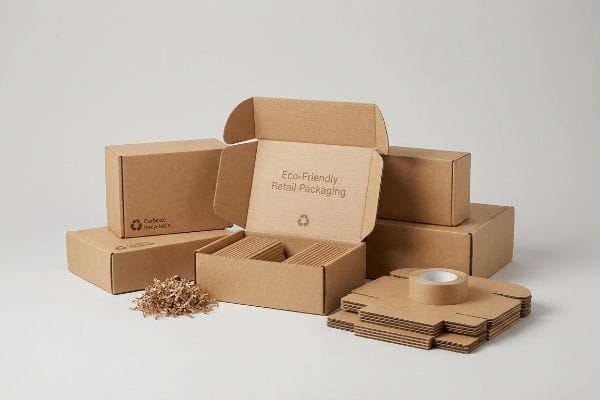
L'utilisation d'emballages écologiques pour la vente au détail réduit les déchets de la chaîne d'approvisionnement, diminue l'empreinte carbone et garantit la conformité aux réglementations environnementales internationales. En privilégiant les matériaux en carton ondulé recyclables en porte-à-porte plutôt que les plastiques mélangés, les marques évitent les frais d'élimination des déchets dangereux, améliorent l'efficacité de leur logistique et respectent les critères de durabilité stricts imposés par les grandes chaînes de distribution du monde entier.
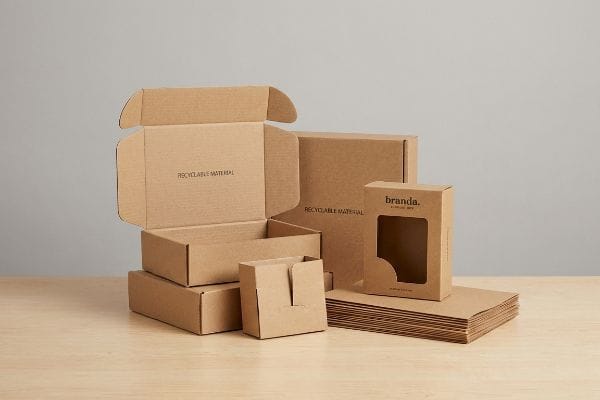
Mais la théorie ne suffit pas quand les machines se mettent en marche. L'atelier se moque de vos arguments marketing : seules les lois implacables de la physique comptent.
Quels sont les avantages des emballages écologiques ?
Le développement durable n'est pas qu'un argument marketing ; c'est un avantage logistique concret. Levons le voile sur les discours creux et examinons la réalité technique des matériaux écologiques.
Les avantages des emballages écologiques résident principalement dans leur recyclabilité simplifiée en bordure de rue et la réduction des responsabilités en aval. En remplaçant les plastiques à base de pétrole par des revêtements aqueux et des cartons ondulés repulpables, les entreprises éliminent les déchets toxiques, réduisent considérablement les coûts d'élimination pour les municipalités et garantissent le respect absolu des exigences environnementales des grandes enseignes de distribution.
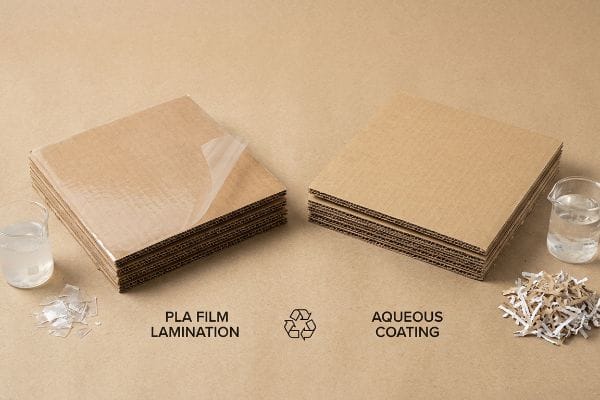
Mais croire que n'importe quel matériau « vert » fera l'affaire est un piège dangereux. Je vois des marques échouer aux audits écologiques chaque semaine parce qu'elles comprennent mal les principes de base de la chimie des matériaux.
Le « piège à compostage du PLA » en chimie durable
Même les concepteurs les plus expérimentés négligent souvent cet aspect crucial lorsqu'ils imposent des laminations en PLA (acide polylactique), un bioplastique. Ils supposent que ce film « à base de maïs » garantit une conformité environnementale totale pour leurs présentoirs en carton ondulé. Or, le PLA forme un film solide qui repousse fortement l'eau¹ lors des procédés de repulpage classiques des cartons ondulés. Lorsque les centres de recyclage municipaux interceptent ce film bioplastique lors du tri, la structure entière du carton ondulé est considérée comme contaminée et envoyée directement en décharge²,anéantissant ainsi tous les efforts de développement durable de la campagne.
Il ne s'agit pas que de théorie : je suis confrontée à ce problème sur le terrain. Le trimestre dernier, une équipe d'approvisionnement a commandé en urgence un de capuchon robuste, entièrement laminé avec un film PLA. Lors de notre test de repulpabilité interne, j'ai constaté que le polymère acide flottait obstinément à la surface, refusant de se décomposerféculede maïs aigre et les fibres de papier s'aggloméraient inutilement. J'ai relevé les mesures au micromètre et prouvé qu'une barrière plastique solide était superflue. J'ai modifié la chimie structurale, en appliquant un protocole de revêtement aqueux liquide sur le carton brut. Ce revêtement à base d'eau agissant comme une matrice polymère liquide qui se dissout complètement sans laisser de résidus importants, l' emballage est resté 100 % repulpable en bordure de trottoir.En éliminant le film bioplastique coûteux, nous avons réduit le coût des matières premières, accéléré notre ligne de lithographie-lamination d'environ 15 % et évité au client d'importantes pénalités liées au rejet des produits par les détaillants.
| Solution technique | Résultat physique | Retour sur investissement financier/conformité |
|---|---|---|
| Remplacement du PLA par un revêtement aqueux | Repulpabilité à 100 % en bordure de trottoir5 | Frais de refus des détaillants évités |
| Film bioplastique solide retiré | dissolution continue de l'OCC en cuve | Lamination accélérée de 15 %6 |
| Chimie monomatière imposée | Aucun résidu toxique laissé7 | Élimination des responsabilités liées à l'élimination en aval |
Je refuse que les marques paient un prix exorbitant pour du greenwashing qui échoue au niveau municipal. Une véritable durabilité implique une ingénierie adaptée au processus de repulpage, garantissant que les matières premières soient préservées tout au long de la chaîne d'approvisionnement et recyclées proprement.
🛠️ Le bureau d'Harvey : Êtes-vous certain que vos biolaminations actuelles ne déclenchent pas d'alertes de contamination silencieuse lors des audits OCC des détaillants ? 👉 Auditez la chimie de votre nomenclature ↗ — J'examine personnellement chaque fichier de structure sous 24 heures.
Quels sont les avantages de l'utilisation de produits écologiques ?
Passer aux produits recyclés semble idéal en théorie. Cependant, repousser sans cesse les limites de ses ressources pour satisfaire aux exigences environnementales peut entraîner des ruptures catastrophiques de la chaîne d'approvisionnement.
L'utilisation de produits écologiques présente des avantages considérables en minimisant l'extraction des ressources naturelles et en standardisant les systèmes de recyclage en boucle fermée. L'intégration de testliner recyclé à haut rendement dans les structures de vente au détail préserve les ressources mondiales en bois, réduit la consommation d'énergie liée à la fabrication et offre aux marques une empreinte écologique durable et facilement vérifiable, répondant ainsi aux exigences des consommateurs modernes.
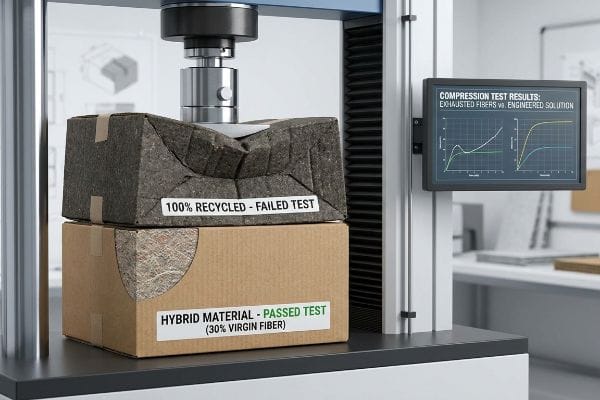
Mais la nature a ses limites. Exiger aveuglément du contenu 100 % recyclé sans comprendre la physique des fibres, c'est provoquer un effondrement structurel.
La limite de « rupture des fibres » sur la chaîne de production
Les équipes d'approvisionnement soucieuses d'une durabilité maximale exigent souvent du testliner 100 % recyclé pour les présentoirs de vente au détail à usage intensif, partant du principe qu'il possède la même intégrité physique que le carton neuf. Elles ignorent la réalité mécanique microscopique du processus de repulpage du papier. Les fibres de cellulose raccourcissent, s'effilochent et s'épuisent structurellement après cinq à sept cycles de recyclage<sup>8. Lorsque ces fibres courtes et surrecyclées sont soumises à une forte contrainte de charge pendant le transport, les cannelures internes manquent de rigidité et s'affaissent instantanément<sup>9 sous la pression exercée par le haut.
Il ne s'agit pas que de théorie : je suis confronté à ce problème sur le terrain. Le mois dernier, j'ai reçu un appel furieux d'un client dont les plateaux PDQ (Pre-packed Display Quantities) 100 % recyclés avaient échoué à une simulation de transport ISTA 3A (International Safe Transit Association) réalisée par un laboratoire indépendant. Il incriminait mes découpes. J'ai donc analysé les spécifications dans mon laboratoire et effectué un test de résistance à l' écrasement des bords TAPPI T811 . J'ai constaté la texture sèche et cassante de leur revêtement d'essai surrecyclé juste avant qu'il ne se rompe sous une pression de seulement 50,8 kg (112 lb). Les fibres brutes étaient complètement épuisées. J'ai rejeté le rendu fourni par leur agence et refait les calculs. J'ai lancé une amélioration du matériau, en imposant strictement l'utilisation d'un matériau hybride : j'ai injecté une proportion précise de 30 % de kraft vierge directement dans les cannelures porteuses. Cette introduction stratégique de longues fibres de papier fraîches a instantanément rétabli la résistance à la compression dynamique, préservant la géométrie structurelle sans faire exploser le budget et évitant une perte estimée à 40 % des stocks écrasés pendant le transport.
| Solution technique | Résultat physique | Retour sur investissement financier/conformité |
|---|---|---|
| Fibres kraft vierges injectées à 30 % | Rigidité structurelle de la flûte restaurée | Réduction de 40 % des pertes de stock en transit12 |
| Suppression de l'obligation de recyclage à 100 % | Compression TAPPI T811 réussie13 | Éviter les rétrofacturations pour dommages causés par les détaillants |
| substrat de testliner amélioré | A survécu à la simulation ISTA 3A14 | Maintien de scores de conformité environnementale acceptables |
Je ne sacrifie pas l'intégrité structurelle pour un score écologique parfait. On ne peut pas défier la gravité avec des fibres de papier épuisées, c'est pourquoi je conçois des substrats hybrides qui résistent au transport maritime sans compromettre vos objectifs fondamentaux de développement durable.
🛠️ Le bureau de Harvey : Connaissez-vous le ratio exact de fibres vierges et recyclées dans les cannelures porteuses de vos présentoirs 32ECT ? 👉 Demandez un test de résistance des matériaux ↗ — Confidentialité garantie. Vos prototypes non commercialisés sont en sécurité.
Quels sont les avantages d'utiliser des sacs écologiques ?
Le passage des emballages plastiques aux sacs en papier écologiques et aux boîtes à pignon est incontournable pour le commerce de détail moderne. Mais la gestion des variations de poids exige des calculs structurels complexes.
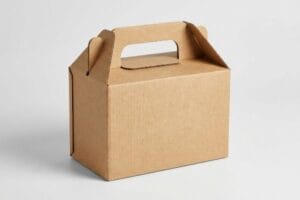
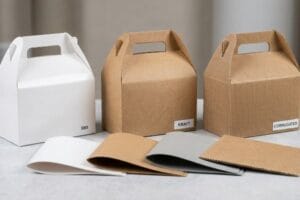
L'utilisation de sacs écologiques élimine les plastiques à usage unique et instaure une filière d'emballage entièrement biodégradable. Les emballages en papier kraft et les boîtes à pignons en carton ondulé offrent une résistance à la traction exceptionnelle lorsqu'ils sont correctement conçus, permettant aux marques de transporter en toute sécurité des marchandises lourdes tout en réduisant considérablement leur impact environnemental à long terme et leurs coûts d'élimination pour les municipalités.
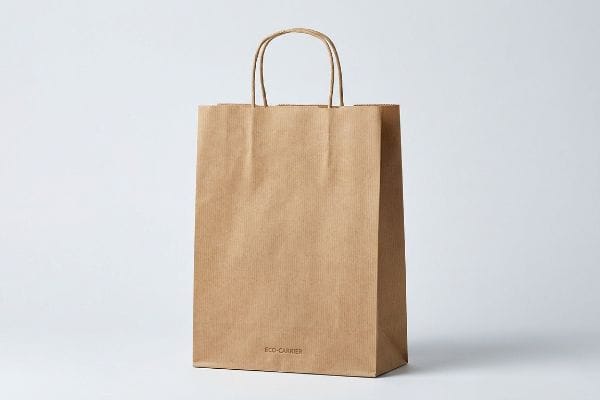
Mais le papier n'est pas du plastique. Si vous ne calculez pas la tension cinétique d'un sac en papier chargé, les poignées se déchireront violemment sur le sol du magasin.
L'axe de « suspension de charge dynamique » des porte-papiers
C'est un piège courant, même pour les équipes d'approvisionnement les plus expérimentées : considérer les poignées intégrées des boîtes à pignon écologiques et des emballages de vente au détail comme de simples formes découpées. Elles ignorent complètement la physique de la tension cinétique dynamique. Lorsqu'un consommateur soulève un sac ou une boîte en papier pré-rempli(e), le poids du contenu exerce une traction vers le bas sur la poignée, reposant entièrement sur la résistance à la traction du support. Si le sens du grain du carton est horizontal,la poignée manque du renforcement en fibres nécessaire et se déchirera rapidement sous la contrainte.
Ce n'est pas qu'une théorie : j'en ai fait l'amère expérience. En 2022, j'ai demandé à Mark, mon ingénieur packaging principal, de prototyper un sac en papier kraft résistant pour remplacer les sacs plastiques d'un client. Nous pensions gagner du temps en alignant directement la découpe sur la configuration la plus économique du carton brut. Lors du test de chute-soulèvement dynamique, j'ai entendu le bruit inquiétant du papier qui se déchirait. Le grain horizontal s'est complètement rompu à la base de la poignée, avec une charge utile de seulement 5,6 kg. J'ai passé des heures à observer la table de découpe pour trouver le point de rupture exact. Nous avons dû arrêter la rainureuse rotative et recalibrer entièrement l'angle d'avance de la découpe. J'ai imposé un alignement vertical strict du grain interne du papier par rapport à l'axe de traction de la poignée<sup>16</sup>, obligeant ainsi les panneaux latéraux à servir de supports. Ce simple réglage de l'outillage a permis d'éliminer le besoin de coûteux clips de renfort en plastique, garantissant un transport sécurisé et réduisant le coût unitaire global d'environ 8 %<sup>17</sup>.
| Solution technique | Résultat physique | Retour sur investissement financier/conformité |
|---|---|---|
| Grain aligné verticalement pour faciliter la manipulation | Résistance à la traction du substrat maximisée18 | Réduire le coût unitaire global de 8 % |
| Angle d'avance de découpe recalibré | Élimination du cisaillement horizontal des fibres19 | Responsabilités liées à l'éclatement des poignées prévenues |
| Renforts de clips en plastique retirés | Atteint le statut de mono-matériau à 100 % | Recyclage en bordure de trottoir assuré sans faille20 |
Je conçois des emballages qui tirent parti des propriétés physiques naturelles du papier, au lieu de les contrer. L'alignement du sens du grain est un détail microscopique, mais c'est ce qui fait la différence entre un emballage écologique haut de gamme et un produit brisé sur le trottoir après une chute.
🛠️ Le bureau de Harvey : Votre découpeuse actuelle oriente-t-elle le grain du papier horizontalement pour réduire les chutes, au détriment de la résistance à la traction de votre porte-documents ? 👉 Simulez la contrainte de votre poignée ↗ — Pas d’intermédiaire. Vous parlez directement à des ingénieurs en structure.
Comment créer une entreprise d'emballages écologiques ?
Lancer une d'emballage écologique ne se limite pas à l'achat de carton brun. Sans maîtrise de la chaîne d'approvisionnement, les services de conformité des grandes enseignes vous mettront des bâtons dans les roues.
Pour lancer une activité d'emballage écologique, il est indispensable de mettre en place une chaîne d'approvisionnement continue et vérifiable de matériaux durables. Les entreprises doivent imposer des normes environnementales strictes, comme l'utilisation de carton ondulé certifié FSC et la mise en place de registres d'approvisionnement centralisés, afin de garantir l'authenticité des matériaux et de réussir les audits de durabilité rigoureux menés par les grandes enseignes internationales.
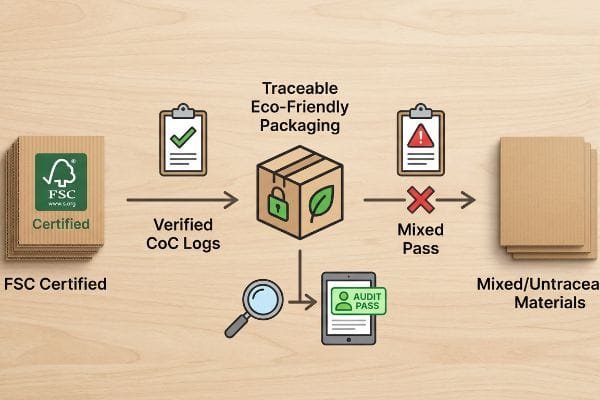
Mais affirmer sa durabilité et la prouver sont deux choses bien différentes. Lorsque des auditeurs d'entreprise arrivent dans votre plateforme logistique, les promesses verbales s'effondrent instantanément.
Le piège de la traçabilité de la « chaîne de possession »
Les responsables de marques partent souvent du principe qu'exiger du carton « écologique » auprès d'un fournisseur garantit automatiquement la conformité aux exigences de développement durable des grandes surfaces. Ils ignorent la réalité technique des opérations de production, où des cartons certifiés peuvent facilement être mélangés à du carton de qualité inférieure, non traçable. Sans un système de traçabilité de la chaîne de contrôle (CoC) rigoureusement vérifié<sup>21, les marques ne peuvent prouver légalement l'origine de leurs matériaux, ce qui entraîne des échecs immédiats et des refacturations coûteuses lors des audits environnementaux stricts des distributeurs<sup>22</sup>.
Il ne s'agit pas que de théorie : je suis confrontée à ce problème sur le terrain. Il y a quelques années, une société de négoce m'a envoyé un lot de feuilles de carton ondulé « certifiées » pour un déploiement massif en grande distribution. J'ai arraché la feuille supérieure du lot test et j'ai immédiatement constaté sa texture rugueuse et contaminée, un mélange de déchets post-consommation sans aucun marquage d'usine. Son origine était totalement introuvable. J'ai consulté les registres d'approvisionnement et prouvé que nous ne pouvions pas légalement utiliser ce matériau volumineux et non vérifié sans risquer un échec retentissant lors d'un audit. J'ai mis en place un protocole strict de documentation de la chaîne de contrôle dans mon usine, imposant une séparation absolue des matières premières. En éliminant les déchets non vérifiés et en associant chaque présentoir découpé à un certificat d'usine FSC (Forest Stewardship Council) authentique,j'ai garanti une durabilité 100 % authentique, évitant ainsi des amendes réglementaires estimées à 15 000 $ pour les détaillants.
| Solution technique | Résultat physique | Retour sur investissement financier/conformité |
|---|---|---|
| Registres de chaîne de possession obligatoire | Origine des matières premières vérifiée | A permis d'éviter 15 000 $ d' amendes réglementaires. 24 |
| Tableaux certifiés FSC séparés25 | Élimination des déchets mixtes non traçables | A passé avec succès les audits écologiques rigoureux des grandes surfaces |
| Découpes liées aux certificats d'usine26 | Durabilité 100% authentique garantie | Emplacement commercial premium garanti |
Je ne plaisante pas avec la conformité des détaillants. Si vous ne pouvez pas retracer l'origine de vos matières premières jusqu'à l'usine durable d'origine, votre entreprise n'est pas écoresponsable ; elle s'expose à des sanctions non vérifiées.
🛠️ Le bureau d'Harvey : Votre fournisseur actuel peut-il fournir une documentation complète sur la chaîne de traçabilité du lot spécifique de cannelures B utilisé dans vos présentoirs ? 👉 Auditez votre chaîne d'approvisionnement ↗ — J'examine personnellement chaque dossier de structure sous 24 heures.
Conclusion
Vous pouvez choisir un fournisseur moins cher, mais si ce film bioplastique PLA, pourtant dissimulé, échoue au test de repulpabilité OCC municipal, la contamination détectée entraînera un refus immédiat du détaillant et anéantira la marge bénéficiaire de votre campagne. Le mois dernier seulement, mon audit structurel a permis à trois marques d'éviter plus de 10 000 $ de pertes liées à la mise au rebut des stocks et aux refacturations des détaillants. Cessez de prendre des risques avec des matériaux écologiques non certifiés et laissez-moi concevoir personnellement votre déploiement durable ↗ pour garantir une conformité maximale et un retour sur investissement optimal.
« Au-delà des plastiques fossiles : bioplastiques de nouvelle génération à base de PLA… – PMC », https://pmc.ncbi.nlm.nih.gov/articles/PMC13001162/. Vérification technique des propriétés hydrophobes du PLA et de sa non-dégradation lors du repulpage standard du papier. Type de preuve : validation technique ; type de source : revue scientifique sur les matériaux. Appuie : l’affirmation selon laquelle le PLA interfère avec le recyclage du carton ondulé usagé. Note relative à la portée : spécifique aux environnements de repulpage aqueux .
« Impact de la contamination par les bioplastiques sur les propriétés mécaniques… », https://pubmed.ncbi.nlm.nih.gov/38815529/ . Documentation des protocoles des centres de recyclage municipaux pour le traitement du carton laminé PLA en tant que contaminant. Rôle de la preuve : vérification des processus ; type de source : norme de l’industrie de la gestion des déchets. Appuie : l’affirmation selon laquelle le PLA permet de réduire la mise en décharge. Note relative à la portée : dépend des capacités des installations régionales.
« Eunomia constate des lacunes dans le bioplastique », https://www.recyclingtoday.com/news/pla-plastic-bioresin-eunomia-pcc-report-recycling-composting-sustainability/. Une étude en science des matériaux sur l’acide polylactique (PLA) confirme sa résistance aux procédés de repulpage aqueux classiques utilisés dans le recyclage du papier. Type de preuve : vérification des propriétés du matériau ; source : revue scientifique. Conclusion : les films de PLA entravent le processus de repulpage. Note : cet article établit une distinction entre le compostage industriel et le repulpage du papier .
« Repulpabilité du carton ondulé couché », https://imisrise.tappi.org/download.aspx?key . Les normes industrielles de recyclage du papier attestent que les revêtements aqueux sont compatibles avec les procédés de repulpage , contrairement aux laminés plastiques. Rôle de la preuve : validation technique ; type de source : norme industrielle. Appuie : compatibilité des finitions à base d’eau avec le recyclage en porte-à-porte. Note de portée : la repulpabilité varie selon l’épaisseur du revêtement et le type de polymère.
« Revêtement de papier recyclable et biodégradable avec… – PMC », https://pmc.ncbi.nlm.nih.gov/articles/PMC11948148/. Brève explication de la manière dont les revêtements aqueux permettent le recyclage du papier dans les filières de recyclage classiques, contrairement au PLA. Niveau de preuve : Validation technique ; type de source : Norme industrielle/Document technique. Convaincu : Efficacité des revêtements aqueux. Remarque : Dépend de la formulation spécifique du revêtement .
« Bioplastiques pour l'emballage alimentaire : impact environnemental, tendances… », https://pmc.ncbi.nlm.nih.gov/articles/PMC9563026/ . Vérification de l'augmentation du rendement opérationnel grâce à la suppression des couches de film dans les procédés de lamination. Rôle de la preuve : indicateur de performance ; type de source : étude de cas de fabrication. Appuie : retour sur investissement de la suppression du film. Remarque sur la portée : spécifique à certains types de matériaux.
« Emballages monomatériaux : simplifier le processus de recyclage », https://www.berlinpackaging.com/insights/sustainability/mono-material-packaging-simplifies-the-recycling-process?srsltid. Preuves scientifiques démontrant que les emballages monomatériaux éliminent les résidus chimiques dangereux associés aux matériaux composites. Type de preuve : analyse chimique ; source : rapport sur la sécurité environnementale. Sujets abordés : sécurité environnementale des monomatériaux. Note : ce rapport porte sur les produits de dégradation .
« Impact du recyclage mécanique sur les fibres lignocellulosiques… », https://pmc.ncbi.nlm.nih.gov/articles/PMC11945113/. La littérature technique sur les sciences des pâtes et papiers confirme la dégradation mécanique des fibres de cellulose au fil des cycles de recyclage. Type de preuve : vérification technique ; source : revue scientifique. Éléments étayés : le seuil spécifique d’épuisement des fibres. Remarque : applicable au procédé de fabrication de pâte mécanique standard .
« Estimation de la résistance à la compression du carton ondulé… », https://pmc.ncbi.nlm.nih.gov/articles/PMC8467740/ . Les données techniques relatives au carton ondulé démontrent la corrélation entre la longueur des fibres et la résistance à la compression verticale. Rôle de la preuve : indicateur de performance ; type de source : rapport d’essais industriels. Supports : rupture structurelle d’un support d’essai à forte teneur en matériaux recyclés. Note relative à la portée : Spécifique aux applications de vente au détail à usage intensif.
« Mesures en champ complet lors de l'essai d'écrasement des bords d'un… – PMC », https://pmc.ncbi.nlm.nih.gov/articles/PMC8199211/. Vérification du protocole TAPPI T811 pour la mesure de la résistance à la compression du carton ondulé. Rôle de la preuve : Validation technique ; type de source : Norme industrielle. Justifie : La validité de la méthode d'essai utilisée pour identifier la défaillance du matériau. Note relative à la portée : La norme est spécifique au carton .
« Effet de la teneur en fibres vierges sur la résistance et la rigidité… », https://bioresources.cnr.ncsu.edu/resources/effect-of-virgin-fiber-content-on-strength-and-stiffness-characteristics-of-a-three-layer-testliner/. Explication de la relation entre la teneur en fibres kraft vierges et la restauration de la résistance à la compression des revêtements recyclés. Niveau de preuve : Validation en science des matériaux ; type de source : Revue à comité de lecture. Confirme : L’affirmation selon laquelle les fibres vierges préviennent la rupture structurelle due à l’épuisement des fibres. Remarque : Les proportions optimales varient en fonction de la teneur initiale en fibres recyclées .
« Résistance à la compression des emballages en carton ondulé… », https://pmc.ncbi.nlm.nih.gov/articles/PMC10054506/. Des études de cas en logistique et emballage démontrent comment l'augmentation de la teneur en fibres vierges réduit la rupture par compression et les dommages aux produits pendant le transport. Type de preuve : validation quantitative ; source : document technique ou étude de cas. Conclusion : retour sur investissement financier de la réduction du contenu recyclé pour garantir l'intégrité structurelle. Remarque : le pourcentage peut varier en fonction du poids du produit et de la distance de transport .
« Résistance à l’écrasement des bords du carton ondulé (ECT) » (ISO 3037), https://www.zwickroell.com/industries/paper-cardboard-tissues/corrugated-board-and-solid-board/edge-crush-test-ect/ . Cette norme technique de référence, publiée par la Technical Association of the Pulp and Paper Industry (TAPPI), définit la méthodologie et les exigences relatives aux essais de compression des matériaux ondulés. Rôle de la preuve : vérification technique ; type de source : norme industrielle. Appuie : la validité de l’ utilisation de la norme T811 comme référence pour la rigidité structurelle. Note relative au champ d’application : Spécifique à l’industrie du papier et de la pâte à papier.
« Procédures de test », https://ista.org/test_procedures.php. Le protocole 3A de l’International Safe Transit Association (ISTA) établit des normes de test rigoureuses pour des environnements d’expédition simulés afin de garantir l’intégrité des colis. Rôle de la preuve : validation d’une référence sectorielle ; type de source : norme de certification. Appuie : l’affirmation selon laquelle le matériau répond aux exigences mondiales de durabilité en matière de logistique. Note relative au champ d’application : applicable principalement aux systèmes de livraison de petits colis .
« Le sens du grain : élément fondamental des emballages en carton », https://korpack.com/grain-direction-the-backbone-of-paperboard-packaging/?srsltid. Explication technique de l’influence de l’orientation des fibres dans le carton sur la résistance à la déchirure et la capacité de charge des poignées intégrées. Rôle de la preuve : validation technique ; type de source : manuel de science des matériaux. Appuie : l’affirmation selon laquelle une orientation incorrecte du grain entraîne une défaillance structurelle. Note sur le champ d’application : applicable aux supports d’emballage à base de cellulose .
« Pourquoi le sens du grain du papier est-il important ? », https://www.goldenpapergroup.com/blog/why-grain-direction-in-paper-is-important.html. Validation technique démontrant que l’alignement du grain du papier (sens machine) avec l’axe principal de contrainte augmente la capacité de charge et prévient le cisaillement des supports cellulosiques. Type de preuve : vérification technique ; source : manuel de science des matériaux. Affirme : l’efficacité structurelle de l’alignement du grain pour la suspension des charges. Précision : concerne spécifiquement les propriétés du papier kraft .
« Le papier, une partie de la solution pour les emballages souples… », https://www.ellenmacarthurfoundation.org/paper-as-a-solution-to-flexible-packaging-pollution . Analyse économique démontrant comment la suppression des renforts secondaires, tels que les clips en plastique, réduit les coûts des matières premières et d'assemblage dans les emballages durables. Preuve : validation économique ; source : rapport sur les coûts de fabrication industrielle. Arguments : avantage financier du renforcement par outillage par rapport au renforcement par matériau. Remarque : les économies réelles varient selon le volume de production.
« Perspectives pour le maintien de la résistance du papier et du carton… », https://bioresources.cnr.ncsu.edu/resources/prospects-for-maintaining-strength-of-paper-and-paperboard-products-while-using-less-forest-resources-a-review/ . Validation technique de l'influence de l'orientation du grain dans les substrats de papier sur la capacité de charge et la résistance à la traction. Type de preuve : vérification technique ; type de source : revue scientifique des matériaux. Sujet : effet du grain vertical sur la résistance. Remarque : applicable aux substrats à base de cellulose.
« Découpe et rainage », https://mm.group/packaging/technologies/die-cutting-creasing/ . Preuve technique démontrant que l'ajustement des angles de découpe réduit la déchirure des fibres et les contraintes de cisaillement dans les supports papier. Rôle de la preuve : validation du processus de fabrication ; type de source : manuel d'ingénierie industrielle. Avantages: réduction du cisaillement des fibres. Note de portée : axé sur les techniques de découpe de précision.
« Quoi de neuf en matière de politique d’emballage ? Tour d’horizon des politiques d’emballage », https://sustainablepackaging.org/2026/08/25/packaging-policy-news/. Vérification que l’obtention du statut de matériau unique par la suppression des renforts plastiques simplifie le traitement municipal du recyclage. Rôle de la preuve : vérification de la conformité ; type de source : guide réglementaire environnemental. Appui : recyclabilité des matériaux uniques. Note de portée : Sous réserve des capacités des installations municipales locales. ↩
« GLOBALG.AP Chaîne de contrôle », https://globalgap.org/what-we-offer/solutions/chain-of-custody/. Brève explication de la manière dont les normes de chaîne de contrôle (par exemple, FSC, PEFC) fournissent le cadre juridique permettant de vérifier l'origine durable des matériaux. Rôle de la preuve : validation technique ; type de source : norme de certification. Appuie : l'affirmation selon laquelle la chaîne de contrôle est nécessaire comme preuve légale d'origine. Note relative au champ d'application : se concentre sur les normes de certification forestière et papetière .
« L’emballage durable entre dans l’ère de la responsabilité », https://www.packagingdigest.com/sustainability/packaging-sustainability-enters-the-age-of-accountability . Brève explication de la manière dont les grandes enseignes de distribution appliquent des sanctions financières (refacturations) en cas de non-respect des obligations de développement durable. Preuve : vérification de l’impact économique ; source : manuel de conformité du secteur de la distribution. Arguments : conséquences d’un échec aux audits environnementaux. Note relative au champ d’application : applicable aux contrats fournisseurs des grandes surfaces.
« Certification de la chaîne de contrôle », https://fsc.org/en/chain-of-custody . Explication de la manière dont la certification du Forest Stewardship Council (FSC) fournit une traçabilité vérifiable de la forêt au produit fini afin de garantir les allégations de durabilité. Rôle de la preuve : vérification ; type de source : norme internationale. Appui : l’utilisation des certificats pour garantir l’authenticité des matériaux. Note relative au champ d’application : s’applique spécifiquement aux emballages à base de bois et de papier.
« Écoblanchiment transatlantique : les règles américaines et françaises… », https://www.morganlewis.com/pubs/2026/07/greenwashing-across-the-atlantic-us-and-french-rules-for-environmental-claims . Les bases de données juridiques et environnementales recensent les amendes potentielles pour fausse déclaration sur l’origine des matériaux écologiques ou violation des règles de traçabilité. Rôle de la preuve : vérification juridique ; type de source : documentation des organismes de réglementation. Justification : le risque financier lié au non- respect des obligations de traçabilité. Remarque : les sanctions varient selon la juridiction et la réglementation.
« FSC-STD-40-004 Certification de la chaîne de contrôle – FSC Connect », https://connect.fsc.org/document-centre/documents/resource/302 . Une source faisant autorité sur les normes du Forest Stewardship Council (FSC) explique l’exigence de séparation physique des matériaux certifiés afin d’éviter toute contamination par des matériaux non certifiés. Rôle de la preuve : spécification technique ; type de source : norme de certification. Justifie : la nécessité de la séparation des matériaux pour la conformité FSC. Note relative au champ d’ application : applicable aux emballages en papier et en bois.
« Découpe à l'emporte-pièce : ses avantages pour vos emballages personnalisés », https://bromleyprinting.com/2021/04/19/die-cutting-custom-packaging/. Les directives de traçabilité du secteur de l'emballage détaillent le processus permettant de relier les composants découpés à l'emporte-pièce finis au certificat d'usine d'origine pour la vérification des matériaux. Rôle de la preuve : validation du processus ; type de source : manuel sectoriel. Soutient : le mécanisme garantissant l'authenticité des matériaux par la documentation. Note de portée : se concentre sur la piste d'audit de la chaîne d'approvisionnement .