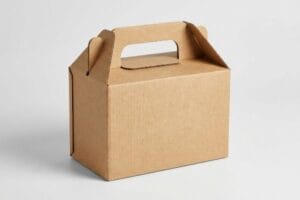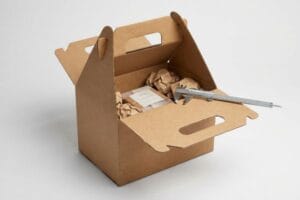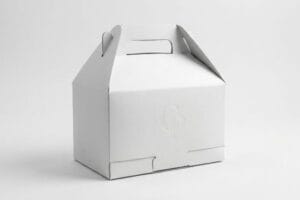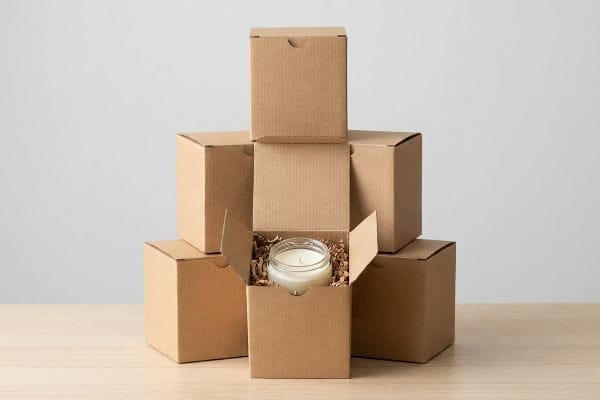
Lancer une marque de bougies est facile, mais protéger les lourds pots en verre pendant le transport tout en conservant une esthétique haut de gamme et écologique est ce qui fait perdre de l'argent à la plupart des startups.
Les boîtes à bougies en kraft pour la vente en gros sont des emballages robustes en carton ondulé non blanchi, conçus pour protéger les produits en cire fragiles pendant le transport. Elles offrent un support structurel solide contre les variations de charge, protègent les produits sensibles à la température des dommages environnementaux et constituent un support durable et recyclable pour le marquage des marques et l'étiquetage de conformité.

Soigner l'esthétique brute n'est que la première étape. Si le produit se casse en rayon, votre marge bénéficiaire s'effondre avec le verre.
Quelles sont les exigences légales concernant les boîtes à bougies ?
Partir du principe que votre boîte en papier brun est naturellement conforme est un angle mort majeur qui déclenche des audits immédiats chez les détaillants.
Les emballages de bougies doivent obligatoirement comporter des étiquettes d'avertissement relatives à la sécurité incendie, une déclaration précise du poids net et des certifications de traçabilité des matériaux. Les détaillants contrôlent rigoureusement ces emballages afin de garantir leur conformité aux lois nationales sur la protection des consommateurs et aux exigences en matière de développement durable, et ainsi prévenir toute infraction liée aux matières dangereuses lors de la distribution à grande échelle.
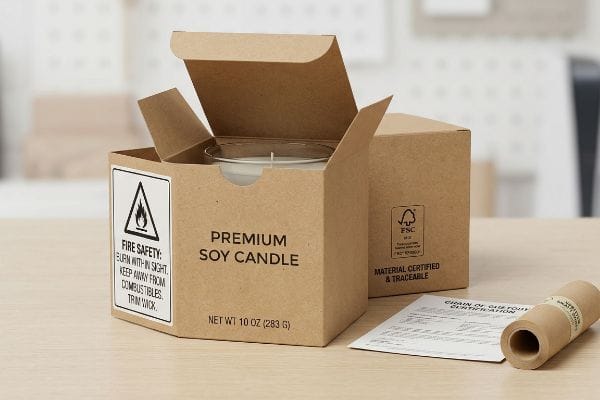
Coller un avertissement de sécurité générique au bas de l'emballage ne suffit pas pour satisfaire aux exigences de conformité des grandes enseignes.
Éviter le piège de la fausse conformité Kraft
Nombre de nouvelles marques partent du principe qu'utiliser un emballage générique en carton brun non blanchi leur confère automatiquement une image écoresponsable . Elles impriment sans discernement la mention « 100 % recyclé » ou des logos certifiés FSC sur leurs visuels, supposant que l'aspect visuel du carton brut suffit aux acheteurs soucieux de développement durable des grandes surfaces.
Cette hypothèse s'effondre dès qu'un acheteur important exige votre documentation. Je vois constamment des équipes d'approvisionnement se démener car elles ont demandé du carton « écologique », mais leur fournisseur l'a mélangé à de la pâte à papier de qualité inférieure et intraçable. Lorsque je consulte les registres des matières premières, l'écart est flagrant. Sans un système de traçabilité complet et ininterrompu, de la papeterie à la table de découpe, il est impossible de prouver légalement l'origine du matériau. La dure réalité s'impose lorsqu'un grand distributeur comme Target lance un audit de développement durable : l' absence de documents vérifiables entraîne le rejet immédiat des livraisonsd' importantes pénalités financières. Pour remédier à cela, j'applique une stricte séparation des matières premières en usine, garantissant ainsi que vos cartons kraft bénéficient d'une traçabilité authentique et vérifiable, permettant de franchir sans difficulté les obstacles à l'approvisionnement.
| Erreurs courantes des débutants | La solution pro | Avantage du magasin |
|---|---|---|
| Impression de logos écologiques non vérifiés | Documentation relative à la chaîne de traçabilité5 | Réussit des audits fournisseurs rigoureux |
| Mélange de pâte à papier non traçable | Ségrégation des matériaux au niveau de l'usine | Élimine les refacturations liées à la conformité6 |
| Partant du principe que brun signifie durable | Kraft vérifié par l'approvisionnement7 | Protège le capital juridique de la marque |
Je refuse que de la pâte à papier non certifiée passe par mes chaînes de production, car les allégations de développement durable mensongères peuvent ruiner des marques du jour au lendemain. Mettre en place une traçabilité rigoureuse garantit que vos emballages résistent aux audits juridiques les plus exigeants et préservent votre rentabilité.
🛠️ Le bureau d'Harvey : Vos boîtes en carton kraft sont-elles réellement conformes ou s'agit-il simplement de carton brun espérant passer l'inspection ? 👉 Auditez vos documents de conformité ↗ — Accès direct à mon bureau. Zéro spam commercial automatisé, promis.
Quels sont les avantages d'acheter des bougies en gros ?
Le transport en vrac de verre haute densité et de cire modifie les lois de la physique à l'intérieur d'un conteneur maritime.
L'achat de bougies en gros présente l'avantage d'optimiser la chaîne d'approvisionnement et de réduire les coûts unitaires. En achetant de grandes quantités, on optimise la densité des palettes, on réduit les frais de transport unitaires et on minimise les interruptions liées aux réapprovisionnements, ce qui permet aux détaillants de maintenir des niveaux de stock continus pendant les périodes de forte demande saisonnière.
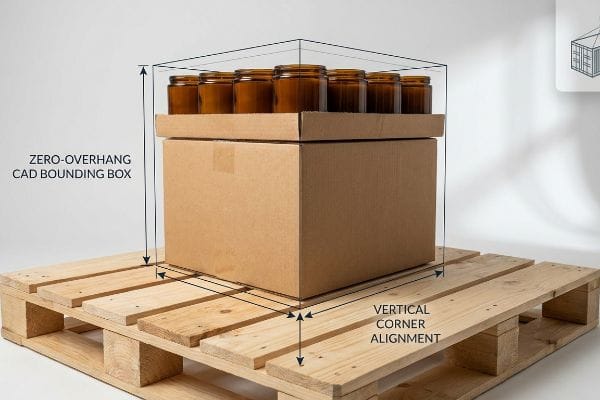
Obtenir une réduction sur volume, c'est bien beau sur un tableur, jusqu'à ce que la marchandise arrive écrasée.
Survivre à la physique du transport de marchandises lourdes
Les marques adorent acheter des bougies lourdes en gros pour optimiser leurs marges, poussant souvent leurs cartons d'expédition à leurs limites dimensionnelles maximales. Les acheteurs demandent fréquemment aux usines de maximiser la taille des cartons afin d' y loger un maximum de pots en verre lourds(8 par carton standard).
Cette soif de volume ignore les lois physiques impitoyables de l' empilage de palettes. J'ai récemment vu un acheteur tenter de réduire ses coûts d'expédition en laissant ses cartons principaux dépasser d'à peine 12,7 mm une palette standard GMA (Grocery Manufacturers Association) de 1219 × 1016 mm (48 × 40 pouces). La résistance à la compression d'un carton ondulé provient jusqu'à 60 % de l'alignement verticalquatre coins. Lorsque j'ai entendu le craquement étouffé et sinistre du carton du bas qui s'affaissait sous le poids de 680 kg (1 500 lb) de la charge supérieure, c'était parce que ces coins non soutenus ne supportaient aucune charge. Pour éviter cela, je configure un gabarit sans débordement dans mon logiciel de CAO (Conception Assistée par Ordinateur), réduisant ainsi artificiellement l'encombrement maximal des cartons. Ceci garantit que chaque coin repose fermement sur le plateau en bois, éliminant complètement les dommages liés au transport lors des traversées maritimes avec double empilage et permettant d'économiser des milliers d'euros en marchandises écrasées.
| Erreurs courantes des débutants | La solution pro | Avantage du magasin |
|---|---|---|
| La palette en bois dépasse | Boîte englobante CAO sans débordement | Élimine les écrasements liés au transport10 |
| En négligeant la force des coins verticaux | Alignement des coins au-dessus des planches de terrasse11 | Résiste au transport de marchandises à double empilement |
| Maximiser la taille de la boîte à l'aveuglette | Réduction dimensionnelle pilotée par les mathématiques12 | Prévient les pertes importantes de stock |
Je ne permets jamais à un client de compromettre la géométrie structurelle pour glisser un bocal supplémentaire dans un emballage. Le respect des limites physiques de la palette préserve l'intégralité de l'investissement.
🛠️ Le bureau d'Harvey : Vos lourds cartons dépassent-ils discrètement des palettes d'expédition ? 👉 Demandez un audit de chargement de palettes ↗ — Téléchargement sécurisé. Ma boîte de réception reste ouverte si vous avez des questions.
À quoi sert une boîte à bougies ?
Au-delà du simple fait de contenir un pot, l'emballage doit trouver un équilibre délicat entre la visibilité du produit et la résistance structurelle.
Un emballage pour bougie sert à la protection physique, à la préservation du parfum et à la présentation en magasin. Il protège la cire fragile des variations de température, évite la casse du verre pendant le transport et constitue un outil de communication visuelle essentiel pour mettre en valeur les profils olfactifs et l'identité de la marque dans les rayons souvent encombrés des magasins.

Offrir aux consommateurs un aperçu du produit en avant-première révèle souvent des problèmes de fabrication cachés.
Le désastre des réparations de fenêtres rigides
Pour stimuler les achats impulsifs, les équipes marketing imposent souvent des fenêtres de visualisation découpées sur les boîtes en carton kraft afin que les consommateurs puissent voir le verre et sentir la cire. Elles demandent généralement des films plastiques transparents standard comme le PET (polyéthylène téréphtalate) pour recouvrir l'espace vide, partant du principe que n'importe quelle barrière transparente conviendra parfaitement au carton.
Imaginez coller du plastique rigide sur une éponge : leur réaction aux conditions environnementales sera toujours différente. Lorsqu'un adhésif rigide standard colle du plastique rigide sur du papier kraft poreux, il crée un conflit de tension superficielle important. J'ai vu des boîtes magnifiquement imprimées arriver dans les centres de distribution complètement déformées, car le papier brut avait absorbé l'humidité et s'était dilaté<sup>14</sup>, tandis que la fenêtre en plastique refusait de bouger. La tension qui en résulte provoque le cintrage du carton plat vers l'intérieur ou le décollement complet de la fenêtre, rendant le produit invendable. Je résous ce problème en utilisant un adhésif très élastique et résistant aux intempéries, associé à un film PLA (acide polylactique) flexible<sup>15</sup>. Cela permet à la fenêtre de s'étirer dynamiquement avec les fibres du papier, garantissant ainsi que la boîte reste parfaitement d'équerre en rayon tout en préservant sa recyclabilité.
| Erreurs courantes des débutants | La solution pro | Avantage du magasin |
|---|---|---|
| Collage de PET rigide sur kraft | Utilisation de films PLA flexibles16 | Maintient le carton carré |
| Utilisation de colles rigides standard | Adhésif élastique résistant aux intempéries17 | Empêche les vitres de se détacher |
| En négligeant la dilatation due à l'humidité | Taux de dilatation des matériaux correspondants18 | Garantit un aspect impeccable en rayon |
J'élimine les plastiques rigides et les colles cassantes car lutter contre l'humidité ambiante est une bataille perdue d'avance. L'utilisation de matériaux adaptés garantit la parfaite intégrité de votre vitrine.
🛠️ Le bureau d'Harvey : La tension superficielle déforme-t-elle insidieusement vos emballages à fenêtre lors des longs transports maritimes ? 👉 Demandez une analyse de la tension des matériaux ↗ — Pas de formulaires interminables qui vous incitent à démarcher. Uniquement de la valeur.
À quoi sert un coffret cadeau ?
Offrir une expérience de déballage luxueuse exige des textures tactiles agressives qui mettent activement à l'épreuve l'intégrité structurelle du papier.
L'objectif d'un coffret cadeau est de sublimer l'expérience de déballage pour le consommateur et de justifier un prix de vente premium. Ces emballages haut de gamme jouent sur les textures, l'élégance de la structure et des systèmes de fermeture sécurisés pour transformer un objet ordinaire en un présent précieux et chargé d'émotion.
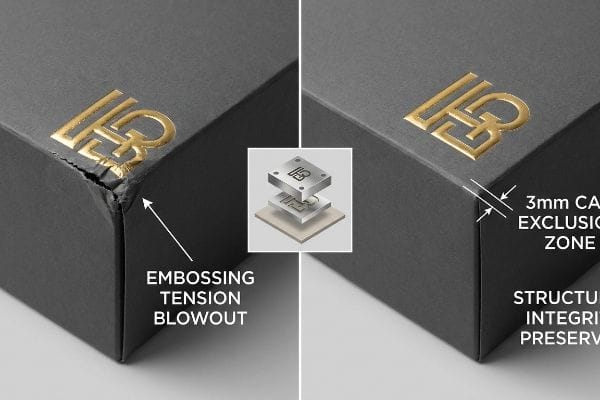
Mais connaître la théorie ne suffit pas lorsque les machines se mettent en marche et que ces textures premium commencent à détruire vos caisses.
L'éclatement de la tension de gaufrage
Les designers affectionnent particulièrement le gaufrage 3D à chaud sur les emballages cadeaux haut de gamme pour exprimer le luxe. Ils placent souvent ces logos profonds et tactiles au centre, au niveau des lignes de pliage ou des rayons de courbure, en supposant que le carton puisse supporter la pression sans dommage mécanique<sup>19</sup>.
Dans mon atelier, je constate régulièrement que ces emballages de luxe se détériorent de façon catastrophique avant même d'atteindre la chaîne d'emballage. Le gaufrage traditionnel utilise des matrices métalliques mâles et femellesqui étirent et affinent fortement les fibres de kraft brut. Lorsque je mesure le taux d'échec d'un gaufrage 3D profond placé directement sur un pli à 90 degrés, le résultat est désastreux : les fibres, épuisées structurellement, cassent net. On entend d'ailleurs le craquement sec et sec lorsque la plieuse-colleuse automatisée force le pli fragilisé à se déformer, en déformant complètement l'angle. Pour remédier à ce problème, j'impose une zone d'exclusion de gaufrage stricte dans le logiciel de CAO, en décalant mathématiquement les textures profondes d'au moins 3 mm (0,12 pouce)tout pli porteur principal. En préservant la densité des fibres au niveau du pli, je garantis que la boîte conserve sa résistance à la compression tout en offrant un toucher luxueux, ce qui permet à mes clients d'éviter un taux de rebut de 15 % sur la chaîne de montage.
| Erreurs courantes des débutants | La solution pro | Avantage du magasin |
|---|---|---|
| Gaufrage sur les lignes de pliage | Zones d'exclusion strictes du CAD | Empêche les éclatements de coins22 |
| Ignorer l'épuisement des fibres | Décalage des textures à 3 mm des rainures23 | Maintient un assemblage automatisé rapide |
| Surcharger le kraft brut | Préserver la densité des fibres de pli24 | Élimine les coûts élevés liés à la mise au rebut des déchets |
Je ne permets jamais que la vision esthétique d'un designer compromette les propriétés physiques du carton. Isoler les tensions extrêmes des joints structurels est le seul moyen de fabriquer des produits de luxe à grande échelle.
🛠️ Conseils d'Harvey : Un défaut structurel de 2 millimètres ne doit pas compromettre le déploiement dans 500 magasins. 👉 Envoyez-moi votre fichier de gabarit ↗ — Je vérifierai la robustesse des calculs avant que vous n'investissiez votre budget dans une production de masse.
Conclusion
Vous pouvez choisir d'optimiser les dimensions de vos cartons d'expédition, mais si ce débordement entraîne l'effondrement de 680 kg de marchandises dans un entrepôt humide, les pertes de transport qui en résultent anéantissent votre marge bénéficiaire. Plus de 500 responsables de marque utilisent ma checklist prépresse pour éviter précisément ces erreurs fatales en début de production. Ne vous fiez plus aux apparences : grâce à mon audit gratuit de découpe, et identifier les points faibles avant le lancement de la production en série.
« Guides verts | Commission fédérale du commerce », https://www.ftc.gov/news-events/topics/truth-advertising/green-guides. Ce document explique les normes réglementaires relatives aux allégations environnementales concernant le contenu recyclé afin de prévenir les pratiques d'étiquetage trompeuses. Rôle de la preuve : conformité réglementaire ; type de source : agence gouvernementale. Argument : nécessité de justifier les allégations relatives au contenu recyclé. Note sur la portée : axé sur les lois de protection des consommateurs .
« Papier et emballage | Forest Stewardship Council », https://fsc.org/en/businesses/paper-packaging . Ce document détaille les exigences légales et les processus d'audit nécessaires à l'utilisation officielle des marques FSC sur les emballages. Rôle de la preuve : validation ; type de source : organisme de certification. Justifie : l'exigence d'une certification formelle de l'apparence visuelle. Note relative au champ d'application : s'applique aux matériaux d'origine forestière.
« Certification de la chaîne de traçabilité », https://fsc.org/en/chain-of-custody . Explication de la manière dont les normes internationales telles que FSC ou PEFC exigent une chaîne de traçabilité continue pour certifier légalement l'origine durable des matériaux. Rôle de la preuve : Spécification technique ; type de source : Norme de certification. Apport : Preuve légale de l' origine des matériaux. Note relative au champ d'application : S'applique aux forêts certifiées durables.
« Quelles erreurs de conditionnement à façon entraînent des pénalités de la part des détaillants… », https://www.industrialpackaging.com/blog/copacker-mistakes-retailer-chargebacks . Documentation des protocoles de conformité des détaillants : le défaut de vérification de la durabilité entraîne des pénalités logistiques. Rôle de la preuve : Norme sectorielle ; type de source : Guide de conformité pour les détaillants. Éléments pris en compte : Conséquences financières et logistiques d’un échec d’audit. Note relative au périmètre : Spécifique aux grandes enseignes de la grande distribution.
« [PDF] Rapport d’audit de la chaîne de contrôle FSC 2016 – Gouvernement de l’État d’Indiana », https://www.in.gov/dnr/forestry/files/fo-FSC_COC_AuditReport_2016.pdf. La vérification de l’origine des matériaux par le biais de chaînes certifiées garantit la légitimité et la conformité des écolabels lors des audits des détaillants. Rôle de la preuve : exigence technique ; type de source : norme de certification (ex. : FSC). Justifie : la nécessité de la documentation pour la réussite de l’audit. Note relative au champ d’application : s’applique aux matériaux durables certifiés .
« Frais de conformité des fournisseurs : causes et solutions… », https://www.linkedin.com/posts/quickbox-fulfillment_struggling-with-vendor-compliance-chargebacks-activity-7421637082487525376-VCk2. Les détaillants appliquent des pénalités financières (refacturations) lorsque les matériaux d’emballage ne respectent pas certaines normes de traçabilité ou de durabilité. Éléments de preuve : impact financier ; type de source : manuel fournisseur du secteur de la distribution. Constat : lien entre les matériaux non traçables et les pénalités financières. Précision : spécifique aux accords de distribution conclus au niveau de l’entreprise .
« Allégations environnementales : Résumé des Guides verts », https://www.ftc.gov/business-guidance/resources/environmental-claims-summary-green-guides. Les organismes de réglementation exigent des preuves à l'appui des allégations de durabilité ; la seule couleur « brune » est donc insuffisante pour garantir la conformité légale. Rôle de la preuve : conformité légale ; type de source : guide réglementaire (p. ex., Guides verts de la FTC). Justifie : la nécessité d'une vérification pour protéger la valeur juridique de la marque. Note relative à la portée : se concentre sur les lois relatives à la protection des consommateurs .
« Maîtriser les solutions d'expédition : l'art de l'emballage des produits en verre », https://www.atlascontainer.com/blog/mastering-shipping-solutions-the-art-of-packaging-glass-products. Les normes industrielles d'optimisation du fret expliquent que maximiser le nombre d'articles à haute densité par carton réduit les coûts d'expédition globaux et améliore l'utilisation des palettes. Preuve : validation technique ; type de source : manuel de logistique. Appuie : l'affirmation selon laquelle l'emballage en vrac optimise l'efficacité de l'expédition. Remarque : portée limitée par les restrictions de poids par carton imposées par le transporteur .
« Estimation de la résistance à la compression des boîtes en carton ondulé… », https://pmc.ncbi.nlm.nih.gov/articles/PMC9864211/. Vérification, à partir de la littérature technique sur l’emballage, du pourcentage de charge supportée par la verticalité des angles des emballages en carton ondulé. Type de preuve : validation technique ; source : manuel d’ingénierie ou norme industrielle. Sujet : impact du débordement des palettes sur l’intégrité structurelle. Précision : spécifique aux boîtes en carton ondulé standard .
« Comment éviter le débordement des palettes dans les opérations de production d'aliments pour animaux », https://www.bwpackaging.com/blog/how-to-prevent-pallet-overhang-in-animal-feed-operations. Les normes industrielles relatives à l'arrimage des marchandises démontrent qu'éviter le débordement des palettes prévient l'écrasement en garantissant que la totalité de la charge repose sur la base de la palette, évitant ainsi l'affaissement des bords. Preuve : vérification causale ; type de source : normes d'expédition. Appuie : l'avantage des boîtes englobantes CAO sans débordement. Note de portée : spécifique aux expéditions à haute densité .
« Étude de l’influence de la rigidité du plateau supérieur des palettes sur la résistance à la compression du carton ondulé… », https://pmc.ncbi.nlm.nih.gov/articles/PMC8585293/. Une source faisant autorité en matière de logistique du transport de marchandises explique comment l’alignement des coins porteurs verticaux de l’emballage avec les planches de support de la palette optimise la résistance à la compression. Rôle de la preuve : vérification technique ; type de source : manuel de logistique. Justification : capacité à supporter le transport de marchandises empilées en double. Remarque concernant le champ d’application : s’applique aux palettes en bois standardisées .
« 10 façons d’optimiser l’expédition et de réduire les coûts d’emballage », https://warespace.com/articles/shipping-and-packaging-insights/optimize-shipping-reduce-packaging-costs . Ce guide technique sur l’ingénierie de l’emballage explique en détail comment optimiser les dimensions des boîtes pour éliminer les espaces vides, réduisant ainsi les déplacements et les dommages dus aux chocs internes. Rôle de la preuve : validation des processus ; type de source : guide d’ingénierie de l’emballage. Contribue à : la prévention des pertes importantes de stock. Remarque : nécessite des données CAO ou volumétriques précises.
« Comparatif des emballages alimentaires : carton contre plastique rPET », https://www.packagingdigest.com/food-packaging/food-packaging-faceoff-paperboard-versus-rpet-plastic. Un guide de spécifications des matériaux de l’industrie confirme que le PET est un matériau standard utilisé pour les fenêtres transparentes des emballages en carton, en raison de sa clarté et de sa résistance. Preuve : vérification technique ; source : base de données sur les matériaux d’emballage. Appuie : l’affirmation selon laquelle le PET est un matériau couramment utilisé pour couvrir les vides. Note sur la portée : se concentre sur les normes d’emballage pour la vente au détail .
« Aperçu du papier et des emballages alimentaires à base de papier… – PMC », https://pmc.ncbi.nlm.nih.gov/articles/PMC6801293/ . Explication de l’hygroscopicité du papier kraft et de son coefficient de dilatation par rapport aux plastiques rigides en milieu humide. Rôle de la preuve : vérification technique ; type de source : revue scientifique sur les matériaux. Appui : cause de la déformation structurelle des emballages composites. Note sur la portée : limité aux papiers à base de cellulose.
« Propriétés mécaniques et cytotoxicité des films PLA/PCL – PMC », https://pmc.ncbi.nlm.nih.gov/articles/PMC6208544/. Données techniques sur l’élasticité et les propriétés mécaniques des films d’acide polylactique (PLA) utilisés dans les emballages durables. Niveau de preuve : spécification technique ; type de source : fiche technique polymère. Arguments : utilisation du PLA flexible pour réduire la tension superficielle. Note relative à la portée : étude axée sur les variantes de polymères biodégradables .
« Au-delà des plastiques fossiles : bioplastique de nouvelle génération à base de PLA… – PMC », https://pmc.ncbi.nlm.nih.gov/articles/PMC13001162/. Un guide technique sur l’emballage ou une source scientifique sur les matériaux expliquerait comment la flexibilité du PLA empêche le gauchissement souvent causé par le PET rigide sur le papier kraft. Rôle de la preuve : Validation technique ; type de source : Revue scientifique sur les matériaux ou guide industriel. Appuie : L’affirmation selon laquelle le PLA maintient la forme carrée du carton. Note de portée : Spécifique au rapiéçage hybride plastique-papier .
« Votre adhésif est-il adapté aux besoins des films pour vitres ? | Bostik US », https://www.bostik.com/us/en_US/blog/post/advanced-packaging/tapes-labels/nam/window-film-adhesives-sustainability-optical-durability-benefits/. Les spécifications techniques de l'adhésif confirment que ses propriétés élastiques permettent à la liaison de résister à la dilatation et à la contraction thermiques sans se rompre. Preuve : Spécification technique ; type de source : Fiche technique de l'adhésif chimique. Objectif : Prévenir le décollement des vitres. Remarque : Ce document porte sur les contraintes liées au climat .
« Faible dilatation thermique et conductivité thermique élevée dans l'époxy… », https://www.sciencedirect.com/science/article/abs/pii/S0272884226008199. La littérature technique en science des matériaux confirme que des coefficients de dilatation identiques préviennent les contraintes mécaniques et les déformations dues aux variations d'humidité ou de température. Rôle de la preuve : Principe scientifique ; type de source : Manuel d'ingénierie. Appui : L'affirmation concernant l'atténuation de la dilatation due à l'humidité. Note de portée : Principe général de compatibilité des matériaux .
« Effet de la pression de gaufrage sur les propriétés mécaniques et la souplesse… », https://pmc.ncbi.nlm.nih.gov/articles/PMC9228970/ . Les directives techniques relatives à l’emballage expliquent comment un gaufrage profond sur les lignes de pliage perturbe l’alignement des fibres et provoque des défaillances du matériau, voire des « éclatements » . Rôle de la preuve : validation technique ; type de source : manuel d’ingénierie de l’emballage. Appuie : l’affirmation selon laquelle le gaufrage au-delà des rayons de pliage entraîne des dommages structurels. Note relative à la portée : spécifique au marquage 3D haute pression.
« Gaufrage (fabrication) – Wikipédia », https://en.wikipedia.org/wiki/Embossing_(manufacturing ). Les définitions techniques du procédé de gaufrage détaillent l'utilisation de matrices opposées pour déformer des supports en papier. Rôle de la preuve : explication du procédé ; type de source : manuel de l'industrie de l'imprimerie. Supports : la méthode mécanique de création de textures en relief. Note de portée : norme pour le gaufrage industriel à haute pression.
« Emballage en carton ondulé de conception innovante pour une durabilité accrue… », https://bioresources.cnr.ncsu.edu/resources/corrugated-board-packaging-with-innovative-design-for-enhanced-durability-during-transport/ . Les normes d'ingénierie d'emballage de référence fournissent des lignes directrices sur les distances minimales entre les gaufrages profonds et les lignes de pliage afin de prévenir toute défaillance structurelle. Niveau de preuve : spécification technique ; type de source : manuel industriel. Appuie : la mesure spécifique de la zone d'exclusion de 3 mm. Remarque concernant la portée : peut varier en fonction du grammage du substrat.
« Influence des lignes de pliage analogiques et numériques sur les propriétés mécaniques… – PMC », https://pmc.ncbi.nlm.nih.gov/articles/PMC9268991/ . Les guides techniques d'emballage expliquent comment le gaufrage perturbe l'intégrité structurelle des lignes de pliage, entraînant une rupture du matériau. Rôle de la preuve : validation technique ; type de source : manuel d'ingénierie d'emballage. Justifie : la nécessité de zones d'exclusion CAO pour éviter les défaillances structurelles. Note relative au champ d' application : s'applique au gaufrage de luxe haute pression.
« Systèmes d'emballage robotisés – Lignes d'emballage automatisées », https://machineconcepts.com/automated-packaging-systems/ . Les normes industrielles relatives aux machines de pliage-collage automatisées spécifient des zones tampons minimales entre les textures en relief et les lignes de rainage afin d'éviter l'épuisement des fibres et les bourrages . Preuve : spécification technique ; source : recommandations du fabricant de machines. Justifie : le décalage de 3 mm est une norme pour maintenir la vitesse d'assemblage. Remarque : les distances peuvent varier en fonction du grammage du papier.
« Modélisation par éléments finis du gaufrage des feuilles de papier », https://bioresources.cnr.ncsu.edu/wp-content/uploads/2020/03/1993.2.1073.pdf. La documentation scientifique sur le papier kraft explique comment une déformation excessive lors du gaufrage réduit la densité des fibres au niveau du pli, augmentant ainsi le risque de fissuration. Rôle de la preuve : preuve scientifique des matériaux ; type de source : document technique. Appui : le lien entre la préservation de la densité des fibres et la réduction des taux de rebut. Note sur la portée : axé sur les substrats kraft bruts .