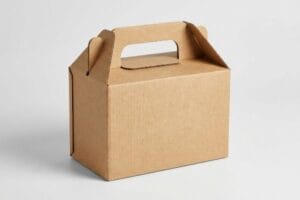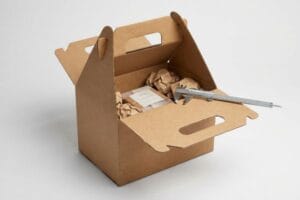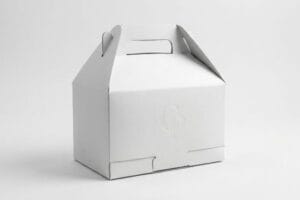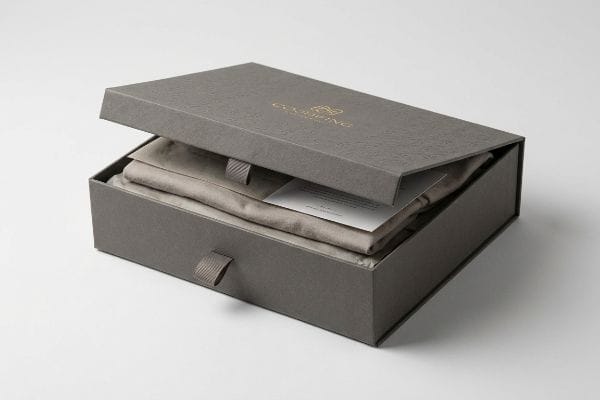
Vous souhaitez que l'emballage de vos vêtements donne l'impression d'un cadeau haut de gamme, mais utiliser des rubans bon marché et des autocollants génériques gâche l'expérience du déballage avant même qu'elle ne commence.
La personnalisation d'une boîte à vêtements pour l'emballage consiste à intégrer des éléments structurels sur mesure, des finitions tactiles et des éléments graphiques de marque directement dans le carton ondulé. Ceci élimine le besoin d'un emballage papier secondaire tout en garantissant la résistance du colis aux manipulations en magasin et en offrant une expérience de déballage haut de gamme au consommateur.
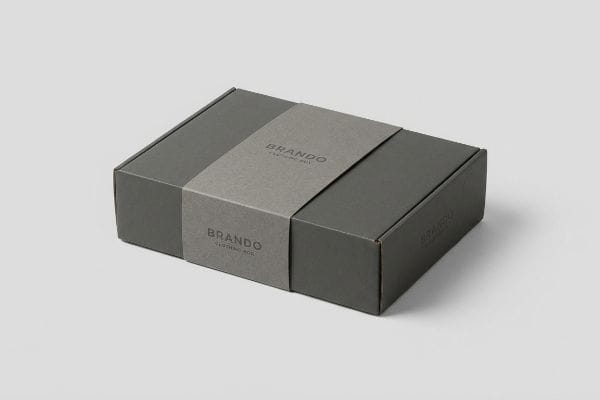
Fabriquer un colis qui ressemble à un cadeau mais qui se transporte comme une forteresse exige une ingénierie spécifique au niveau industriel.
Comment emballer un carton de vêtements pour offrir ?
Oubliez la lutte avec les rouleaux de papier d'emballage extérieur dans les rayons des magasins.
Pour emballer efficacement un carton de vêtements, il est préférable d'utiliser des fermetures intégrées et des adhésifs dissimulés plutôt que du papier extérieur ou du ruban adhésif visible. La conception du carton avec des languettes mâles-femelles intégrées garantit une fermeture invisible et inviolable, préservant ainsi une apparence soignée pendant le transport et le déballage par le client.
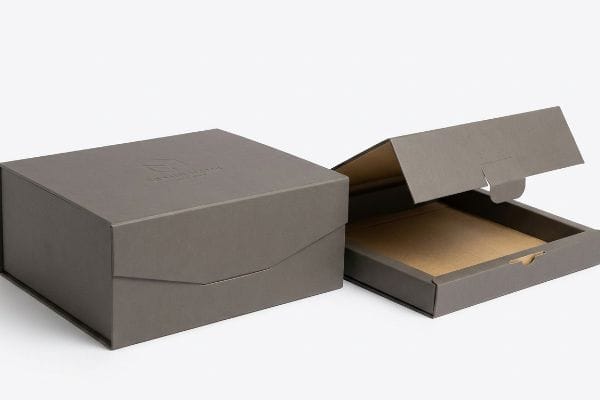
La connaissance des mécanismes de fermeture structurelle ne constitue que le point de départ.
La stratégie de fermeture cachée
De nombreuses marques partent du principe que la seule façon de sécuriser un emballage cadeau est de recouvrir les bords de ruban adhésif transparent ou d'y nouer des rubans complexes. Cette méthode courante alourdit la chaîne de préparation de commandeset rend l'ouverture du colis fastidieuse et frustrante pour le client.
Je vois constamment de nouvelles marques de vêtements acheter des enveloppes standard et tenter de les personnaliser avec des autocollants, pour ensuite constater que ces derniers se décollent pendant le transport. Plutôt que de lutter contre ces ajouts externes, j'intègre des languettes autobloquantes directement dans la découpe. Je me souviens d'avoir vu une équipe logistique peiner pendant 20 minutes à aligner parfaitement du ruban adhésif sur une pile de boîtes de chemises de luxe ; la colle s'accrochait sans cesse à la finition mate, l'abîmant. En remplaçant le ruban adhésif par des attaches en papier façon origami et des pastilles de colle invisibles, nous avons éliminé tous les points de friction visibles. Le clic net et satisfaisant de la languette découpée qui se met en place confirme que la boîte est bien fermée, ce qui accélère la chaîne d'emballage d'environ 25 %et préserve une présentation impeccable de la marque.
| Erreurs courantes des débutants | La solution pro | Avantage du magasin |
|---|---|---|
| Utilisation de ruban adhésif transparent externe | Languettes prédécoupées emboîtables | Gain de 25 secondes par boîte3 |
| Nouer des rubans décoratifs | Joints adhésifs invisibles4 | Empêche les accrocs pendant le transport |
| Fermetures autocollantes fragiles | Verrous structurels en papier5 | Empêche l'ouverture non autorisée |
Je refuse qu'un ruban adhésif bon marché ternisse l'image d'une marque haut de gamme. Opter pour des systèmes autobloquants optimise l'organisation de votre zone d'emballage tout en rehaussant instantanément la valeur perçue par le client.
🛠️ Le bureau d'Harvey : Vos équipes logistiques perdent-elles des heures à scotcher des cartons ? 👉 Obtenez un gabarit de fermeture personnalisé ↗ — Accès direct à mon bureau. Zéro spam commercial automatisé, promis.
Comment personnaliser votre emballage ?
Apposer un logo générique sur un carton brun ne suffira pas à attirer l'attention.
La personnalisation des emballages consiste à modifier le support physique par le biais du gaufrage, de revêtements spéciaux et de l'impression en couleur sélective. Ces finitions structurelles et chimiques permettent aux marques de vêtements d'intégrer leur identité directement dans les fibres de papier, créant ainsi une esthétique durable et agréable au toucher sans compromettre l'intégrité structurelle du carton principal.
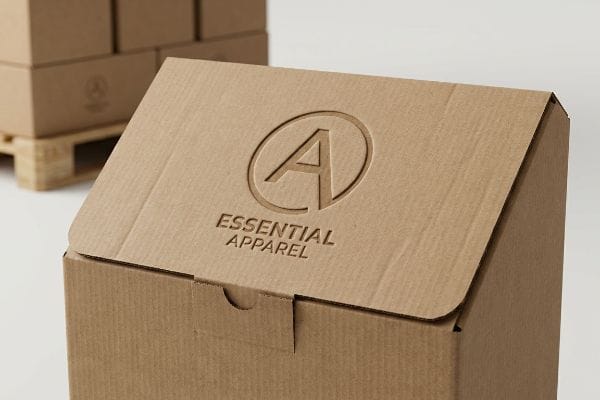
Les choix esthétiques sont importants, mais ils ont de graves conséquences mécaniques.
Le dilemme du branding tactile
Les équipes marketing souhaitent souvent donner une impression de luxe à leurs boîtes de vêtements ; elles demandent donc un gaufrage 3D prononcépour faire ressortir leur logo. Elles traitent le carton ondulé comme une feuille de papier plate et solide, supposant qu'une simple pression vers l'extérieur créera une belle texture visuelle.
Le problème, c'est que le gaufrage extérieur étire fortement la couche supérieure de papier7, amincissant considérablement les fibres précisément là où la boîte a besoin de solidité. Un client insistait pour avoir un logo en relief de grande taille sur le rabat supérieur d'une boîte à pulls, et lors d'un simple test de compression, j'ai entendu le craquement sec et distinct des fibres de papier qui se rompaient au niveau du pli. Pour remédier à cela, j'exige systématiquement d'inverser l'outillage pour un gaufrage intérieur sur les supports en carton ondulé. En enfonçant la matrice métallique dans le carton, on comprime les cannelures internes en un bloc solide8, préservant ainsi l'élasticité de la couche extérieure. Ce micro-ajustement garantit une rigidité suffisante pour l'empilage sur une palette standard de 1219 × 1016 mm (48 × 40 pouces), tout en conservant un toucher haut de gamme.
| Erreurs courantes des débutants | La solution pro | Avantage du magasin |
|---|---|---|
| Gaufrage extérieur sur les cannelures | Outillage de débossage intérieur | Empêche les déchirures de la doublure supérieure9 |
| Couches de finition brillantes | Vernis sélectif UV sur finition mate | Crée un contraste tactile |
| Marquage à chaud fragile | Inondation dense de couleur tachetée | Empêche les griffures10 |
Je ne sacrifie jamais la solidité de la boîte pour une simple mode. En comprimant les cannelures vers l'intérieur, on obtient la texture luxueuse recherchée sans risquer une livraison écrasée.
🛠️ Bureau Harvey : Vous vous demandez si votre finition personnalisée résistera au stockage en entrepôt ? 👉 Demandez un audit des matériaux ↗ — Téléchargement sécurisé. Ma boîte de réception reste ouverte si vous avez des questions.
Faut-il emballer les boîtes à vêtements ?
On pourrait croire qu'ajouter une couche de papier d'emballage brillant masque les matériaux bon marché.
Non. Il est inutile d'emballer les boîtes de vêtements si l'emballage primaire est conçu avec des micro-cannelures de qualité supérieure et une lithographie haute fidélité. Une boîte de vente solide et esthétiquement irréprochable constitue sa propre couche de présentation, éliminant ainsi le gaspillage de matériaux et les coûts de main-d'œuvre liés à un emballage décoratif secondaire.
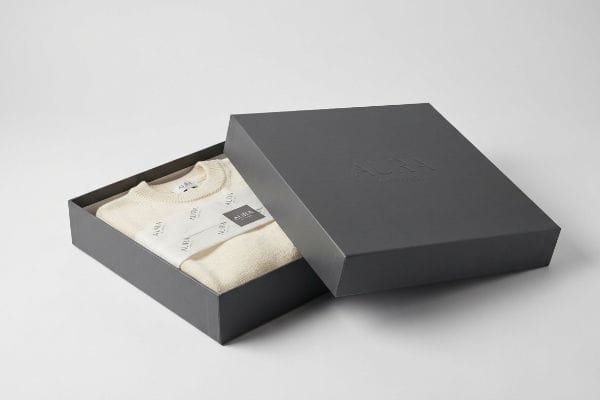
Le fait de se fier uniquement à la boîte implique que la surface doit être absolument parfaite.
Effacer l'effet de planche à laver
De nombreuses jeunes marques de mode cherchent à réduire leurs coûts en utilisant des boîtes en carton ondulé standard (cannelure C)¹¹, prévoyant de les recouvrir ultérieurement de pochettes ou de papier d'emballage à leur effigie. Elles partent du principe que n'importe quel carton épais fera l'affaire, pourvu qu'il soit recouvert.
Lorsqu'on colle une fine feuille imprimée sur des cannelures épaisses et larges, on obtient le fameux effet ondulé, où des lignes verticales ondulent visiblementsur la face avant de la boîte. J'ai vu un jour un commerçant essayer désespérément de lisser du papier d'emballage sur une boîte ondulée, mais les nervures irrégulières du carton reflétaient la lumière, donnant à un emballage pourtant haut de gamme un aspect incroyablement bon marché. Ma règle d'or : éliminer complètement le besoin d'emballage en utilisant un support de base en micro-cannelure denseou en contrecollant la lithographie sur du sulfate blanchi solide avant de l'appliquer sur le carton. La finition lisse et brillante du micro-cannelure supprime complètement ces ombres disgracieuses, permettant à la boîte nue de trôner fièrement en rayon sans qu'aucun emballage secondaire ne masque ses défauts.
| Erreurs courantes des débutants | La solution pro | Avantage du magasin |
|---|---|---|
| Utilisation de cannelures en C épaisses | Passage à la micro-flûte électrique14 | Empêche les ondulations visibles à la surface |
| S'appuyer sur des manchons en papier | Litho-lamination directe15 | Supprime le travail d'emballage manuel |
| Impression sur papier testliner brut | sulfate blanchi solide enrobé16 | Offre des couleurs d'encre éclatantes |
Je fabrique des boîtes qui sont faites pour être vues, pas pour être cachées. En améliorant le profil de vos cannelures, vous transformez un simple emballage d'expédition en un coffret cadeau haut de gamme, directement sorti de la chaîne de production.
🛠️ Le bureau de Harvey : Les ondulations verticales nuisent-elles à l’esthétique de vos emballages haut de gamme ? 👉 Demandez votre analyse structurelle ↗ — Pas de formulaires interminables qui vous incitent à passer des heures à démarcher. Uniquement de la valeur ajoutée.
Où puis-je concevoir mon propre emballage ?
Trouver une plateforme logicielle pour dessiner une boîte est facile.
La conception de vos propres emballages nécessite l'importation de gabarits PDF structurés et compensés pour la flexion dans des plateformes de conception graphique comme Canva ou Illustrator. Ainsi, tout en maîtrisant l'esthétique de surface, les tolérances mathématiques sous-jacentes de pliage, d'encochage et de capacité de charge restent parfaitement respectées pour la production en série.
Mais connaître la théorie ne suffit pas lorsque les machines se mettent en marche.
Pourquoi les conceptions web échouent en usine
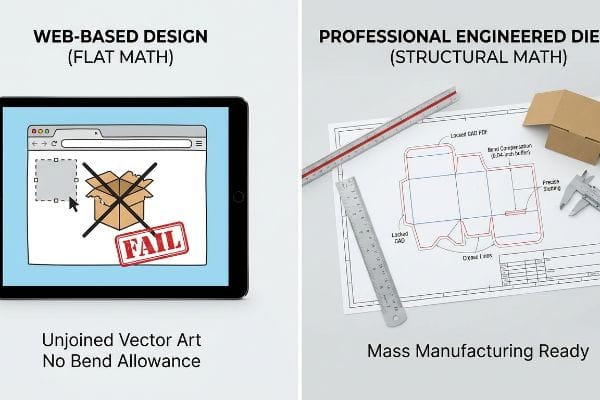
Les fondateurs de marques supposent souvent pouvoir concevoir une boîte à vêtements entièrement personnalisée à partir de zéro en utilisant des éditeurs d'images Web basiques. Ils glissent et déposent des panneaux carrés et des languettes imbriquées sur un écran plat, supposant que des formes numériques standard se traduiront comme par magie en un carton 3D fonctionnel17.
Dans mon atelier, je constate régulièrement d'importants retards de production car les outils web génèrent des fichiers vectoriels non reliés, sans tenir compte des tolérances de pliage. Lorsque je teste ces fichiers amateurs sur ma table de découpe Kongsberg, les calculs théoriques se heurtent à la réalité physique du calibre du carton. Si un concepteur dessine une fente de 2,79 mm (0,11 pouce) de large pour un carton cannelé B sans prendre en compte la dilatation du papier lors d'un pliage à 90 degrés, la languette ainsi obtenue se déformera violemment avec un craquement sonore lorsque le sous-traitant la fermera. Je résous ce problème en fournissant systématiquement un PDF verrouillé, généré à partir d'un fichier CAO (Conception Assistée par Ordinateur), intégrant une marge d'humidité précise de 1 mm (0,04 pouce) dans les fentes. En obligeant le client à concevoir en se basant précisément sur mon plan structurel, je garantis une réduction de 30 % du temps d'assemblage par le sous-traitant, ce qui permet d'économiser des milliers d'euros en main-d'œuvre et d'éliminer les coins déchirés sur la chaîne de montage.
| Erreurs courantes des débutants | La solution pro | Avantage du magasin |
|---|---|---|
| Concevoir des onglets dans Canva | PDF structurels CAO verrouillés20 | Empêche les déchirures lors du pliage |
| En négligeant l'épaisseur du circuit imprimé | Compensation de courbure de l'étrier21 | Garantit des boîtes parfaitement carrées |
| Mesures de fente 1:1 | tampon d'humidité de 0,04 pouce22 | Assemblage manuel sans frottement |
Je ne peux pas faire tourner une usine avec de jolies images. Vous vous occupez du graphisme, et je me charge des calculs de structure, en veillant à ce que vos boîtes se plient correctement une fois arrivées sur la table d'assemblage.
🛠️ Conseils d'Harvey : Un défaut structurel de 2 millimètres ne doit pas compromettre le déploiement dans 500 magasins. 👉 Envoyez-moi votre fichier de gabarit ↗ — Je vérifierai la robustesse des calculs avant que vous n'investissiez votre budget dans une production de masse.
Conclusion
Vous pouvez certes négliger les gabarits de base pour l'impression, mais si ces tolérances de pliage non contrôlées engendrent des frottements importants sur la chaîne d'emballage, ralentissant la production d'environ 30 %, votre marge bénéficiaire s'en trouvera réduite à néant. Plus de 500 responsables de marque utilisent ma checklist prépresse pour éviter précisément ces erreurs fatales en début de production. Ne laissez plus les tolérances au hasard : laissez-moi analyser vos fichiers grâce à mon audit de gabarits gratuit ↗ afin de détecter les erreurs critiques avant le lancement de la production en série.
« Automatisation de l’emballage : des avantages pour la logistique d’aujourd’hui… », https://www.fortna.com/insights-resources/packaging-automation-benefits-for-todays-fulfillment-operations/. Rapports sectoriels sur la logistique du e-commerce expliquant comment l’application manuelle d’adhésifs et de rubans augmente le temps de travail par unité dans les flux d’emballage. Type de preuve : données factuelles ; source : étude sectorielle. Confirme : l’affirmation selon laquelle l’emballage standard augmente les coûts opérationnels. Précision : l’étude porte sur la logistique de vêtements à grand volume .
« Ruban adhésif de scellage de carton ou ruban adhésif d'emballage : lequel choisir ? », https://www.afasystemsinc.com/carton-sealing-tape-vs-packing-tape/ . Les données comparatives du secteur de la logistique d'exécution des commandes fournissent des informations sur le gain de temps obtenu en remplaçant le rubanage manuel par des fermetures prédécoupées intégrées . Type de preuve : validation quantitative ; source : rapport du secteur de la logistique. Confirme : l'affirmation selon laquelle les fermetures structurelles augmentent la vitesse d'emballage. Remarque : les résultats peuvent varier selon que l'emballage est manuel ou semi-automatisé.
« Le guide ultime des rubans adhésifs d'emballage écologiques – EcoEnclose », https://www.ecoenclose.com/blog/the-ultimate-guide-to-eco-friendly-packaging-tape?srsltid=AfmBOood-AP2-qJMnHObzPesm1i0DsNtUC-1LtSAneEzjbXy2-r2g__d. Étude comparative sectorielle des temps et mouvements comparant la vitesse d'assemblage des languettes prédécoupées à celle de l'application de ruban adhésif traditionnel. Type de preuve : vérification quantitative ; source : rapport sectoriel. Confirme : un gain de temps de 25 secondes par unité. Remarque : les résultats peuvent varier selon l'expérience des opérateurs .
« Garantir la sécurité de la fermeture des emballages : Glue Dots Intl. », https://www.foodmanufacturing.com/home/packaging/product/21101285/gluedots-international-ensuring-package-seal-security . Spécifications techniques des pastilles adhésives sensibles à la pression utilisées dans la vente au détail pour minimiser les saillies et les accrochages. Rôle de la preuve : validation technique ; type de source : guide d’ingénierie de l’emballage. Appui : l’utilisation de pastilles adhésives pour prévenir les accrochages pendant le transport. Remarque: l’efficacité dépend du poids du carton.
« Technologie d'inviolabilité », https://en.wikipedia.org/wiki/Tamper-evident_technology . Recherche sur l'intégrité mécanique des systèmes de fermeture à pliage conçus pour empêcher toute ouverture accidentelle ou non autorisée sans outil. Rôle de la preuve : validation de la sécurité ; type de source : manuel de conception d' emballages. Appuie : l'affirmation selon laquelle les systèmes de fermeture structurels empêchent toute ouverture non autorisée. Note relative à la portée : limité à certains types de pliage.
« Étude de l’effet des perforations sur la résistance à la charge… », https://pmc.ncbi.nlm.nih.gov/articles/PMC11396172/ . Documentation technique sur l’influence du gaufrage profond sur le cannelage et la stabilité structurelle du carton ondulé. Rôle de la preuve : validation technique ; type de source : guide de fabrication. Sujet : limitations physiques du gaufrage du carton. Note sur la portée : se concentre spécifiquement sur les supports en carton ondulé.
« Effet de la pression de gaufrage sur les propriétés mécaniques et la souplesse… », https://pmc.ncbi.nlm.nih.gov/articles/PMC9228970/ . Explication technique de la façon dont l’étirement des fibres lors du gaufrage réduit la résistance à la traction des revêtements en carton ondulé. Rôle de la preuve : validation technique ; type de source : manuel de science des matériaux. Appuie : l’affirmation selon laquelle le gaufrage amincit les fibres de papier. Note de portée : spécifique aux emballages à base de papier.
« Emballages en carton ondulé au design innovant pour… », https://bioresources.cnr.ncsu.edu/resources/corrugated-board-packaging-with-innovative-design-for-enhanced-durability-during-transport/ . Explication du procédé de débossage qui comprime le carton ondulé afin d’en renforcer la rigidité locale tout en préservant l’élasticité du revêtement. Niveau de preuve : validation technique ; type de source : guide d’ingénierie de l’emballage. Sujet : le mécanisme de débossage pour la préservation de la structure. Remarque : applicable aux supports en carton ondulé.
« Influence des lignes de pliage analogiques et numériques sur les propriétés mécaniques… », https://pmc.ncbi.nlm.nih.gov/articles/PMC9268991/ . Explication technique de la façon dont le débossage réduit les contraintes structurelles sur les couvertures en carton ondulé par rapport au gaufrage. Rôle de la preuve : validation technique ; type de source : manuel d’ingénierie de l’emballage. Supports : intégrité structurelle des matériaux cannelés. Note de portée : spécifique au carton ondulé.
« Vernis sélectif UV vs marquage à chaud : quelle finition d'emballage est la meilleure ? », https://www.leelinepackage.com/spot-uv-vs-foil-stamping/. Comparaison de la durabilité et de la résistance à l'abrasion de l'encrage haute densité et du marquage à chaud en milieu commercial. Preuve : vérification de la durabilité ; source : normes d'impression industrielle. Argument : résistance aux rayures. Note : étude de la longévité de la finition de surface .
« Nuances de cannelure, indices ECT et épaisseur de paroi : explications 2025 », https://anchorbox.com/corrugated-box-strength/. Normes techniques d’emballage confirmant le rôle de la cannelure C comme matériau ondulé courant et économique, utilisé pour l’expédition et la vente au détail de base. Preuve : spécification technique ; source : manuel de l’industrie de l’emballage. Appui : l’utilisation de la cannelure C comme mesure d’économie dans l’emballage de la mode. Note de portée : se concentre sur les propriétés des matériaux et les prix de l’industrie .
« Avec les boîtes en carton ondulé, vous pouvez mesurer le succès », https://www.billerud.com/products/packaging-materials/corrugated-materials/knowledge-center/washboarding . Vérification que le montage de fines doublures sur de larges cannelures provoque des ondulations visibles , connues sous le nom d'effet « waxboard ». Rôle de la preuve : définition technique ; type de source : manuel d'ingénierie de l'emballage. Appuie : la cause des ondulations de surface des boîtes en carton ondulé. Note de portée : spécifique aux interactions du substrat ondulé.
« Guide pour comprendre les cannelures des boîtes en carton ondulé », https://gentlever.com/flutes-types-sizes-and-thickness-in-corrugated-boxes/. Confirmation technique que la haute densité de cannelures de la cannelure E minimise les irrégularités de surface et l'effet de tôle ondulée. Preuve : spécification du matériau ; source : norme de fabrication. Appuie : l'affirmation selon laquelle les micro-cannelures offrent une finition plus lisse. Remarque sur le champ d'application : s'applique aux emballages destinés à la vente au détail .
« Explication des types de cannelures pour carton ondulé : A, B, C, E et F », https://www.onyxpackaging.com/blog/corrugated-box-flute-types.php. Explication technique montrant comment la cannelure plus fine de type E réduit l’effet de « tôle ondulée » par rapport à la cannelure plus épaisse de type C, pour une finition plus lisse. Type de preuve : spécification technique ; source : guide de l’industrie de l’emballage. Objectif : amélioration de la qualité de surface. Remarque : s’applique aux supports en carton ondulé .
« Litho-lamination vs. Impression numérique : Guide pratique pour les acheteurs industriels… », https://mdmpkg.com/litho-laminited-vs-digital-printing-premium-corrugated-packaging-2/. Comparaison du procédé de litho-lamination et de l'application manuelle de manchons pour démontrer la réduction de la main-d'œuvre dans l'assemblage des emballages. Éléments de preuve : efficacité du processus ; type de source : manuel de fabrication. Avantages : réduction des coûts de main-d'œuvre. Précision : étude axée sur la production industrielle .
« Carton blanchi – Graphic Packaging International », https://www.graphicpkg.com/packaging-materials/paperboard/bleached-paperboard/ . Données scientifiques comparant l'absorption d'encre et la reproduction des couleurs du carton SBS couché à celles d'un papier testliner recyclé. Preuve : spécification du matériau ; type de source : fiche technique de fabrication du papier. Avantage : excellente tenue des couleurs de l'encre. Note: normes d'emballage haut de gamme pour la vente au détail.
« Conception d'emballages structurels : éléments clés et processus », https://www.arkay.com/resources/structural-packaging-design. Ce guide technique de fabrication explique pourquoi les formes géométriques de base ne comportent pas les compensations de courbure et les tolérances d'épaisseur de matériau nécessaires à leur intégrité structurelle. Rôle de la preuve : validation technique ; type de source : manuel de fabrication. Appuie : l'affirmation selon laquelle les schémas numériques non conçus par des ingénieurs présentent des défaillances lors de l'assemblage physique. Note relative au champ d'application : s'applique spécifiquement aux matériaux en carton ondulé et en boîte pliante .
« Détermination analytique de la rigidité en flexion d'un carton ondulé à cinq couches… », https://pmc.ncbi.nlm.nih.gov/articles/PMC8777652/. Normes techniques relatives aux dimensions des cannelures et aux tolérances de pliage du carton ondulé afin d'éviter le flambage du matériau lors du pliage. Type de preuve : spécification technique ; type de source : manuel de fabrication. Arguments : Nécessité d'un rainurage précis en fonction de l'épaisseur du matériau. Note relative à la portée : Spécifique aux normes relatives aux cannelures de type B.
« Conception d’emballages pour l’humidité relative en distribution… », https://www.packagingstrategies.com/articles/91064-engineering-boxes-for-relative-humidity-in-the-distribution-environment . Recommandations techniques pour la mise en œuvre de tolérances dimensionnelles afin de compenser la dilatation des matériaux due à l’humidité dans les emballages en carton ondulé. Niveau de preuve : bonnes pratiques d’ingénierie ; type de source : guide technique. Appui : Utilisation de tampons spécifiques pour garantir un assemblage adapté à différents environnements. Remarque : Les variations dépendent du climat local et de la qualité du matériau.
« Conception optimale des emballages en carton ondulé double paroi », https://pmc.ncbi.nlm.nih.gov/articles/PMC8950760/ . Analyse de la manière dont les fichiers CAO vectoriels fournissent des coordonnées précises pour les lignes de découpe, évitant ainsi la rupture du matériau lors du pliage, comparativement aux conceptions raster. Type de preuve : comparaison technique ; type de source : guide d’ingénierie de l’emballage. Appui : utilisation de la CAO pour l’intégrité structurelle. Note de portée : axé sur les flux de travail professionnels de découpe.
« Le guide ultime des boîtes en carton ondulé », https://www.shorr.com/resources/blog/ultimate-guide-corrugated-boxes/ . Explication technique montrant comment la prise en compte de l'épaisseur du matériau (calibre) permet d'éviter les imprécisions dimensionnelles lors du pliage. Rôle de la preuve : validation technique ; type de source : manuel de fabrication. Arguments : nécessité d'une tolérance de pliage pour garantir l'équerrage. Remarque: spécifique aux supports rigides.
« Effet de l’humidité relative, de la durée de stockage et de l’emballage… – PMC », https://pmc.ncbi.nlm.nih.gov/articles/PMC10092868/ . Vérification des tolérances normalisées de l’industrie pour les dimensions des fentes afin de tenir compte de la dilatation et de la contraction hygroscopiques du carton. Type de preuve : spécification empirique ; type de source : norme technique industrielle. Apport : valeur tampon spécifique pour l’assemblage manuel. Remarque sur le champ d’application : s’applique principalement au carton ondulé.