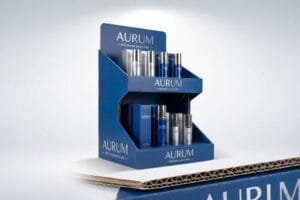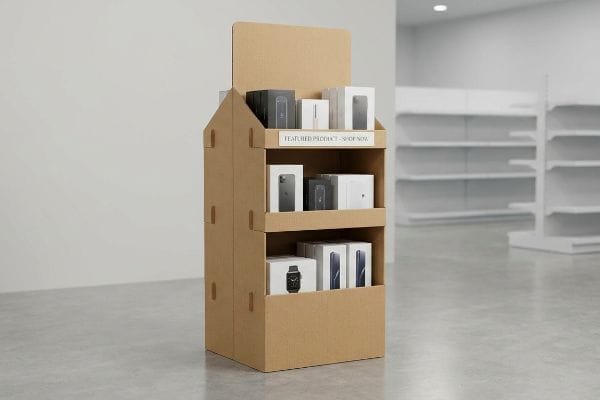
Launching a retail campaign feels amazing until your expensive floor displays get hidden in a backroom because they failed standard compliance. Let's protect your marketing budget.
The advantages of using an FSDU (Floor Standing Display Unit) include maximizing product visibility, driving impulse purchases, and bypassing crowded permanent aisles. These freestanding structures give brands complete creative control over merchandising, allowing targeted promotions that directly interrupt shopper traffic patterns to significantly boost retail sales.

To truly capture shopper attention, we must look beyond basic cardboard structures and focus on engineered visual interruption.
What are the benefits of Fsdu?
Securing floor space is tough, but ignoring how shoppers visually digest your unit guarantees your product remains invisible to passing foot traffic.
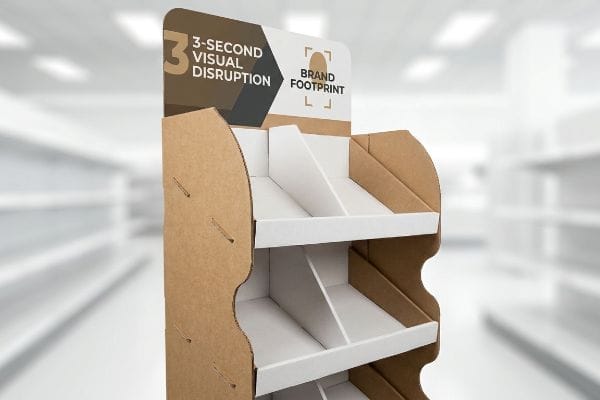
The core benefits of an FSDU center on instant visual disruption and measurable ROI (Return on Investment). By elevating fast-moving consumer goods off standard shelving, these modular units create a dedicated brand footprint, drastically reducing the friction between product discovery and the final purchase decision.
Understanding the theoretical advantages is easy, but engineering a unit that actually converts requires precise physical math.
The 3-Second Visual Disruption Rule
Many brand founders treat temporary freestanding units exactly like permanent inline shelving. They meticulously stack rows of identical boxes within straight walls, assuming shoppers will stop and patiently browse the assortment. This passive merchandising approach completely ignores the chaotic nature of high-traffic retail environments where consumers are actively rushing and filtering out background noise1.
I frequently see experienced marketing teams fall into the trap of designing flat, billboard-style side panels that blend perfectly into the store aisles. To fix this, I enforce the 3-Second Lift formula in my facility, using curvy, die-cut outer shapes that physically break the rigid store grid. When you walk past a standard rectangular box, it rarely registers, but a die-cut edge extending just 2 inches (50.8 mm) outward2 catches peripheral vision instantly. Hearing the satisfying loud snap of these oversized contoured headers locking into the corrugated base proves the structure holds tension properly. By forcing this physical interruption, you stop shoppers in their tracks, translating that structural pop into immediate brand recognition and faster inventory turnover3.
| Common Rookie Mistake | The Pro Fix | Retail-Floor Benefit |
|---|---|---|
| Flat flush side panels | Die-cut contour edges | Grabs peripheral vision |
| Standard flat shelving | 15-degree angled shelves | Increases product readability |
| Heavy text paragraphs | 3-second visual branding | Speeds up purchase choices |
I always prioritize structural disruption over dense text graphics. If a passing shopper cannot instantly identify your product category from ten feet away, your beautifully printed unit will fail to generate revenue on a busy Saturday.
🛠️ Harvey's Desk: Not sure if your header shape is bold enough to stop foot traffic? 👉 Get A Structural File Review ↗ — Direct access to my desk. Zero automated sales spam, I promise.
What is the key advantage of a straight store layout?
Navigating rigid, grid-based grocery environments requires strategic placement. If your dimensions are slightly off, your unit will never leave the retailer's loading dock.
The key advantage of a straight store layout is highly predictable customer traffic flow. This organized grid design allows brands to strategically position promotional displays at end-caps and high-visibility intersections, guaranteeing maximum exposure for impulse items as shoppers move sequentially down long, unobstructed grocery aisles.
However, maximizing that predictable traffic flow requires strict adherence to retailer spatial constraints and metal shelving limits.
Surviving the 34.5-Inch End-Cap Constraint
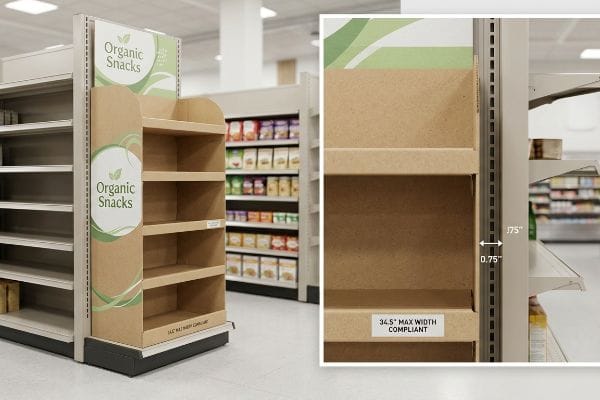
Standard grid layouts rely heavily on end-caps to drive high-margin promotional volume. Brands often design promotional shippers based on the total theoretical width4 of these gondola ends, aiming to dominate the entire visual space. They assume maximizing the physical footprint automatically maximizes their sales velocity and brand presence.
It is a common trap that catches even experienced procurement teams, assuming a standard US end-cap strictly labeled as 36 inches (914.4 mm) can actually accommodate a 36-inch wide unit. In reality, I have to constantly intercept artwork files and shave them down, because permanent internal metal bracket hardware consumes that outer space. If you ship a full-width unit, the store associate will aggressively shove the raw corrugated edges against those metal brackets, resulting in a horrible tearing sound and permanently collapsed shelves. By enforcing a strict 34.5-inch (876.3 mm) maximum width protocol on my cutting tables, I ensure your unit slides perfectly into the bay, saving massive assembly headaches and completely preventing costly retailer compliance rejections.
| Common Rookie Mistake | The Pro Fix | Retail-Floor Benefit |
|---|---|---|
| 36-inch wide layout | 34.5-inch maximum width5 | Fits gondola bays perfectly |
| Ignoring metal hardware | Internal width buffer zone | Prevents ripped paper sides |
| Assuming universal fit | Retailer spec database checks | Eliminates compliance chargebacks6 |
I refuse to let a minor measurement error derail your national rollout campaign. Precise dimensional engineering guarantees that your inventory actually reaches the retail floor instead of getting tossed straight into the backroom cardboard compactor.
🛠️ Harvey's Desk: Are your display dimensions safely within the major big-box retailer compliance zones? 👉 Download My Sizing Guide ↗ — Download safely. My inbox is open if you have questions later.
What are the benefits of in-store experience?
Online shopping offers incredible convenience, but physical retail locations provide an unmatched tactile advantage. Translating your brand identity requires specialized material finishes.
The physical benefits of in-store experience include tactile product interaction, immediate gratification, and enhanced brand trust. When shoppers physically engage with a well-engineered display, the multi-sensory connection accelerates their purchasing decision, creating a memorable retail moment that digital screens simply cannot replicate for consumer goods.
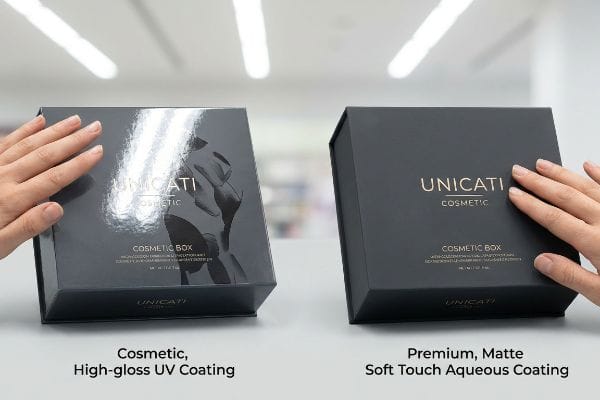
To capitalize on this physical interaction, we must move beyond standard glossy printing techniques and utilize engineered coatings.
Engineering Tactile Engagement with Soft Touch Finishes
When developing premium cosmetic or electronics units, designers often default to standard UV (Ultraviolet) gloss coatings. They assume a high-shine finish inherently communicates luxury and cleanliness on the shop floor. This standard approach completely ignores how aggressive overhead fluorescent retail lighting creates harsh glares7, completely obscuring the actual product packaging from the shopper's sightline.
Even veteran designers often overlook this blind spot until they see their beautifully printed artwork reduced to a blinding white reflection in a brightly lit pharmacy. I fix this by implementing a Soft Touch Aqueous Coating for brands demanding a premium in-store feel. Unlike standard cheap laminate films, feeling the smooth, velvet-like drag of this water-based coating immediately communicates high-end quality directly to the shopper's fingertips. By substituting reflective gloss with this highly tactile, recyclable matte finish8, I eliminate glare while ensuring the substrate maintains structural folding integrity9, ultimately helping you secure higher retail price points for your featured merchandise.
| Common Rookie Mistake | The Pro Fix | Retail-Floor Benefit |
|---|---|---|
| High-gloss UV coating | Soft Touch Aqueous finish10 | Eliminates harsh lighting glare |
| Cheap slippery texture | Velvet-like surface drag11 | Communicates premium brand value |
| Non-recyclable films | Water-based paper coating12 | Meets eco-friendly compliance |
I strongly advocate for matching your physical material finish directly to your product's perceived retail value. A highly tactile, glare-free surface invites shoppers to physically touch your unit, turning passive observation into active purchasing engagement.
🛠️ Harvey's Desk: Is harsh store lighting ruining your meticulously designed graphic artwork? 👉 Request A Material Swap ↗ — No forms that trigger endless sales calls. Just pure value.
What are the advantages of free flow store layout?
Open floor plans give shoppers the freedom to wander, but this unstructured environment exposes your promotional structures to severe physical risks from every direction.
The advantages of a free flow store layout include encouraging exploration, increasing shopper dwell time, and allowing creative merchandising. This unstructured environment gives brands the flexibility to utilize 360-degree promotional displays, naturally guiding customers toward high-margin specialty items without the strict confines of rigid aisles.
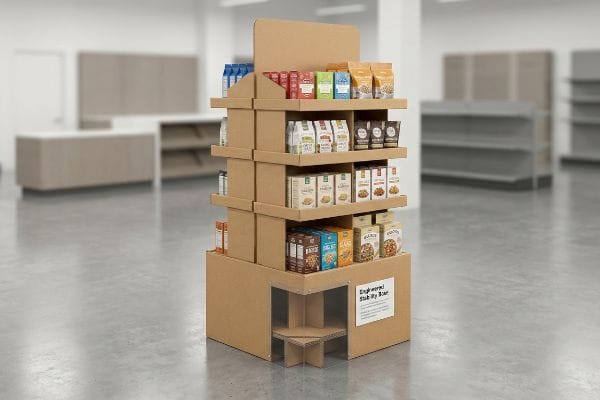
But knowing the theory isn't enough when the machines start running and these exposed units hit the chaotic retail floor.
Why Standard Base Designs Fail on the Factory Floor
In specialty boutiques, buyers often request tall, slender merchandisers designed to be viewed from all sides. They assume that as long as the base footprint fits within the allotted floor space, the unit will easily remain upright throughout the campaign. This visually appealing but entirely top-heavy approach completely ignores the chaotic physics of wandering shoppers, heavy winter coats, and accidental shopping cart collisions.
This isn't just theory—I see this happen on the testing floor when a standard vertical FSDU faces multi-directional impacts. I routinely measure the true center of gravity, and a 60-inch (1524 mm) tall unit with a basic flush base will catastrophically tip over with less than 4.2 lbs (1.9 kg) of lateral force. Hearing the hollow thud of a fully loaded prototype crashing onto the factory concrete exposes the geometric flaw instantly. I fix this by engineering a Tipping Point Extended Easel Back or a mathematically calculated False Bottom that widens the structural footprint by exactly 3.75 inches (95.25 mm). By strictly enforcing this widened base geometry, I shift the center of gravity downward, completely preventing the unit from tipping during busy store hours and saving clients from severe liability claims and damaged inventory.
| Common Rookie Mistake | The Pro Fix | Retail-Floor Benefit |
|---|---|---|
| Flush narrow profiles | Extended False Bottom13 | Stops accidental tipping hazards |
| Top-heavy merchandise | Lowered center of gravity14 | Survives heavy cart collisions |
| 180-degree flat layout | 360-degree safe access15 | Maximizes open floor traffic |
I always demand rigorous physical tilt testing for any open-floor promotional environments. Your structural footprint must mathematically counteract the absolute height of your merchandise, or you risk turning your beautiful display into a dangerous floor hazard.
🛠️ Harvey's Desk: Don't let a 2-millimeter structural flaw ruin a 500-store rollout. 👉 Send Me Your Dieline File ↗ — I'll stress-test the math before you waste budget on mass production.
Conclusion
You can easily source cheap, untested cardboard structures for your open layout campaigns, but when a top-heavy unit tips over from a minor shopping cart bump, scattering inventory and creating a massive trip hazard, the resulting retailer chargebacks will instantly wipe out your entire promotional margin. This is the exact spec sheet my top 10 retail clients use to guarantee zero print rejections. Stop guessing on dynamic friction physics and let me personally audit your structural tolerances through my Free Dieline Pre-Flight Audit ↗ to catch fatal balance errors before your project hits the factory floor.
"[PDF] Visual Attention in Consumer Settings J. Wesley Hutchinson Joy Lu …", https://faculty.wharton.upenn.edu/wp-content/uploads/2016/06/Visual_Attention_in_Consumer_Settings_IHCP_150814.pdf. [Research in environmental psychology and retail marketing explains how shoppers employ selective attention to filter out repetitive stimuli in high-stimulation environments]. Evidence role: behavioral validation; source type: academic journal or retail psychology study. Supports: the necessity of visual disruption. Scope note: Specific to high-traffic retail contexts. ↩
"POINT-OF-PURCHASE INSIGHTS: THE IMPACT OF RETAIL POP …", https://www.bcipkg.com/point-of-purchase-insights-the-impact-of-retail-pop-displays-on-consumer-behavior/. [Research on visual merchandising and human peripheral vision explains how non-linear shapes disrupt the store grid to attract shopper attention]. Evidence role: factual support; source type: academic journal or industry study. Supports: the efficacy of non-standard edges in catching attention. Scope note: Specific measurement efficacy may vary by aisle width. ↩
"Design Visual Elements and Brand-Based Equity: Mediating Role of …", https://pmc.ncbi.nlm.nih.gov/articles/PMC9096551/. [Market research on Point of Sale (POS) marketing demonstrates that high-visibility display units increase brand recall and sales velocity]. Evidence role: causal support; source type: market research report. Supports: the link between visual disruption and sales metrics. Scope note: Effects depend on product placement and category. ↩
"Gondola Shelving Layout Planning Guide: Design Solutions for …", https://rackleaders.com/how-to-plan-your-gondola-shelving-layout/. [Technical guidelines for point-of-purchase (POP) display design would confirm the industry practice of designing based on theoretical gondola width]. Evidence role: technical process validation; source type: display manufacturing guide; Supports: the design approach used by brands. Scope note: focused on display dimensions. ↩
"Gondola Shelving Dimensions Guide", https://rackleaders.com/gondola-shelving-dimensions-guide/. [Industry standard shelving specifications for retail gondolas would verify that 34.5 inches is a critical threshold for end-cap fitment]. Evidence role: Technical specification verification; source type: Industry Standard Manual. Supports: the necessity of specific width constraints for retail displays. Scope note: Dimensions may vary slightly by manufacturer or specific retailer brand. ↩
"Vendor Compliance Fees: Causes and Solutions for Retailers", https://www.linkedin.com/posts/quickbox-fulfillment_struggling-with-vendor-compliance-chargebacks-activity-7421637082487525376-VCk2. [Retailer vendor manuals and compliance guidelines typically document the financial penalties imposed on brands for providing non-compliant point-of-purchase displays]. Evidence role: Business practice validation; source type: Vendor Compliance Manual. Supports: the financial incentive for adhering to retailer spec databases. Scope note: Chargeback structures vary across different retail chains]. ↩
"Eye Disease Resulting From Increased Use of Fluorescent Lighting …", https://pmc.ncbi.nlm.nih.gov/articles/PMC3222423/. [An optical engineering study or retail design guide would demonstrate how specular reflection from high-gloss surfaces under direct overhead lighting impairs visibility]. Evidence role: technical validation; source type: industrial design research. Supports: the claim that gloss finishes can obscure product packaging. Scope note: applies specifically to high-specular finishes and direct light sources. ↩
"What Is Aqueous Coating? – Mid-Atlantic Packaging", https://midatlanticpackaging.com/blog/what-is-aqueous-coating/?srsltid=AfmBOooNvHJYQ0jmUOIIq5YJnab2Mx5cb3CBpl4bqWTGD6rYW5_bI7AC. [Industry standards for sustainable printing verify that water-based aqueous coatings are more readily recyclable than plastic-based laminates]. Evidence role: material verification; source type: technical specification. Supports: sustainability claim of the finish. Scope note: depends on the compatibility of the base substrate. ↩
"Aqueous Coating in Packaging: Process, Types, Benefits, and Uses", https://packhit.com/packaging/finishes/coating/aqueous/. [Technical data on packaging engineering demonstrates that aqueous coatings bond more flexibly to the substrate, preventing the cracking or peeling common with thick film laminates during folding]. Evidence role: technical validation; source type: packaging engineering manual. Supports: structural durability claim. Scope note: performance varies by coating thickness and substrate weight. ↩
"Aqueous Coating vs UV Coating: Understanding the Differences", https://www.colorvisionprinting.com/blog/aqueous-coating-vs-uv-coating-understanding-the-differences. [Technical documentation on printing finishes explains how matte aqueous coatings diffuse light to reduce specular reflection compared to high-gloss UV]. Evidence role: technical specification; source type: industrial printing manual. Supports: glare reduction in retail environments. Scope note: effectiveness varies by light source angle. ↩
"Salient Material Properties and Haptic Volume Perception – PubMed", https://pubmed.ncbi.nlm.nih.gov/22972632/. [Peer-reviewed research in sensory marketing demonstrates that specific tactile frictions, such as velvet textures, increase perceived product luxury and brand value]. Evidence role: psychological evidence; source type: academic journal. Supports: correlation between tactile drag and premium branding. Scope note: effects may vary across different consumer demographics. ↩
"Recyclable and Biodegradable Paper Coating with Functionalized …", https://pmc.ncbi.nlm.nih.gov/articles/PMC11948148/. [Environmental certification standards specify that water-based coatings are more compatible with standard paper recycling streams than plastic-based films]. Evidence role: compliance verification; source type: environmental regulatory body. Supports: eco-friendly compliance claims. Scope note: recyclability depends on the specific chemical composition of the coating]. ↩
"Tipover-Prevention-Project-Anchors-without-Tools.pdf", https://www.cpsc.gov/s3fs-public/pdfs/Tipover-Prevention-Project-Anchors-without-Tools.pdf. [Technical specifications for retail fixtures explain how extending the base footprint prevents tipping in narrow profile displays]. Evidence role: Technical specification; source type: Industry standard. Supports: Prevention of tipping hazards. Scope note: Specific to display base engineering. ↩
"Shopping cart with lowered center of gravity and frame therefor", https://patents.google.com/patent/US7182349B2/en. [Physics principles regarding stability demonstrate that lowering the center of mass increases resistance to tipping during external impacts like cart collisions]. Evidence role: Physical principle; source type: Engineering manual. Supports: Collision survival. Scope note: General physics applied to retail fixtures. ↩
"Retail Store Layout Optimization with Video Analytics", https://interfacesystems.com/blog/retail-store-layout/. [Retail design research shows that island-style displays with omnidirectional access optimize customer flow and traffic density compared to flat layouts]. Evidence role: Layout optimization; source type: Retail management study. Supports: Traffic maximization. Scope note: Applies to open floor plan environments. ↩