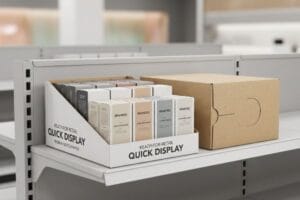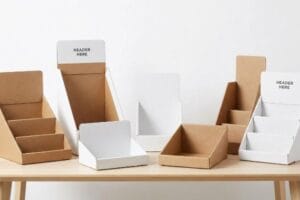
Les lancements de printemps sont cruciaux pour les marques de produits de grande consommation. Si vos produits saisonniers se fondent dans la masse des rayons, vous perdez les achats impulsifs. Créons quelque chose qui attire vraiment l'attention et incite à l'achat.
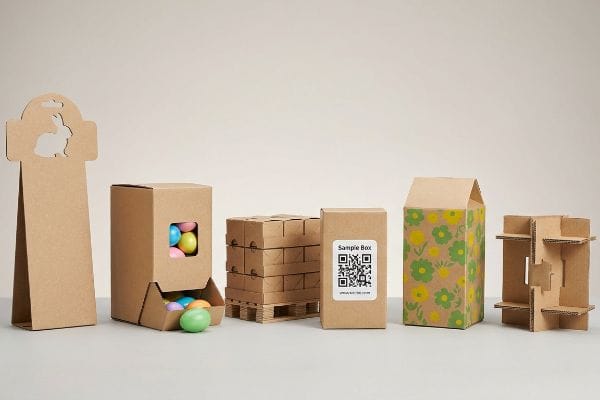
Six idées de présentoirs pour Pâques tirent parti de cartes d'en-tête découpées, de distributeurs à gravité, de palettes modulaires fractionnées, de l'intégration de codes QR, d'effets graphiques en aplat de couleur et de présentoirs en papier monomatériau. Ces choix structurels optimisent la visibilité, garantissent une mise en conformité rapide et augmentent considérablement l'engagement des clients.
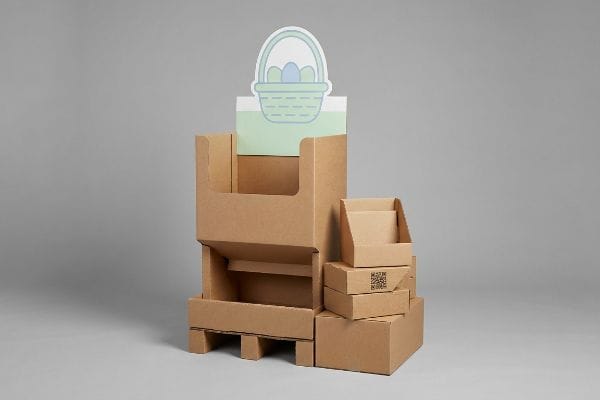
La théorie, c'est bien beau pour les présentations commerciales, mais survivre à la dure réalité d'un grand magasin exige une ingénierie rigoureuse.
Quelles sont des idées originales pour décorer Pâques?
Pour se démarquer pendant une période de fêtes chargée, il faut plus que de coller des images de lapins sur une boîte en carton rectangulaire standard.
Des idées originales de décoration de Pâques pour les points de vente mettent en avant des éléments structuraux 3D découpés à l'emporte-pièce, créant ainsi un effet psychologique unique et ciblé. Plutôt que d'encombrer les présentoirs de textes, les concepteurs utilisent des points d'ancrage visuels surdimensionnés et à fort contraste pour perturber le comportement automatique du client et susciter une interaction physique immédiate dans l'espace de trois secondes limité entre les rayons.

Ajouter une grande forme découpée semble simple, mais l'équilibre structurel change rapidement une fois qu'elle sort de l'écran.
Déploiement d'éléments découpés en 3D sans surcharge cognitive
Même les designers les plus expérimentés partent souvent du principe qu'ils doivent condenser toutes les valeurs de la marque, la liste des ingrédients et les détails promotionnels sur leurs présentoirs saisonniers. Ils estiment que s'ils paient pour une lithographie personnalisée, ils doivent utiliser chaque centimètre carré du panneau pour leurs textes promotionnels.
Il s'agit du piège classique de la surcharge cognitive¹ . Dans un magasin bondé, les clients se déplacent rapidement ; ils n'ont pas le temps de lire un long texte sur votre produit. Encombrer constamment le présentoir de textes promotionnels excessifs transforme un outil de présentation efficace en une brochure confuse. Au lieu de surcharger l'espace, simplifiez stratégiquement le design en une seule forme 3D découpée, imposante et distinctive – comme la silhouette d'un grand panier – qui met en valeur l'objectif d'achat principal. Ce point d'ancrage visuel unique attire l'attention et réduit les distractions visuelles pour le consommateur² .
| Erreurs courantes des débutants | La solution pro | Avantage du magasin |
|---|---|---|
| Imprimer de longs paragraphes de texte dans les en-têtes | Isoler un objectif principal avec une forme découpée en 3D | Capte l'attention en moins de 3 secondes3 |
| Utilisation de panneaux structurels plats et rectangulaires | éléments escamotables incurvés et surdimensionnés conçus par des ingénieurs | Perturbe le pilotage automatique visuel dans les allées fréquentées4 |
| S'appuyant sur des graphismes complexes à plusieurs couches | Déployer un point focal structurel unique et audacieux | Réduit les frottements lors du montage pour les vendeurs |
Il est essentiel de réduire impitoyablement les cahiers des charges des clients à un seul point focal, car un message complexe ne fonctionne pas. Une silhouette nette capte l'attention plus rapidement qu'un paragraphe, stimulant instantanément les achats impulsifs.
🛠️ Le bureau d'Harvey : Vos visuels saisonniers vous sèment la confusion ? 👉 Demandez une analyse structurelle ↗ — Accès direct à mon bureau. Zéro spam commercial automatisé, promis.
Comment présenter les articles dans un magasin de détail ?
Placer un produit saisonnier sur une étagère ordinaire ne suffit pas. Il faut concevoir l'interaction physique en se basant sur une ergonomie humaine précise et des mesures de champ de vision pour déclencher une vente.
Pour une présentation efficace des articles en magasin, il est essentiel de maîtriser l'espace. Les responsables merchandising doivent capter l'attention du client à une distance de neuf mètres, maintenir son intérêt visuel à un mètre et favoriser l'achat final à une distance précise de sept centimètres grâce à des systèmes d'étagères ergonomiques.
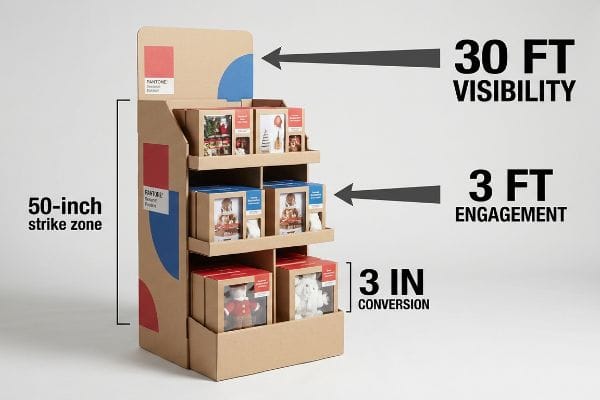
Comprendre ces dynamiques spatiales change complètement la façon dont vous calculez votre base structurelle et vos lèvres de retenue.
Maîtriser la règle 3-3-3 pour les marchands saisonniers
La plupart des équipes marketing évaluent les présentoirs en magasin uniquement en se basant sur des fichiers PDF affichés sur des écrans d'ordinateur rétroéclairés. Elles approuvent des visuels parfaitement lisibles de près, mais totalement illisibles vus de loin, dans un entrepôt immense et lumineux.
Combien de fois avez-vous ignoré un présentoir de tête de gondole , le trouvant banal de loin ? Il est essentiel de concevoir stratégiquement ce présentoir pour attirer le trafic depuis des zones cibles précises. Placer des caractères minuscules près de la base du présentoir est contre-productif : aucun client ne se baissera pour lire ces messages publicitaires. Pour corriger ce déséquilibre visuel, il faut utiliser des aplats de couleurs Pantone vifs pour une visibilité optimale à 9 mètres , positionner le produit principal précisément à la hauteur d'un humain (environ 127 cm ) pour une attention portée à 90 cm, et découper le rebord avant en carton pour une visibilité maximale.
| Erreurs courantes des débutants | La solution pro | Avantage du magasin |
|---|---|---|
| Conception graphique réservée à une visualisation de près | Ancrez des couleurs vives pour une visibilité à 9 mètres7 | Réduit le trafic piétonnier des allées principales |
| Placer les produits clés trop bas sur la base | Optimisez la zone de frappe de 50 pouces (127 cm)8 | Conforme à l'ergonomie humaine naturelle |
| Utilisation de lèvres à haute rétention qui dissimulent les objets | Découper les bords avant pour assurer une visibilité de 85 %9 | Augmente les conversions tactiles sans friction |
Tester la visibilité des produits à une distance de 9 mètres (30 pieds) permet d'éviter les problèmes majeurs de visibilité en point de vente. Si le message visuel principal n'est pas immédiatement perceptible, l'ensemble de l'agencement doit être repensé sans délai.
🛠️ Harvey's Desk : Vos produits phares sont-ils masqués par des rebords qui obstruent leur visibilité ? 👉 Faites vérifier vos découpes ↗ — Téléchargez en toute sécurité. Je reste à votre disposition pour toute question.
Quelle sera la tendance en matière de décoration de Pâques en 2026 ?
Le développement durable n'est plus une tactique marketing marginale ; les grandes enseignes de distribution imposent explicitement l'utilisation de matériaux écologiques pour atteindre leurs objectifs climatiques pour les saisons à venir.
Les tendances en matière de décoration de Pâques pour 2026 privilégient l'utilisation d'un seul matériau. Les marques abandonnent totalement les plastiques mélangés et les éléments métalliques, leur préférant des cadenas en papier origami et des cartons ondulés 100 % recyclables en collecte sélective. Cette stratégie leur permet de contourner les audits environnementaux rigoureux des grandes surfaces et de réduire le gaspillage de matériaux.
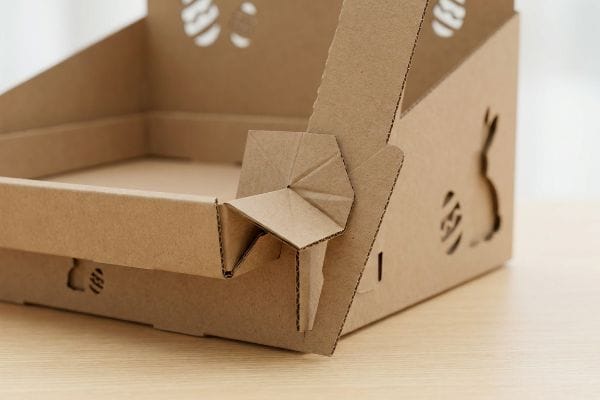
Opter pour des matériaux écologiques semble noble, mais cela pose de sérieux problèmes structurels si l'on utilise encore des systèmes d'assemblage traditionnels.
Le passage aux serrures en papier origami et aux systèmes monomatériaux
Les marques partent souvent du principe qu'apposer un logo de recyclage vert sur un emballage le rend automatiquement écologique. Elles continuent d'utiliser des attaches en plastique bon marché et des crochets en S en métal pour maintenir ensemble de lourds plateaux de présentation, ignorant complètement les réalités du recyclage en aval, au niveau municipal.
L'utilisation de matériaux mixtes complique considérablement le processus de recyclage¹¹et entraîne souvent un rejet automatique dans les centres de tri. Mélanger des attaches en plastique bon marché avec du carton vierge ignore totalement les réalités environnementales en aval et pénalise les grandes enseignes qui s'efforcent d'atteindre des objectifs de développement durable unifiés. Au lieu d'utiliser des fixations en plastique externes pour maintenir les plateaux de marchandises lourds, les stratégies de vente modernes intègrent des languettes en papier emboîtables, de type origami¹²,directement dans la structure. Ce changement élimine complètement les attaches externes, rendant le produit entièrement recyclable en collecte sélective et accélérant considérablement le temps d'assemblage pour les employés en magasin lors des lancements saisonniers à fort volume.
| Erreurs courantes des débutants | La solution pro | Avantage du magasin |
|---|---|---|
| Utilisation de clips de pression en plastique pour le support d'étagère | Languettes de verrouillage en papier de style origami pour ingénieurs13 | Accélère la chaîne de montage de conditionnement à façon |
| Mélanger des éléments métalliques avec du carton | Adopter une conception structurelle monomatériau stricte14 | Garantit des audits de conformité des détaillants sans faille |
| Recourir à des joints structuraux non recyclables | Utiliser des joints de friction ondulés à emboîtement15 | Élimine les frais d'élimination des déchets en aval |
Supprimer les éléments en plastique des présentoirs représente le véritable avenir du merchandising durable. Une conception véritablement écologique supporte en toute sécurité des charges importantes grâce à la seule physique structurelle des attaches en papier plié.
🛠️ Le bureau de Harvey : Vous payez encore pour des clips en plastique qui risquent d’entraîner un refus de conformité de la part des détaillants ? 👉 Demandez votre audit structurel ↗ — Pas de formulaires qui déclenchent des appels commerciaux incessants. Uniquement de la valeur.
Quelles sont les tendances en matière de décoration de Pâques ?
Les couleurs pastel éclatantes caractérisent le printemps, mais reproduire ces teintes vives spécifiques sur des matériaux industriels poreux exige un calibrage prépresse précis.
Les tendances en matière de décoration de Pâques mettent en avant des graphismes pastel unis et éclatants, sans fusion optique de points. Pour obtenir cette esthétique printanière à fort contraste, les ingénieurs en emballage utilisent des aplats d'encre de couleur directe précis sur des surfaces ondulées, éliminant ainsi l'aspect terne et délavé souvent obtenu avec l'impression quadrichromique standard sur testliner poreux.
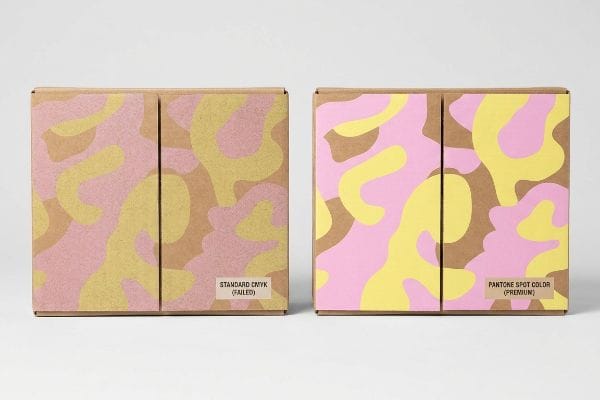
Mais connaître la théorie ne suffit pas lorsque les machines se mettent en marche et que votre délicat rose pastel se transforme en un brun sale.
Pourquoi l'impression en processus standard échoue-t-elle en usine ?
Les équipes marketing convertissent fréquemment les logos d'entreprise et les couleurs saisonnières vives en formats CMJN16 (Cyan, Magenta, Jaune, Noir), en supposant que l'impression en quadrichromie correspondra parfaitement à l'illustration numérique impeccable qu'elles ont approuvée sur leurs tablettes.
Dans mon atelier, je vois régulièrement des campagnes printanières se transformer en véritables catastrophes dès leur passage sur la presse. L'impression quadrichromique standard repose sur de minuscules points de trame superposés ; lorsque j'inspecte une feuille rejetée, l'odeur chimique prononcée de l'encre fraîche révèle précisément comment ces points sont absorbés de manière inégale par les fibres de papier non fixées<sup>17</sup>, transformant un jaune vif de Pâques en une masse granuleuse sous l'éclairage cru des magasins. Je corrige ce défaut de fabrication fatal en imposant un protocole strict d'encrage des couleurs d'accompagnement<sup>18</sup>, utilisant un mélange d'encres Pantone précis qui crée une couche de pigment solide et dense sur le support brut. En évitant complètement le mélange optique des points, je garantis une netteté impeccable de l'identité visuelle de la marque, évitant ainsi les rejets coûteux des tirages en masse et assurant une qualité structurelle supérieure.
| Erreurs courantes des débutants | La solution pro | Avantage du magasin |
|---|---|---|
| S'appuyer sur le CMJN pour des couleurs saisonnières unies | Obligation de remplir les zones de couleur Pantone | Élimine l'effet visuel granuleux et flou des demi-teintes |
| Approuver des fichiers numériques sans contexte matériel | Effectuez des tirages physiques sur le plateau réel | Évite les rejets coûteux en production de masse |
| Négliger l'absorption d'encre sur le testeur poreux | Utiliser des couches de pigments solides à haute densité | Optimise la visibilité de la marque à contraste élevé |
Se fier aux épreuves numériques est une erreur fatale lors de l'impression sur des matériaux ondulés. À moins que la densité des pigments ne soit vérifiée mathématiquement sur le support physique, les campagnes haut de gamme paraîtront incroyablement bon marché sous l'éclairage fluorescent agressif des points de vente.
🛠️ Le bureau d'Harvey : Savez-vous si votre graphiste a utilisé le CMJN standard pour vos couleurs pastel au lieu des tons directs ? 👉 Envoyez-moi votre fichier de découpe ↗ — Je vérifierai les calculs avant que vous n'investissiez votre budget dans une production en série.
Conclusion
Vous pouvez choisir un fournisseur uniquement en fonction de ses prix unitaires bas, mais si cette impression de mauvaise qualité, avec ses points optiques imprécis, est refusée par le détaillant et retarde votre lancement de Pâques d'environ 30 %, votre marge bénéficiaire saisonnière sera complètement anéantie. Voici la fiche technique exacte que mes 10 principaux clients du secteur de la vente au détail utilisent pour garantir zéro rejet d'impression. Ne vous fiez plus aux tolérances de prépresse : laissez-moi analyser personnellement vos fichiers grâce à mon Audit de découpe gratuit ↗ afin de détecter les erreurs critiques de couleur et de structure avant le lancement de la production en série.
« Préférences des consommateurs pour les paniers alimentaires sous charge cognitive – PMC », https://pmc.ncbi.nlm.nih.gov/articles/PMC8997493/. [Une étude évaluée par des pairs en psychologie cognitive démontre qu'une stimulation excessive dans un environnement de vente au détail peut dépasser la capacité de traitement du consommateur, entraînant une paralysie décisionnelle]. Rôle des preuves : fondement théorique ; type de source : revue scientifique. Appuie : l'affirmation selon laquelle des présentoirs encombrés nuisent à l'intérêt pour les produits. Note de portée : s'applique aux environnements de vente au détail à forte stimulation .
« Rapport 2025 sur le merchandising visuel : Les principaux défis pour le commerce de milieu de gamme… », https://onedoor.com/resource/mid-market-retailer-challenges/. [Les normes du secteur du merchandising visuel indiquent que des points focaux uniques et à fort contraste diminuent l’effort mental nécessaire pour traiter un présentoir, augmentant ainsi le taux d’arrêt des clients]. Rôle de la preuve : preuve à l’appui ; type de source : guide de conception pour le commerce de détail. Appui : l’efficacité des ancres visuelles uniques. Note sur la portée : spécifique aux présentoirs sur le lieu de vente .
« Évaluation de l’attention et de l’excitation du consommateur par oculométrie… », https://pmc.ncbi.nlm.nih.gov/articles/PMC8380820/ . [Une étude de référence sur la psychologie du consommateur en magasin et l’oculométrie confirme le délai précis nécessaire à un élément visuel pour capter l’attention d’un client] . Rôle de la preuve : indicateur ; type de source : étude sectorielle. Appui : l’intérêt d’utiliser une forme découpée en 3D pour atteindre les objectifs principaux. Remarque : les fenêtres d’attention peuvent varier selon l’agencement du magasin.
« Rupture de motifs : pourquoi briser les schémas répétitifs capte l’attention », https://www.clearsalesmessage.com/pattern-interrupts/ . [La psychologie cognitive et la recherche en design visuel expliquent comment les formes géométriques non standard rompent les schémas visuels répétitifs auxquels les consommateurs sont confrontés, interrompant ainsi la navigation « automatique » ]. Rôle de la preuve : principe technique ; type de source : manuel de conception ou article universitaire. Appuie : l’utilisation d’éléments saillants courbes et surdimensionnés. Note sur la portée : s’applique spécifiquement aux environnements à forte stimulation.
« Présenté avec fierté : la psychologie du merchandising visuel – Moo », https://www.moo.com/blog/business-tips/visual-merchandising-psychology. [Les normes du secteur du marketing visuel confirment que les couleurs d'accompagnement à saturation élevée augmentent le contraste et la saillance visuelle, permettant ainsi de capter l'attention de loin dans les points de vente]. Rôle de la preuve : justification technique ; type de source : étude de marketing visuel. Appuie : la stratégie de rupture à 9 mètres. Note de portée : l'efficacité varie selon l'éclairage ambiant .
« Chapitre 2 : Choisir la hauteur d’affichage adaptée à vos clients », https://www.creativedisplaysnow.com/guides/understanding-the-retail-customer/chapter-2-how-to-choose-the-right-display-height-for-your-customers/ . [Des données ergonomiques sur le niveau des yeux et la portée humaine indiquent qu’une hauteur de 127 cm (50 pouces) représente une zone optimale pour que les consommateurs adultes puissent interagir avec les produits sans se baisser]. Preuve : spécification technique ; source : manuel d’ergonomie pour le commerce de détail. Appui : positionnement optimal du produit pour une interaction à 90 cm (3 pieds). Remarque : peut varier selon la taille du public cible.
« Comment choisir les bonnes couleurs pour une visibilité optimale de la signalétique », https://www.bartush.com/marketing/sign-colors/ . [Une norme sectorielle en merchandising visuel vérifierait la distance efficace à laquelle les couleurs contrastées attirent l’attention du client]. Type de preuve : spécification technique ; source : guide de conception pour points de vente. Données : indicateurs de visibilité de la signalétique. Remarque : la visibilité peut varier en fonction de l’éclairage du magasin et de la largeur des allées.
« [PDF] Directives pour les magasins d'alimentation au détail – Ergonomie pour… – OSHA », https://www.osha.gov/sites/default/files/publications/OSHA3192.pdf . [Des recherches ergonomiques sur le champ de vision et la portée humaine identifient la zone verticale optimale pour un placement de produits à fort taux de conversion ] . Type de preuve : donnée factuelle ; type de source : étude ergonomique. Sujets abordés : ergonomie du placement de produits. Note de portée : Basé sur la distribution moyenne des tailles adultes.
« Quelle est la hauteur moyenne des étagères de vente au détail ? – PopDisplay », https://popdisplay.me/what-is-the-average-retail-shelf-height/ . [Les normes d'ingénierie du commerce de détail quantifient l'impact de la hauteur du rebord de l'étagère sur le pourcentage d'emballage visible pour le consommateur]. Type de preuve : spécification technique ; source : manuel de conception pour le commerce de détail. Objectif : optimisation des conversions grâce à la visibilité. Remarque : varie selon les dimensions de l'emballage du produit.
« Pourquoi l’emballage papier est la solution idéale pour les fixations… », https://khangthanh.com/en/Other-news/Why-paper-packaging-is-the-ideal-solution-for-fastener-products-2947.html. [Les normes d’emballage du secteur ou les audits de la chaîne d’approvisionnement confirmeraient la prévalence des fixations composées de matériaux mixtes dans les présentoirs de vente au détail]. Rôle de la preuve : vérification factuelle ; type de source : rapport sectoriel. Appuie : la dépendance actuelle aux composants non recyclables. Note sur la portée : se concentre sur les pratiques courantes du secteur .
« Défis liés à la réduction des déchets plastiques post-consommation issus des ordures ménagères… », https://pmc.ncbi.nlm.nih.gov/articles/PMC8931185/. [Une source faisant autorité en matière de gestion des déchets explique comment les composites multi-matériaux entravent le tri automatisé et augmentent les taux de contamination]. Rôle de la preuve : argument factuel ; type de source : rapport industriel. Arguments : nécessité technique des monomatériaux. Note de portée : étude axée sur les installations de recyclage en porte-à-porte .
« Emballages origami durables : une solution créative pour… », https://base.binus.ac.id/product-design-engineering/2025/08/22/sustainable-origami-packaging-a-creative-solution-to-reduce-bubble-wrap-waste-through-student-innovation/. [Des guides de conception technique ou des livres blancs sur le développement durable démontrent comment le pliage structurel remplace les attaches en plastique dans les présentoirs de vente au détail]. Rôle de la preuve : spécification technique ; type de source : manuel de conception/livre blanc. Soutient : la transition vers des systèmes monomatériaux. Note de portée : spécifiquement concernant les présentoirs saisonniers de vente au détail. ↩
« Emballage et déploiement d'origami souple dans des volumes cylindriques… », https://pmc.ncbi.nlm.nih.gov/articles/PMC5043326/. [Les rapports industriels sur l'ingénierie des emballages durables quantifieraient la réduction du temps d'assemblage grâce au remplacement des clips en plastique par des mécanismes de verrouillage en papier]. Rôle de la preuve : validation technique ; type de source : livre blanc industriel. Apports : efficacité de l'assemblage en co-emballage. Note de portée : spécifiquement pour les emballages de présentation en point de vente .
« Quoi de neuf en matière de politique d’emballage ? Tour d’horizon des politiques d’emballage », https://sustainablepackaging.org/2026/05/21/packaging-policy-news/. [Les exigences de développement durable des grandes enseignes de distribution préciseraient comment les emballages monomatériaux simplifient le processus d’audit relatif aux objectifs climatiques]. Rôle de la preuve : preuve réglementaire ; type de source : document de politique d’entreprise. Apport : audits de conformité simplifiés pour les distributeurs. Note relative au champ d’application : s’applique aux objectifs climatiques des entreprises .
« [PDF] Guide de l'EPA pour la gestion des déchets industriels : Introduction », https://www.epa.gov/sites/default/files/2016-03/documents/industrial-waste-guide.pdf. [Des études de cas sur la gestion des déchets permettraient de fournir des données sur les économies réalisées grâce à l'élimination des joints structurels non recyclables dans le carton ondulé]. Rôle des preuves : validation économique ; type de source : étude environnementale. Appui : suppression des redevances sur les déchets en aval. Note sur la portée : porte sur l'élimination des déchets industriels .
« CMJN vs RVB : Quel espace colorimétrique choisir ? – Intranet | MCAD », https://intranet.mcad.edu/kb/cmyk-vs-rgb-what-color-space-should-i-work. [Les normes de gestion des couleurs faisant autorité détaillent l’inadéquation du gamut entre les écrans numériques RVB additifs et l’impression CMJN soustractive, confirmant que de nombreuses couleurs vives ne peuvent être reproduites fidèlement par impression quadrichromique]. Rôle de la preuve : explication technique ; type de source : norme industrielle. Sujet : Explication technique des raisons pour lesquelles l’impression quadrichromique ne parvient pas à reproduire fidèlement les illustrations numériques. Note de portée : Principes généraux de la colorimétrie concernant les modèles de couleurs soustractifs .
« [PDF] 1. Le gain de point correspond à l’augmentation de la taille des points de trame lorsque l’encre est absorbée par… », https://www.coloradomesa.edu/art/documents/student-resources/study-guide-2019.pdf . [La documentation technique sur les encres d’imprimerie explique comment les supports poreux provoquent des bavures d’encre et une absorption inégale des points de trame, entraînant un gain de point et une perte de netteté de l’image.] Rôle de la preuve : Validation technique ; type de source : Manuel d’ingénierie de l’imprimerie. Justification : Cause des impressions ternes sur papier non traité. Remarque sur la portée : Limité aux supports non scellés.
« Différence entre les couleurs d'accompagnement et les couleurs CMJN », https://www.deprintedbox.com/blog/spot-vs-process-color/ . [Les normes industrielles pour l'emballage précisent que l'utilisation des couleurs d'accompagnement garantit une couverture pigmentaire uniforme, éliminant ainsi la granularité associée au mélange optique des points en impression CMJN. ] Type de preuve : Comparaison technique ; type de source : Manuel d'arts graphiques. Solution : Obtenir des couleurs vives et unies sur des matériaux ondulés. Précision : Concerne spécifiquement les couleurs de marque à contraste élevé.