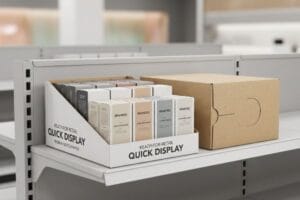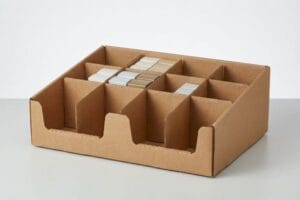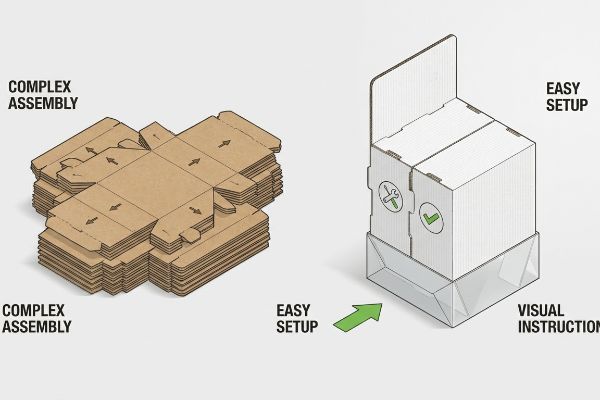
¿Tienes problemas con los complicados expositores de cartón que confunden a tu personal de tienda? No estás solo; un expositor mal diseñado puede arruinar un lanzamiento a nivel nacional antes incluso de que se venda un solo producto.
Depende. Los expositores solo son fáciles de montar y mantener si están diseñados con tolerancias que evitan la fricción. Los diseños complejos tipo origami causan grandes problemas en el sector minorista. Las estructuras de alta calidad utilizan instrucciones visuales y bases modulares preencoladas para garantizar un despliegue rápido y sin complicaciones, sin depender de cintas adhesivas frágiles ni clips de plástico que puedan resultar frustrantes.
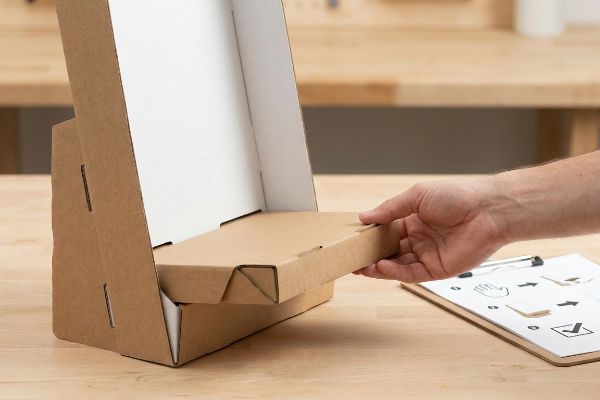
Una cosa es conocer la teoría de una configuración rápida, pero traducirla a la realidad de la fabricación física requiere eliminar los hábitos de diseño defectuosos.
¿Cuál es la finalidad de un expositor?
Comprender con precisión lo que debe lograr un merchandiser determina su estructura. No se trata simplemente de una caja de almacenamiento estándar; es una herramienta de diseño estratégico para la disrupción física.
El objetivo de un expositor es captar la atención del cliente de forma contundente e impulsar las compras impulsivas. Estos expositores independientes elevan físicamente la mercancía fuera de los pasillos habituales, creando una zona visual exclusiva de alto contraste que interrumpe el flujo de clientes y acelera significativamente las ventas durante las campañas promocionales.
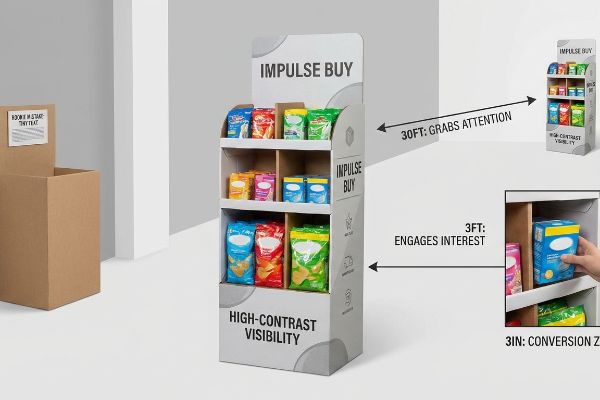
Sin embargo, colocar una caja con la marca en un pasillo no garantiza automáticamente la interacción del consumidor.
Regla de compromiso espacial 3-3-3 para el propósito de un estante de exhibición
Incluso los equipos de marketing más experimentados suelen diseñar estos expositores pensando exclusivamente en la visualización de cerca en sus monitores retroiluminados, ignorando la dura realidad física de cómo los compradores se mueven realmente por los pasillos abarrotados de las tiendas. Llenan los encabezados con texto diminuto y degradados sutiles. Esto provoca que la unidad se mimetice visualmente con el fondo, sin lograr atraer el flujo de clientes desde ladistancia¹.
Veo este error constantemente: un hermoso diseño de empaque plano que se vuelve invisible en una gran superficie comercial. Para solucionarlo, diseño cada unidad utilizando el continuo espacial 3-3-3².El expositor debe captar la atención desde 914 cm (30 pies) de distancia mediante formas troqueladas llamativas, despertar el interés del comprador a 91 cm (3 pies) y lograr la conversión final a 7,6 cm (3 pulgadas). Recuerdo haber visto a un dependiente forcejear para deslizar botellas pesadas en una bandeja estrecha y mal espaciada, y oír cómo se rompía el borde corrugado porque la zona de conversión táctil era demasiado reducida. Al optimizar ese borde de retención frontal para lograr una visibilidad del producto del 85 %³ y un fácil acceso manual, evitamos daños por reposición y garantizamos que el propósito del expositor se traduzca en un aumento real de las ventas minoristas, no solo en un diseño atractivo.
| Error común de principiante | La solución profesional | Beneficio para el punto de venta |
|---|---|---|
| Texto de encabezado pequeño | Colores directos de alto contraste | Llama la atención desde 9 metros de distancia4 |
| Estantes profundos y oscuros | Labio de retención caído | Aumenta la visibilidad del producto en un 85%5 |
| Diseños de cuadrícula simétricos | Agrupaciones de productos asimétricas 3-5-76 | Reduce las roturas de papel al reponerlo |
Jamás permito que mis clientes impriman extensos ensayos de marketing en sus encabezados. Me centro en el principal factor psicológico que puede generar impacto y lo convierto en algo impactante, garantizando así una distracción visual incluso antes de que el comprador empuje su carrito por el pasillo.
🛠️ Oficina de Harvey: ¿Sus clientes pasan de largo sus expositores de punto de venta (POP) sin detenerse? 👉 Obtenga una auditoría gratuita de visibilidad espacial ↗ — Acceso directo a mi oficina. Le prometo que no recibirá spam de ventas automatizado.
¿Cuál es la altura adecuada para un estante de exhibición?
Encontrar el punto óptimo para la presencia vertical de tu estructura es clave para el éxito en el lineal. Si está demasiado alta, el minorista la rechazará; si está demasiado baja, los clientes simplemente pasarán de largo.
La altura ideal para un expositor suele estar entre 127 y 137 cm (50 a 54 pulgadas) para una ergonomía óptima. Esta altura vertical específica garantiza que la mercancía más rentable quede a la vista del cliente, maximizando la visibilidad y fomentando las compras impulsivas sin infringir las estrictas normas de espacio libre en los pasillos.
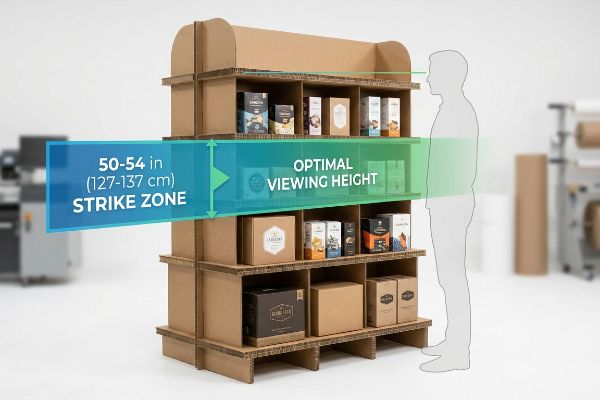
Especificar esta dimensión en su software CAD (Diseño Asistido por Computadora) es fácil, pero trasladarla al lugar físico de la tienda es donde comienzan las dificultades.
Cómo lograr la altura ideal para un expositor gracias a su diseño ergonómico
Muchos fundadores de marcas simplemente observan los expositores de sus competidores y adivinan las dimensiones generales, asumiendo que cualquier tamaño estándar funcionará. A menudo colocan sus artículos de mayor margen en el nivel inferior simplemente porque las botellas pesadas caben mejor allí, perdiendo por completo el plano visual óptimo7.
Los compradores siempre me preguntan: "¿No podríamos simplemente hacer la unidad más alta para que quepan más productos?" Tengo que recordarles el mapa de calor humano. Si obligas a un comprador a agacharse hasta el suelo o estirarse por encima de los hombros, pierdes la venta impulsiva. Cuando pruebo prototipos en mi planta de producción, cargo físicamente los estantes de cartón corrugado 32ECT (Edge Crush Test)8.Literalmente se puede oír cómo crujen las ondulaciones internas del papel si sobrecargas una unidad pesada en la parte superior. En cambio, fijamos los SKU principales, los de mayor margen, justo en esa marca de 50 pulgadas (127 cm)9.Mantener una buena altura para un estante de exhibición enfocado en la ergonomía humana natural previene la fatiga del estante, reduce el inventario muerto en la base y mejora drásticamente los márgenes de venta sin depender de materias primas adicionales.
| Error común de principiante | La solución profesional | Beneficio para el punto de venta |
|---|---|---|
| Poner los productos héroes a bajo precio | Dirigido a la zona de 54 pulgadas (137 cm)10 | Potencia la interacción natural por impulso |
| Ignorar las normas de altura de la tienda | Consultar las guías de estilo específicas de cada minorista | Evita los rechazos del gerente de la tienda |
| Sobrecargar los estantes superiores | Colocar los artículos pesados en la base11 | Mantiene estable toda la unidad |
Constantemente veo cómo unidades magníficas quedan eclipsadas por ignorar la biología básica de cómo los humanos exploran un espacio. Siempre coloco el mensaje principal justo a la altura de los ojos para garantizar una presencia espacial inmediata.
🛠️ Oficina de Harvey: ¿No estás seguro de si tus SKU más rentables se encuentran en la zona muerta de tu unidad actual? 👉 Solicita un mapa de calor ↗ — Descárgalo de forma segura. Mi bandeja de entrada está abierta si tienes alguna pregunta más adelante.
¿Cuáles son los diferentes tipos de estanterías de exhibición?
Navegar por los diversos espacios físicos que requiere el merchandising moderno puede resultar abrumador. Desde enormes palés hasta diminutos mostradores de caja, cada formato cumple una función operativa específica.
Los distintos tipos de expositores incluyen unidades de suelo independientes, expositores de palés, expositores de mostrador, expositores laterales y bandejas listas para colocar en estanterías. Cada categoría está diseñada específicamente para adaptarse a distintas zonas de venta, desde pasillos promocionales de alto tránsito hasta el espacio más restringido y propicio para las compras impulsivas que rodea la caja registradora.
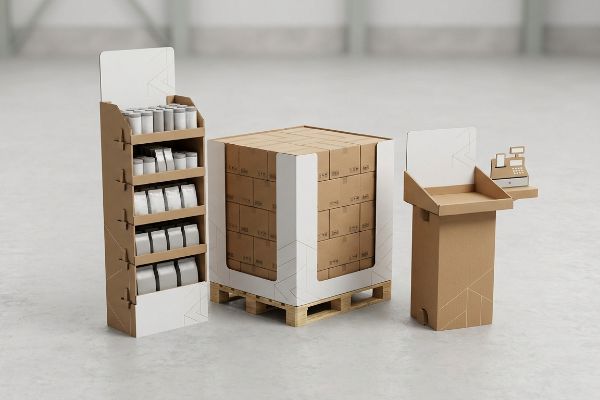
Un error común se produce cuando las marcas intentan forzar que un formato estructural cumpla la función de otro.
Estructuración de los diferentes tipos de estanterías de exhibición sin contaminación cruzada
Las empresas comerciales suelen presentar diseños escalables en los que un gran expositor de suelo puede reducirse a la mitad para funcionar como mostrador de caja. Ignoran las estrictas normas legales y logísticasque rigen la existencia de estas dos zonas físicas completamente separadas en el comercio minorista norteamericano.
Imagínelo como intentar usar una camioneta de trabajo pesado como carrito de golf; el hecho de que tenga cuatro ruedas no significa que quepa en el green. Una regla práctica: nunca mezcle las matemáticas del almacén con las de la caja. He visto a empleados empujando agresivamente un expositor de piso sobre un mostrador abarrotado, raspando el acabado laminado porque violaba los límites de alcance frontal de la ADA (Ley para Estadounidenses con Discapacidades)13.Para solucionar esto, separo permanentemente los flujos de ingeniería. Las unidades de piso están estrictamente ancladas al límite de paleta estándar de la GMA (Asociación de Fabricantes de Alimentos)14 para soportar cargas dinámicas, mientras que las unidades de mostrador POS (Punto de Venta) se rigen exclusivamente por el alcance ergonómico. Tratar los diferentes tipos de estantes de exhibición como desafíos de ingeniería aislados elimina por completo los costosos cargos de devolución de gerentes de tienda estrictos.
| Error común de principiante | La solución profesional | Beneficio para el punto de venta |
|---|---|---|
| Unidades de piso cada vez más pequeñas | mostradores de ingeniería a medida | Previene infracciones de la Ley ADA15 |
| Ignorando el voladizo del palé | Cajas delimitadoras de palés GMA estrictas16 | Evita daños por aplastamiento durante el transporte |
| Presentación de talla única | Aislamiento de las canalizaciones POP y POS | Elimina la resistencia del gerente de la tienda |
Me niego a aprobar diseños de prendas que se adaptan al espacio disponible. Respetar los límites bien definidos entre un pesado palé de almacén y un delicado mostrador de caja es precisamente la forma de proteger el valor de su marca en el mercado minorista.
🛠️ Harvey's Desk: ¿Están sus mostradores de tamaño reducido infringiendo secretamente las principales leyes de cumplimiento para grandes superficies? 👉 Obtenga su lista de verificación de cumplimiento ↗ — Sin formularios que generen interminables llamadas de ventas. Solo valor puro.
¿Cuál es la altura óptima para un expositor en una tienda?
Determinar la dimensión vertical máxima requiere equilibrar un gran impacto visual con las leyes de la física cinética. Llevar al límite la gravedad supone un riesgo enorme para la estructura física.
La altura ideal para un expositor de venta al por menor depende estrictamente de su ancho de base y centro de gravedad, aunque las unidades de suelo estándar suelen alcanzar una altura máxima de entre 127 y 152 cm (50 a 60 pulgadas). Mantener una relación óptima entre altura y profundidad evita que el producto se desequilibre peligrosamente, a la vez que garantiza la máxima visibilidad en los pasillos concurridos de la tienda.
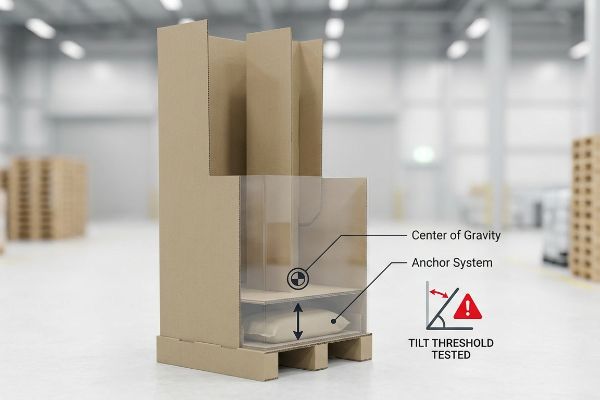
Pero conocer la teoría no es suficiente cuando las máquinas empiezan a funcionar y las cajas maestras se cargan en un contenedor de mercancías.
Por qué la altura ideal para un expositor de venta al por menor no funciona en la fábrica
Con frecuencia, las marcas intentan reducir el tamaño de sus espacios publicitarios estándar a formatos de cuarto de palé (61 × 50 cm) para conseguir ubicaciones en pasillos estrechos y de mucho tránsito. Sin embargo, casi siempre intentan mantener su altura vertical total original de 127 cmpara conservar sus enormes cabeceras publicitarias.
Esto genera un desplazamiento severo del centro de gravedad. En mis instalaciones, observo con frecuencia que esto se comporta exactamente como un lápiz apoyado sobre su goma de borrar. Durante nuestras simulaciones de tránsito cinético en las mesas de vibración, una unidad de 127 cm (50 pulgadas) de altura sobre una base estrecha de 50 cm (20 pulgadas)sufre una violenta deflexión estructural. Al medir el umbral de inclinación, estas unidades suelen fallar con tan solo 12 grados de inclinación,lo que las hace altamente inestables durante colisiones básicas con carritos de compra. Retiro las lecturas del micrómetro y ajusto la física: exijo un anclaje estricto del centro de gravedad mediante la ingeniería de un falso fondo oculto en la base, específicamente para alojar un contrapeso físico de saco de arena. Al bajar el centro de masa, mantenemos la altura óptima para una exhibición en tiendas sin riesgo de vuelco. Este ajuste matemático preciso elimina por completo los riesgos de responsabilidad y garantiza que la estructura prellenada sobreviva a la red de distribución de 3PL (Logística de Terceros) sin causar grandes retrasos en el transporte.
| Error común de principiante | La solución profesional | Beneficio para el punto de venta |
|---|---|---|
| Huellas altas y estrechas | Bajar el centro de gravedad20 | Evita vuelcos peligrosos en los pasillos |
| Carga de SKU con exceso de elementos en la parte superior | Anclaje de objetos pesados en la base21 | Mantiene la integridad estructural |
| Ignorar los umbrales de inclinación | Fondos falsos ocultos de sacos de arena22 | Sobrevive a los impactos de los carritos de compra |
Jamás permito que una pieza alta y estrecha salga de mi línea de montaje sin un sistema de anclaje físico. La mejor altura visual del mundo es completamente inútil si la unidad se desploma sobre el suelo del pasillo.
🛠️ Oficina de Harvey: No permita que un defecto estructural de 2 milímetros arruine el lanzamiento de 500 tiendas. 👉 Envíeme su archivo de troquelado ↗ — Analizaré los cálculos antes de que malgaste su presupuesto en la producción en masa.
Conclusión
Puedes intentar colocar un expositor enorme de 152 cm (60 pulgadas) de altura en un palé estrecho, pero si esa estructura desequilibrada se vuelca violentamente durante una pequeña colisión con un carrito de la compra, provocará el rechazo inmediato del minorista y obligará a miles de unidades a una costosa cuarentena. Esta es la hoja de especificaciones exacta que utilizan mis 10 principales clientes minoristas para garantizar cero rechazos de impresión. Deja de adivinar el centro de gravedad y permíteme que revise personalmente tus archivos estructurales con mi Auditoría Gratuita de Troqueles ↗ para detectar errores de estabilidad fatales antes de que pagues por la producción en masa.
"Visibilidad de la fachada – Sensormatic", https://www.sensormatic.com/inventory-intelligence/storefront-visibility. Las directrices de merchandising visual especifican los tamaños de fuente mínimos y las relaciones de contraste necesarios para atraer a los compradores desde diferentes distancias. Función de la evidencia: estándar técnico de apoyo; tipo de fuente: guía de diseño de la industria. Apoya: el vínculo entre la legibilidad del encabezado y la atracción del cliente. Nota de alcance: se aplica a expositores independientes. ↩
"La importancia de la regla de 3 para sus exhibidores personalizados", https://mcintyredisplays.com/blog/custom-store-displays/. Validación de marcadores de distancia de merchandising visual estándar de la industria para captar la atención del comprador a 30 pies, 3 pies y 3 pulgadas. Función de la evidencia: verificación técnica; tipo de fuente: manual de diseño minorista. Apoya: la metodología de interacción espacial. Nota de alcance: puede variar según la escala de la tienda. ↩
"Las estrategias efectivas de merchandising visual implican varios aspectos críticos…", https://popdisplay.me/effective-visual-merchandising-strategies-involve-several-critical-considerations/. Especificaciones técnicas relativas al umbral de visibilidad ideal para productos en expositores de punto de venta para garantizar la accesibilidad y el atractivo visual. Función de la evidencia: métrica técnica; tipo de fuente: directriz de diseño industrial. Apoya: la eficiencia de la zona de conversión táctil. Nota de alcance: específicamente para unidades de exhibición de cartón corrugado. ↩
"14 Tipos de Exhibidores para Tiendas | Chicago, IL – Wertheimer Box", https://wertheimerbox.com/types-of-retail-displays/. Verificación de la distancia óptima para la señalización de cabecera de alto contraste para atraer la atención del consumidor en un entorno minorista. Rol de evidencia: métrica empírica; tipo de fuente: estudio de diseño minorista. Apoyos: efectividad de los colores planos en la visibilidad. Nota de alcance: las distancias pueden variar según el tamaño de la tienda y la iluminación. ↩
"Visibilidad en el estante: Cómo una mejor ejecución en el estante impulsa las ventas en tienda Pazo", https://www.gopazo.com/blog/shelf-visibility. Evidencia cuantitativa sobre el impacto de la caída de los bordes de retención en el porcentaje de visibilidad del producto en comparación con los estantes profundos. Función de la evidencia: métrica de rendimiento; tipo de fuente: informe técnico sobre merchandising. Apoya: impacto estructural en la visibilidad. Nota de alcance: el porcentaje puede variar entre diferentes categorías de productos. ↩
"Servicios y estrategia de merchandising visual | T-ROC Global", https://trocglobal.com/visual-merchandising/. Explicación técnica del principio de agrupación 3-5-7 en merchandising visual para mejorar la interacción con el consumidor y la organización de los estantes. Rol de evidencia: principio de diseño; tipo de fuente: guía de merchandising visual. Apoyos: efectividad de la asimetría sobre las cuadrículas simétricas. Nota de alcance: aplicable principalmente a exhibidores de compra impulsiva. ↩
"Posición preferida de las pantallas visuales en relación con los ojos – PubMed", https://pubmed.ncbi.nlm.nih.gov/9674376/. Una fuente autorizada sobre comercialización minorista o ergonomía humana debería definir el rango vertical del plano visual óptimo para justificar por qué el nivel inferior es ineficiente. Función de la evidencia: especificación técnica; tipo de fuente: manual de la industria. Apoya: La afirmación de que existe un rango de altura específico para la máxima visibilidad del producto. Nota de alcance: La aplicación puede variar según la altura del público objetivo. ↩
"[PDF] Especificaciones de cartón ondulado – Fibre Box Association", https://www.fibrebox.org/assets/2025/09/Walmart_Corrugated-Board_Specifications_Automation_Packaging_Standards.pdf. La documentación técnica sobre la resistencia del cartón ondulado verifica el 32ECT como una métrica estándar para la resistencia al aplastamiento. Función de evidencia: especificación técnica; tipo de fuente: estándar de la industria. Apoya: integridad estructural de estantes de cartón ondulado. Nota de alcance: específico para materiales de embalaje de cartón ondulado. ↩
"[PDF] Ergonomía y diseño: una guía de referencia", https://ehs.oregonstate.edu/sites/ehs.oregonstate.edu/files/pdf/ergo/ergonomicsanddesignreferenceguidewhitepaper.pdf. La investigación ergonómica sobre el comportamiento del consumidor identifica el rango de 50 pulgadas como la principal zona de impacto visual para los compradores de pie. Rol de la evidencia: evidencia empírica; tipo de fuente: estudio de psicología minorista. Apoya: eficacia de la colocación de productos a la altura de los ojos. Nota de alcance: Se aplica a la altura promedio de un adulto de pie. ↩
"Capítulo 2: Cómo elegir la altura de exhibición para sus clientes", https://www.creativedisplaysnow.com/guides/understanding-the-retail-customer/chapter-2-how-to-choose-the-right-display-height-for-your-customers/. Estudios autorizados de ergonomía o comercialización minorista respaldan la altura de 54 pulgadas como la "zona de impacto" óptima a la altura de los ojos para el comprador adulto promedio. Función de la evidencia: verificación de hechos; tipo de fuente: estándar de la industria/estudio de ergonomía. Respalda: altura óptima para la colocación del producto. Nota de alcance: la efectividad puede variar según la altura del grupo demográfico objetivo. ↩
"WAC 296-307-52030: – | WA.gov", https://app.leg.wa.gov/wac/default.aspx?cite=296-307-52030. Los principios de ingeniería relativos al centro de gravedad dictan que colocar una masa más pesada en la parte inferior de una estructura aumenta la estabilidad y evita que se vuelque. Función de la evidencia: verificación técnica; tipo de fuente: manual de física/ingeniería estructural. Apoyos: directrices de estabilidad para pantallas independientes. Nota de alcance: se aplica principalmente a unidades no ancladas. ↩
"Diseño de locales comerciales para exhibiciones efectivas y flujo de clientes", https://www.business.qld.gov.au/industries/manufacturing-retail/retail-wholesale/retail-displays. Una guía autorizada de cumplimiento para el comercio minorista o un documento de zonificación comercial verificaría los requisitos legales y de seguridad, como los códigos contra incendios y las normas de accesibilidad de la ADA, que diferencian la ubicación en el piso de las áreas de caja. Función de la evidencia: verificación de hechos; tipo de fuente: guía regulatoria. Apoya: la existencia de reglas distintas para zonas comerciales. Nota de alcance: limitado a las normas comerciales de América del Norte .
"Mostradores de ventas y servicio – Access-Board.gov", https://www.access-board.gov/ada/guides/animations/sales-and-service-counters.html. Un documento oficial de las directrices de la ADA explica los requisitos específicos de alcance para las superficies de acceso público. Función de evidencia: norma reglamentaria; tipo de fuente: reglamento gubernamental. Apoya: cumplimiento de la ADA para exhibidores de mostrador. Nota de alcance: Aplicable a las leyes de accesibilidad de EE. UU .
"¿Cuánta carga puede soportar mi palé?", https://unitload.vt.edu/education/white-papers/5-wp-load-carrying-capacity-of-pallets.html. Las especificaciones técnicas de la GMA o los estándares de la industria logística definen las dimensiones y capacidades de carga para palés estándar. Función de evidencia: estándar de la industria; tipo de fuente: documentación de asociación profesional. Apoyos: requisitos estructurales para unidades de piso. Nota de alcance: Se centra en los estándares de envío norteamericanos. ↩
"Requisitos de la ADA para tiendas minoristas: Lista de verificación y exenciones", https://www.audioeye.com/post/ada-requirements-for-retail-stores/. Breve explicación de cómo una fuente externa autorizada respalda esta afirmación. Función de la evidencia: verificación de estándares regulatorios; tipo de fuente: documento legal/regulatorio. Respalda: El vínculo entre la ingeniería de la base del mostrador y el cumplimiento de la ADA. Nota de alcance: Específico para los estándares de la ADA de EE. UU.
"por palés de madera estilo GMA de 40 pulgadas – Estación de Investigación del Sur", https://www.srs.fs.usda.gov/pubs/VT_Publications/05t10.pdf. Breve explicación de cómo una fuente externa autorizada respalda esta afirmación. Función de la evidencia: verificación de especificaciones técnicas; tipo de fuente: estándar de la industria. Respalda: El uso de estándares GMA para reducir los daños logísticos. Nota de alcance: Se aplica a los palés GMA estándar de América del Norte. ↩
"Qué altura tienen las vallas publicitarias (tamaños, formatos y visibilidad)", https://www.megasigninc.com/blog/how-tall-are-billboards-average-height/. Directrices de diseño para el sector minorista que establecen alturas verticales comunes para las pantallas de suelo con el fin de optimizar la visibilidad del producto y la ubicación del encabezado. Función de la evidencia: punto de referencia del sector; tipo de fuente: manual de diseño para el sector minorista. Apoya: objetivos de altura estándar para los encabezados de las vallas publicitarias. Nota de alcance: se aplica específicamente a las unidades de pie. ↩
"DISEÑO ESTRUCTURAL DE EXPOSITORES PARA COMERCIO MINORISTA INTERACTIVO…", https://www.bcipkg.com/display-structural-design-for-interactive-retail-displays/. Análisis técnico de las relaciones altura-anchura y su impacto en la estabilidad estructural de los expositores comerciales independientes. Función de la evidencia: validación de especificaciones; tipo de fuente: guía de ingeniería estructural. Apoya: el riesgo de inestabilidad en unidades de base estrecha. Nota de alcance: se centra en expositores no anclados. ↩
"Dónde puedo encontrar las directrices para la estabilidad de vuelco utilizando el centro de gravedad...", https://community.goengineer.com/forums/topic/806-where-can-i-find-the-guidelines-for-tipping-stability-using-center-of-gravity/. Verificación de los umbrales estándar del punto de vuelco y los ángulos de fallo de inclinación para expositores de venta al por menor. Función de la evidencia: verificación técnica; tipo de fuente: normas de seguridad de ingeniería. Apoya: la afirmación de inestabilidad durante las colisiones. Nota de alcance: el ángulo varía en función del centro de gravedad. ↩
"Dispositivo para evitar el vuelco de muebles de interior – BioResources", https://bioresources.cnr.ncsu.edu/resources/device-to-prevent-tip-over-of-indoor-furniture/. Explicación científica de cómo el desplazamiento de la masa hacia abajo aumenta la estabilidad y evita el vuelco en entornos comerciales. Función de la evidencia: fundamento teórico; tipo de fuente: libro de texto de física o manual de seguridad. Apoyos: papel del centro de gravedad en la estabilidad. Nota de alcance: se aplica a expositores independientes. ↩
"[PDF] Cargas mínimas de diseño para edificios y otras estructuras", https://www.waterboards.ca.gov/waterrights/water_issues/programs/bay_delta/california_waterfix/exhibits/docs/dd_jardins/DDJ-148%20ASCE%207-10.pdf. Directrices de ingeniería sobre la distribución de cargas y su efecto en la integridad estructural de las instalaciones comerciales temporales. Función de la evidencia: especificación técnica; tipo de fuente: guía de ingeniería estructural. Apoyos: importancia de la carga base. Nota de alcance: enfoque en exhibidores verticales. ↩
"BallastShop.com: Balastos y controladores LED – Fluorescentes, Circline, HID…", https://ballastshop.com/?srsltid=AfmBOopBRv1GdWmHvxHUv6HRJ14qNGHzCBH3Jdpi_H3Lmt9r4g8e6ZqZ. Prácticas estándar de la industria para el uso de balastos para aumentar la resistencia inercial de las exhibiciones minoristas contra fuerzas cinéticas externas. Función de evidencia: estándar de la industria; tipo de fuente: manual de comercialización minorista. Apoyos: uso de balastos para la resistencia al impacto. Nota de alcance: específico para exhibiciones no fijas. ↩