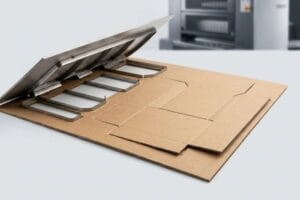
Estás perdiendo espacio privilegiado en la caja porque tu estrategia de empaquetado es desorganizada. Para conseguir esa compra impulsiva final en el punto de venta se requiere ingeniería de precisión, no solo una caja de cartón más pequeña.
En el sector del embalaje, CDU significa Mostrador Expositor. Se trata de un expositor compacto y estructural que se coloca justo en la caja. Las marcas utilizan estas cajas especializadas para organizar productos pequeños, maximizar las compras impulsivas y mantener una visibilidad precisa del inventario sin ocupar todo el espacio del pasillo.

Comprender la definición es solo el primer paso. Para sobrevivir realmente al duro entorno de una caja registradora concurrida, es necesario comprender cómo estas unidades están diseñadas matemáticamente para soportar la intensa fricción de los clientes.
¿Qué significa Cdu en el sector minorista?
Diseñar para la zona de cajas de una tienda es un juego completamente distinto a diseñar para el pasillo principal. Se trabaja con centímetros, no con metros.
En el sector minorista, una CDU (Unidad de Control de Precios) es un elemento estratégico en el punto de venta, ubicado cerca de la caja registradora. Los minoristas confían en estas unidades para rentabilizar las zonas de pago con mayor afluencia de clientes, captando la atención de los compradores de última hora y manteniendo los artículos pequeños ordenados y completamente protegidos de derrames accidentales.
Si bien un comprador de Target o CVS podría aprobar tu diseño, el gerente de la tienda tirará tu exhibición a la basura si interrumpe el trabajo de los cajeros.
Optimización de la estabilidad de las unidades de distribución de contenido (CDU) para cajas registradoras de alto tráfico
La mayoría de las marcas abordan el lanzamiento de un expositor de mostrador simplemente diseñando una caja que se ajuste a su surtido de productos. Se centran exclusivamente en que la tarjeta superior sea lo suficientemente alta como para mostrar su logotipo, ignorando por completo el centro de gravedad¹.Envían las unidades desmontadas al minorista, dando por sentado que la base estructural soportará sin problemas una carga pesada de cosméticos, pilas o dulces.
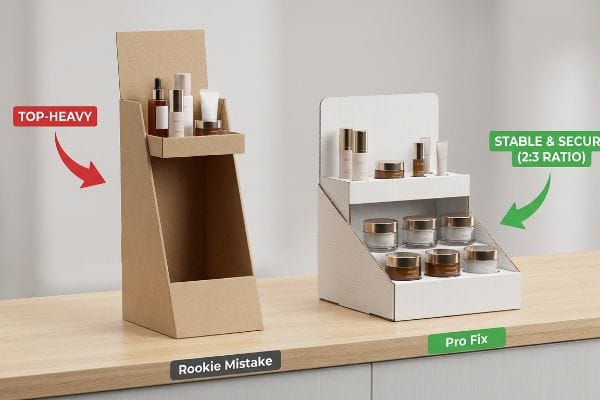
Incluso los diseñadores veteranos suelen pasar por alto este punto ciego al buscar la máxima visibilidad en los estantes. Con frecuencia veo marcas que lanzan exhibidores que violan la regla fundamental de la proporción 2 :3 entre profundidad y altura . Cuando un exhibidor mide 381 mm de alto pero solo 152 mm de profundidad, se convierte en un grave problema. El año pasado, vi a un empleado reabastecer una unidad inestable; en el momento en que un cliente golpeó el mostrador, toda la estructura se inclinó hacia adelante, provocando el desagradable golpe de botellas de cosméticos de vidrio que se derramaron sobre el piso de linóleo. La solución es puramente matemática: limitamos la altura máxima estrictamente en relación con la profundidad de la base. Si necesita un mueble alto, debe diseñar una base más ancha y profunda para anclarlo de forma segura al mostrador.
| Error común de principiante | La solución profesional | Beneficio para el punto de venta |
|---|---|---|
| Empujando la altura a más de 15 pulgadas (381 mm) sobre una base estrecha | Aplicar la estricta relación de profundidad a altura de 2:33 | Evita que la unidad se incline hacia adelante |
| Apilar artículos líquidos pesados en el nivel superior | Sujetar los artículos más pesados a la bandeja inferior | Reduce el centro de gravedad instantáneamente4 |
| Ignorando la fricción de contragolpe | Agregar un panel trasero extendido oculto | Absorbe las vibraciones del carrito de la compra |
Me niego a comercializar un troquel para mostrador que no haya superado una prueba de inclinación física. Si su unidad no resiste una inclinación de 15 grados hacia adelante en mi mesa de pruebas de fábrica, no tiene ninguna posibilidad de sobrevivir en una concurrida caja registradora.
🛠️ El escritorio de Harvey: ¿Te preocupa que tu mostrador de caja sea demasiado pesado para la zona de cajas? 👉 Obtén una revisión de estabilidad estructural ↗ — Acceso directo a mi escritorio. Sin spam de ventas automatizado, te lo prometo.
¿Qué significan las siglas Cdu en ventas?
Los equipos de ventas consideran que el espacio de caja es la superficie más rentable de cualquier edificio comercial. Para ellos, el embalaje no es solo protección; es una herramienta de conversión activa.
En ventas, CDU significa Mostrador Exhibidor, que funciona como un cierre silencioso. Los equipos de ventas utilizan estas unidades para interrumpir físicamente los últimos momentos de la transacción del cliente, impulsando conversiones inmediatas por impulso e inflando artificialmente el valor promedio del carrito antes de pagar.

Si la estructura de tu producto no comunica de inmediato qué es y por qué es importante, simplemente estás desperdiciando un valioso espacio en el registro.
Cálculo del aumento de ventas con una estrategia de CDU
Los directores de ventas a menudo me preguntan cómo garantizar el retorno de la inversión (ROI) en expositores temporales de cartón corrugado. El enfoque básico consiste en tratar el expositor como un folleto, imprimiendo párrafos densos con características, beneficios e historia de la marca en cada superficie disponible. Parten de la base de que si un cliente está haciendo fila, tiene el tiempo y las ganas de leer un texto tan extenso.
La realidad es que una fila de caja concurrida es un entorno de alta presión y ritmo acelerado. Si tu exhibición requiere más de tres segundos para entenderse5, el comprador la ignorará por completo. Recientemente audité una campaña donde una marca cubrió su borde frontal de retención con pequeños puntos; el desorden visual era tan agresivo que los compradores que pasaban no podían procesar físicamente la oferta principal. La simplificamos por completo, ejecutando la fórmula de "3-Second Lift". Inundamos la base con un solo color Pantone y diseñamos un enorme encabezado troquelado con solo tres palabras en negrita. El fuerte "clic" de las pestañas entrelazadas durante el ensamblaje señalaba una caja estructuralmente sólida, pero la implacable simplicidad gráfica fue lo que realmente impulsó un aumento del 22% en las compras impulsivas6 en comparación con el grupo de control.
| Error común de principiante | La solución profesional | Beneficio para el punto de venta |
|---|---|---|
| Imprimir párrafos de texto en la base | Utilizando un color Pantone sólido y un titular | Elimina la sobrecarga cognitiva del comprador7 |
| Ocultar el producto detrás de un labio frontal alto | Bajando el borde para garantizar una visibilidad del 85%8 | Permite una interacción táctil instantánea |
| Tarjetas de cabecera planas y rectangulares | Ingeniería de formas 3D curvas troqueladas | Altera la visión periférica del comprador9 |
Siempre les digo a mis clientes que la pantalla de la caja registradora es una valla publicitaria, no un libro de texto. Si se complica demasiado el mensaje, se está disuadiendo activamente al consumidor de comprar.
🛠️ Harvey's Desk: ¿Tus bandejas de pago cansan visualmente a los clientes incluso antes de que vean el producto? 👉 Solicita tu Guía de Merchandising ↗ — Descárgala de forma segura. Mi bandeja de entrada está abierta si tienes alguna pregunta.
¿Qué significa Cdu?
Si dejamos de lado la jerga de marketing, la ingeniería básica de esta unidad es sorprendentemente simple, pero increíblemente fácil de interpretar erróneamente si se ignoran los principios básicos de la física.
Fundamentalmente, una CDU es una estructura de embalaje secundario especializada, diseñada exclusivamente para mostradores de mostrador. A diferencia de los grandes expositores de suelo, requiere una microingeniería precisa para sostener de forma segura productos pesados dentro de un espacio muy reducido, sin volcarse ni bloquear el paso del cajero.
Un diseño gráfico atractivo es inútil si la estructura física se derrumba bajo el peso del propio producto.
La física detrás de una base CDU confiable
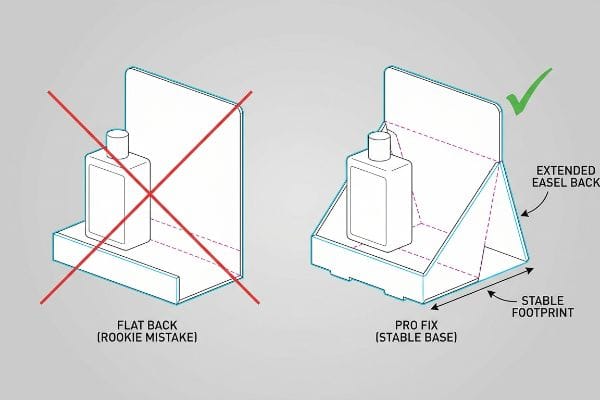
Piensa en un mueble de mostrador como en el caballete de una bicicleta. Si el caballete es demasiado corto o está colocado justo debajo del cuadro central, la más mínima brisa puede derribar la bicicleta. Lo mismo ocurre con el embalaje. Muchas marcas envían troqueles con un panel trasero perfectamente plano para sus muebles de mostrador, dando por sentado que los separadores internos proporcionarán la rigidez suficientepara mantener la mercancía en posición vertical.
Es una trampa común que atrapa incluso a equipos de compras experimentados. Priorizan colocar la mayor cantidad de unidades posible en un palé de envío y, sin querer, diseñan una base estructuralmente deficiente. Una vez vi a un dependiente frustrado intentar armar una unidad con respaldo plano cargada con linternas metálicas pesadas; cada vez que un cliente sacaba una por el frente, el peso se desplazaba y el expositor se inclinaba hacia atrás. El dependiente tuvo que asegurarlo al mostrador con cinta adhesiva transparente, arruinando por completo la estética premium de la marca. Mi regla general es simple: siempre implementamos el protocolo de "Física del Punto de Inflexión" extendiendo el respaldo del caballete o diseñando un falso fondo con bloqueo. Esto extiende artificialmente la base trasera solo 50,8 mm (2 pulgadas), transfiriendo la carga cinética hacia abajo y asegurando que la unidad permanezca sólida como una roca sin necesidad de cinta adhesiva.
| Error común de principiante | La solución profesional | Beneficio para el punto de venta |
|---|---|---|
| Diseño de un panel trasero perfectamente plano | Diseño de un soporte de caballete plegable y extensible11 | Evita el vuelco hacia atrás a medida que se venden los productos |
| Confiar en cartón corrugado de pared simple para artículos pesados | Actualización de la estructura base a una cerradura de doble pared12 | Evita que toda la estructura se deforme |
| Permitir que los empleados utilicen cinta adhesiva transparente para estabilizarlo | Utilizando cierres de fricción internos ocultos13 | Mantiene la imagen de marca externa impecable |
Instalo anclajes estructurales en las capas ocultas del cartón. Tus clientes deberían disfrutar de una experiencia de marca impecable, sin percatarse de la compleja estructura que lo mantiene en pie.
🛠️ Escritorio de Harvey: ¿Tu expositor actual se mantiene en pie sobre el mostrador solo con cinta adhesiva? 👉 Solicita una mejora estructural ↗ — Sin formularios que generen interminables llamadas de ventas. Solo valor puro.
¿Cuál es el significado completo de Cdu Box?
Hemos abordado la psicología de las ventas y las definiciones básicas. Pero conocer la teoría no basta cuando las máquinas automatizadas empiezan a funcionar en la planta de producción.
Las siglas CDU significan Unidad de Exhibición para Mostrador. Esta estructura se envía normalmente como una bandeja prellenada y lista para la venta, que pasa fácilmente de una caja de transporte protectora a una presentación organizada y atractiva para el consumidor en el mostrador.
Conseguir que una pantalla tenga buen aspecto en un software de renderizado 3D es fácil, pero esta es la cruda realidad cuando intentas producir en masa 5.000 de ellas.
¿Por qué fallan en la fábrica las matrices de unidades de distribución de carbono (CDU) de tamaño reducido?
Muchas marcas dan por sentado que un archivo CAD (Diseño Asistido por Computadora) universal funciona en todas las dimensiones. Para ahorrar en costos de ingeniería estructural, toman un archivo de exhibición de piso robusto y de gran éxito y simplemente reducen la geometría en un 50 %para crear una versión de caja. Asumen que las proporciones se traducirán naturalmente en un espacio más reducido.
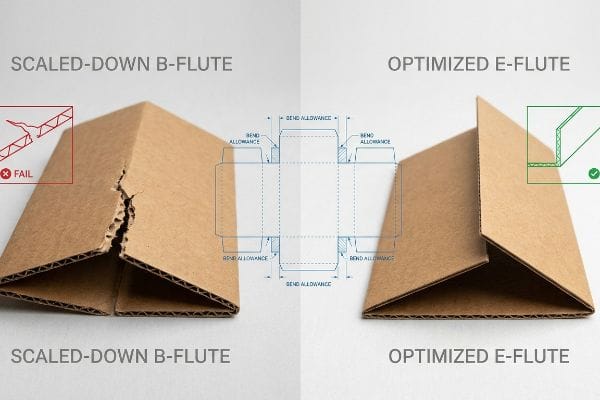
En mis instalaciones, observo con frecuencia los resultados catastróficos de esta suposición de "encogimiento para ajuste" durante las pruebas de preproducción. Al reducir matemáticamente una matriz diseñada originalmente para cartón corrugado grueso de flauta B, también se reducen los radios de plegado y las pestañas de enclavamiento a microproporciones. Las densas flautas corrugadas de 3,2 mm de espesor(15) no pueden doblarse limpiamente en una ranura de 8 mm. Al probar estos archivos a escala reducida en la mesa de corte Kongsberg, escucho el áspero sonido de desgarro de la hoja superior de kraft virgen que se rompe bajo la inmensa tensión superficial. Las fibras físicas del papel se liberan y se desprenden. Al pasar a un sustrato delgado de flauta E (1,5 mm) (16 y reconstruir matemáticamente los márgenes de plegado desde cero, elimino la falla de las micropestañas. Al aplicar esta tolerancia de calibre específica, garantizo que el tiempo de ensamblaje de coempaquetado se reduzca en 35 segundos por unidad, lo que ahorra a los clientes miles de dólares en costos de mano de obra y garantiza una configuración perfectamente cuadrada y sin fricción.
| Error común de principiante | La solución profesional | Beneficio para el punto de venta |
|---|---|---|
| Reducción a la mitad del tamaño de una exhibición de piso con flauta B | Rediseño de la línea de troquelado específicamente para flauta Mi17 | Evita que la lámina superior impresa se agriete |
| Ignorando el consumo de calibre de plegado corrugado18 | Ampliación matemática de los espacios de recepción | Garantiza que las pestañas se cierren sin problemas y sin romperse |
| Forzar tableros gruesos en espacios pequeños e interconectados | Diseño de una cavidad para el hardware de bloqueo por fricción | Reduce el tiempo de ensamblaje de co-empaquetado en 35 segundos19 |
Me niego a imprimir una plantilla de piso a escala reducida sin recalcular el grosor físico de la tabla. Los cálculos deben modificarse al cambiar la escala del material; de lo contrario, solo se estaría fabricando basura costosa.
🛠️ Oficina de Harvey: No permita que un defecto estructural de 2 milímetros arruine el lanzamiento de 500 tiendas. 👉 Envíeme su archivo de troquelado ↗ — Analizaré los cálculos antes de que malgaste su presupuesto en la producción en masa.
Conclusión
Puedes intentar ahorrar en costes de ingeniería simplemente reduciendo el tamaño de un de exhibición en planta , pero cuando esas micropestañas se rompan inevitablemente durante el empaquetado conjunto, la fricción resultante ralentizará tu línea de montaje en un 30 % aproximadamente y eliminará por completo el margen de beneficio de tu campaña. Esta es la hoja de especificaciones exacta que utilizan mis 10 principales clientes minoristas para garantizar cero rechazos de impresión. Deja de adivinar las tolerancias y permíteme revisar personalmente tus archivos con mi Auditoría Gratuita de Troqueles ↗ para detectar errores fatales antes de la producción.
"Asegurar la estabilidad y el soporte estructural en exhibidores temporales", https://www.ud-direct.com/blog/tips-and-tricks-to-ensure-stability-and-structure-support-in-temporary-displays . Las guías técnicas de diseño para el comercio minorista explican cómo descuidar el centro de gravedad en exhibidores con la parte superior pesada provoca que se vuelquen en zonas de mucho tránsito. Función de la evidencia: validación técnica; tipo de fuente: manual de ingeniería de empaques. Apoya: la afirmación de que la estabilidad a menudo se pasa por alto en el diseño de unidades de cartón empaquetadas planas. Nota de alcance: se aplica específicamente a unidades de cartón empaquetadas planas.
"Capítulo 2: Elegir la altura de exhibición para sus clientes", https://www.creativedisplaysnow.com/guides/understanding-the-retail-customer/chapter-2-how-to-choose-the-right-display-height-for-your-customers/. Los estándares de la industria para la ingeniería de exhibidores en el punto de venta validarían la proporción específica requerida para evitar que se vuelquen en zonas de alto tránsito. Función de evidencia: verificación técnica; tipo de fuente: manual de diseño minorista o guía de ingeniería. Soportes: métricas de estabilidad para CDU. Nota de alcance: la proporción puede variar según el centro de gravedad y el peso del material. ↩
"¿Cómo elegir la altura de su expositor comercial?", https://popdisplay.me/how-to-choose-your-retail-display-height/. Las directrices del sector para la ingeniería de expositores en el punto de venta (POP) suelen especificar relaciones de aspecto para evitar que se vuelquen en zonas de mucho tránsito. Función de la evidencia: Especificación técnica; tipo de fuente: Manual de ingeniería de mobiliario comercial. Apoya: El requisito de relación 2:3 para la estabilidad de la CDU. Nota de alcance: Puede variar según la densidad del material. ↩
"14 Tipos de Exhibidores Minoristas | Chicago, IL – Wertheimer Box", https://wertheimerbox.com/types-of-retail-displays/. La física fundamental con respecto al centro de masa dicta que colocar los componentes más pesados en el punto más bajo de una estructura aumenta la estabilidad estática. Función de evidencia: Principio científico; tipo de fuente: Libro de texto de ingeniería mecánica. Apoyos: El beneficio de estabilidad de anclar SKU pesados a la bandeja inferior. Nota de alcance: Aplicación universal en estática. ↩
"Explorando el comportamiento de navegación y el nivel de atención del comprador con un…", https://pmc.ncbi.nlm.nih.gov/articles/PMC6895988/. La investigación en psicología del consumidor y seguimiento ocular en el comercio minorista identifica la ventana cognitiva limitada para captar la atención en zonas de pago de alto tráfico. Función de la evidencia: validación fáctica; tipo de fuente: estudio de ciencias del comportamiento. Apoya: la afirmación de que las pantallas que superan un tiempo de procesamiento de 3 segundos se ignoran. Nota de alcance: Los tiempos de procesamiento pueden variar según la categoría del producto. ↩
"Cómo el diseño de empaques impacta las ventas: Convierta el diseño en una poderosa herramienta...", https://confetti.design/blog/packaging-design-impact-on-sales. Los puntos de referencia de la industria para la optimización del punto de venta proporcionan datos sobre el porcentaje de aumento de ventas logrado mediante la reducción del desorden visual. Función de la evidencia: evaluación comparativa de métricas; tipo de fuente: informe de análisis minorista. Apoya: la afirmación de que la simplificación gráfica aumenta las tasas de conversión por impulso. Nota de alcance: Los resultados dependen en gran medida del conocimiento de marca inicial. ↩
"[PDF] SOBRECARGA EN EL COMERCIO MINORISTA: CONFUSIÓN EN LA EXPERIENCIA DE COMPRA", https://www.leedsbeckett.ac.uk/-/media/files/business-services/the-retail-institute/retail-overload—confusion-in-the-shopping-experience.pdf. Investigación académica o industrial sobre cómo minimizar el texto y usar imágenes llamativas reduce la carga cognitiva de los consumidores durante las compras impulsivas. Rol de la evidencia: justificación psicológica; tipo de fuente: estudio de comportamiento del consumidor. Apoya: el beneficio del diseño minimalista de la unidad de control del consumidor. Nota de alcance: centrado en entornos minoristas de alto tráfico. ↩
"La exhibición de paquetes en tiendas minoristas y el panel de exhibición principal...", https://www.nist.gov/publications/display-packages-retail-stores-and-principal-display-panel-requirement-packaged-goods. Verificación de los estándares de la industria para los porcentajes de visibilidad del producto en diseños de CDU para maximizar las ventas. Función de la evidencia: validación de la métrica; tipo de fuente: guía de diseño minorista. Apoya: el punto de referencia de visibilidad del 85 %. Nota de alcance: se aplica a las exhibiciones de caja. ↩
"Tarjetas de cabecera para envases minoristas – Clear Print", https://www.clearprint.com/header-cards-for-retail-packaging/. Investigación sobre la efectividad de las formas 3D para interrumpir la visión periférica y captar la atención en entornos minoristas. Función de la evidencia: explicación técnica; tipo de fuente: estudio de merchandising visual. Apoya: el uso de formas 3D curvas. Nota de alcance: se refiere al seguimiento ocular en los pasillos de venta. ↩
"DISEÑO ESTRUCTURAL DE EXHIBICIONES PARA COMERCIO MINORISTA INTERACTIVO…", https://www.bcipkg.com/display-structural-design-for-interactive-retail-displays/. Explicación de cómo las normas de embalaje estructural definen la función de los separadores internos para proporcionar estabilidad lateral y evitar el vuelco. Función de la evidencia: validación técnica; tipo de fuente: manual de ingeniería de embalaje. Apoya: la afirmación de que los separadores internos son insuficientes para la estabilidad estructural sin una geometría de base adecuada. Nota de alcance: específico para exhibidores de mostrador de cartón corrugado. ↩
"Cómo elegir el caballete perfecto | ¡Consejos principales! – YouTube", https://www.youtube.com/watch?v=5PsowMGiPC0. Las directrices técnicas para el diseño de envases minoristas demuestran cómo el respaldo de un caballete desplaza el centro de gravedad para evitar que se vuelque al retirar el peso. Función de la evidencia: Validación técnica; tipo de fuente: Manual de ingeniería de envases. Apoya: La física de la estabilidad de la exhibición. Nota de alcance: Específicamente para unidades de exhibición de mostrador. ↩
"Diseño óptimo de embalajes de cartón corrugado de doble pared – PMC", https://pmc.ncbi.nlm.nih.gov/articles/PMC8950760/. Los datos de ingeniería estructural para materiales corrugados confirman que la construcción de doble pared aumenta la resistencia a la compresión vertical para evitar el pandeo bajo cargas pesadas. Función de la evidencia: Especificación del material; tipo de fuente: Guía de ingeniería estructural. Apoyos: Prevención de fallas estructurales. Nota de alcance: Se aplica a aplicaciones de cartón corrugado. ↩
"5 proyectos innovadores que utilizan la cinta 3M™ Dual Lock™", https://www.thrustin.com/blog/5-innovative-projects-that-utilize-3m-dual-lock-tape/. Los estándares de diseño industrial para exhibidores de punto de venta abogan por los cierres de fricción mecánicos en lugar de los adhesivos para garantizar la integridad estructural sin dañar los gráficos externos. Función de la evidencia: Mejores prácticas de diseño; tipo de fuente: Manual de diseño industrial. Apoya: Uso de cierres mecánicos para la preservación estética. Nota de alcance: Se centra en el ensamblaje de exhibidores de punto de venta. ↩
"Ingeniería de embalaje estructural: por qué es el principal motor de…", https://www.zenpack.us/blog/structural-packaging-engineering/. Fuentes autorizadas en ingeniería de embalaje detallan por qué el escalado lineal de troqueles no tiene en cuenta el grosor del material ni la integridad estructural. Función de la evidencia: validación técnica; tipo de fuente: manual estándar de la industria. Apoya: el riesgo técnico de reducir el tamaño de archivos de visualización grandes. Nota de alcance: limitado a materiales de cartón corrugado y cartulina. ↩
"[PDF] Especificaciones de cartón ondulado – Fibre Box Association", https://www.fibrebox.org/assets/2025/09/Walmart_Corrugated-Board_Specifications_Automation_Packaging_Standards.pdf. Verificación del espesor estándar de la industria (calibre) para cartón ondulado de flauta B. Función de la evidencia: verificación fáctica; tipo de fuente: estándar de la industria del embalaje. Apoyos: especificaciones técnicas del espesor del sustrato. Nota de alcance: pueden existir pequeñas variaciones entre diferentes fabricantes. ↩
"Cartón ondulado y grados de materiales – Packaging Strategies", https://www.packagingstrategies.com/articles/96269-corrugated-board-and-material-grades. Verificación del espesor estándar de la industria (calibre) para cartón ondulado de flauta E. Función de la evidencia: verificación fáctica; tipo de fuente: estándar de la industria del embalaje. Apoyos: especificaciones técnicas del espesor del sustrato. Nota de alcance: pueden existir pequeñas variaciones entre diferentes fabricantes. ↩
"¿Por qué se agrietan las cajas de cartón corrugado al plegarlas? – LinkedIn", https://www.linkedin.com/pulse/why-do-corrugated-boxes-crack-when-folded-practical-moss-6nqyc . Los manuales técnicos de embalaje explican por qué la reducción de tamaño de las líneas de troquelado sin ajustar el tipo de flauta provoca tensión y agrietamiento del material. Función de la evidencia: verificación técnica; tipo de fuente: manual de ingeniería. Apoya: la necesidad de cambiar a flauta E al reducir el tamaño. Nota de alcance: Se centra en materiales de cartón corrugado impresos.
"Estimación de la resistencia a la compresión de cajas de cartón corrugado…", https://pmc.ncbi.nlm.nih.gov/articles/PMC8467740/. Los estándares de la industria para el diseño de embalajes definen el consumo de calibre de pliegue como la cantidad de material utilizado en un pliegue, lo que requiere ranuras más anchas. Función de la evidencia: validación de terminología; tipo de fuente: estándar de la industria. Apoya: el requisito de ensanchar matemáticamente las ranuras de recepción. Nota de alcance: Práctica estándar en la ingeniería de cartón corrugado. ↩
"FAQ – Preguntas frecuentes | CS Cavity Sliders USA", https://www.cavitysliders.com/knowledge-hub/faq/. Los estudios de caso sobre eficiencia operativa cuantifican el tiempo ahorrado en el ensamblaje al implementar cavidades de hardware con bloqueo por fricción en lugar de ajustes forzados. Función de la evidencia: prueba cuantitativa; tipo de fuente: estudio de caso. Apoya: la métrica específica de ahorro de tiempo para el co-empaquetado. Nota de alcance: Los resultados pueden variar según la habilidad del trabajador y el grosor de la placa. ↩