Inviertes miles de dólares para introducir tu marca en las tiendas, solo para darte cuenta de que la caja de cartón en la que llegó se suponía que era la herramienta de marketing. Corrijamos ese costoso descuido.
En el sector de la comercialización, un contenedor de envío es una caja estructural preempaquetada que transporta de forma segura los productos y se transforma instantáneamente en un expositor de suelo o estantería. Este elemento elimina la necesidad de mano de obra adicional y actúa como un vendedor silencioso, impulsando las compras por impulso y reduciendo los costes logísticos.

Integrar el embalaje de transporte con la presentación en tienda no es solo un truco de diseño ingenioso; es un requisito fundamental para los lanzamientos a gran escala en el mercado minorista norteamericano.
¿Qué es una exhibición de remitente?
Convertir una caja de envío en un expositor para tiendas suena genial hasta que ves un palé de mercancía aplastada que ha sido rechazada en un muelle de recepción.
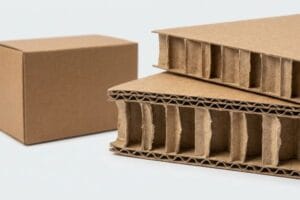
Un expositor de envío funciona como una caja maestra de alta resistencia diseñada con paneles perforados que se pueden abrir fácilmente o tapas removibles. Una vez que llega al punto de venta, el personal retira rápidamente los paneles protectores de transporte para revelar una unidad de merchandising completamente organizada y estructuralmente sólida, lo que ahorra horas de trabajo manual en la reposición de estantes.

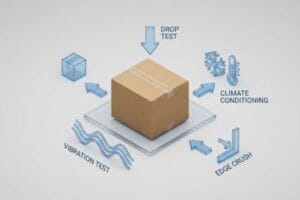
Lograr esa doble funcionalidad requiere una ingeniería rigurosa, ya que la caja debe resistir el transporte internacional antes de lucir bien en el suelo.
La logística oculta de las pantallas para transportistas
Los equipos de compras suelen ampliar las dimensiones de las cajas maestras para que quepa más producto, asumiendo que el cartón corrugado de alta resistencia protegerá la mercancía independientemente del espacio que ocupe. Priorizan la máxima densidad de unidades para ahorrar en el flete del contenedor, basándose únicamente en las métricas teóricas de resistencia al estallido, en lugar de como un componente de un ecosistema de almacenamiento dinámico.
Veo esta trampa con frecuencia cuando las marcas sobresalen sus cajas maestras más allá de un palé estándar de 48 × 40 pulgadas (121,9 × 101,6 cm) GMA (Grocery Manufacturers Association) por apenas una fracción de pulgada para meter una unidad adicional. Una caja de cartón corrugado obtiene hasta el 60 % de su resistencia a la compresión vertical de las cuatro esquinas alineadas perfectamente con la plataforma de madera. Recientemente vi a un trabajador de muelle intentar mover una carga apilada doble donde el nivel inferior estaba completamente sin soporte; el fuerte y desgarrador aplastamiento del cartón 32ECT (Edge Crush Test) fue ensordecedor. Para evitar esto, exijo una caja delimitadora estricta de voladizo cero en nuestro software CAD (Diseño Asistido por Computadora), reduciendo artificialmente la huella exactamente 0,5 pulgadas (1,27 cm). Este ajuste a nivel de milímetros garantiza un soporte completo de las esquinas, eliminando daños en el transporte y manteniendo su campaña minorista rentable en lugar de generar enormes cargos de devolución de minoristas.
| Error común de principiante | La solución profesional | Beneficio para el punto de venta |
|---|---|---|
| Bordes de paletas que sobresalen | Reducción de la huella en 0,5 pulgadas (1,27 cm)2 | Sobrevive al apilamiento doble |
| Basándose en la teoría de la ECT | Alineación de las esquinas con la cubierta de madera3 | Evita el aplastamiento del nivel inferior |
| Ignorando las matemáticas del contenedor | Caja delimitadora CAD de voladizo cero4 | Elimina la recepción de rechazos |
Nunca confío en la resistencia teórica del tablero cuando la geometría está comprometida. Siempre dejo que los límites físicos del palé de madera determinen el espacio máximo que ocupará el expositor para garantizar que sus productos sobrevivan al viaje por mar.
🛠️ El escritorio de Harvey: ¿No estás seguro de si el cálculo de tus cajas maestras está poniendo en riesgo la carga de tus palés? 👉 Obtén una revisión de la estructura de tu caja ↗ — Acceso directo a mi escritorio. Sin spam de ventas automatizado, lo prometo.
¿Qué es un transportista en marketing?
Los gráficos de tu campaña se ven increíblemente nítidos en una pantalla de ordenador retroiluminada, pero los pasillos de las tiendas revelan la cruda y turbia realidad del cartón sin tratar.
En marketing, un expositor publicitario funciona como una enorme valla publicitaria física de alto contraste, ubicada en pasillos de gran afluencia de clientes. En lugar de mimetizarse con las estanterías convencionales, esta unidad de marca interrumpe físicamente el recorrido visual del comprador, captando su atención de inmediato e impulsando rápidamente el reconocimiento de la marca mediante una estrategia de combinación de colores y un diseño estructural acertado.

Transformar una caja básica en una herramienta de marketing de élite requiere luchar contra la química física de cómo la tinta se absorbe en las fibras de papel crudo.
Por qué los colores estándar no funcionan en los envíos minoristas
Los equipos de marketing suelen convertir los logotipos corporativos sólidos en colores de proceso estándar, asumiendo que la mezcla digital de cuatro tintas coincidirá perfectamente con su guía de estilo corporativa. Entregan el diseño a una imprenta estándar esperando resultados vibrantes en un testliner sin sellar y sin tratar. Esto ignora cómo las fibras porosas reaccionan físicamente a los patrones de puntos ópticos superpuestos5.
Incluso los diseñadores veteranos suelen pasar por alto este punto ciego al pasar de cajas plegables brillantes a expositores estructurales. Una vez revisé una tirada de impresión donde el logotipo de una marca premium se convirtió en una mancha granulada y descolorida porque los puntos de semitono húmedos se absorbieron de manera desigual en el cartón kraft crudo6, lo que hizo que el texto fuera completamente ilegible bajo la iluminación intensa de la tienda. Detuve inmediatamente las prensas e implementé un protocolo de inundación de color directo, reemplazando el proceso CMYK (cian, magenta, amarillo, clave) por una única tinta de color directo Pantone mezclada con precisión. La densa y perfectamente lisa inundación de pigmento secó con absoluta claridad sobre el cartón rugoso. Al usar tintas directas dedicadas, garantiza que el logotipo de su marca permanezca altamente visible desde 6 metros de distancia7, maximizando su impacto de marketing y evitando el costo de reimprimir miles de expositores borrosos.
| Error común de principiante | La solución profesional | Beneficio para el punto de venta |
|---|---|---|
| Impresión de logotipos en colores de proceso | Utilizando tintas Pantone específicas8 | Evita gráficos borrosos |
| Ignorando la absorbencia del sustrato | Recubrimiento de inundación de pigmento sólido9 | Garantiza una visibilidad de 20 pies |
| Suponiendo que las pantallas digitales coincidan con la impresión | Coincidencia de muestras de color físicas10 | Mantiene un alto valor de marca |
Para crear herramientas de marketing, me baso en formulaciones de tinta específicas, en lugar de ilusiones ópticas. Sustituir los puntos difuminados por pigmentos sólidos es la única manera de superar la porosidad del embalaje estructural.
🛠️ Oficina de Harvey: ¿Te preguntas cómo se absorberán físicamente los colores de tu marca en el cartón de prueba? 👉 Solicita una guía de prueba de color directo ↗ — Descárgala de forma segura. Mi bandeja de entrada está abierta si tienes alguna pregunta más adelante.
¿Qué es mercancía de exhibición?
Presentar una estructura de piso enorme a una gran superficie comercial suele resultar en un rechazo inmediato porque el espacio de los pasillos es su recurso más caro.
La exhibición de productos se refiere al inventario físico estratégicamente seleccionado y presentado en vitrinas especializadas. Incluye tanto los productos más visibles como los elementos estructurales circundantes, diseñados para optimizar la densidad del espacio en la tienda, maximizar la interacción con el cliente y cumplir estrictamente con las limitaciones de espacio logístico impuestas por las grandes cadenas minoristas.
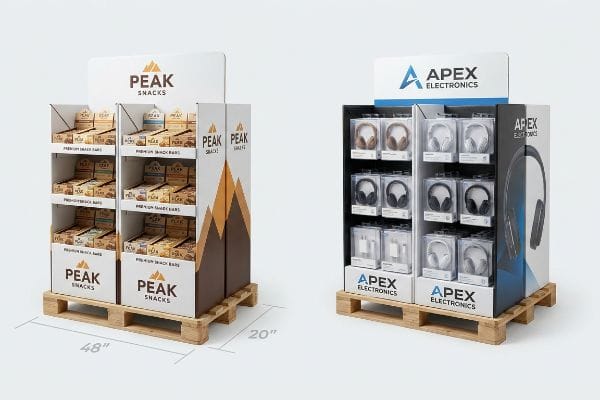
Colocar con éxito la mercancía en un local no se trata de construir el espacio más grande, sino de dominar la geometría del espacio comercial.
Las matemáticas espaciales de la exhibición de productos
Los fundadores de marcas suelen diseñar expositores de gran tamaño para albergar todo su catálogo de productos, con la esperanza de que una presencia masiva domine el pasillo. Presentan estos diseños de todo o nada a los compradores, dando por sentado que la magnitud de la campaña garantiza el dominio del punto de venta. No tienen en cuenta las estrictas limitaciones de flujo de tráfico impuestas por los gerentes regionales de las tiendas .
Es una trampa común que atrapa incluso a equipos de compras experimentados cuando asumen que una campaña debe monopolizar toda una base de madera. He visto clientes perder lucrativas ubicaciones navideñas porque su pesada estructura de 250 libras (113,3 kg) bloqueaba físicamente los carriles de carritos de compra que cumplen con la Ley de Estadounidenses con Discapacidades (ADA)¹², lo que resultaba en una fuerte fricción cuando un gerente tenía que arrastrar agresivamente la unidad rígida por un piso de baldosas hasta un almacén. Soluciono esto diseñando unidades a granel con precisión a dimensiones fraccionarias estándar, específicamente medios palets de 48 × 20 pulgadas (121,9 × 50,8 cm). Esta subdivisión matemática garantiza que su campaña pueda compartir perfectamente un solo palet con otra marca. Al utilizar la arquitectura fraccionaria, usted brinda a los compradores minoristas la flexibilidad para maximizar sin problemas su densidad de piso, aumentando drásticamente sus posibilidades de obtener ubicaciones privilegiadas en intersecciones de alto tránsito.
| Error común de principiante | La solución profesional | Beneficio para el punto de venta |
|---|---|---|
| Obligando a ocupar toda la superficie del palé | Dimensiones fraccionarias de ingeniería | Cabe en pasillos estrechos |
| Bloqueo del tráfico de carritos de compra | Cumplir con los límites de 48 × 20 pulgadas13 | Evita la destitución del gerente |
| Ignorando la densidad del piso (matemáticas14) | Arquitecturas base modulares | Obtiene la aprobación del comprador más rápido |
Siempre diseño teniendo en cuenta las restricciones de espacio en los pasillos del minorista antes de considerar el diseño gráfico. Ofrecer a los compradores opciones de distribución modular elimina su principal excusa para rechazar la mercancía.
🛠️ Harvey's Desk: ¿Te cuesta encajar tu campaña de venta minorista en un pasillo de grandes almacenes con mucha competencia? 👉 Consigue mis plantillas de palets fraccionados ↗ — Sin formularios que generen interminables llamadas de ventas. Solo valor puro.
¿Qué es un trabajo de exhibición de producto?
Enviar cajas de cartón planas a un almacén externo para su ensamblaje parece sencillo hasta que el papel empieza a rebelarse contra los trabajadores.
Un trabajo de exhibición de productos implica el ciclo completo de cumplimiento físico de una campaña minorista. Esto incluye el troquelado mecánico de paneles estructurales en bruto, el plegado automatizado o manual, la aplicación de adhesivos de alta resistencia, la integración de artículos promocionales en las bandejas y la paletización final para el envío a los centros de distribución de grandes superficies.
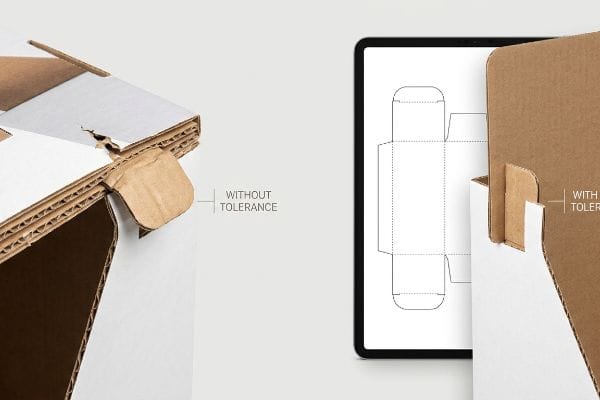
Gestionar este proceso que requiere mucha mano de obra exige tener en cuenta variables ambientales que alteran por completo el comportamiento de los materiales en la línea de montaje.
La pesadilla del montaje tras los expositores de productos
Los ingenieros estructurales en oficinas con temperatura controlada suelen establecer las tolerancias de las ranuras de troquelado basándose en el calibre seco absoluto de la placa¹⁵.Calculan ajustes milimétricos exactos para las pestañas de enclavamiento, asumiendo que el material permanecerá perfectamente estático durante el almacenamiento. Pasan por alto los intensos cambios ambientales que sufren estos componentes durante el transporte marítimo¹⁶o el almacenamiento en regiones costeras húmedas.
Sé que puede que confíe en sus archivos digitales, pero basarse en cálculos para ambientes secos es peligroso al realizar envíos a entornos húmedos como Florida. Durante un reciente trabajo de coempaquetado, un testliner de flauta B poroso absorbió tanta humedad ambiental17 que se hinchó físicamente, y vi a un trabajador aplastar agresivamente las flautas y rasgar la hoja superior impresa solo para intentar forzar una pestaña hinchada en una ranura imposiblemente estrecha. Para evitar esta ralentización, incorporo automáticamente un amortiguador de humedad directamente en nuestros troqueles estructurales, añadiendo 0,04 pulgadas (1,01 mm) adicionales de espacio libre18 a todas las ranuras de recepción. Este ajuste matemático tiene en cuenta la expansión del papel, lo que garantiza que el coempaquetador experimente un ensamblaje sin fricción, ahorrándole miles en costos de mano de obra por hora y evitando costosos daños por desgarro del material.
| Error común de principiante | La solución profesional | Beneficio para el punto de venta |
|---|---|---|
| Redacción de espacios de tolerancia cero | Agregar topes de 0,04 pulgadas (1,01 mm)19 | Elimina los gráficos rasgados |
| Ignorando la humedad ambiental | Ingeniería para la hinchazón por humedad20 | Acelera la línea de montaje |
| Forzando las matemáticas de la sala seca | Prueba de los límites del material hinchado | Reduce los costos de co-envasado |
Me niego a aprobar un troquel sin saber dónde se realizará el ensamblaje final. Tener en cuenta la humedad regional influye directamente en la rapidez con la que un operario puede fabricar la unidad.
🛠️ Escritorio de Harvey: ¿Están sus mecanismos de exhibición entrelazados diseñados para condiciones de transporte húmedas? 👉 Obtenga una prueba de fricción de ensamblaje gratuita ↗ — Acceso directo a mi escritorio. Sin spam de ventas automatizado, lo prometo.
¿Qué es un embalaje expositor?
Aplicar un acabado brillante de alta calidad a sus cajas plegables les da un aspecto costoso, pero esa misma química destruye los componentes flexibles de las pantallas.
El embalaje de exhibición actúa como una capa híbrida fundamental que protege los productos individualmente a la vez que los presenta visualmente al consumidor. Requiere una ingeniería de materiales precisa para equilibrar las propiedades de barrera protectora con una estética de alta fidelidad para el punto de venta, asegurando que la unidad destaque en los estantes sin comprometer su integridad estructural.
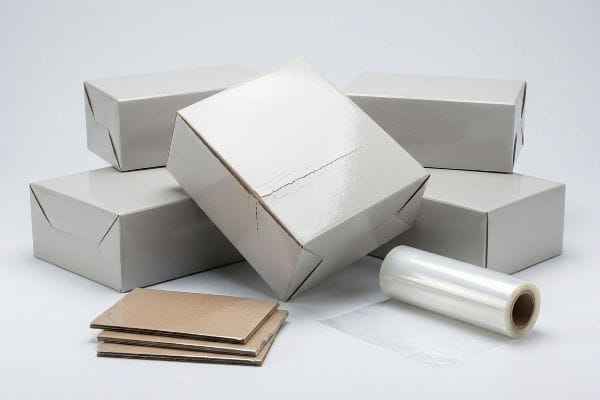
Lograr un equilibrio entre la protección de barrera y el atractivo en el lineal se convierte en un desafío enorme cuando las tintas rígidas entran en contacto con maquinaria de plegado mecánica de alta exigencia.
Fallos de materiales flexibles en envases para exhibición
Los equipos de marca suelen asumir que los barnices litográficos rígidos estándar utilizados en cajas planas se pueden adaptar fácilmente a estructuras híbridas delgadas y flexibles. Aprueban recubrimientos de alto brillo sin probar cómo reaccionará el polímero curado a la rápida tensión aplicada por los equipos automatizados de envasado vertical de formado, llenado y sellado21.Esto ignora la elasticidad fundamental necesaria para los procesos automatizados de alta velocidad22.
Aplicar barnices rígidos a un sustrato que necesita doblarse 180 grados 23 es una receta para fallas mecánicas instantáneas en la línea. Una vez, audité una producción en un clima seco donde el barniz rígido estándar se rompió literalmente bajo la presión de la rueda de corte, y el sonido agudo de la tinta curada al fracturarse dejó al descubierto el papel crudo debajo. Para evitar esta microfractura, aplico estrictamente un protocolo de laminación con película elástica antigrietas 24 para todos los componentes de pantalla flexibles o pliegues de encabezado extremos. Esta capa de polímero especializada se mueve en armonía con la fibra del sustrato en lugar de resistirse a ella. La implementación de esta química flexible reduce drásticamente el tiempo de inactividad de la máquina y garantiza que sus barreras de humedad permanezcan completamente intactas, manteniendo los productos de consumo de alta rotación ( FMCG ) frescos y con una apariencia impecable
| Error común de principiante | La solución profesional | Beneficio para el punto de venta |
|---|---|---|
| Utilizando barnices litográficos rígidos | Aplicación de laminación con película elástica25 | Detiene la fractura mecánica |
| Ignorando la tensión de plegado | Adaptación de la química a curvas de 180 grados26 | Mantiene intactas las barreras protectoras |
| Acelerar el secado de los recubrimientos | Utilizando capas flexibles antigrietas27 | Evita que queden expuestos los bordes del papel |
Siempre adapto la elasticidad del recubrimiento a la tensión mecánica de la maquinaria de plegado. Un acabado impecable es inútil si se rompe en el momento en que la máquina lo estira.
🛠️ Harvey's Desk: ¿Tu acabado brillante premium se romperá al contacto con una máquina plegadora automática? 👉 Solicita mi guía rápida de laminación de películas ↗ — Descarga segura. Mi bandeja de entrada está abierta si tienes alguna pregunta más adelante.
¿Cuál es la definición de embalaje de exhibición?
La definición teórica de la puesta en escena en tiendas es sencilla, pero la química física de la unión del papel impreso al tablero estructural es extremadamente compleja.
La definición de embalaje para exhibición abarca diseños estructurales especializados, concebidos para adaptarse sin problemas tanto al transporte a granel como a las presentaciones en puntos de venta para el consumidor. Esta categoría exige un cumplimiento estricto de las tolerancias de fabricación, los procesos de curado químico y los estándares logísticos para garantizar la visibilidad de la marca, la rigidez estructural y el cumplimiento normativo en diversos entornos de distribución.
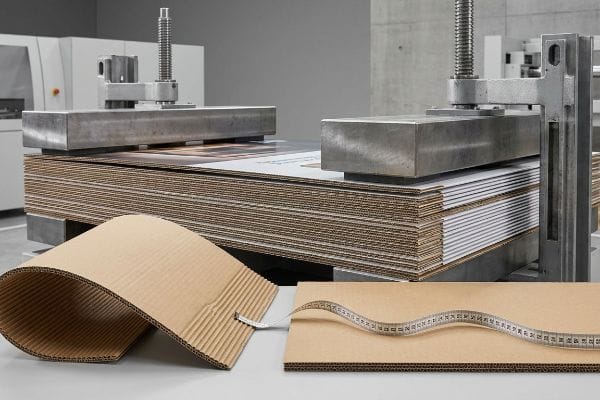
Pero conocer la teoría no es suficiente cuando las máquinas empiezan a funcionar y tus hojas impresas con tanta belleza comienzan a comportarse como una esponja.
Por qué fallan los envases de exhibición estándar en la planta de producción
En mi empresa, es frecuente que los clientes asuman que al montar una lámina superior impresa de alta calidad sobre un cartón corrugado rígido de flauta B se obtiene automáticamente un panel de visualización perfectamente plano. Aprueban las pruebas digitales planas, ignorando por completo la realidad química del proceso de laminación litográfica28.Esto pasa por alto la enorme tensión superficial que se crea cuando los adhesivos húmedos interactúan con los revestimientos secos y porosos29.
Lograr que una pantalla se mantenga en pie en un laboratorio es fácil, pero esta es la cruda realidad cuando se envían 500 de ellas utilizando adhesivo de PVA (acetato de polivinilo) a base de agua en grandes superficies. A medida que el pegamento se seca en el aire de la fábrica, se contrae agresivamente30 µm; recientemente medí un panel lateral de 60 pulgadas (152,4 cm) que se curvó hacia adentro 0,85 pulgadas (2,15 cm), deformándose como una patata frita e imposibilitando el montaje de la base. Para contrarrestar esta intensa tensión, diseño un estricto protocolo de peso de curado en la planta de producción, apilando los paneles húmedos bajo placas de presión de peso muerto exacto durante 24 horas para forzar un curado químicamente plano. Al exigir esta fase de secado estructural equilibrada, garantizo que sus paneles de 5 pies se mantengan perfectamente rectos en el punto de venta, evitando el colapso total de la unidad y salvando todo el lanzamiento de su campaña.
| Error común de principiante | La solución profesional | Beneficio para el punto de venta |
|---|---|---|
| Suponiendo que los adhesivos húmedos se secan planos | Imponer un curado de peso muerto de 24 horas31 | Garantiza que los paneles queden rectos |
| Ignorando la tensión superficial química | Estructuras de revestimiento de madera equilibradas32 | Evita que las patatas fritas se deformen |
| Componentes laminados de alta velocidad | Prensado controlado en planta de producción33 | Evita fallos en el ensamblaje de la base |
Considero la aplicación del adhesivo como una prueba de resistencia química, no solo como una forma de fijar gráficos. Lograr un curado perfectamente plano bajo una fuerte presión mecánica es fundamental para formatos grandes.
🛠️ Oficina de Harvey: No permita que un defecto estructural de 2 milímetros arruine el lanzamiento de 500 tiendas. 👉 Envíeme su archivo de troquelado ↗ — Analizaré los cálculos antes de que malgaste su presupuesto en la producción en masa.
Conclusión
Puedes elegir al proveedor más barato, pero cuando esos paneles laminados litográficos gigantes se deforman agresivamente por la tensión descontrolada de la humedad del PVA, la base resultante se deformará por completo y provocará rechazos inmediatos por parte de los minoristas. Más de 500 gerentes de marca utilizan mi lista de verificación de preimpresión para evitar estos errores fatales iniciales. Deja de esperar que tus materiales se sequen planos y permíteme auditar personalmente tu estrategia de producción con mi Revisión Gratuita de Viabilidad de Fábrica ↗ para asegurar tus tolerancias antes de imprimir una sola unidad.
"ECT vs. Resistencia al estallido del papel: Cómo elegir las especificaciones correctas…", https://www.paperindex.com/academy/ect-vs-bursting-strength-of-paper-how-to-choose-the-right-specs-for-electronics-packaging/. [Una fuente autorizada de ingeniería de embalaje explicaría la prueba de estallido de Mullen y su función en la medición de la presión que puede soportar un cartón corrugado antes de romperse. Función de la evidencia: especificación técnica; tipo de fuente: estándar de la industria. Apoyos: la confianza en métricas estructurales específicas para determinar la durabilidad del cartón. Nota de alcance: comparación de la resistencia al estallido con la prueba de aplastamiento de bordes (ECT) para la resistencia al apilamiento.] ↩
"Expositores de palets personalizados para venta al por menor | Fácil montaje", https://blingblingpackaging.com/products/custom-pop-displays/custom-pallet-displays/. [Los estándares de la industria para el diseño de embalajes especifican el espacio libre preciso necesario para evitar que el palé sobresalga y garantizar la estabilidad durante el apilamiento doble]. Función de la evidencia: especificación técnica; tipo de fuente: manual de ingeniería de embalaje. Soportes: reducción de la huella para la apilabilidad. Nota de alcance: aplicable a palets GMA estándar. ↩
"[PDF] Efecto de la rigidez de la plataforma del palé y los factores de carga unitaria en…", https://www.unitload.vt.edu/content/dam/unitload_vt_edu/graduate-research-and-subpages-pictures-and-docs/thesis-and-dissertations-/Baker%20-%20ETD%20-%20Effect%20of%20pallet%20deckboard%20stiffness%20and%20unit%20load%20factors%20on%20corrugated%20box%20compression%20strength.pdf. [El análisis estructural del cartón corrugado demuestra que la capacidad de carga vertical se maximiza cuando las esquinas de la caja están alineadas directamente con los soportes de la plataforma del palé]. Función de la evidencia: afirmación estructural; tipo de fuente: estudio de ciencia de los materiales. Soportes: prevención del aplastamiento del nivel inferior. Nota de alcance: específico para expositores de cartón corrugado. ↩
"Estándares de presentación digital CAD – Ciudad de Columbus, Ohio", https://www.columbus.gov/Services/Columbus-Water-Power/Information-for-Customers/Public-Utility-Contractors/CAD-Digital-Submission-Standards. [Las directrices de cumplimiento logístico para la recepción minorista establecen que los envíos que exceden el espacio del palé son propensos a sufrir daños y rechazos sistemáticos]. Función de la evidencia: cumplimiento de la industria; tipo de fuente: manual de logística minorista. Apoya: eliminación de rechazos de recepción. Nota de alcance: varía según el minorista. ↩
"Idoneidad de los sustratos a base de papel para la electrónica impresa – PMC", https://pmc.ncbi.nlm.nih.gov/articles/PMC8839088/. [La literatura técnica sobre sustratos de impresión explica cómo la absorción de tinta en las fibras porosas provoca una ganancia de punto, lo que altera el color previsto de los patrones CMYK superpuestos]. Función de la evidencia: verificación técnica; tipo de fuente: manual de ingeniería de impresión. Apoya: el mecanismo físico que causa la degradación del color en el cartón crudo. Nota de alcance: se aplica específicamente a materiales corrugados sin sellar. ↩
"Por qué los colores impresos se ven diferentes en cajas de cartón kraft frente a cajas blancas – Upack", https://www.upack.in/blog/post/why-do-printed-colors-look-different-on-kraft-vs-white-boxes?srsltid=AfmBOoqrXirzDuI-dzcYtlgXrcrR6voN_pLERKKOjMBAviX10T-XAmGI. [Las guías técnicas sobre impresión de cartón ondulado explican cómo la naturaleza porosa del cartón kraft crudo provoca la absorción de tinta y la ganancia de punto, distorsionando los medios tonos CMYK]. Función de la evidencia: explicación técnica; tipo de fuente: estándar de la industria de la impresión. Apoya: por qué falla el CMYK en cajas de envío sin recubrimiento. Nota de alcance: se aplica a cartón ondulado sin recubrimiento. ↩
"Guía completa para exhibidores en puntos de venta para tiendas minoristas", https://colorreflections.com/digital-printing-news/the-complete-guide-to-point-of-purchase-displays-for-retail-stores/. [Los estudios de visual merchandising minorista proporcionan datos sobre el contraste y la densidad de color óptimos necesarios para el reconocimiento de la marca desde distancias específicas del comprador]. Función de la evidencia: verificación de métricas; tipo de fuente: investigación de visual merchandising. Apoya: impacto de marketing de los colores directos. Nota de alcance: depende del tamaño físico del logotipo. ↩
"Pantone vs. CMYK para empaques personalizados – EcoEnclose", https://www.ecoenclose.com/blog/pantone-vs-cmyk-for-custom-branded-packaging?srsltid=AfmBOorLuSd2czz-gGYhb0hSzWjJ0B_xHtwSP9eVbNHo_W2haI8snG3k. Los estándares de impresión de la industria explican cómo los colores directos proporcionan tonalidades consistentes y vibrantes que evitan la mezcla de colores y la falta de nitidez típicas de la impresión CMYK en cartón crudo. Función de la evidencia: Validación técnica; tipo de fuente: Manual de la industria de la impresión. Apoya: prevención de gráficos confusos. Nota de alcance: Específicamente para sustratos porosos para venta minorista. ↩
"Sellado y recubrimientos de inundación de epoxi: Cómo aplicarlos – UltraClear Epoxy", https://www.bestbartopepoxy.com/blogs/ultraclear/epoxy-seal-flood-coats-how-to-apply-them?srsltid=AfmBOop6lXCbZZk7Vo1pFs-eFJ8q2sLmVTUTbiy_dhXPTYBWU5dDHyFS. Las especificaciones técnicas sobre el tratamiento del sustrato demuestran que un recubrimiento de inundación actúa como imprimación para evitar la absorción de tinta en las fibras, asegurando una mayor saturación y visibilidad del color. Función de la evidencia: Especificación técnica; tipo de fuente: Guía de ciencia de materiales. Apoyos: visibilidad en sustratos absorbentes. Nota de alcance: Aplicable a cartón corrugado y cartón crudo. ↩
"CMYK vs RGB: ¿En qué espacio de color debo trabajar? – Intranet | MCAD", https://intranet.mcad.edu/kb/cmyk-vs-rgb-what-color-space-should-i-work. Los estándares de diseño gráfico documentan la disparidad entre los modelos de color aditivos RGB en pantallas y los modelos sustractivos en impresión, lo que requiere pruebas físicas para la precisión de la marca. Función de evidencia: Práctica estándar; tipo de fuente: Manual de diseño gráfico. Apoya: mantenimiento del valor de marca. Nota de alcance: Principio general de impresión. ↩
"Guía y consideraciones sobre el diseño de tiendas minoristas | JRM Construction", https://www.jrmcm.com/jrm-news/retail-store-layout-considerations/. [Las guías autorizadas de operaciones minoristas y las normas de cumplimiento de la ADA definen requisitos específicos de ancho de pasillo y flujo de tráfico que los gerentes regionales deben hacer cumplir para garantizar la seguridad y la accesibilidad]. Función de la evidencia: verificación de hechos; tipo de fuente: estándar de la industria/manual operativo. Apoya: restricciones en el espacio de exhibición. Nota de alcance: los límites varían según la jurisdicción y el tamaño del minorista. ↩
"Normas ADA para el Diseño Accesible, Título III, Reglamento 28 CFR…", https://www.ada.gov/law-and-regs/design-standards/1991-design-standards/. [Las Normas ADA para el Diseño Accesible especifican anchos mínimos de espacio libre para rutas accesibles en espacios comerciales para garantizar la maniobrabilidad de sillas de ruedas y ayudas para la movilidad]. Función de la evidencia: requisito reglamentario; tipo de fuente: legislación gubernamental. Apoya: la afirmación de que bloquear carriles viola las leyes de accesibilidad. Nota de alcance: Aplicable a propiedades comerciales de EE. UU .
"Guía de dimensiones de carritos de compra: Tabla de tamaños para tiendas minoristas", https://www.trolleymfg.com/shopping-cart-dimensions/. [Un documento estándar de la industria o una guía para minoristas verifica las dimensiones específicas necesarias para mantener la accesibilidad de los pasillos y el flujo de los carritos de compra]. Función de la evidencia: especificación técnica; tipo de fuente: manual de operaciones minoristas. Admite: dimensiones estándar para el espacio de exhibición. Nota de alcance: Las dimensiones pueden variar según los requisitos específicos de los grandes minoristas. ↩
"10 Métricas de Planificación de Espacios de Oficina que Mejoran la Utilización – Matterport", https://matterport.com/blog/office-space-planning-metrics?srsltid=AfmBOooeG9WcDLQtrNGwg–tXRHVjNz4hK2gT1ACcX1jLt072ihp2fWZ. [Los textos académicos o profesionales de gestión minorista explican las fórmulas matemáticas utilizadas para calcular la densidad de ventas y la eficiencia de utilización del espacio]. Función de la evidencia: marco conceptual; tipo de fuente: libro de texto. Apoya: la necesidad de calcular la eficiencia del espacio para la aprobación del comprador. Nota de alcance: Se centra en la relación entre las ventas y la superficie en pies cuadrados. ↩
"Efecto de la humedad relativa, los días de almacenamiento y el embalaje en la nuez pecana...", https://pmc.ncbi.nlm.nih.gov/articles/PMC10092868/. [Una fuente autorizada sobre el diseño de embalajes estructurales explicaría cómo se utilizan las mediciones con calibrador seco para las tolerancias y los riesgos subsiguientes de ignorar la absorción de humedad]. Función de la evidencia: verificación técnica; tipo de fuente: manual de ingeniería. Apoya: la práctica estándar de la industria de utilizar el calibrador seco para las especificaciones iniciales. Nota de alcance: se aplica a cartón corrugado y estructural. ↩
"Influencia de la humedad y la temperatura en las propiedades mecánicas de…", https://bioresources.cnr.ncsu.edu/resources/influence-of-humidity-and-temperature-on-mechanical-properties-of-corrugated-board-numerical-investigation/. [Los datos de ciencia de materiales sobre tableros a base de celulosa cuantificarían la expansión y contracción higroscópica causada por las fluctuaciones de humedad durante el transporte marítimo]. Función de la evidencia: respaldo fáctico; tipo de fuente: estudio de ciencia de materiales. Apoya: la afirmación de que los entornos de tránsito afectan la integridad estructural. Nota de alcance: se centra en los cambios dimensionales inducidos por la humedad. ↩
""Efectos de la humedad relativa en la resistencia a la compresión de…", https://open.clemson.edu/all_theses/3225/. [La documentación de ciencia de materiales sobre cartón corrugado explica cómo las fibras de celulosa absorben vapor de agua, provocando la expansión dimensional del revestimiento]. Función de la evidencia: Verificación técnica; tipo de fuente: Manual de ciencia de materiales. Apoya: La hinchazón física del cartón ondulado tipo B en ambientes húmedos. Nota de alcance: Las tasas de expansión dependen del GSM y el grado específicos del revestimiento. ↩
"Plantillas gratuitas para cajas de exhibición – Descarga de troqueles imprimibles – Pacdora", https://www.pacdora.com/dielines/display-box-dielines. [Las directrices de ingeniería de embalaje proporcionan recomendaciones de tolerancia específicas para las holguras de las ranuras para evitar interferencias en el montaje causadas por la expansión del material]. Función de evidencia: Verificación de especificaciones; tipo de fuente: Estándar de diseño industrial. Apoya: La aplicación de amortiguadores de holgura específicos en troqueles estructurales. Nota de alcance: Los valores de tolerancia pueden variar según el perfil de la acanaladura y el espesor del cartón. ↩
"Tolerancias RSC para máquinas de montaje y empaquetado de cajas – AICC Now", https://now.aiccbox.org/rsc-tolerances-for-case-erectors-and-packers/. [Un manual de ingeniería de embalaje autorizado verificaría las medidas de amortiguación específicas necesarias para evitar fallos del material o roturas de gráficos en expositores de cartón ondulado]. Función de la evidencia: especificación técnica; tipo de fuente: manual de ingeniería. Apoya: tolerancias óptimas de ranura. Nota de alcance: se aplica al diseño estructural del cartón. ↩
"Cómo afecta la humedad a las cajas de cartón ondulado – FlexPAC", https://www.flexp.com/blog/humidity-affects-corrugated-boxes/. [Los documentos técnicos sobre ciencia de los materiales para embalaje explicarían cómo el ajuste de la absorción de humedad evita retrasos en el montaje causados por la expansión del material]. Función de la evidencia: propiedad física; tipo de fuente: documento técnico. Apoyos: impacto de la humedad en el montaje. Nota de alcance: específico para materiales a base de papel. ↩
"Nuevo método para la detección de modos de fallo en recubrimientos transparentes curados con UV… – PMC", https://pmc.ncbi.nlm.nih.gov/articles/PMC9503640/. [Documentación técnica sobre materiales de embalaje que explica cómo se agrietan o delaminan los recubrimientos rígidos bajo la tensión mecánica de los equipos VFFS]. Función de la evidencia: validación técnica; tipo de fuente: manual de ingeniería. Apoya: fallo de recubrimientos rígidos en sustratos flexibles. Nota de alcance: se aplica a barnices poliméricos de alto brillo. ↩
"Eficiencia y automatización: la base tecnológica de las líneas de envasado modernas...", https://www.lantech.com/efficiency-and-automation-the-technological-basis-of-modern-packaging-lines/. [Las normas industriales para maquinaria de envasado especifican los umbrales mínimos de elongación o elasticidad necesarios para evitar la rotura del material durante el procesamiento automatizado de alta velocidad]. Función de la evidencia: verificación de especificaciones; tipo de fuente: norma técnica. Apoya: la necesidad de elasticidad del material para la automatización. Nota de alcance: específico para estructuras híbridas flexibles. ↩
"Fallo del recubrimiento de barrera en el ápice del pliegue | Dr. Kanishka Salwan, Ph.D. …", https://www.linkedin.com/posts/dr-kanishka-salwan-ph-d-4887a8135_packagingscience-barriercoatings-materialengineering-activity-7411932886544842752-h7QH. [La documentación técnica sobre la mecánica de los recubrimientos confirma que los barnices rígidos carecen de las propiedades de elongación necesarias para la deformación de 180 grados, lo que provoca un fallo cohesivo o adhesivo]. Función de la evidencia: Validación técnica; tipo de fuente: Manual de Ciencia de los Materiales. Apoya: Modos de fallo de los recubrimientos rígidos. Nota de alcance: Se aplica a recubrimientos de alto módulo. ↩
"Película de embalaje flexible – Bolsas prefabricadas – Película laminada – Bolsa", https://www.prepac.org/packaging-film/. [Las normas de ingeniería de embalaje especifican el uso de películas de polímero de bajo módulo para distribuir la tensión y evitar la fractura durante los procesos de corte y plegado]. Función de la evidencia: Verificación de la solución técnica; tipo de fuente: Manual de ingeniería de embalaje. Apoyos: Eficacia de las laminaciones antigrietas. Nota de alcance: Específicamente para radios de plegado extremos. ↩
"Barniz vs. Laminación y barniz acuoso | PackMojo", https://packmojo.com/help/varnish-vs-lamination/?srsltid=AfmBOoo9kNL1pOjWeIBrS8foG5km5ahVRQKmXsycu6pjldO2lRSQxOcG. [Una fuente autorizada sobre materiales de embalaje explicaría cómo la película elástica previene el agrietamiento y la fractura mecánica asociados con los barnices rígidos durante el plegado]. Función de la evidencia: Verificación técnica; tipo de fuente: revista de ciencia de los materiales; Apoya: la eficacia de la laminación de película para prevenir fallas estructurales; Nota de alcance: específicamente para cajas plegables flexibles. ↩
"Conversión y sus efectos en las propiedades de barrera de los envases recubiertos…", https://bioresources.cnr.ncsu.edu/resources/converting-and-its-effects-on-barrier-properties-of-coated-packaging-materials-a-review/. [La documentación técnica sobre ingeniería de envases describiría las propiedades químicas y la elasticidad necesarias para que los recubrimientos mantengan la integridad de la barrera durante pliegues bruscos de 180 grados]. Función de la evidencia: Especificación técnica; tipo de fuente: manual de ingeniería de envases; Apoya: la necesidad de una coincidencia química para el mantenimiento de la barrera; Nota de alcance: se aplica a puntos de plegado de alta tensión. ↩
"Recubrimientos de cera para aplicaciones de embalaje de papel: Estudio de…", https://pmc.ncbi.nlm.nih.gov/articles/PMC11926751/. [Los estándares de la industria para la aplicación de recubrimientos industriales detallarían cómo las capas intermedias flexibles evitan el agrietamiento de los recubrimientos secos y la consiguiente exposición de los bordes del papel]. Función de la evidencia: Verificación del proceso; tipo de fuente: manual de recubrimiento industrial; Apoya: el uso de capas flexibles para prevenir fallas en el recubrimiento; Nota de alcance: centrado en procesos de recubrimiento en seco de alta velocidad. ↩
"Entendiendo el embalaje laminado litográfico", https://pmpackaging.com/posts/2025/03/understanding-litho-laminated-packaging. [Una guía de fabricación de embalajes definiría las etapas de unión química y curado del proceso de laminación litográfica]. Función de la evidencia: definición técnica; tipo de fuente: manual de la industria. Apoya: la complejidad de la construcción de embalajes para exhibición. Nota de alcance: se centra en la etapa de laminación. ↩
"Corrugated Board Twist Twist watt – causas y soluciones", https://imisrise.tappi.org/download.aspx?key=92APR097. [La literatura sobre ciencia de los materiales detallaría cómo la humedad del adhesivo provoca hinchazón de las fibras y tensión superficial en los revestimientos corrugados, lo que conduce a la deformación]. Función de la evidencia: explicación causal; tipo de fuente: documento técnico o revista académica. Apoya: la causa física de la curvatura del panel de visualización. Nota de alcance: se refiere específicamente a las interacciones de adhesivos a base de agua. ↩
"[PDF] Adhesivos para madera: Formación de la unión y rendimiento", https://www.fpl.fs.usda.gov/documnts/fplgtr/fplgtr282/chapter_10_fpl_gtr282.pdf. [Las especificaciones técnicas para adhesivos de acetato de polivinilo detallan la contracción volumétrica que se produce durante la evaporación del agua, lo que genera tensiones internas en los materiales unidos]. Función de la evidencia: Verificación técnica; tipo de fuente: ficha técnica del adhesivo. Apoya: el vínculo causal entre el secado del PVA y la deformación estructural. Nota de alcance: Las tasas de contracción reales varían según el grado del producto y el espesor de la aplicación. ↩
"[PDF] UNIÓN ADHESIVA DE MADERA", https://www.woodcenter.org/wp-content/uploads/2018/08/tb1512.pdf. [Los manuales técnicos sobre adhesivos industriales especifican la duración y la presión necesarias para garantizar un secado plano y la estabilización de la unión en materiales de tablero compuesto]. Función de la evidencia: Especificación técnica; tipo de fuente: Guía de fabricación industrial. Apoyos: Tiempo de curado necesario para evitar la deformación. Nota de alcance: Los tiempos de curado pueden variar según la química del adhesivo. ↩
"Cinco razones para la deformación y el alabeo del papel", https://www.goldenpapergroup.com/blog/five-reasons-for-paper-bending-and-warping.html. [Una investigación en ciencia de los materiales explica cómo el equilibrio entre la tensión y la composición de los cartones de revestimiento previene la contracción diferencial y el consiguiente alabeo en forma de "patata frita"]. Función de la evidencia: Principio físico; tipo de fuente: Revista de ciencia de los materiales. Apoya: Relación entre la estructura del cartón de revestimiento y la estabilidad del material. Nota de alcance: Específico para aplicaciones de cartón corrugado y estructural. ↩
"[PDF] Norma de producto para madera laminada encolada estructural", https://www.apawood.org/Data/Sites/1/documents/standards/a190-1/ballot-item-1-for-2022-c1.pdf. [Las normas de ingeniería para la laminación describen cómo el prensado controlado garantiza una distribución uniforme del adhesivo y previene fallos estructurales en los conjuntos base]. Función de la evidencia: Norma de proceso; tipo de fuente: Libro de texto de ingeniería de embalaje. Apoya: Prevención de fallos en el conjunto base. Nota de alcance: Se aplica a embalajes de exhibición de alta resistencia. ↩