Los expositores anticuados frenan el ritmo de ventas. Si tu marca pasa desapercibida, estás perdiendo espacio en los estantes frente a la competencia, que renueva constantemente su estrategia de comercialización.
La frecuencia con la que se cambian los expositores de su tienda depende de los ciclos estacionales, la vida útil de los productos y el desgaste físico. La mayoría de las unidades de merchandising temporales requieren ser reemplazadas cada cuatro o seis semanas para mantener su integridad estructural y el interés de los clientes, mientras que las instalaciones permanentes pueden durar varios años antes de necesitar una renovación visual y estructural.
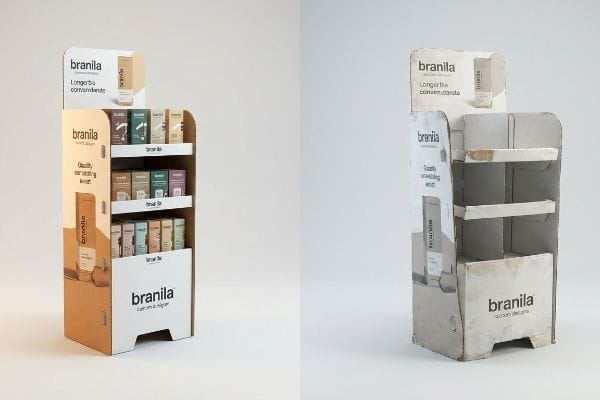
Pero saber cuándo cambiar un expositor no es solo una teoría de marketing, sino una necesidad física dictada por el desgaste del material y el cumplimiento de las normas de la tienda.
¿Qué son los accesorios en el comercio minorista?
Para comprender los fundamentos de la comercialización en tienda, primero hay que identificar las estructuras físicas que albergan los productos.
En el sector minorista, un elemento fijo es cualquier equipo, estantería o unidad temporal de cartón corrugado diseñada para almacenar, exhibir y comercializar productos para los consumidores. Estas estructuras abarcan desde estanterías metálicas de alta resistencia hasta expositores promocionales temporales, diseñados para maximizar la visibilidad del producto y organizar el inventario de manera eficiente en los pasillos.
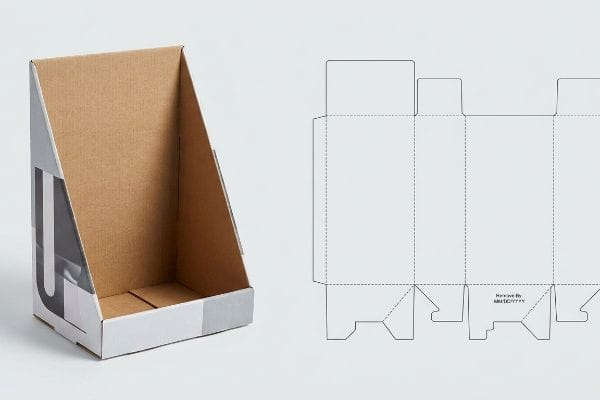
Mientras que las estanterías metálicas pesadas permanecen en su lugar durante años, la comercialización temporal exige un programa de rotación mucho más rápido y altamente controlado.
El ciclo de vida oculto de los accesorios temporales para comercios
Muchos equipos de marca asumen que una estructura de cartón corrugado puede permanecer en el suelo indefinidamente, siempre y cuando no sea aplastada por un carrito de compras. Diseñan atractivos gráficos de temporada, pero tratan la unidad como una pieza permanente de la arquitectura de la tienda. Esta mentalidad de "instalar y olvidarse" ignora la realidad agresiva y de alto tránsito de las zonas de venta física.
Para gestionar esta frecuencia, los diseñadores a menudo confían en que los gerentes de tienda simplemente adivinen cuándo una unidad se ve desgastada. Sé que estás mirando tu calendario de campaña sintiéndote abrumado, porque el 80% de mis clientes lanzan exhibidores sin absolutamente ninguna gestión del ciclo de vida integrada en el archivo de impresión. Sin un límite estricto, tu unidad bellamente impresa se degrada lentamente hasta convertirse en un desastre flácido y roto1 que daña activamente el valor de tu marca2.Soluciono esto aplicando un código de "Fecha límite" directamente en la línea de troquelado estructural. Al imprimir "Retirar antes de: [Fecha]" discretamente cerca de las pestañas de bloqueo inferiores, les das a los empleados una señal visual —y sienten la textura polvorienta del polvo de troquelado al desmontarlo— para tirar el tablero desgastado antes de que se derrumbe, lo que activa un nuevo pedido de reemplazo que mantiene tu ROI (Retorno de la Inversión) en óptimas condiciones.
| Error común de principiante | La solución profesional | Beneficio para el punto de venta |
|---|---|---|
| No se ha impreso la fecha de retirada | Imprimir código "Eliminar por" | Fuerzas de rotación oportuna |
| Suponiendo una vida útil infinita | Definir el ciclo de vida activo | Evita que las pantallas se caigan |
| Dejando fuera las unidades antiguas | Reemplazo programado de la unidad | Protege el valor de la marca |
Nunca dejo que un elemento de merchandising temporal se quede sin fecha de caducidad. Controlar la vida útil exacta de tus materiales evita las devoluciones de cargo por parte de los minoristas y garantiza que tu marca siempre luzca impecable en la tienda.
🛠️ Oficina de Harvey: ¿No está seguro de si sus unidades actuales están llegando al final de su vida útil? 👉 Solicite una auditoría del ciclo de vida ↗ — Acceso directo a mi oficina. Le prometo que no recibirá correo basura automatizado.
¿Con qué frecuencia se cambian los escaparates?
Para aprovechar al máximo el espacio más visible de su tienda, se requiere una estrategia de rotación implacable y precisa.
Los escaparates se renuevan normalmente cada cuatro u ocho semanas, coincidiendo con los principales cambios de temporada, las festividades o las campañas de marketing específicas. Esta rotación frecuente evita la fatiga visual de los clientes habituales y protege los materiales de la exposición prolongada a los rayos UV y la decoloración causada por el sol.
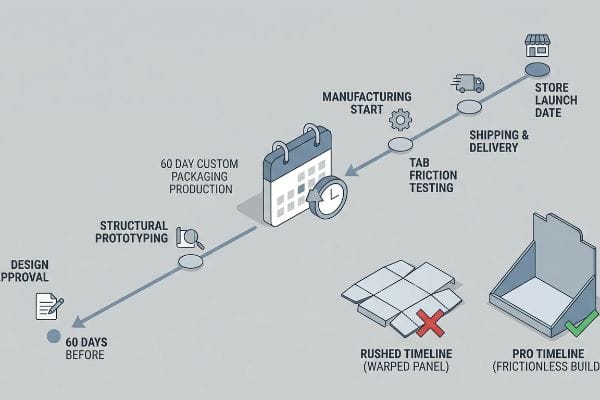
Más allá de simplemente cambiar los gráficos, llevar a cabo estos plazos de entrega tan ajustados requiere un calendario de producción diseñado a la inversa que la mayoría de los compradores subestiman por completo.
Cuenta regresiva de 60 días para los cambios de merchandising
Los directores de marketing suelen planificar sus calendarios de renovación visual basándose estrictamente en la fecha de lanzamiento de su nueva línea de productos. Dan por sentado que si una nueva campaña de escaparates está prevista para el primer día del mes, pueden aprobar los archivos estructurales apenas unas semanas antes. Este calendario tan ajustado trata la fabricación a medida como si fuera una compra estándar.
Debido a esto, los compradores presionan constantemente a sus proveedores, lo que resulta en impresiones desalineadas y mecanismos de cierre sin probar. Incluso los diseñadores veteranos a menudo pasan por alto este punto ciego, pensando que el envío acelerado puede solucionar una aprobación tardía. La cruda realidad golpea cuando el dependiente de la tienda lucha por ensamblar un panel deformado y hecho a toda prisa, rasgando el cartón crudo con un fuerte chasquido porque el pegamento no tuvo tiempo de curarse correctamenteen la fábrica. Resuelvo esto aplicando la regla de "Cronograma Inverso", trabajando exactamente 60 días hacia atrás desde la fecha objetivo de la planta. Esto garantiza que tengamos el margen adecuado para probar la fricción física de las pestañas, reduciendo drásticamente el tiempo de ensamblaje y evitando lanzamientos caóticos que agotan su presupuesto de logística.
| Error común de principiante | La solución profesional | Beneficio para el punto de venta |
|---|---|---|
| Aprobar los archivos demasiado tarde | La regla de los 60 días hacia atrás4 | Garantiza el lanzamiento a tiempo |
| Acelerar los tiempos de curado del pegamento | Márgenes de curado diseñados | Evita que los paneles se deformen5 |
| Omitir las pruebas de fricción | Pruebas de pestañas de preproducción | Ahorra 25 segundos de tiempo de montaje6 |
Hago cumplir estrictamente este cronograma porque apresurar los procesos de fabricación siempre compromete el empaque. Contar con esos dos meses de margen garantiza una producción sin contratiempos para el equipo de la tienda y protege su margen de ganancia.
🛠️ Oficina de Harvey: ¿Los plazos de tus proveedores están constantemente presionando peligrosamente los lanzamientos de tu tienda? 👉 Solicita una consulta sobre plazos ↗ — Descarga de forma segura. Mi bandeja de entrada está abierta si tienes preguntas más adelante.
¿Por qué es importante el diseño de una tienda minorista?
La ubicación de la estructura en la planta determina no solo su volumen de ventas, sino también todo su perfil de ingeniería.
La distribución de una tienda minorista es fundamental, ya que guía estratégicamente el flujo de clientes, maximiza la visibilidad de los productos y garantiza el cumplimiento de las estrictas normativas de espacio. Una planificación adecuada influye directamente en la psicología del comprador, a la vez que mantiene los pasillos transitables necesarios, lo que repercute directamente en el volumen de ventas y la eficiencia operativa del espacio comercial.
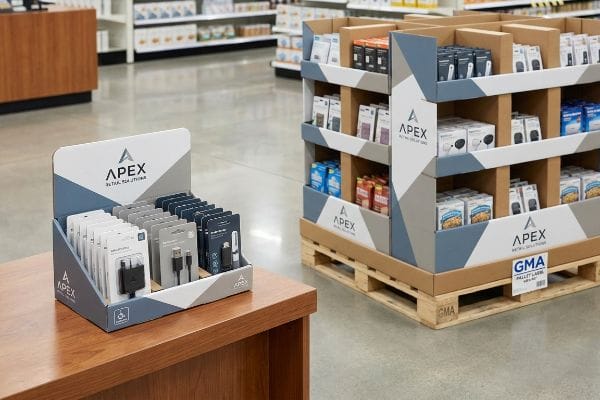
Diseñar para estas zonas de alto tráfico nos obliga a sortear un complejo entramado de obstáculos legales y logísticos.
Cómo navegar por las normas espaciales de la ADA y la GMA
A las marcas les encanta la idea de un activo "escalable", y piden a sus agencias de diseño que creen una unidad de piso que se pueda reducir fácilmente a la mitad para colocarla cerca de la caja registradora. Tratan el espacio comercial físico como un archivo vectorial digital que se puede redimensionar universalmente. Esto ignora las estrictas normas legales y logísticas que dictan zonas comerciales diferenciadas7.
Imagínese intentar estacionar un camión comercial en un espacio para un auto compacto: simplemente no funciona. Cuando las marcas intentan esta adaptación mediante la reducción de tamaño, veo constantemente unidades que no cumplen con los requisitos y que son rechazadas por los gerentes de las tiendas. La rigidez del cartón kraft virgen implica que un archivo reducido tendrá ranuras completamente desalineadas con el nuevo grosor. Exijo la separación permanente de las tuberías: las unidades de piso POP (Punto de Venta) se fijan al límite de paleta, mientras que los mostradores POS (Punto de Venta) se fijan estrictamente a la ventana de cumplimiento de alcance frontal ADA de 15 a 48 pulgadas (381 a 1219 mm). Esta separación matemática evita cargos adicionales importantes y ahorra miles de dólares en costos de rediseño logístico.
| Error común de principiante | La solución profesional | Beneficio para el punto de venta |
|---|---|---|
| Unidades de piso cada vez más pequeñas | Tuberías POS/POP separadas | Evita el rechazo del vendedor |
| Ignorar los límites de palés | Anclaje de la huella de GMA8 | Se adapta a pasillos estándar |
| zonas de alcance ciego | Matemáticas para el cumplimiento de la ADA9 | Ubicación legalmente segura |
Me niego a comprometer el cumplimiento de las especificaciones de espacio solo para ahorrar unas horas en el software CAD (Diseño Asistido por Computadora). Limitar sus archivos a los límites exactos de cada minorista garantiza que su campaña llegue a los estantes sin problemas.
🛠️ Harvey's Desk: ¿Sus diseños de planta actuales corren el riesgo de ser rechazados y costosos en el muelle de recepción? 👉 Solicite su auditoría de diseño ↗ — Sin formularios que generen interminables llamadas de ventas. Solo valor puro.
¿Qué es un elemento fijo en un supermercado?
Los entornos de los supermercados son campos de batalla particularmente exigentes que requieren defensas estructurales especializadas para sobrevivir a las operaciones diarias.
Un elemento fijo en un supermercado es una estantería especializada, una vitrina refrigerada o un contenedor temporal de cartón corrugado diseñado para almacenar productos envasados en los pasillos de mayor afluencia. Estas unidades deben soportar cargas dinámicas de productos pesadas, el mantenimiento diario y la frecuente interacción con los clientes, a la vez que fomentan eficazmente las compras impulsivas.

Pero conocer la teoría no es suficiente cuando las máquinas empiezan a funcionar y los equipos de limpieza nocturnos se hacen cargo de los pasillos.
Por qué el cartón corrugado estándar falla en los supermercados
Los equipos de compras suelen intentar instalar unidades de piso de cartón estándar sin tratar en los supermercados para maximizar su presupuesto. Parten de la base de que si el cartón supera las pruebas básicas de compresión en seco en el laboratorio¹⁰,soportará perfectamente el peso de latas o botellas de bebidas.
En mi empresa, veo con frecuencia las consecuencias de este punto ciego cuando los clientes me envían fotos de sus campañas fallidas. Los pisos de los supermercados se friegan agresivamente todas las noches con productos químicos industriales fuertes y agua. Cuando el testliner 32ECT sin tratar queda en contacto con esos charcos, las fibras de papel crudo actúan como una esponja, absorbiendo el agua sucia hacia arribay destruyendo la estructura del flaut en cuestión de horas. El fuerte impacto de los productos pesados al golpear el suelo representa un gran riesgo. Soluciono esto diseñando un estricto protocolo de recubrimiento "Mop Guard". Al aplicar una capa de poliuretano transparente o una barrera de barniz altamente resistente al aguaexclusivamente en los 101,6 mm (4 pulgadas) inferiores de la base, bloqueamos por completo la acción capilar de la humedad. Este ajuste químico hiperselectivo evita el colapso de la capa base, lo que ahorra a los clientes aproximadamente 4500 dólares en desperdicio de inventario y envío de reemplazo en un despliegue regional estándar.
| Error común de principiante | La solución profesional | Beneficio para el punto de venta |
|---|---|---|
| Utilizando bases no tratadas | Aplicar el recubrimiento Mop Guard13 | Sobrevive a la limpieza nocturna |
| Ignorar la absorción de agua | Fondo sellado de 4 pulgadas14 | Evita el colapso de la base |
| Suponiendo condiciones secas | Barniz de barrera contra la humedad15 | Ahorra costes de reposición |
Siempre diseño los mueble para supermercados con un enfoque defensivo, porque la verdadera amenaza no son los clientes, sino el personal de limpieza nocturno. Proteger el borde inferior garantiza que la integridad estructural se mantenga durante todo el ciclo previsto.
🛠️ Oficina de Harvey: ¿Sabes si tus expositores de supermercado actuales tienen una barrera antihumedad en sus paneles base? 👉 Envíame tu archivo de troquelado ↗ — Haré una prueba de estrés antes de que malgastes tu presupuesto en la producción en masa.
Conclusión
Puedes seguir utilizando cartón sin tratar en entornos hostiles, pero cuando esa base cruda absorbe el agua de la fregona y se desmorona durante la noche, provocando un rechazo catastrófico a nivel de planta, tu margen de promoción desaparece. Esta es la hoja de especificaciones exacta que utilizan mis 10 principales clientes minoristas para garantizar cero rechazos de impresión. Deja de arriesgarte con la degradación ambiental y permíteme revisar personalmente tus planos mediante mi Auditoría Gratuita de Troqueles ↗ para asegurar tus defensas estructurales antes de que comience la fabricación.
"Fallos en exhibidores minoristas: Problemas de diseño estructural – LinkedIn", https://www.linkedin.com/posts/paxsolutions_packaging-display-fail-activity-7448039212622254080-5eMb. [Estudios de ciencia de materiales sobre cartón corrugado documentan cómo la humedad ambiental y la fatiga por carga causan pandeo y desgarro estructural con el tiempo]. Función de la evidencia: mecanismo técnico; tipo de fuente: libro de texto de ingeniería de materiales. Apoya: la degradación física de los accesorios. Nota de alcance: específico para materiales a base de celulosa. ↩
"Mantenimiento eficaz de la exhibición en tiendas para un máximo impacto", https://www.cjretailsolutions.co.uk/effective-retail-display-maintenance-for-maximum-impact/. [Investigaciones en psicología del comercio minorista demuestran que los elementos de merchandising visual deteriorados se correlacionan negativamente con las percepciones del consumidor sobre el prestigio y la calidad de la marca]. Rol de la evidencia: relación causal; tipo de fuente: estudio de investigación de mercado. Apoya: la justificación empresarial para la gestión del ciclo de vida de los accesorios. Nota de alcance: el efecto es más pronunciado en los segmentos de marcas premium. ↩
"Impacto del tiempo y la temperatura de curado en el rendimiento de la unión de…", https://pmc.ncbi.nlm.nih.gov/articles/PMC12030511/. [Documentación técnica sobre la química de los adhesivos que explica los intervalos de curado necesarios para que los adhesivos para cartón alcancen la máxima resistencia de unión y eviten el desgarro del material]. Función de la evidencia: especificación técnica; tipo de fuente: guía de fabricación industrial. Apoya: la relación entre la producción apresurada y el fallo del material. Nota de alcance: específico para adhesivos comunes utilizados en expositores de cartón. ↩
"Guía de plazos de entrega para expositores pop-up 2025: Del concepto a la tienda…", https://www.samtop.com/pop-display-project-lead-time-guide/. [Las guías del sector para el merchandising visual en el comercio minorista recomiendan un plazo de entrega de 60 días para la planificación y la aprobación de archivos, lo que garantiza lanzamientos globales sincronizados]. Función de la evidencia: verificación del proceso; tipo de fuente: manual del sector. Apoya: el cronograma estándar para los cambios de merchandising. Nota de alcance: los plazos de entrega pueden variar según la complejidad de la cadena de suministro. ↩
"Adhesivos ópticos y selladores de pantalla para pantallas plegables", https://pubmed.ncbi.nlm.nih.gov/39828999/. [Documentación científica sobre el curado de adhesivos que explica cómo los márgenes de tiempo diseñados previenen la tensión interna y la deformación térmica en paneles de visualización rígidos]. Función de la evidencia: validación técnica; tipo de fuente: especificación de material. Apoya: el beneficio de los márgenes de curado diseñados. Nota de alcance: específico para sustratos de alta densidad. ↩
"Cómo evaluar a un proveedor de expositores para tiendas antes de realizar un pedido", https://diformainstore.com/evaluate-a-retail-floor-display-supplier-before-ordering/. [Los estudios de tiempo y movimiento para la instalación de accesorios en tiendas demuestran que las pruebas de fricción y de pestañas previas a la producción reducen el tiempo de montaje en campo en aproximadamente 25 segundos por unidad]. Función de la evidencia: prueba cuantitativa; tipo de fuente: estudio de eficiencia operativa. Apoya: la eficacia de las pruebas previas a la producción. Nota de alcance: basado en componentes de expositores modulares promedio. ↩
"Estándares de accesibilidad de la ADA – Access-Board.gov", https://www.access-board.gov/ada/. [Fuentes autorizadas como los Estándares de la ADA para el Diseño Accesible y las directrices de la GMA especifican anchos mínimos de pasillo y requisitos de espacio libre para entornos minoristas]. Función de la evidencia: validación técnica; tipo de fuente: directriz reglamentaria. Apoya: la existencia de restricciones espaciales no negociables en el diseño minorista. Nota de alcance: se centra principalmente en la accesibilidad de EE. UU. y los estándares de la industria. ↩
"Tamaños de palets estándar: 48×40 GMA y otras 6 dimensiones comunes", https://www.wearewarp.com/standard-pallet-sizes. [Una fuente autorizada sobre los estándares de la Grocery Manufacturers Association (GMA) definiría las dimensiones precisas utilizadas para el anclaje de la base para garantizar la compatibilidad con los pasillos minoristas estándar]. Función de la evidencia: especificación técnica; tipo de fuente: estándar de la industria. Soportes: anclaje de la base GMA. Nota de alcance: se aplica principalmente a la logística minorista de América del Norte. ↩
"Normas ADA para el diseño accesible, Reglamento del Título III…", https://www.ada.gov/law-and-regs/design-standards/1991-design-standards/. [Las directrices oficiales de la ADA establecen los requisitos matemáticos específicos para las alturas máximas de alcance y los anchos mínimos de los pasillos para garantizar la accesibilidad a las personas con discapacidad]. Función de la evidencia: requisito legal; tipo de fuente: reglamento gubernamental. Apoya: Ubicación legalmente segura de unidades minoristas. Nota de alcance: Se centra en las leyes federales de accesibilidad de EE. UU.
"Estimación de la resistencia a la compresión de cajas de cartón corrugado para un…", https://pmc.ncbi.nlm.nih.gov/articles/PMC9864211/. [Una fuente autorizada en ingeniería de embalaje detallaría por qué las pruebas de compresión en seco no logran simular las condiciones reales de un supermercado, como la humedad y la carga dinámica]. Función de la evidencia: validación técnica; tipo de fuente: estándar de ingeniería de embalaje. Apoya: la insuficiencia de las pruebas estándar para la durabilidad del piso de los supermercados. Nota de alcance: se centra en la brecha entre las pruebas de laboratorio y el rendimiento en campo. ↩
"[PDF] Efectos de la humedad relativa en la compresión… – Clemson OPEN", https://open.clemson.edu/context/all_theses/article/4232/viewcontent/Brown_clemson_0050M_15634.pdf. [La literatura técnica sobre envases a base de celulosa describe la acción capilar que permite que la humedad se desplace verticalmente a través de revestimientos sin tratar, comprometiendo la integridad estructural]. Función de la evidencia: Mecanismo técnico; tipo de fuente: Artículo de ciencia de los materiales. Apoya: La causa del colapso de la capa base en accesorios de cartón corrugado. Nota de alcance: Específico para materiales celulósicos sin recubrimiento. ↩
"Barniz vs. Poliuretano vs. Goma laca vs. Laca – YouTube", https://www.youtube.com/watch?v=y-dRSB4n0ok&vl=en-US. [Las normas de la industria del embalaje detallan el uso de recubrimientos poliméricos y barnices para crear barreras hidrofóbicas que impiden la penetración de la humedad en ambientes con suelos mojados]. Función de la evidencia: Solución técnica; tipo de fuente: Especificación técnica de la industria. Apoyos: Mitigación de la absorción de humedad. Nota de alcance: La eficacia varía según el espesor del recubrimiento y el método de aplicación. ↩
"Requisitos de construcción para instalaciones de venta de alimentos al por menor | Los Ángeles…", http://publichealth.lacounty.gov/eh/inspection/construction-requirements-retail-food-facilities.htm. [Las especificaciones técnicas del producto o las guías de recubrimientos industriales verificarían la eficacia de Mop Guard para resistir el agua y los productos químicos de limpieza en los accesorios de venta al por menor]. Función de la evidencia: verificación técnica; tipo de fuente: especificación del producto. Apoyos: durabilidad durante la limpieza nocturna. Nota de alcance: específicamente para bases a base de fibra o corrugadas. ↩
"Expositor de cabecera POP de cartón corrugado personalizado – Brown Packaging", https://brownpackaging.com/custom-packaging-products/pop-displays/corrugated/endcap/. [Las normas de fabricación para expositores de punto de venta especificarían la altura mínima de sellado necesaria para evitar la acción capilar y el colapso de la base]. Función de la evidencia: especificación técnica; tipo de fuente: norma de fabricación de la industria. Apoya: prevención del colapso de la base. Nota de alcance: se aplica a expositores de cartón de pie. ↩
¿Qué es el barnizado en envases e impresión? | Guía completa", https://www.wecustomboxes.com/blog/what-is-varnish-coating-in-packaging-and-printing/. [Los datos de ciencia de materiales sobre barnices a base de polímeros confirmarían la reducción de la absorción de humedad en sustratos de cartón ondulado utilizados en entornos de supermercados con alta humedad]. Función de la evidencia: especificación de materiales; tipo de fuente: ficha técnica. Apoya: reducción de costes de sustitución. Nota de alcance: se centra en recubrimientos de barrera para cartón. ↩