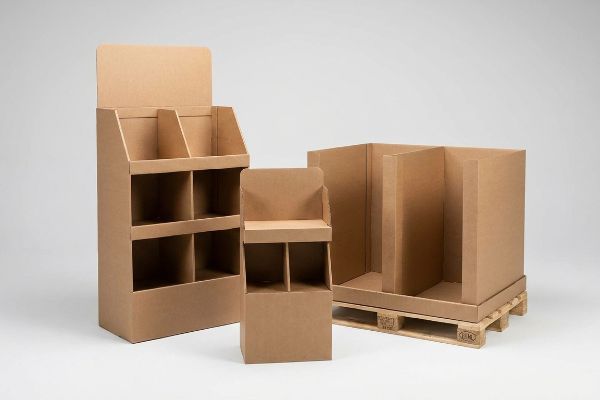
Elegir el expositor adecuado determina si tu producto se vende como pan caliente o termina en el almacén. Requiere encontrar el equilibrio perfecto entre la planificación estructural y el estricto cumplimiento de las normas de las grandes superficies.
Elegir un expositor para puntos de venta implica adaptar el peso del producto y los objetivos de marketing a formatos estructurales específicos, como expositores de suelo, mostrador o palé. Un proceso de selección eficaz garantiza que la geometría del embalaje cumpla con la normativa de la tienda para maximizar la visibilidad y evitar costosos rechazos logísticos o fallos estructurales.

Pero conocer los nombres teóricos de estas unidades no basta cuando se prepara un despliegue masivo de 500 tiendas. Analicemos la realidad física que hay detrás de estas estructuras.
¿Cuáles son los diferentes tipos de expositores para tiendas?
Antes de examinar los troquelados, debe comprender las categorías.
Los distintos tipos de expositores para puntos de venta se clasifican generalmente en unidades de suelo para puntos de venta (POP), bandejas de mostrador para puntos de venta (POS), expositores lineales para estanterías y palés de alta resistencia para grandes almacenes. Los fabricantes diseñan estas diversas estructuras de cartón utilizando perfiles de cartón ondulado específicos para optimizar la capacidad de carga dinámica según la ubicación de la tienda y las dimensiones del producto.
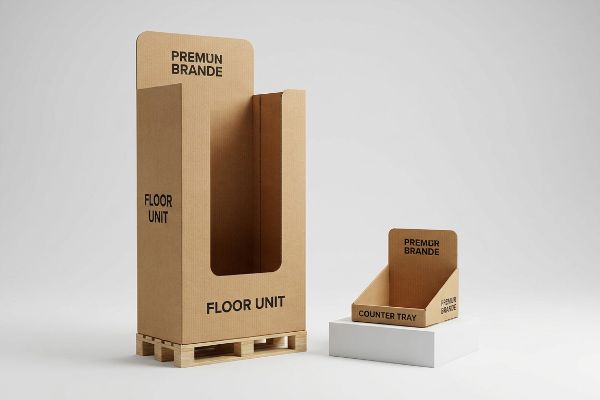
Diferenciar entre una unidad de suelo y una bandeja de registro parece sencillo hasta que se tienen en cuenta las estrictas normas de espacio.
Por qué POP y POS requieren diferentes matemáticas de ingeniería
Los responsables de marca suelen abordar las categorías de venta minorista desde una perspectiva visual, partiendo de la base de que un expositor de suelo exitoso en el punto de venta puede reducirse a la mitad para servir como expositor de caja. Tratan los distintos tipos de unidades como plantillas gráficas intercambiables. Este enfoque se basa exclusivamente en las proporciones estéticas, ignorando los estrictos límites físicos y legales que rigen las zonas comercialesnacionales¹.
Veo constantemente esta trampa de escala cuando los veteranos intentan imponer un troquelado universal. Reducen un enorme contenedor de piso para que quepa en un mostrador, ignorando por completo que estas dos zonas operan con normativas diferentes. En mis instalaciones, separo permanentemente los flujos de trabajo de ingeniería. Los archivadores de piso para puntos de venta se ajustan estrictamente al estándar de la GMA (Grocery Manufacturers Association) de 48 × 40 pulgadas( 1219 × 1016 mm) para soportar la logística pesada del almacén. Por el contrario, los archivadores de mostrador para puntos de venta deben cumplir estrictamente con la ventana de cumplimiento de alcance frontal de la ADA (Americans with Disabilities Act) de 15 a 48 pulgadas( 381 a 1219 mm). Recuerdo haber visto a un gerente de tienda empujar con fuerza una unidad de exhibición de tamaño excesivo, pero reducida, fuera de un mostrador de caja estrecho. El grueso cartón crudo, que superó la prueba de resistencia a la presión de los bordes (32ECT), se rasgó ruidosamente al golpear el suelo, simplemente porque la base era cuatro pulgadas (101,6 mm) demasiado ancha. Al diseñar estos tipos de exhibidores para que se ajusten a sus zonas de exhibición legales específicas desde el primer día, se evitan esos molestos rechazos en la tienda y se garantiza que los encargados de la comercialización lleguen a tiempo al área de ventas.
| Error común de principiante | La solución profesional | Beneficio para el punto de venta |
|---|---|---|
| Unidades de suelo reducibles para mostradores | Cree archivos personalizados que cumplan con la normativa ADA4 | Evita el rechazo de la caja registradora |
| Ignorar los límites de la logística de palés | Bases de anclaje conforme a los estándares de GMA5 | Elimina el voladizo del tránsito |
| Utilizando una plantilla estructural | Canalizaciones POP y POS separadas | Ahorra semanas de trabajo manual |
Me niego a utilizar plantillas universales porque una bandeja de caja registradora y un contenedor de palets experimentan tensiones cinéticas completamente diferentes. Personalizar la geometría estructural para cada tipo de expositor es la única manera de garantizar el cumplimiento total por parte del minorista.
🛠️ Oficina de Harvey: ¿No está seguro de si su expositor de mostrador a escala reducida cumple con los estrictos límites de alcance de la ADA? Envíeme su archivo de troquelado plano. Le indicaré los puntos de fricción problemáticos antes de imprimir. 👉 Obtenga una auditoría de su troquelado ↗ — Acceso directo a mi oficina. Sin spam de ventas automatizado, se lo prometo.
¿Cuáles son las 4 P del merchandising visual?
Una estructura hermosa es inútil si la estrategia subyacente está desconectada de la tienda.
Las cuatro P del merchandising visual son producto, precio, lugar y promoción. Estos principios fundamentales determinan cómo se presenta el inventario físico en un entorno minorista. Los estrategas alinean el diseño del empaque con estos elementos para captar la atención del público, generar impulsos psicológicos e impulsar las ventas en el punto de venta.

Memorizar los cuatro pilares es fácil, pero aplicarlos al cartón corrugado físico es donde la mayoría de las campañas fracasan.
Alineando su marco estructural con la estrategia de las 4 P
Las marcas emergentes suelen intentar lanzar nuevos productos sin dominar los marcos comerciales del comercio minorista, dando por sentado que un producto de alta calidad se venderá solo. Consideran el expositor simplemente como un contenedor de envío, en lugar de un participante activo en el ecosistema promocional. Sin integrar el producto, el precio, la ubicación y la promocióndirectamente en la arquitectura estructural, el expositor resulta ajeno al modelo operativo de la tienda.
Piensa en los cuatro pilares como el ADN de tu estrategia de merchandising, no solo como jerga teórica. Incluso los compradores experimentados preguntan cómo adaptar mensajes promocionales complejos a una simple caja de cartón corrugado sin generar desorden visual. El secreto está en construir una Matriz de Marco de Venta Minorista7 antes de cortar el primer troquel. He visto exhibidores de laminado litográfico con una impresión impecable fracasar estrepitosamente porque la promoción era brillante, pero el lugar no era el adecuado, lo que resultó en una unidad demasiado alta para el pasillo de la tienda de conveniencia objetivo. Debes alinear tu canal de precios específico directamente con los límites de tamaño físico8.Escuchar el golpe sordo de un exhibidor pesado siendo arrojado a un contenedor de basura en la trastienda por violar el espacio promocional específico de una tienda es una dolorosa lección de desalineación estratégica. Al vincular sistemáticamente tu ingeniería estructural con la mecánica operativa exacta del minorista objetivo, tu campaña se integra a la perfección y protege tu inversión en marketing.
| Error común de principiante | La solución profesional | Beneficio para el punto de venta |
|---|---|---|
| Ignorar las reglas específicas de diseño de la tienda | Visualización del mapa a la categoría del minorista | Garantiza una colocación perfecta en el pasillo |
| Ocultar las etiquetas de precio en las sombras estructurales | Labios de retención frontales angulados diseñados por ingenieros | Aumenta la tasa de compras impulsivas9 |
| Sobrecargar cajas con texto promocional | Aislar mensajes individuales de alto contraste | Reduce la sobrecarga cognitiva del comprador10 |
Siempre obligo a mis clientes a comparar su estrategia de marketing con la realidad de las tiendas físicas antes de aprobar cualquier archivo de preimpresión. Integrar los cuatro pilares directamente en el diseño estructural elimina por completo el riesgo de un costoso desajuste logístico.
🛠️ Oficina de Harvey: ¿Confía en que sus gráficos promocionales actuales no entren en conflicto con las limitaciones de categorías de las tiendas físicas? 👉 Solicite una revisión estratégica ↗ — Descargue de forma segura. Mi bandeja de entrada está abierta si tiene alguna pregunta más adelante.
¿Cuáles son los 4 tipos de distribución de tiendas?
El flujo de clientes en las tiendas es como el agua, y sus vendedores deben actuar como represas de alta ingeniería.
Los cuatro tipos de distribución de tiendas son la cuadrícula, el circuito cerrado, el flujo libre y la estructura en forma de espina dorsal. Los supermercados y las grandes superficies utilizan estos patrones arquitectónicos de circulación para controlar sutilmente el movimiento de los consumidores, determinar la ubicación de la mercancía, maximizar la densidad espacial y posicionar estratégicamente los expositores promocionales de cartón ondulado de alto margen en las intersecciones físicas de mayor afluencia.
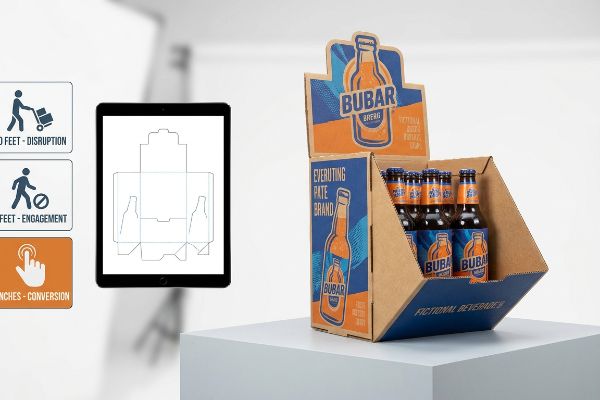
Saber si te encuentras en una red o en un circuito de flujo libre determina la distancia exacta a la que se ubicará tu consumidor.
Diseño para la regla de interacción espacial 3-3-3
Los equipos de marketing suelen diseñar los puntos de venta exclusivamente para una visualización de cerca en sus monitores de computadora retroiluminados de alta resolución. Ignoran la realidad física de cómo los compradores se mueven en los diferentes pasillos. Cuando una pantalla está optimizada únicamente para una distancia de visualización de un metro (3 pies)¹¹, se mimetiza por completo con el entorno visual saturado de una gran red comercial, sin lograr atraer clientes de los pasillos principales.
Conducir un carrito de compras por un almacén gigante es como conducir por una autopista; ignoras las vallas publicitarias a menos que obstaculicen tu visión. Para sobrevivir en cualquiera de los cuatro tipos de diseño, debes seguir estrictamente la regla de interacción espacial 3-3-312.Diseño unidades para captar la atención desde treinta pies de distancia, generar interés específico a tres pies y lograr la conversión táctil a tres pulgadas (76,2 mm). Cuando un cliente intenta imprimir pequeños párrafos de texto para atraer compradores a lo largo de un diseño de lomo largo, la exhibición fracasa instantáneamente. Recuerdo haber pasado mi pulgar sobre un logotipo bellamente grabado pero completamente invisible en el prototipo de un cliente, sabiendo que ningún comprador a treinta pies de distancia en el pasillo podría ver ese costoso detalle. Al utilizar encabezados troquelados enormes y colores planos de alto contraste para ese impacto visual inicial, seguido de un borde frontal rebajado para el agarre táctil, obligas físicamente al ojo humano a interactuar con tu marca independientemente del patrón arquitectónico de la tienda.
| Error común de principiante | La solución profesional | Beneficio para el punto de venta |
|---|---|---|
| Utilizar texto diminuto para generar atracción visual | Utilice formas estructurales troqueladas llamativas | Altera la línea de base visual de 30 pies13 |
| Espaciado uniforme y simétrico del producto | Implementar divisores modulares asimétricos | Crea tensión visual psicológica14 |
| Labios altos que retienen el producto | Recortar el labio delantero para lograr una visibilidad del 85%15 | Conversión táctica sin fricción de 3 pulgadas |
Diseño cada archivo estructural para que cumpla explícitamente con los diferentes umbrales de distancia espacial. Obligar a que un diseño atraiga físicamente a los compradores a treinta pies, tres pies y tres pulgadas garantiza una conversión masiva del flujo de clientes en cualquier diseño.
🛠️ Oficina de Harvey: ¿No está seguro de si su troquelado actual presenta suficientes problemas estructurales visuales como para romper un diseño de cuadrícula masivo? Envíeme su archivo de troquelado plano. Marcaré los puntos de fricción problemáticos antes de la impresión. 👉 Solicite su evaluación estructural ↗ — Sin formularios que generen interminables llamadas de ventas. Solo valor puro.
¿Cuáles son los estándares de exhibición en tiendas minoristas?
Alcanzar los objetivos estéticos es un lujo; sobrevivir a la violencia mecánica de la cadena de suministro es imprescindible.
Las normas de exhibición en tiendas minoristas rigen los estrictos requisitos de dimensiones, peso y seguridad exigidos por las grandes superficies comerciales. Estos marcos de cumplimiento rigurosos regulan desde el tamaño de los palés y los límites de peso de los estantes hasta las certificaciones de materiales medioambientales aprobadas, garantizando que las estructuras físicas sobrevivan a la cadena de suministro sin provocar atascos en la maquinaria automatizada ni devoluciones de cargo por parte del minorista.
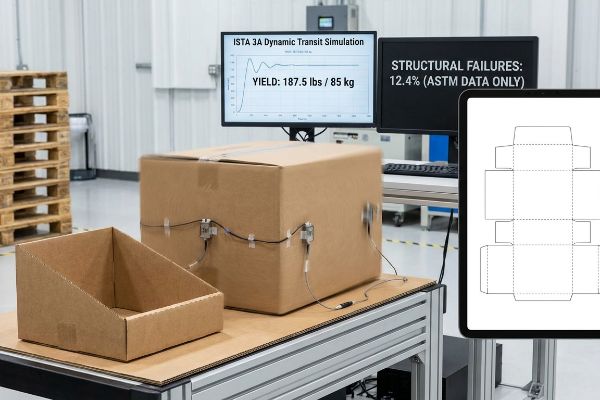
Pero conocer la teoría no es suficiente cuando las máquinas empiezan a funcionar y sus palés se ven sometidos a un impacto cinético real durante el transporte de mercancías.
Por qué fallan las normas estáticas ASTM bajo traumatismos dinámicos de carga
Los equipos de compras suelen basarse en certificaciones estáticas de materiales ASTM (Sociedad Estadounidense para Pruebas y Materiales), como la prueba plana 32ECT¹⁶,para garantizar que sus estructuras de cartón corrugado cumplan con los estándares de resistencia de los minoristas. Dan por sentado que superar una prueba teórica de compresión de cartón plano en un laboratorio con temperatura controlada les otorga automáticamente inmunidad contra daños físicos durante el transporte. Esto crea una grave falsa sensación de seguridad que ignora por completo la geometría dinámica de un paquete tridimensional ensamblado y completamente cargado.
En mis instalaciones, veo con frecuencia cajas maestras bellamente impresas y perfectamente certificadas para resistencia al estallido, que se abren catastróficamente en la zona de pruebas. Conocer el límite de las fibras de papel planas es completamente inútil si la geometría ensamblada se dobla bajo vibración cinética. Cuando mido el rendimiento durante una simulación de tránsito dinámico ISTA (International Safe Transit Association) 3A17, una caja construida estrictamente con datos teóricos ASTM18 a menudo sufre una tasa de falla del 12,4 % en las esquinas estructurales. He visto una bandeja prellenada de 85 kg (187,5 lb) sacudirse violentamente en la mesa de vibración, el sonido agudo y desgarrador del colapso de la flauta B interna resonando en todo el laboratorio mientras la fuerza de corte cinético oblitera el cartón. Tomé las lecturas del calibrador y demostré que no necesitábamos actualizar a un costoso cartón de triple pared; solo necesitaba diseñar un protocolo estricto de simulación de tránsito ISTA que validara la geometría final. Al combinar matemáticamente las bases de referencia de la materia prima con pruebas completas de choque cinético dinámico, garantizo que la geometría del embalaje resista el transporte marítimo, lo que ahorra a las marcas miles de dólares en devoluciones de los minoristas por inventario dañado.
| Error común de principiante | La solución profesional | Beneficio para el punto de venta |
|---|---|---|
| Basándose únicamente en datos ASTM planos | Exigir pruebas dinámicas de tránsito ISTA19 | Revela vulnerabilidades geométricas ocultas |
| Ignorando la vibración cinética de la carga | Refuerzo de esquina de doble pared del ingeniero20 | Evita reventones catastróficos en las esquinas |
| Tratar los límites de peso como estáticos | Ejecutar simulaciones de caída rotacional de 150 lb21 | Garantiza la supervivencia de cargas pesadas |
Separo permanentemente las suposiciones sobre la resistencia de la materia prima de la resistencia cinética total del sistema. Someter la geometría tridimensional completamente cargada a simuladores de tránsito extremos es el único método comprobado para evitar costosos fallos en la cadena de suministro de la producción en masa.
🛠️ Oficina de Harvey: No permita que un defecto estructural de 2 milímetros arruine el lanzamiento de 500 tiendas. 👉 Envíeme su archivo de troquelado ↗ — Analizaré los cálculos antes de que malgaste su presupuesto en la producción en masa.
Conclusión
Puedes arriesgarte con datos de laboratorio estáticos, pero cuando la vibración cinética del transporte daña las esquinas de tu cartón ondulado durante el tránsito, te enfrentarás a un aplastamiento catastrófico del inventario que provocará el rechazo inmediato del minorista y semanas de costosos reprocesamientos manuales. Más de 500 gerentes de marca utilizan mi lista de verificación de preimpresión para evitar estos errores fatales en las primeras etapas. Deja de adivinar las tolerancias estructurales y permíteme revisar personalmente tu geometría con mi Auditoría Gratuita de Tránsito de Troqueles ↗ para detectar vulnerabilidades físicas antes de que tu palé llegue a un camión.
"Estándares de accesibilidad de la ADA – Access-Board.gov", https://www.access-board.gov/ada/. Breve explicación de cómo las leyes de zonificación comercial y las regulaciones de accesibilidad (como la ADA) dictan la ubicación física de los expositores para garantizar la seguridad y el cumplimiento legal. Función de la evidencia: validación; tipo de fuente: directrices regulatorias. Apoya: la existencia de restricciones legales en la ubicación de los expositores comerciales. Nota de alcance: las leyes específicas pueden variar según la jurisdicción. ↩
"Palet de madera tratada térmicamente GMA – 48 x 40" H-1260 – ULINE", https://www.uline.com/Product/Detail/H-1260/Pallets/Heat-Treated-Wood-GMA-Pallet-48-x-40. Verificación de las dimensiones estándar de palets de la industria de la Asociación de Fabricantes de Alimentos (GMA) utilizadas en la logística norteamericana. Función de la evidencia: validación fáctica; tipo de fuente: documentación estándar de la industria. Apoya: la base para las restricciones de espacio de exhibición en el piso. Nota de alcance: se centra en palets de envío estándar. ↩
"Capítulo 3: Partes Operables – Access-Board.gov", https://www.access-board.gov/ada/guides/chapter-3-operable-parts/. Confirmación de las normas de accesibilidad de la Ley de Estadounidenses con Discapacidades (ADA) con respecto al rango de alcance frontal para superficies de cara al público. Función de la evidencia: verificación legal; tipo de fuente: directrices regulatorias gubernamentales. Apoya: las restricciones de ingeniería para las pantallas de mostrador de los puntos de venta. Nota de alcance: se aplica al cumplimiento de la accesibilidad en los EE. UU .
"Mostradores de ventas y servicio", https://www.access-board.gov/ada/guides/animations/sales-and-service-counters.html. Explica cómo las normas de la Ley de Estadounidenses con Discapacidades (ADA) dictan la altura y la accesibilidad de los mostradores de venta minorista para prevenir el rechazo legal y garantizar la inclusión. Función de la evidencia: Especificación técnica; tipo de fuente: Reglamento gubernamental. Apoya: El requisito de cumplimiento de la ADA en la ingeniería de puntos de venta. Nota de alcance: Se aplica principalmente a las jurisdicciones de EE. UU.
"Tipos de expositores de palets: completos, medios y cuartos – GreenDot Packaging", https://greendotpackaging.com/understanding-pallet-display-types-full-half-and-quarter-pallet-displays/. Proporciona las dimensiones específicas y los requisitos de carga establecidos por la Grocery Manufacturers Association (GMA) para garantizar que los expositores paletizados se ajusten a los sistemas estándar de transporte y almacenamiento sin voladizos. Función de evidencia: Estándar de la industria; tipo de fuente: Directrices de la organización comercial. Apoya: El uso de los estándares de la GMA para eliminar el voladizo de tránsito. Nota de alcance: Se centra en los estándares logísticos norteamericanos. ↩
"Las 4 P del marketing explicadas – Leavey School of Business – SCU", https://www.scu.edu/business/blog/business-concepts/what-are-the-4-ps-of-marketing/. Breve explicación de cómo la literatura sobre estrategia minorista aboga por alinear la mezcla de marketing con las estructuras de exhibición física para mantener la coherencia operativa. Función de la evidencia: validación conceptual; tipo de fuente: guía de gestión minorista. Apoya: la necesidad de alineación estructural con las 4 P. Nota de alcance: específicamente para exhibidores en el punto de venta. ↩
"Diseño para que los vendedores impulsen la presencia en los estantes", https://www.linkedin.com/posts/tlbush_why-your-packaging-has-to-win-the-merchandising-activity-7459640172536741888-Xorc. Explicación de cómo una matriz estructurada alinea la estrategia minorista con las limitaciones físicas del empaque antes de la producción. Función de la evidencia: validación del proceso técnico; tipo de fuente: guía profesional de la industria. Apoya: la afirmación de que las matrices de planificación estratégica previenen fallas de diseño. Nota de alcance: la terminología puede variar entre las agencias de empaque. ↩
"AG 1091A: Exhibiciones de mercancía minorista en la zona frontal", https://www.seattle.gov/transportation/permits-and-services/permits/applicant-guides/ag-1091a. Documentación sobre cómo los diferentes niveles de precios y canales minoristas determinan las dimensiones físicas permitidas de las exhibiciones en el punto de venta. Función de evidencia: estándar operativo; tipo de fuente: manual de logística minorista. Apoya: el vínculo entre la estrategia de precios y la asignación de espacio físico. Nota de alcance: específico para entornos minoristas físicos. ↩
"Punto de venta: Cómo los minoristas pueden influir en los compradores en el punto de venta...", https://blog.intouch.com/posts/points-of-purchase-displays. Breve explicación de cómo el diseño ergonómico de la exhibición y la visibilidad de la etiqueta de precio influyen en el comportamiento de compra impulsiva del consumidor. Función de la evidencia: validación; tipo de fuente: estudio de investigación de mercado. Apoya: el vínculo entre las correcciones estructurales de la exhibición y las métricas de ventas. Nota de alcance: puede variar según la categoría del producto. ↩
"Las imágenes de mayor contraste se recuerdan mejor durante situaciones naturales...", https://pmc.ncbi.nlm.nih.gov/articles/PMC11166978/. Breve explicación de cómo la comunicación visual simplificada y los mensajes de alto contraste reducen la fatiga mental en entornos minoristas. Función de la evidencia: apoyo teórico; tipo de fuente: revista académica sobre psicología del consumidor. Apoya: la afirmación de que los mensajes aislados mejoran el procesamiento del comprador. Nota de alcance: se centra en la percepción visual. ↩
"Visibilidad/Distancia de visión – NACTO", https://nacto.org/publication/urban-street-design-guide/intersection-design-elements/visibility-sight-distance/. Las directrices autorizadas de diseño para el comercio minorista proporcionan evidencia sobre las distancias mínimas de visibilidad necesarias para que la señalización promocional sea visible desde los pasillos principales y atraiga el flujo de clientes. Función de la evidencia: especificación técnica; tipo de fuente: manual de diseño de la industria. Apoya: la afirmación de que la optimización de corto alcance falla en entornos de pasillos anchos. Nota de alcance: se aplica específicamente a cuadrículas comerciales de alta densidad. ↩
"La importancia de la regla de 3 para sus exhibidores personalizados", https://mcintyredisplays.com/blog/custom-store-displays/. Verificación de la regla 3-3-3 como un marco de interacción espacial reconocido en el diseño minorista y el merchandising visual. Rol de evidencia: validación técnica; tipo de fuente: manual de diseño de la industria. Apoya: las métricas específicas para la atención y conversión del consumidor. Nota de alcance: verificar la adopción en toda la industria frente a marcos de diseño de nicho. ↩
"Diseño de locales comerciales para exhibiciones efectivas y flujo de clientes", https://www.business.qld.gov.au/industries/manufacturing-retail/retail-wholesale/retail-displays. Los estándares de la industria para el merchandising visual a menudo definen la distancia a la que se capta la mirada del cliente para determinar la efectividad de la señalización y la forma. Función de la evidencia: métrica técnica; tipo de fuente: manual de diseño minorista. Apoya: la efectividad de las formas estructurales para romper la monotonía visual a una distancia específica. Nota de alcance: la distancia base puede variar según la altura del techo de la tienda y el ancho del pasillo. ↩
"Formación de la percepción de precios a través de escaparates: Los roles…", https://onlinelibrary.wiley.com/doi/10.1002/mar.70049. La psicología ambiental estudia el impacto de los diseños asimétricos en la atención del consumidor y el procesamiento cognitivo. Rol de la evidencia: marco teórico; tipo de fuente: revista de psicología revisada por pares. Apoya: la afirmación de que la asimetría interrumpe los patrones para aumentar la participación del comprador. Nota de alcance: el efecto varía según la categoría del producto. ↩
"14 Tipos de Exhibidores Minoristas | Chicago, IL – Wertheimer Box", https://wertheimerbox.com/types-of-retail-displays/. Las especificaciones de fabricación de los accesorios proporcionan pautas sobre la relación entre la visibilidad del producto y la altura del borde del estante para maximizar la accesibilidad. Función de evidencia: especificación técnica; tipo de fuente: guía de fabricación. Apoya: el porcentaje óptimo de visibilidad para la conversión del producto. Nota de alcance: específico para estanterías minoristas de frente abierto. ↩
"[PDF] Especificaciones de cartón ondulado – Fibre Box Association", https://www.fibrebox.org/assets/2025/09/Walmart_Corrugated-Board_Specifications_Automation_Packaging_Standards.pdf. Verificación técnica de 32ECT (Edge Crush Test) como referencia industrial específica para la resistencia del material ondulado en expositores minoristas. Función de evidencia: especificación técnica; tipo de fuente: estándar industrial. Apoya: el uso de clasificaciones ECT para garantizar la integridad estructural. Nota de alcance: específico para embalajes de cartón ondulado. ↩
"[PDF] 3A 2 – Asociación Internacional de Tránsito Seguro", https://ista.org/docs/3Aoverview.pdf. Breve explicación de cómo el protocolo ISTA 3A valida el embalaje simulando las tensiones dinámicas del entorno de envío. Función de evidencia: especificación técnica; tipo de fuente: estándar industrial. Apoya: la necesidad de la simulación dinámica en lugar de las pruebas estáticas de materiales. Nota de alcance: se aplica específicamente a los sistemas de entrega de paquetes. ↩
"Embalaje de cartón corrugado con diseño innovador para una mayor durabilidad...", https://bioresources.cnr.ncsu.edu/resources/corrugated-board-packaging-with-innovative-design-for-enhanced-durability-during-transport/. Breve explicación de cómo las normas ASTM para las propiedades de la materia prima (como la resistencia al estallido) difieren del rendimiento estructural dinámico. Función de la evidencia: comparación técnica; tipo de fuente: norma de ingeniería. Apoya: la afirmación de que las bases de referencia de la materia prima son insuficientes para predecir el corte cinético. Nota de alcance: se centra en la limitación de las métricas estáticas del material. ↩
"Pruebas de embalaje para venta minorista para el cumplimiento de las normas de grandes superficies – Intertek", https://www.intertek.com/performance-testing/packaging/retail-compliance/. Verificación de las normas ISTA (International Safe Transit Association) para simular el estrés del transporte en condiciones reales en comparación con las pruebas estáticas ASTM. Función de la evidencia: validación; tipo de fuente: norma técnica. Apoyos: superioridad de las pruebas dinámicas sobre los datos estáticos. Nota de alcance: específico para embalaje de transporte. ↩
"Cómo proteger las cookies de la vibración del ferrocarril: evite una pérdida del 20 % en los envíos", https://www.pier2pier.com/blog/protect-cookies-from-rail-vibration/. Justificación técnica para el refuerzo de esquinas con el fin de mitigar fallos estructurales causados por vibraciones cinéticas durante el transporte. Función de la evidencia: especificación de ingeniería; tipo de fuente: manual de embalaje. Apoyos: prevención de rotura de esquinas. Nota de alcance: se aplica normalmente a estructuras de cartón ondulado. ↩
"[PDF] Pruebas de productos empaquetados que pesan hasta 150 libras.", https://ista.org/docs/PKG_Testing_Under150Lbs.pdf. Puntos de referencia de la industria para pruebas de caída rotacional basadas en el peso, utilizadas para garantizar la integridad de cargas pesadas durante el transporte. Función de evidencia: métrica de rendimiento; tipo de fuente: punto de referencia de ingeniería. Soporte: supervivencia de cargas pesadas. Nota de alcance: específico para unidades de visualización de alta masa. ↩