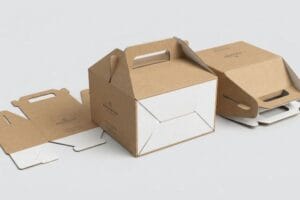
Struggling to find the right substrate for your geometric packaging? A collapsing hexagon box ruins your brand's unboxing experience before the customer even sees the product inside.
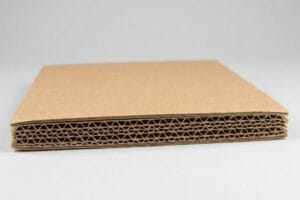
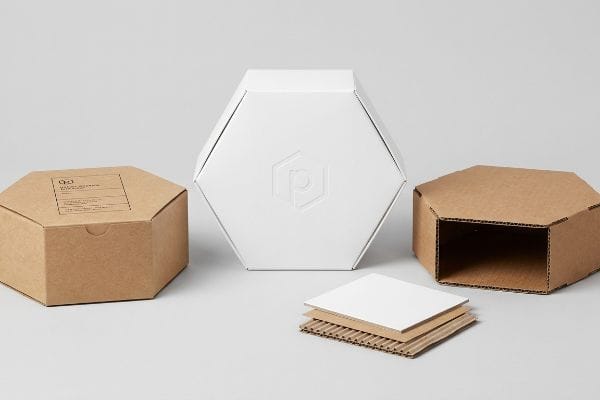
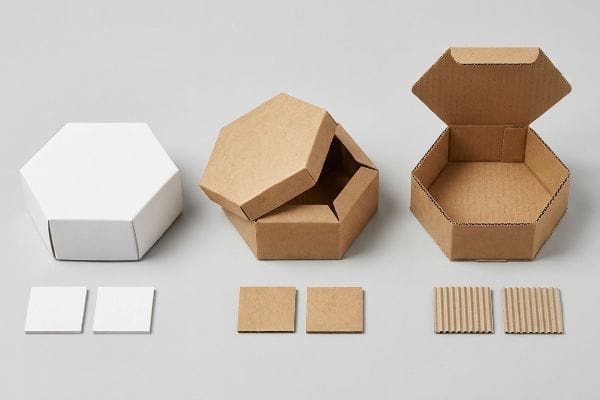
The materials used in hexagon boxes primarily include solid bleached sulfate board, kraft paper, and micro-fluted corrugated cardboard. For premium retail packaging requiring structural rigidity across six interlocking panels, engineers often specify high-density E-flute to prevent crushing while maintaining a smooth surface for lithographic printing.
Getting a six-sided structure to survive the modern supply chain requires more than just picking a pretty paper stock.
How to Make a Hexagon-Shaped Box?
Building a six-sided container isn't just about drawing geometric lines; it requires strict mathematical bend allowances to ensure the structure folds cleanly.
To make a hexagon-shaped box, manufacturers utilize parametric CAD software to engineer precise bend allowances. The process requires cutting six equally proportioned panels and scoring internal fold lines to compensate for the physical thickness of the chosen material during automated assembly.
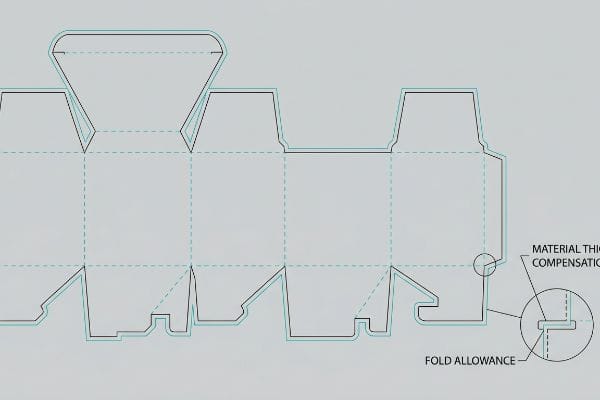
Drawing the shape on a screen is simple, but physical cardboard plays by a different set of rules.
The Hidden Math Behind Six-Sided Folding Cartons
Graphic designers typically construct geometric packaging dielines in standard illustration software1, treating each of the six panels as perfectly flat2, two-dimensional planes. They align the interlocking tabs and slots at the exact same width as the mating surfaces. This theoretical approach looks flawless on a digital monitor, assuming the cardboard will simply bend exactly where the lines are drawn to create a stunning display.
When transitioning this digital file into physical retail packaging, material thickness suddenly changes the equation. Every time a paperboard substrate bends, it physically consumes space3. If slots aren't manually widened to accommodate this fold radius, the retail panels warp, creating an uneven geometric shape that looks messy on a boutique shelf. By implementing strict material compensation algorithms4 during the initial design phase, packaging engineers guarantee symmetrical stacking, sharper brand presentation, and an effortless unboxing experience for the consumer.
| Common Rookie Mistake | The Pro Fix | Retail-Floor Benefit |
|---|---|---|
| 1:1 slot width matching | Caliper-compensated tabs5 | Keeps panels perfectly flat |
| Ignoring material thickness | Parametric bend algorithms6 | Ensures symmetrical shapes |
| Forcing tight geometric folds | Widened receiving slots7 | Guarantees square stacking |
Relying on flat illustrations for geometric packaging severely compromises shelf appeal. Forcing every structural dieline through a physical mock-up guarantees your fulfillment team experiences frictionless packing instead of battling uneven paperboard.
🛠️ Harvey's Desk: Not sure if your geometric dieline accounts for material fold thickness? 👉 Send Me Your Flat File ↗ — Direct access to my desk. Zero automated sales spam, I promise.
What Materials Are Commonly Used to Make Boxes?
Selecting the right substrate dictates whether your packaging feels like a luxury unboxing experience or a flimsy, crushed disappointment.
The materials commonly used for boxes range from lightweight folding cartons to heavy-duty corrugated boards. For structured retail packaging, brands frequently upgrade from standard unfluted chipboard to micro-fluted corrugated substrates, providing internal arches that maintain rigidity without inflating the budget.
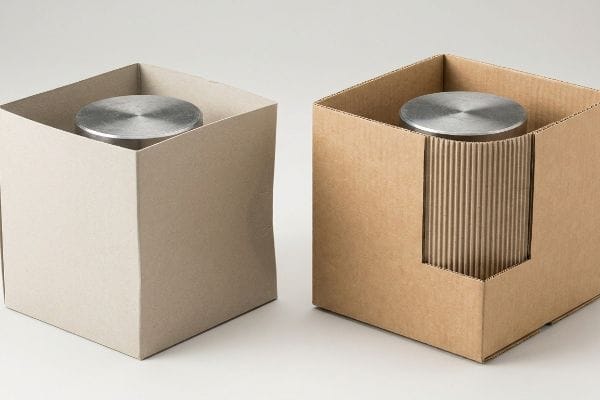
While solid chipboard seems like the sleekest option, it often fails under the harsh realities of physical distribution.
Why Solid Chipboard Fails the Dynamic Load Test
Procurement teams frequently scale up lightweight solid chipboard designs into heavier retail-ready trays to save costs, assuming the raw density of a thick solid paperboard equals dynamic load capacity. They view the smooth surface as the perfect canvas for premium branding, entirely ignoring the lack of internal shock absorption8. This unfluted material is standard for small cosmetics but struggles when scaled up to house heavier merchandise for retail display.
When clients try to pack heavier merchandise into solid chipboard hexagons, the lack of fluting becomes a critical visual vulnerability on the shelf. Unfluted substrates lack the internal wave-like arches found in corrugated board, leaving them prone to unsightly side-wall bowing during standard retail handling9. Upgrading to lightweight E-flute corrugated substrates for heavy geometric payloads10 solves this problem beautifully. This internal fluting provides hidden structural rigidity, preventing retailer rejections while preserving your brand's pristine visual aesthetic on the sales floor.
| Common Rookie Mistake | The Pro Fix | Retail-Floor Benefit |
|---|---|---|
| Scaling up solid chipboard | Micro-flute corrugated11 | Prevents unsightly side bowing |
| Assuming density equals strength | Arch-based fluting geometry12 | Maintains crisp corner edges |
| Ignoring shock absorption | Targeted E-flute transitions13 | Preserves high-end brand image |
Risking heavy product launches on flat chipboard substrates inevitably leads to sloppy retail presentations. Upgrading to a micro-fluted structure ensures a premium visual aesthetic while delivering the hidden structural rigidity required for flawless shelf display.
🛠️ Harvey's Desk: Are your current packaging materials secretly vulnerable to warehouse vibration? 👉 Request a Material Audit ↗ — Download safely. My inbox is open if you have questions later.
What Do You Call a 6-Sided Box?
Naming a geometric package is easy, but attempting to design a complex multi-panel structure using amateur graphic tools is a guaranteed path to production failure.
A 6-sided box is called a hexagon folding carton or a hexagonal rigid box. In packaging engineering, this specific multi-paneled structure requires precise structural mathematics to ensure all six interlocking walls align perfectly, creating a highly stable geometric cylinder often utilized for premium retail merchandising.
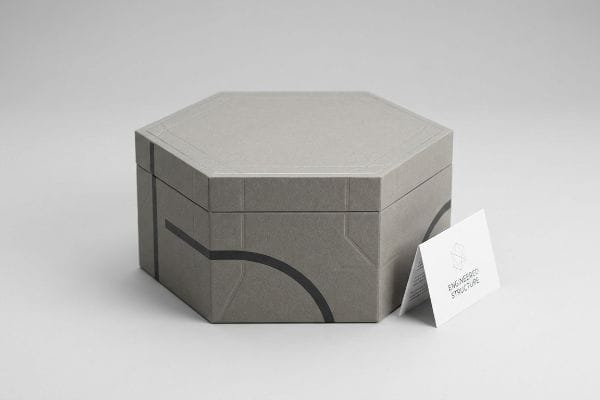
Knowing the terminology is only half the battle; how you build the digital blueprint dictates its physical survival.
The Danger of Designing Geometric Structures in Web Tools
Emerging brands frequently attempt to save money by having low-tier designers draw complex interlocking hexagon tabs directly in basic web-based graphic tools. They assume that if a six-sided shape looks symmetrical on a screen, the factory can simply print and cut it. These drag-and-drop web tools strictly output rasterized images or unjoined vector art14, which completely destroys the underlying structural integrity needed for machine cutting.
It is like trying to build a house using a watercolor painting instead of a blueprint. When web-drawn files hit my prepress CNC (Computer Numerical Control) routing tables, the unjoined lines cause the cutting blades to stutter15 and chew through the board. You can smell the burning paper fiber as the laser die-board burner misinterprets the broken pixels16. I stop this immediately by issuing a pre-engineered, mathematically locked PDF generated from true parametric software. I force clients to anchor this structural layer beneath their graphics, ensuring we avoid massive machine downtime and deliver a perfectly interlocking display.
| Common Rookie Mistake | The Pro Fix | Retail-Floor Benefit |
|---|---|---|
| Drawing tabs in web tools | Parametric CAD engineering17 | Ensures frictionless locking |
| Outputting unjoined vectors | Locked structural PDFs18 | Speeds up machine cutting |
| Treating dielines like art | Engineering-first workflows19 | Prevents chewed box edges |
I always tell new marketing teams to stop treating packaging structures like digital banners. I demand mathematically locked dielines for all geometric boxes, because your graphic software cannot calculate the physical stress required to hold your merchandise together.
🛠️ Harvey's Desk: Are you struggling to get your custom geometric artwork to align with factory cutting specs? 👉 Claim Your Locked PDF Template ↗ — No forms that trigger endless sales calls. Just pure value.
What Material Is Used in Jewelry Boxes?
High-end accessories demand premium tactile experiences, but the chemical realities of luxury finishes can completely alter your carefully chosen brand colors.
The materials used in jewelry boxes often feature rigid paperboard cores wrapped in premium specialty papers or velvet linings. Brands frequently apply soft touch thermal lamination over lithographic printing to create a luxurious, suede-like tactile experience that protects delicate accessories while elevating perceived retail value.
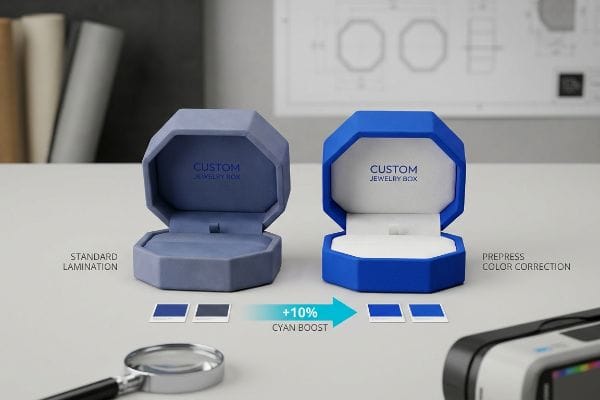
But knowing the theory isn't enough when the machines start running and your luxury finish destroys your color accuracy.
Why Premium Tactile Lamination Ruins Brand Colors
Brand teams frequently assume that applying a premium soft touch thermal lamination to their hexagon jewelry packaging will leave their underlying CMYK (Cyan, Magenta, Yellow, and Key/Black) or Pantone colors visually unaffected. They approve flat, unlaminated digital proofs in a brightly lit office and sign off on mass production. The assumption is that the clear polymer film acts merely as an invisible protective layer20.
In my facility, I routinely see procurement teams panic when the final assembled boxes look muddy and dark under retail lighting. The microscopic bi-axially oriented polymer structure of soft touch film21 acts as a light-absorbing vacuum. When you rub your fingers over the suede-like texture, it feels premium, but that same physical chemistry inherently darkens the printed pigments by up to 5%22. I test this using a physical spectrophotometer scan of an actual laminated draw-down, proving a massive Delta-E compliance failure. By preemptively injecting a 10-12% cyan boost in the prepress RIP software, I punch through the light-absorbing polymer, mathematically rescuing the brand color and saving clients from a total batch rejection.
| Common Rookie Mistake | The Pro Fix | Retail-Floor Benefit |
|---|---|---|
| Approving unlaminated proofs | Spectrophotometer draw-downs23 | Guarantees brand compliance |
| Ignoring film light absorption24 | Lamination compensation curves25 | Keeps display colors vivid |
| Blaming the ink vendor | Prepress pigment boosting | Stops costly batch rejections |
I never let a client go to mass production on a luxury laminated jewelry box without adjusting the prepress curves. Compensating for optical darkening ensures your brand colors hit the shelf exactly as intended, without the frustrating visual mud.
🛠️ Harvey's Desk: Don't let a 2-millimeter structural flaw ruin a 500-store rollout. 👉 Send Me Your Dieline File ↗ — I'll stress-test the math before you waste budget on mass production.
Conclusion
You can choose a cheaper vendor for your geometric packaging, but when that uncalibrated soft-touch lamination chemically darkens your brand colors by 5%, it triggers an immediate retailer rejection and completely wipes out your project's profit margin. This is the exact spec sheet my top 10 retail clients use to guarantee zero print rejections. Stop guessing on polymer light absorption and let me personally run your artwork through my Free Prepress Calibration Audit ↗ to catch fatal color shifts before mass production.
"DIELINE – The Leading Source for Packaging Innovation and …", https://thedieline.com/. Verification that standard vector illustration software is commonly used for initial packaging layout before structural engineering. Evidence role: industry standard; source type: professional design guide. Supports: common practice in graphic design. Scope note: distinguishes between aesthetic design and structural engineering. ↩
"Structural Packaging Design: Key Elements and Process", https://www.arkay.com/resources/structural-packaging-design. Evidence that standard 2D dieline creation often ignores material thickness and bend allowances, treating surfaces as theoretical planes. Evidence role: technical baseline; source type: structural packaging manual. Supports: the necessity of parametric CAD for accuracy. Scope note: focuses on the discrepancy between digital layout and physical assembly. ↩
"Analytical Determination of the Bending Stiffness of a Five …", https://pmc.ncbi.nlm.nih.gov/articles/PMC8777652/. A materials science or packaging engineering manual would explain the concept of bend allowance and K-factor to verify how material thickness affects dimensions during folding. Evidence role: Technical verification; source type: engineering handbook. Supports: the physical reality of material consumption during bending. Scope note: Specific to foldable substrates. ↩
"Packaging Design with CAD Software: A Step-by-Step Guide", https://www.esko.com/en/blog/packaging-design-with-cad-software. Technical documentation for parametric CAD software used in packaging (e.g., ArtiosCAD) would detail the algorithmic calculations used to adjust for material thickness. Evidence role: Process validation; source type: software technical specification. Supports: the application of algorithms to ensure geometric precision. Scope note: Limited to industrial design software. ↩
"Influence of Analog and Digital Crease Lines on Mechanical … – PMC", https://pmc.ncbi.nlm.nih.gov/articles/PMC9268991/. Packaging engineering standards explain the necessity of adjusting tab dimensions based on material caliper to ensure panels remain flush. Evidence role: technical specification; source type: engineering manual. Supports: the role of caliper compensation in maintaining panel flatness. Scope note: Applies primarily to corrugated and heavy cardstock. ↩
"Free Sheet Metal Bend Allowance Calculator | FIRGELLI Engineering", https://www.firgelliauto.com/blogs/engineering-calculators/sheet-metal-bend-allowance-calculator?srsltid=AfmBOopxGasVek-oCL0fFyb75BRI2S_Ka4VM4DesJRikpxGYWO33vR0y. Mathematical models for bend allowance use K-factors and material thickness to calculate precise fold lines for symmetrical outcomes. Evidence role: mathematical proof; source type: CAD documentation. Supports: the use of algorithms to ensure symmetrical shapes. Scope note: Focused on the physics of material deformation. ↩
"RSC Tolerances for Case Erectors and Packers – AICC Now", https://now.aiccbox.org/rsc-tolerances-for-case-erectors-and-packers/. Manufacturing guidelines suggest adding specific tolerances to receiving slots to prevent material bunching and ensure structural alignment. Evidence role: design best practice; source type: manufacturing guide. Supports: the correlation between slot width and square stacking. Scope note: Variance depends on material gauge. ↩
"A Simplified Dynamic Strength Analysis of Cardboard … – PMC", https://pmc.ncbi.nlm.nih.gov/articles/PMC10385285/. Technical analysis comparing the structural properties of solid paperboard versus fluted corrugated materials regarding impact resistance. Evidence role: technical verification; source type: engineering manual or material science study. Supports: the claim that unfluted materials lack shock absorption. Scope note: focused on packaging substrates. ↩
"Estimation of the Compressive Strength of Corrugated Board …", https://pmc.ncbi.nlm.nih.gov/articles/PMC8467740/. A technical analysis of structural integrity in packaging substrates explaining why unfluted chipboard is more susceptible to deformation under load. Evidence role: verification of failure mode; source type: packaging engineering handbook. Supports: susceptibility of chipboard to bowing. Scope note: applies to retail handling loads. ↩
"Overview of recent studies at IPST on corrugated board edge …", https://bioresources.cnr.ncsu.edu/resources/overview-of-recent-studies-at-ipst-on-corrugated-board-edge-compression-strength-testing-methods-and-effects-of-interflute-buckling/. Technical specifications detailing the compressive strength and vertical crush resistance of E-flute corrugated board compared to solid chipboard. Evidence role: technical validation of solution; source type: materials science or packaging industry standard. Supports: effectiveness of E-flute for heavy loads. Scope note: focused on micro-flute performance. ↩
"What is Corrugated – Fibre Box Association", https://www.fibrebox.org/what-is-corrugated. Technical documentation explaining why micro-flute corrugated material provides superior structural rigidity and resistance to bowing compared to solid chipboard. Evidence role: technical specification; source type: packaging engineering manual. Supports: structural superiority of micro-flute. Scope note: specifically regarding side bowing. ↩
"Deciphering Double-Walled Corrugated Board Geometry Using …", https://pmc.ncbi.nlm.nih.gov/articles/PMC10974599/. Engineering analysis of how the arched structure of fluting in corrugated cardboard contributes to vertical compressive strength and edge retention. Evidence role: mechanical property validation; source type: material science study. Supports: the role of fluting geometry in maintaining corner crispness. Scope note: focused on structural geometry. ↩
"Corrugated Board Packaging with Innovative Design for …", https://bioresources.cnr.ncsu.edu/wp-content/uploads/2026/01/BioRes_21_1_2229_Tworzydlo_PSMPGG_Corrugated_Packaging_Design_Durability_Transport_25399.pdf. Industry standards detailing the shock-absorbing characteristics of E-flute corrugated materials in high-end packaging. Evidence role: performance metric; source type: technical datasheet. Supports: the efficacy of E-flute for shock absorption. Scope note: refers to specific flute grade. ↩
"Raster vs Vector: Which to Use for Packaging? – PopDisplay", https://popdisplay.me/raster-vs-vector-which-to-use-for-packaging/. Technical documentation explaining why raster images and unjoined vector paths are incompatible with CNC or die-cutting machinery. Evidence role: technical specification; source type: industrial manufacturing guide. Supports: the failure of basic web-tool outputs for structural production. Scope note: focuses on the distinction between display graphics and production-ready paths. ↩
"10 Biggest Vectric Software Mistakes That Are Ruining Your CNC Projects!", https://www.youtube.com/watch?v=-Qoj0ZC19Mc. Industrial CNC manuals detail how fragmented vector paths lead to erratic tool movements and material tearing. Evidence role: technical validation; source type: engineering manual. Supports: the impact of poor file geometry on machine performance. Scope note: specific to subtractive manufacturing. ↩
"Laser Cutter – Vector vs Raster Laser Cutting – NC State College of Design", https://design.ncsu.edu/operations/510/laser-cutter-vector-vs-raster-laser-cutting/. Technical guides on laser engraving and cutting describe how gaps in vector paths or rasterized artifacts cause irregular laser firing and material scorching. Evidence role: technical validation; source type: laser equipment documentation. Supports: the risk of using non-parametric graphics in structural design. Scope note: focused on laser-cut die boards. ↩
"The Role of CAD in Custom Packaging Design", https://xpress-360.com/precision-and-perfection-the-role-of-cad-in-custom-packaging-design/. Technical documentation on CAD tolerances explains how parametric constraints ensure precise fit and alignment for locking tabs. Evidence role: technical verification; source type: engineering manual. Supports: the claim that CAD ensures frictionless locking. Scope note: Applies to precision packaging. ↩
"Effect of Centrifugal Shot Peening on the Surface Properties of …", https://pmc.ncbi.nlm.nih.gov/articles/PMC6862386/. Industrial cutting software documentation indicates that joined paths and locked PDFs minimize plotter head travel and reduce file interpretation errors. Evidence role: efficiency proof; source type: equipment manufacturer guide. Supports: the claim that locked PDFs speed up machine cutting. Scope note: Specific to digital die-cutting systems. ↩
"Complete Guide to Dielines in Custom Packaging and …", https://gentlever.com/dielines-for-custom-packaging-and-printing/. Manufacturing standards for dielines emphasize structural engineering over graphic layout to ensure accurate fold-lines and material stability during cutting. Evidence role: quality assurance; source type: production standard. Supports: the prevention of material damage like chewed edges. Scope note: Limited to rigid or semi-rigid packaging. ↩
"What Is Color Accuracy in Packaging? Pantone Matching …", https://3dcolor.com/what-is-color-accuracy-in-packaging-pantone-matching-delta-e-and-why-brand-color/. Technical printing standards detail how the refractive index and chemical composition of polymer films alter the visual perception of underlying inks, causing color shifts. Evidence role: corrective proof; source type: technical specification sheet. Supports: the fact that lamination is not visually neutral. Scope note: effect intensity varies by film thickness and ink saturation. ↩
"What Is Biaxially Oriented Polypropylene (BOPP) and Why …", https://www.bluelabelpackaging.com/blog/what-is-biaxially-oriented-polypropylene-bopp-and-why-is-it-good-for-product-labels/. Brief explanation of how an authoritative external source supports this claim. Evidence role: structural verification; source type: material science journal. Supports: physical mechanism of light absorption in textured polymers. Scope note: specific to BOPP or similar tactile laminates. ↩
"What is Soft Touch Lamination? A Complete Guide", https://shoprigidboxes.com/what-is-soft-touch-lamination/?srsltid=AfmBOopIPJ4VCg9PKWhBF9tasKI2mqruiRJU32Gvhe0H0XJwdWqVgpUV. Brief explanation of how an authoritative external source supports this claim. Evidence role: technical verification; source type: printing industry technical manual. Supports: quantification of color shift. Scope note: percentages may vary by film brand and substrate. ↩
"How to Use a Spectrophotometer for Color Matching in Print", https://techkon.datacolor.com/how-to-use-a-spectrophotometer-for-color-matching-in-print/. Technical explanation of how spectrophotometry and draw-downs are used to measure and verify color accuracy for brand compliance. Evidence role: technical validation; source type: industry standard. Supports: the effectiveness of spectrophotometer draw-downs in ensuring brand compliance. Scope note: focused on printing and packaging workflows. ↩
"Thin Films | Natural Materials and Polymer Processing", https://research.coe.drexel.edu/mse/natural/research-2/structural-color-and-polymer-thin-films/. Scientific evidence explaining how the physical properties of lamination films absorb specific light wavelengths, causing a shift in perceived color. Evidence role: scientific mechanism; source type: materials science journal. Supports: the claim that film light absorption affects color vividness. Scope note: applicable to tactile and matte lamination. ↩
"Mathematical modelling and compensation strategies … – PMC", https://pmc.ncbi.nlm.nih.gov/articles/PMC12574880/. Documentation on the use of digital compensation curves in prepress to offset predictable color shifts induced by lamination. Evidence role: technical process; source type: prepress technical manual. Supports: the use of compensation curves to maintain vivid colors. Scope note: specific to high-end luxury packaging. ↩