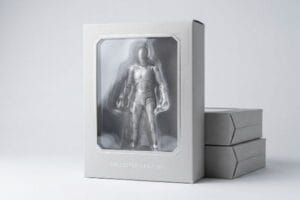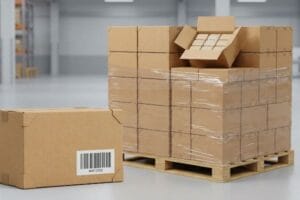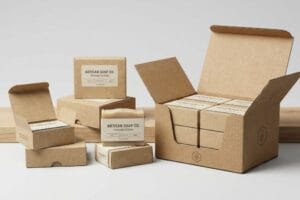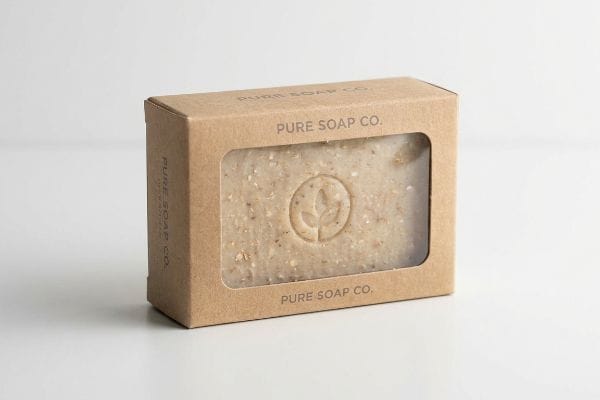
Struggling to grab shopper attention in a crowded retail aisle? A die-cut window transforms a standard soap folding carton into a tactile, visual experience that instantly drives impulse sales.
Transparency sells because a windowed soap box allows consumers to physically see the product's color and texture before buying. This structural visibility builds immediate brand trust, reduces perceived risk, and significantly increases conversion rates in highly competitive retail environments without compromising the packaging's structural integrity.
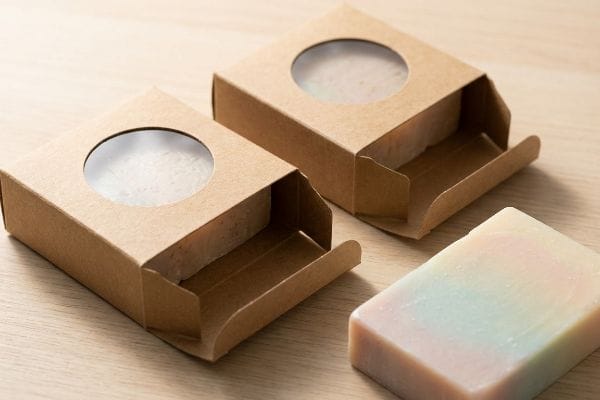
But carving a massive hole out of a folding carton isn't just a simple design choice. It introduces severe structural vulnerabilities that demand strict engineering oversight to survive the global supply chain.
Do I Need Fda Approval to Sell Homemade Soap?
Launching a new artisan soap brand feels exciting until you hit a wall of federal regulations. Navigating compliance is exactly where many independent brands accidentally sabotage their rollout.
No. You do not need FDA (Food and Drug Administration) approval to sell traditional homemade soap. If your product strictly cleanses the body and contains standard lye and fats, it remains exempt. However, making medical claims instantly reclassifies it as a regulated drug requiring strict federal compliance.
While you might escape federal cosmetic registration, your physical packaging still bears massive liability on the retail shelf. This is where chemical safety collides with structural engineering.
The Toxicity Trap of Unregulated Substrates
When I audit client dielines for new personal care lines, I constantly see brands obsessing over their organic soap ingredients while completely ignoring the chemistry of their packaging. Even veteran designers often overlook this blind spot, assuming any cheap folding carton is safe for skin-contact products. In reality, wrapping an alkaline bar of soap in standard paperboard covered in heavy-metal commercial inks creates a severe chemical leaching hazard1, especially when ambient humidity causes the product to sweat inside the box.
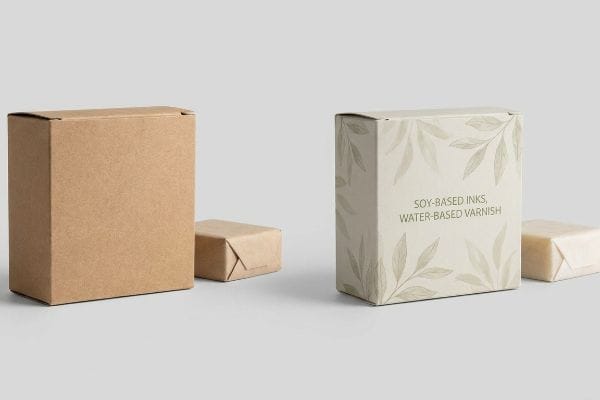
This isn't just theory—I see this happen on the testing floor when we subject unlined kraft boxes to elevated moisture testing. The alkaline soap acts as a mild solvent2, breaking down standard petroleum-based inks and causing them to migrate directly into the raw paper fibers. By enforcing the "Baby Safe" CPSIA (Consumer Product Safety Improvement Act) ink standard on my 6-color Heidelberg offset press, I substitute toxic chemicals with soy-based inks and water-based varnishes. This precise chemical pivot completely eliminates solvent migration, ensuring your organic soap stays pure while eliminating the risk of costly retailer chargebacks or legal liability.
| Metric/Feature | Generic Carton | Engineered Packaging |
|---|---|---|
| Ink Chemistry | Petroleum-based | Soy-based (CPSIA)3 |
| Moisture Barrier | None | Water-based varnish4 |
| Retail Liability | High risk | Zero leaching5 |
I refuse to let a few pennies saved on ink destroy a premium skincare brand's reputation. Controlling the prepress chemistry guarantees your packaging remains as clean and safe as the product inside it.
🛠️ Harvey's Desk: Are your current folding cartons quietly leaching petroleum inks into your organic soap during transit? 👉 Request a Free Material Audit ↗ — I review every structural file personally within 24 hours.
What Is the Best Soap Box?
Choosing the optimal packaging format dictates how your product survives transit and captures attention. The ideal solution balances aesthetic visibility with raw compressive strength.
The best soap box is a die-cut Kraft folding carton equipped with a flexible, eco-friendly viewing window. This specific configuration protects the delicate edges of the bar from impact damage while allowing consumers to visually inspect the artisanal textures, maximizing both shelf appeal and physical protection.
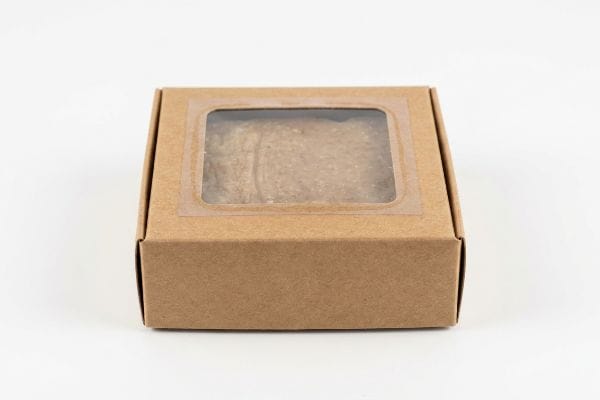
Creating this visual permeability seems straightforward on a flat PDF (Portable Document Format), but introducing a physical window fundamentally alters the board's dynamic tension.
The Geometric Physics of Window Patching
Engineering a viewing window into a folding carton fundamentally compromises the continuous paperboard structure. By removing a central section of the SBS (Solid Bleached Sulfate) or Kraft material, we intentionally eliminate a portion of the box's vertical load-bearing capacity6. To restore this lost strength, structural engineers must mathematically calculate the exact placement of the cutout, ensuring it remains a minimum of 0.75 inches (19.05 mm) away from all structural score lines7 to prevent corner blowout during automated folding.
Furthermore, adhering a clear polymer film across this die-cut void introduces a complex surface tension relationship. Because rigid plastic panes and porous paperboard expand and contract at entirely different rates8 during temperature fluctuations, using a standard rigid adhesive causes the carton to warp9. We resolve this by applying a flexible window patch protocol utilizing a climate-resistant adhesive that stretches dynamically with the paper fiber's expansion. This mechanical elasticity guarantees the flat carton remains perfectly square and runs flawlessly through automated high-speed co-packing lines.
| Metric/Feature | Flat Concept | Structural Reality |
|---|---|---|
| Window Margin | Unrestricted | 0.75 inches (19 mm)10 |
| Adhesive Type | Rigid PVA | Flexible elastic11 |
| Carton Geometry | Prone to warp | Perfectly square12 |
I rely on parametric CAD (Computer-Aided Design) software to calculate these bend allowances long before a single sheet of paper is cut. A perfectly flat window box is a product of deliberate mathematical compensation.
🛠️ Harvey's Desk: Is your current windowed packaging bowing inward or popping open under high-humidity warehouse conditions? 👉 Get a Free Window Tension Analysis ↗ — 100% confidential. Your unreleased retail designs are safe with me.
What Is the Most Sanitary Way to Store Bar Soap?
Protecting premium soaps from environmental contamination ensures product longevity. However, improper storage environments quickly degrade both the cleanser and its surrounding protective structure.
The most sanitary way to store bar soap involves using a breathable, moisture-resistant environment that prevents mold growth while isolating fragrance oils. In retail, this requires specialized secondary packaging engineered with targeted barrier coatings to block airborne contaminants and prevent essential oils from deteriorating structural adhesives.
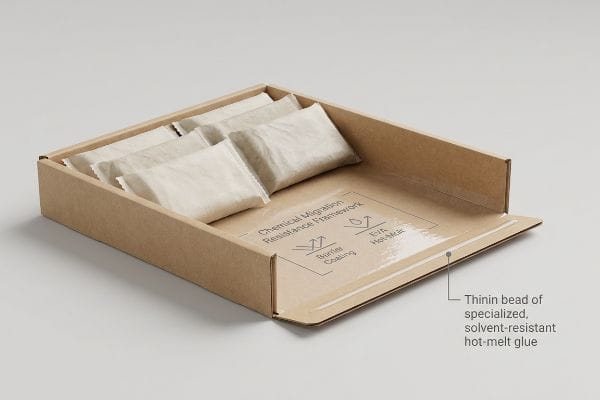
Maintaining this hygienic barrier becomes exponentially more difficult when scaling up to bulk retail environments, where active chemical migration silently compromises display stability.
The Chemical Migration Resistance Framework
Heavily scented personal care products contain concentrated essential oils that act as highly active chemical solvents13. When these bars are stored or merchandised in unlined corrugated trays, the volatile organic compounds naturally outgas in warm logistics environments. This invisible vapor penetrates the porous testliner of the cardboard, aggressively dissolving the internal water-based glues14 that hold the merchandising structure together.
To counteract this chemical degradation, structural engineers must implement a solvent-resistant matrix across the entire secondary packaging ecosystem. Instead of relying on standard adhesives, the construction pivots to specialized EVA (Ethylene-Vinyl Acetate) hot-melt glues15 which are chemically impervious to organic solvent migration. Additionally, applying a clear aqueous barrier coating16 to the interior facing of the display trays creates a physical shield. This precise chemical containment ensures the volatile soap fragrances remain locked inside the product, preserving the sanitary environment and keeping the heavy-duty merchandising trays fully intact under maximum payload.
| Metric/Feature | Standard Storage | Sanitary Matrix |
|---|---|---|
| Internal Glue | Water-based | EVA hot-melt17 |
| Surface Barrier | Raw paper | Aqueous coating18 |
| Structural Lifespan | Rapid decay | Full campaign |
I engineer retail environments to respect the active chemistry of the products they hold. Properly isolating volatile fragrances is the only way to guarantee a sanitary, structurally sound presentation.
🛠️ Harvey's Desk: Are essential oils from your artisan soaps silently dissolving your display trays before they hit the aisle? 👉 Claim Your Free Adhesive Compatibility Test ↗ — No account managers in the middle. You talk directly to structural engineers.
What Is the Best Packaging for Soap?
Standing out in a saturated personal care market requires more than a clean graphic design. The physical texture of your box must communicate premium quality before the customer even reads the label.
The best packaging for soap utilizes a rigid, E-flute corrugated board combined with a tactile inward deboss finish. This mono-material configuration delivers a luxurious, premium feel without compromising the edge crush strength required to stack heavy retail units safely in high-traffic big-box aisles.
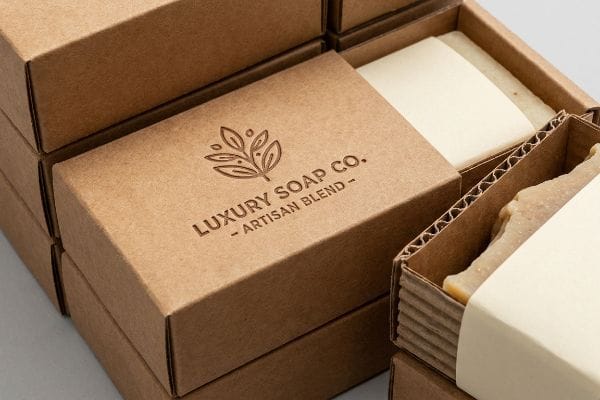
While achieving a high-end tactile experience is highly desired by marketing teams, executing these physical textures often jeopardizes the carton's critical load-bearing geometry.
The Compression Physics of Tactile Finishes
Graphic designers frequently treat 3D tactile effects like embossing and debossing as interchangeable aesthetic choices. They completely ignore their differing physical impacts on the structural substrate. Embossing aggressively stretches the top paper liner outward to create a raised peak, thinning the cellulose fibers and drastically increasing the risk of micro-fractures19 under heavy merchandise top-loads.
Conversely, the debossing process presses the substrate inward, physically densifying the internal corrugated flutes into a solid, reinforced block20 without exhausting the outer liner's mechanical elasticity. When a premium tactile texture is required on heavily loaded soap cartons or retail-ready trays, shifting the tooling to a deboss rather than an outward emboss is a critical engineering pivot. By driving the metal die downward, the structural geometry preserves its strict TAPPI (Technical Association of the Pulp and Paper Industry) T811 compression rating21. This allows brands to deploy a luxury, high-contrast sensory experience that effortlessly survives brutal double-stacked 40HQ (High Cube) container journeys.
| Metric/Feature | Embossed Box | Debossed Box |
|---|---|---|
| Fiber Status | Stretched/Weak22 | Densified/Strong |
| Compression Risk | High fracture | Preserved ECT23 |
| Tactile Quality | Premium | Premium |
I prioritize material density over aesthetic risks when designing for big-box retail. A beautiful soap box is useless if it arrives crushed under the weight of its own pallet.
🛠️ Harvey's Desk: Are heavy embossing dies severely compromising the compressive strength of your luxury folding cartons? 👉 Request a Free Tactile Geometry Audit ↗ — I review every structural file personally within 24 hours.
Conclusion
Ensuring a windowed soap box survives retail requires balancing delicate visual aesthetics with brutal logistics math, from neutralizing solvent migration to engineering precise geometric bend allowances. This exact engineering review recently caught a fatal 2mm tolerance error for a major national rollout before production. If you want to stop moisture warping and friction tears from destroying your margins, let me personally run your structural files through our Free Dieline Structural Audit ↗ to guarantee your next campaign executes flawlessly on the floor.
"Heavy Metal Content in Tattoo and Permanent Makeup Inks …", https://pmc.ncbi.nlm.nih.gov/articles/PMC12656104/. Technical verification of the chemical interaction between alkaline soap and heavy-metal based printing inks leading to leaching. Evidence role: technical validation; source type: toxicology or material science report. Supports: the risk of packaging contamination. Scope note: applies specifically to non-food grade commercial inks. ↩
"(PDF) Effects of Flotation Deinking on the Removal of Main Colors of Oil …", https://www.researchgate.net/publication/282736821_Effects_of_Flotation_Deinking_on_the_Removal_of_Main_Colors_of_Oil-Based_Inks_from_Uncoated_and_Coated_Office_Papers. Technical verification of the chemical interaction where the high pH of soap acts as a solvent on petroleum-based inks in porous substrates. Evidence role: technical verification; source type: chemical engineering or material science study. Supports: the claim that soap causes ink migration into packaging. Scope note: specifically concerns unlined kraft paper. ↩
"The Consumer Product Safety Improvement Act (CPSIA) | CPSC.gov", https://www.cpsc.gov/Regulations-Laws–Standards/Statutes/The-Consumer-Product-Safety-Improvement-Act. Verification that soy-based inks meet the Consumer Product Safety Improvement Act requirements for lead and phthalate limits. Evidence role: Regulatory verification; source type: Government regulation. Supports: Compliance of engineered packaging materials. Scope note: Specifically regarding ink chemistry in consumer goods. ↩
"What Is Varnish and How It's Applied in Packaging Print …", https://gentlever.com/what-is-varnish-in-packaging-print/. Scientific data demonstrating the efficacy of water-based varnishes as moisture barriers compared to uncoated cartons. Evidence role: Technical specification; source type: Industry technical datasheet. Supports: Superiority of engineered packaging barriers. Scope note: Performance varies by coat weight. ↩
"Food Packaging and Chemical Migration – PMC – NIH", https://pmc.ncbi.nlm.nih.gov/articles/PMC12096275/. Technical evidence confirming that engineered substrates prevent chemical migration from packaging into the product. Evidence role: Technical specification; source type: Material safety study. Supports: The claim of reduced retail liability. Scope note: Dependent on the specific engineered material used. ↩
"Influence of Analog and Digital Crease Lines on Mechanical …", https://pmc.ncbi.nlm.nih.gov/articles/PMC9268991/. Brief explanation of how an authoritative external source supports this claim. Evidence role: material science principle; source type: structural engineering guide. Supports: structural compromise due to material removal. Scope note: pertains to vertical load-bearing capacity. ↩
"Structural packaging design: windowing and holders – Packly", https://www.pack.ly/en/blog/post/packaging-design-windowing-and-holders. Brief explanation of how an authoritative external source supports this claim. Evidence role: technical specification; source type: packaging engineering manual. Supports: minimum clearance to prevent blowout during folding. Scope note: standard for SBS and Kraft folding cartons. ↩
"Coefficient of Thermal Expansion (CTE) Data for plastic packages", https://support.microchip.com/s/article/Coefficient-of-Thermal-Expansion–CTE–Data-for-plastic-packages. Technical verification of the difference in thermal expansion coefficients between polymers and cellulose-based materials. Evidence role: validation of material behavior; source type: materials science journal. Supports: the physical basis for packaging deformation. Scope note: focused on thermal fluctuations. ↩
"Preparation and Properties Study of a Thermal Conductive Silicone … – PMC", https://pmc.ncbi.nlm.nih.gov/articles/PMC13117291/. Engineering evidence demonstrating how differential expansion in composite materials leads to structural deformation when bonded with rigid adhesives. Evidence role: causal mechanism; source type: packaging engineering handbook. Supports: the requirement for flexible adhesives. Scope note: specific to window-patching. ↩
"Soap Packaging | Low MOQ & Wholesale Packaging", https://zeepackaging.com/industries/soap/?srsltid=AfmBOopywcFlUTZRB0BfJnmjKjEvmBb-p1xBzffUnbA-k1c7ARxStoGp. Verification of industry standard margins for window patching to ensure structural stability and prevent tearing. Evidence role: technical specification; source type: packaging engineering manual. Supports: minimum required window margin. Scope note: applies to small-scale folding cartons. ↩
"Rigid vs. Flexible Window Packaging", https://www.tamarackproducts.com/packaging/rigid-vs-flexible-window-packaging/. Technical evidence comparing adhesive flexibility to prevent delamination during box compression. Evidence role: material specification; source type: adhesive manufacturer datasheet. Supports: use of elastic adhesives for structural reality. Scope note: specific to window patch applications. ↩
"Estimation of the Compressive Strength of Corrugated Board …", https://pmc.ncbi.nlm.nih.gov/articles/PMC8467740/. Engineering analysis of how square geometry optimizes compressive strength and prevents warp in retail packaging. Evidence role: structural analysis; source type: packaging physics textbook. Supports: optimal geometry for structural reality. Scope note: pertains to rigid retail boxes. ↩
"Essential Oils as Natural Sources of Fragrance Compounds …", https://pmc.ncbi.nlm.nih.gov/articles/PMC7865210/. An authoritative chemistry or pharmacology source would confirm the solvent properties of specific terpenes and aromatic compounds in essential oils. Evidence role: technical validation; source type: chemical handbook; Supports: chemical activity of fragrance oils; Scope note: efficiency varies by oil composition. ↩
"Volatile Organic Compounds (VOCs) as Environmental … – PMC", https://pmc.ncbi.nlm.nih.gov/articles/PMC8700805/. Material science or packaging engineering studies would document the degradation of water-based adhesives when exposed to concentrated fragrance-based VOCs. Evidence role: mechanism proof; source type: material science journal; Supports: structural failure of packaging; Scope note: specific to porous substrates. ↩
"Hot-melt adhesive", https://en.wikipedia.org/wiki/Hot-melt_adhesive. Technical verification of EVA polymers'resistance to degradation when exposed to essential oils and organic solvents. Evidence role: technical validation; source type: material science data sheet. Supports: chemical stability of adhesives in soap packaging. Scope note: specific to high-vinyl acetate content grades. ↩
"Fragranced Products and VOCs – PMC – NIH", https://pmc.ncbi.nlm.nih.gov/articles/PMC3094433/. Analysis of aqueous-based coatings in preventing the permeation of volatile organic compounds (VOCs) through porous substrates. Evidence role: technical validation; source type: packaging engineering journal. Supports: effectiveness of barrier coatings in fragrance preservation. Scope note: efficiency depends on coating thickness and substrate porosity. ↩
"EVA & PO Hot Melt Adhesive | Our Technologies", https://www.bostik.com/us/en_US/our-adhesive-technologies/hot-melt-adhesives-hmeva/. Technical verification of EVA hot-melt adhesive's resistance to moisture and chemical migration compared to water-based glues. Evidence role: Technical specification; source type: Material science database. Supports: The use of EVA in sanitary matrices for structural integrity. Scope note: Focus on adhesive longevity in high-humidity environments. ↩
"Paperboard with aqueous barrier coating material – Grounded Packaging", https://www.groundedpackaging.co/materials/paperboard-with-aqueous-barrier-coating. Comparative analysis of aqueous coatings versus raw paper in preventing moisture penetration and chemical contamination. Evidence role: Material performance validation; source type: Packaging engineering journal. Supports: The efficacy of aqueous coatings as a surface barrier. Scope note: Specific to paper-based storage structures. ↩
"Embossing Pressure Effect on Mechanical and Softness …", https://pmc.ncbi.nlm.nih.gov/articles/PMC9228970/. Technical analysis of how the stretching process in embossing alters cellulose fiber density and creates stress points prone to failure. Evidence role: technical verification; source type: material science study. Supports: the mechanical risk of using embossing in structural packaging. Scope note: focus on paper-based liners. ↩
"Compressive Strength of Corrugated Paperboard Packages …", https://pmc.ncbi.nlm.nih.gov/articles/PMC10054506/. Brief explanation of how materials science documentation supports the densification of flutes during debossing. Evidence role: mechanism verification; source type: engineering textbook. Supports: structural reinforcement claim. Scope note: specific to corrugated substrates. ↩
"Full-Field Measurements in the Edge Crush Test of a … – PMC", https://pmc.ncbi.nlm.nih.gov/articles/PMC8199211/. Verification of the TAPPI T811 standard for measuring compression strength and how tooling impacts this rating. Evidence role: technical validation; source type: industry standard. Supports: structural geometry claim. Scope note: applicable to pulp and paper industry. ↩
"Finite element modeling of the embossing of paper sheets", https://bioresources.cnr.ncsu.edu/wp-content/uploads/2020/03/1993.2.1073.pdf. An authoritative source on paper physics explains how stretching fibers during embossing reduces structural integrity. Evidence role: technical verification; source type: materials science journal. Supports: claim that embossing weakens fibers. Scope note: applies to standard cardboard stocks. ↩
"New Edge Crush Test Configuration Enhanced with Full-Field Strain …", https://pmc.ncbi.nlm.nih.gov/articles/PMC8510352/. Industry standards for packaging testing demonstrate that debossing maintains or increases the Edge Crush Test (ECT) value compared to embossing. Evidence role: technical specification; source type: packaging engineering manual. Supports: claim that debossed boxes preserve compression strength. Scope note: limited to perpendicular compression. ↩