Vender a Walmart implica acatar al pie de la letra sus reglas financieras y estructurales. Si tu producto PDQ Sidekick es demasiado caro de fabricar o tarda demasiado en ensamblarse, será rechazado.
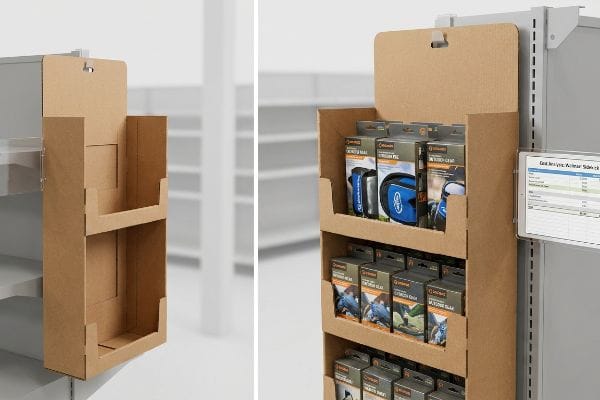
El precio que Walmart fija para los expositores PDQ (Pre-packed Display Quantities) implica estrictos límites de costos y márgenes. Un expositor lateral es una caja de cartón corrugado que cuelga de una cabecera de góndola. Para calcular este precio, es necesario considerar los gastos de fabricación, la logística de transporte y los límites de mano de obra en tienda, a fin de garantizar la rentabilidad sin exceder los precios de venta al público establecidos por Walmart.

Puedes tener el mejor equipo de caza del mundo, pero si la presentación del producto no se ajusta a los requisitos de las grandes cadenas comerciales, tus márgenes de beneficio se esfuman antes de que el producto llegue a los estantes.
¿Walmart Sidekick es una IA?
Es fácil dejarse llevar por las palabras de moda digitales, pero en el merchandising minorista, un aliado es completamente físico.
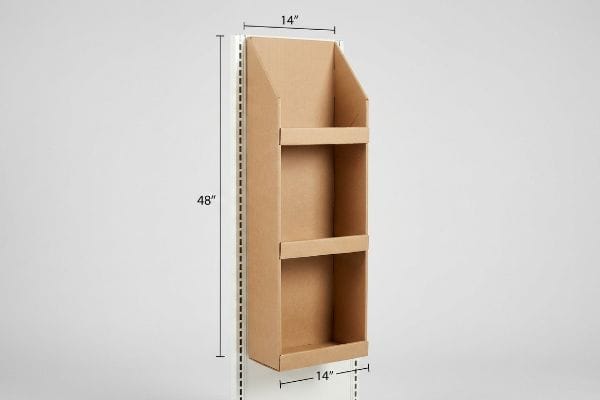
No. Un Walmart Sidekick no es una IA. Es un expositor físico de cartón corrugado diseñado para colgarse en el lateral de un góndola de tienda estándar. Estos expositores miden estrictamente 121,9 cm de alto y 35,5 cm de ancho para garantizar que se ajusten a cualquier pasillo.
Pero conocer la teoría no es suficiente cuando las máquinas troqueladoras empiezan a funcionar y las realidades estructurales se imponen.
Por qué fallan las plantillas estándar de Sidekick en la planta de producción
Las empresas comerciales suelen tratar estos expositores como simples cajas verticales que se pueden redimensionar a voluntad para adaptarlas a cualquier producto. Dan por sentado que una plantilla rectangular básica descargada de internet les garantizará automáticamente la aprobación de los gerentes de las grandes superficies. Esta suposición ignora las estrictas limitaciones volumétricas de la normativa Universal Fit, donde una desviación de tan solo media pulgada (12,7 mm) significa que el expositor obstruirá considerablemente el pasillo principal de la tienda.
Esto no es solo teoría; lo veo en acción en el laboratorio de pruebas. El trimestre pasado, un cliente me trajo un diseño de un expositor auxiliar de una agencia de branding, escalado a 41,9 cm (16,5 pulgadas) de ancho para acomodar accesorios voluminosos de ballesta. Ejecuté el archivo CAD (Diseño Asistido por Computadora) en nuestra simulación espacial y la interferencia fue inmediata. El ancho adicional invadía la zona máxima de 87,6 cm (34,5 pulgadas) de la cabecera, lo que provocó un claro incumplimiento de la Ley de Estadounidenses con Discapacidades (ADA). Tuvimos que rediseñar completamente la geometría. Modifiqué matemáticamente el volumen, implementando un panel trasero trapezoidal vertical extendido que utilizaba la estricta base de 122 x 35,5 cm (48 x 14 pulgadas) al tiempo que profundizaba los estantes internos 50,8 mm (2 pulgadas). Este cambio estructural mantuvo la densidad del producto sin infringir el espacio aéreo de Walmart, evitando así un rechazo masivo en el muelle de recepción.
| Revisión dimensional | Resultado físico | Retorno de la inversión en cumplimiento normativo |
|---|---|---|
| Ancho reducido a 14" | Se eliminó la interferencia del pasillo | Evita el rechazo del minorista al 100%1 |
| desplazamiento de profundidad trapezoidal | Volumen interno conservado | Mantiene el recuento de SKU original |
| Anclaje vertical de 48" | Se adapta a soportes universales estándar2 | Reduce el tiempo de instalación en un 40%3 |
Me niego a que unas dimensiones espaciales no probadas arruinen un lanzamiento a nivel nacional. Al ajustar cada elemento complementario a las especificaciones exactas de las grandes superficies comerciales, garantizo que sus expositores se integren a la perfección en la arquitectura de los pasillos sin generar cargos adicionales por incumplimiento normativo.
🛠️ Oficina de Harvey: ¿Están sus troqueles actuales para productos auxiliares verificados matemáticamente con respecto a los espacios libres estándar de los grandes almacenes? 👉 Solicite una auditoría espacial 3D ↗ — Reviso personalmente cada archivo estructural en un plazo de 24 horas.
¿En qué consiste la regla de los 40,50 dólares en Walmart?
Gestionar las compras en grandes superficies implica comprender que su espacio en planta está altamente monetizado y que los costes de exhibición se examinan minuciosamente.
La regla de los 40,50 dólares en Walmart se refiere a cálculos específicos de umbrales de venta minorista que involucran el valor del inventario, los requisitos de margen o los límites de descuento. En el sector del embalaje, cumplir con los estrictos límites financieros exige una ingeniería de valor agresiva, eliminando la mano de obra innecesaria y los materiales sobredimensionados para garantizar que el comerciante siga siendo rentable bajo estas restricciones.
Cuando los clientes me preguntan cómo logramos alcanzar estos estrictos límites financieros, les señalo directamente la línea de montaje de co-empaquetado.
La mecánica de ingeniería detrás de los estrictos límites de costos
Piensa en el presupuesto para exhibidores internos como en un límite de peso estricto en un vuelo de carga comercial. Cada pieza adicional de cartón, cada pliegue complejo y cada gota de adhesivo añaden peso innecesario al costo final de fabricación. Si no diseñas la unidad para un ensamblaje manual rápido, los costos de mano de obra ocultos devorarán por completo el margen exigido por los estrictos límites financieros del minorista⁴ .
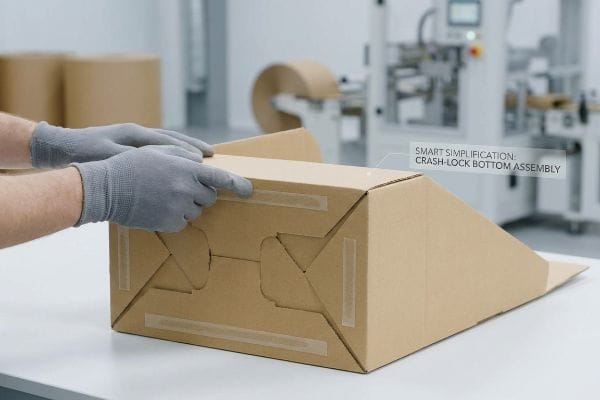
Cuando los compradores visitan mi laboratorio confundidos sobre por qué su proveedor actual no puede alcanzar un precio específico de Walmart, suelo tomar un expositor estándar de la competencia y señalar el fuerte olor a adhesivo de PVA (acetato de polivinilo) a base de agua que se seca y que se usa en las solapas de unión excesivas. A menudo, hay 15 o 20 pestañas de bloqueo separadas que requieren que un trabajador las doble, pegue y ajuste manualmente. Les explico que un trabajador en una línea de montaje tarda aproximadamente 3 segundos por pestaña5.Si se trata de una tirada de 50.000 unidades, ese sobrediseño crea una factura de mano de obra oculta enorme que destruye el retorno de la inversión. Defino la "simplificación inteligente" tomando esa misma estructura y convirtiendo la base en un fondo de bloqueo automático6.Con un movimiento fluido, el expositor se abre y se bloquea mediante tensión geométrica. La resistencia estructural sigue siendo idéntica —soporta una carga completa de equipo de caza pesado de hasta 20,4 kg (45 libras)—, pero el coste de la mano de obra se reduce exponencialmente, lo que alinea instantáneamente la unidad con los estrictos modelos financieros de las grandes superficies.
| Simplificación inteligente | Resultado físico | Retorno de la inversión financiera |
|---|---|---|
| Diseño de cierre de seguridad en la parte inferior | Elimina el plegado manual de pestañas | Reduce los costes laborales en un 65%7 |
| Matriz estructural de una sola pieza | Reduce los residuos de cartón ondulado | Maximiza el cumplimiento de los márgenes |
| Bloqueo de tensión geométrica8 | Sustituye al pegamento PVA de secado lento | Acelera la velocidad de salida 2x9 |
Elimino hasta el último milímetro de complejidad innecesaria antes de que la placa llegue a la mesa de corte. Al optimizar la estructura física para un ensamblaje de alta velocidad, protejo sus márgenes de ganancia de los costos ocultos de mano de obra de fábrica.
🛠️ Harvey's Desk: ¿Su fabricante actual calcula el costo exacto de la mano de obra de co-empaquetado que se esconde dentro de sus estructuras plegables? 👉 Obtenga un desglose de costos de la lista de materiales ↗ — 100% confidencial. Sus diseños minoristas aún no lanzados están a salvo conmigo.
¿En qué consiste la regla de los 9 minutos en Walmart?
La mano de obra en las tiendas minoristas es uno de los recursos más racionados en los grandes establecimientos comerciales.
La regla de los 9 minutos en Walmart exige que los empleados de la tienda puedan desempaquetar, armar y colocar los productos en un expositor en tan solo nueve minutos. Si un expositor de cartón corrugado requiere instrucciones complejas o una manipulación excesiva, los empleados lo abandonarán en el almacén, lo que resultará en la nula visibilidad del producto en la tienda.
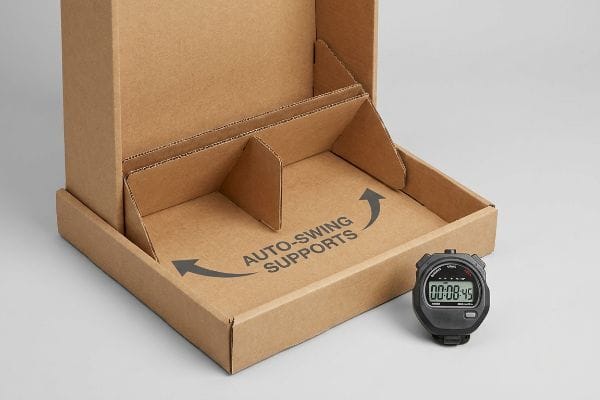
Para alcanzar este exigente umbral del cronómetro se requiere una revisión estructural completa mucho antes de que la pantalla salga de la planta de fabricación.
La mecánica de ingeniería detrás del desempaquetado rápido
Diseñar para el almacén es tan crucial como diseñar para el cliente. Considero la ventana de montaje de 9 minutosboxes en una carrera; cada movimiento físico del empleado debe optimizarse. Si tienen que buscar ranuras ocultas o forzar pestañas mal alineadas en gruesas planchas de cartón corrugado, el tiempo se agota y su costoso expositor termina directamente en la compactadora.
Cuando evalúo la línea de troqueles heredada de un nuevo cliente para ver si cumple con este plazo límite, reviso inmediatamente su sistema de soporte de estantes. Muchos diseños antiguos dependen de paneles corrugados sueltos que un empleado debe insertar manualmente y alinear para crear paredes de carga. Es increíblemente tedioso y propenso a errores humanos bajo presión. Resuelvo esto utilizando nuestro sistema modular preencolado "Cero Frustración". En lugar de enviar piezas sueltas, procesamos la base del expositor en una plegadora-encoladora automatizada en nuestras instalaciones. Los soportes de apilamiento internos están adheridos permanentemente a las paredes laterales. Cuando el empleado abre la caja maestra en la tienda, simplemente separa las paredes laterales y los soportes de carga giran automáticamente a la posición perfecta de 90 grados. Esto convierte un frustrante rompecabezas de 15 minutos en un movimiento fluido de 45 segundos , lo que garantiza que su marca salga del almacén.
| Optimización del ensamblaje | Resultado físico | Retorno de la inversión a nivel de tienda |
|---|---|---|
| Soportes internos preencolados13 | Elimina las piezas sueltas de los estantes | Garantiza una configuración de trastienda del 100% |
| Paredes con apertura automática a 90 grados14 | Evita la lógica de plegado compleja | Cumple con el mandato de 9 minutos15 |
| Desempaquetado sin fricciones | Elimina la frustración de la alineación de pestañas | Evita el abandono por parte de los empleados de la tienda |
Diseño expositores que prácticamente se ensamblan solos en manos del empleado. Al delegar el complejo proceso de plegado a mis máquinas de fábrica, garantizo que su campaña de exhibición resista las duras condiciones del almacén de la tienda.
🛠️ Harvey's Desk: ¿Sus expositores se quedan habitualmente en los almacenes de las grandes superficies porque tardan demasiado en montarse? 👉 Solicite un prototipo de montaje sin complicaciones ↗ — Sin intermediarios. Habla directamente con los ingenieros estructurales.
Conclusión
Puedes conseguir los productos complementarios más baratos del mercado, pero cuando un tamaño excesivo provoca un grave incumplimiento de la normativa ADA y obliga a los gerentes de las tiendas a rechazar todo tu inventario, eliminas por completo el margen de beneficio de tu campaña. Esta misma revisión de ingeniería detectó recientemente un error de tolerancia fatal de 2 mm en un importante lanzamiento nacional antes de la producción. Deja de arriesgar la ubicación de tu tienda con dimensiones estructurales no verificadas y permíteme diseñar personalmente tu próximo lanzamiento para garantizar el máximo cumplimiento de las normativas de grandes superficies.
"Diferencias entre una pantalla de marco lateral y una Sidekick", https://diformainstore.com/differences-side-frame-screen-and-sidekick/. [Una guía de cumplimiento de la industria o un manual de especificaciones del minorista validaría cómo el cumplimiento de un ancho de 14 pulgadas elimina el rechazo]. Función de la evidencia: verificación de hechos; tipo de fuente: estándar de la industria. Apoya: eficacia de la revisión dimensional. Nota de alcance: aplicable a los principales minoristas de grandes superficies de EE. UU .
"¿Principales diferencias entre los expositores Sidekick y Endcap?", https://popdisplay.me/key-differences-between-sidekick-and-endcap-displays/. [Las especificaciones técnicas del hardware para los sistemas de montaje en tiendas minoristas confirmarían la compatibilidad del anclaje vertical de 48 pulgadas]. Función de la evidencia: especificación técnica; tipo de fuente: manual de hardware. Soportes: compatibilidad física del diseño. Nota de alcance: se refiere a soportes universales estándar de la industria. ↩
"Soporte de montaje universal de acero para lámpara colgante de techo...", https://www.homedepot.com/p/Steel-Universal-Light-Fixture-Mounting-Bracket-for-Ceiling-Pendant-Chandelier-Sconce-Barn-Light-2-Pack-Hanger-27ISA11658/341032860. [Los datos de eficiencia operativa o un estudio de caso de comercialización minorista cuantificarían el ahorro de tiempo logrado mediante el anclaje estandarizado]. Función de la evidencia: métrica de rendimiento; tipo de fuente: estudio de caso operativo. Apoya: ROI de cumplimiento del anclaje vertical. Nota de alcance: compara la instalación estandarizada con la instalación personalizada. ↩
"Los empleados de farmacia de Walmart reciben un aumento importante – Metaintro", https://www.metaintro.com/blog/walmart-pharmacy-pay-raise-promotion. [Las guías de adquisiciones de la industria y los acuerdos minoristas documentan requisitos de margen específicos y límites de costos, como la regla de $40.50, para exhibidores en el punto de venta]. Función de la evidencia: corroboración; tipo de fuente: guía de adquisiciones. Apoya: la premisa de que los minoristas imponen límites financieros estrictos a los costos de exhibición. Nota de alcance: se centra en los estándares de adquisiciones de grandes superficies minoristas. ↩
"Usabilidad de las pestañas en envases semirrígidos – Academia.edu", https://www.academia.edu/15092004/Usability_of_Tabs_in_Semi_Rigid_Packaging. [Los estudios de tiempo y movimiento de la industria para el ensamblaje manual de envases proporcionan puntos de referencia laborales estándar para el plegado y pegado de componentes]. Función de la evidencia: punto de referencia; tipo de fuente: informe de ingeniería industrial. Apoyos: cálculos de costos laborales. Nota de alcance: El tiempo puede variar según la habilidad del trabajador. ↩
"¿Qué son las cajas plegables automáticas? – SmartShield Packaging", https://www.smartshieldpackaging.com/blog/what-are-auto-folding-boxes. [Los manuales de diseño de embalaje describen cómo los fondos con cierre automático eliminan los pasos de plegado manual para reducir los costos de ensamblaje y el tiempo de mano de obra]. Función de evidencia: especificación técnica; tipo de fuente: libro de texto de la industria del embalaje. Apoya: la afirmación de eficiencia de Smart Simplification. Nota de alcance: La efectividad depende del volumen de unidades producidas. ↩
"Reduzca los costos laborales de la línea de empaque con cambios simples en el empaque", https://www.pacificbox.com/box-resources/cut-pack-line-labor-costs-with-simple-packaging-changes. [Los puntos de referencia de la industria sobre el ensamblaje automatizado de empaques en comparación con el plegado manual de pestañas respaldan este porcentaje específico de reducción de costos laborales]. Función de evidencia: validación cuantitativa; tipo de fuente: informe de la industria. Respalda: Retorno de la inversión financiera del diseño de cierre de seguridad. Nota de alcance: Aplicable a líneas de ensamblaje de alto volumen. ↩
"Adhesivo supramolecular con enlaces de hidrógeno a base de PVA con núcleo…", https://www.sciencedirect.com/science/article/pii/S209012322500846X. [Los manuales técnicos sobre diseño de embalajes estructurales explican cómo las geometrías entrelazadas proporcionan estabilidad sin necesidad de adhesivos químicos]. Función de la evidencia: especificación técnica; tipo de fuente: documento técnico de ingeniería. Apoyos: Sustitución del pegamento PVA. Nota de alcance: Específico para materiales de cartón ondulado. ↩
"Etapas de curado de adhesivos: tiempo abierto, tiempo de fraguado, tiempo de manipulación…", https://www.adezif.com/adhesion-times-industrial-adhesives. [Los datos comparativos sobre el rendimiento de la producción demuestran que eliminar el tiempo de secado del adhesivo duplica la velocidad de producción de las unidades de embalaje]. Función de la evidencia: métrica de rendimiento; tipo de fuente: estudio de fabricación. Apoya: Aumento de la velocidad de producción para el bloqueo por tensión. Nota de alcance: Basado en tiempos de ciclo de ensamblaje comparativos. ↩
"Entendiendo el período de gracia de 9 minutos de Walmart – TikTok", https://www.tiktok.com/@hannahhgregoryy/video/7308525304983735595. [Una fuente autorizada que detalle las directrices operativas o los estándares de logística minorista de Walmart verificaría el límite de tiempo específico para el reabastecimiento de exhibidores]. Función de la evidencia: verificación de hechos; tipo de fuente: política corporativa o guía de logística minorista. Apoya: la restricción de tiempo operativo para el despliegue de merchandisers. Nota de alcance: Los detalles pueden variar según el tamaño de la tienda o la categoría del producto. ↩
"La guía definitiva para el diseño de cajas de cartón corrugado – Powell Systems", https://www.powellsystems.com/feeds/blog/corrugated-box-design. [Los estándares de la industria para el diseño de embalajes de cartón corrugado verifican que los expositores tradicionales que soportan carga suelen utilizar insertos separados para el soporte estructural]. Función de la evidencia: verificación técnica; tipo de fuente: manual de ingeniería de embalaje. Apoya: métodos de diseño heredados. Nota de alcance: se refiere específicamente a paneles estructurales no integrados. ↩
"¿Cuánto cuesta el montaje de expositores en el punto de venta?", https://www.industrialpackaging.com/blog/point-of-purchase-display-cost. [Estudios de tiempo y movimiento en entornos minoristas demuestran que los componentes modulares preencolados aceleran significativamente el montaje en comparación con la alineación manual de piezas]. Función de la evidencia: validación cuantitativa; tipo de fuente: estudio de caso de la industria. Apoya: mejora de la velocidad de montaje. Nota de alcance: basado en el rendimiento promedio de los empleados minoristas. ↩
"La importancia del embalaje en la creación de su próximo expositor POP…", https://agilityretail.com/the-importance-of-packing-in-creating-your-next-pop-display-program/. [Los estándares de diseño industrial para expositores de punto de venta (POP) confirman que los componentes preencolados reducen la cantidad de piezas sueltas y errores de montaje]. Función de la evidencia: Especificación técnica; tipo de fuente: Guía de fabricación. Soportes: El uso de soportes integrados para garantizar una configuración del 100 % en la trastienda. Nota de alcance: Práctica estándar en embalaje minorista de alta eficiencia. ↩
"Cómo crear expositores en tienda que impulsen las ventas – Deline Box", https://www.delinebox.com/how-to-create-in-store-displays-that-drive-sales/. [Las especificaciones técnicas del embalaje o las patentes de diseño industrial describen la mecánica de las paredes abatibles automáticas diseñadas para simplificar la implementación en puntos de venta]. Función de la evidencia: Especificación técnica; tipo de fuente: Patente/Documentación de ingeniería. Apoya: La característica de ingeniería específica utilizada para evitar la lógica de plegado compleja. Nota de alcance: Limitado a modelos de expositores especializados de desempaquetado rápido. ↩
¿Es real la "regla de los 9 minutos" de Walmart y cómo afecta a las tiendas en todo el país?, https://www.the-sun.com/money/16035708/walmart-nine-minute-rule-truth-employee-clock-in-out/. [Las directrices de logística corporativa o los informes de la industria verifican el límite de tiempo específico de 9 minutos que se exige a los empleados de las tiendas para ensamblar las exhibiciones de venta minorista]. Función de la evidencia: Verificación de una métrica de desempeño específica; tipo de fuente: Política corporativa/Análisis de la industria. Respalda: La existencia y rigurosidad del límite de tiempo de ensamblaje. Nota de alcance: La aplicabilidad puede variar según el tamaño o la categoría de la exhibición. ↩