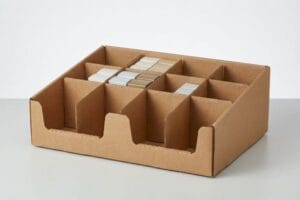
Lograr que tu producto llegue rápidamente a los puntos de venta se convierte en una lucha constante contra las estrictas normativas y los márgenes ajustados. Una unidad bien diseñada cambia por completo esa dinámica.
Los expositores PDQ ofrecen ventajas clave para las operaciones diarias de venta minorista, ya que maximizan la visibilidad del producto y minimizan el tiempo de montaje. Estas unidades de cartón corrugado, ligeras y listas para colocar en estanterías, permiten una rápida colocación de los productos, asegurando que su mercancía empaquetada pase sin problemas desde los palés de envío directamente a los pasillos de la tienda, sin ninguna dificultad de montaje.

Antes de finalizar el diseño de su troquel estructural, comprender la terminología específica y la física de los materiales que hay detrás de estos expositores de despliegue rápido le evitará costosos rechazos por parte de los minoristas.
¿Qué significan las siglas PDQ display?
Al entrar en una gran superficie comercial, enseguida te fijarás en estas bandejas compactas que dominan los pasillos de compra impulsiva, pero su nombre suele confundir a los compradores.
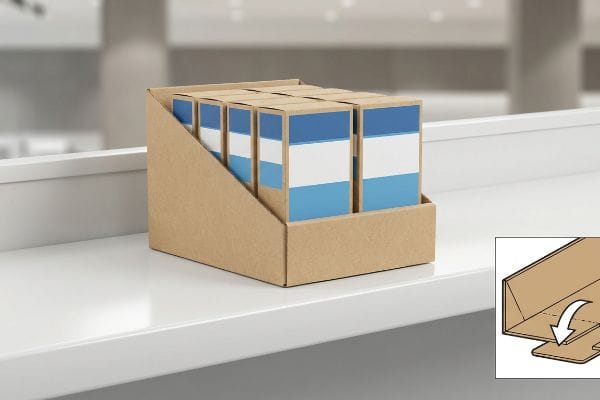
Las pantallas PDQ, siglas de Product Display Quickly (Exhibición Rápida de Productos), también se conocen como Pretty Darn Quick (Exhibición Rápida). Este término del sector describe bandejas compactas y precargadas diseñadas para colocarse instantáneamente en los estantes o mostradores de las tiendas, lo que permite al personal reponer los artículos en segundos sin tener que interpretar complejas guías de montaje visual.
Conocer el acrónimo es fácil, pero lograr la velocidad prometida requiere una ejecución estructural impecable entre bastidores.
La ingeniería de cero frustración detrás de los vendedores ambulantes rápidos
La mayoría de los equipos de marca asumen que una bandeja pequeña equivale naturalmente a un montaje rápido. Diseñan estructuras desmontadas con una docena de pestañas entrelazadas, esperando que los trabajadores minoristas con salario mínimo sigan instrucciones de origami complejas durante un turno ajetreado. Este enfoque teórico ignora por completo la caótica realidad de un entorno de tienda real donde el tiempo en la tienda es muy limitado1.
Sé que estás mirando esta estructura de cartón con cara de desconcierto, porque muchos de mis clientes inicialmente quieren enviarlas planas para ahorrar en gastos de envío. Pero he visto a dependientes sudar la gota gorda intentando forzar un pliegue complejo durante quince minutos, para finalmente rendirse y envolver la base con cinta adhesiva transparente. La fricción del cartón grueso sin tratar contra una ranura demasiado pequeña es increíblemente frustrante. En lugar de pestañas manuales, integro bases modulares preencoladas. Se oye un clic nítido cuando la bandeja se bloquea en su lugar en el instante en que se abre, eliminando la necesidad de hojas de instrucciones. Este simple cambio de ingeniería ahorra aproximadamente veinte segundos de montaje por unidad²,reduciendo significativamente los costes laborales y asegurando que tu marca luzca impecable en el estante.
| Error común de principiante | La solución profesional | Beneficio para el punto de venta |
|---|---|---|
| Pestañas de bloqueo manual complejas | Bases de protección modulares preencoladas | Ahorra 20 segundos de montaje por unidad |
| Ignorar la fatiga de los empleados de la tienda | Estructuras de base con bloqueo automático | Elimina el uso de cinta adhesiva antiestética |
| Confiar en las instrucciones en papel | Diseños intuitivos de apertura desplegable | Garantiza la implementación inmediata |
Nunca dejo el montaje al azar en la tienda. Al integrar mecanismos de autobloqueo directamente en la línea de troquelado, garantizo que su campaña promocional se lance sin problemas, sin depender de empleados sobrecargados de trabajo que tengan que interpretar manuales complicados.
🛠️ El escritorio de Harvey: ¿Están disminuyendo los índices de ejecución en sus tiendas debido a pasos de ensamblaje complicados? 👉 Obtenga una revisión de simplificación estructural ↗ — Acceso directo a mi escritorio. Sin spam de ventas automatizado, lo prometo.
¿Qué significan las siglas PDQ?
Cuando los compradores utilizan el término en plural, generalmente se refieren a una campaña de comercialización específica que se implementará en varias tiendas, exigiendo una consistencia absoluta en las tallas físicas.
PDQ son las siglas de varias unidades listas para la venta que se despliegan simultáneamente en las redes de venta minorista. Si bien el acrónimo significa "bastante rápido", el plural destaca una campaña promocional coordinada de expositores de mostrador o vitrinas diseñadas específicamente para impulsar las compras rápidas en zonas comerciales de mucho tránsito.
Introducir varias unidades en cadenas minoristas nacionales significa que ya no solo luchas por la visibilidad, sino que luchas contra las leyes de la física.
Cómo equilibrar los expositores de mostrador y minimizar el riesgo de vuelco
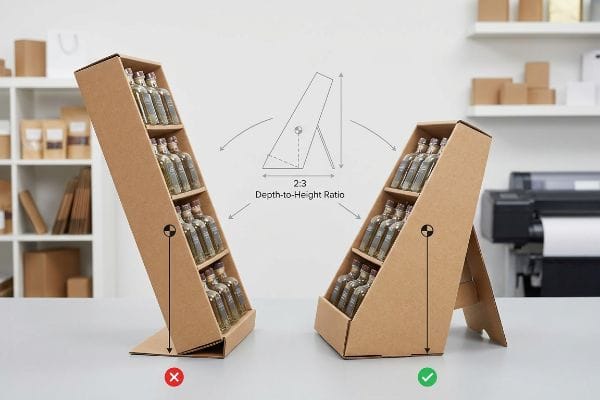
Ampliar una campaña de comercialización a menudo lleva a los equipos de diseño a maximizar el volumen interno del producto en un espacio muy reducido. Simplemente estiran la pared trasera de la bandeja para colocar más inventario, ignorando por completo el centro de gravedad. Esto crea un accesorio inherentemente inestable que infringe las normas de seguridad de la tienda³ .
Cuando se colocan artículos pesados en una base estrecha, la gravedad acaba imponiéndose. A menudo veo que equipos de marketing experimentados pasan por alto este punto ciego, lo que provoca que las unidades se inclinen lentamente hacia adelante bajo el peso de botellas de vidrio o cosméticos líquidos. Es una trampa común sentir esa sensación de inestabilidad justo al colocar el último artículo, para luego ver cómo toda la unidad se derrumba en el suelo. Para evitarlo, aplico matemáticamente una estricta proporción de dos a tres entre la profundidad y la altura de todas las cajas registradoras independientes⁴.Al extender el soporte hacia atrás o ampliar la base, contrarrestamos el impulso hacia adelante. Este ajuste de estabilidad reduce drásticamente la responsabilidad y evita costosos cargos a los minoristas por productos dañados.
| Error común de principiante | La solución profesional | Beneficio para el punto de venta |
|---|---|---|
| Estirar las paredes traseras demasiado alto | Relación profundidad-altura de 2:35 | Evita que el vehículo se vuelque hacia adelante |
| Bases estrechas para líquidos densos | Soportes traseros extendidos para caballete6 | Evita que la encimera se caiga |
| Ignorando el centro de gravedad | Huella inferior más ancha7 | Supera las auditorías de seguridad de la tienda |
Analizo cada estructura comparándola con las leyes básicas de la gravedad. Al aplicar esta proporción, me aseguro de que sus expositores se mantengan en pie durante todo el ciclo promocional, protegiendo así tanto su producto como su margen de beneficio.
🛠️ Harvey's Desk: ¿Sientes que tu expositor de mostrador actual es demasiado pesado cuando está completamente cargado? 👉 Solicita una auditoría de estabilidad ↗ — Descarga de forma segura. Mi bandeja de entrada está abierta si tienes alguna pregunta más adelante.
¿Qué es PDQ en la cadena de suministro?
El traslado rápido de mercancías desde la planta de fabricación directamente al punto de venta requiere una mentalidad logística completamente diferente.
En la cadena de suministro, PDQ se refiere a los expositores preempaquetados optimizados para el transporte inmediato y la rápida colocación en el punto de venta. Al evitar el reempaquetado en almacenes secundarios, estas estructuras de cartón corrugado optimizadas agilizan el proceso logístico desde el centro de distribución hasta el pasillo de la tienda, reduciendo drásticamente la manipulación manual y los costes de transporte asociados.
Sin embargo, optimizar una caja para un envío más rápido a menudo introduce riesgos ambientales invisibles durante la fase de tránsito propiamente dicha.
La fricción oculta del co-empaquetado y la humedad ambiental
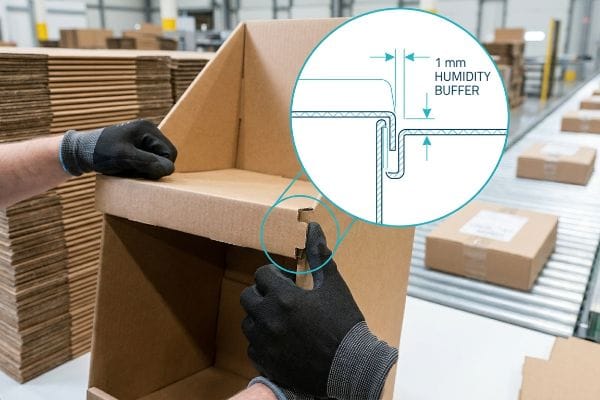
Muchos diseñadores gráficos crean sus archivos digitales utilizando las medidas exactas del cartón en seco. Crean mecanismos de cierre con holgura cero⁸,asumiendo que los paquetes planos se comportarán exactamente igual en un almacén húmedo que en una oficina con aire acondicionado. Esta omisión de las leyes de la física ambiental provoca enormes cuellos de botella en el proceso.
Piensa en las fibras de papel como una esponja seca lista para absorber el aire a su alrededor. Incluso los equipos de compras más experimentados caen en esta trampa al realizar envíos a centros de distribución costeros. He estado en plantas de co-empaquetado y he escuchado el frustrante sonido de una hoja superior impresa desgarrándose porque el soporte poroso absorbía la humedad ambiental y se hinchaba. Los trabajadores terminan aplastando las ondulaciones solo para forzar las pestañas a unirse. Para solucionar esto, diseño automáticamente un amortiguador de humedad preciso en los archivos CAD (Diseño Asistido por Computadora). Al agregar 0,04 pulgadas (1 mm) adicionales de espacio libre9 a las ranuras de recepción, compenso matemáticamente la expansión del papel. Este ajuste de tolerancia cero al desgarro acelera el tiempo de ensamblaje de co-empaquetado en un treinta por ciento estimado10, manteniendo su cadena de suministro en movimiento sin problemas.
| Error común de principiante | La solución profesional | Beneficio para el punto de venta |
|---|---|---|
| Diseños de ranuras de holgura cero | Ranura amortiguadora de humedad de 1 mm11 | Evita que la capa superior se rasgue |
| Ignorando la humedad del almacén costero | Matemáticas de expansión de papel CAD | Acelera el proceso de co-envasado un 30 %12 |
| Forzando pestañas hinchadas y apretadas | Brechas de tolerancia matemática | Evita la frustración de los trabajadores |
Protejo los plazos de su cadena de suministro diseñando soluciones para los entornos de almacén más exigentes. Al tener en cuenta los cambios físicos de materiales antes de que comience la producción en masa, mantengo su cronograma de entrega al día y elimino los cuellos de botella laborales totalmente evitables.
🛠️ Harvey's Desk: ¿Tus equipos de montaje tienen problemas con las pestañas de bloqueo que de repente se sienten demasiado apretadas? 👉 Solicita una revisión de seguridad estructural ↗ — Sin formularios que generen interminables llamadas de ventas. Solo valor puro.
¿Para qué sirve el cartón ondulado?
Además de ser ligero y totalmente reciclable, este material sirve como estructura básica para casi todas las campañas de merchandising temporales que existen actualmente en el mercado.
El cartón ondulado es útil porque su estructura interna ondulada actúa como amortiguador mecánico, a la vez que soporta grandes pesos verticales. Este sustrato altamente adaptable ofrece una excelente capacidad de impresión para gráficos de marca, al tiempo que proporciona la resistencia a la compresión necesaria para soportar las exigentes condiciones de la cadena de suministro sin sufrir aplastamientos internos.
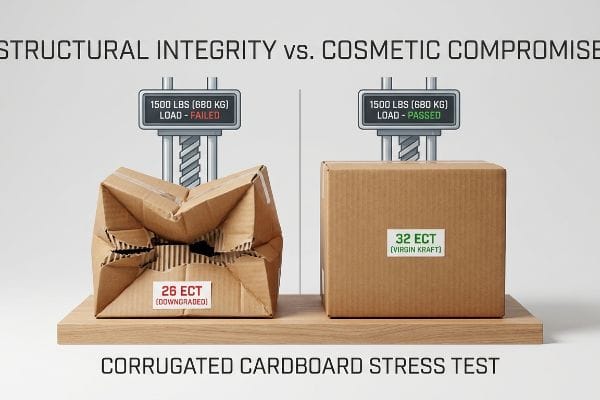
Lograr que un solo expositor se mantenga en pie en un laboratorio es fácil, pero esta es la cruda realidad cuando se envían quinientos de ellos cargados con mercancía pesada.
Por qué las mejoras estéticas suelen provocar el colapso de la planta de producción
Los equipos de compras buscan constantemente maneras de compensar los altos costos de los acabados cosméticos de alta gama, como las laminaciones de lámina de cobertura total. Una suposición aparentemente razonable, pero en realidad peligrosa, es que pueden degradar secretamente el sustrato principal, pasando de una robusta clasificación ECT (Edge Crush Test)32 a una placa ECT de 26, para ahorrar unos céntimos por unidad sin que nadie se dé cuenta.
Esto no es solo teoría; lo veo suceder en la planta de pruebas cuando una caja supuestamente premium simplemente se rompe. Cuando se elimina la densidad crítica de fibra del núcleo ondulado para pagar por un exterior brillante, se reduce drásticamente la capacidad de la prueba de compresión de cajas (BCT)14.En mis instalaciones, veo rutinariamente cómo estas cajas comprometidas sufren un aplastamiento catastrófico bajo una prueba estándar de carga superior de 1500 lb (680 kg). Literalmente se puede oír cómo las fibras internas del papel se rompen bajo la presión. Obtuve las lecturas del micrómetro y demostré que no necesitábamos costosas películas de aluminio que debilitan la estructura. Al volver a un estricto estándar de kraft virgen de 32 ECT15 y aplicar un recubrimiento acuoso brillante de alto contenido de sólidos, restauramos el déficit estructural. Esta corrección drástica eliminó por completo los daños durante el transporte, ahorrándole al cliente miles en cargos de los minoristas, al tiempo que se lograba un impacto visual de alta gama.
| Error común de principiante | La solución profesional | Beneficio para el punto de venta |
|---|---|---|
| Reducción a 26 ECT | Aplicación de la norma 32 ECT virgen | Evita que la carga de palés se aplaste |
| Comprar papel de aluminio pesado y caro | Recubrimientos acuosos de alto contenido en sólidos | Reduce las tasas de defectos de los materiales |
| Ignorando la física de carga superior | Pruebas de estrés de laboratorio BCT | Evita las devoluciones de cargos por transporte |
Me niego a que los presupuestos para la estética comprometan la física estructural. Al mantener el material principal cumpliendo estrictamente con los estándares de alta resistencia, garantizo que su producto sobreviva a la dura realidad del transporte de carga fraccionada (LTL) sin deformarse.
🛠️ Oficina de Harvey: No permita que un defecto estructural de 2 milímetros arruine el lanzamiento de 500 tiendas. 👉 Envíeme su archivo de troquelado ↗ — Analizaré los cálculos antes de que malgaste su presupuesto en la producción en masa.
Conclusión
Puedes optar por reducir la calidad de tu tablero estructural para ahorrar unos céntimos, pero cuando esa base debilitada se derrumba bajo el peso de los palés, ralentizando la línea de distribución aproximadamente un treinta por ciento, tu margen de beneficio desaparece por completo. Esta es la hoja de especificaciones exacta que utilizan mis 10 principales clientes minoristas para garantizar cero rechazos de impresión. Deja de arriesgarte con las tolerancias de los materiales y permíteme auditar personalmente tu configuración mediante mi Auditoría Previa a la Producción Gratuita ↗ para detectar errores estructurales fatales antes de que comience la producción en masa.
«Empleo en el comercio minorista: antes, durante y después de la pandemia», https://www.bls.gov/opub/btn/volume-11/retail-trade-employment-before-during-and-after-the-pandemic.htm. [Una fuente autorizada sobre operaciones minoristas o gestión laboral cuantificaría las limitaciones de tiempo y los costos laborales asociados con la reposición de estantes en grandes almacenes]. Función de la evidencia: hecho de apoyo; tipo de fuente: informe de la industria. Apoya: la necesidad operativa de exhibidores de montaje rápido. Nota de alcance: se centra en entornos minoristas de alto volumen. ↩
¿Qué son los expositores PDQ? – POP de cartón y cartón ondulado personalizados…, https://popdisplay.me/what-are-pdq-displays/. [Estudios de casos de ingeniería de embalaje y estudios de tiempos y movimientos que comparan bandejas de plegado manual con fondos preencolados proporcionan datos empíricos sobre mejoras en la velocidad de montaje]. Función de la evidencia: Validación cuantitativa; tipo de fuente: Informe técnico de la industria. Apoya: Eficiencia de los fondos modulares. Nota de alcance: El ahorro real puede variar según el tamaño del expositor y la experiencia del personal. ↩
"Experto en seguridad de exhibidores minoristas: por qué siempre debe contactar a un…", https://www.felbrodisplays.com/retail-display-safety-expert-why-you-should-always-contact-a-professional/. [Un manual de seguridad minorista autorizado o una guía de seguridad de la industria describiría las proporciones máximas de altura a ancho para prevenir riesgos de vuelco en los exhibidores de punto de venta]. Función de la evidencia: verificación regulatoria; tipo de fuente: norma de seguridad. Apoya: la afirmación de que ciertos diseños de exhibidores violan las políticas de seguridad de la tienda. Nota de alcance: las políticas específicas pueden variar entre diferentes cadenas minoristas. ↩
¿Cuál es la altura promedio de un estante en una tienda? – PopDisplay, https://popdisplay.me/what-is-the-average-retail-shelf-height/. [Los manuales de ingeniería o las normas de diseño de exhibidores para tiendas especifican las proporciones óptimas de base a altura necesarias para mantener la estabilidad y evitar que las unidades de exhibición con la parte superior pesada se vuelquen]. Función de la evidencia: validación técnica; tipo de fuente: estándar de la industria. Apoya: la base matemática para la estabilidad de la exhibición. Nota de alcance: Las proporciones específicas pueden variar según el centro de gravedad del producto. ↩
"Entendiendo el embalaje PDQ en el comercio minorista – LinkedIn", https://www.linkedin.com/pulse/understanding-pdq-packaging-retail-moss-tvthc. [Las directrices de ingeniería para expositores de punto de venta establecen proporciones específicas para evitar cambios en el centro de gravedad que provoquen vuelcos hacia adelante]. Función de la evidencia: especificación técnica; tipo de fuente: manual de la industria. Apoya: relación de estabilidad para la prevención de vuelcos. Nota de alcance: Se aplica principalmente a expositores de cartón para mostrador. ↩
Soporte de caballete de 36": Doble ala blanca, cartón corrugado de alta resistencia de 50 pt", https://www.affordabledisplayproducts.com/36-inch-white-double-wing-easel-back?srsltid=AfmBOorTkMfl1g5M_qqJCxotEAZYuEiKgDuSlrlux-0V09QbGoiZv69n. [La documentación del embalaje estructural explica cómo extender el soporte de caballete aumenta el ángulo de apoyo y resiste el peso de líquidos pesados]. Función de la evidencia: solución técnica; tipo de fuente: guía de ingeniería estructural. Soportes: prevención de caídas de la pantalla. Nota de alcance: La eficiencia depende del grado del material del cartón corrugado. ↩
"[PDF] MANUAL DE AUDITORÍA/INSPECCIÓN DE SEGURIDAD – Química de OSU", https://chemistry.osu.edu/sites/chemistry.osu.edu/files/ACS%20Safety%20Audit%20Manual.pdf. [Los manuales de cumplimiento de seguridad para minoristas especifican anchos de base mínimos en relación con la altura de la exhibición para cumplir con los requisitos de auditoría de seguridad de la tienda]. Función de evidencia: métrica de cumplimiento; tipo de fuente: lista de verificación de auditoría de seguridad. Apoya: aprobar auditorías de seguridad. Nota de alcance: Los requisitos varían según la cadena minorista y los códigos de seguridad locales. ↩
"Influencia de la humedad y la temperatura en las propiedades mecánicas de…", https://bioresources.cnr.ncsu.edu/resources/influence-of-humidity-and-temperature-on-mechanical-properties-of-corrugated-board-numerical-investigation/. [Las normas de ingeniería de embalaje especifican que deben integrarse tolerancias en los diseños de cartón corrugado para acomodar los cambios dimensionales causados por la absorción de humedad higroscópica]. Función de la evidencia: Validación técnica; tipo de fuente: Norma industrial/Manual de ingeniería. Apoya: La afirmación de que los diseños de holgura cero son susceptibles a fallar en condiciones de humedad variable. Nota de alcance: El impacto depende de la tasa de absorción de humedad del material. ↩
""Efectos de la humedad relativa en la resistencia a la compresión de…", https://open.clemson.edu/all_theses/3225/. [Las normas de ingeniería para materiales corrugados especifican compensaciones de tolerancia para tener en cuenta la expansión higroscópica de las fibras de papel en ambientes húmedos]. Función de la evidencia: especificación técnica; tipo de fuente: manual de ingeniería de embalaje. Apoyos: ajuste CAD específico para la humedad. Nota de alcance: puede variar según el peso del revestimiento. ↩
"El impacto del co-empaquetado en los plazos de lanzamiento de productos – Econo-Pak", https://www.econo-pak.com/the-impact-of-co-packing-on-product-launch-timelines/. [Los puntos de referencia de la industria sobre procesos de ensamblaje ajustado cuantifican la reducción del tiempo de mano de obra al eliminar la resistencia al ajuste del material y el desgarro]. Función de la evidencia: métrica de rendimiento; tipo de fuente: informe técnico de la industria. Apoya: aumento de la productividad por ajuste de tolerancia. Nota de alcance: valor estimado basado en la eficiencia operativa]. ↩
"Efecto de la humedad relativa, los días de almacenamiento y el embalaje… – PMC", https://pmc.ncbi.nlm.nih.gov/articles/PMC10092868/. [Un manual autorizado de ingeniería de embalaje definiría el espacio estándar requerido para evitar fallas del material debido a la expansión higroscópica]. Función de la evidencia: especificación técnica; tipo de fuente: estándar de la industria. Apoya: requisito de amortiguación de 1 mm. Nota de alcance: específico para materiales de cartón corrugado. ↩
"[PDF] Desarrollo e integración de geometría y optimización…", https://open.clemson.edu/cgi/viewcontent.cgi?article=1388&context=all_dissertations. [Los puntos de referencia de la industria o los estudios de caso de logística cuantifican las ganancias de productividad logradas al ajustar las dimensiones del embalaje para la humedad mediante CAD]. Función de la evidencia: métrica de rendimiento; tipo de fuente: documento técnico sobre la cadena de suministro. Apoya: ganancia de eficiencia del 30 %. Nota de alcance: Se aplica a entornos de almacenes costeros. ↩
"Guía de resistencia de cajas de cartón corrugado: grados de flauta, clasificaciones ECT y pared…", https://anchorbox.com/corrugated-box-strength/. Los estándares de la industria para la prueba de aplastamiento de bordes (ECT) definen la resistencia a la compresión del cartón corrugado, validando la diferencia en la capacidad de carga entre las clasificaciones ECT de 32 y 26. Función de evidencia: especificación técnica; tipo de fuente: estándar de la industria del embalaje. Soportes: pérdida de integridad estructural. Nota de alcance: se aplica a la compresión vertical del cartón corrugado. ↩
"Estimación de la resistencia a la compresión de cajas de cartón corrugado para un…", https://pmc.ncbi.nlm.nih.gov/articles/PMC9864211/. [La literatura autorizada sobre ingeniería de embalaje establece que la densidad y la calidad del material de ondulación son los principales factores que influyen en la capacidad de carga vertical medida mediante la prueba de compresión de cajas]. Función de la evidencia: validación técnica; tipo de fuente: libro de texto de ingeniería. Apoya: la correlación entre la densidad de la fibra y la capacidad estructural. Nota de alcance: específico para sustratos de cartón corrugado. ↩
"[PDF] Especificaciones de cartón corrugado – Fibre Box Association", https://www.fibrebox.org/assets/2025/09/Walmart_Corrugated-Board_Specifications_Automation_Packaging_Standards.pdf. [Los estándares de la industria para la prueba de aplastamiento de bordes (ECT) definen umbrales de carga específicos, siendo 32 ECT un grado estructural común para contenedores de envío de alta resistencia]. Función de evidencia: especificación técnica; tipo de fuente: estándar de la industria. Apoya: el uso de 32 ECT para la integridad estructural. Nota de alcance: Se aplica a las clasificaciones de embalaje estándar de América del Norte. ↩