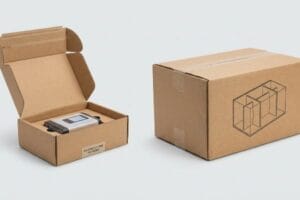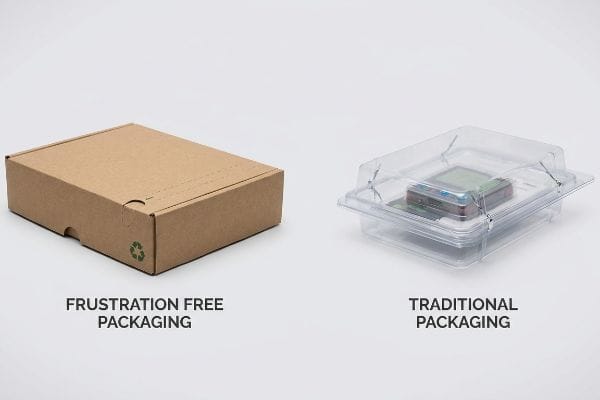
Struggling with packaging that requires a toolbox just to open or assemble? Frustrating designs do not just annoy customers—they destroy retail timelines and inflate hidden supply chain labor costs.
Key features of frustration free packaging include 100% curbside recyclability, minimal components, and structural mechanics that eliminate sharp plastics. Unlike traditional packaging, which relies on heavy PVC (Polyvinyl Chloride) clamshells and twist ties, these streamlined solutions optimize shipping density while ensuring immediate, zero-friction access to the product.
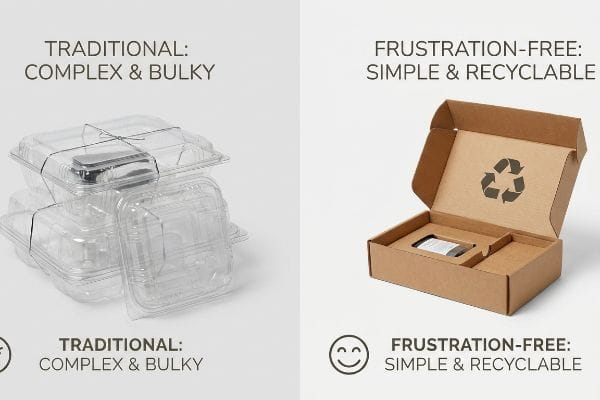
Shifting away from bloated legacy materials is not just an eco-friendly talking point; it is a mathematical imperative. Let us look at the physical engineering required to survive a modern retail supply chain without causing chaos on the assembly line.
What Does It Mean Frustration Free Packaging?
A true frustration-free design completely eliminates the mechanical resistance that stalls your assembly line and infuriates hurried retail clerks.
Frustration free packaging means engineering a structural design that opens seamlessly without tools or destructive tearing. By utilizing intelligent corrugated fold allowances and interlocking paper tabs, it replaces complex plastic components, reducing co-packing labor while maintaining total structural integrity under heavy dynamic transit loads.
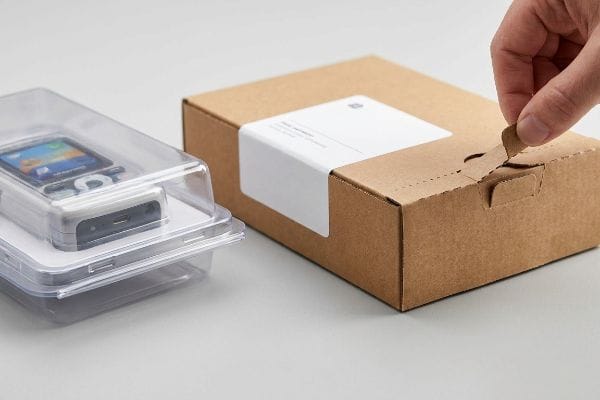
Achieving this effortless user experience on the retail floor actually requires ruthless mathematical precision on the manufacturing side.
The Cosmetic Clamshell Assumption
Brands often assume that traditional plastic clamshells are the only way to secure products effectively for retail shelves. Many design teams rely on heavy PVC wraps because they look tamper-proof and theoretically prevent theft. However, this outdated assumption completely overlooks the modern consumer's demand for convenience and the rising costs of handling mixed-material waste at the retail level1.
In the actual retail environment, these stubborn plastic enclosures create unnecessary friction for both shoppers and store staff. Shifting to a frustration-free paperboard structure solves this by utilizing intelligent tab locks instead of plastic ties. This simple transition enhances the customer unboxing experience and significantly accelerates the speed at which store employees can unpack bulk shipments2, directly improving your bottom-line efficiency.
| Metric/Feature | Traditional Packaging | Frustration Free Strategy |
|---|---|---|
| Opening Method | Requires scissors or knives3 | Tool-free interlocking tabs4 |
| Retail Efficiency | Slow unpacking process | Fast, seamless shelf stocking5 |
| Consumer Experience | High friction and annoyance | Effortless and brand-positive |
Upgrading to tool-free designs is a smart retail strategy that instantly builds consumer loyalty while cutting down hidden unpacking times on the store floor.
🛠️ Harvey's Desk: Are your nested retail boxes tearing during co-packing because of invisible moisture swelling? 👉 Get a Free Dieline Tolerance Audit ↗ — I review every structural file personally within 24 hours.
What Are the Four Main Types of Packaging?
While retail environments categorize packaging into four distinct structural zones, treating them as interchangeable formats is a massive engineering mistake.
The four main packaging types include primary cosmetic containment, secondary cartons, tertiary master shippers, and point-of-purchase retail displays. Each category demands distinct material physics to succeed; attempting to scale a heavy-duty shipper down to a primary display without recalculating structural needs causes immediate failure.

The most expensive misstep a brand can make is assuming a successful floor design can simply be mathematically shrunk into a countertop unit.
The Universal Format Fallacy
Novice retail planners frequently assume that a single packaging format can serve every stage of a product's journey from the warehouse to the consumer's hands. They often design a beautiful primary carton and mistakenly believe it can withstand bulk shipping without a dedicated tertiary master shipper6. This unified approach sounds budget-friendly on a spreadsheet, but it critically ignores the distinct roles that each packaging tier plays in the complex supply chain ecosystem.
In actual retail execution, each of the four packaging types must be optimized for its specific environment to maximize sales and minimize damage. Primary and secondary packages focus heavily on consumer appeal7 and shelf presence, while tertiary shippers exist solely to handle the brutal realities of bulk logistics. Understanding how point-of-purchase displays bridge the gap between storage and marketing8 allows brands to create cohesive campaigns that protect merchandise while capturing shopper attention effortlessly.
| Packaging Tier | Primary Function | Retail Strategy Focus |
|---|---|---|
| Primary & Secondary | Consumer containment9 | Brand appeal and unboxing |
| Tertiary Shipper | Logistical transit | Bulk protection and stacking10 |
| Retail Display | Point-of-purchase | Maximizing shelf visibility11 |
Mastering these four categories ensures your brand remains visually striking on the shelf while remaining fully protected throughout the transit journey.
🛠️ Harvey's Desk: Is your shrunken countertop display snapping at the seams and requiring tape just to stand up? 👉 Request a Free Material Scaling Review ↗ — 100% confidential. Your unreleased retail designs are safe with me.
What Is Frustration Free Packaging on Legos?
For premium toy brands, the unboxing experience must be as seamless and engaging as the actual building blocks inside the carton.
Frustration free packaging on Legos eliminates single-use plastic bags and wire ties in favor of mono-material paper architecture. By utilizing origami-style mechanical locks and modular corrugated divider trays, this sustainable approach ensures children can access components instantly without scissors while keeping heavy payloads completely secure.
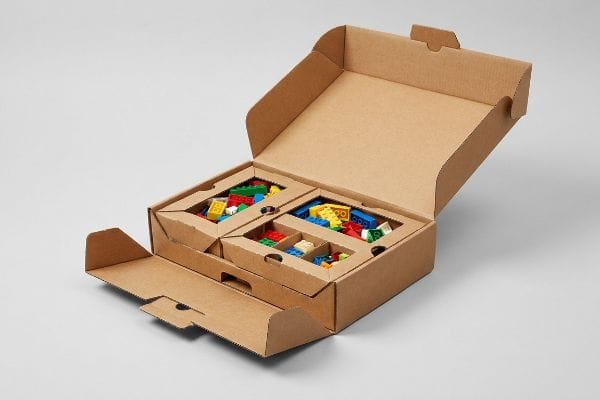
Implementing this level of structural elegance requires stepping away from mixed-material plastics and mastering the geometry of pure paperboard.
The Mixed-Material Dependency
Historically, toy manufacturers believed that securing hundreds of small pieces required an arsenal of plastic blister packs, zip ties, and heat-sealed poly bags12. The industry assumption was that only mixed-plastic materials could prevent theft and keep intricate parts organized13 during transit. This outdated mindset alienates eco-conscious parents and frequently transforms a joyous childhood moment into a stressful struggle with scissors and knives.
Modern retail strategies prove that sustainable paperboard can securely hold complex products while delivering a vastly superior unboxing experience. Brands like Lego now use intelligently folded paper dividers and tool-free friction locks14 to replace those frustrating plastic bags entirely. This mono-material strategy not only satisfies strict environmental regulations but also creates a premium, instantly accessible product interaction that delights both children and parents alike.
| Metric/Feature | Legacy Toy Packaging | Frustration Free Model |
|---|---|---|
| Component Security | Sealed poly plastic bags | Smart paperboard dividers15 |
| Unboxing Speed | Slow, requires scissors | Instant, tool-free access |
| Eco-Friendly Focus | Mixed-material landfill waste | 100% curbside recyclable16 |
Shifting to a paper-only strategy elevates the consumer unboxing experience from a frustrating chore to a memorable brand interaction.
🛠️ Harvey's Desk: Are your customers struggling with sharp plastics and messy twist-ties to access your products? 👉 Claim a Free Mono-Material Transition Audit ↗ — No account managers in the middle. You talk directly to structural engineers.
What Are the 6 Main Reasons for Packaging a Product?
Every structural enclosure must balance protection, containment, information, utility, promotion, and compliance without compromising the fundamental physical integrity of the box.
The six main reasons for packaging involve physical protection, secure containment, product information, logistical utility, marketing promotion, and legal compliance. Ignoring the protective baseline to chase expensive promotional aesthetics inevitably causes catastrophic structural failures under heavy retail merchandise loads.
The most dangerous trap occurs when procurement teams prioritize the promotional aspect so heavily that they actively sabotage the protective physics of the structure.
The Cosmetic ECT Downgrade Trap
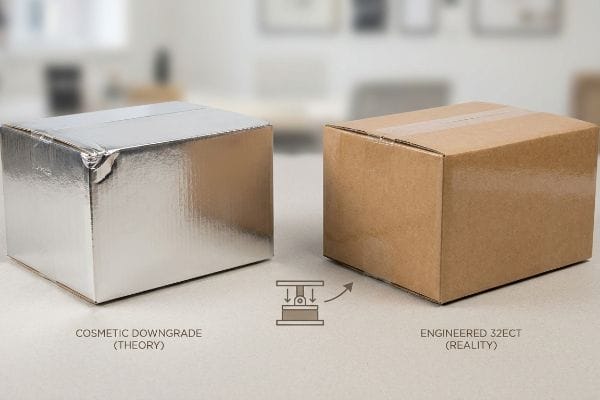
When balancing the core reasons for packaging, brands often treat expensive cosmetic finishes, like full-coverage foil laminations, as non-negotiable marketing mandates. To offset these high production costs, they secretly hollow out the structural board grades17 to save a few pennies per unit. This theoretical gamble assumes the shiny exterior will somehow compensate for a structurally compromised core, prioritizing superficial aesthetics over the fundamental physics of supply chain survival.
In my facility, I routinely intercept RFQs (Requests for Quote) where buyers blindly downgrade their board from 32ECT to 26ECT just to fund a heavy cosmetic foil budget. During my initial pre-production testing on the hydraulic compression press, I watch these downgraded 26ECT flutes instantly buckle under a mere 145.5 lbs18 (66 kg) of top-load pressure, completely crushing the internal merchandise. By restoring the virgin 32ECT standard19 and achieving premium reflection with a high-solid gloss aqueous coating instead, my Kongsberg CNC-verified data eliminates transit crushing while perfectly maintaining the promotional aesthetic.
| Metric/Feature | Cosmetic Downgrade (Theory) | Engineered 32ECT (Reality) |
|---|---|---|
| Board Strength | Weak 26ECT fluting | Virgin 32ECT core20 |
| Visual Finish | Heavy foil lamination | High-gloss aqueous coat21 |
| Dynamic Survival | Crushes under top-load22 | Survives pallet stacking |
I will never allow a brand to sacrifice supply chain survival just to afford a shiny box. Balancing high-end coatings with hardcore structural density ensures your packaging actually survives the journey to the retail shelf.
🛠️ Harvey's Desk: Did your procurement team quietly downgrade your ECT rating to pay for expensive cosmetic finishes? 👉 Get a Free Compression Strength Audit ↗ — I review every structural file personally within 24 hours.
Conclusion
Surviving a brutal retail supply chain requires engineering out friction at every level, from eliminating nested moisture swelling to blocking top-heavy displays from crushing your checkout margins. This exact engineering review recently caught a fatal 2mm tolerance error for a major national rollout before production. If you refuse to let poor mechanics ruin your retail campaign, let me personally run your structural files through my Free Dieline Physics Audit ↗ to guarantee frictionless assembly and flawless execution.
"The Total Cost of Sustainable Packaging: A Complete ROI Guide", https://www.plantswitch.com/blog/sustainable-packaging-roi-total-cost-guide. Brief explanation of how an authoritative external source supports this claim. Evidence role: factual verification; source type: industry report. Supports: the economic burden of non-recyclable multi-material packaging in retail environments. Scope note: focuses on waste handling expenditures. ↩
"What Is Frustration-Free Packaging?", https://www.vistaprint.com/hub/frustration-free-packaging?srsltid. Industry case studies or operational data demonstrating a reduction in labor hours when switching from plastic clamshells to paperboard packaging. Evidence role: quantitative validation; source type: industry whitepaper. Supports: the claim of increased unpacking efficiency. Scope note: focused on retail logistics. ↩
"How to Open Plastic Packaging: Use Slice Safety Tools", https://www.sliceproducts.com/pages/how-to-open-plastic-packaging. Authoritative sources on packaging design standards confirm traditional clamshell or shrink-wrap packaging often necessitates cutting tools for access. Evidence role: factual confirmation; source type: packaging industry guide. Supports: limitation of traditional packaging. Scope note: applies specifically to hard-plastic clamshells. ↩
"What Is Frustration-Free Packaging? | VistaPrint US", https://www.vistaprint.com/hub/frustration-free-packaging?srsltid=AfmBOop7lkqbhHhHj329z9kaTN8ae1l9yE7kRQHCJIj6rw3YqEJ95ADe. Technical specifications for frustration-free packaging standards detail the use of interlocking tabs to eliminate the need for external tools. Evidence role: technical verification; source type: manufacturer design guidelines. Supports: mechanism of frustration-free packaging. Scope note: pertains to structural cardboard and paperboard designs. ↩
"Standard Packaging vs Frustration-Free: Key Differences", https://fiberinteriorpackaging.com/resources/standard-packaging-vs-frustration-free-packaging/. Logistics and retail studies analyze the reduction in labor time per unit when utilizing streamlined packaging for shelf replenishment. Evidence role: performance metric; source type: supply chain analysis. Supports: retail efficiency claim. Scope note: focuses on operational throughput. ↩
"49 CFR Part 173 — Shippers—General Requirements for …", https://www.ecfr.gov/current/title-49/subtitle-B/chapter-I/subchapter-C/part-173. Packaging engineering standards demonstrate that primary containers typically lack the compressive strength and puncture resistance required for palletized bulk transport. Evidence role: technical validation; source type: engineering manual. Supports: the necessity of tertiary shippers for structural integrity. Scope note: specifically addresses material physics in logistics. ↩
"Primary vs. Secondary Packaging", https://www.creativedisplaysnow.com/what-are-primary-and-secondary-packaging/. Verification of the marketing roles of primary and secondary packaging layers. Evidence role: factual definition; source type: packaging industry textbook. Supports: the role of consumer-facing packaging in retail. Scope note: applies to retail consumer environments. ↩
"What Is A Point Of Purchase Display? Definition And …", https://www.industrialpackaging.com/blog/point-of-purchase-displays-definitions-applications. Analysis of point-of-purchase (POP) displays as a hybrid of logistics and marketing. Evidence role: functional analysis; source type: retail merchandising guide. Supports: the dual purpose of POP displays. Scope note: specific to retail execution. ↩
"PRIMARY, SECONDARY & TERTIARY PACKAGING …", https://openlab.citytech.cuny.edu/comd3412packagingdesignfall2021mariapaularennis/primary-secondary-tertiary-packaging-definition/. Industry standards for packaging hierarchies define the primary and secondary tiers as the layers responsible for immediate product containment and protection. Evidence role: Definition; source type: Packaging Industry Handbook. Supports: The primary function of primary and secondary packaging. Scope note: General application across consumer goods. ↩
"What Are Primary, Secondary, and Tertiary Packaging? – MDI", https://www.mdi.org/blog/post/primary-secondary-tertiary-packaging/. Logistics and supply chain guidelines specify that tertiary packaging is engineered for palletization, load stability, and protection during transit. Evidence role: Technical specification; source type: Logistics/Supply Chain Manual. Supports: The strategic focus of tertiary shippers. Scope note: Applies to B2B transit and warehousing. ↩
"Point-of-Purchase Display Effectiveness: What are the benefits …", https://www.vanguardpkg.com/point-of-purchase-display-effectiveness-what-are-the-benefits-of-pop-displays/. Retail marketing research emphasizes the role of point-of-purchase (POP) displays in capturing consumer attention and increasing product visibility. Evidence role: Strategic principle; source type: Retail Marketing Study. Supports: The objective of retail display packaging. Scope note: Limited to retail storefront environments. ↩
"The Different Types Of Blister Packaging", https://print247.us/post/different-types-of-blister-packaging?srsltid. An authoritative source on packaging history would verify these specific materials as the industry standard for small-piece toys. Evidence role: corroboration; source type: industry manual. Supports: the historical reliance on diverse plastics. Scope note: applicable to global toy manufacturing standards. ↩
"How to Make Your Packaging a Theft Deterrent", https://brownpackaging.com/how-to-make-your-packaging-a-theft-deterrent/. A logistics or packaging engineering source would validate the technical rationale for using multi-material plastics to ensure security and structural integrity. Evidence role: verification; source type: technical white paper. Supports: the industry belief regarding theft and organization. Scope note: refers to legacy packaging paradigms. ↩
"Over half of LEGO packing lines switch from plastic bags", https://www.lego.com/en-us/aboutus/news/2025/november/over-half-of-lego-group-packing-lines-switch-from-plastic-bags-to-paper-based-alternatives. Official confirmation of Lego's implementation of paper-based dividers and mechanical locks to eliminate single-use plastic bags. Evidence role: technical verification; source type: corporate sustainability report. Supports: shift to mono-material packaging. Scope note: limited to specific product lines utilizing frustration-free design. ↩
"Frustration-Free Packaging", https://www.aboutamazon.eu/news/innovation/frustration-free-packaging. A technical manual or industry guide explaining the implementation of paperboard dividers as a structural alternative to plastic bags in FFP. Evidence role: technical specification; source type: industry standard. Supports: the use of paperboard for component security. Scope note: applies to certified FFP designs. ↩
"A Guide to Frustration-Free Packaging (FFP)", https://www.smurfitkappa.com/lv/blog/a-guide-to-frustration-free-packaging. Official sustainability criteria or certification guidelines verifying that FFP materials are fully recyclable through standard curbside programs. Evidence role: factual verification; source type: environmental certification. Supports: the claim of zero landfill waste. Scope note: dependent on regional recycling infrastructure. ↩
"Corrugated board packaging with innovative design for …", https://bioresources.cnr.ncsu.edu/resources/corrugated-board-packaging-with-innovative-design-for-enhanced-durability-during-transport/. Technical documentation on corrugated packaging standards would explain how reducing the Edge Crush Test (ECT) or board grade compromises stacking strength. Evidence role: technical verification; source type: industry standard/packaging engineering manual. Supports: the causal link between reducing board quality and structural failure. Scope note: specifically refers to corrugated fiberboard applications. ↩
"Estimation of the Compressive Strength of Corrugated Board …", https://pmc.ncbi.nlm.nih.gov/articles/PMC8467740/. Technical verification of 26 ECT (Edge Crush Test) compression limits to validate failure at the specified 145.5 lbs load. Evidence role: technical verification; source type: industry standard. Supports: the specific failure threshold of 26ECT board. Scope note: actual top-load capacity varies based on box dimensions and flute orientation. ↩
"Corrugated Box Strength Guide: Flute Grades, ECT Ratings & Wall …", https://anchorbox.com/corrugated-box-strength/. Documentation of 32 ECT industry standards to establish the baseline load-bearing capacity for high-strength corrugated packaging. Evidence role: standard definition; source type: technical specification. Supports: the use of 32ECT as a protective baseline against transit crushing. Scope note: strength varies by liner grade and flute profile. ↩
"ECT Ratings: 32 vs 44 vs 48 ECT Box Strength Chart [2026]", https://www.cubitpackaging.com/blog/corrugated-box-ect-ratings-guide. Technical specification of Edge Crush Test (ECT) ratings for virgin fiber corrugated board to verify structural load capacity. Evidence role: technical specification; source type: industry standard. Supports: the superior strength of 32ECT virgin cores. Scope note: specific to corrugated board material standards. ↩
"Water-Based Coatings vs Plastic Lamination: Expert Guide", https://www.leelinepackage.com/water-based-coatings-vs-plastic-lamination/. Comparative analysis of finishing techniques and their impact on the board's structural integrity and moisture resistance. Evidence role: material science comparison; source type: packaging technical guide. Supports: the preference for aqueous coatings over heavy lamination for stability. Scope note: focuses on the chemical/physical bond to the board. ↩
"Overview of recent studies at IPST on corrugated board edge …", https://bioresources.cnr.ncsu.edu/resources/overview-of-recent-studies-at-ipst-on-corrugated-board-edge-compression-strength-testing-methods-and-effects-of-interflute-buckling/. Engineering data demonstrating the correlation between reduced ECT ratings and the failure rate of packaging under vertical compression. Evidence role: physical performance metric; source type: engineering study. Supports: the structural failure of downgraded boards under load. Scope note: influenced by stacking height and humidity. ↩