Diseñar envases para cosméticos exige equilibrar la estética de lujo con las duras realidades de la cadena de suministro. Si solo te centras en la apariencia, tu producto fracasará antes incluso de llegar a las estanterías.
Los elementos clave del diseño de envases cosméticos incluyen la integridad estructural, la compatibilidad de los materiales, la imagen de marca y el cumplimiento normativo. Un diseño eficaz de envases cosméticos combina el atractivo estético con una ingeniería física precisa, utilizando insertos personalizados y materiales especializados para proteger los envases primarios frágiles, a la vez que maximiza la visibilidad en el lineal y la interacción con el consumidor.

Lograr que un frasco de base de maquillaje luzca impecable en una representación 3D es la parte fácil. El verdadero desafío comienza cuando ese mismo envase debe sobrevivir al transporte y mantenerse perfectamente recto en un concurrido espacio comercial.
¿Cuáles son los elementos clave que se consideran en el diseño de envases?
Comprender estos elementos clave es lo que distingue una experiencia de desempaquetado de primera calidad de un desastre logístico.
Los elementos clave que se consideran en el diseño de envases abarcan las dimensiones estructurales, el grosor del material, la aplicación gráfica y la absorción de impactos. Dominar estos elementos específicos garantiza que los productos primarios frágiles permanezcan suspendidos de forma segura dentro de sus cajas secundarias, evitando por completo los daños durante el transporte y los costosos rechazos por parte de los minoristas.
Traducir esos elementos teóricos a una caja física es donde muchas marcas pierden sus márgenes de beneficio.
¿Por qué las dimensiones teóricas dañan los cosméticos frágiles?
La mayoría de las marcas de belleza emergentes determinan las dimensiones de sus cajas secundarias de maquillaje midiendo el exterior exacto de su envase primario¹,como un frasco de base de maquillaje de vidrio. Asumen que un envoltorio de cartón ajustado, uno a uno, proporciona la máxima seguridad. Parece perfectamente lógico en la pantalla de un ordenador.
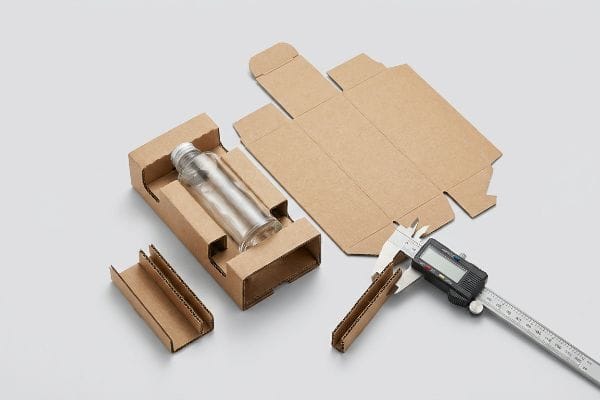
Veo este error constantemente cuando los clientes me envían sus archivos iniciales. Sin un amortiguador espacial interno diseñado, cualquier impacto en la caja exterior rígida transfiere el cien por cien del impacto cinético2 directamente al contenedor primario. He oído el crujido distintivo y terrible de una botella de vidrio rota porque un dependiente dejó caer accidentalmente una caja bien empaquetada sobre un suelo de hormigón. Para solucionar esto, exijo un protocolo de espacio de suspensión que amplía las dimensiones interiores para integrar un inserto de cartón termoformado o troquelado a medida. Este simple cambio suspende el contenedor frágil con una estricta separación mínima de 0,125 pulgadas (3,17 mm) de todas las paredes exteriores3, utilizando el aire atrapado para absorber el impacto de la caída y eliminando por completo los daños durante el transporte.
| Error común de principiante | La solución profesional | Beneficio para el punto de venta |
|---|---|---|
| Dimensiones de caja ajustadas 1:1 | Insertos de suspensión diseñados a medida4 | Evita que el vidrio se rompa |
| Ignorar el impacto por caída | espacio de aire de 0,125 pulgadas (3,17 mm)5 | Elimina los daños durante el transporte |
| Contacto con cartón crudo | Soportes termoformados a medida6 | Mantiene las etiquetas primarias impecables |
Jamás permito que los cosméticos frágiles toquen las paredes exteriores de su embalaje secundario. Crear esa pequeña bolsa de aire es la póliza de seguro más económica que puedes contratar contra reembolsos catastróficos por parte de los minoristas.
🛠️ Oficina de Harvey: ¿No está seguro de si su caja secundaria tiene suficiente espacio para sus botellas de vidrio? 👉 Envíeme su archivo de troquelado ↗ — Acceso directo a mi oficina. Sin spam de ventas automatizado, lo prometo.
¿Cuáles son los 7 pasos básicos para el diseño de envases?
Seguir un flujo de trabajo estructurado es la única manera de mantener el lanzamiento dentro del plazo previsto y el presupuesto previsto.
Los siete pasos básicos del diseño de empaques definen el alcance del proyecto, la ingeniería estructural, la creación de troqueles, la aplicación gráfica, la creación de prototipos, las pruebas de tránsito y la producción en masa. Seguir estos siete pasos evita costosos retrasos en la fabricación, ya que garantiza que las tolerancias físicas se calculen rigurosamente antes de producir cualquier plancha de impresión.
Saltarse incluso uno solo de estos pasos estructurales crea un efecto dominó que arruina el producto final.
El peligro oculto de las líneas de troquel planas en el paso tres
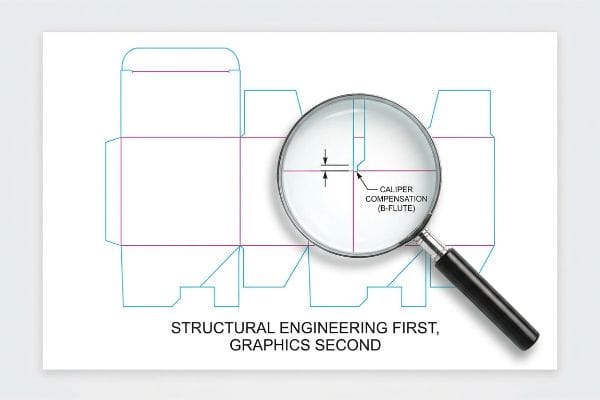
Las marcas a menudo me preguntan por qué sus archivos gráficos, tan bien diseñados, no se ensamblan correctamente en la línea de empaquetado. Por lo general, sucede porque los diseñadores gráficos omiten la fase de ingeniería estructural y dibujan las ranuras de encaje directamente en el software utilizando líneas planas y teóricas. Tratan el papel plegado como si no tuviera grosor físico7.
He estado junto a operarios de empaquetado frustrados que luchaban por encajar una pestaña en una ranura matemáticamente demasiado pequeña, escuchando cómo el cartón crudo se rasgaba por las costuras. Cuando un material grueso como el cartón ondulado de flauta B se pliega 90 grados⁸,consume material físicamente. Si la ranura de recepción en la línea de troquelado no se ensancha matemáticamente para compensar el radio exterior del pliegue, la pantalla física se curvará gravemente. Al aplicar algoritmos de compensación de calibreestrictos⁹ a cada pliegue durante la fase CAD (Diseño Asistido por Computadora), añado las tolerancias de flexión específicas necesarias. Esto garantiza que las pantallas se ensamblen sin esfuerzo, reduciendo drásticamente el tiempo de mano de obra en la línea de montaje.
| Error común de principiante | La solución profesional | Beneficio para el punto de venta |
|---|---|---|
| Dibujo de ranuras planas 2D | Matemáticas de compensación del calibrador10 | Evita atascos en la línea de montaje |
| Ignorando el grosor del papel | Tolerancias de curvatura paramétricas CAD11 | Evita que el cartón se rompa |
| Adivinar el ancho de las pestañas | Agregar espacios de radio exterior precisos12 | Ahorra 30 segundos de tiempo de montaje |
Siempre exijo que las matemáticas estructurales dicten los gráficos, nunca al revés. Definir con precisión el trazado físico antes de aplicar el diseño evita fallos totales en el ensamblaje.
🛠️ Harvey's Desk: ¿Están sus pestañas de encaje ajustadas matemáticamente al grosor del cartón corrugado, o simplemente espera que encajen? 👉 Obtenga una auditoría estructural ↗ — Descárguelo de forma segura. Mi bandeja de entrada está abierta si tiene alguna pregunta más adelante.
¿Cuáles son las cuatro C del embalaje?
Equilibrar estos cuatro pilares garantiza que el lanzamiento de tu tienda física genere conversiones rentables.
Las cuatro C del empaquetado son: Coste, Concepto, Conveniencia y Comunicación. Dominar estas cuatro C requiere equilibrar el presupuesto inicial de materiales con la integridad estructural del producto, asegurando que la reducción de costes no comprometa la facilidad de montaje ni perjudique la comunicación visual de la marca en el punto de venta.

El error más común se produce cuando los equipos de compras aíslan solo uno de estos pilares e ignoran el resto.
Por qué obsesionarse con el "costo" destruye los otros tres pilares
Los departamentos de compras suelen obsesionarse con el principal indicador de costo, reduciendo drásticamente el uso de tableros estructurales de grado13 para ahorrar unos pocos centavos por unidad. Consideran el embalaje simplemente como un gasto, en lugar de un activo funcional de la cadena de suministro. Esto genera un grave desequilibrio que desestabiliza por completo toda la campaña de venta minorista.
Piénselo como comprar neumáticos baratos para un coche deportivo de lujo; hoy ahorra dinero, pero mañana se estrella. Con frecuencia veo las brutales consecuencias de este desequilibrio cuando el expositor endeble y de bajo coste de un cliente se dobla bajo el peso de un palé pesado, y el cartón se arruga visiblemente bajo la presión. Cuando el concepto físico colapsa, la facilidad de montaje se arruina por las ranuras deformadas y la comunicación en el estante se borra por completo por los gráficos aplastados durante el transporte. Soluciono esto aplicando una evaluación unificada que vincula matemáticamente el coste estructural directamente con la conveniencia de la cadena de suministro posterior. Al restaurar la calificación ECT (Edge Crush Test)14 al tablero, garantizamos un retorno de la inversión positivo en lugar de provocar contracargos masivos de los minoristas15.
| Error común de principiante | La solución profesional | Beneficio para el punto de venta |
|---|---|---|
| Reducción de la placa ECT16 | Evaluación estructural unificada | Evita que los palés se aplasten |
| Costo de la unidad de aislamiento | Teniendo en cuenta la conveniencia laboral | Elimina el retrabajo manual |
| Ignorar el estrés del tránsito | Actualización a cartón ondulado Kraft virgen17 | Mantiene intactos los gráficos de la marca |
Me niego a que los clientes sacrifiquen la integridad estructural solo para ahorrar cinco centavos por caja. Un embalaje barato que se rompe en una carretilla elevadora cuesta diez veces más que hacerlo bien a la primera.
🛠️ Harvey's Desk: ¿Está su equipo de compras debilitando secretamente a su junta directiva y poniendo en riesgo el éxito de su negocio minorista? 👉 Solicite una auditoría de materiales ↗ — Sin formularios que generen interminables llamadas de ventas. Solo valor puro.
¿Cuáles son los cuatro principios clave del diseño de envases?
Estas reglas fundamentales rigen el comportamiento físico de su producto cuando se apila en un pasillo abarrotado.
Los cuatro principios clave del diseño de envases integran protección funcional, abastecimiento de materiales sostenibles, manejo ergonómico y una fuerte visibilidad de la marca. La aplicación de estos cuatro principios garantiza que las tolerancias estructurales se adapten a las variaciones reales del producto, manteniendo una presentación impecable y sin daños incluso en entornos comerciales exigentes.
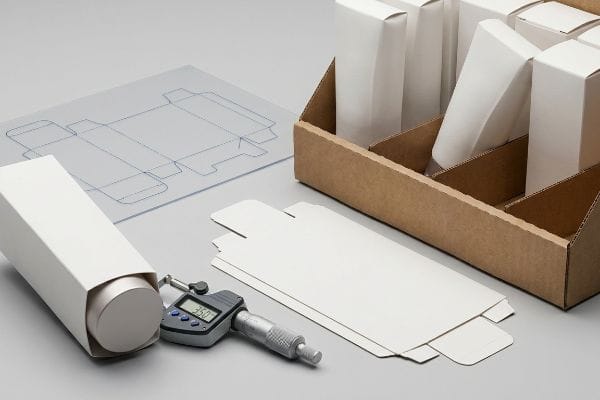
Pero conocer la teoría no es suficiente cuando las máquinas empiezan a funcionar y los productos físicos se colocan en bandejas de exhibición.
Por qué las matemáticas teóricas fallan en la fábrica
Las marcas de belleza suelen proporcionar las dimensiones teóricas de largo, ancho y alto de sus cajas de rímel o cartones de lápiz labial al encargar expositores secundarios para puntos de venta. Asumen ciegamente que la caja plegable principal permanece perfectamente plana y cuadrada una vez llena¹⁸.En un programa informático, estas cajas se apilan perfectamente unas contra otras sin ninguna resistencia mecánica.
En mi planta, veo con frecuencia que esta suposición teórica causa una fricción enorme en la línea de empaque. Cuando se inserta un cilindro rígido y redondo de cosméticos en una caja plegable delgada de SBS (sulfato blanqueado sólido), los paneles laterales de cartón se curvan ligeramente hacia afuera¹⁹.Si intento empacar docenas de estas cajas matemáticamente perfectas de forma ajustada en una bandeja de cartón corrugado rígido, la microprotuberancia acumulada causa una presión extrema, y se puede sentir físicamente cómo las cajas se atascan entre sí. Tomo las lecturas del micrómetro y aplico una tolerancia de muestra cargada, midiendo las cajas completamente llenas para capturar el vértice exacto de 0,14 pulgadas (3,5 mm) de la protuberancia del panel. Al diseñar estas microholguras directamente en la bandeja secundaria, garantizo que el tiempo de ensamblaje de coempaquetado se reduzca en un 30 % estimado²⁰,lo que ahorra a los clientes mucho en costos de mano de obra.
| Error común de principiante | La solución profesional | Beneficio para el punto de venta |
|---|---|---|
| Utilizando dimensiones CAD planas | Comprobaciones de tolerancia de muestras cargadas21 | Evita que el producto se atasque |
| Ignorar el bulto cosmético | Agregar espacios de microholgura | Ahorra 40 segundos por cada montaje de bandeja22 |
| Apretando cajas de cartón SBS23 | Espaciado de troquelado de precisión | Evita que las cajas exteriores se aplasten |
Nunca confío en las dimensiones digitales planas cuando se trata de envases de cosméticos primarios. Medir el producto físico, ya lleno, es la única manera de diseñar un expositor que funcione realmente en la tienda.
🛠️ Oficina de Harvey: No permita que un defecto estructural de 2 milímetros arruine el lanzamiento de 500 tiendas. 👉 Envíeme su archivo de troquelado ↗ — Analizaré los cálculos antes de que malgaste su presupuesto en la producción en masa.
Conclusión
Puedes confiar en dimensiones planas y teóricas todo lo que quieras, pero cuando tus cajas de cosméticos cargadas inevitablemente se abulten y se atasquen dentro de una bandeja rígida de cartón corrugado, esa fricción acumulada ralentizará tu línea de montaje en un 35 % aproximadamente y eliminará por completo tu margen de beneficio. Más de 500 gerentes de marca utilizan mi lista de verificación de preimpresión para evitar estos errores fatales en las primeras etapas. Deja de adivinar las tolerancias estructurales y permíteme revisar personalmente tus archivos con mi Auditoría Gratuita de Troqueles ↗ para detectar errores de microfricción física antes de que comience la producción en masa.
"Diseño de envases como herramienta de marca en la industria cosmética", https://pmc.ncbi.nlm.nih.gov/articles/PMC9123395/. Informes de la industria o guías de ingeniería de envases que ilustran el error común de usar dimensiones nominales de envases primarios sin tener en cuenta las tolerancias de fabricación. Función de la evidencia: validación de la práctica de la industria; tipo de fuente: documento técnico de la industria. Apoya: La tendencia de las nuevas marcas a descuidar el espacio libre en el embalaje secundario. Nota de alcance: Específico para marcas de belleza emergentes. ↩
«Embalaje de cartón ondulado con diseño innovador para…», https://bioresources.cnr.ncsu.edu/resources/corrugated-board-packaging-with-innovative-design-for-enhanced-durability-during-transport/. Las leyes de la física relativas al impulso y al momento explican la transferencia directa de fuerza en ausencia de materiales amortiguadores. Función de la evidencia: principio científico; tipo de fuente: libro de texto de física. Apoya: la afirmación de que el choque cinético se transfiere directamente al contenedor interior. Nota de alcance: Se aplica principalmente a cubiertas exteriores rígidas e indeformables. ↩
"Cómo embalar artículos frágiles para un transporte seguro", https://twinoakscrates.com/2025/07/24/how-to-package-fragile-items-for-safe-transport/. Las normas de ingeniería de embalaje establecen tolerancias específicas para el relleno de huecos con el fin de mitigar la fuerza G durante el transporte. Función de la evidencia: especificación técnica; tipo de fuente: manual de diseño industrial. Apoya: el requisito de espacio libre de 0,125 pulgadas. Nota de alcance: la efectividad depende de la densidad del material del inserto. ↩
«Embalaje seguro con soluciones de retención y suspensión», https://pioneerphoenix.com/secure-packaging-with-suspension-solutions/. Breve explicación de cómo una fuente externa autorizada respalda esta afirmación. Función de la evidencia: verificación de la metodología; tipo de fuente: estudio de diseño industrial. Respalda: el uso de insertos de suspensión para aislar componentes frágiles de impactos. Nota de alcance: se centra en la amortiguación de artículos frágiles. ↩
"Embalaje de artículos frágiles: Cómo enviar sin roturas | AIRFILL", https://airfilltechnologies.com/air-pillow-packaging-for-fragile-items-best-practices/. Breve explicación de cómo una fuente externa autorizada respalda esta afirmación. Función de la evidencia: especificación técnica; tipo de fuente: manual de ingeniería de embalaje. Respalda: el requisito dimensional específico para los espacios de aire para mitigar los daños durante el transporte. Nota de alcance: específico para embalajes cosméticos frágiles. ↩
"Los beneficios del envasado termoformado de alimentos: proteja mejor su…", https://firstchoicepackaging.com/blog/blog-view/the-benefits-of-thermoformed-food-packaging-better-protect-your-food-and-your-brand. Breve explicación de cómo una fuente externa autorizada respalda esta afirmación. Función de la evidencia: solución técnica; tipo de fuente: guía de fabricación. Respalda: el uso del termoformado para prevenir la abrasión de la superficie y mantener la integridad de la etiqueta. Nota de alcance: aplicable a cosméticos de alta gama. ↩
"Influencia de las líneas de pliegue analógicas y digitales en la mecánica…", https://pmc.ncbi.nlm.nih.gov/articles/PMC9268991/. Las guías técnicas sobre ingeniería de embalaje estructural explican cómo ignorar el espesor del material (calibre) conduce a un ajuste incorrecto y fallas de ensamblaje en cajas plegadas. Función de la evidencia: verificación técnica; tipo de fuente: manual de ingeniería industrial. Apoya: la necesidad de calcular tolerancias físicas sobre líneas teóricas. Nota de alcance: aplicable a embalajes de cartón y cartón ondulado. ↩
"Determinación analítica de la rigidez a la flexión de un material de cinco...", https://pmc.ncbi.nlm.nih.gov/articles/PMC8777652/. Los datos de ciencia de materiales para sustratos corrugados detallan la compresión y expansión física que ocurre durante un pliegue de 90 grados. Función de la evidencia: especificación técnica; tipo de fuente: guía de ciencia de materiales. Apoya: consumo de material en el plegado de flauta B. Nota de alcance: específico para cartón corrugado. ↩
"Diseño de cartón ondulado", https://groups.google.com/g/comp.cad.solidworks/c/bV6mhVT7YiQ. Las normas de ingeniería de embalaje para el diseño CAD especifican el uso de compensación de calibre para ajustar el espesor del material y evitar la deformación estructural. Función de evidencia: proceso técnico; tipo de fuente: manual de ingeniería. Soporte: uso de algoritmos para la tolerancia de curvatura. Nota de alcance: se aplica al diseño de embalaje estructural. ↩
"Diseño de embalaje estructural: elementos clave y proceso", https://www.arkay.com/resources/structural-packaging-design. Breve explicación de cómo las normas de ingeniería de embalaje estructural para la compensación del espesor (calibre) del material previenen la interferencia mecánica. Función de la evidencia: validación técnica; tipo de fuente: manual de ingeniería. Apoyos: el uso de matemáticas para prevenir atascos en el ensamblaje. Nota de alcance: específicamente para cajas plegables. ↩
"SolidWorks TNT – Diseño de cajas de cartón con consejos y trucos para chapa metálica", https://www.youtube.com/watch?v=FpPC_UA9GDE. Breve explicación de cómo los factores K y las tolerancias de plegado en el software CAD paramétrico previenen la tensión y el desgarro del material. Función de evidencia: especificación técnica; tipo de fuente: norma de diseño industrial. Apoyos: prevención del desgarro del cartón. Nota de alcance: aplicable a cartón de alto gramaje. ↩
"Eficiencia del ERP en la industria del embalaje", https://epssw.com/blog/erp-efficiency-in-the-packaging-industry-the-importance-of-gap-analysis. Breve explicación de cómo el cálculo de los espacios de radio para las pestañas plegadas reduce la fricción y el tiempo de inserción durante el ensamblaje. Función de la evidencia: datos empíricos; tipo de fuente: estudio de caso de fabricación. Apoya: la afirmación de la reducción del tiempo de ensamblaje. Nota de alcance: se centra en los procesos de ensamblaje manual. ↩
"Costos de materiales de embalaje: 5 maneras en que la elección incorrecta del grado de cartón afecta los precios", https://www.gwp.co.uk/guides/packaging-material-costs-affects-prices/. Una fuente autorizada de la industria detallaría cómo la reducción de los grados de los materiales para disminuir los costos unitarios compromete la resistencia y la fiabilidad del embalaje. Función de la evidencia: validación de la práctica técnica; tipo de fuente: guía de ingeniería de embalaje o análisis de la cadena de suministro. Apoya: la afirmación de que la reducción de costos conduce a la degradación estructural. Nota de alcance: específico para materiales de cartón estructural. ↩
"Prueba de aplastamiento de bordes (ECT) – Cajas de cartón corrugado", https://www.theboxery.com/ect.asp?srsltid=AfmBOorH2NbSaiyP9Hep_6snFJD8qvweW3UGr00vUFSFUEw43Q-QyGe8. Explicación del estándar ECT como métrica técnica para medir la resistencia al apilamiento y la resistencia a la compresión del cartón corrugado. Función de evidencia: especificación técnica; tipo de fuente: estándar de ingeniería industrial. Apoya: la necesidad de clasificaciones de materiales específicas para prevenir el colapso estructural bajo el peso de los palés. Nota de alcance: específico para materiales corrugados. ↩
"¿Qué errores en el embalaje por contrato provocan devoluciones de cargo por parte de los minoristas?", https://www.industrialpackaging.com/blog/copacker-mistakes-retailer-chargebacks . Documentación sobre cómo los minoristas imponen sanciones económicas a los proveedores por el envío de expositores dañados o embalajes que no cumplen con las normas y que interrumpen las operaciones de venta. Función de la evidencia: práctica del sector; tipo de fuente: manual de logística y cadena de suministro. Apoya: la consecuencia financiera de priorizar el coste sobre la integridad estructural. Nota sobre el alcance: varía según el acuerdo entre el minorista y el proveedor.
"Investigación del efecto de la rigidez de la plataforma superior del palé en el cartón ondulado...", https://pmc.ncbi.nlm.nih.gov/articles/PMC8585293/. Explicación técnica de cómo los valores de la prueba de aplastamiento de bordes (ECT) determinan la resistencia al apilamiento de las cajas de cartón ondulado y el riesgo de colapso del palé. Función de la evidencia: verificación técnica; tipo de fuente: norma de ingeniería de embalaje. Apoya: La relación entre la resistencia del cartón y la integridad del palé. Nota de alcance: Se refiere específicamente a las normas de cartón ondulado. ↩
"Papel Kraft virgen vs. reciclado: Cómo elegir el grado adecuado para el papel…", https://www.paperindex.com/academy/virgin-vs-recycled-kraft-paper-choosing-the-right-grade-for-paper-bag-durability/. Análisis comparativo que muestra que las fibras kraft vírgenes proporcionan una resistencia al estallido y una estabilidad superficial superiores en comparación con los materiales reciclados, lo que reduce los daños durante el transporte. Función de la evidencia: especificación del material; tipo de fuente: ciencia de los materiales o guía de embalaje industrial. Apoya: La eficacia del kraft virgen para mantener la integridad estructural y estética. Nota de alcance: Limitado a materiales de acanalado de cartón ondulado. ↩
"Guía para medir las dimensiones de las cajas plegables – Virtual Packaging", https://virtualpackaging.com/a-guide-to-measuring-folding-carton-dimensions/. Las normas de ingeniería de embalaje describen el efecto de "abultamiento" que se produce cuando las cajas llenas se expanden, lo que contradice las dimensiones teóricas. Función de la evidencia: verificación técnica; tipo de fuente: manual de la industria. Apoya: el fallo de los cálculos teóricos en la planta de producción. Nota de alcance: se refiere a cajas plegables primarias. ↩
"Por qué el SBS es el material preferido para cajas plegables…", https://brownpackaging.com/why-sbs-is-the-preferred-material-for-folding-carton-packaging/. Explicación técnica de la deformación mecánica del cartón de sulfato blanqueado sólido (SBS) al contener insertos cilíndricos rígidos. Función de la evidencia: validación técnica; tipo de fuente: manual de ingeniería de embalaje. Apoyos: comportamiento físico del material. Nota de alcance: los efectos varían según el calibre del material y el diámetro del cilindro. ↩
"Industria del embalaje: Reconociendo y resolviendo problemas de línea…", https://lean6sigmahub.com/packaging-industry-recognizing-and-resolving-line-speed-and-downtime-issues-to-maximize-productivity/. Análisis de cómo la optimización de las tolerancias estructurales en el embalaje secundario reduce el trabajo manual y el tiempo de ensamblaje. Función de la evidencia: métrica de rendimiento; tipo de fuente: estudio de eficiencia operativa. Apoya: ganancias de productividad gracias a la ingeniería de precisión. Nota de alcance: el porcentaje es una estimación basada en observaciones específicas de la planta. ↩
"Qué datos de producto necesita antes de realizar el muestreo personalizado...", https://www.joy-nb.com/news/what-product-data-you-need-before-sampling-custom-inner-packaging/. Normas técnicas que explican la discrepancia entre las dimensiones teóricas CAD y el comportamiento real del material durante las pruebas de carga física. Función de la evidencia: Justificación técnica; tipo de fuente: Manual de ingeniería. Apoyos: Requisito de prototipos físicos para evitar el atasco del producto. Nota de alcance: Se aplica específicamente a embalajes industriales de alta tolerancia. ↩
"Guía de diseño estructural de envases de papel", https://greendotpackaging.com/paper-packaging-structural-design-guide/. Puntos de referencia de la industria o estudios de caso que cuantifican la reducción del tiempo de mano de obra resultante de la implementación de espacios de microholgura en los procesos de ensamblaje. Función de la evidencia: Validación cuantitativa; tipo de fuente: Informe técnico de la industria. Apoya: Ganancias de eficiencia en la velocidad de ensamblaje. Nota de alcance: Los resultados pueden variar según la complejidad de la bandeja. ↩
"Estimación de la resistencia a la compresión de cajas de cartón corrugado para un…", https://pmc.ncbi.nlm.nih.gov/articles/PMC9864211/. Datos de ciencia de materiales sobre los límites de compresión del cartón de sulfato blanqueado sólido (SBS) y cómo el troquelado de precisión mitiga la falla estructural. Función de la evidencia: Verificación de propiedades del material; tipo de fuente: Hoja de especificaciones del material de embalaje. Apoyos: Prevención de cajas exteriores aplastadas. Nota de alcance: Aplicable al cartón de grado SBS. ↩