
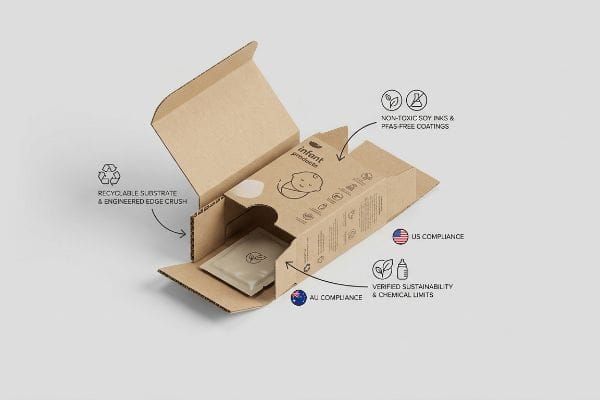
Navegar por el cumplimiento normativo de la venta minorista transfronteriza de artículos para bebés puede ser como caminar por un campo minado. Analicemos los protocolos de ingeniería exactos necesarios para que sus productos lleguen a los estantes de todo el mundo.
Las directrices de envasado garantizan el cumplimiento de las normativas de EE. UU. y Australia mediante la imposición de límites químicos estrictos y métricas de sostenibilidad verificadas. Para alcanzar los estándares globales se requieren tintas de soja no tóxicas, recubrimientos libres de PFAS, sustratos reciclables y tolerancias de resistencia al aplastamiento de los bordes diseñadas para proteger los productos infantiles y evitar costosos rechazos en los comercios minoristas internacionales.
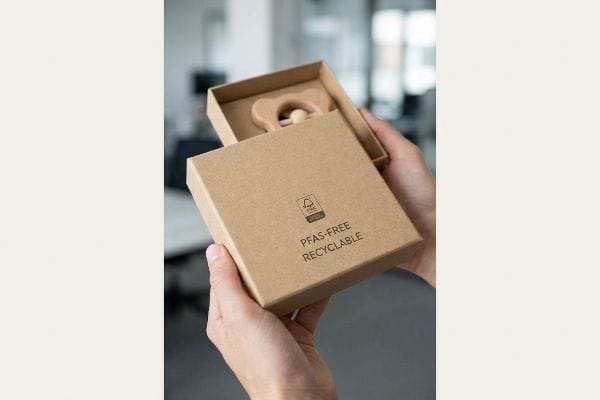
Conocer las reglas es solo la mitad del trabajo. Hay que diseñar físicamente las pantallas para que sobrevivan al proceso sin que se pierdan beneficios.
¿Cuáles son las pautas de embalaje sustentable del pacto de embalaje australiano?
Expandir tu marca de productos infantiles al extranjero implica adaptarte a las leyes medioambientales locales sin destruir tu cadena de suministro.
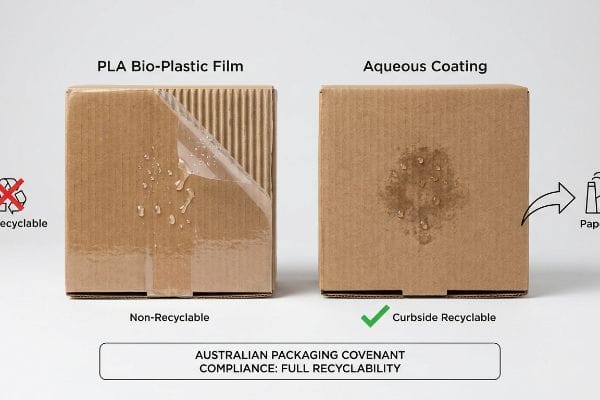
Las directrices australianas sobre envases sostenibles priorizan el reciclaje integral en la recogida selectiva, la reducción de materiales y la minimización de los residuos en vertederos. Las marcas deben evitar los bioplásticos no reciclables que perjudican a las fábricas de papel convencionales, optando en su lugar por recubrimientos de barrera a base de agua y materiales kraft vírgenes que mantienen su integridad estructural y se disuelven fácilmente durante el proceso de reciclaje comercial.
Alcanzar estos objetivos sobre el papel es fácil, pero utilizar los materiales ecológicos equivocados destrozará la integridad estructural.
La trampa del compostaje en la comercialización minorista ecológica
Las marcas emergentes suelen intentar cumplir con los convenios ecológicos internacionales exigiendo laminaciones de bioplástico PLA (ácido poliláctico) en sus cajas de cartón corrugado. Se parte de la premisa de que, al ser una película de origen vegetal, automáticamente cumple con los requisitos de sostenibilidad en todos los mercados globales. Desafortunadamente, esto ignora las realidades mecánicas de los centros de reciclaje municipalesestándar¹.
Veo constantemente este error común cuando las marcas buscan un acabado brillante de alta calidad mientras intentan ser "ecológicas". El problema es que el PLA forma una película física sólida que repele el agua de forma agresivadurante el proceso estándar de repulpado de OCC (envases de cartón ondulado usados). Vi cómo toda la campaña de un cliente se cancelaba porque las cuchillas de la planta de reciclaje no podían romper la membrana plástica. La película rígida se desprendía en fragmentos pegajosos y desordenados, lo que obligaba a desechar el lote directamente en un vertedero. Inmediatamente optamos por un recubrimiento acuoso líquido sobre el testliner sin tratar. Dado que este acabado actúa como una matriz de polímero a base de agua, proporciona ese brillo premium propio de las tiendas, disolviéndose perfectamente en la cuba, eliminando por completo la fricción de la clasificación y manteniendo a la marca al 100% conforme a la normativa.
| Error común de principiante | La solución profesional | Beneficio para el punto de venta |
|---|---|---|
| Utilizando laminaciones de película de PLA rígido | Aplicación de recubrimientos acuosos líquidos3 | Garantiza la reciclabilidad en la acera |
| Utilizando acabados de materiales mixtos | Especificación de estructuras de papel monomaterial4 | Elimina el rechazo por repulpado |
| Ignorar las capacidades de la fábrica local | Recubrimientos que cumplen con los estándares OCC5 | Evita multas por incumplimiento de las normas medioambientales |
Proteja su compromiso con el medio ambiente eliminando las biopelículas pesadas que las fábricas de papel convencionales rechazan. Las barreras acuosas de alta calidad garantizan que sus productos para bebés luzcan impecables bajo la intensa iluminación de las tiendas, superando sin esfuerzo las estrictas auditorías internacionales de sostenibilidad.
🛠️ Oficina de Harvey: ¿Están sus recubrimientos "ecológicos" actuales provocando que sus exhibidores sean rechazados en el centro de reciclaje? 👉 Solicite una auditoría de materiales ↗ — Acceso directo a mi oficina. Sin spam de ventas automatizado, lo prometo.
¿Qué ley australiana regula lo que las empresas australianas pueden poner en sus envases?
Cuando vendes productos para bebés, los organismos reguladores examinan minuciosamente cada gota de producto químico que haya en tu cartón.
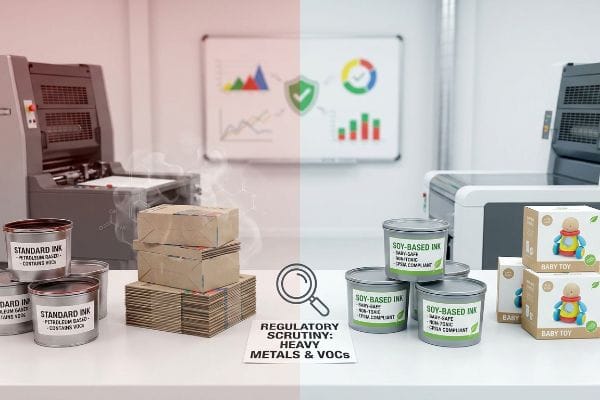
La legislación australiana regula las declaraciones y la seguridad del empaquetado mediante marcos de protección al consumidor que se ajustan a estrictos estándares internacionales. En el caso de los productos para bebés, esto exige la eliminación rigurosa de metales pesados, compuestos orgánicos volátiles tóxicos y residuos químicos peligrosos de todas las tintas de impresión, barnices y adhesivos estructurales utilizados en los expositores de venta al público.
No se trata solo de lo que imprimes, sino de la química literal de cómo esos gráficos se adhieren al soporte.
La química oculta de los estándares de tinta segura para bebés
Muchos equipos de marketing se centran exclusivamente en el diseño visual de sus diseños, enviando sin más archivos CMYK (cian, magenta, amarillo y negro) a su proveedor de impresión. Dan por sentado que las tintas offset comerciales estándar son universalmente aceptables para productos de consumo . Sin embargo, las tintas estándar a base de petróleo suelen contener trazas de metales pesados y COV ( compuestos orgánicos volátiles) que no superan las auditorías de seguridad para categorías cercanas a productos infantiles .
Imagínelo como cocinar para alguien con alergias graves; una cocina contaminada arruina incluso los ingredientes más seguros. Con frecuencia, los compradores me preguntan si pueden usar recubrimientos UV estándar para ahorrar unos centavos. Siempre me niego. Una vez vi a un diseñador principiante aprobar un lote de tinta de petróleo barata, solo para tener arcadas por el fuerte olor químico cuando se abrieron las cajas maestras en un almacén sofocante. Para evitar esto, exigimos un estricto protocolo de tinta a base de soja que cumpla con la CPSIA (Ley de Mejora de la Seguridad de los Productos de Consumo)para todos los productos para bebés. El olor húmedo y terroso de la tinta de soja secándose en la imprenta es un alivio sensorial y garantiza que, cuando un niño pequeño inevitablemente toque el expositor, la marca no corra ningún riesgo de responsabilidad.
| Error común de principiante | La solución profesional | Beneficio para el punto de venta |
|---|---|---|
| Utilizando tintas comerciales derivadas del petróleo | Obligatoriedad de las tintas a base de soja según la CPSIA8 | Elimina la emisión de gases químicos9 |
| Aplicación de barnices UV estándar | Utilizando barreras transparentes a base de agua10 | Elimina los residuos tóxicos de la superficie |
| Ignorar la química de la capa de impresión | Datos de seguridad de la tinta previos al vuelo | Evita retiradas catastróficas de productos |
Considero la composición química de la tinta una barrera de seguridad innegociable, especialmente cuando los consumidores finales son bebés. Especificar tintas de soja certificadas elimina la emisión de gases, protege a sus consumidores y garantiza que sus pantallas superen las inspecciones legales transfronterizas más estrictas.
🛠️ Harvey's Desk: ¿Estás completamente seguro de que los barnices de tus expositores actuales no contienen COV ocultos? 👉 Verifica las especificaciones de tu tinta ↗ — Descarga de forma segura. Mi bandeja de entrada está abierta si tienes alguna pregunta más adelante.
¿Cuáles son los conceptos de embalaje sostenible?
La verdadera sostenibilidad no consiste simplemente en estampar un logotipo de una hoja verde en una caja; es una disciplina de ingeniería.
Los conceptos de embalaje sostenible implican el diseño de estructuras que minimicen el impacto ambiental mediante la eficiencia de los materiales y una gestión optimizada del final de su vida útil. Esto incluye el uso de arquitecturas monomateriales, la reducción del peso volumétrico total, la eliminación de componentes de materiales mixtos como los clips de plástico y la priorización de materias primas procedentes exclusivamente de redes forestales certificadas como responsables para garantizar la máxima reciclabilidad.
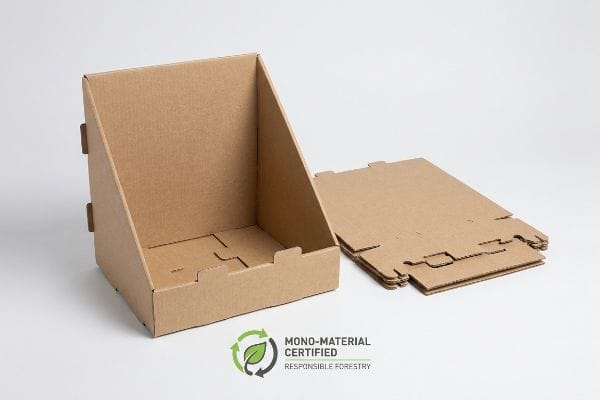
Un diseño puede parecer ecológico en la pantalla del ordenador, pero un simple clip de plástico puede arruinar su impacto ambiental.
El mandato de un solo material para una comercialización optimizada
Un grave error para las marcas emergentes es recurrir a clips de plástico baratos o conectores metálicos para reforzar expositores de varios niveles. Si bien estas piezas moldeadas por inyección aumentan temporalmente la capacidad de carga dinámica¹¹,instantáneamente una unidad de cartón reciclable en una pesadilla de materiales mixtos¹².Cuando finaliza la campaña, el personal de las tiendas no perderá tiempo separando el plástico del papel.
Es como intentar reciclar un sobre de papel con una ventana de plástico gigante; las máquinas simplemente lo escupen. Una regla general: si requiere un sujetador secundario, su troquelado es defectuoso. Regularmente veo a empleados de tiendas batallando para encajar conectores de plástico frágiles en bases de flauta B de 0,12 pulgadas (3 mm)13, a menudo rasgando el cartón crudo por la frustración. Para solucionar esto, diseñamos cierres de fricción "estilo origami" directamente en el software CAD (Diseño Asistido por Computadora). El fuerte y satisfactorio clic de una pestaña corrugada matemáticamente precisa que se encaja en su ranura correspondiente proporciona la misma rigidez14 sin una sola onza (28 g) de plástico, reduciendo su lista de materiales y siendo perfectamente sostenible.
| Error común de principiante | La solución profesional | Beneficio para el punto de venta |
|---|---|---|
| Confiar en clips de plástico para estantes | Cerraduras de fricción corrugadas de ingeniería | Acelera la configuración en tienda |
| Mezclando metal y cartón | Hacer cumplir un mandato monomaterial15 | Garantiza el reciclaje al final de su vida útil |
| Exceso de pegamento en juntas estructurales | Utilizando pestañas plegables al estilo origami16 | Elimina los engorrosos fallos de adhesión |
Me niego a que la ingeniería deficiente infle su presupuesto con componentes de plástico innecesarios. Al diseñar cierres de fricción monomateriales, elimino las dificultades del montaje, reduzco los costos de materia prima y ofrezco una solución verdaderamente sostenible.
🛠️ Harvey's Desk: ¿Cansado de pagar por clips de plástico adicionales solo para evitar que tus estantes de cartón se derrumben? 👉 Actualiza a Origami Locks ↗ — Sin formularios que generen interminables llamadas de ventas. Solo valor puro.
¿Es obligatorio el pacto de embalaje australiano?
Gestionar la logística global implica comprender que la placa que se inspecciona en un laboratorio seco no sobrevivirá a un contenedor de envío húmedo.
Sí. El convenio australiano sobre embalaje exige objetivos específicos de recuperación y marcos de diseño sostenible para las empresas globales aplicables. Sin embargo, el uso obligatorio de sustratos de cartón ondulado reciclado genera graves vulnerabilidades físicas durante el transporte marítimo en condiciones de alta humedad, lo que requiere tolerancias de ingeniería precisas para evitar que las fibras de papel se hinchen y comprometan el ensamblaje del expositor.
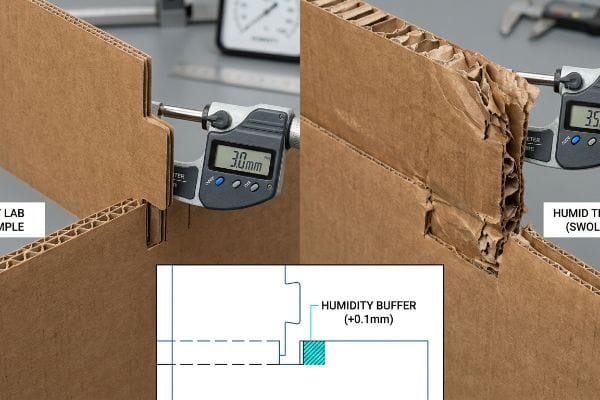
Pero conocer la teoría no es suficiente cuando las máquinas empiezan a funcionar y la humedad aumenta bruscamente en el muelle de carga.
¿Por qué fallan los tableros reciclados obligatorios en la planta de producción?
Los equipos de compras suelen sustituir sin criterio el cartón virgen por cartón reciclado de alta calidad para cumplir con las cuotas de sostenibilidad obligatorias, sin modificar sus troqueles originales. Parten de la base de que un cartón ondulado B de 3 mm (0,12 pulgadas) se comporta exactamente igual independientemente de su composición de fibra. Esta suposición teórica ignora por completo la física ambiental del papel reciclado poroso durante el transporte prolongado.
Esto no es solo teoría: lo veo suceder en la planta de pruebas cuando los clientes envían paquetes planos a regiones húmedas. El tablero reciclado 32ECT (Edge Crush Test) actúa como una esponja gigante; cuando mido las ondulaciones sin tratar con mi micrómetro digital después de un viaje oceánico simulado, la absorción de humedad causa una hinchazón severa de 0,14 pulgadas (3,5 mm)17 a lo largo de las pestañas de enclavamiento. Una ranura que encajaba perfectamente en una oficina seca de repente se vuelve imposible de ajustar. El equipo de coempaquetado termina aplastando físicamente las ondulaciones y rasgando la laminación litográfica de alta calidad solo para forzar las piezas a unirse, lo que causa una fricción masiva, ralentiza la línea de ensamblaje en un 30 % estimado y elimina por completo el margen de beneficio del proyecto. Obtuve las lecturas del micrómetro y demostré que no necesitábamos desechar el tablero ecológico; solo necesitábamos programar un "amortiguador de humedad" altamente específico de 0,04 pulgadas (1,2 mm) en las rutas de enrutamiento de la mesa de corte CNC (Control Numérico por Computadora). Al ampliar matemáticamente las ranuras de recepción, garantizo que el tiempo de ensamblaje para el coempaquetado se reduzca en 42 segundos por unidad, lo que ahorra a los clientes miles de dólares en costes de mano de obra, al tiempo que se mantiene el cumplimiento total de la normativa.
| Error común de principiante | La solución profesional | Beneficio para el punto de venta |
|---|---|---|
| Ignorando la expansión por humedad ambiental | Diseñar un amortiguador de humedad matemático | Elimina las láminas superiores rasgadas |
| Forzando pestañas corrugadas hinchadas | Ampliación de las tolerancias de las ranuras CNC | Reduce drásticamente el tiempo de envasado conjunto |
| Suponiendo que las dimensiones del laboratorio seco se mantengan | Ensayo de resistencia de fibras recicladas porosas | Evita retrasos masivos en el montaje |
Jamás confío en que una plantilla seca resista un tránsito marítimo húmedo. Calculando meticulosamente la expansión de las fibras y ampliando las ranuras de encaje fracciones de milímetro, garantizo que sus muebles desmontables se ensamblarán sin problemas en cualquier parte del mundo.
🛠️ Oficina de Harvey: ¿Conoce la tasa exacta de expansión por humedad del cartón ondulado de flauta B de su proveedor actual durante el transporte marítimo? 👉 Envíeme su archivo de troquelado ↗ — Haré una prueba de estrés antes de que gaste su presupuesto en producción en masa.
Conclusión
Puedes optar por el cartón reciclado más barato para cumplir con los requisitos, pero cuando ese material poroso se hinche en un recipiente húmedo, te enfrentarás a ondulaciones aplastadas que ralentizarán la línea de coempaquetado en un devastador 30 %. Esta es la hoja de especificaciones exacta que utilizan mis 10 principales clientes minoristas para garantizar cero rechazos de impresión. Deja de adivinar las tolerancias ambientales y permíteme revisar personalmente tus archivos estructurales con mi Auditoría Previa a la Impresión Gratuita ↗ para detectar puntos críticos de fricción por humedad antes del lanzamiento.
«Alternativas biodegradables y compostables a los plásticos convencionales», https://pmc.ncbi.nlm.nih.gov/articles/PMC2873018/. [Informes autorizados sobre gestión de residuos explican cómo los bioplásticos PLA actúan como contaminantes en los flujos de reciclaje estándar, interrumpiendo los procesos de pulpado mecánico y clasificación]. Función de la evidencia: verificación técnica; tipo de fuente: informe de la industria. Apoya: La incompatibilidad de los laminados de bioplástico con el reciclaje en la acera. Nota de alcance: Se aplica específicamente a instalaciones municipales que carecen de compostaje industrial.] ↩
"Poli(ácido láctico): un polímero versátil de base biológica para el futuro… – PMC", https://pmc.ncbi.nlm.nih.gov/articles/PMC8198026/. [Una norma industrial o una guía de gestión de residuos detallaría cómo las películas de PLA interfieren con el proceso de hidropulpeo para cartón ondulado]. Función de la evidencia: verificación técnica; tipo de fuente: documento técnico. Apoya: la incompatibilidad del PLA con el reciclaje estándar de OCC. Nota de alcance: se centra en el repulpeo mecánico. ↩
«La verdad sobre por qué los revestimientos acuosos no están libres de plástico – Verive», https://verive.eu/food-packaging-materials/aqueous-lining-plastic-free-truth/. [Las normas técnicas para residuos de envases especifican que los recubrimientos acuosos son compatibles con los flujos de reciclaje de papel estándar, a diferencia de las laminaciones de PLA]. Función de la evidencia: validación técnica; tipo de fuente: norma industrial. Apoya: la afirmación de que los recubrimientos acuosos permiten el reciclaje en la acera. Nota de alcance: la efectividad depende de las capacidades de las instalaciones regionales. ↩
"Ventajas y desventajas de los materiales monocapa y multicapa para embalaje", https://www.packworld.com/leaders-new/materials/flexible-packaging/video/22793392/pros-and-cons-of-mono-and-multilayer-materials-for-sustainable-packaging. [Los datos de la ciencia de los materiales demuestran que las construcciones monocapa eliminan los problemas de contaminación causados por los acabados de materiales mixtos durante el proceso de repulpado]. Función de la evidencia: validación técnica; tipo de fuente: informe técnico. Apoya: la afirmación de que los monomateriales eliminan el rechazo del repulpado. Nota de alcance: se refiere específicamente a los flujos de reciclaje a base de papel. ↩
"[PDF] Norma voluntaria para el repulpado y reciclaje de materiales recubiertos o tratados…", https://www.fibrebox.org/assets/2025/07/2025_Voluntary_-Standard.pdf. [Las directrices de la industria para los envases de cartón ondulado usados (OCC) definen los niveles máximos de recubrimiento permitidos para garantizar que el material no sea rechazado por estar contaminado]. Función de la evidencia: prueba reglamentaria; tipo de fuente: directriz reglamentaria. Apoya: la afirmación de que el cumplimiento de las normas OCC evita multas por incumplimiento. Nota de alcance: se aplica específicamente a los materiales de cartón ondulado. ↩
"Tinta de soja vs. tinta UV: ventajas e inconvenientes para el embalaje y la impresión", https://meyers.com/meyers-blog/soy-ink-vs-uv-ink-pros-cons-for-packaging-and-printing/. Un estudio técnico autorizado o una directriz regulatoria verificaría la presencia de metales pesados y compuestos orgánicos volátiles en las tintas de petróleo convencionales y su incumplimiento de los umbrales de seguridad infantil. Función de la evidencia: Verificación técnica; tipo de fuente: Directriz regulatoria o análisis químico. Apoya: La afirmación de que las tintas estándar no son adecuadas para envases en contacto con bebés. Nota de alcance: Se centra en los residuos químicos en la impresión offset. ↩
"Ley de Mejora de la Seguridad de los Productos de Consumo (CPSIA) | CPSC.gov", https://www.cpsc.gov/Regulations-Laws–Standards/Statutes/The-Consumer-Product-Safety-Improvement-Act. [Una fuente regulatoria autorizada de la CPSC verificaría los límites de plomo y ftalatos para las tintas utilizadas en productos para niños según la Ley de Mejora de la Seguridad de los Productos de Consumo. Función de la evidencia: Verificación técnica; tipo de fuente: Regulación gubernamental. Apoya: La afirmación de que se requieren protocolos de tinta específicos para el cumplimiento legal en productos para bebés. Nota de alcance: La CPSIA es una ley estadounidense, lo que implica un estándar de seguridad global para el comercio internacional. ]
"Perspectivas del mercado de tintas de impresión para bebés 2025-2032", https://www.intelmarketresearch.com/printing-inks-for-baby-s-market-3121. [Una guía regulatoria o documento legislativo verifica que las tintas a base de soja cumplen con los requisitos de seguridad de la CPSIA para productos infantiles]. Función de la evidencia: verificación regulatoria; tipo de fuente: legislación gubernamental. Apoya: El requisito de alternativas de tinta no tóxicas. Nota de alcance: La CPSIA es una norma estadounidense; se requiere la alineación con las normas australianas para su aplicación local. ↩
"[PDF] Comparación ambiental de la tinta de soja con la tinta de petróleo con respecto a…", https://scholarworks.wmich.edu/cgi/viewcontent.cgi?article=1367&context=engineer-senior-theses. [Estudios de salud ambiental revisados por pares proporcionan datos que muestran que las tintas a base de soja reducen significativamente la emisión de compuestos orgánicos volátiles (COV) en comparación con las tintas a base de petróleo]. Función de la evidencia: verificación científica; tipo de fuente: estudio revisado por pares. Apoya: La afirmación de que las tintas de soja reducen la emisión de gases químicos. Nota de alcance: Las tasas de emisión de gases están influenciadas por la temperatura de secado y la ventilación. ↩
"Función de la barrera cutánea en lactantes: Actualización y perspectivas – PMC", https://pmc.ncbi.nlm.nih.gov/articles/PMC8880311/. [Las fichas de datos de seguridad química y las comparaciones técnicas demuestran que las barreras a base de agua reducen la presencia de residuos tóxicos en la superficie en comparación con los barnices UV]. Función de la evidencia: validación técnica; tipo de fuente: informe de seguridad química. Apoya: La reducción de residuos peligrosos. Nota de alcance: Los efectos pueden variar según el polímero específico utilizado en la barrera. ↩
"Análisis simplificado de la resistencia dinámica del embalaje de cartón...", https://pmc.ncbi.nlm.nih.gov/articles/PMC10385285/. [Los datos de ingeniería estructural para cartón corrugado respaldan la afirmación de que los sujetadores mecánicos aumentan la carga máxima y la estabilidad de las unidades de exhibición]. Función de la evidencia: Validación técnica; tipo de fuente: Artículo de ciencia de materiales. Apoya: La compensación entre resistencia y sostenibilidad. Nota de alcance: Específico para configuraciones de exhibición minorista. ↩
"Contenedores y embalajes: Datos específicos del producto | US EPA", https://www.epa.gov/facts-and-figures-about-materials-waste-and-recycling/containers-and-packaging-product-specific. [Los estándares de la industria para el reciclaje municipal indican que los envases de materiales mixtos aumentan la contaminación y reducen la calidad de la pulpa de papel recuperada]. Función de la evidencia: Apoyo fáctico; tipo de fuente: Directrices de gestión de residuos. Apoya: El impulso hacia una arquitectura monomaterial. Nota de alcance: Depende de la tecnología de clasificación de la instalación local. ↩
"Cartón ondulado y grados de material – flauta – Packaging Strategies", https://www.packagingstrategies.com/articles/96269-corrugated-board-and-material-grades. [Los estándares de la industria para el embalaje de cartón ondulado definen el espesor típico del cartón de flauta B como aproximadamente 3 mm o 0,12 pulgadas]. Función de evidencia: especificación técnica; tipo de fuente: estándar de material. Apoyos: precisión de las mediciones de la flauta B. Nota de alcance: pueden existir pequeñas variaciones entre diferentes fabricantes. ↩
"Evite daños en el embalaje con soluciones eficaces | Allen Field", https://www.allenfield.com/prevent-damage-protect-whats-inside-designing-packaging-that-holds-up/. [Estudios de ingeniería sobre el diseño estructural del cartón ondulado demuestran que los cierres de fricción de ingeniería de precisión pueden alcanzar una capacidad de carga comparable a la de los sujetadores secundarios de plástico]. Función de la evidencia: validación del rendimiento; tipo de fuente: investigación de ingeniería. Apoya: viabilidad de los sujetadores monomateriales. Nota de alcance: la rigidez depende del grado de cartón utilizado. ↩
"El futuro de la sostenibilidad: envases flexibles monomateriales para…", https://epacflexibles.com/en-gb/the-future-of-sustainability-mono-material-flexible-packaging-for-your-brand/?srsltid=AfmBOopcLAPr8No0lOSIWDv8zs4oSee-oPY1ybGO9Ls-kzCBOBgZDNaU. [Fuentes autorizadas sobre economía circular y gestión de residuos confirman que el diseño monomaterial reduce la contaminación y simplifica el proceso de clasificación para el reciclaje mecánico]. Función de la evidencia: validación técnica; tipo de fuente: revista revisada por pares. Apoya: La correlación entre la pureza del material y la reciclabilidad. Nota de alcance: Las tasas de reciclaje reales dependen de la infraestructura municipal local. ↩
"Plegado de láminas de origami fotopolimerizadas mediante postcurado – PMC – NIH", https://pmc.ncbi.nlm.nih.gov/articles/PMC7806536/. [Estudios de ingeniería sobre diseño de envases demuestran que los mecanismos geométricos entrelazados pueden reemplazar los adhesivos químicos manteniendo la estabilidad estructural]. Función de la evidencia: verificación mecánica; tipo de fuente: manual de ingeniería. Apoya: La viabilidad de las uniones estructurales sin adhesivo. Nota de alcance: La aplicabilidad varía según el espesor del material y los requisitos de carga. ↩
"Entendiendo la resistencia de las cajas de envío – EcoEnclose", https://www.ecoenclose.com/blog/understanding-shipping-box-strength/?srsltid=AfmBOoq_ujcakUpGeF3vIi9e-MdLjv89dHASCiNTbOpxnO9lh0VNldfR. [Los datos técnicos sobre la expansión higroscópica del cartón corrugado reciclado bajo alta humedad proporcionan la base física para la hinchazón del material]. Función de evidencia: verificación técnica; tipo de fuente: estudio de ciencia de materiales o manual de ingeniería. Apoya: la medición específica de la expansión del cartón durante el tránsito. Nota de alcance: las tasas de expansión varían según la composición de la fibra y la humedad relativa. ↩


