
La publicidad en el punto de venta a menudo no logra detener a los compradores apresurados. Si sus exhibidores de cartón corrugado se confunden con el entorno, está desperdiciando un valioso espacio en la tienda y perdiendo ventas impulsivas inmediatas.
Para mejorar la publicidad en el punto de venta, es necesario optimizar la geometría estructural, realzar el contraste de color y reducir la fricción en el montaje. Los minoristas logran mayores conversiones diseñando expositores que rompen visualmente la monotonía de los pasillos, utilizando palés fraccionados para una colocación flexible y desplegando gráficos de alta fidelidad que captan la atención inmediata del comprador durante los lanzamientos de productos de temporada.
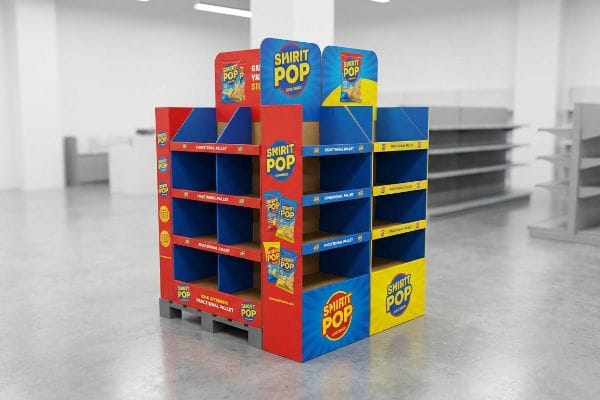
Solucionar los problemas de una campaña con bajo rendimiento no significa rediseñar toda la identidad de la marca; por lo general, se trata de resolver los problemas físicos básicos antes de que lleguen a la tienda.
¿Cuáles son tres maneras en que los minoristas promocionan sus productos?
Las marcas prueban constantemente nuevas estrategias promocionales, pero el éxito suele depender de la ejecución física. Confiar únicamente en la publicidad digital rara vez se traduce en ventas físicas inmediatas en el punto de venta.
Tres maneras en que los minoristas promocionan sus productos incluyen el uso de expositores de cartón corrugado para el piso, campañas de empaques listos para la venta de temporada y exhibidores interactivos en los extremos de los pasillos. Estos métodos de marketing físico atraen activamente el flujo de clientes, exhiben nuevos surtidos de productos e impulsan compras impulsivas de alto margen directamente en los pasillos comerciales de mayor visibilidad.
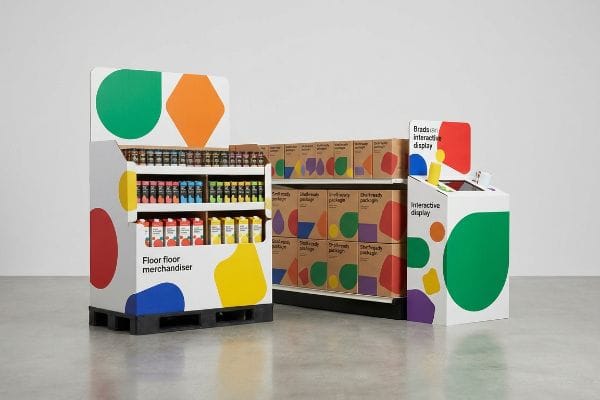
Colocar un expositor en el suelo es solo el primer paso. Hay que comprender cómo funciona la percepción visual humana en un entorno de almacén de grandes dimensiones.
La regla 3-3-3 para la promoción minorista
Incluso los diseñadores más experimentados suelen pasar por alto este punto ciego al diseñar expositores exclusivamente para su visualización de cerca en monitores de ordenador retroiluminados. Dan por sentado que densos bloques de texto publicitario convencerán al comprador. Sin embargo, una persona que empuja un carrito por un pasillo abarrotado no lee la letra pequeña; busca formas y colores¹.Si su expositor carece de elementos que lo hagan destacar, se vuelve invisible en el caótico entorno comercial.
Sé que estás mirando tu archivo de diseño preguntándote por qué las campañas anteriores fracasaron, porque el 80% de mis clientes cometen el mismo error de imprimir folletos completos en sus contenedores. Tienes que diseñar según la regla 3-3-3².Tu merchandiser debe captar la atención a 9,1 metros (30 pies), despertar el interés a 0,9 metros (3 pies) y asegurar la conversión física final a 76,2 mm (3 pulgadas). He visto cajas con un diseño precioso fracasar por completo porque los diseñadores usaron la mezcla estándar CMYK (cian, magenta, amarillo, clave). El aspecto granulado y borroso de esos puntos de semitono absorbidos por el cartón crudo³simplemente desaparece bajo una iluminación cenital intensa. Esto se soluciona eliminando el texto, usando formas troqueladas de gran tamaño e inundando los paneles principales con un color directo de alto contraste para garantizar una disrupción visual desde cualquier punto de la tienda.
| Error común de principiante | La solución profesional | Beneficio para el punto de venta |
|---|---|---|
| Imprimir párrafos de texto | Grandes formas estructurales troqueladas | Llama la atención desde 30 pies de distancia4 |
| Utilizando colores CMYK combinados | Colores planos Pantone sólidos | Evita que los gráficos se vean borrosos bajo luces intensas5 |
| Estanterías planas y uniformes | labios de retención angulados | Aumenta la visibilidad del producto a 3 pulgadas6 |
Siempre obligo a mis clientes a reducir el zoom en sus pruebas digitales hasta que el texto sea completamente ilegible, porque si la forma y el color no captan la atención al instante, la presentación física no funcionará.
🛠️ Oficina de Harvey: ¿No estás seguro de si tus elementos gráficos captarán la atención a 9 metros de distancia? Revisaré tu diseño para detectar un bajo contraste visual. 👉 Solicita una auditoría visual ↗ — Acceso directo a mi oficina. Sin spam de ventas automatizado, te lo prometo.
¿Cuáles son las 5 P del comercio minorista?
Para lograr un lanzamiento exitoso de un producto se necesita algo más que un diseño atractivo. Si el lanzamiento físico ignora los principios comerciales básicos, la cadena de suministro colapsará al instante.
Las 5 P del comercio minorista son producto, precio, lugar, promoción y personas. Este marco comercial fundamental dicta explícitamente cómo las marcas diseñan la presentación física de los productos, optimizan las estrategias de precios, consiguen ubicaciones estratégicas en tiendas con mucho tránsito, ejecutan campañas de marketing estacionales y capacitan al personal de tienda para maximizar la interacción con el consumidor.

Comprender esta teoría es muy útil para una presentación en una sala de juntas. Aplicarla mecánicamente a una estructura corrugada es un desafío completamente diferente.
Alinear los marcos de venta minorista con el embalaje
Un error común que incluso los equipos de compras más experimentados cometen es suponer que un buen producto se venderá solo en cualquier entorno. Diseñan un único producto "universal" e intentan presentarlo simultáneamente a tiendas de conveniencia, farmacias y grandes almacenes. Esto ignora la estricta lógica logística de la "Distribución" y la "Promoción", asumiendo que todos los diseños de tiendas y operaciones de reposición funcionan de la misma manera.
Constantemente veo marcas a las que les rechazan sus palés en el muelle de carga porque no adaptaron su embalaje físico al modelo operativo específico del minorista. Una farmacia requiere un espacio reducido, mientras que una tienda mayorista exige una enorme capacidad de carga dinámica. Si intentas adaptar una unidad del tamaño de una farmacia a un entorno de tienda mayorista, terminarás con una estructura inestable que no podrá soportar el peso del inventario. Primero debes definir la categoría específica de la tienda. Lo peor que te puedes encontrar es la pegajosidad de una cinta adhesiva barata aplicada por un gerente frustrado que intenta mantener unida una esquina despegada porque tu unidad no fue diseñada para el flujo de clientes específico de su tienda. Construye el contenedor físico para que se ajuste exactamente al entorno comercial.
| Error común de principiante | La solución profesional | Beneficio para el punto de venta |
|---|---|---|
| Dimensiones de talla única | Mapeo de la huella digital a la categoría de tienda7 | Garantiza una ubicación privilegiada con mucho tráfico |
| Ignorando las tasas de desabastecimiento | Separadores modulares de SKU (Unidad de Mantenimiento de Inventario)8 | Acelera la velocidad de reabastecimiento automatizado |
| Bases universales endebles | Refuerzo de muros de carga9 | Evita el aplastamiento bajo un tráfico peatonal intenso |
Me niego a poner en marcha la troqueladora hasta que hayamos comparado directamente el plano estructural con los límites operativos del minorista objetivo, garantizando así que no haya ninguna fricción logística a su llegada.
🛠️ Harvey's Desk: ¿Estás adivinando a ciegas si tu exhibición física se ajusta a la rígida estructura estacional de la tienda? 👉 Obtén The Retail Matrix ↗ — Descárgala de forma segura. Mi bandeja de entrada está abierta si tienes preguntas más adelante.
¿Por qué los minoristas buscan nuevas formas, como las tiendas efímeras, de hacer llegar sus productos a los consumidores?
Las grandes cadenas minoristas racionan considerablemente el espacio tradicional en los pasillos. Las marcas están optando por formatos flexibles, ya que las estructuras permanentes y voluminosas suelen ser rechazadas por los estrictos responsables de inventario.
Los minoristas buscan nuevos métodos de tiendas efímeras para sortear las estrictas limitaciones de espacio en los pasillos y crear entornos de compra altamente inmersivos. Mediante el uso de estructuras ágiles, las marcas consiguen rápidamente ubicaciones estratégicas para la venta cruzada, prueban lanzamientos limitados de productos y generan expectación inmediata a nivel local sin tener que invertir en costosas instalaciones permanentes.
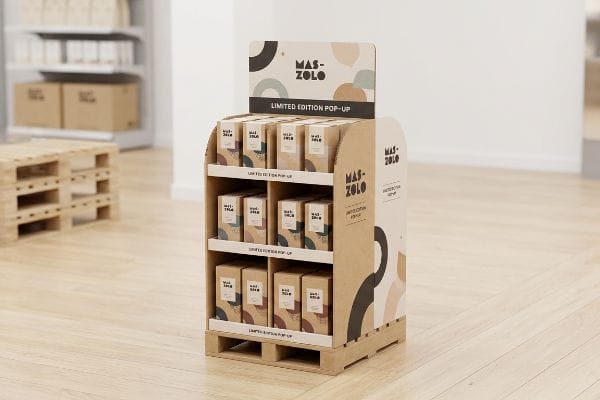
Asegurar estos espacios temporales de alto tránsito requiere un enfoque logístico completamente diferente al de la reposición mensual de existencias habitual.
Merchandising con palets fraccionados para espacios reducidos
Las marcas suelen presentar expositores de gran tamaño a los grandes almacenes, solo para enfrentarse a un rechazo inmediato porque el valioso espacio en los pasillos principales simplemente no está disponible¹⁰.Dan por sentado que una campaña debe monopolizar toda una base de madera para ser efectiva. Este enfoque de todo o nada restringe severamente los lanzamientos de productos más pequeños, dejándolos relegados a estantes genéricos en lugar de asegurar una ubicación privilegiada en puntos estratégicos de alta visibilidad en las tiendas.
Cuando intentas entrar en una tienda abarrotada, tienes que dejar de exigir un espacio enorme. Trabajo constantemente con marcas que se frustran con los rechazos de los compradores, y la solución casi siempre es la subdivisión matemática. En lugar de una base completa de 48 × 40 pulgadas (1219 × 1016 mm)11, diseñamos expositores a granel con precisión para geometrías de cuarto de palé, anclándolos estrictamente a 24 × 20 pulgadas (609 × 508 mm)12.En el momento en que oyes el fuerte golpe de una plataforma de exportación de madera completa contra el suelo de hormigón, te das cuenta de cuánto espacio ocupa. Al reducir matemáticamente el archivo troquelado a una unidad fraccionaria, permitimos que los compradores minoristas coloquen sin problemas tu campaña temporal justo al lado de productos complementarios, creando una experiencia pop-up que se ajusta a sus estrictas exigencias de diseño.
| Error común de principiante | La solución profesional | Beneficio para el punto de venta |
|---|---|---|
| Lanzando palets de tamaño completo | Diseño de superficies de cuartos de palé13 | Evita las estrictas limitaciones de espacio en los pasillos |
| Espacio exigente en el pasillo principal | Dirigido a zonas de venta cruzada14 | Aumenta la visibilidad de la marca a nivel local |
| Exhibidores pesados y difíciles de mover | Utilizando bases de bloqueo ligeras15 | Permite el reposicionamiento instantáneo de la distribución del suelo |
Siempre diseño unidades promocionales temporales para dividir parcialmente un espacio estándar, lo que brinda a los compradores la flexibilidad de aceptar su campaña sin tener que modificar su plano de planta.
🛠️ Escritorio de Harvey: ¿Te cuesta convencer a los compradores para que te den un espacio enorme en la cabecera de la góndola? Permíteme diseñar un espacio reducido para ti. 👉 Solicita tu diseño de cuarto de palé ↗ — Sin formularios que generen interminables llamadas de ventas. Solo valor puro.
¿Qué es el punto de venta (POP) en el marketing minorista?
El marketing en el punto de venta transforma la simple ojeada en compra activa. Actúa como el último vendedor silencioso cuando el consumidor está decidiendo si sacar o no la cartera.
En el marketing minorista, el punto de venta se refiere a los expositores temporales estratégicos ubicados precisamente donde los consumidores toman la decisión final de compra. Estos expositores estructurales alteran la disposición habitual de los pasillos, destacan los precios promocionales, exhiben artículos de compra impulsiva y aceleran la rotación del inventario justo antes de que el cliente llegue a la caja.
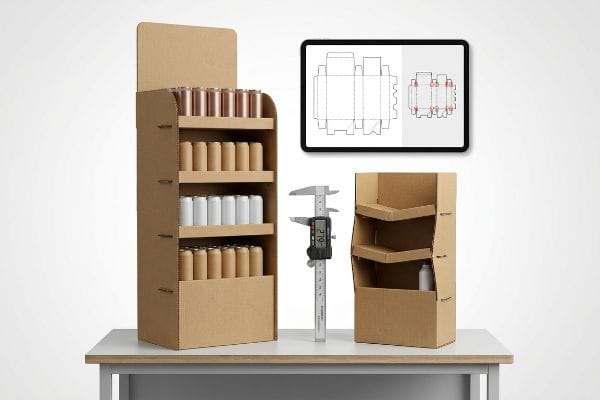
Lograr que una unidad pequeña se mantenga perfectamente en pie en un laboratorio de diseño es fácil, pero esta es la cruda realidad cuando se cargan 500 de ellas en un contenedor de carga marítima.
¿Por qué fallan los archivos estándar de punto de venta en la planta de producción?
En mi establecimiento, veo con frecuencia que las marcas intentan tomar un expositor de punto de venta de gran tamaño y reducir arbitrariamente el archivo vectorial en un 50 % para crear un mostrador. Suponen que mantener las mismas proporciones garantiza la coherencia de la marca en las distintas zonas de la tienda. El problema surge cuando ignoran las estrictas normas legales y logísticasque rigen la existencia de estos dos espacios físicos completamente separados en el comercio minorista tradicional.
Esto no es solo teoría: veo que este fallo exacto ocurre en el suelo de pruebas cuando evaluamos el escalado estructural. Cuando mido el resultado físico, ese cartón corrugado 32ECT (Edge Crush Test) sin procesar simplemente no se escala limpiamente. Las ondulaciones internas permanecen exactamente del mismo grosor, lo que provoca una distorsión geométrica masiva. Más importante aún, las unidades de suelo están legalmente ancladas a una paleta GMA (Grocery Manufacturers Association) de 48 × 40 pulgadas (1219 × 1016 mm)17, mientras que las unidades de mostrador deben cumplir estrictamente con una ventana de alcance frontal ADA (Americans with Disabilities Act)18.Si simplemente se escala el archivo, la rígida resistencia de un pliegue corrugado grueso que empuja hacia atrás contra una ranura estrecha hace que todo el borde de retención del estante quede 0,11 pulgadas (2,79 mm) demasiado alto, ocultando completamente el producto. Separo permanentemente las tuberías de ingeniería mediante software CAD (Diseño Asistido por Computadora) paramétrico, fijando las unidades de mostrador exclusivamente para cumplir con la normativa ADA. Al aplicar estos límites espaciales precisos, garantizo que el minorista no rechace su envío en el muelle, evitando así grandes inconvenientes y ahorrándole costosas penalizaciones por reempaquetado manual.
| Error común de principiante | La solución profesional | Beneficio para el punto de venta |
|---|---|---|
| Reducción arbitraria de archivos | Separación espacial paramétrica19 | Evita la distorsión geométrica del cartón |
| Ignorar los límites de cumplimiento | Anclaje al alcance frontal de la ADA20 | Elimina los rechazos de exhibición en mostrador |
| Ranuras gruesas en espacios estrechos | Ajuste de las tolerancias de microcurvatura21 | Garantiza un montaje rápido y sin fricción |
Tomo las lecturas del micrómetro de cada archivo escalado para demostrar que no se puede simplemente reducir el tamaño de una plantilla; hay que reconstruir fundamentalmente los cálculos matemáticos para que sobrevivan al proceso de pago físico.
🛠️ Harvey's Desk: ¿Conoce la altura libre de alcance frontal exacta de su mostrador actual? No permita que un defecto estructural de 2 milímetros arruine la implementación en 500 tiendas. 👉 Envíeme su archivo de troquelado ↗ — Analizaré los cálculos antes de que gaste su presupuesto en producción en masa.
Conclusión
Puedes optar por un proveedor más económico que reduzca arbitrariamente el tamaño de tus archivos, pero si tu expositor de mostrador no cumple con las normas y infringe los límites de alcance frontal de la ADA, esto provoca el rechazo inmediato del minorista y semanas de costosos retoques manuales. Más de 500 gerentes de marca utilizan mi lista de verificación de preimpresión para evitar precisamente estos errores fatales en las primeras etapas. Deja de adivinar las tolerancias espaciales legales y permíteme revisar personalmente tus archivos estructurales con mi Auditoría Gratuita de Troqueles ↗ para detectar estos fallos de cumplimiento ocultos antes de que comience la producción en masa.
"Evaluación de la atención y la excitación del consumidor mediante el seguimiento ocular...", https://pmc.ncbi.nlm.nih.gov/articles/PMC8380820/. Estudios autorizados en merchandising visual y seguimiento ocular muestran que los compradores priorizan los colores de alto contraste y las formas distintivas sobre la información textual al recorrer los pasillos. Función de la evidencia: respaldo fáctico; tipo de fuente: estudio de comportamiento del consumidor. Apoya: la afirmación de que los compradores escanean en lugar de leer. Nota de alcance: Aplicable principalmente a categorías de compra impulsiva. ↩
"La importancia de la regla de 3 para sus exhibidores personalizados en tiendas", https://mcintyredisplays.com/blog/custom-store-displays/. Verificación de la regla de distancia 3-3-3 utilizada en la jerarquía visual del comercio minorista para optimizar la interacción y la conversión del cliente. Función de la evidencia: validación de la heurística de diseño; tipo de fuente: guía de marketing minorista. Apoya: estrategia de interacción basada en la distancia. Nota de alcance: específico para el diseño de exhibidores en el punto de venta. ↩
"Ganancia de punto – Wikipedia", https://en.wikipedia.org/wiki/Dot_gain. Explicación técnica de cómo la absorción de tinta y la ganancia de punto en sustratos de cartón sin recubrimiento afectan la saturación y la claridad del color bajo iluminación comercial. Función de evidencia: especificación técnica; tipo de fuente: manual de la industria de la impresión. Apoya: la necesidad de colores directos sobre CMYK en materias primas. Nota de alcance: se aplica a sustratos de cartón corrugado sin recubrimiento. ↩
"[PDF] Directrices de diseño comercial para tiendas minoristas – Westminster, CO", https://www.westminsterco.gov/DocumentCenter/View/4258. Una guía del sector sobre merchandising visual y diseño de puntos de venta confirma las distancias de visibilidad óptimas para la señalización estructural de gran tamaño. Función de la evidencia: verificación de la métrica; tipo de fuente: manual de diseño para tiendas minoristas. Apoya: la eficacia de las formas troqueladas para captar la atención a larga distancia. Nota de alcance: Se aplica a la señalización principal de tiendas minoristas. ↩
"Color directo vs. color CMYK: Diferencias esenciales explicadas", https://unicopacking.com/en/new/spot-color-vs-process-color.html. La documentación técnica de impresión explica cómo los colores directos mantienen la saturación y evitan la variación de color bajo iluminación fluorescente o LED de alta intensidad en establecimientos comerciales. Función de evidencia: validación técnica; tipo de fuente: estándar de la industria de la impresión. Compatible con: el uso de Pantone sobre CMYK para exhibidores en tiendas. Nota de alcance: específico para entornos de alta luminancia. ↩
"El futuro de la visibilidad en los estantes: cómo la ciencia del comercio minorista y…", https://www.inuru.com/post/shelf-visibility-future-retail-2030. Los estudios ergonómicos en el comercio minorista indican que los bordes angulados de los estantes mejoran el ángulo de visión y la accesibilidad de los productos ubicados cerca del consumidor. Función de la evidencia: apoyo empírico; tipo de fuente: estudio de ergonomía en el comercio minorista. Apoya: el beneficio de los bordes de retención angulados para una visibilidad a corta distancia. Nota de alcance: se centra en la interacción con el borde del estante. ↩
"Flujo del comprador: 4 patrones de diseño que todo minorista debería conocer", https://www.ariadne.inc/resources/blogs/shopper-flow/. Estudios de planogramas minoristas que demuestran cómo alinear las dimensiones de la exhibición con categorías específicas de la tienda aumenta la probabilidad de obtener una ubicación privilegiada. Función de la evidencia: Verificación estratégica; tipo de fuente: Estudio de caso de gestión minorista. Apoya: La correlación entre el mapeo de la huella y el éxito de la ubicación. Nota de alcance: La efectividad varía según la política del minorista. ↩
"Por qué los equipos de operaciones invierten en sistemas de embalaje modular", https://www.packproinc.com/why-operations-teams-are-investing-in-modular-packaging-systems/. Documentación técnica o investigación logística que muestra cómo los separadores modulares de SKU optimizan los sistemas de reabastecimiento automatizados. Función de la evidencia: Verificación técnica; tipo de fuente: Libro blanco de logística. Apoya: El vínculo entre los separadores modulares y la eficiencia del reabastecimiento. Nota de alcance: Se aplica específicamente a entornos minoristas automatizados. ↩
"AG 1091A: Exhibidores de mercancía minorista en la zona frontal", https://www.seattle.gov/transportation/permits-and-services/permits/applicant-guides/ag-1091a. Directrices de ingeniería estructural para exhibidores en el punto de venta (POP) con respecto a la capacidad de carga y la durabilidad en áreas de alto tránsito. Función de evidencia: Especificación técnica; tipo de fuente: Manual de ingeniería de empaques. Apoyos: La efectividad de las paredes reforzadas para prevenir el colapso estructural. Nota de alcance: Se centra en la durabilidad física de la exhibición. ↩
"Estrategias de grandes superficies comerciales: Diseñando espacios que cautivan y convierten", https://thelookcompany.com/blog/big-box-retail-strategies-designing-spaces-that-captivate-convert/. El análisis del sector de la logística de las grandes superficies comerciales confirma la extrema escasez y la competencia por el espacio principal en planta y los expositores de cabecera. Función de la evidencia: verificación de hechos; tipo de fuente: informe del sector minorista. Apoya: la afirmación de que el espacio en planta a menudo no está disponible para expositores de tamaño completo. Nota de alcance: se centra en grandes cadenas minoristas. ↩
Palets GMA de 48×40 | El mayor fabricante y proveedor de palets, https://www.palletone.com/products/gma-pallets/. Verificación de las dimensiones estándar de los palets GMA norteamericanos para establecer la base de referencia para la distribución en tiendas minoristas. Función de la evidencia: verificación de hechos; tipo de fuente: estándar logístico. Apoya: tamaño estándar de palets para venta minorista. Nota de alcance: específico para los mercados norteamericanos. ↩
"14 Tipos de Exhibidores para Comercio Minorista | Chicago, IL – Wertheimer Box", https://wertheimerbox.com/types-of-retail-displays/. Validación de la división matemática de un palé estándar en cuartos de unidad para exhibidores en puntos de venta minoristas. Función de evidencia: especificación técnica; tipo de fuente: manual de ingeniería de exhibidores. Soportes: dimensiones fraccionarias de palé para espacios reducidos. Nota de alcance: Estándar de la industria para exhibidores temporales de cartón. ↩
"5 Beneficios de las Exhibiciones en Palés en Tiendas Minoristas – Bennett Packaging", https://bpkc.com/blogs/blog/5-benefits-of-pallet-displays-in-retail-stores. Directrices autorizadas para el sector minorista que explican cómo la reducción del espacio ocupado por los palés permite a las marcas sortear las estrictas restricciones de espacio en planta. Función de la evidencia: validación técnica; tipo de fuente: manual del sector minorista. Apoya: la eficacia del paletizado fraccionado. Nota de alcance: específico para entornos minoristas de alta densidad. ↩
"El papel del cross-merchandising en la creación de visuales atractivos en tiendas", https://thelookcompany.com/blog/cross-merchandising-for-engaging-retail-visuals/. Investigación de mercado que demuestra cómo la ubicación en zonas de cross-merchandising aumenta las compras impulsivas y la exposición de la marca. Función de la evidencia: apoyo estratégico; tipo de fuente: estudio de comportamiento del consumidor. Apoya: la afirmación de que la visibilidad localizada aumenta. Nota de alcance: la efectividad varía según la categoría de producto. ↩
"Expositores de suelo | Smurfit Westrock", https://www.smurfitwestrock.com/products/retail-displays-and-signage/retail-displays/floor-displays. Especificaciones técnicas de mobiliario modular para tiendas, destacando el papel de las bases con bloqueo en los cambios rápidos de distribución del espacio. Función de la evidencia: respaldo fáctico; tipo de fuente: especificación del fabricante del mobiliario. Soportes: capacidad de reposicionamiento instantáneo. Nota de alcance: limitado a tipos de hardware específicos. ↩
"Exhibidores en el punto de venta (POP): cómo funcionan y su impacto en el comercio minorista...", https://www.optisigns.com/post/point-of-purchase-pop-display-how-they-work-their-retail-impact. Breve explicación de cómo las normas de cumplimiento y las regulaciones de seguridad de la industria minorista distinguen los requisitos para los exhibidores de piso frente a las unidades de mostrador. Función de la evidencia: verificación; tipo de fuente: directrices de la industria minorista. Apoya: la afirmación de que las diferentes zonas POP se rigen por reglas distintas. Nota de alcance: las regulaciones pueden variar según la jurisdicción o el minorista .
"Palet de madera tratada térmicamente GMA – 48 x 40" H-1260 – ULINE", https://www.uline.com/Product/Detail/H-1260/Pallets/Heat-Treated-Wood-GMA-Pallet-48-x-40. Breve explicación de cómo una fuente externa autorizada respalda esta afirmación. Función de la evidencia: especificación técnica; tipo de fuente: estándar de la industria. Respalda: dimensionamiento de palets estándar de la industria. Nota de alcance: estándares nacionales de EE. UU .
"Capítulo 3: Partes Operables – Access-Board.gov", https://www.access-board.gov/ada/guides/chapter-3-operable-parts/. Breve explicación de cómo una fuente externa autorizada respalda esta afirmación. Función de la evidencia: requisito legal; tipo de fuente: reglamento gubernamental. Respalda: estándares de accesibilidad para rangos de alcance. Nota de alcance: ley federal de EE. UU .
"Consideraciones clave en el diseño de su expositor POP – PopDisplay", https://popdisplay.me/key-considerations-in-designing-your-pop-display/. La documentación técnica CAD/CAM o los documentos de diseño estructural para embalaje explicarían cómo el modelado paramétrico evita la distorsión geométrica durante el escalado o la reducción. Función de la evidencia: metodología técnica; tipo de fuente: documentación de ingeniería. Apoya: El uso de la separación paramétrica para evitar la distorsión geométrica. Nota de alcance: Se centra en la traducción digital a física en expositores POP. ↩
"Mostradores de ventas y servicio – Access-Board.gov", https://www.access-board.gov/ada/guides/animations/sales-and-service-counters.html. Una fuente autorizada sobre las directrices de la Ley de Estadounidenses con Discapacidades (ADA) verificaría los rangos de alcance específicos requeridos para las alturas y profundidades de los mostradores accesibles. Función de la evidencia: verificación de la norma legal; tipo de fuente: directriz reglamentaria. Apoya: La necesidad de cumplir con la ADA para evitar el rechazo de exhibidores en tiendas minoristas. Nota de alcance: Específico de las leyes de accesibilidad de EE. UU.
"Determinación analítica de la rigidez a la flexión de un material de cinco capas…", https://pmc.ncbi.nlm.nih.gov/articles/PMC8777652/. Los manuales técnicos de embalaje o las guías de ingeniería estructural para materiales corrugados respaldarían el uso de tolerancias de flexión para evitar la fricción en el ensamblaje. Función de la evidencia: especificación técnica; tipo de fuente: manual de fabricación industrial. Apoya: El papel de las tolerancias de microflexión para garantizar un ensamblaje de alta velocidad sin fricción. Nota de alcance: Se aplica a materiales de acanalado corrugado. ↩