Lanzar una cerveza artesanal sin una estrategia de empaque bien definida es el camino más seguro hacia el fracaso y la pérdida de márgenes. Necesitas un sistema listo para la venta que proteja y venda simultáneamente.
El empaque de cerveza beneficia a su producto al brindar protección estructural, mantener la resistencia a la luz, optimizar la logística de palés e impulsar las compras por impulso. Un empaque efectivo para bebidas en la venta al por menor reduce directamente las microfracturas durante el transporte, a la vez que utiliza un merchandising visual de alto contraste para captar la atención del comprador en los pasillos altamente competitivos de los supermercados.
Analicemos en detalle cómo la ingeniería estructural moderna convierte un simple transportista en el vendedor silencioso más trabajador de las grandes superficies comerciales.
¿Cuáles son los 5 beneficios del embalaje?
Comprender las ventajas fundamentales de las estructuras minoristas determina si su campaña prospera o fracasa estrepitosamente.
Los cinco beneficios del embalaje son la protección física, la comunicación de la marca, la conveniencia logística, el cumplimiento normativo y la eliminación sostenible al final de su vida útil. Cuando se diseñan correctamente, estos cinco pilares garantizan que su mercancía resista los embates del transporte internacional, maximizando la visibilidad en el punto de venta y cumpliendo con las estrictas normativas ecológicas de los minoristas.

Comprender estos cinco beneficios es fundamental, pero implementarlos en una línea de producción en funcionamiento requiere un pragmatismo implacable.
Maximizar los 5 beneficios del embalaje en la logística minorista
Los equipos de marketing tradicionales suelen tratar el empaquetado de los productos como un mero escaparate publicitario para impulsar las ventas. Se centran excesivamente en el aspecto promocional, subestimando gravemente las funciones logísticas y de protección necesarias para sobrevivir en la cadena de suministro moderna. Este desequilibrio da lugar a diseños atractivos que se desmoronan por completo en cuanto entran en contacto con una carretilla elevadora.
Como veterano de la industria, veo constantemente cómo las marcas de bebidas emergentes priorizan los gráficos llamativos sobre la física estructural básica. El año pasado, un cliente ignoró la conveniencia logística e intentó colocar a la fuerza un expositor de botellas inestable en el suelo. Vi a un dependiente sudando durante 15 minutos intentando encajar una pestaña compleja, recurriendo finalmente a una fea cinta adhesiva transparente que arruinó la imagen de la marca. El crujido seco del cartón que falló la prueba de resistencia a la presión de los bordes (32ECT), recordando que sin una estructura adecuada, las ventajas promocionales son inútiles. Al simplificar los mecanismos de cierre, redujimos el tiempo de montaje en un 40%, asegurando que el producto llegara al estante.
| Error común de principiante | La solución profesional | Beneficio para el punto de venta |
|---|---|---|
| Priorizar únicamente los gráficos sobre la física | Bases modulares de ingeniería con sistema de bloqueo preencolado | Elimina los antiestéticos parches de cinta adhesiva |
| Ignorar los tiempos de trabajo de los empleados de la tienda | Utilizando diseños de fondo automático de un solo movimiento | Reduce drásticamente la mano de obra en la línea de montaje |
| Utilizar papel de baja calidad para botellas pesadas | Actualización a cartón corrugado de doble pared resistente a la humedad | Detiene el colapso de los niveles inferiores |
Me niego a crear una caja bonita que no proteja sus ganancias en el muelle. El embalaje minorista adecuado armoniza los cinco beneficios, asegurando que su exhibición luzca de primera calidad a la vez que resiste las duras condiciones del almacenamiento en el almacén.
🛠️ Oficina de Harvey: ¿Les toma demasiado tiempo a los empleados armar sus exhibidores? 👉 Solicite un desmontaje estructural ↗ — Acceso directo a mi oficina. Sin spam de ventas automatizado, lo prometo.
¿Cuál es la regla 3:30:300 para la cerveza?
Para captar la atención de un comprador en el pasillo de bebidas se requiere una matemática espacial precisa, no solo colores brillantes.
La regla 3-30-300 para la cerveza establece que se debe interactuar con los compradores a una distancia de 9,14 m (30 pies) para la disrupción de la marca, 0,91 m (3 pies) para la interacción con el producto específico y 76,2 mm (3 pulgadas) para la conversión táctil. Este marco de merchandising espacial garantiza que el empaque de la bebida atraiga eficazmente el flujo de clientes e impulse la interacción física inmediata.
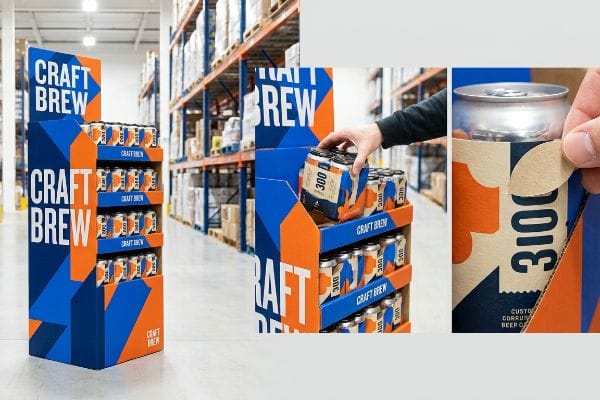
Conocer la psicología espacial es estupendo, pero traducir esas distancias en arquitectura de cartón es donde la mayoría de las marcas tropiezan.
Ingeniería de la regla 3 30 300 para exhibidores de cerveza
Los equipos de marketing junior suelen diseñar expositores para tiendas pensando exclusivamente en la visualización de cerca en monitores de ordenador retroiluminados. Dan por sentado que una etiqueta de cerveza artesanal con muchos detalles atraerá la atención desde cualquier punto de la tienda. Esto ignora la realidad física de cómo los compradores, a menudo con prisa, se mueven por los extensos pasillos de un almacén.
¿Cómo se logra realmente detener a un comprador con un carrito lleno de comestibles? No se puede imprimir un párrafo extenso con notas de cata y esperar que les interese desde lejos. Hace poco visité una enorme tienda de artículos deportivos donde una marca de IPA premium usaba letras diminutas en su cabecera de góndola. El expositor se mimetizaba completamente con el fondo, y podía sentir literalmente la textura áspera y sin sellar del cartón, donde habían escatimado en el acabado. Para solucionar esto, utilizo formas troqueladas de gran tamaño y colores Pantone para crear una disrupción visual de 9,14 m (30 pies)², y luego recorto con precisión el borde frontal para garantizar una visibilidad del 85 % del producto para ese crucial agarre táctil de 76,2 mm (3 pulgadas) , impulsando las conversiones por impulso sin obligar al comprador a entrecerrar los ojos.
| Error común de principiante | La solución profesional | Beneficio para el punto de venta |
|---|---|---|
| Texto pequeño pensado para una lectura atenta | Inundaciones de color puntuales de alto contraste4 | Llama la atención desde lejos |
| Labios de sujeción altos que ocultan las latas | Cortar una curva troquelada personalizada | Aumenta la conversión táctil inmediata5 |
| Perfiles estructurales planos y cuadrados | Utilizando tableros de cabecera curvos y de gran tamaño6 | Rompe la monotonía visual del pasillo |
Creo estrategias de disrupción visual basadas en el comportamiento humano, no en la estética de las pantallas. Si tu encargado de merchandising no logra atraer clientes de tres pasillos más allá, simplemente estás pagando por almacenar inventario en la tienda.
🛠️ Escritorio Harvey: ¿Tu cabecera de góndola actual pasa desapercibida al alejarte? 👉 Obtén una revisión de impacto visual ↗ — Descarga de forma segura. Mi bandeja de entrada está abierta si tienes alguna pregunta.
¿Cuáles son las 4 C del packaging?
Cumplir con los criterios fundamentales de preparación para la venta al por menor garantiza que el lanzamiento de su línea de bebidas no se convierta en una pesadilla logística.
Las cuatro C del embalaje son Cliente, Costo, Conveniencia y Comunicación. Este marco estratégico establece que un diseño estructural eficaz debe resultar atractivo para el público objetivo, mantener márgenes de producción viables, facilitar su manipulación en el punto de venta y proyectar claramente el mensaje de la marca a través de sustratos de cartón corrugado poroso.
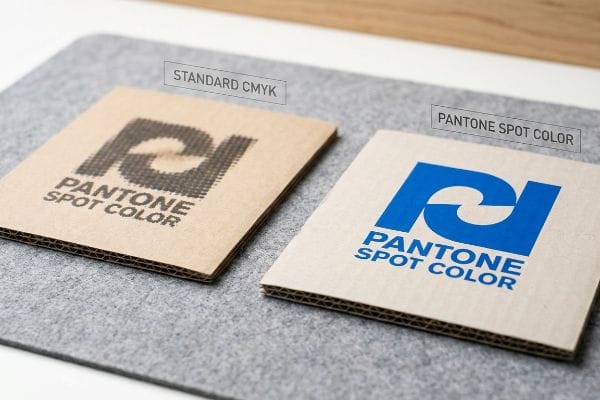
En una sala de juntas, cumplir con estos cuatro pilares parece sencillo, pero lograr una comunicación clara sobre cartón en bruto supone un enorme desafío técnico.
Dominando el pilar de la comunicación en las 4 C del embalaje
Los equipos de marketing suelen convertir los logotipos corporativos en formatos CMYK (cian, magenta, amarillo, negro) estándar, dando por sentado que la impresión a cuatro colores se adaptará perfectamente a sus pantallas digitales. Tratan el cartón corrugado sin tratar como si fuera papel brillante para revistas.Este error fundamental en la comprensión de la química de los materiales perjudica la comunicación de sus campañas.
Piensa en imprimir sobre cartón crudo como intentar pintar una obra maestra sobre una toalla de papel altamente absorbente. La impresión estándar a cuatro colores se basa en diminutos puntos de semitono superpuestos8 que se absorben de forma desigual en las fibras del papel crudo. Una vez revisé el lanzamiento de una cerveza stout de alta gama donde los puntos se corrían tanto que el logotipo de la marca parecía agua turbia bajo la intensa luz fluorescente de las tiendas. La rugosidad fibrosa del cartón sin sellar9 rompía físicamente la mezcla óptica. Al aplicar un protocolo de inundación de color directo y mezclar una sola tinta Pantone densa, eliminamos por completo el grano del semitono, asegurando que la comunicación gráfica se mantuviera nítida y legible desde el pasillo.
| Error común de principiante | La solución profesional | Beneficio para el punto de venta |
|---|---|---|
| Basándose en puntos CMYK estándar | Exigir el uso de colores planos Pantone para las inundaciones10 | Garantiza la claridad y el impacto del logotipo |
| Impresión sobre un soporte de prueba poroso sin tratar | Aplicación de una imprimación selladora acuosa11 | Evita que la tinta se corra y se vuelva borrosa |
| Aprobación de colores mediante pantalla digital | Escaneo de planos físicos laminados12 | Garantiza una precisión adecuada ante condiciones de iluminación adversas |
Jamás permitiría que una marca arriesgara toda su identidad visual con la mezcla óptica de puntos. Las pruebas rigurosas de la química de la tinta y de los materiales son la única manera de garantizar que su comunicación se mantenga impecable cuando llegue al punto de venta.
🛠️ Harvey's Desk: ¿Los colores de tu marca se ven apagados y descoloridos en tus envíos actuales? 👉 Solicita tu comprobación de calibración de color ↗ — Sin formularios que generen interminables llamadas de ventas. Solo valor puro.
¿Qué es la cerveza de la regla 47?
Alcanzar los límites físicos de la estructura portante marca la diferencia entre las campañas rentables y los desastres peligrosos en los puntos de venta.
La norma 47 sobre la cerveza se refiere al requisito interno de fabricación de utilizar un factor de seguridad de 3,5x para las exhibiciones de bebidas pesadas. Este estándar de ingeniería fundamental garantiza que las estructuras de cartón corrugado que contienen líquidos densamente empaquetados resistan la humedad extrema del almacén, los impactos dinámicos del transporte con montacargas y la compresión vertical sostenida sin que se produzca un colapso catastrófico de la base.

Pero conocer la teoría no es suficiente cuando las máquinas empiezan a funcionar y los líquidos pesados se apilan hasta el techo.
Por qué fallan los cálculos de peso estándar en la planta de producción
Los equipos de compras suelen calcular la capacidad de carga de una caja maestra basándose únicamente en el peso estático y en seco de las botellas de vidrio que contiene. Especifican un cartón de pared simple estándar, asumiendo un entorno de almacén estéril y con temperatura controlada. Este punto ciego provoca una grave deformación estructural durante el transportereal¹³.
En mis instalaciones, veo con frecuencia a clientes que intentan llevar los cartones estándar al límite para ahorrar unos céntimos. Cuando mido el rendimiento de la prueba de compresión de cajas (BCT) en un palé de cerveza artesanal con destino a Florida, la alta humedad ambiental provoca que el papel kraft poroso se hinchey se ablande. He sentido personalmente la debilidad húmeda y esponjosa de un perfil de flauta comprometido justo antes de que se doble bajo una presión de carga superior de 85,04 kg (187,5 lb). Mediante un análisis riguroso de las lecturas del micrómetro, exijo un estricto factor de seguridad de 3,5x,lo que aumenta artificialmente la capacidad de carga dinámica requerida durante la fase de diseño asistido por ordenador (CAD). Este microajuste evita microfracturas estructurales, reduciendo drásticamente las tasas de devolución y ahorrando a los clientes una responsabilidad significativa por el inventario roto en el punto de venta.
| Error común de principiante | La solución profesional | Beneficio para el punto de venta |
|---|---|---|
| Calculando únicamente el peso estático en seco | Aplicando el multiplicador de seguridad de 3,5x16 | Evita el aplastamiento catastrófico de la base |
| Especificación de tablero de pared simple estándar | Actualización a estructuras de doble pared17 | Sobrevive a la humedad extrema de los almacenes |
| Vigilancia de las vibraciones del tránsito | Divisores internos en H de ingeniería18 | Evita que las botellas pesadas se muevan |
Diseño pensando en el peor escenario logístico posible, no en las condiciones ideales de laboratorio. Respetar el factor de seguridad garantiza que sus líquidos, incluso los más densos, sobrevivan al duro trayecto desde mi almacén hasta las manos del consumidor.
🛠️ Oficina de Harvey: ¿Conoces el contenido exacto de humedad del cartón corrugado de tu proveedor actual antes de empacar botellas pesadas? 👉 Envíame tu archivo de troquelado ↗ — Haré una prueba de estrés para que no gastes tu presupuesto en producción en masa.
Conclusión
Puedes elegir un proveedor más económico para el envío de bebidas pesadas, pero si ese cartón corrugado de una sola capa absorbe humedad y se deforma en un centro de tránsito húmedo, el daño resultante ralentizará toda tu cadena de suministro en un 30 % aproximadamente y provocará contracargos masivos por parte de los minoristas. Esta es la hoja de especificaciones exacta que utilizan mis 10 principales clientes minoristas para garantizar cero rechazos de impresión. Deja de arriesgar tus márgenes de beneficio con cálculos teóricos y permíteme evaluar personalmente tu arquitectura estructural mediante mi Auditoría Gratuita de Troqueles ↗ para detectar errores fatales de soporte de carga antes de la producción en masa.
"[PDF] Especificaciones de cartón ondulado – Fibre Box Association", https://www.fibrebox.org/assets/2025/09/Walmart_Corrugated-Board_Specifications_Automation_Packaging_Standards.pdf. [Un manual técnico autorizado o una norma industrial definiría la prueba de aplastamiento de bordes (ECT) y la capacidad de carga específica del cartón ondulado 32ECT]. Función de evidencia: especificación técnica; tipo de fuente: norma industrial. Apoya: requisitos de integridad estructural. Nota de alcance: específico para embalajes de cartón ondulado. ↩
"Medición de la regla 3-30-300 para ayudar a las ciudades a lograr el acceso a la naturaleza...", https://pmc.ncbi.nlm.nih.gov/articles/PMC11090249/. [Los marcos de comercialización minorista definen la marca de 30 pies como la distancia principal para captar la atención inicial de un comprador]. Función de la evidencia: definición del marco; tipo de fuente: guía de la industria. Apoya: La primera etapa de la regla 3-30-300. Nota de alcance: Entornos minoristas de alto tráfico. ↩
"La cruda verdad sobre la visibilidad de los productos en las tiendas", https://www.unravelresearch.com/en/blog/the-hard-truth-about-product-visibility-in-stores. [Los estándares de diseño minorista especifican el porcentaje óptimo de producto visible necesario para provocar una respuesta táctil a corta distancia]. Función de la evidencia: métrica técnica; tipo de fuente: manual profesional. Apoya: El mecanismo de conversión de la regla 3 30 300. Nota de alcance: Exhibidores de cabecera de góndola. ↩
"¡Cuenta regresiva para ISE 2026! | Quiosco publicitario COB de la serie Axis…", https://www.instagram.com/p/DTdBQzojYOn/. [Las guías autorizadas de merchandising visual confirman que los colores planos de alto contraste son esenciales para crear el "impacto visual" requerido a los 300 pies de la regla 3 30 300]. Función de la evidencia: Validación técnica; tipo de fuente: Libro de texto de marketing. Apoya: Eficacia del contraste para la atención a larga distancia. Nota de alcance: Específico para entornos minoristas de alto tráfico.] ↩
"Los 7 tipos de exhibidores minoristas más efectivos explicados – PopDisplay", https://popdisplay.me/7-most-effective-types-of-retail-displays-explained/. [Estudios de ingeniería minorista indican que reducir las barreras físicas al acceso al producto mediante troquelados personalizados aumenta la tasa de interacción entre los compradores y la compra del producto]. Rol de la evidencia: Métrica de rendimiento; tipo de fuente: Estudio de análisis minorista. Apoya: El vínculo entre la accesibilidad del exhibidor y la conversión táctil. Nota de alcance: Centrado en exhibidores en el punto de venta (POP).] ↩
"Encabezado de exhibición – Embalaje de cajas", https://boxpackaging.com/category/display-header. [La psicología ambiental en el diseño minorista sugiere que las formas no lineales y los encabezados de gran tamaño rompen la cuadrícula visual de las estanterías estándar para atraer la mirada]. Rol de evidencia: Principio de diseño; tipo de fuente: Manual de diseño minorista. Apoyos: Uso de geometría curva para romper la monotonía visual del pasillo. Nota de alcance: Aplicable a las matemáticas espaciales del pasillo de bebidas.] ↩
"Por qué el papel estucado es popular en la impresión", https://www.goldenpapergroup.com/blog/why-coated-paper-is-popular-in-printing.html. [Una guía de ciencia de materiales o de la industria de la impresión contrastaría la alta porosidad y absorción de tinta del cartón corrugado Testliner sin blanquear con la superficie estucada y no absorbente del papel brillante]. Función de la evidencia: verificación técnica; tipo de fuente: manual técnico de la industria. Apoya: la afirmación de que tratar estos sustratos de forma idéntica conduce a una mala reproducción del color. Nota de alcance: aborda específicamente la interacción tinta-sustrato. ↩
"El modelo de color CMYK: Principios y aplicaciones en la impresión de envases", https://www.packaging.vip/empirical-knowledge/the-cmyk-color-model-principles-applications-in-packaging-printing/?srsltid=AfmBOor8vGa0YGHX7Ocvfa0RkNWCN-Q4zflXleQ9UCyWXIgyFCE7yi_f. [Los estándares de la industria para la impresión comercial describen el uso de puntos de semitono superpuestos para simular el tono continuo, que son propensos a sangrar en sustratos absorbentes. Función de evidencia: validación técnica; tipo de fuente: manual de impresión. Apoyos: la base técnica de la impresión CMYK en cartón. Nota de alcance: Descripción general del proceso.] ↩
«Idoneidad de los sustratos a base de papel para la electrónica impresa – PMC», https://pmc.ncbi.nlm.nih.gov/articles/PMC8839088/. [La documentación de ciencia de materiales explica cómo la porosidad y la rugosidad superficial del cartón sin sellar provocan la dispersión de la tinta, interrumpiendo la mezcla óptica de los colores. Función de la evidencia: validación técnica; tipo de fuente: guía de ingeniería de embalaje. Apoya: la razón de la degradación de la imagen en sustratos crudos. Nota de alcance: específico para cartón corrugado sin sellar.] ↩
"CMYK vs. Colores directos en la impresión de envases", https://meyers.com/meyers-blog/cmyk-vs-spot-colors-in-packaging-printing-what-cpg-brands-need-to-know/. [Los estándares de la industria para las artes gráficas explican cómo los colores directos Pantone proporcionan una saturación y precisión de color consistentes en comparación con la impresión de proceso CMYK para identidades de marca]. Función de la evidencia: validación técnica; tipo de fuente: manual de la industria. Apoya: el uso de colores directos para la claridad del logotipo. Nota de alcance: específicamente para elementos de marca de alto contraste. ↩
"Kool Seal® Bleed Blocker Primer – Koolseal", https://www.koolseal.com/product/kool-seal-bleed-blocker-primer/. [Las especificaciones técnicas para la impresión de cartón ondulado detallan cómo las imprimaciones acuosas sellan los sustratos porosos para evitar la absorción de tinta y el sangrado en las fibras del cartón]. Función de la evidencia: verificación del proceso; tipo de fuente: especificación técnica. Apoyos: estabilidad de la tinta en superficies porosas. Nota de alcance: se aplica al cartón testliner crudo. ↩
"Pruebas digitales vs. físicas: Solucione ahora los cambios de color en las etiquetas", https://www.labelprintingchina.com/digital-vs-physical-proofing-labels-guide/. [Las directrices de gestión del color enfatizan el uso de pruebas físicas para tener en cuenta la interacción con el sustrato y las variaciones de iluminación que las pantallas digitales no pueden replicar]. Función de la evidencia: verificación estándar; tipo de fuente: estándar de la industria. Apoya: precisión del color bajo la iluminación del punto de venta. Nota de alcance: se relaciona con la fase de prueba y aprobación. ↩
"[PDF] Embalaje de cartón ondulado con diseño innovador para una mayor durabilidad…", https://bioresources.cnr.ncsu.edu/wp-content/uploads/2026/01/BioRes_21_1_2229_Tworzydlo_PSMPGG_Corrugated_Packaging_Design_Durability_Transport_25399.pdf. [Estudios técnicos sobre la resistencia a la compresión del cartón ondulado demuestran que los cálculos de carga estática ignoran las tensiones dinámicas y la humedad, lo que provoca el colapso estructural]. Función de la evidencia: validación técnica; tipo de fuente: estudio de ingeniería. Apoya: el fallo de los cálculos de peso estático en logística. Nota de alcance: Se aplica específicamente a cargas líquidas de alta densidad. ↩
"[PDF] Efecto de la humedad en los parámetros de resistencia del papel y el cartón ondulado.", https://core.ac.uk/download/pdf/53096933.pdf. [Documentación técnica sobre embalaje de cartón ondulado que explica la reducción en los valores de la prueba de compresión de cajas (BCT) a medida que la humedad aumenta el contenido de humedad del cartón kraft liner]. Función de la evidencia: validación técnica; tipo de fuente: norma de ingeniería. Apoya: degradación estructural inducida por la humedad. Nota de alcance: centrado en fibras de celulosa. ↩
"[PDF] Evaluación de factores de seguridad en envases corrugados para condiciones extremas…", https://sparrow.up.poznan.pl/tomasz.garbowski/files/pack_rev_2023_04.pdf. [Las directrices de ingeniería de envases para expositores líquidos de alta densidad especifican factores de seguridad para prevenir el colapso catastrófico bajo estrés dinámico y ambiental]. Función de la evidencia: especificación técnica; tipo de fuente: manual de la industria. Apoya: la aplicación de un multiplicador de carga de 3,5x. Nota de alcance: se refiere a expositores minoristas de cartón corrugado. ↩
"Carga estática vs. carga dinámica: las sorprendentes fuerzas en…", https://www.qmhinc.com/static-loading-vs-dynamic-loading-the-surprising-forces-in-warehouses/?srsltid=AfmBOoo1tZFWf0nrjc5lB1DPzUwp0Q7N2gSnxlDY-mi4gPkKBrgmGZMK. [Una fuente de ingeniería autorizada sobre cálculos de carga de embalaje verifica los factores de seguridad utilizados para prevenir el aplastamiento de la base bajo tensión dinámica]. Función de evidencia: especificación técnica; tipo de fuente: manual de ingeniería. Apoya: la necesidad de multiplicadores de seguridad en la arquitectura de soporte de carga. Nota de alcance: Se aplica específicamente al apilamiento de cartón corrugado. ↩
"Opciones de resistencia del cartón corrugado en capas: pared simple vs. pared doble…", https://ufppackaging.com/insights/layered-corrugated-strength-options. [Las especificaciones técnicas para materiales de cartón corrugado demuestran la mayor integridad estructural y resistencia a la humedad de las construcciones de doble pared en comparación con las de pared simple]. Función de la evidencia: comparación de materiales; tipo de fuente: estándar de embalaje industrial. Apoyos: impacto del grado del cartón en la durabilidad en el almacén. Nota de alcance: La efectividad varía según el tamaño de la ondulación y el grado del material. ↩
"[PDF] CÓMO ELEGIR EL EMBALAJE INTERIOR ADECUADO – DHL", https://www.dhl.de/dam/jcr:581f0583-20f3-4e2c-a8b6-264086d892bd/fact-sheet-internal-packing-and-padding.pdf. [Las directrices de diseño logístico confirman que los separadores en H distribuyen el peso y minimizan el movimiento lateral de los contenedores de vidrio pesados durante las vibraciones del transporte]. Función de la evidencia: verificación del diseño; tipo de fuente: guía de logística de transporte. Apoyos: eficacia de la partición interna para evitar desplazamientos. Nota de alcance: específico para contenedores rígidos y pesados. ↩