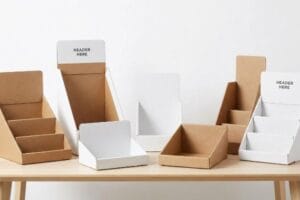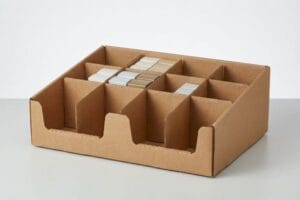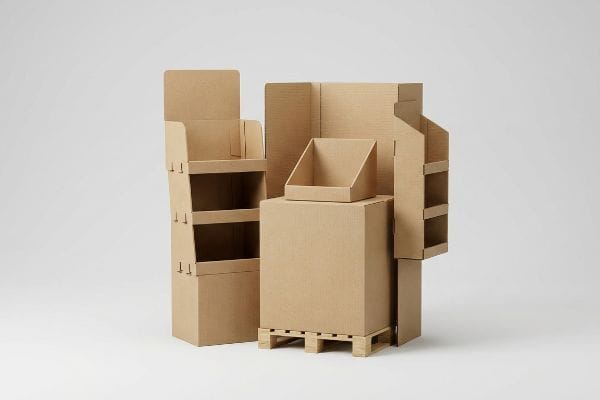
Los entornos comerciales son campos de batalla implacables donde la integridad estructural determina las ventas. Los expositores en el punto de venta deben equilibrar la distracción visual con el estricto cumplimiento de la cadena de suministro para sobrevivir en los pasillos de las grandes superficies.
Los expositores de cartón corrugado para puntos de venta (POP) incluyen expositores de suelo, unidades de mostrador, faldones para palés y soportes laterales. Estas versátiles estructuras combinan una imagen de marca de alta fidelidad con cartón ligero y resistente. Seleccionar el formato adecuado requiere analizar las limitaciones de espacio en el punto de venta, los límites de carga de los productos y las realidades físicas del transporte en la cadena de suministro global.

Comprender estos formatos fundamentales es solo el comienzo. El verdadero desafío reside en diseñarlos para que sobrevivan a las duras realidades de la logística de almacén y las fricciones a nivel de tienda.
¿Cuáles son los diferentes tipos de expositores de merchandising visual?
Diseñar la campaña de venta minorista perfecta requiere alinear tu visión creativa con zonas de comercialización físicas estrictas.
Los distintos tipos de expositores visuales incluyen unidades de punto de venta (POP), cajas registradoras de mostrador (TPV), cabeceras de góndola y expositores laterales. Cada formato se adapta a zonas espaciales específicas, lo que exige un estricto cumplimiento de las limitaciones de altura y la capacidad de carga estructural del establecimiento para maximizar las conversiones por impulso.
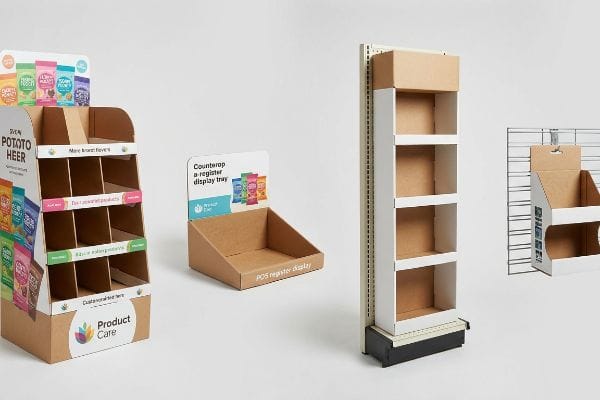
Si bien los diseñadores se obsesionan con el diseño gráfico, el entorno físico determina qué formato se puede implementar legal y estructuralmente.
La restricción espacial de la ADA frente a la GMA
Incluso los equipos de compras más experimentados a menudo intentan reducir una unidad de piso enorme a una exhibición de caja registradora, ignorando la física estructural. Constantemente veo archivos CAD (diseño asistido por computadora) vectoriales planos que tratan todas las zonas de comercialización como lienzos en blanco idénticos. Asumen que un diseño puede simplemente reducirse a la mitad sin alterar la calidad del tablero ni los mecanismos de plegado1.
En mi empresa, veo con frecuencia a clientes que intentan esta adaptación a escala reducida, confiando ciegamente en una lista de materiales (BOM) genérica de Excel. La realidad se impone durante la preproducción cuando pruebo estas unidades reducidas en nuestra mesa de corte Kongsberg. El cartón denso de flauta B, que funciona perfectamente para un palé GMA de 48 × 40 pulgadas (1219 × 1016 mm)², se vuelve físicamente imposible de plegar a microproporciones. Las pestañas estructurales se rompen y la lámina superior se desgarra por la tensión superficial. Al imponer matemáticamente una separación estricta entre la logística POP y las zonas de alcance del POS, rediseño completamente la geometría CAD para utilizar sustratos de flauta E más delgados para las unidades de caja³.Este ajuste de grosor de 1,5 mm garantiza un plegado sin fricción, reduciendo el tiempo de ensamblaje en aproximadamente 45 segundos por unidad y protegiendo a los clientes de los elevados cargos de los minoristas por unidades de caja que no cumplen con las especificaciones.
| Métrica/Característica | Enfoque genérico | Realidad diseñada |
|---|---|---|
| Escala estructural | Contracción directa del 50%4 | Rediseño específico del sustrato |
| Perfil de flauta | Flauta B gruesa (3 mm)5 | Flauta de precisión tipo E (1,5 mm)6 |
| Tiempo de montaje | retrasos por alta fricción | Pestañas de bloqueo sin fricción |
Me niego a que una mala planificación espacial perjudique una campaña. Al ubicar cada expositor en su zona comercial específica, garantizo que sus estructuras se ensamblen a la perfección y generen la máxima rentabilidad.
🛠️ Harvey's Desk: ¿Están sus pesadas bandejas de caja reduciendo significativamente su retorno de inversión en envíos incluso antes de que lleguen a la tienda? 👉 Obtenga una auditoría gratuita de densidad espacial ↗ — Reviso personalmente cada archivo estructural en un plazo de 24 horas.
¿Cuáles son los diferentes tipos de cajas expositoras?
Elegir la arquitectura exacta de la caja determina cómo resistirá su producto el transporte marítimo y el desembalaje a alta velocidad.
Los distintos tipos de cajas expositoras se componen principalmente de RSC (Contenedores Ranurados Regulares) para envíos cerrados, HSC (Contenedores Semiranurados) para expositores de venta al por menor con la parte superior abierta y bandejas troqueladas a medida. Seleccionar la estructura adecuada determina la resistencia a la compresión por carga superior y la eficiencia con la que los empleados de la tienda pueden reponer los estantes.
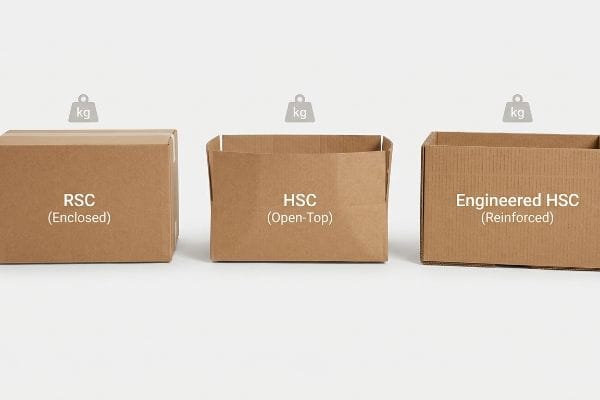
Sustituir una caja totalmente cerrada por un contenedor de venta al por menor con la parte superior abierta parece una simple medida para ahorrar costes, pero altera por completo la capacidad de carga dinámica.
Vulnerabilidad a la compresión RSC vs. HSC
Incluso los gerentes de marca experimentados frecuentemente sustituyen los contenedores ranurados estándar por variaciones con media ranura para crear contenedores listos para la venta al público , ahorrando así unos céntimos en materia prima. Cuando audito los troqueles de los clientes, veo constantemente que ignoran por completo la pérdida del cerramiento superior de 360 grados. Tratan la falta de las solapas superiores como una alteración estética en lugar de un gran déficit estructural, dejando las paredes verticales abiertas sin su mecanismo principal para distribuir la presión de carga superior7.
En mis instalaciones, veo habitualmente a los equipos de compras colocar estas vulnerables cajas abiertas directamente sobre palés de madera estándar, asumiendo que la densidad del papel crudo resistirá. La realidad física se desmorona cuando someto estos diseños teóricos a mi prensa de compresión de laboratorio. Debido a que la línea de troquelado plana del CAD ignora por completo el grosor y el calibre específicos de la estabilidad superior faltante, un cartón estándar ECT (Edge Crush Test) de 32 se curva repentinamente hacia afuera con tan solo 65,9 kg (145,3 lb) de presión superior. Mis veinte años de experiencia me enseñaron a compensar matemáticamente esta tapa faltante actualizando a un perfil de cartón de doble pared y orientando estrictamente las ondulaciones internas perfectamente verticales. Al mejorar la composición física a una mezcla de kraft virgen y garantizar una alineación absoluta de la fibra, restauro la capacidad de carga dinámica, asegurando que las cajas sobrevivan al transporte apilado doble y ahorrando a los clientes miles de dólares en inventario aplastado no vendible.
| Métrica/Característica | Enfoque genérico | Realidad diseñada |
|---|---|---|
| Estilo de caja | HSC básico de techo abierto | HSC de doble pared reforzado10 |
| Orientación de la flauta | Alineación aleatoria | 100% veta vertical11 |
| Distribución de carga | Las paredes se curvan hacia afuera | Compresión máxima de ECT12 |
No permito que los compradores sacrifiquen la integridad estructural solo para ahorrar unos céntimos en las solapas superiores. La distribución de carga diseñada con precisión garantiza que sus cajas lleguen listas para la venta, no para el contenedor de reciclaje.
🛠️ Harvey's Desk: ¿Corre el riesgo de que su caja expositora abierta se doble bajo el peso excesivo de las paletas apiladas en el almacén? 👉 Solicite una revisión de compresión de cajas ↗ — 100 % confidencial. Sus diseños de venta al por menor aún no lanzados están a salvo conmigo.
¿Cuáles son los cuatro tipos básicos de pantallas?
Para dominar el espacio comercial es necesario implementar formatos específicos de forma estratégica para interrumpir el flujo de clientes sin crear riesgos para la seguridad.
Los cuatro tipos básicos de expositores son: expositores de suelo, unidades de mostrador, estanterías colgantes laterales y grandes vitrinas expositoras. Estas estructuras arquitectónicas distintivas se implementan en diversas zonas de la tienda para interceptar estratégicamente el flujo de clientes y captar ventas impulsivas de alto margen durante breves periodos promocionales.
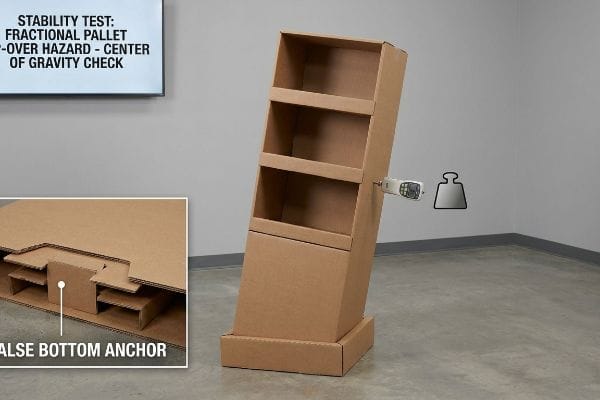
Diseñar estas cuatro unidades en la pantalla de un ordenador es fácil, pero trasladarlas a espacios comerciales físicos conlleva importantes problemas de adaptación al movimiento.
Riesgo de vuelco de palés fraccionados
Con frecuencia, las marcas intentan dominar los pasillos de las tiendas instalando estructuras de suelo altas y estrechas sin calcular el cambio en el centro de gravedad. Al revisar los conceptos iniciales, a menudo veo dimensiones estándar de expositores de suelo reducidas imprudentemente a un tamaño equivalente al de un cuarto de palé, manteniendo una altura total de 1270 mm (50 pulgadas)¹³. Esto crea un desequilibrio geométrico alarmante que se comporta exactamente como un lápiz apoyado sobre su goma de borrar.
Esto no es solo teoría; lo aprendí por las malas el mes pasado al probar un expositor de suelo de un cuarto de palé para el lanzamiento de una bebida de gran volumen. Recuerdo específicamente cómo mi ingeniero jefe, Mark, se basaba en una lista de verificación genérica de cumplimiento para minoristas que consideraba el peso estático como una verdad absoluta en ingeniería. Durante nuestra evaluación interna de inclinación, en el momento en que simulamos una colisión menor con un carrito de compras, la estructura de 1270 mm (50 pulgadas) de altura, que contenía 85 kg (187,5 libras) de líquido, se inclinó violentamente hacia adelante, rompiendo por completo las estrías de la base. Detuvimos la prueba de inmediato, desechamos el archivo CAD y rediseñamos la arquitectura de la base directamente en la fábrica. Al bajar matemáticamente el centro de masa e ingeniar un falso fondo oculto,fijado con pestañas troqueladas entrelazadas, logramos anclar la fuerza de corte cinética. Invierto tiempo y dinero en mi laboratorio de pruebas para que usted no pierda ganancias en el punto de venta. Este ajuste geométrico preciso eliminó por completo la responsabilidad por vuelco, garantizando una implementación segura en el comercio minorista y previniendo activamente contracargos masivos legales y de los minoristas15.
| Métrica/Característica | Enfoque genérico | Realidad diseñada |
|---|---|---|
| Arquitectura base | Base estándar hueca | Anclaje de fondo falso16 |
| Centro de gravedad | Peligrosamente alto | Matemáticamente reducido17 |
| Resistencia al impacto | Vuelco catastrófico | Absorción de cizallamiento cinético18 |
Jamás aprobaré un expositor de suelo sin asegurar su centro de gravedad. Los pasillos de las tiendas son caóticos, y mi ingeniería garantiza que sus expositores se mantengan firmes en todo momento.
🛠️ Harvey's Desk: ¿Sus expositores altos de un cuarto de palé generan riesgos ocultos de vuelco que podrían provocar el rechazo inmediato de la mercancía por parte de la tienda? 👉 Solicite su auditoría gratuita del centro de gravedad ↗ — Sin intermediarios. Hablará directamente con ingenieros estructurales.
¿Cuáles son las desventajas del cartón corrugado?
Todos los materiales tienen debilidades físicas inherentes, y comprender las limitaciones de las fibras de papel es la única manera de prevenir fallos catastróficos.
Entre las desventajas del cartón ondulado se incluyen su extrema vulnerabilidad a la absorción de humedad, su susceptibilidad al aplastamiento cinético y su limitada durabilidad a largo plazo en exteriores. Debido a que está compuesto por fibras de celulosa porosas, la exposición a alta humedad puede comprometer seriamente su rigidez estructural y deformar las láminas superiores impresas si no se diseña adecuadamente.

Si bien el cartón ondulado genérico y barato falla estrepitosamente en ambientes húmedos, el cartón de ingeniería de alta conductividad eléctrica (ECT) supera estas vulnerabilidades mediante una fisicoquímica precisa y una previsión logística.
La realidad de la tolerancia a la hinchazón por humedad
Incluso los equipos de compras experimentados suelen tratar las pantallas de cartón corrugado como si fueran de plástico indestructible, ignorando la realidad microscópica de las fibras de celulosa. Constantemente veo documentos de RFQ (solicitud de cotización) que reducen ciegamente el grado del cartón para ahorrar $0.05 por unidad, asumiendo que el material permanecerá perfectamente rígido en todos los entornos. Diseñan troqueles en oficinas con temperatura controlada basándose estrictamente en el calibre seco absoluto del cartón19.
En mis instalaciones, veo con frecuencia las consecuencias de estas suposiciones ingenuas cuando el cartón corrugado genérico y barato interactúa con el transporte marítimo real. El punto ciego se produce cuando los compradores olvidan que el testliner poroso absorbe físicamente la humedad ambientalen zonas de alta humedad como Florida o durante largos tránsitos de contenedores. Durante las pruebas de preproducción en una importante serie de embalaje plano, tomé las lecturas del micrómetro y observé cómo una ranura de flauta B teóricamente perfecta de 3,17 mm se hinchaba exactamente 0,04 pulgadas( 1,01 mm), lo que hacía que el ensamblaje fuera físicamente imposible sin aplastar las flautas. Una vez que el equipo de compras me permitió ajustar la lista de materiales de Excel, el propio material hizo el trabajo pesado. Implementé un algoritmo estricto de amortiguación de humedad en la línea de troquelado, ensanchando artificialmente cada ranura de enclavamiento para garantizar un margen de tolerancia de 0,5 mm. Este microajuste rompe el bloqueo por fricción durante el ensamblaje, asegurando que los coempaquetadores experimenten una configuración sin fricción ni roturas, independientemente de la humedad ambiental del almacén, eliminando por completo los costosos retrabajos manuales.
| Métrica/Característica | Enfoque genérico | Realidad diseñada |
|---|---|---|
| Espacio libre de ranura | Calibrador seco exacto | Amortiguador de humedad diseñado22 |
| Química de la Junta | Línea de prueba genérica | Papel kraft resistente a la humedad23 |
| Resultado del ensamblaje | Pestañas de sujeción rotas24 | Montaje plano sin fricción |
Me niego a que la humedad impredecible arruine una campaña de empaquetado que, de otro modo, sería perfecta. Al predecir matemáticamente la expansión de las fibras del papel, garantizo que sus componentes estructurales encajen a la perfección en cada ocasión.
🛠️ Harvey's Desk: ¿Sus componentes empaquetados en plano absorben humedad durante el transporte y provocan retrasos importantes en el montaje para sus proveedores? 👉 Solicite una auditoría gratuita de humedad en la línea de troquelado ↗ — Reviso personalmente cada archivo estructural en un plazo de 24 horas.
Conclusión
Sobrevivir en el caótico mundo de los pasillos de las tiendas requiere dominar las duras realidades físicas de la compresión estructural, la hinchazón por humedad y los cambios en el centro de gravedad antes incluso de que comience la producción en masa. Tan solo el mes pasado, mi auditoría estructural ayudó a 3 marcas a evitar pérdidas de más de 10 000 $ en inventario desechado y devoluciones de clientes. Si está cansado de que los diseños teóricos fallen en la fábrica, permítame que revise personalmente sus archivos estructurales con mi Auditoría Gratuita de Ingeniería para el Sector Minorista ↗ para garantizar la supervivencia absoluta de su cadena de suministro.
"DISEÑO ESTRUCTURAL DE EXHIBICIONES PARA COMERCIO MINORISTA INTERACTIVO…", https://www.bcipkg.com/display-structural-design-for-interactive-retail-displays/. Las guías técnicas sobre ingeniería de exhibidores en puntos de venta explican cómo el escalado de las dimensiones requiere ajustes en el grosor del material y las estructuras de plegado para mantener la integridad estructural. Función de la evidencia: validación técnica; tipo de fuente: estándar de fabricación. Apoyos: necesidad de ajustes en el grado del tablero al escalar. Nota de alcance: se aplica específicamente a exhibidores de plástico rígido y corrugado. ↩
Palets GMA de 48×40 | El mayor fabricante y proveedor de palets, https://www.palletone.com/products/gma-pallets/. Verificación de las dimensiones estándar de la industria para palets GMA (Grocery Manufacturers Association). Función de la evidencia: verificación fáctica; tipo de fuente: documentación estándar de la industria. Apoya: la escala física de las unidades de piso POP estándar. Nota de alcance: estándar en la logística norteamericana. ↩
"Guía para el cartón ondulado de flauta E: para qué sirve y cuándo usarlo", https://www.accbox.com/blog/a-guide-to-e-flute-corrugated-what-its-good-for-and-when-to-use-it/. Comparación técnica de grados de flauta de cartón ondulado para expositores de punto de venta de pequeña escala para garantizar la plegablebilidad y la integridad estructural. Función de la evidencia: especificación técnica; tipo de fuente: manual de ingeniería de embalaje. Apoya: la transición a la flauta E para microproporciones. Nota de alcance: se centra en las propiedades del cartón ondulado. ↩
"La importancia de los prototipos de exhibición en puntos de venta – Frank Mayer", https://www.frankmayer.com/blog/why-retail-display-prototypes-are-an-important-stage-in-the-manufacturing-process/. Validación de los porcentajes de escala comunes utilizados en la creación de prototipos genéricos de exhibición en puntos de venta. Función de la evidencia: validación metodológica; tipo de fuente: directrices de diseño. Apoya: prácticas comunes de creación de prototipos. Nota de alcance: las proporciones específicas dependen de la escala final prevista. ↩
"Guía de espesor de cartón", https://www.aopackmachine.com/cardboard-thickness-guide/?srsltid=AfmBOop9GRQ0eyZBS7Zm0z1kZzPexgySbZQG8jmCoZjPLcwWHwNPWKOZ. Verificación de las especificaciones de espesor estándar de la industria para cartón corrugado de flauta B. Función de evidencia: verificación fáctica; tipo de fuente: especificación técnica de la industria. Soportes: estándares de espesor de material. Nota de alcance: las tolerancias pueden variar según el fabricante. ↩
"Cartón ondulado y grados de material – Packaging Strategies", https://www.packagingstrategies.com/articles/96269-corrugated-board-and-material-grades. Verificación de las especificaciones de espesor estándar de la industria para cartón ondulado de flauta E. Función de la evidencia: verificación fáctica; tipo de fuente: especificación técnica de la industria. Apoyos: estándares de espesor de material. Nota de alcance: las tolerancias pueden variar según el fabricante. ↩
"[PDF] Investigación del efecto de las cajas de cartón corrugado en la distribución de", https://www.unitload.vt.edu/content/dam/unitload_vt_edu/graduate-research-and-subpages-pictures-and-docs/thesis-and-dissertations-/Clayton%20-%20ETD%20-%20Investigation%20of%20the%20Effect%20of%20Corrugated%20Boxes%20on%20the%20Distribution%20of%20Compression%20Stresses%20on%20the%20Top%20Surface%20of%20Wooden%20Pallets.pdf. Los datos de ingeniería sobre la integridad estructural de las cajas de cartón corrugado explican cómo las solapas superiores evitan el pandeo de la pared y distribuyen la carga vertical. Función de la evidencia: validación técnica; tipo de fuente: estándar de la industria del embalaje. Apoya: la afirmación de que quitar las solapas superiores reduce la capacidad de carga superior. Nota de alcance: específico para contenedores ranurados. ↩
"Métodos de prueba y efectos del pandeo entre flautas – BioResources", https://bioresources.cnr.ncsu.edu/resources/overview-of-recent-studies-at-ipst-on-corrugated-board-edge-compression-strength-testing-methods-and-effects-of-interflute-buckling/. Un punto de referencia de ingeniería para la resistencia del cartón corrugado verifica la capacidad de carga específica y el punto de falla del material 32 ECT en configuraciones de tapa abierta. Función de evidencia: Verificación de datos de métrica técnica; tipo de fuente: Manual de ingeniería de embalaje. Apoya: La vulnerabilidad a la compresión específica de las cajas HSC. Nota de alcance: La carga de falla exacta depende de las dimensiones de la caja. ↩
"Estimación de la resistencia a la compresión de cajas de cartón corrugado…", https://pmc.ncbi.nlm.nih.gov/articles/PMC8467740/. Los datos de ciencia de materiales confirman que los perfiles de doble pared aumentan significativamente la resistencia a la compresión vertical en comparación con la construcción de pared simple. Función de la evidencia: Validación técnica; tipo de fuente: Hoja de especificaciones de la industria. Apoya: La efectividad de aumentar el espesor del cartón para restaurar la capacidad de carga. Nota de alcance: Se centra en la rigidez estructural. ↩
"La guía definitiva para cajas de cartón corrugado – Shorr Packaging", https://www.shorr.com/resources/blog/ultimate-guide-corrugated-boxes/. Una fuente autorizada en ingeniería de embalaje verificaría las ventajas estructurales de la construcción de doble pared en contenedores de media ranura (HSC) para cargas pesadas. Función de evidencia: especificación técnica; tipo de fuente: manual de la industria. Apoyos: superioridad de los HSC de doble pared. Nota de alcance: se centra en el espesor y la resistencia del material. ↩
"[PDF] Especificaciones de cartón ondulado – Fibre Box Association", https://www.fibrebox.org/assets/2025/09/Walmart_Corrugated-Board_Specifications_Automation_Packaging_Standards.pdf. La documentación técnica sobre la fabricación de cartón ondulado explica cómo la alineación vertical de las ondulaciones maximiza la resistencia a la compresión vertical. Función de la evidencia: validación técnica; tipo de fuente: guía de ingeniería. Apoya: el impacto de la orientación de la fibra en la durabilidad de la caja. Nota de alcance: específico para la carga vertical. ↩
"Explicación de las clasificaciones ECT: Qué significan para su cartón ondulado…", https://epackagesupply.com/blogs/packaging-guide/ect-ratings-explained-what-they-mean-for-your-corrugated-packaging?srsltid=AfmBOoqUUjBIe4dPeZ-LdWQzwyTRNqWYMaWZvhKnMW33GG7Z6X1JY9Uj. Las métricas de la prueba estandarizada de aplastamiento de bordes (ECT) definen la fuerza de compresión máxima que puede soportar un cartón ondulado antes de romperse. Función de evidencia: métrica técnica; tipo de fuente: estándar industrial (ASTM/ISO). Apoya: el uso de ECT para medir la capacidad de carga. Nota de alcance: se aplica a materiales de embalaje de cartón ondulado. ↩
"AG 1091A: Exhibidores de mercancía minorista en la zona frontal", https://www.seattle.gov/transportation/permits-and-services/permits/applicant-guides/ag-1091a. Validación técnica de las relaciones altura-base para exhibidores minoristas para prevenir riesgos de vuelco. Función de evidencia: Especificación técnica; tipo de fuente: Norma de seguridad. Apoya: La afirmación de que una altura de 50 pulgadas sobre una base de palé fraccionada es inestable. Nota de alcance: La estabilidad varía según el peso de la carga del producto. ↩
"Percepción de la estabilidad física y del centro de masa de objetos 3D", https://pmc.ncbi.nlm.nih.gov/articles/PMC4323039/. Breve explicación de cómo los principios de la ingeniería estructural confirman que la reducción del centro de masa disminuye la probabilidad de vuelco. Función de la evidencia: Validación técnica; tipo de fuente: Manual de ingeniería. Apoyos: uso de ajustes geométricos para la estabilidad. Nota de alcance: Aplicable a estructuras temporales de cartón. ↩
"Los riesgos ocultos del mal montaje de expositores en el punto de venta (y cómo evitarlos…)", https://www.eliteprintingandpackaging.com/blog/the-hidden-risks-of-poor-pos-display-assembly-and-how-to-avoid-them/. Breve explicación de cómo las políticas de cumplimiento del sector minorista penalizan a los proveedores por infracciones de seguridad mediante contracargos. Función de la evidencia: Verificación de riesgos empresariales; tipo de fuente: Manual de cumplimiento del minorista. Apoya: Implicaciones financieras de la inestabilidad de los expositores. Nota de alcance: Varía según la entidad corporativa. ↩
"Expositores de palets: Mejores prácticas para el posicionamiento de productos | TPH Global", https://www.tphinc.com/custom-point-of-purchase-pop-pos-retail-store-displays-packaging-blog/positioning-products-on-pallet-displays/. Las especificaciones técnicas de ingeniería para los accesorios de venta minorista verificarían el uso de anclajes de fondo falso para aumentar la estabilidad de la base. Función de la evidencia: especificación técnica; tipo de fuente: manual de ingeniería. Apoya: la eficacia de arquitecturas de base específicas para prevenir vuelcos. Nota de alcance: se aplica al diseño de expositores comerciales. ↩
"14 Tipos de Exhibidores Comerciales | Chicago, IL – Wertheimer Box", https://wertheimerbox.com/types-of-retail-displays/. Los principios físicos relacionados con el centro de gravedad explican cómo el desplazamiento de la masa hacia abajo aumenta la estabilidad estática. Función de la evidencia: principio científico; tipo de fuente: libro de texto de física. Apoya: la afirmación de que bajar el centro de gravedad evita el vuelco. Nota de alcance: aplicación general de la física. ↩
"7 Características de una Exhibición Minorista de Alto Impacto – WestRock", https://www.westrock.com/blog/7-features-of-a-high-impact-retail-display. La investigación en ingeniería estructural sobre la resistencia al impacto definiría cómo la absorción de la fuerza cortante cinética previene fallas catastróficas durante las colisiones. Función de la evidencia: mecanismo técnico; tipo de fuente: estudio de ingeniería estructural. Apoya: el método para mitigar los riesgos de vuelco. Nota de alcance: aplicación de la ciencia de los materiales. ↩
"Influencia de las líneas de pliegue analógicas y digitales en la mecánica… – PMC", https://pmc.ncbi.nlm.nih.gov/articles/PMC9268991/. Una fuente autorizada en ingeniería de embalaje debería explicar cómo las mediciones con calibre seco no tienen en cuenta la expansión higroscópica en las fibras de celulosa. Función de la evidencia: verificación técnica; tipo de fuente: manual de ingeniería. Apoya: la afirmación de que basar las líneas de troquelado únicamente en el calibre seco supone un riesgo estructural. Nota de alcance: se aplica a materiales corrugados a base de celulosa. ↩
"La belleza del papel y cómo controlar sus propiedades higroscópicas", https://www.contiweb.com/resource-center/the-natural-beauty-of-paper-and-how-to-control-its-hygroscopic-properties. Fuentes autorizadas sobre ciencia del papel describen las propiedades higroscópicas de las fibras de celulosa en el testliner. Función de la evidencia: verificación técnica; tipo de fuente: libro de texto de ciencia de los materiales. Apoyos: absorción de humedad en ambientes de alta humedad. Nota de alcance: las tasas de absorción varían según el contenido reciclado. ↩
"Influencia de la humedad y la temperatura en las propiedades mecánicas de…", https://bioresources.cnr.ncsu.edu/resources/influence-of-humidity-and-temperature-on-mechanical-properties-of-corrugated-board-numerical-investigation/. Los datos de ingeniería sobre la estabilidad dimensional del cartón ondulado bajo humedad confirmarían los coeficientes de expansión estándar para la flauta B. Función de la evidencia: validación empírica; tipo de fuente: estándar de embalaje industrial. Apoya: la magnitud de la hinchazón estructural. Nota de alcance: los valores específicos dependen de los niveles de humedad relativa. ↩
"[PDF] Efectos del contenido de humedad en la resistencia a la compresión de cajas: FBA BCT…", https://renewablebioproducts.gatech.edu/sites/default/files/2025-12/4effects-of-moisture-content-on-box-compression-strength.pdf. Explicación técnica de cómo el cálculo de tolerancias para la holgura de las ranuras tiene en cuenta la expansión higroscópica de las fibras de papel en diferentes niveles de humedad. Función de la evidencia: Especificación técnica; tipo de fuente: Manual de ingeniería. Apoyos: La necesidad de amortiguadores para evitar fallos de ensamblaje. Nota de alcance: Específico para diseños corrugados de ajuste de precisión. ↩
"Papeles base para cartón ondulado: explicación del revestimiento y el acanalado", https://www.dunapack-packaging.com/company/news-and-blog/detail-view/types-of-containerboard-what-you-should-know-about-liners-and-flutings/. Análisis comparativo de los tratamientos químicos y la longitud de la fibra del papel kraft frente al testliner en relación con las tasas de absorción de agua. Función de la evidencia: verificación de las propiedades del material; tipo de fuente: estudio de ciencia de los materiales. Apoya: el uso de kraft para una mayor tolerancia a la humedad. Nota de alcance: se refiere a revestimientos kraft tratados específicamente o vírgenes. ↩
""Efectos de la humedad relativa en la resistencia a la compresión de…", https://open.clemson.edu/all_theses/3225/. Documentación de fallas mecánicas donde la hinchazón del material aumenta la fricción y la tensión en los componentes de la unión, lo que lleva a la rotura estructural. Función de la evidencia: Análisis de fallas; tipo de fuente: Informe de embalaje industrial. Apoyos: El resultado negativo del uso de calibradores secos exactos. Nota de alcance: Se aplica a ensamblajes planos de alta tolerancia. ↩