
Inviertes enormes presupuestos en diseñar campañas de venta minorista, solo para ver cómo los transeúntes las ignoran. Una estructura perfectamente diseñada es la única manera de convertir el flujo de clientes en ventas cuantificables.
La efectividad de los expositores en el punto de venta depende de su ubicación estratégica, el alto contraste visual que generan y una estricta integridad estructural. Estos elementos de exhibición en tiendas cierran la brecha entre el interés inicial y la conversión física, guiando la psicología del comprador para impulsar las compras por impulso en los últimos segundos.

Pero comprender su potencial teórico no sirve de nada si la ejecución estructural falla en las condiciones reales de una gran superficie comercial. Analicemos cómo construirlas correctamente.
¿Cuál es una desventaja de un expositor promocional en el punto de venta (POP)?
No dejes que los gráficos atractivos te cieguen ante la realidad del comercio minorista físico.
Una desventaja de los expositores en el punto de venta es su estricta vulnerabilidad a las normativas de espacio para minoristas. Si una unidad estructural infringe los límites de alcance frontal establecidos o excede las dimensiones específicas de espacio libre en el pasillo, los responsables de la tienda rechazarán y desecharán inmediatamente el costoso expositor, anulando por completo toda la campaña de marketing físico.
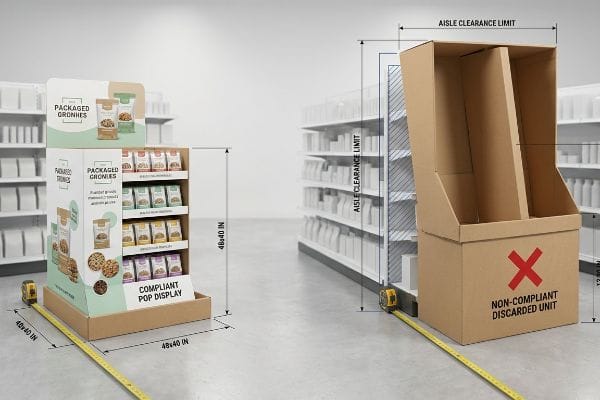
Comprender las limitaciones físicas de un pasillo de la tienda es tan importante como la imagen de marca impresa en el cartel superior.
El conflicto espacial entre la ADA y la GMA
Incluso los diseñadores más experimentados suelen pasar por alto las estrictas normativas urbanísticas que rigen los espacios comerciales físicos¹ . Diseñan locales amplios y atractivos, dando por sentado que el minorista cederá gustosamente un espacio privilegiado en los pasillos a cambio de un producto altamente rentable. Este optimismo teórico ignora por completo la exigente infraestructura logística que requieren las operaciones de almacenamiento estándar.
Veo este conflicto a diario cuando un cliente intenta reducir un expositor de punto de venta (POP) a una unidad de mostrador sin modificar la geometría subyacente. Una vez vi a un dependiente sudando para colocar a la fuerza una base de cartón corrugado sobredimensionada e incompatible en un mostrador de caja, donde el roce del cartón sin tratar contra el laminado creaba un punto de fricción enorme. La unidad infringía el estricto rango de alcance frontal de 381 a 1219 mm ( 15 a 48 pulgadas ) de la Ley de Estadounidenses con Discapacidades (ADA). Como resultado, el minorista tiró todo el envío directamente a la compactadora. Es fundamental que los archivos de los expositores de punto de venta se ajusten estrictamente al límite de palets de 1219 × 1016 mm (48 × 40 pulgadas) de la Asociación de Fabricantes de Alimentos (GMA) y que se separe permanentemente ese cálculo de diseño asistido por ordenador (CAD) de la ingeniería de la zona de caja.
| Error común de principiante | La solución profesional | Beneficio para el punto de venta |
|---|---|---|
| Ignorar las leyes de alcance minorista4 | Modelos de punto de venta específicos para ingeniería | Evita el rechazo inmediato de la tienda |
| Reducción de archivos de palets en un 50% | Separando las matemáticas POP y POS | Ahorra horas de trabajo de rediseño |
| Sobresaliendo de la base de madera | Desplazamiento CAD de 0,5 pulgadas (12,7 mm)5 | Evita que las esquinas se aplasten en los muelles |
Jamás permito que un encargado de merchandising entre en la zona de cajas sin antes desmontar completamente la estructura. Aplicar cálculos precisos de cumplimiento desde el principio garantiza que sus unidades sobrevivan a la recepción y lleguen al pasillo de venta previsto sin generar retrasos legales.
🛠️ Oficina de Harvey: ¿No está seguro de si su unidad de exhibición infringe las leyes de alcance para comercios? 👉 Obtenga una verificación de cumplimiento gratuita ↗ — Acceso directo a mi oficina. Sin spam de ventas automatizado, lo prometo.
¿Qué funciones deben cumplir los expositores de punto de venta eficaces?
Diseñar un expositor no se trata solo de mostrar la mercancía; se trata de controlar el comportamiento humano.
Los expositores pop-up eficaces en el punto de venta deben captar la atención visual al instante desde la distancia, despertar el interés del consumidor objetivo al acercarse y facilitar la extracción del producto. Este embudo de comportamiento de tres etapas, diseñado con precisión, previene la sobrecarga cognitiva y maximiza las compras impulsivas en pasillos de tiendas concurridos.

Debes diseñar la distribución física para guiar sin esfuerzo la mirada del comprador directamente hacia la propuesta de valor principal del producto.
Activación de la regla de interacción espacial 3-3-3
Los equipos de marketing suelen tratar los expositores de cartón corrugado de las tiendas como lienzos informativos en blanco, llenándolos con densos párrafos sobre la historia de la marca. Dan por sentado que los compradores se detendrán en un pasillo concurrido para leer cada punto antes de realizar una compra. En realidad, las grandes superficies modernas son entornos de alta velocidad donde el desorden visual repele activamente el flujo de clientes en lugar deatraerlo⁶.
Es una trampa común que atrapa incluso a equipos de compras experimentados, especialmente al lanzar nuevos SKU (Unidades de Mantenimiento de Inventario). Con frecuencia tengo que interceptar archivos de preimpresión donde los clientes intentan imprimir siete mensajes de marketing diferentes en un solo encabezado. El resultado visual es un brillo borroso y cegador de tinta CMYK (cian, magenta, amarillo, negro/clave) bajo luces fluorescentes intensas que oculta por completo el producto principal. Para solucionar esto, aplico la "Regla 3-3-3". Diseñamos formas troqueladas de gran tamaño para captar la atención desde 9,1 metros de distancia7, optimizamos la zona de impacto en el estante a 1270 mm de altura8 para lograr una interacción a 0,9 metros, y cortamos el borde de retención frontal para garantizar una visibilidad del 85 % para la conversión final a 76,2 mm. Debes aislar implacablemente tu oferta principal para activar ese reflejo psicológico de compra.
| Error común de principiante | La solución profesional | Beneficio para el punto de venta |
|---|---|---|
| Imprimir párrafos de texto | Disrupción visual de color puntual | Llama la atención desde 9 metros de distancia9 |
| Colocar los elementos clave demasiado abajo | Zona de impacto de 50 pulgadas (1270 mm)10 | Impulsa decisiones impulsivas más rápidas |
| Bordes de estante de alta retención | Regla de visibilidad del producto del 85%11 | Elimina la fricción en la extracción del producto |
Elimino los textos publicitarios innecesarios en la planta de producción porque la sobrecarga cognitiva perjudica las ventas más rápido que un mal precio. Al diseñar zonas de interacción espacial específicas, garantizo que su campaña detenga eficazmente a los compradores apresurados.
🛠️ Harvey's Desk: ¿Los bordes de tus estantes ocultan la imagen principal de tu producto a los clientes? 👉 Solicita una auditoría de visibilidad ↗ — Descárgala de forma segura. Si tienes alguna pregunta, puedes consultarme más adelante.
¿Cuánto cuesta un expositor en el punto de venta?
El precio unitario es solo una fracción de lo que realmente cuesta un lanzamiento en el mercado minorista.
El costo de los expositores en el punto de venta depende directamente de la integridad del material base, la complejidad estructural y el volumen total de fabricación. Si bien las configuraciones estándar de cartón temporal ofrecen precios de lanzamiento competitivos, la reducción de la calidad de las estructuras acanaladas críticas para financiar laminados estéticos de alta gama incrementa drásticamente los gastos logísticos totales debido a los graves daños durante el transporte.
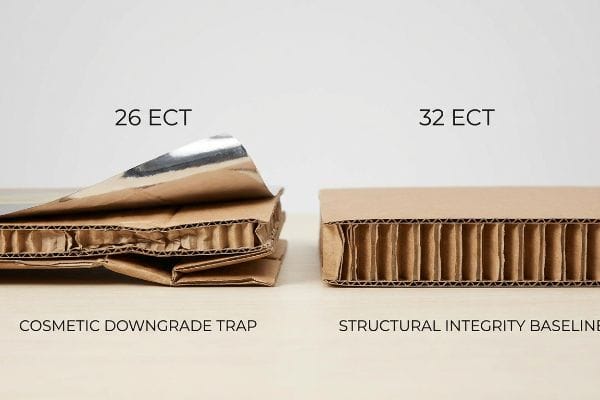
Evaluar las inversiones en materiales únicamente en función de sus costes iniciales de impresión es un camino directo hacia un fallo estructural generalizado.
La trampa de la degradación cosmética de la ECT
Las marcas suelen centrarse excesivamente en el precio unitario inicial, considerando los acabados cosméticos de alta gama como requisitos innegociables y exigiendo recortes presupuestarios drásticos. Para que los cálculos cuadren, los equipos de compras a menudo intentan reducir el grosor del cartón corrugado estructural. Parten de la base de que, mientras el exterior luzca brillante y lujoso, la densidad interna del papel no importará.
Imagínelo como construir un auto deportivo de lujo sobre un chasis de plástico barato. Constantemente veo clientes que intentan, en secreto, degradar una placa 13 virgen de 32 ECT (Edge Crush Test) a una alternativa endeble de 26 ECT solo para poder costear el estampado de lámina gruesa. Se ve hermoso en el monitor, pero la realidad golpea cuando escucho el crujido fuerte y desagradable de esa placa hueca doblarse bajo una carga superior de 250 libras (113,3 kg) durante las pruebas de vibración ISTA 14 (International Safe Transit Association). En lugar de buscar materias primas baratas para permitirse un aumento de precio estético, impongo una base estructural estricta. Restauramos el estriado interno denso y logramos el reflejo visual de primera calidad utilizando recubrimientos líquidos acuosos de alta eficiencia, protegiendo tanto sus márgenes de ganancia como la supervivencia estructural de la unidad.
| Error común de principiante | La solución profesional | Beneficio para el punto de venta |
|---|---|---|
| Reducción de la calificación de ECT | Aplicación de la norma Virgin 32 ECT Board15 | Resiste el apilamiento de palés pesados |
| Comprar películas de aluminio caras | Utilizando un brillo acuoso de alto contenido en sólidos16 | Reduce el costo unitario de forma orgánica |
| Centrándonos únicamente en el precio unitario | Cálculo del retorno de la inversión total en transporte público | Elimina las devoluciones de cargo de los minoristas17 |
Me niego a sacrificar la estructura física de un expositor solo para financiar un acabado exterior brillante. La verdadera rentabilidad reside en diseñar una base estructural que garantice que la mercancía sobreviva al duro trayecto hasta la tienda.
🛠️ Harvey's Desk: ¿Estás sacrificando la resistencia crítica de tu tablero solo para poder pagar laminados de superficie de primera calidad? 👉 Solicita tu auditoría de costos estructurales ↗ — Sin formularios que generen interminables llamadas de ventas. Solo valor puro.
¿Cuáles son las ventajas y desventajas de los expositores en el punto de venta?
Reducir el tamaño de una campaña masiva para el mostrador de caja introduce una física estructural completamente nueva.
Las ventajas y desventajas de los expositores en el punto de venta se centran en su tamaño compacto frente a las estrictas tolerancias estructurales. Si bien captan eficazmente las ventas impulsivas en caja sin requerir un gran espacio, un escalado inadecuado de las gruesas láminas corrugadas genera una fricción mínima que perjudica gravemente el montaje en fábrica y la estética general de la marca.
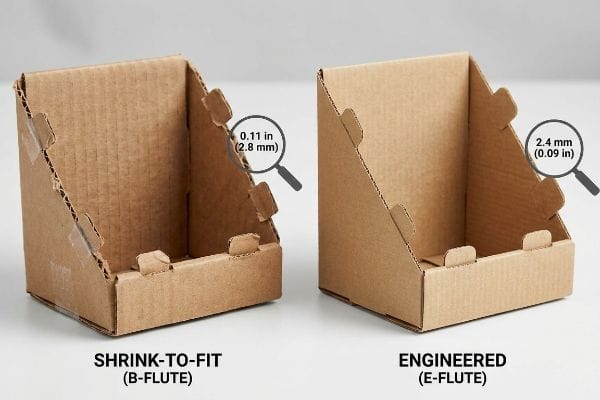
Lograr que una pequeña unidad de sobremesa se mantenga en perfecto estado en un laboratorio de pruebas es fácil, pero esta es la cruda realidad cuando se envía un lote de gran volumen.
Por qué los sistemas de punto de venta estándar termoencogibles fallan en la planta de producción
Muchas marcas asumen que adaptar una campaña publicitaria exitosa para el mostrador de caja es tan sencillo como reducir las dimensiones del archivo a la mitad. Creen que un troquel universal se comporta de forma idéntica en todos los tamaños, partiendo de la peligrosa suposición de que los materiales corrugados gruesos se pueden plegar en formas geométricas en miniaturasin consecuencias físicas.
En mi planta, veo con frecuencia cómo este optimismo teórico choca estrepitosamente con la física de los materiales cuando los compradores presentan diseños de "encogimiento a medida". Al reducir matemáticamente una línea de troquelado de flauta B gruesa, las tolerancias de plegado internas se reducen a unas imposibles 0,11 pulgadas (2,8 mm)19.Mido estas micropestañas en la planta de preimpresión y observo cómo las densas fibras del papel se resisten agresivamente a doblarse, culminando en el sonido agudo y frustrante del desgarro del forro superior que se desprende de la flauta. Soluciono esto exigiendo estrictamente un cambio de material a un sustrato de flauta E (microflauta) mucho más delgado20 para todas las unidades de punto de venta. Al aplicar activamente este ajuste de tolerancia de 2,4 mm (0,09 pulgadas), garantizo que el tiempo de ensamblaje de coempaquetado se reduzca en 45 segundos por unidad, lo que ahorra a los clientes enormes costes de mano de obra y elimina por completo la estética desordenada y con cinta adhesiva.
| Error común de principiante | La solución profesional | Beneficio para el punto de venta |
|---|---|---|
| Reducción de grosor de las limas de flauta B | Pasando a una tabla delgada de flauta E21 | Garantiza pliegues limpios de 90 grados |
| Forzando pequeños bloqueos de fricción | Ampliación de las holguras de las ranuras CAD22 | Acelera el ensamblaje físico |
| Usar cinta adhesiva transparente para reparaciones | Ingeniería estructural de micro pestañas23 | Mantiene una estética de primera calidad |
Jamás permito que un archivo de ajuste por contracción entre en producción en masa sin recalcular las tolerancias físicas del calibre. Corregir estas mínimas tolerancias estructurales desde el principio es la única manera de evitar que su campaña de verificación se convierta en una pesadilla de ensamblaje.
🛠️ Oficina de Harvey: No permita que un defecto estructural de 2 milímetros arruine el lanzamiento de 500 tiendas. 👉 Envíeme su archivo de troquelado ↗ — Analizaré los cálculos antes de que malgaste su presupuesto en la producción en masa.
Conclusión
Puedes buscar al proveedor de cartón más barato, pero cuando ese cartón hueco de 26 ECT se deforma catastróficamente bajo el peso de los palés del almacén, ralentiza tu línea de montaje de co-empaquetado en un 35 % aproximadamente y destruye por completo la rentabilidad de tu campaña. Esta es la hoja de especificaciones exacta que utilizan mis 10 principales clientes minoristas para garantizar cero rechazos de impresión. Deja de arriesgarte con materias primas no probadas y permíteme que revise personalmente la geometría estructural de tus productos con mi Auditoría Gratuita de Troqueles ↗ para detectar riesgos de compresión fatales antes de la producción en masa.
"Estándares de accesibilidad de la ADA – Access-Board.gov", https://www.access-board.gov/ada/. Los estándares autorizados de la industria y los mandatos legales, como la ADA, rigen la distribución espacial y la zonificación de los entornos comerciales para garantizar la accesibilidad. Función de la evidencia: verificación de hechos; tipo de fuente: estándar regulatorio. Apoya: la afirmación de que los entornos comerciales están dictados por una zonificación estricta. Nota de alcance: específicamente en lo que respecta a la accesibilidad y las medidas de seguridad. ↩
"Capítulo 3: Partes Operables – Access-Board.gov", https://www.access-board.gov/ada/guides/chapter-3-operable-parts/. Verificación de las medidas específicas del rango de alcance de la ADA para el diseño accesible. Función de la evidencia: especificación técnica; tipo de fuente: reglamento gubernamental. Apoya: la afirmación sobre las dimensiones de cumplimiento de la ADA. Nota de alcance: se aplica al alcance sin obstrucciones. ↩
Palés GMA "48×40" | El mayor fabricante y proveedor de palés", https://www.palletone.com/products/gma-pallets/. Confirmación de las dimensiones estándar de palés de la industria establecidas por la GMA. Función de evidencia: estándar de la industria; tipo de fuente: directrices de la asociación comercial. Apoya: el requisito de dimensionamiento de la huella del expositor POP. Nota de alcance: tamaño estándar de palé norteamericano. ↩
"Actualización de la ADA: Una guía para pequeñas empresas", https://www.ada.gov/resources/title-iii-primer/. Las normas autorizadas de accesibilidad de la ADA definen los rangos de alcance para las exhibiciones en tiendas minoristas para garantizar la inclusión y el cumplimiento legal. Función de la evidencia: requisito legal; tipo de fuente: regulación gubernamental. Apoya: La afirmación de que ignorar estas leyes conlleva el rechazo de la tienda. Nota de alcance: Aplicable principalmente a las directrices de la ADA de EE. UU.
"[PDF] REQUISITOS GENERALES PARA PALÉS DE MADERA – Snap-on", https://www.snapon.com/Snap-on-Files/Suppliers/Packaging-and-Labeling-Guidelines/StandardforPalletSizesandConstruction.pdf. Las normas de ingeniería logística y de embalaje especifican desplazamientos para expositores basados en palés para proteger la integridad estructural durante el transporte y la manipulación. Función de la evidencia: especificación técnica; tipo de fuente: manual de ingeniería industrial. Apoya: La afirmación de que este desplazamiento evita el aplastamiento de las esquinas en los muelles. Nota de alcance: Puede variar según el grado del palé y el método de envío. ↩
"[PDF] El impacto del merchandising visual y las tiendas minoristas… – Ijrpr", https://ijrpr.com/uploads/V6ISSUE3/IJRPR40666.pdf. Un estudio autorizado sobre psicología ambiental o diseño minorista que muestra cómo los estímulos visuales excesivos conducen a la fatiga o evitación del consumidor. Función de la evidencia: vínculo causal; tipo de fuente: revista revisada por pares o informe de investigación de la industria. Apoya: la afirmación de que las exhibiciones desordenadas repelen a los compradores. Nota de alcance: específico para entornos minoristas de alto tránsito. ↩
¿Qué es un expositor en el punto de venta? Tipos y mejores prácticas", https://www.rosedisplays.com/blog/general/point-of-purchase-displays/. Breve explicación de cómo los estándares de diseño minorista respaldan el radio de captación visual de 30 pies para los expositores en el punto de venta. Función de la evidencia: especificación técnica; tipo de fuente: estándar de la industria. Respalda: distancia de atención visual. Nota de alcance: se aplica a entornos minoristas de pasillo abierto. ↩
"La ciencia del merchandising a la altura de los ojos: ¿Realmente genera más ingresos…?", https://www.nexgenus.com/company/blog/the-science-of-eye-level-merchandising-does-it-really-drive-more-revenue. Breve explicación de cómo los datos ergonómicos sobre la altura promedio de los ojos de un adulto validan 50 pulgadas como una zona de impacto óptima para la interacción. Rol de la evidencia: datos biométricos; tipo de fuente: estudio ergonómico. Apoyos: altura de la zona de impacto en el estante. Nota de alcance: basado en distribuciones de altura promedio de adultos. ↩
"10 consejos para crear un mejor expositor en el punto de venta", https://packagingtech.net/blog/10-tips-for-creating-a-better-point-of-purchase-display. Verificación de la distancia a la que las señales visuales de alto contraste atraen la atención del cliente en un entorno minorista. Función de la evidencia: validación de métricas; tipo de fuente: estudio de psicología ambiental. Apoya: distancia de interacción visual. Nota de alcance: varía según la iluminación y la escala de la tienda. ↩
"Diseño de locales comerciales para exhibiciones efectivas y flujo de clientes", https://www.business.qld.gov.au/industries/manufacturing-retail/retail-wholesale/retail-displays. Especificación técnica para la colocación vertical ideal de artículos de compra impulsiva para alinearse con el nivel y alcance promedio de los ojos humanos. Función de evidencia: validación técnica; tipo de fuente: estándar de diseño minorista. Apoya: optimización de compras impulsivas. Nota de alcance: basado en métricas de altura promedio de adultos. ↩
"Participación en el estante: qué es, cómo medirla con precisión y cómo…", https://visiongroupretail.com/blog/share-of-shelf-measurement-guide. Referencia del sector para el porcentaje mínimo de visibilidad del producto necesario para reducir la fricción psicológica y física durante la selección. Función de la evidencia: validación de referencia; tipo de fuente: manual de merchandising. Apoya: directrices de accesibilidad del producto. Nota de alcance: se refiere específicamente a la altura del borde del estante. ↩
"Métodos de prueba y efectos del pandeo entre flautas – BioResources", https://bioresources.cnr.ncsu.edu/resources/overview-of-recent-studies-at-ipst-on-corrugated-board-edge-compression-strength-testing-methods-and-effects-of-interflute-buckling/. Breve explicación de cómo las normas de ingeniería de embalaje correlacionan la densidad del material y las clasificaciones de la prueba de aplastamiento de bordes (ECT) con la falla estructural durante el transporte. Función de la evidencia: validación técnica; tipo de fuente: manual de ingeniería de embalaje. Apoya: la afirmación de que reducir la integridad estructural del cartón es una práctica común pero arriesgada de reducción de costos. Nota de alcance: se centra en exhibidores minoristas temporales de cartón corrugado. ↩
"Guía de resistencia de cajas de cartón corrugado: grados de flauta, clasificaciones ECT y pared…", https://anchorbox.com/corrugated-box-strength/. Las fuentes autorizadas definirían las clasificaciones de la prueba de aplastamiento de bordes (ECT) y la diferencia proporcional en la integridad estructural entre 32 y 26 ECT. Función de la evidencia: especificación técnica; tipo de fuente: hoja de datos del material. Apoya: la inferioridad estructural de las clasificaciones ECT más bajas. Nota de alcance: ECT es la métrica estándar de la industria para la resistencia del cartón corrugado. ↩
"Pruebas de embalaje ISTA – Intertek", https://www.intertek.com/performance-testing/packaging/ista/. Las normas de ingeniería externas proporcionan umbrales de fallo típicos para placas ECT específicas según los protocolos de prueba de ISTA (Asociación Internacional de Tránsito Seguro). Función de la evidencia: verificación técnica; tipo de fuente: norma industrial/manual de ingeniería. Apoya: la probabilidad de pandeo de la placa bajo cargas de peso específicas. Nota de alcance: Los puntos de fallo varían según las dimensiones de la pantalla. ↩
"14 Tipos de Exhibidores Minoristas | Chicago, IL – Wertheimer Box", https://wertheimerbox.com/types-of-retail-displays/. Especificaciones técnicas sobre la clasificación de la Prueba de Aplastamiento de Bordes (ECT) del cartón corrugado para verificar que 32 ECT es un estándar para exhibidores minoristas que soportan carga. Función de evidencia: especificación técnica; tipo de fuente: estándar de la industria del embalaje. Soportes: capacidad de carga del cartón 32 ECT. Nota de alcance: se aplica al cartón corrugado. ↩
¿Qué es el recubrimiento acuoso? Beneficios, aplicaciones y por qué es importante…", https://millionpack.com/aqueous-coating/. Comparación de recubrimientos acuosos frente a películas de aluminio en cuanto a coste y calidad de acabado en impresión comercial. Función de la evidencia: análisis de coste-beneficio; tipo de fuente: guía de la industria de la impresión. Apoya: reducción de costes mediante recubrimientos acuosos. Nota de alcance: centrado en técnicas de acabado superficial. ↩
"Reembolsos en el comercio minorista: qué son y cómo evitarlos", https://www.youtube.com/watch?v=Umj0QiHtTUc. Análisis de cómo los daños durante el transporte y las fallas estructurales de los expositores de punto de venta generan multas o reembolsos para los minoristas. Función de la evidencia: verificación de procesos comerciales; tipo de fuente: informe técnico sobre gestión de la cadena de suministro. Apoya: la relación entre el retorno de la inversión en transporte y la reducción de reembolsos. Nota de alcance: específico para la logística minorista. ↩
"Guía de opciones de espesor de cajas de cartón corrugado para envíos – GMS Industries", https://feeds.gmsindustries.com/blog/corrugated-shipping-box-cardboard-thickness-options. Las normas de ingeniería de embalaje explican cómo el espesor del material (calibre) y el tamaño de la ondulación requieren tolerancias de plegado específicas que no escalan linealmente, lo que provoca fallos estructurales en diseños a pequeña escala. Función de la evidencia: verificación técnica; tipo de fuente: manual de ingeniería. Apoya: la afirmación de que la simple reducción de dimensiones es insuficiente para materiales corrugados. Nota de alcance: Se aplica específicamente al cartón corrugado .
"Determinación analítica de la rigidez a la flexión de un material de cinco capas…", https://pmc.ncbi.nlm.nih.gov/articles/PMC8777652/. Las especificaciones técnicas para sustratos de cartón corrugado de flauta B proporcionan el radio de plegado mínimo viable y los umbrales de tolerancia para validar este punto de falla. Función de la evidencia: verificación técnica; tipo de fuente: estándar industrial. Apoya: la afirmación de que 0,11 pulgadas está por debajo del límite físico del material. Nota de alcance: específico para papel corrugado de alta resistencia. ↩
"Tipos de cartón ondulado (A, B, C, E, F) y sus usos", https://www.packaginghero.com/corrugated-flute-types-and-uses?srsltid=AfmBOooM5z60b-wIhVvJxD5j6rV1_nPmq4dLSBsyFy5OSeWcky8HMSC5. El análisis comparativo de los tipos de cartón ondulado identifica el cartón ondulado tipo E como el estándar para puntos de venta de pequeña escala debido a su radio de plegado más ajustado y su integridad estructural. Función de la evidencia: mejor práctica técnica; tipo de fuente: guía de ingeniería de embalaje. Apoya: la recomendación del cartón ondulado tipo E para unidades de punto de venta. Nota de alcance: estándar general de la industria. ↩
"Embalaje de microflauta | Cartones de flauta EF N – Netpak", https://www.netpak.com/en/packaging-resources/industry-articles/micro-flute-packaging-efn-flute/. Los estándares de la industria para materiales de cartón ondulado verifican que la flauta E, más delgada, permite pliegues más ajustados y precisos en comparación con la flauta B, más gruesa. Función de la evidencia: verificación técnica; tipo de fuente: manual de fabricación. Apoya: el uso de la flauta E para pliegues limpios de 90 grados. Nota de alcance: se aplica a exhibidores minoristas de pequeña escala. ↩
"Influencia de la humedad y la temperatura en las propiedades mecánicas de…", https://bioresources.cnr.ncsu.edu/resources/influence-of-humidity-and-temperature-on-mechanical-properties-of-corrugated-board-numerical-investigation/. Los principios de ingeniería relativos a la acumulación de tolerancias demuestran que el aumento de las holguras en los diseños de ranuras reduce la fricción y el atasco durante el montaje manual. Función de la evidencia: principio de ingeniería; tipo de fuente: libro de texto técnico. Apoya: la correlación entre la holgura de la ranura y la velocidad de montaje. Nota de alcance: específico para mecanismos de bloqueo por fricción. ↩
"DISEÑO ESTRUCTURAL DE EXHIBICIONES PARA VENTA MINORISTA INTERACTIVA…", https://www.bcipkg.com/display-structural-design-for-interactive-retail-displays/. Las directrices de diseño de empaques contrastan la degradación visual causada por los adhesivos con el aspecto impecable de las pestañas estructurales integradas. Función de evidencia: estándar de diseño; tipo de fuente: informe técnico de la industria. Apoya: el mantenimiento de una estética premium a través de la ingeniería de pestañas. Nota de alcance: enfocado en exhibidores minoristas de alta gama. ↩