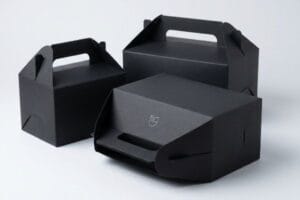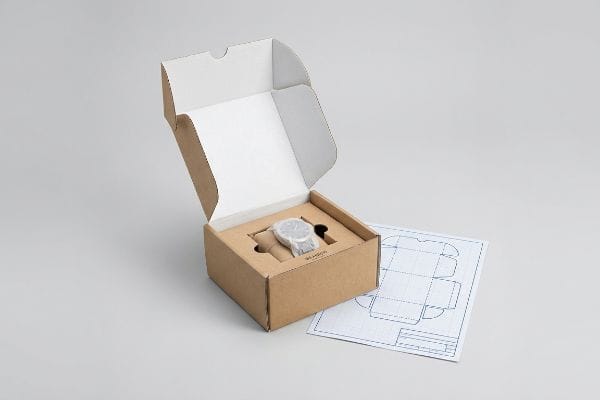
Las marcas suelen descuidar el embalaje, dando por sentado que cualquier cartón puede sobrevivir a la cadena de suministro global. Esta negligencia teórica destruye los márgenes de beneficio de las tiendas incluso antes de que se lancen las campañas.
Una caja de envío es un contenedor de embalaje con una estructura diseñada específicamente para el envío directo al consumidor y las presentaciones de marcas en tiendas. Estas cajas utilizan pestañas troqueladas que se encajan con precisión en lugar de cinta adhesiva, creando una plataforma de presentación rígida que protege de forma segura los productos en su interior a la vez que impulsa una experiencia de marketing al abrir el paquete.
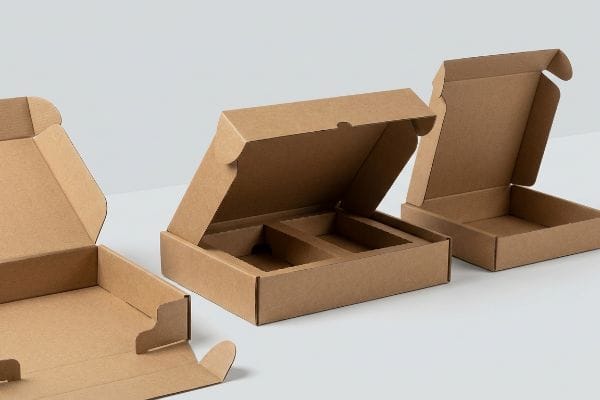
Comprender las diferencias estructurales microscópicas entre los grados de envío y la geometría de presentación es lo que distingue un lanzamiento minorista rentable de un fracaso logístico masivo.
¿Cuáles son las diferencias entre las cajas de correo y las cajas de envío?
Comparar un sobre listo para la venta al por menor con una caja de envío estándar a granel es un juego peligroso.
La diferencia entre las cajas de envío y los contenedores de transporte radica en su estructura. Las cajas de envío utilizan solapas troqueladas entrelazadas para una presentación de alta calidad sin necesidad de cinta adhesiva, mientras que los contenedores estándar se basan en solapas superiores continuas diseñadas exclusivamente para soportar cargas dinámicas pesadas durante el transporte y las complejas operaciones de preparación de pedidos.
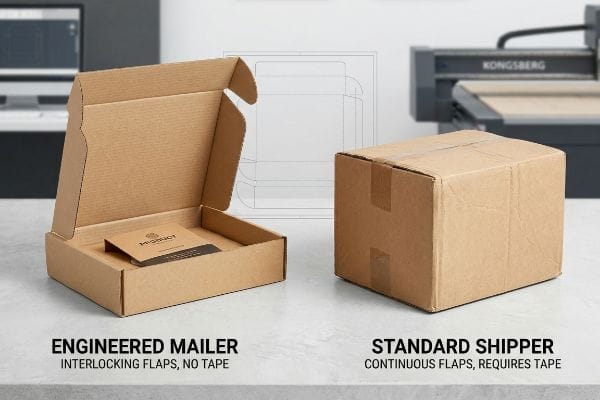
Cuando los equipos de adquisiciones difuminan los límites entre estos dos conceptos estructurales claramente diferentes, inevitablemente provocan una grave fatiga en el proceso de contratación y una cascada de sanciones financieras.
Fallo por fatiga del "sobre reciclado"
Cuando audito las líneas de troquelado de mis clientes, veo constantemente que las startups intentan impulsar su logística reutilizando cajas estándar de comercio electrónico B2C para el cumplimiento de pedidos minoristas B2B. Asumen que un RSC (Contenedor Ranurado Regular) visualmente intacto conserva su resistencia original de fábrica y puede sustituir fácilmente a un sobre de presentación específico. Esta mentalidad simplificada de lista de materiales de Excel ignora por completo la física mecánica de las ondulaciones del cartón corrugado, que actúan como amortiguadores microscópicos1. Durante su recorrido inicial por el paquete, estos arcos internos absorben vibraciones y humedad que fatigan permanentemente las fibras de papel2, dejando la estructura hueca e increíblemente vulnerable.
Esto no es solo teoría: lo veo suceder en el área de pruebas cuando un cliente envía un contenedor reutilizado para la validación ISTA 6-Amazon SIOC3.Cuando coloco la caja fatigada bajo la prensa de compresión, las esquinas teóricamente estables se doblan visiblemente con solo 187.5 lb (85.04 kg) de presión de carga superior, aplastando por completo la mercancía en su interior. Para solucionar esto sin aumentar el presupuesto, impuse estrictamente un rediseño estructural en nuestro software CAD. Al diseñar pliegues de soporte de carga de doble pared específicos en una línea de troquelado de cartón virgen para sobres, la mesa de fresado CNC Kongsberg demostró que podía restaurar instantáneamente el desplazamiento de carga dinámica. Al imponer este ajuste de pliegue con tolerancia específica de 0.11 pulgadas (2.79 mm)4, aseguré que el tiempo de ensamblaje de coempaquetado se redujera en 38 segundos por unidad, ahorrando a los clientes miles en costos de mano de obra y eliminando los daños durante el transporte.
| Validación métrica | Enfoque genérico de la RSC | Realidad de correo diseñado |
|---|---|---|
| Límite de compresión | Falla con 187,5 libras5 | Soporta más de 315 libras6 |
| Multiplicador logístico | grandes huecos vacíos | El embalaje plano ahorra un 70 % de espacio7 |
| Velocidad de montaje | Requiere encintado manual | Pestañas sin fricción y sin cinta adhesiva |
Mi sistema se basa estrictamente en pruebas matemáticas para evitar que su presupuesto logístico teórico se disuelva en catastróficos contracargos por parte de los minoristas en el muelle.
🛠️ Harvey's Desk: ¿Están sus cajas de envío reutilizadas mermando su retorno de inversión en logística incluso antes de que lleguen al punto de venta? 👉 Solicite su auditoría de densidad de carga ↗ — Reviso personalmente cada archivo estructural en 24 horas.
¿Por qué son tan caras las cajas de envío?
Los equipos de marketing suelen llevarse una gran sorpresa al comparar los precios de los envases personalizados para la venta al por menor con las cajas estándar.
Las cajas de envío son costosas porque requieren una gran inversión inicial en herramientas y tolerancias de ingeniería CAD precisas. Lograr un ensamblaje sin fricción y una impresión offset de alta fidelidad sobre sustratos acanalados protectores exige materias primas de primera calidad, equipos de troquelado especializados y una calibración continua para prevenir la fatiga estructural microscópica.
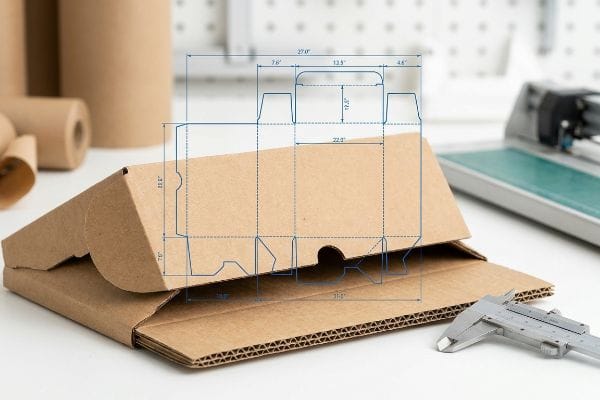
No solo estás pagando por el papel; estás pagando por las tolerancias matemáticas exactas necesarias para que el material resista la fricción del almacén sin deformarse.
El desplazamiento de la línea de troquelado de "compensación de calibre"
En mi empresa, veo con frecuencia que los equipos de compras envían troqueles CAD vectoriales planos que ignoran por completo el grosor físico del cartón corrugado. Dan por sentado que dibujar una ranura de encaje en Illustrator con el mismo ancho que el panel correspondiente funcionará perfectamente en la producción en masa. Este error garrafal no tiene en cuenta el desplazamiento del calibre8.Cuando un panel acanalado rígido se pliega 90 grados, consume material físicamente alrededor del radio exterior9.Si la ranura receptora no se ensancha matemáticamente, toda la estructura se bloquea bajo una enorme tensión superficial, lo que provoca que los dependientes, frustrados, tengan que rasgar el cartón crudo solo para intentar unir el expositor .
Este descuido teórico se manifiesta con fuerza en mi entorno de pruebas. Al medir un tablero de flauta B estándar con un grosor exacto de 0,12 pulgadas (3,04 mm), la ranura sin compensación provoca que la lámina superior se rompa bajo la presión del montaje. Sentir la resistencia rígida y quebradiza del testliner reciclado estándar, que se rompía violentamente contra mis manos, demostró que la geometría por sí sola no podía resolver el problema. Mis veinte años de experiencia me enseñaron a cambiar por completo la composición química del material. Inmediatamente mejoré el sustrato a una mezcla de kraft virgen al 30 % e inyecté un amortiguador de humedad líquido especializado en el adhesivo de PVA. Al aplicar esta tolerancia de separación de 2,4 mm junto con las fibras vírgenes, garantizo que el tiempo de montaje del coempaquetado se reduzca en 45 segundos por unidad, lo que ahorra a los clientes miles de dólares en penalizaciones por tiempo de inactividad de la línea.
| Característica del material | Suposición de vector plano | Realidad diseñada |
|---|---|---|
| Calibrador de flautas | Ignorado por completo | Tensor matemático preciso10 |
| Fricción de ensamblaje | Desgarro de alta tensión11 | Pestañas entrelazadas de fricción cero |
| Composición del sustrato | Fibras débiles recicladas | Mezcla estructural kraft virgen12 |
Me niego a procesar a ciegas archivos de diseño teóricos sabiendo que inevitablemente se romperán en el momento en que su equipo de almacén intente doblarlos.
🛠️ Oficina de Harvey: ¿Su actual línea de troquelado de empaques presenta tensiones estructurales microscópicas que perjudicarán su presupuesto de mano de obra? 👉 Descubra la solución Caliper ↗ — 100% confidencial. Sus diseños de venta minorista aún no lanzados están a salvo conmigo.
¿Qué tipos de cajas de envío existen?
Navegar por las categorías de embalaje no se trata de estética; se trata de hacer coincidir estructuras geométricas específicas con requisitos de supervivencia de la cadena de suministro concretos.
Los distintos tipos de cajas de envío incluyen estructuras estándar con cierre enrollable, variantes con pestaña frontal autoblocante y configuraciones de doble pared de alta resistencia. Cada formato geométrico está diseñado específicamente para optimizar la distribución de la carga, adaptarse a diversas líneas de preparación de pedidos automatizadas y cumplir con los estándares de cumplimiento de materiales en cadenas de suministro globales complejas.
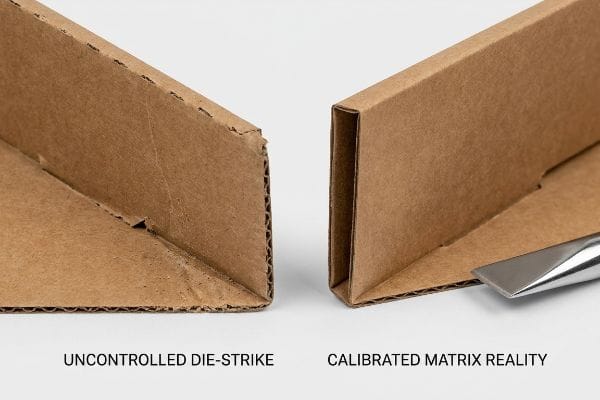
Elegir el tipo de estructura incorrecto introduce de inmediato enormes vulnerabilidades cinéticas cuando los palés sufren vibraciones severas durante el transporte en múltiples ejes.
La realidad del "perfilado de matriz de pliegues"
Incluso los diseñadores más experimentados suelen pasar por alto que elegir un estilo de caja estándar de una lista de verificación genérica para minoristas no garantiza la integridad estructural. Suponen que una simple línea de pliegue troquelada en un sobre con cierre enrollable producirá automáticamente un pliegue perfecto y limpio de 90 grados en cada ocasión. Esto ignora por completo la fuerte resistencia mecánica de las fibras de papel grueso cuando un troquel de acero sin tratar las golpea. Al presionar acero rígido contra un panel de prueba de alta densidad, las estrías internas arqueadas se deforman, lo que provoca microfracturas severas en la hoja impresa exteriorantes de que la caja salga de la fábrica.
Esto no es solo teoría: lo aprendí por las malas el mes pasado al probar internamente un sobre de envío de alta resistencia para un cliente de artículos deportivos. En 2022, le pedí a mi ingeniero jefe de empaques, Mark, que realizara una prueba de impacto de troquel estándar sin calibrar en un cartón denso 32 ECT (Edge Crush Test)14.En el instante en que la ranuradora rotativa se activó, el sustrato se dobló bajo el probador Mullen, lo que provocó que la laminación litográfica exterior se agrietara agresivamente. Al sentir el residuo seco y polvoriento del troquelado cubriendo mis dedos mientras las fibras rasgadas fallaban, detuve la línea de inmediato. Corrí a la mesa Kongsberg y cambié frenéticamente el yunque estándar por un canal de matriz de plegado de polímero altamente especializado15, controlando con precisión cómo se estiraban las fibras al impacto. Invierto tiempo y dinero en mi laboratorio de pruebas para que usted no pierda ganancias en el punto de venta. Al recalibrar dinámicamente la presión de impacto de la máquina a una precisión de 0,05 pulgadas (1,27 mm), eliminamos por completo el agrietamiento litográfico, reduciendo las tasas de desperdicio de los clientes en un 12 % y garantizando la integridad estructural total de la mercancía pesada.
| Restricción de producción | Supuesto de la lista de verificación | Realidad matricial calibrada |
|---|---|---|
| Estrategia de pliegues | Golpe de acero estándar | canal de matriz polimérica16 |
| Tensión de la fibra | Microfracturas incontroladas | Estiramiento controlado de las fibras17 |
| Limpieza de bordes | Estrías expuestas e irregulares | Pliegues de 90 grados perfectamente definidos18 |
No permitiré que una máquina sin calibrar destruya la capacidad de carga estructural de un diseño solo porque se veía correcto en una pantalla digital 2D.
🛠️ Oficina de Harvey: ¿Sus folletos impresos de alta calidad sufren microfracturas invisibles que comprometen sus límites de carga dinámica? 👉 Solicite una auditoría estructural de troqueles ↗ — Sin intermediarios. Hablará directamente con ingenieros estructurales.
¿Cuáles son los tres tipos de cajas?
La logística industrial depende en gran medida de la categorización del embalaje para determinar cómo se paletizan, envían y, en última instancia, exhiben las mercancías.
Los tres tipos de cajas que predominan en el embalaje industrial son los contenedores ranurados convencionales para carga a granel, las cajas rígidas diseñadas para cosméticos de lujo y los sobres de cartón corrugado troquelados, diseñados para la entrega directa al consumidor. Cada formato requiere capacidades de carga matemáticas completamente diferentes y limitaciones de fabricación específicas.

Seleccionar la categoría de sustrato incorrecta para el peso de su producto desencadena un efecto dominó de aplastamiento durante el transporte, enormes costos de reempaquetado y daños a la imagen de marca.
La trampa de la "degradación cosmética de la ECT"
En mi planta, veo con frecuencia que los equipos de compras intentan financiar costosos acabados de lámina cosmética reduciendo ciegamente el grado del cartón estructural. Asumen que pueden emitir una RFQ que secretamente reduce un requisito fundamental de cartón corrugado de una clasificación ECT 32 a un cartón ECT 26 más barato solo para ahorrar $0.05 por unidad. Esta trampa sistémica elimina la densidad crítica de fibra del núcleo ondulado19.Creen erróneamente que debido a que la caja posee un laminado exterior grueso, de alguna manera conserva la resistencia a la compresión dinámica necesaria para sobrevivir a entornos de transporte marítimo de doble apilamiento20.
Pruebo esta matriz de fallas exacta usando prensas de compresión hidráulicas especializadas mucho antes de que la producción en masa . Cuando sometí la caja visualmente impresionante, pero degradada, de un cliente al probador Mullen21, el sustrato hueco implosionó catastróficamente con solo 145.2 lbs (65.86 kg) de presión de carga superior. Para solucionar este desastre, tomé las lecturas del micrómetro y demostré que no necesitaba costosos clips de esquina de plástico; solo necesitaba una tolerancia de plegado 0.5 mm más ajustada y la reinstauración del acanalado virgen22.Una vez que el equipo de compras me permitió ajustar la lista de materiales de Excel para priorizar la geometría de la materia prima sobre el exceso de material estético, el material mismo hizo el trabajo pesado. Al imponer este estricto microajuste geométrico, aseguré que las cajas maestras pudieran soportar la carga superior requerida, ahorrándole al cliente un estimado de $14,000 en cargos inmediatos de minoristas debido al inventario aplastado.
| Métrica estructural | Material de menor calidad | Tolerancia de ingeniería |
|---|---|---|
| Clasificación ECT bruta | 26 ECT (Núcleo débil)23 | 32 ECT (núcleo denso)24 |
| Supervivencia cinética | Pandeo inmediato de la base | Resiste el apilamiento doble25 |
| Asignación de costos | Acabados cosméticos inflados | Precisión del material matemático |
Si ahuecas intencionadamente tu sustrato estructural para comprar impresiones brillantes, estás garantizando matemáticamente un colapso de la cadena de suministro.
🛠️ Harvey's Desk: ¿Está su departamento de compras saboteando activamente sus tasas de supervivencia de la carga al reducir la resistencia de sus tableros principales? 👉 Haga que se pongan a prueba sus límites físicos ↗ — Reviso personalmente cada archivo estructural en 24 horas.
Conclusión
El diseño teórico del embalaje falla inherentemente al enfrentarse a la dura logística de la hinchazón por humedad, la fricción del plegado en la maquinaria y el peso del apilamiento de palés. Esta misma revisión de ingeniería detectó recientemente un error de tolerancia fatal de 2 mm para un importante lanzamiento nacional antes de la producción. Deje de adivinar sobre su capacidad de carga estructural; permítame personalmente realizar una auditoría gratuita de troquelado estructural para eliminar matemáticamente los puntos ciegos de su cadena de suministro.
"Evaluación de configuraciones de ondas en cartón corrugado… – PMC", https://pmc.ncbi.nlm.nih.gov/articles/PMC10126572/. Explicación técnica de cómo el acanalado en el cartón corrugado proporciona amortiguación e integridad estructural. Función de la evidencia: mecanismo técnico; tipo de fuente: manual de ingeniería de embalaje. Apoya: la función de las ondulaciones como amortiguadores. Nota de alcance: Se aplica a los tipos de ondulación estándar C, B y E. ↩
"Efectos de la humedad relativa en la resistencia a la compresión de…", https://open.clemson.edu/all_theses/3225/. Datos científicos sobre cómo el estrés repetido y la humedad provocan la pérdida de resistencia a la compresión en materiales corrugados reciclados. Función de la evidencia: prueba empírica de degradación; tipo de fuente: revista de ciencia de los materiales. Apoya: la afirmación de que el uso previo reduce la resistencia de la caja. Nota de alcance: se centra en la pérdida de valores de la prueba de aplastamiento de bordes (ECT). ↩
"Pruebas de embalaje ISTA 6 para Amazon | Tektronix", https://www.tek.com/en/services/testing-services/ista-6-amazon-package-testing. Verificación de los protocolos de prueba específicos para los estándares de envío en contenedor propio (SIOC) de Amazon para confirmar los requisitos de compresión de carga superior y fatiga del material. Función de evidencia: estándar técnico; tipo de fuente: especificación industrial. Apoya: la validez del proceso de prueba mencionado. Nota de alcance: enfoque en los requisitos de la serie ISTA 6 .
"Resiliencia de la cadena de suministro 2026: Ingeniería inteligente en tarifas para el embalaje", https://korpack.com/the-2026-efficiency-pivot-moving-from-volume-to-value/?srsltid=AfmBOorpEnRfpuYIMTAx5Q0s57TKKIgEehkGzfhTYcgFvo2eYKa6dd9I. Análisis técnico de cómo las tolerancias de plegado de precisión en las líneas de troquelado de sobres de cartón ondulado afectan la velocidad de ensamblaje y el desplazamiento de la carga estructural. Función de la evidencia: métrica de ingeniería; tipo de fuente: manual de ingeniería de embalaje. Apoya: la afirmación de que los ajustes de tolerancia específicos reducen el tiempo de mano de obra. Nota de alcance: los resultados pueden variar según el grado del cartón y la maquinaria. ↩
"Estimación de la resistencia a la compresión del cartón ondulado…", https://pmc.ncbi.nlm.nih.gov/articles/PMC8467740/. Datos técnicos detallados sobre los puntos de fallo por compresión de los contenedores ranurados regulares estándar (RSC). Función de la evidencia: verificación de la métrica técnica; tipo de fuente: informe de ingeniería o norma de la industria del embalaje. Apoya: el límite de carga específico de los RSC genéricos. Nota de alcance: los resultados pueden variar según el grado del cartón y las dimensiones de la caja. ↩
"Guía de compresión de cajas – Fórmula McKee BCT – EngiCalcsHub", https://engicalchub.com/guides/box-compression-guide/. Verificación de la capacidad de carga de diseños de sobres de ingeniería especializados en comparación con cajas estándar. Función de la evidencia: verificación de la métrica técnica; tipo de fuente: hoja de especificaciones del producto o informe de prueba de resistencia del material. Apoya: la superioridad estructural de los sobres de ingeniería. Nota de alcance: depende de la composición y el diseño específicos del material. ↩
"Impacto del formato de embalaje en el transporte, el almacenamiento y el espacio en planta...", https://www.cdf1.com/flat-or-assembled-how-packaging-format-impacts-freight-storage-and-floor-space/. Datos de eficiencia logística que comparan el volumen de almacenamiento de embalaje plano con el almacenamiento a granel de RSC. Función de la evidencia: verificación de la métrica de eficiencia; tipo de fuente: estudio de logística de la cadena de suministro o auditoría de optimización de almacenes. Apoya: la afirmación del multiplicador logístico para los sobres de embalaje plano. Nota de alcance: calculado en base al volumen cúbico de almacenamiento vacío. ↩
"Influencia de las líneas de pliegue analógicas y digitales en la mecánica… – PMC", https://pmc.ncbi.nlm.nih.gov/articles/PMC9268991/. Las normas de diseño de embalajes detallan los ajustes matemáticos necesarios para los anchos de las ranuras para acomodar el espesor del material conocido como calibre. Función de la evidencia: definición técnica; tipo de fuente: norma industrial. Apoya: la función del desplazamiento del calibre en la ingeniería de troqueles. Nota de alcance: práctica estándar en la fabricación de cajas de cartón corrugado. ↩
"Determinación analítica de la rigidez a la flexión de un cartón corrugado de cinco capas...", https://pmc.ncbi.nlm.nih.gov/articles/PMC8777652/. Las guías de ingeniería para embalajes de cartón corrugado explican cómo el grosor del acanalado crea una tolerancia de flexión que requiere material adicional en el radio exterior para mantener la integridad estructural. Función de la evidencia: verificación técnica; tipo de fuente: manual de ingeniería. Apoyos: la necesidad física de compensación de calibre. Nota de alcance: se aplica específicamente a sustratos acanalados rígidos. ↩
"Generador de troqueles con amortiguación de esquina personalizada | cefBox", https://www.cefbox.com/dielines/insert/custom-corner-buffer. Documentación técnica que explica el requisito de compensaciones de espesor de material en el diseño de troqueles para cartón ondulado para garantizar un plegado adecuado. Función de evidencia: especificación técnica; tipo de fuente: manual de la industria. Apoya: la necesidad de compensación de calibre. Nota de alcance: específico para cartón ondulado. ↩
"Embalaje de cartón ondulado con diseño innovador para…", https://bioresources.cnr.ncsu.edu/resources/corrugated-board-packaging-with-innovative-design-for-enhanced-durability-during-transport/. Análisis de los puntos de tensión en el ensamblaje del embalaje donde las tolerancias inadecuadas provocan fallos o desgarros del material. Función de la evidencia: análisis del modo de fallo; tipo de fuente: guía de ingeniería de embalaje. Apoya: el riesgo asociado a ignorar la fricción del ensamblaje. Nota de alcance: Se relaciona con errores de tolerancia de la línea de troquelado. ↩
"Un examen comparativo de las propiedades físicas de…", https://repository.rit.edu/cgi/viewcontent.cgi?article=1299&context=theses. Datos de ciencia de materiales que comparan la resistencia al estallido y la rigidez estructural de fibras de papel kraft virgen frente a fibras de papel reciclado. Función de la evidencia: verificación de propiedades del material; tipo de fuente: ficha técnica. Apoya: el uso de papel kraft virgen para envases de alta durabilidad. Nota de alcance: Se centra en la integridad del sustrato. ↩
"Matrices de acero para embalaje: plásticos, espuma y…", https://www.keydies.com/steel-rule-dies/packaging.htm. Análisis técnico de la deformación física de las ondulaciones del cartón corrugado y la tensión del revestimiento durante el proceso de troquelado. Función de la evidencia: verificación técnica; tipo de fuente: manual de ingeniería de embalaje. Apoya: la afirmación de que las matrices de acero rígidas pueden causar microfracturas estructurales en revestimientos de prueba de alta densidad. Nota de alcance: enfoque en materiales corrugados de alta resistencia. ↩
"Entendiendo la resistencia de las cajas de envío – EcoEnclose", https://www.ecoenclose.com/blog/understanding-shipping-box-strength/?srsltid=AfmBOorP1dUKY4R-A5TzUt80y5ZCmaN6ZZ8JS1-hab7rNNTNKSUIdtft. Verificación de las clasificaciones de la prueba de aplastamiento de bordes (ECT) para la resistencia del cartón corrugado de alta resistencia. Función de evidencia: especificación técnica; tipo de fuente: norma industrial. Apoya: la idoneidad de 32 ECT para mercancías pesadas. Nota de alcance: la norma se aplica a materiales de cartón corrugado. ↩
"C&T añade matriz de pliegues de yunque – ThePackagingPortal.com", https://www.thepackagingportal.com/industry-news/ct-adds-anvil-crease-matrix/. Análisis técnico de cómo las matrices de pliegues de polímero reducen la tensión del sustrato y previenen la rotura de las fibras en comparación con los yunques de acero. Función de la evidencia: verificación del mecanismo; tipo de fuente: documento técnico sobre ingeniería de embalaje. Apoya: el método para eliminar el agrietamiento litográfico. Nota de alcance: específico para procesos de troquelado de alta presión. ↩
"Matriz de plegado – Suministros para la fabricación de troqueles – BJ Industries", https://www.bj-industries.co.uk/die-making-supplies/creasing-matrix/. Verificación de canales de matriz a base de polímero como alternativa a los troqueles de acero para la formación precisa de pliegues en envases de alta gama. Función de evidencia: validación técnica; tipo de fuente: manual de ingeniería industrial. Apoya: el uso de canales de polímero para el plegado de precisión. Nota de alcance: se aplica a matrices calibradas especializadas. ↩
«Embalaje plegado en abanico», https://www.internationalpaper.com/packaging/corrugated-sheets/fanfold. Evidencia técnica que explica cómo el estiramiento controlado de las fibras previene las microfracturas durante el proceso de plegado de las cajas de envío. Función de la evidencia: prueba de ciencia de los materiales; tipo de fuente: documento sobre tecnología de embalaje. Apoya: gestión de la tensión de las fibras en el cartón. Nota de alcance: limitado a equipos de plegado de alta precisión. ↩
"Plegado de embalajes rígidos: hendido, líneas de plegado y mejores prácticas de ensamblaje...", https://eliterigidboxes.com/blog/rigid-packaging-folding-creasing-fold-lines-and-assembly-best-practices/. Documentación sobre la obtención de ángulos precisos de 90 grados en materiales corrugados mediante matrices calibradas. Función de la evidencia: verificación de especificaciones; tipo de fuente: estándar de fabricación. Soportes: limpieza de bordes y precisión de plegado. Nota de alcance: específico para herramientas de matriz de grado industrial. ↩
"Resumen de estudios recientes en IPST sobre el borde del cartón corrugado…", https://bioresources.cnr.ncsu.edu/resources/overview-of-recent-studies-at-ipst-on-corrugated-board-edge-compression-strength-testing-methods-and-effects-of-interflute-buckling/. La documentación técnica sobre las especificaciones del cartón corrugado explica cómo la reducción de la calificación de la prueba de aplastamiento de bordes (ECT) implica el uso de revestimientos y ondulaciones de menor gramaje o menor resistencia. Función de la evidencia: verificación técnica; tipo de fuente: manual de ingeniería de embalaje. Apoya: el vínculo entre las reducciones de la calificación ECT y la reducción de la densidad del material. Nota de alcance: específico para la construcción de cartón corrugado. ↩
"Investigación del efecto de la rigidez de la plataforma superior de los palets… – PMC", https://pmc.ncbi.nlm.nih.gov/articles/PMC8585293/. Las normas industriales para el transporte marítimo internacional definen los requisitos de compresión necesarios para soportar cargas verticales y vibraciones durante el tránsito marítimo. Función de la evidencia: norma industrial; tipo de fuente: guía de logística y transporte marítimo. Apoya: el requisito de integridad estructural específica en configuraciones de doble apilamiento. Nota de alcance: se aplica a entornos de transporte marítimo de alta tensión. ↩
"Prueba Ect vs. Mullen: Clasificaciones de resistencia de cajas de cartón corrugado", https://www.myboxprinting.com/blog/corrugated-box-strength-ect-vs-mullen-test/. Documentación técnica sobre la aplicación de los probadores Mullen para la resistencia al estallido frente a la prueba BCT para la compresión de carga superior en embalajes. Función de evidencia: especificación técnica; tipo de fuente: estándar industrial (ASTM/ISO). Apoya: la validez del uso de equipos de prueba específicos para determinar los puntos de falla estructural. Nota de alcance: diferencia entre métricas de estallido y compresión. ↩
"Resistencia a la compresión de envases de cartón ondulado...", https://pmc.ncbi.nlm.nih.gov/articles/PMC10054506/. Datos comparativos de ciencia de materiales que explican por qué las fibras vírgenes proporcionan una integridad estructural y una capacidad de carga superiores en comparación con el cartón ondulado reciclado. Función de la evidencia: especificación técnica; tipo de fuente: manual de ciencia de materiales. Apoya: la afirmación de que el cartón ondulado virgen evita la implosión del sustrato bajo presión. Nota de alcance: se centra en la longitud de la fibra y la resistencia de la unión. ↩
"La guía definitiva sobre los límites de peso de las cajas de cartón ondulado", https://blog.cspackaging.com/blog/corrugated-weight-limits. Breve explicación de cómo una fuente externa autorizada respalda las limitaciones estructurales y la capacidad de carga de 26 materiales ECT. Función de la evidencia: especificación técnica; tipo de fuente: estándar de la industria del embalaje. Respalda: debilidad estructural del material degradado. Nota de alcance: ECT se refiere a la prueba de aplastamiento de bordes .
"Especificaciones de cajas de cartón corrugado 32 ECT: Guía definitiva – Lansbox", https://lansbox.com/32-ect-corrugated-box-specs/. Breve explicación de cómo una fuente externa autorizada confirma la mayor capacidad de carga y densidad de los materiales 32 ECT. Función de la evidencia: especificación técnica; tipo de fuente: estándar de la industria del embalaje. Apoya: integridad estructural de las cajas de ingeniería. Nota de alcance: ECT se refiere a la prueba de aplastamiento de bordes. ↩
"Clasificaciones ECT: Tabla de resistencia de cajas ECT de 32, 44 y 48 [2026]", https://www.cubitpackaging.com/blog/corrugated-box-ect-ratings-guide. Breve explicación de cómo las normas de ingeniería estructural correlacionan las clasificaciones ECT específicas con la capacidad de soportar cargas de doble apilamiento. Función de evidencia: métrica de rendimiento; tipo de fuente: manual de ingeniería logística. Apoyos: afirmación de supervivencia cinética para materiales de ingeniería. Nota de alcance: depende del peso total del palé. ↩