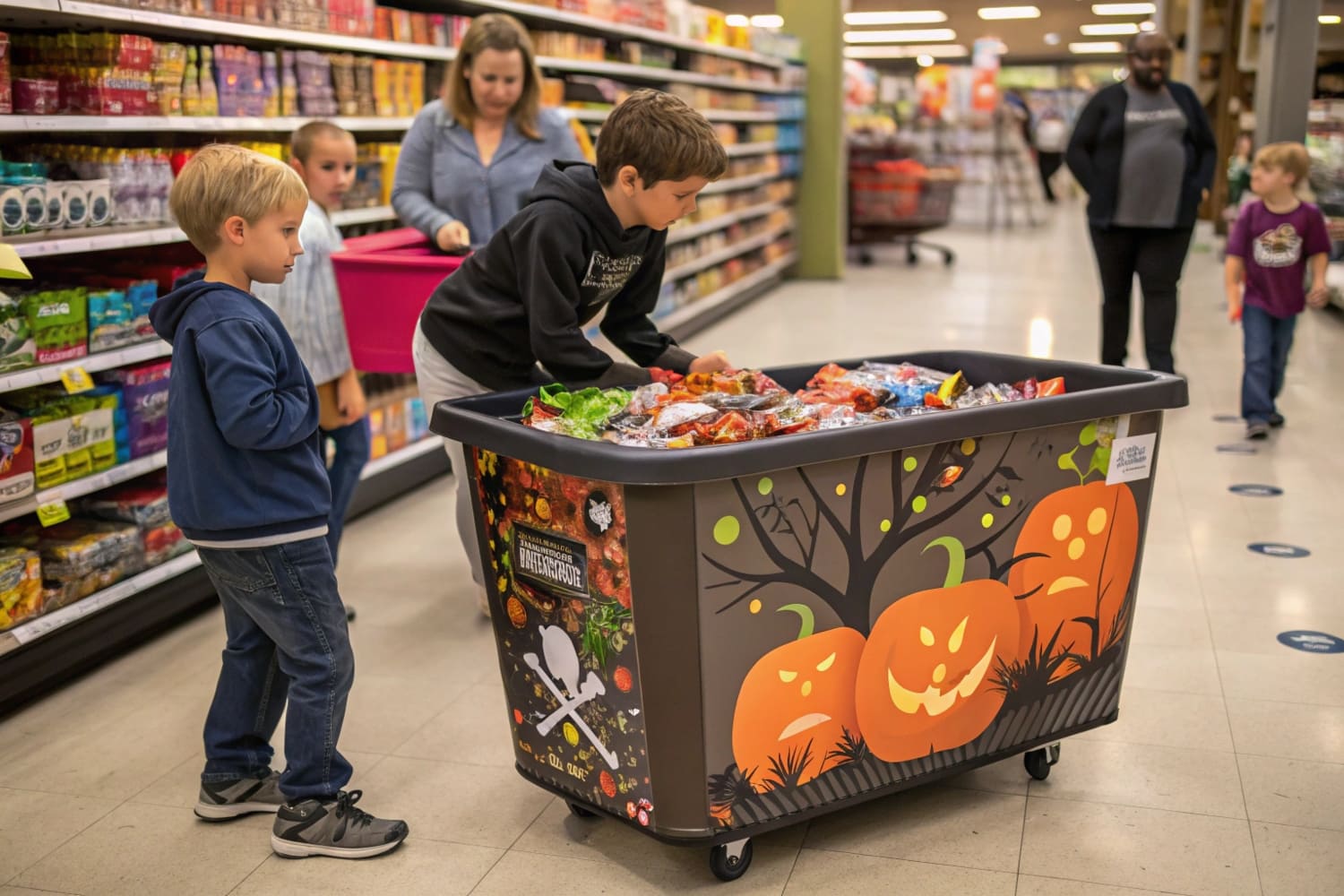
Los compradores no planean cada compra. Lo veo todas las semanas. Un simple contenedor cerca de una calle transitada puede provocar una compra. Funciona porque está despejado, cerca y lleno.
Un exhibidor de contenedores es un gran contenedor de cartón con la parte superior abierta que se coloca en el piso de ventas para contener muchos artículos pequeños para compras rápidas e impulsivas; aumenta la visibilidad, acelera la configuración e impulsa las ventas rápidas durante promociones cortas.
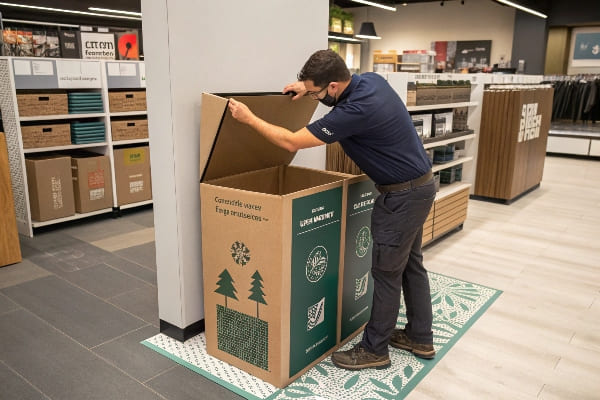
Lo mantendré simple y útil. Definiré términos clave. Compartiré pasos que puedes copiar hoy mismo. También mencionaré aspectos de diseño, resistencia y sostenibilidad de proyectos reales.
¿Qué es el proceso de dumping en el comercio minorista?
Los equipos preparan, llenan y renuevan el contenedor con un tiempo ajustado. El flujo correcto mantiene el contenedor limpio, seguro y rentable gracias a una promoción.
El proceso de volcado es un plan claro y repetible para recibir, ensamblar, almacenar, mantener, informar y retirar un contenedor de volcado, con propietarios designados, listas de verificación simples, pasos de seguridad e instrucciones de reciclaje al final de su vida útil.
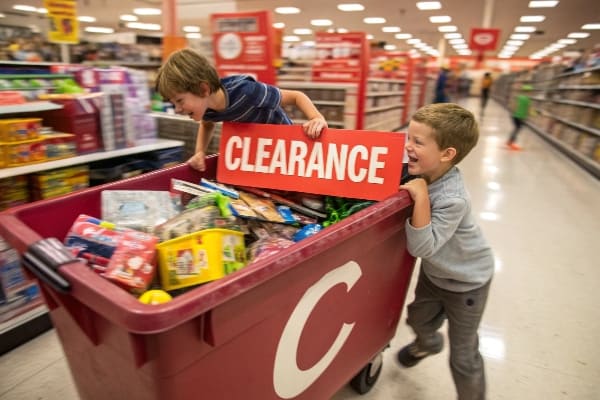
Pasos que puedes copiar
Gestiono expositores en Norteamérica, el Reino Unido y Australia. Los resultados más rápidos se obtienen con un proceso sencillo. Imprimimos la lista de verificación en el transportista. Asignamos a los propietarios antes de que la carga salga del muelle. Realizamos pruebas de resistencia y transporte en nuestra planta de Shenzhen, y luego los empaquetamos en plano para reducir el flete. Preferimos tintas a base de agua 1 y recubrimientos reciclables porque ahora los compradores preguntan primero por ello. La rapidez de la configuración es importante porque la mano de obra es escasa. La impresión digital me permite producir lotes pequeños para pruebas regionales. Cuando un arancel dispara el coste del cartón, un diseño más ligero con pliegues inteligentes mantiene el margen. El verano pasado, mi equipo preparó 400 contenedores para una botadura de proa. Redujimos el tiempo de montaje de 12 minutos a 6. Las ventas directas aumentaron porque nos movimos antes, llenamos con más profundidad y mantuvimos el contenedor ordenado.
| Paso | Dueño | Tiempo objetivo | Consejo clave |
|---|---|---|---|
| Recibir e inspeccionar | Líder de tienda | 10 minutos | Verifique los bordes, la impresión, los insertos y los códigos de barras |
| Ensamblar contenedor2 | Equipo de merchandising | 6–8 minutos | Pliegues previos; utilice pestañas numeradas |
| Stock y letrero | Equipo de merchandising | 5 minutos | Coloque los SKU de héroes boca arriba; coloque el precio en dos lados |
| Monitorear y rellenar3 | Asociado | 2–3 veces al día | Rellene hasta el 80% de su capacidad para mantener la "abundancia" |
| Retirar y reciclar | Líder de tienda | 10 minutos | Aplanar; seguir las normas de reciclaje locales |
Puertas de calidad que previenen el dolor
Mantengo tres niveles de seguridad: resistencia 4 , color y ajuste. Probamos la carga para que coincida con el peso real del producto más un 30 %. Verificamos el Pantone en el mismo soporte y flauta que usamos en las tiradas masivas. Probamos el ajuste de los palets y el ancho de pasillo para Walmart, Costco y otras cadenas de supermercados. Usamos códigos QR en los encabezados para un video de configuración de 30 segundos. Añadimos una simple nota de seguridad: no se permite que el producto supere la altura del borde en la zona infantil. En temporada alta, añadimos una etiqueta IoT 5 o una hoja de recuento manual. En mi experiencia, estos pequeños niveles de seguridad protegen los plazos, que es el problema más común para compradores como David en la búsqueda de marcas.
¿Qué es un contenedor en el comercio minorista?
Un contenedor es un recipiente que contiene productos a granel para facilitar el acceso. Elimina barreras y ayuda a los compradores a tomar decisiones rápidamente.
En el comercio minorista, un contenedor es un recipiente abierto o con tapa que almacena o exhibe artículos a granel; los contenedores de cartón corrugado son comunes porque son livianos, de bajo costo, rápidos de imprimir y fáciles de reciclar.
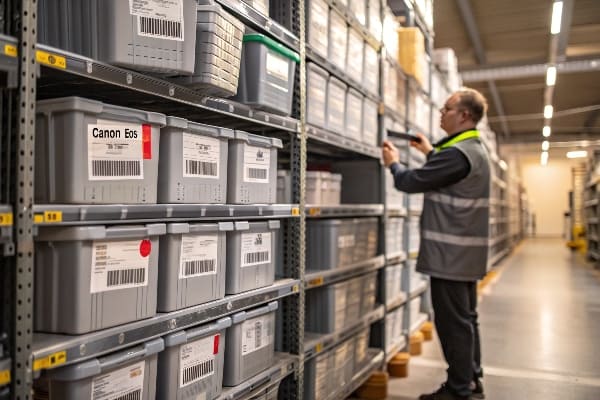
Tipos y dónde encajan
Un contenedor puede estar en el suelo, en un estante, en un palé o en un mostrador. Elijo el tipo según el tamaño de la cesta, el tráfico de la tienda y los límites de mano de obra. Los contenedores de suelo se adaptan a artículos de gran volumen y bajo precio, y a los impulsos de temporada. Los contenedores de mostrador impulsan pequeñas compras adicionales cerca de la caja registradora. Los contenedores de palé ayudan a los clubes a mover un gran volumen con toques mínimos. Los contenedores de gravedad alimentan paquetes pequeños desde la parte superior, lo que mantiene el frente ordenado. Para tiradas cortas, la impresión digital nos permite ajustar el arte para EE. UU., Canadá o el Reino Unido. Para la resistencia, prefiero doble pared 6 para equipo pesado como piezas de caza. Para el color, bloqueo las pruebas en el tablero exacto. Eso evita la falta de coincidencia común entre la muestra y la masa. Añado notas de contenido FSC o reciclado porque los compradores preguntan. Mantengo los pasos de montaje por debajo de ocho. Eso hace que la formación sea sencilla para las grandes cadenas.
| Tipo de contenedor | Mejor uso | Ventajas | Precauciones |
|---|---|---|---|
| Contenedor de basura (suelo)7 | Impulso, estacional | Gran impacto, rápida de instalar | Distancia de seguridad; mantener una altura segura |
| Bandeja PDQ (estante)8 | SKU pequeños organizados | Filas ordenadas, fácil reposición | El espacio es reducido; tenga en cuenta la profundidad del estante |
| Contenedor de palets | Tiendas del club | Alto volumen, poca mano de obra | Costo de flete; reglas de ajuste de pallets |
| Contenedor de mostrador | Verificar | Compras complementarias | Huella pequeña; stock frecuente |
| contenedor de gravedad | Paquetes pequeños | Siempre de frente | Requiere un revestimiento resistente y una alimentación suave |
Conceptos básicos de diseño que ahorran costes
Diseño con una regla simple: menos cartón, más resistencia. Los cortes inteligentes superan a las paredes gruesas. El embalaje plano ahorra flete y almacenamiento. Agrego cierres en las esquinas para evitar que se deforme. Uso tintas a base de agua y pegamento bajo en COV 9 . Imprimo letras en negrita e íconos simples porque los compradores los escanean en segundos. Mantengo la historia de la marca breve. Pongo el precio alto y lo repito. Planifico cajas de recarga que también funcionan como contenedores interiores. Mi objetivo es cero materiales mixtos 10 , lo que mejora el reciclaje. En Asia-Pacífico, el rápido crecimiento favorece los plazos de entrega cortos, lotes pequeños e intercambios rápidos. En Europa, los compradores priorizan la sostenibilidad. En América del Norte, los compradores exigen una venta directa comprobada. Los contenedores transparentes que satisfacen estas necesidades triunfan en todas las regiones.
¿Qué es un monitor de contenedores?
Un monitor de contenedor mantiene el contenedor lleno, ordenado y seguro. Puede ser una persona o un sensor. El objetivo es mantener las ventas con menos desperdicio.
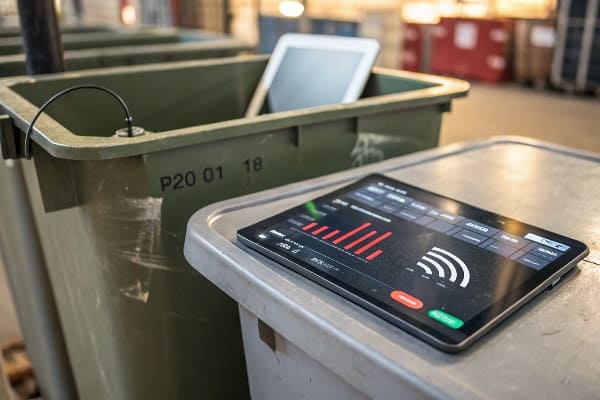
Un monitor de contenedores es la persona, la lista de verificación o el sensor de IoT que verifica el nivel de existencias, la limpieza y el planograma, y luego activa la recarga, la rotación o la extracción en momentos establecidos para mantener las ventas estables y las mermas bajas.
Humano vs. sensor
He usado ambos. Un monitor humano sigue una breve lista de verificación. Incluye nivel, precio, daños y seguridad. Añade una foto rápida como prueba. Un monitor de sensor 11 usa una almohadilla de pesas, un sensor de tiempo de vuelo o una etiqueta inteligente. Informa de bajo stock a un teléfono. Puede enviar una tarea al personal. La elección depende de la mano de obra y el tamaño de la tienda. En cadenas pequeñas, el papel funciona bien. En cadenas grandes, la tecnología ligera se amortiza rápidamente. Una vez probé un código QR en el encabezado. El personal lo escaneó. Un simple bot registró las comprobaciones y recordó al equipo tres veces al día. Las horas sin stock se redujeron a la mitad. Las ventas aumentaron porque el contenedor parecía lleno y fresco. El costo fue bajo. La configuración fue sencilla. Los datos también nos ayudaron a planificar el siguiente tamaño de tirada.
| Acercarse | Ventajas | Contras | Mejor para |
|---|---|---|---|
| Lista de verificación humana | Flexible, de bajo costo | Seguimiento inconsistente | Equipos pequeños; promociones cortas |
| Sensor de IoT12 | Alertas en tiempo real | Costo inicial, configuración | Cadenas de múltiples tiendas; tiradas largas |
| Auditoría fotográfica13 | Prueba visual | Tiempo de revisión manual | Lanzamientos de alto valor |
| Híbrido | Equilibrar costes y rigor | Necesita un flujo de trabajo simple | La mayoría de los minoristas de tamaño mediano |
Métricas que importan
Monitoreo cuatro cifras. La tasa de llenado 14 muestra qué tan lleno se mantiene el contenedor durante el horario de atención. El tiempo de respuesta muestra la rapidez con la que lo reponemos tras una alerta de stock bajo. La tasa de merma 15 muestra las pérdidas por daños o robo. La venta directa muestra las unidades vendidas frente a las enviadas. También superviso la precisión del color y la impresión en campo, porque a los equipos de marca les importa. Me centro en la seguridad en cada control: base estable, bordes lisos y pasillos despejados. Evito llenar demasiado por encima del borde en las zonas infantiles. Un contenedor limpio y seguro garantiza tiradas más largas y pedidos repetidos. Ahí es donde mi negocio genera ganancias, porque las tiradas repetidas conllevan menores costos de diseño y configuración.
¿Qué es un contenedor de basura de Hot Wheels?
Los coches Hot Wheels se venden por diversión. Un contenedor de la marca convierte esa emoción en un destino claro en el pasillo de juguetes.
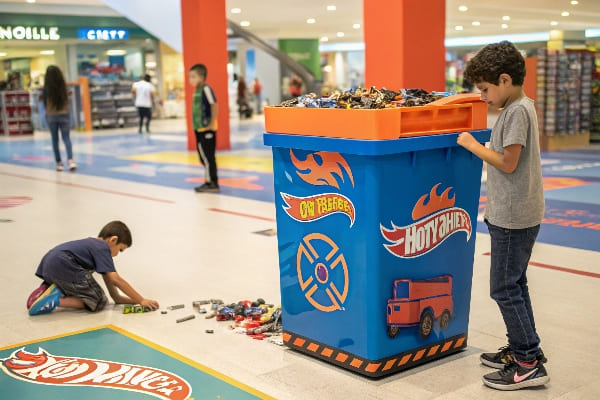
Un contenedor de basura de Hot Wheels es un expositor corrugado alto y abierto con la parte superior impresa con la marca Hot Wheels que contiene muchos autos en blíster, invita a hurgar y se ubica en zonas de juguetes de alto tráfico para generar fuertes ventas impulsivas.
Por qué funciona y cómo construirlo
Este contenedor funciona porque invita a la " búsqueda del tesoro 16 ". Los niños y coleccionistas quieren excavar. Por lo tanto, el contenedor debe verse llamativo, seguro y lleno. Mantengo la altura del borde adecuada para los niños. Imprimo marcas de marca grandes en tres lados. Elijo una ranura fuerte para las esquinas. Agrego una bandeja de base para evitar que se comben. Redondeo los bordes para reducir los enganches. Diseño fundas interiores para levantar los autos y mantenerlos al alcance. Planifico recargas que coincidan con los paquetes de cajas. Pruebo el color en el tablero real para alcanzar el naranja y el azul de Hot Wheels. Uso tintas a base de agua 17 y recubrimientos reciclables. Bloqueo una configuración rápida: ocho pasos o menos. Instruyo al personal para que rellene hasta aproximadamente el 80% de su capacidad para mantener la sensación de "abundancia". Adapto la ubicación a las tapas de los extremos o a los pasillos de juguetes eléctricos. Impulso las auditorías fotográficas los fines de semana, cuando hay más tráfico.
| Elemento | Objetivo | Consejo práctico |
|---|---|---|
| Encabezado en negrita18 | Marca de señal desde lejos | Utilice un arte de héroe simple y precio |
| Resistencia en las esquinas | Ponte de pie para hurgar | Utilice paredes dobles o añada cerraduras de esquina |
| Manga interior | Mantenga los coches accesibles | Establecer un falso fondo flotante |
| Anti-barrido | Disuadir los grandes acaparamientos | Utilice la altura del borde y las cuadrículas divisorias |
| Plan de recarga19 | Mantener la caza | Programe recargas pequeñas y frecuentes |
Ubicación, cronograma y sostenibilidad 20
Coloco contenedores de Hot Wheels cerca del tráfico infantil y en las entradas de los pasillos de juguetes. Evito los pasillos estrechos. Pruebo dos ubicaciones durante una semana, luego elijo la mejor por venta directa. Programo los lanzamientos con las vacaciones escolares y los sets de vacaciones. En las tiendas club, uso contenedores de paletas para un mayor volumen. En los supermercados, uso huellas más delgadas que cumplen con las reglas del pasillo. Para la sostenibilidad, mantengo los diseños de un solo material 21 . Evito las ventanas de plástico y las láminas. Imprimo códigos QR para un video de set rápido. Incluyo una nota de reciclaje simple para el personal de la tienda. La demanda de POP más ecológico es fuerte en Europa. Crece rápidamente en América del Norte. En Asia-Pacífico, la velocidad y la personalización impulsan los pedidos. Estos contenedores satisfacen las tres necesidades cuando diseñamos inteligentemente e imprimimos rápido.
Conclusión
Los contenedores de basura son herramientas sencillas. Un proceso claro, un diseño inteligente y una supervisión constante los convierten en una opción ganadora. Cuando los mantenemos resistentes, seguros y ecológicos, se venden rápido y generan confianza.
Explore las ventajas de las tintas a base de agua, incluidos los beneficios ambientales y la calidad de impresión, para mejorar sus procesos de impresión. ↩
Aprenda consejos y técnicas para ensamblar contenedores que mejoren la visibilidad del producto y la participación del cliente. ↩
Explorar estrategias efectivas para mantener los niveles de existencias y garantizar un entorno minorista bien organizado. ↩
Comprender las pruebas de resistencia puede mejorar la calidad de su embalaje y garantizar que cumpla con los estándares de la industria. ↩
Explorar las etiquetas de IoT puede revolucionar sus procesos de inventario, haciéndolos más eficientes y precisos. ↩
Conozca las ventajas de los embalajes de doble pared para artículos pesados, garantizando durabilidad y protección durante el transporte y almacenamiento. ↩
Explore las ventajas de los contenedores de basura para compras impulsivas y cómo pueden mejorar las ventas en entornos minoristas. ↩
Descubra cómo las bandejas PDQ pueden optimizar el espacio en los estantes y mejorar la organización de los productos, facilitando la reposición. ↩
Explore este enlace para comprender cómo los materiales ecológicos pueden mejorar sus diseños y al mismo tiempo promover la sostenibilidad. ↩
Descubra las ventajas de utilizar cero materiales mezclados en sus diseños para impulsar la eficiencia del reciclaje y la sostenibilidad. ↩
Explore este enlace para comprender cómo los monitores de sensores pueden optimizar la gestión del inventario y mejorar la eficiencia. ↩
Descubra cómo los sensores de IoT pueden mejorar las operaciones minoristas con alertas y eficiencia en tiempo real. ↩
Conozca las ventajas de las auditorías fotográficas para proporcionar pruebas visuales de lanzamientos de alto valor. ↩
Comprender la tasa de llenado es crucial para optimizar el inventario y garantizar la satisfacción del cliente, lo que la convierte en una métrica clave para el éxito empresarial. ↩
Explorar las causas de la tasa de merma puede ayudar a las empresas a implementar estrategias efectivas de prevención de pérdidas, mejorando en última instancia la rentabilidad. ↩
Explorar este concepto puede mejorar su comprensión de cómo atraer clientes y crear experiencias memorables. ↩
Descubrir las ventajas de las tintas a base de agua puede ayudarle a tomar decisiones ecológicas en sus diseños de envases. ↩
Comprender la función de los encabezados en negrita puede mejorar su estrategia de marca y mejorar la visibilidad. ↩
Un plan de recarga sólido es crucial para mantener los niveles de existencias y garantizar la satisfacción del cliente. ↩
Explorar este recurso le proporcionará información sobre prácticas sostenibles efectivas que pueden mejorar el atractivo de su producto. ↩
Este enlace le ayudará a comprender los beneficios de los diseños de un solo material, cruciales para las soluciones de embalaje ecológicas. ↩