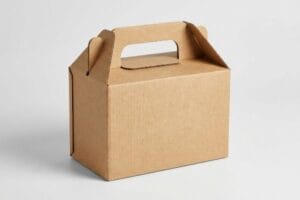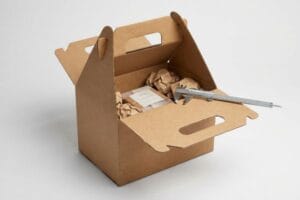
Buscas un empaque que luzca elegante en el estante, pero que no requiera conocimientos de ingeniería para su montaje. Precisamente ahí es donde destaca esta estructura en particular.
Una caja plegable recta es un diseño de cartón en el que los paneles superior e inferior se pliegan en la misma dirección. Esta estructura garantiza un panel frontal limpio y sin bordes visibles, lo que la hace ideal para el embalaje de cosméticos y productos electrónicos de alta gama.
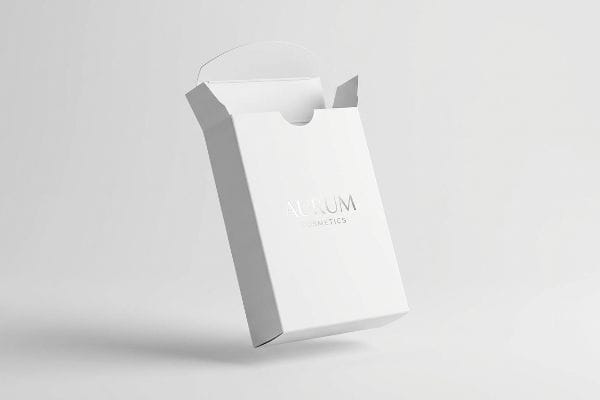
Pero simplemente conocer la definición no te salvará cuando llegue el momento de aumentar la producción. Veamos cómo se comportan realmente estas estructuras en la práctica.
¿Cuáles son los diferentes tipos de cajas de almacenamiento?
Desde pliegues invertidos hasta fondos automáticos, las variaciones parecen infinitas. Elegir la correcta determina si su equipo de logística trabaja a toda velocidad o se paraliza por completo.
Los distintos tipos de cajas con pliegues incluyen principalmente pliegues rectos, pliegues inversos y bases automáticas. Un pliegue inverso pliega sus paneles laterales en direcciones opuestas, mientras que una base automática cuenta con una base preencolada que se ajusta instantáneamente a una forma rígida, lo que acelera significativamente las operaciones de co-empaquetado de alto volumen.
Elegir el estilo es solo la mitad del trabajo; la verdadera prueba llega cuando el cartón se pliega.
La realidad de la compensación del calibrador para los pliegues de solapa
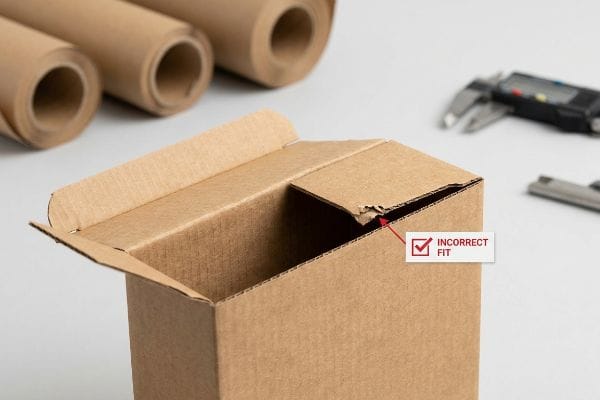
Incluso los diseñadores veteranos suelen pasar por alto este punto ciego al dibujar pestañas entrelazadas en software vectorial con el mismo ancho que el panel correspondiente¹.Tratan una línea digital plana como una verdad absoluta, dando por sentado que una simple ranura aceptará sin problemas una solapa plegada sin fricción.
Veo que esto sucede constantemente cuando los compradores pasan de papel fino a cartón ondulado más grueso. Un dependiente intenta doblar la solapa superior, pero la rigidez del cartón ondulado se resiste. Como el diseño asistido por ordenador (CAD) no tuvo en cuenta el grosordel cartón, la solapa queda demasiado ancha para la ranura. Se oye cómo se rompe el cartón mientras el dependiente se esfuerza por cerrarla, hasta que finalmente se rinde y pega un trozo de cinta adhesiva transparente sobre los gráficos de alta calidad.
| Error común de principiante | La solución profesional | Beneficio para el punto de venta |
|---|---|---|
| Ignorando el grosor de la tabla | Tolerancias de curvatura paramétricas3 | Inserción de colgajo sin fricción |
| Relación de lengüetas a ranuras de 1:1 | Ampliar las ranuras matemáticamente4 | Evita que el cartón se rompa |
| Troqueles planos básicos | PDF estructurales 3D bloqueados | Ahorra 25 segundos de tiempo de montaje5 |
Introduzco matemáticamente un margen de curvatura directamente en la línea de corte antes de que se active la mesa de corte. Corregir este cálculo fraccional de antemano elimina por completo el desgarro del papel en la línea de montaje.
🛠️ Oficina de Harvey: ¿No está seguro de si sus pestañas entrelazadas tienen el margen de flexión adecuado para sustratos más gruesos? 👉 Obtenga una auditoría gratuita de troquelado ↗ — Acceso directo a mi oficina. Sin spam de ventas automatizado, lo prometo.
¿Qué es una caja final de pliegue recto?
La precisión es fundamental cuando ambos extremos del empaque se pliegan hacia adentro sobre el mismo eje. La mecánica de este pliegue específico determina la presentación física de su marca.
Una caja con cierre recto cuenta con solapas que se abren desde el panel trasero y se pliegan suavemente hacia el frontal. Esta configuración evita que los bordes de cartón sin tratar interrumpan la presentación visual principal, creando una experiencia de desempaquetado de alta gama, muy apreciada por marcas de cosméticos de lujo, software y productos farmacéuticos de alta gama.
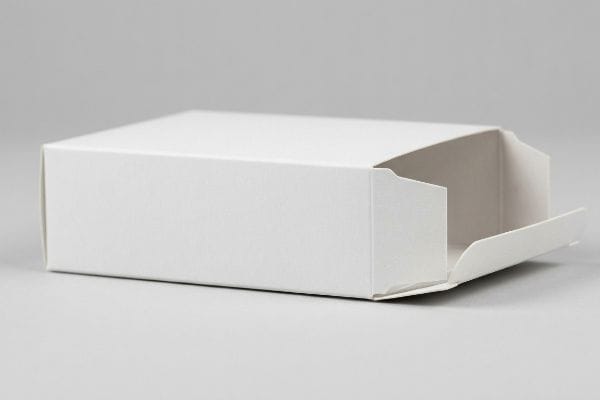
Ese panel frontal sin juntas luce genial en una maqueta digital, pero requiere una fuerza física considerable para crear las bisagras.
Control de la matriz de pliegues en los extremos de las costuras
Los equipos de compras suelen dar por sentado que trazar una línea de pliegue punteada sobre una matriz garantiza automáticamente un pliegue perfecto de 90 grados. Confían en que una matriz de acero estándar troquelará la caja6 sin dañar la superficie impresa.
La realidad de la fabricación es mucho más violenta. Cuando una cuchilla de acero sin filo golpea papel kraft virgen grueso, no solo lo pliega, sino que aplasta las fibras internas⁷.He visto hermosas cajas de cierre recto y brillante salir de la imprenta, solo para sufrir graves grietas litográficas justo en la bisagra frontal principal⁸al plegarse. La tinta blanca nítida se rompe como pintura seca, dejando al descubierto las fibras marrones sin tratar y arruinando la estética de alta calidad por la que acabas de pagar.
| Error común de principiante | La solución profesional | Beneficio para el punto de venta |
|---|---|---|
| Presión de regla de acero estándar | Matriz de plegado de polímero9 | Tinta cero rota |
| Suponiendo curvas automáticas de 90° | Control de estiramiento de la fibra10 | Esquinas limpias y definidas |
| Utilizando tablas secas y porosas | Material con humedad equilibrada11 | Las solapas se pliegan sin agrietarse |
Utilizo canales de plegado específicos para papel femenino que actúan como un yunque, controlando con precisión cómo se estiran las fibras del papel durante el golpe. Esto garantiza bordes absolutamente nítidos, sin una sola grieta microscópica en la tinta.
🛠️ Escritorio de Harvey: ¿Se agrietan las bisagras impresas y dejan al descubierto fibras marrones durante el montaje? 👉 Solicita una revisión estructural ↗ — Descarga de forma segura. Mi bandeja de entrada está abierta si tienes alguna pregunta más adelante.
¿Cuáles son los tres tipos de cajas?
En el mundo del embalaje, las estructuras suelen clasificarse en tres grandes categorías. Saber a qué categoría pertenece tu embalaje evita fallos catastróficos durante el transporte.
Los tres tipos de cajas son: cajas plegables, cajas rígidas y contenedores de cartón corrugado. Las cajas plegables son ligeras y se empaquetan planas; las cajas rígidas ofrecen una presentación de lujo que evita que se doblen; y las cajas de cartón corrugado utilizan arcos internos acanalados para absorber fuertes impactos cinéticos durante los complejos tránsitos de la cadena de suministro global.
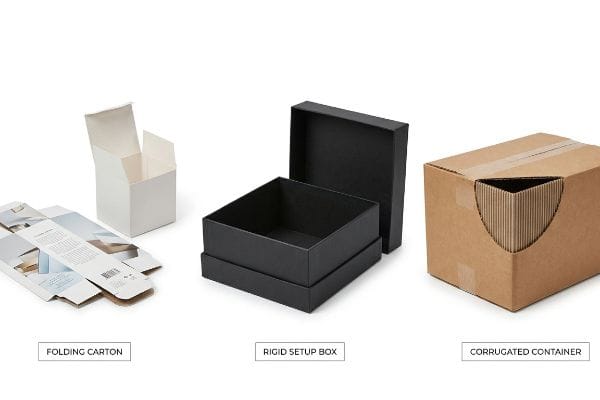
Muchas marcas confunden erróneamente las líneas que separan estas tres categorías, intentando forzar un material ligero a realizar un trabajo pesado.
La trampa de sustrato sin estrías en el comercio minorista
Es una trampa común que atrapa incluso a equipos de compras experimentados: diseñan una caja plegable estándar y atractiva usando cartón sólido12, y luego intentan ampliarla a un expositor masivo listo para el estante para ahorrar dinero. Asumen que la densidad del cartón en bruto equivale a la resistencia13.
Pero la densidad estática no puede reemplazar el desplazamiento de carga geométrica 14. El aglomerado sólido no tiene estructura interna 15. Recientemente evalué una bandeja grande tipo puck hecha de aglomerado grueso. Bajo una carga superior de 30 lb (13,6 kg), no había ningún mecanismo para dispersar el impacto cinético. El tablero sólido y rígido simplemente se arqueó hacia afuera y se deformó, lo que provocó que todo el expositor se deformara considerablemente en el estante de la tienda.
| Error común de principiante | La solución profesional | Beneficio para el punto de venta |
|---|---|---|
| Ampliación de la producción de tableros de partículas sólidos | Actualización a flauta travesera16 | Evita que los estantes se curven |
| Suponiendo que la densidad es igual a la resistencia | Geometría estriada interna | Absorbe el impacto cinético17 |
| Utilizar muebles desmontados para artículos pesados | Transición de microcanales18 | Mantiene las cajas perfectamente cuadradas |
Prohíbo estrictamente el uso de cartón liso para cualquier empresa minorista de gran tamaño. Optar por cartón ondulado de microcanales aprovecha la geometría arqueada interna para absorber de forma segura las cargas superiores sin aumentar el presupuesto de materia prima.
🛠️ Harvey's Desk: ¿Tu caja plegable grande se dobla hacia afuera por el peso de tus productos? 👉 Solicita tu auditoría de materiales ↗ — Sin formularios que generen interminables llamadas de ventas. Solo valor puro.
¿Cuánto suele costar una caja de dulces?
El precio unitario es lo primero en lo que se fijan los compradores, pero centrarse exclusivamente en el presupuesto inicial a menudo oculta los verdaderos gastos operativos que le esperan más adelante.
Una caja estándar suele costar entre 0,30 y 1,50 dólares por unidad, dependiendo en gran medida del volumen del pedido, el grosor del material y los acabados estéticos. Sin embargo, la incorporación de características costosas como láminas metálicas o laminados suaves al tacto en tiradas pequeñas puede elevar significativamente el coste unitario debido a la complejidad de la maquinaria de fábrica.
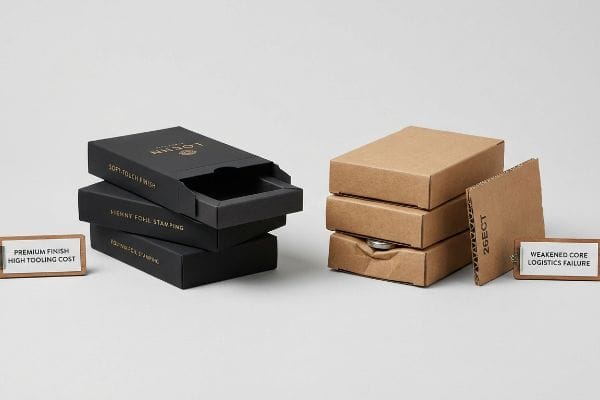
Pero conocer la teoría no es suficiente cuando las máquinas empiezan a funcionar; optimizar los costes en una hoja de cálculo suele generar auténticas pesadillas en la práctica.
La realidad de la degradación cosmética de la terapia electroconvulsiva
Para compensar los altos costos del embalaje premium para minoristas, los equipos de compras suelen hacer una suposición aparentemente razonable pero en realidad peligrosa. Reducen secretamente la clasificación ECT (Edge Crush Test) del material base,reemplazando un cartón robusto de 32 ECT por un sustituto más barato de 26 ECT,solo para poder costear una costosa laminación de lámina de cobertura total en el exterior.
Esto no es solo teoría: lo veo suceder en la planta de pruebas cuando las cajas de alta gama colapsan bajo condiciones logísticas básicas. En mis instalaciones, cuando colocamos estas cajas de aluminio de menor calidad en un probador de aplastamiento de bordes TAPPI T81120, la falla es inmediata. Al eliminar la densidad crítica de fibra del núcleo ondulado para ahorrar dinero, la caja pierde su rigidez estructural. La película de aluminio gruesa puede verse impresionante, pero cuando mido la prueba de compresión de la caja (BCT), la unidad se deforma con solo 42.5 libras (19.2 kg) de presión superior. Al restaurar el cartón a un estándar 32ECT virgen21 y reemplazar la película gruesa con un recubrimiento acuoso brillante de alto contenido de sólidos, garantizo que la integridad estructural se mantenga a prueba de balas. Este cambio preciso en el material evita el aplastamiento del inventario, lo que ahorra a los clientes grandes cargos de devolución de minoristas y preserva una imagen premium en el estante.
| Error común de principiante | La solución profesional | Beneficio para el punto de venta |
|---|---|---|
| Reducción de la calidad del aire acondicionado por motivos estéticos | mandato Virgin 32ECT22 | Sobrevive al apilamiento en el almacén |
| Películas de papel de aluminio gruesas y caras | Recubrimientos acuosos brillantes23 | Reduce el costo unitario de la lista de materiales |
| Ignorar las métricas de fallos de BCT | Validación TAPPI T81124 | Evita las devoluciones de cargo por parte de los minoristas |
Prohíbo rotundamente degradar la calidad de los tableros estructurales para financiar mejoras estéticas. Fijar las especificaciones del material base garantiza que sus cajas resistan las duras condiciones del transporte sin perjudicar la imagen de su marca.
🛠️ Oficina de Harvey: No permita que un defecto estructural de 2 milímetros arruine el lanzamiento de 500 tiendas. 👉 Envíeme su archivo de troquelado ↗ — Analizaré los cálculos antes de que malgaste su presupuesto en la producción en masa.
Conclusión
Puedes intentar ahorrar unos céntimos optando a ciegas por un cartón de 26 ECT para poder permitirte acabados metalizados, pero cuando ese cartón estructuralmente agotado se deforma bajo el peso del palé, provoca una fricción enorme, ralentizando la línea de montaje en un 30 % aproximadamente y eliminando por completo tus márgenes de beneficio. Esta es la hoja de especificaciones exacta que utilizan mis 10 principales clientes minoristas para garantizar cero rechazos de impresión. Deja de arriesgarte con las densidades de los materiales y permíteme auditar personalmente las tolerancias de tu embalaje con mi Auditoría Previa a la Impresión Gratuita ↗ para detectar riesgos fatales de aplastamiento antes de que lleguen a la planta de producción.
"Embalaje de cartón ondulado con diseño innovador para…", https://bioresources.cnr.ncsu.edu/resources/corrugated-board-packaging-with-innovative-design-for-enhanced-durability-during-transport/. Las guías técnicas de ingeniería de embalaje especifican que los anchos de las ranuras deben ajustarse en función del calibre del material para garantizar que las pestañas encajen sin fricción. Función de la evidencia: Validación técnica; tipo de fuente: Manual de ingeniería. Apoya: La necesidad de tolerancias sobre la coincidencia exacta del ancho. Nota de alcance: Específico para el diseño de cajas plegables. ↩
"Diseño óptimo de embalajes de cartón corrugado de doble pared – PMC", https://pmc.ncbi.nlm.nih.gov/articles/PMC8950760/. La documentación técnica sobre el diseño estructural de embalajes explica cómo debe tenerse en cuenta el calibre del material en los cálculos de la línea de troquelado para evitar problemas de ajuste. Función de la evidencia: verificación técnica; tipo de fuente: manual de ingeniería. Apoya: el vínculo causal entre el espesor del cartón omitido en CAD y el fallo de ensamblaje. Nota de alcance: específico para contenedores plegables. ↩
"Cómo calcular la tolerancia de doblado y la deducción de doblado con…", https://www.youtube.com/watch?v=0mGG4ZtC2a4. Breve explicación de cómo se utilizan las tolerancias de doblado paramétricas en el diseño de embalajes CAD para tener en cuenta el grosor del material durante el plegado. Función de evidencia: validación técnica; tipo de fuente: manual de ingeniería. Apoya: el método profesional para corregir errores de grosor de cartón. Nota de alcance: específico para software de diseño paramétrico. ↩
"Investigación del efecto de las perforaciones en la capacidad de carga…", https://pmc.ncbi.nlm.nih.gov/articles/PMC11396172/. Breve explicación de las tolerancias matemáticas requeridas para las relaciones ranura-pestaña para garantizar la integridad estructural del cartón. Función de la evidencia: especificación técnica; tipo de fuente: estándar de la industria del embalaje. Apoya: la afirmación de que ajustar el ancho de la ranura evita el desgarro. Nota de alcance: varía según el calibre. ↩
"Diseño de embalaje estructural: elementos clave y proceso", https://www.arkay.com/resources/structural-packaging-design. Breve explicación de datos empíricos que comparan la velocidad de ensamblaje de guías estructurales 3D con troqueles planos 2D. Función de la evidencia: métrica cuantitativa; tipo de fuente: estudio de eficiencia industrial. Apoya: el beneficio de ahorro de tiempo de los PDF 3D bloqueados. Nota de alcance: los resultados pueden variar según la complejidad de la caja. ↩
"Corte con troqueles de acero – Troqueles de acero | Solicitar presupuesto", https://www.americanmicroinc.com/die-cutting/steel-rule-die-cutting/. La documentación técnica sobre la mecánica del troquelado explica cómo interactúan los troqueles de acero con los sustratos y el potencial de deformación superficial o problemas de "marcado". Función de la evidencia: verificación técnica; tipo de fuente: guía de fabricación. Apoya: la eficacia y los riesgos de los troqueles de acero. Nota de alcance: se aplica a materiales de cartón plegable estándar. ↩
"Perspectivas para mantener la resistencia del papel y el cartón…", https://bioresources.cnr.ncsu.edu/resources/prospects-for-maintaining-strength-of-paper-and-paperboard-products-while-using-less-forest-resources-a-review/. Breve explicación de cómo las herramientas de plegado inadecuadas provocan fallos estructurales de las fibras y compresión en el papel kraft. Función de la evidencia: mecanismo técnico; tipo de fuente: manual de ingeniería de embalaje. Apoyos: degradación del material durante el plegado. Nota de alcance: específico para papeles kraft vírgenes gruesos. ↩
"Cambios en las propiedades de agrietamiento por pliegue y mecánicas… – BioResources", https://bioresources.cnr.ncsu.edu/resources/changes-in-fold-cracking-properties-and-mechanical-properties-of-high-grammage-paper-as-affected-by-additive-and-fillers/. Definición técnica del agrietamiento litográfico como la fractura de la tinta y el recubrimiento en la línea de pliegue. Función de la evidencia: identificación de defectos; tipo de fuente: estándar de la industria de la impresión. Apoyos: falla visual de acabados premium en las bisagras. Nota de alcance: centrado en superficies recubiertas/brillantes. ↩
"Influencia de las líneas de pliegue analógicas y digitales en la mecánica…", https://pmc.ncbi.nlm.nih.gov/articles/PMC9268991/. Comparación técnica de herramientas de plegado que muestra cómo las matrices de polímero reducen la tensión superficial para evitar que la tinta se agriete. Función de la evidencia: Verificación técnica; tipo de fuente: Manual de ingeniería de embalaje. Apoya: Eficacia de las matrices de polímero en el mantenimiento de la integridad de la tinta. Nota de alcance: Se aplica a recubrimientos de alta pigmentación en cartulina plegada. ↩
"Franjas de fibra: Agrupamiento sostenible para su negocio", https://www.atlanticpkg.com/fiber-based-banding-sustainable-bundling-for-your-business/. Documentación sobre cómo el control del estiramiento de la fibra previene la deformación estructural y garantiza ángulos de esquina precisos de 90 grados. Función de evidencia: Verificación técnica; tipo de fuente: Norma de fabricación industrial. Apoya: El uso del control de estiramiento para esquinas afiladas. Nota de alcance: Específico para cartones de alto gramaje. ↩
"Prevención del agrietamiento de cajas de cartón corrugado en condiciones climáticas extremas", https://www.maheshwaristarchtech.com/corrugated-box-crack-prevention.php. Investigación en ciencia de materiales sobre la relación entre el contenido de humedad del sustrato y la prevención de la fractura de las fibras durante el plegado. Función de la evidencia: Verificación técnica; tipo de fuente: Estudio de ciencia de materiales. Apoya: La afirmación de que una humedad equilibrada previene el agrietamiento de las solapas. Nota de alcance: Depende del entorno de almacenamiento y del tipo de fibra. ↩
"Material de cartón en envases de cartón plegable – Netpak", https://www.netpak.com/en/packaging-resources/industry-articles/paperboard-material-in-folding-carton/. Breve explicación de cómo una fuente externa autorizada respalda esta afirmación. Función de la evidencia: especificación técnica; tipo de fuente: manual de la industria del embalaje. Respalda: composición común del material de los envases de cartón plegable. Nota de alcance: confirma el cartón compacto como sustrato estándar. ↩
"Resistencia a la compresión de envases de cartón corrugado…", https://pmc.ncbi.nlm.nih.gov/articles/PMC10054506/. Breve explicación de cómo una fuente externa autorizada respalda esta afirmación. Función de la evidencia: principio técnico; tipo de fuente: revista de ciencia de los materiales. Respalda: la distinción entre densidad del material e integridad estructural geométrica. Nota de alcance: aborda por qué la densidad es una métrica insuficiente para la escala. ↩
"Diseño de optimización topológica de carga múltiple para la estructura…", https://pmc.ncbi.nlm.nih.gov/articles/PMC11356512/. Una fuente técnica sobre mecánica estructural o ingeniería de embalaje explicaría por qué la densidad del material por sí sola es insuficiente para soportar cargas en comparación con estructuras geométricas como el acanalado. Función de la evidencia: principio teórico; tipo de fuente: libro de texto de ingeniería. Apoyos: la necesidad de la geometría estructural para la absorción de impactos. Nota de alcance: física estructural general. ↩
"La guía definitiva para cajas de cartón corrugado", https://www.shorr.com/resources/blog/ultimate-guide-corrugated-boxes/. Una guía de ciencia de materiales o de la industria del embalaje confirmaría que el cartón compacto es un tablero de fibra prensada homogéneo que carece de los arcos internos acanalados que se encuentran en los materiales corrugados. Función de la evidencia: especificación del material; tipo de fuente: manual técnico de la industria. Apoyos: la falta de absorción de impactos en el cartón compacto. Nota de alcance: se refiere a sustratos no acanalados. ↩
"Qué es el cartón ondulado", https://www.fibrebox.org/what-is-corrugated/. Documentación técnica que explica la resistencia a la compresión y a la flexión del cartón ondulado tipo E en comparación con el cartón compacto. Función de la evidencia: verificación técnica; tipo de fuente: manual de ingeniería de embalaje. Apoya: el uso de cartón ondulado tipo E para evitar la deformación de los estantes. Nota de alcance: la eficacia varía según el peso total de la carga. ↩
"Descifrando la geometría del cartón corrugado de doble pared mediante…", https://pmc.ncbi.nlm.nih.gov/articles/PMC10974599/. Explicación científica de cómo la estructura arqueada de los materiales acanalados disipa la energía del impacto. Función de la evidencia: explicación científica; tipo de fuente: revista de ciencia de los materiales. Apoya: la afirmación de que la geometría acanalada proporciona absorción de impactos. Nota de alcance: se aplica a velocidades de impacto específicas. ↩
"Embalaje de microcanal | Cartones de canal N EF", https://www.netpak.com/en/packaging-resources/industry-articles/micro-flute-packaging-efn-flute/. Análisis comparativo de los valores de la prueba de aplastamiento de bordes (ECT) del microcanal y su capacidad para mantener la cuadratura estructural. Función de la evidencia: validación técnica; tipo de fuente: estándar de embalaje de la industria. Apoyos: uso de microcanal para mantener cuadradas las cajas pesadas. Nota de alcance: se refiere a grados de microcanal de alto rendimiento. ↩
"Entendiendo la resistencia de las cajas de envío", https://www.ecoenclose.com/blog/understanding-shipping-box-strength/?srsltid. Los estándares de embalaje de la industria confirman las diferencias técnicas en la capacidad de carga y el precio entre los cartones ondulados de 32 ECT y 26 ECT. Función de la evidencia: especificación técnica; tipo de fuente: estándar de fabricación; respalda: la diferencia relativa de costo y resistencia entre estas dos clasificaciones ECT. Nota de alcance: Se aplica a grados estándar de cartón ondulado. ↩
"Nueva configuración de prueba de aplastamiento de bordes mejorada con deformación de campo completo…", https://pmc.ncbi.nlm.nih.gov/articles/PMC8510352/. Confirmación de TAPPI T811 como el estándar industrial reconocido para medir la resistencia al aplastamiento de bordes del cartón corrugado. Función de evidencia: especificación técnica; tipo de fuente: estándar industrial. Apoya: la validez de la metodología de prueba mencionada. Nota de alcance: se aplica específicamente a materiales corrugados. ↩
"Especificaciones de cajas de cartón corrugado 32 ECT: Guía definitiva – Lansbox", https://lansbox.com/32-ect-corrugated-box-specs/. Verificación de la clasificación 32 ECT (Prueba de aplastamiento de bordes) como referencia cuantitativa para la resistencia del cartón y la resistencia a la compresión. Función de la evidencia: especificación técnica; tipo de fuente: hoja de datos del material. Apoya: la afirmación de que restaurar a 32 ECT garantiza la integridad estructural. Nota de alcance: se refiere a la resistencia al aplastamiento del borde del cartón en lb/pulg .
"Clasificaciones ECT explicadas: qué significan para su…", https://epackagesupply.com/blogs/packaging-guide/ect-ratings-explained-what-they-mean-for-your-corrugated-packaging?srsltid=AfmBOooFp8iZSidvCDNEyCtivG3ZTWXb4vHwczqPzUSSc-_TOmLgdg9k. Verificación de 32 ECT como estándar de durabilidad estructural en entornos de apilamiento de almacén. Función de evidencia: especificación técnica; tipo de fuente: manual de ingeniería de embalaje. Apoya: El requisito de 32 ECT para garantizar la integridad del apilamiento. Nota de alcance: Específico para estándares de cartón corrugado. ↩
"Recubrimiento acuoso vs. recubrimiento UV: diferencias clave para envases premium", https://gentlever.com/aqueous-coating-vs-uv-coating/. Análisis comparativo de los costos de producción de recubrimientos acuosos frente a laminaciones de lámina. Función de la evidencia: análisis de costos; tipo de fuente: informe de precios de la industria. Apoya: La afirmación de que los recubrimientos acuosos reducen el costo unitario de los materiales. Nota de alcance: Los costos varían según el volumen del pedido. ↩
"Importancia de la preparación de muestras para ensayos de borde a borde…", https://imisrise.tappi.org/download.aspx?key=18APR219. Documentación de TAPPI T811 como estándar industrial global para la medición de la resistencia a la compresión de cajas de cartón corrugado. Función de la evidencia: estándar industrial; tipo de fuente: organismo de normalización técnica. Apoya: El uso de T811 para validar las métricas BCT para prevenir fallas estructurales y cargos adicionales. Nota de alcance: Se aplica a las pruebas de embalaje de cartón corrugado. ↩