
Desarrollar un gran producto requiere meses de inversión, pero nada de eso importa si los compradores pasan de largo sin prestarle atención en un pasillo abarrotado de gente.
El embalaje para la venta al por menor es el principal contenedor físico utilizado para proteger, comercializar y entregar productos de consumo directamente a los compradores en entornos comerciales. Más allá de la simple contención, utiliza elementos específicos de ingeniería estructural y diseño gráfico para impulsar las compras por impulso, garantizar el cumplimiento de las normas logísticas y maximizar la visibilidad en los estantes.

Comprender la teoría es fácil, pero ejecutarla a la perfección en cadenas de suministro complejas es donde la mayoría de las marcas emergentes pierden margen de beneficio.
¿Qué significa el embalaje para la venta al por menor?
Muchos fundadores dan por sentado que una caja impresa es simplemente un recipiente para mover el inventario, tratándola como un mero gasto de adquisición en lugar de un motor de ingresos.
El significado del embalaje minorista va mucho más allá de simplemente meter un producto en una caja de cartón. Representa un activo de marketing altamente sofisticado, diseñado para cumplir con estrictos marcos comerciales, optimizar la logística del almacén, atraer clientes y garantizar la seguridad física de los artículos durante las interacciones con un gran volumen de consumidores.
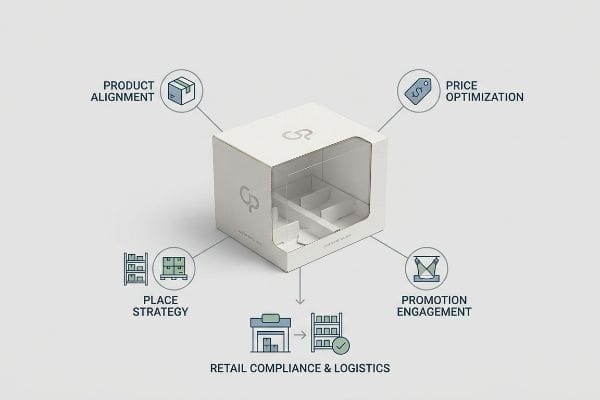
Si el diseño estructural no responde explícitamente a las exigencias comerciales del entorno específico de la tienda en la que se ubica, la campaña fracasará incluso antes de comenzar.
Las 4 P de la alineación del marco de venta minorista
Los nuevos equipos de marketing suelen intentar lanzar productos sin dominar los fundamentos del comercio minorista. Diseñan una caja visualmente impactante en la pantalla de un ordenador, dando por sentado que un buen producto se venderá solo. Esto ignora por completo la estricta mecánica empresarial de las 4 P (Producto, Precio, Plaza, Promoción) ¹ y los distintos modelos operativos de las diferentes grandes superficies² .
Veo constantemente cómo las marcas emergentes caen en esta trampa al presentar sus propuestas a gigantes como Walmart o Target . Me traen un concepto de exhibición enorme y excesivamente complejo que luce espectacular, pero que viola por completo la estrategia espacial del minorista. Sin una alineación empresarial fundamental, la cadena de suministro se interrumpe y el empaque se convierte en una carga económica. Al alinear la campaña directamente con la realidad operativa del minorista, se evitan rechazos costosos y se garantiza una aprobación sin problemas en el muelle de recepción³ .
| Error común de principiante | La solución profesional | Beneficio para el punto de venta |
|---|---|---|
| Diseño para un plano de tienda genérico | Mapea directamente con las 4 P del minorista | Evita costosos rechazos por parte de los compradores4 |
| Ignorando el flujo de tráfico en los pasillos | Disrupción agresiva de troquelado de ingeniería | Fuerzas de acoplamiento por impulso de 3 segundos5 |
| Gasto excesivo en huellas no autorizadas | Cumplimiento estricto de las guías de estilo del minorista | Garantiza una aprobación sin contratiempos del muelle de recepción6 |
Diseñar un archivo estructural sin adaptar la campaña a la realidad operativa del minorista es un enorme desperdicio. Una caja bonita que es rechazada en el muelle de recepción no genera ningún retorno de la inversión.
🛠️ Oficina de Harvey: ¿Diseñas exhibidores a ciegas sin conocer las limitaciones de espacio exactas de tu minorista objetivo? 👉 Obtén una verificación de cumplimiento para minoristas ↗ — Acceso directo a mi oficina. Sin spam de ventas automatizado, te lo prometo.
¿Qué significa cuando Amazon habla de embalaje no destinado a la venta al por menor?
Las marcas que hacen la transición del comercio electrónico a las tiendas físicas a menudo no comprenden las importantes diferencias logísticas entre estos dos canales de distribución tan distintos.
Cuando Amazon habla de embalaje no minorista, se refiere a sobres minimalistas y fáciles de usar, diseñados específicamente para la logística de comercio electrónico directo al consumidor. A diferencia de los expositores tradicionales de las tiendas, estos contenedores, pensados para el transporte, eliminan los costosos acabados estéticos, las voluminosas cajas de plástico y los excesivos gráficos publicitarios para priorizar la eficiencia del almacén y la protección básica durante el envío.
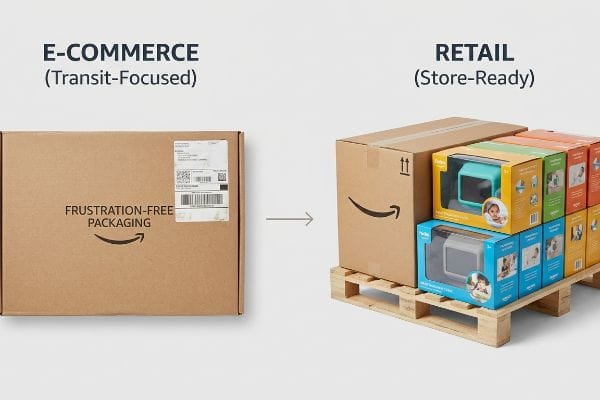
Saber cómo separar los materiales de venta directa al consumidor de los lanzamientos en tiendas comerciales es fundamental para evitar fallos estructurales catastróficos.
Sobreviviendo al estándar ISTA 6-Amazon SIOC
Las startups suelen intentar optimizar su logística reutilizando cajas de comercio electrónico B2C (de empresa a consumidor) —como los sobres estándar de Amazon— para el envío a tiendas B2B (de empresa a empresa). Observan una caja que parece intacta y asumen erróneamente que conserva su resistencia original de fábrica para un segundo viajehasta las tiendas físicas. Este es un grave error que afecta incluso a equipos de compras experimentados que buscan ahorrar costes.
Reutilizar estos sobres para lanzamientos en tiendas minoristas es un error estratégico. Si bien la caja puede verse bien por fuera, su propósito principal de transporte ya se ha cumplido, lo que la compromete para la distribución de carga a granel⁸.Separar los materiales de venta directa al consumidor de los de los lanzamientos en tiendas comerciales garantiza que el inventario minorista llegue en perfectas condiciones. Un lanzamiento exitoso en tiendas minoristas requiere materiales nuevos e impecables que cumplan con las estrictas exigencias estéticas y funcionales de las tiendas físicas.
| Error común de principiante | La solución profesional | Beneficio para el punto de venta |
|---|---|---|
| Reutilización de cajas de comercio electrónico entrantes | Imponer un mandato estricto sobre el material virgen | Elimina los cargos por daños durante el transporte9 |
| Ignorando el desgaste del material | Utilice cajas maestras nuevas | Mantiene la capacidad de carga adecuada10 |
| Combinación de suministros B2C y B2B | Tuberías de embalaje estructural segregadas | Acelera las líneas de co-envasado automatizadas11 |
Mezclar suministros para comercio electrónico y distribución minorista genera riesgos innecesarios. Para garantizar un lanzamiento exitoso, es fundamental dedicar cajas maestras nuevas y en perfecto estado exclusivamente a sus canales mayoristas.
🛠️ Oficina de Harvey: ¿No está seguro de si sus cajas maestras actuales tienen la resistencia a la compresión necesaria para el transporte marítimo de doble apilamiento? 👉 Solicite una auditoría de materiales ↗ — Descárguela de forma segura. Mi bandeja de entrada está abierta si tiene alguna pregunta más adelante.
¿Cuáles son los diferentes tipos de envases para la venta al por menor?
Al entrar en una gran superficie comercial, uno se encuentra rodeado de cientos de formatos físicos diferentes, cada uno de los cuales cumple una función logística y psicológica muy específica.
Los distintos tipos de embalaje para venta al por menor incluyen expositores de suelo, unidades de mostrador, palés estructurales fraccionados y bandejas listas para colocar en estanterías. Cada formato específico está diseñado estratégicamente para adaptarse a diferentes zonas comerciales, desde los enormes pasillos de los grandes almacenes hasta las cajas registradoras de puntos de venta con acceso restringido que exigen un estricto cumplimiento de las normas de alcance frontal.

Seleccionar el formato incorrecto para la zona de tienda asignada no solo da mala imagen, sino que también conlleva responsabilidades inmediatas en materia de seguridad y multas por incumplimiento.
POP vs. POS: Las restricciones espaciales de la ADA y la GMA
Las empresas comerciales y los diseñadores aficionados suelen proponer un concepto de diseño escalable, sugiriendo que un enorme expositor de punto de venta (POP) puede reducirse simplemente a la mitad en una pantalla de ordenador para funcionar como un expositor de mostrador (TPV). Tratan el archivo estructural como un gráfico flexible, ignorando las estrictas normas espaciales y logísticas que rigen estas dos zonas comerciales separadas¹² .
No basta con reducir el tamaño de un archivo CAD (Diseño Asistido por Computadora) para que siga cumpliendo con las normativas. Los expositores de suelo POP deben anclarse respetando los límites estrictos de altura de los palés¹³,mientras que los expositores de mostrador POS deben cumplir con las estrictas normas de alcance frontal¹⁴.La confusión entre estos tipos de estructuras genera ubicaciones incómodas y el rechazo inmediato por parte de la gerencia de la tienda. Dimensionar correctamente los expositores para sus zonas específicas garantiza una colocación impecable y maximiza el impacto de la promoción.
| Error común de principiante | La solución profesional | Beneficio para el punto de venta |
|---|---|---|
| Reducción de tamaño de un expositor de suelo para mostradores | Reevaluar las proporciones del formato | Garantiza un aspecto estético limpio |
| Ignorando los radios de giro | Limitar la huella a palets fraccionados15 | Mantiene los pasillos despejados y conformes a la normativa |
| Violación de las leyes de alcance frontal16 | Adaptar los diseños de los puntos de venta a los límites de la ADA17 | Garantiza una colocación de caja sin problemas |
separar de forma permanente las tuberías de ingeniería para las unidades de piso y mostrador . Intentar adaptar una geometría estructural a gran escala a un formato microscópico inevitablemente alterará su estrategia de promoción.
🛠️ Escritorio Harvey: ¿Intentas convertir un expositor de suelo enorme en una unidad de mostrador sin rediseñar las pestañas de fricción? 👉 Solicita tu revisión estructural gratuita ↗ — Sin formularios que generen interminables llamadas de ventas. Solo valor puro.
¿Qué significa "envasado para la venta al por menor"?
Una cosa es imprimir un bonito logotipo en una caja, pero lograr una verdadera preparación comercial requiere una modificación estructural drástica.
El empaquetado para la venta al por menor significa que el producto está completamente envuelto en materiales que cumplen con la normativa vigente, son resistentes y estéticamente atractivos para su colocación inmediata en la tienda. Esta clasificación garantiza que la unidad pueda soportar las redes logísticas globales, a la vez que transmite eficazmente la imagen de marca y se escanea sin problemas en la caja.
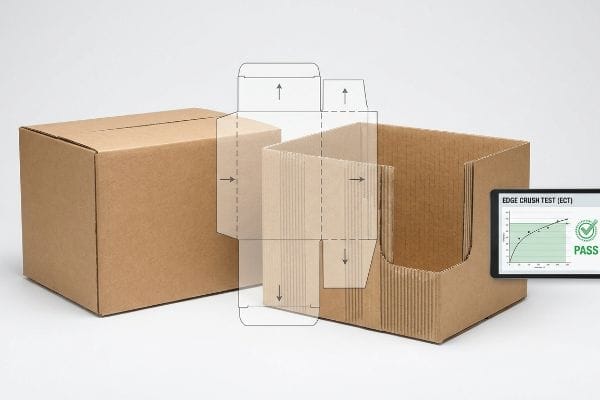
Pero conocer la teoría no es suficiente cuando las máquinas empiezan a funcionar; escatimar en la integridad estructural para crear un estante instantáneo inevitablemente provocará un desastre en la cadena de suministro.
¿Por qué las cajas RSC estándar no funcionan como contenedores de venta al por menor?
Los equipos de compras suelen intentar ahorrar en costes de materia prima sustituyendo un RSC (Contenedor Ranurado Regular) estándar por un HSC (Contenedor Ranurado Medio) de tapa abierta. La premisa es sencilla: al quitar las solapas superiores continuas, se crea un contenedor instantáneo listo para la venta al público al que los compradores pueden acceder fácilmente. Si bien esto parece increíblemente práctico en una representación digital, ignora por completo la tensión cinética del apilamiento de palés18.
Esto no es solo teoría: veo que esto sucede en el campo de pruebas cuando evaluamos las bases estructurales. Al quitar las solapas superiores, se elimina por completo el cerramiento superior de 360 grados, destruyendo la capacidad de la estructura para distribuir la presión de carga superior. Pruebo esto usando una prueba de aplastamiento de borde TAPPI T811 (ECT)19, y cuando un HSC sin soporte se somete a peso dinámico, los datos negativos son innegables: registro regularmente una caída del 41,3 % en la estabilidad de la esquina. El sonido repugnante y lento de un revestimiento kraft virgen 32ECT que se rompe por completo en la esquina inferior bajo el peso de un palé pesado es una dura prueba de realidad. Para solucionar esto, aplico rigurosamente un protocolo de alineación de fibra vertical y mejoro las paredes vulnerables a un perfil de flauta B de doble pared20. Al restaurar matemáticamente la estabilidad superior perdida, me aseguro de que el equipo de ensamblaje de co-empaquetado no pierda tiempo pegando con cinta adhesiva las esquinas aplastadas, lo que ahorra a los clientes aproximadamente 2100 dólares en costos de retrabajo manual por cada campaña estándar, al tiempo que se mantiene la comodidad de venta minorista con la parte superior abierta.
| Error común de principiante | La solución profesional | Beneficio para el punto de venta |
|---|---|---|
| Utilizando cajas HSC sin refuerzo | Alinee la veta corrugada perfectamente vertical21 | Restaura la compresión crítica de carga superior |
| Ignorar la estabilidad faltante del flap | Actualización a ranurado de doble pared específico22 | Evita el aplastamiento catastrófico de la base |
| Basándose en especificaciones de materiales planos | Ejecutar simulaciones dinámicas de tránsito de ISTA23 | Garantiza la supervivencia durante el transporte marítimo |
Un contenedor de venta al por menor sin tapa nunca debe entrar en producción en masa sin compensar mecánicamente la falta de tapa. Confiar en la densidad de la materia prima en lugar de mejorar la geometría estructural garantiza un fallo catastrófico durante el transporte.
🛠️ Oficina de Harvey: No permita que un defecto estructural de 2 milímetros arruine el lanzamiento de 500 tiendas. 👉 Envíeme su archivo de troquelado ↗ — Analizaré los cálculos antes de que malgaste su presupuesto en la producción en masa.
Conclusión
Puedes optar por reducir los costos de material cambiando a un contenedor abierto sin soporte, pero cuando esas esquinas estructuralmente debilitadas colapsen bajo el peso del palé, el pandeo resultante ralentizará la línea de ensamblaje de coempaquetado en un 30 % aproximadamente y provocará el rechazo inmediato por parte del minorista. Más de 500 gerentes de marca utilizan mi lista de verificación de preimpresión para evitar estos errores fatales en las primeras etapas. Deja de adivinar las tolerancias de compresión y permíteme revisar personalmente tus archivos estructurales con mi Auditoría de Troquelado Gratuita ↗ para garantizar matemáticamente que tu empaque resista la dura realidad del punto de venta.
"Las 4 P del marketing explicadas – Leavey School of Business – SCU", https://www.scu.edu/business/blog/business-concepts/what-are-the-4-ps-of-marketing/. Un libro de texto de marketing de referencia verificaría las 4 P como el marco fundamental para la comercialización minorista. Función de la evidencia: fundamento teórico; tipo de fuente: libro de texto académico. Apoya: la categorización estándar de Producto, Precio, Plaza y Promoción. Nota de alcance: principio empresarial fundamental. ↩
"Comprendiendo a los grandes minoristas: definición, ejemplos y…", https://www.investopedia.com/terms/b/big_box_retailer.asp. Los informes de la industria o las revistas de logística detallarían cómo varían los diferentes grandes minoristas en sus requisitos de recepción y almacenamiento en estantes. Función de la evidencia: validación fáctica; tipo de fuente: análisis de la industria. Apoya: la necesidad de adaptar el embalaje a las operaciones específicas del minorista. Nota de alcance: se centra en la logística operativa. ↩
"Guía de contracargos de Amazon, Walmart y Target – JASCI", https://www.jascicloud.com/blog/amazon-walmart-target-chargebacks-guide. Los manuales autorizados de los proveedores minoristas describen las sanciones específicas (contracargos) y los criterios de rechazo para los envíos que no cumplen con los estándares de embalaje y etiquetado en el muelle de recepción. Función de la evidencia: verificación fáctica del riesgo operativo; tipo de fuente: manual de cumplimiento del proveedor corporativo. Apoya: la afirmación de que la alineación operativa previene pérdidas financieras y fallas logísticas. Nota de alcance: se centra en la distribución minorista a gran escala .
"El impacto de los elementos visuales del diseño de envases en la compra…", https://pmc.ncbi.nlm.nih.gov/articles/PMC11851823/. Documentación que muestra cómo la falta de alineación con los marcos de trabajo de los minoristas (como las 4 P) conduce al rechazo del producto durante la adquisición. Función de la evidencia: verificación del proceso; tipo de fuente: guía de adquisiciones minoristas. Apoya: el beneficio de la alineación con el marco de trabajo. Nota de alcance: Puede variar según el rigor específico de la incorporación del minorista. ↩
"Efecto del orden espacial en la compra impulsiva: moderado por la autointerpretación", https://pmc.ncbi.nlm.nih.gov/articles/PMC10451481/. Verificación del referente del sector para el tiempo disponible para captar la atención del consumidor en un estante de venta minorista. Función de la evidencia: métrica técnica; tipo de fuente: estudio de comportamiento del consumidor. Apoya: la efectividad de la disrupción troquelada. Nota de alcance: se aplica principalmente a categorías de compra impulsiva de alto tráfico. ↩
"Mejores prácticas de comercialización: Cumplimiento – Vanguard Companies", https://www.vanguardpkg.com/merchandising-best-practices-compliance/. Prueba de que el cumplimiento de las dimensiones y guías de estilo de embalaje específicas es un requisito para la recepción en almacén y la aceptación en muelle. Función de la evidencia: estándar operativo; tipo de fuente: manual de cumplimiento del proveedor. Apoya: la necesidad de huellas aprobadas. Nota de alcance: Se centra en la logística B2B y las operaciones de la cadena de suministro. ↩
"Embalaje de cartón ondulado con diseño innovador para una mayor durabilidad...", https://bioresources.cnr.ncsu.edu/resources/corrugated-board-packaging-with-innovative-design-for-enhanced-durability-during-transport/. Explicación técnica de la fatiga del material y la degradación estructural del cartón ondulado tras los ciclos de tránsito iniciales. Función de la evidencia: Verificación técnica; tipo de fuente: Manual de ingeniería de embalaje. Apoya: La afirmación de que las cajas reutilizadas visualmente intactas carecen de la capacidad estructural para la distribución minorista. Nota de alcance: Se aplica a las normas de cartón ondulado. ↩
"Embalaje de cartón ondulado con diseño innovador para una mayor durabilidad...", https://www.researchgate.net/publication/400035184_Corrugated_board_packaging_with_innovative_design_for_enhanced_durability_during_transport. La documentación técnica sobre la fatiga del cartón ondulado explica cómo las tensiones iniciales durante el transporte reducen la resistencia a la compresión de un contenedor, lo que lo hace inadecuado para las cargas verticales del transporte a granel paletizado. Función de la evidencia: Validación técnica; tipo de fuente: Guía de ingeniería de embalaje. Apoya: La afirmación de que los sobres utilizados anteriormente carecen de la integridad estructural necesaria. Nota de alcance: Se aplica específicamente a materiales de cartón ondulado. ↩
"¿Qué errores de embalaje por contrato provocan devoluciones de cargo por parte de los minoristas?", https://www.industrialpackaging.com/blog/copacker-mistakes-retailer-chargebacks. Verificación de que los distribuidores minoristas imponen sanciones económicas (devoluciones de cargo) por mercancías que llegan dañadas debido a un embalaje deficiente. Función de la evidencia: verificación de hechos; tipo de fuente: directrices de logística de la industria. Apoya: el vínculo entre la calidad del embalaje y las sanciones económicas. Nota de alcance: las políticas de devolución de cargo varían según el minorista .
"Estimación de la resistencia a la compresión de cajas de cartón corrugado…", https://pmc.ncbi.nlm.nih.gov/articles/PMC8467740/. Evidencia técnica que demuestra cómo la fatiga del material en el cartón reutilizado reduce la resistencia a la compresión vertical y la capacidad de carga. Función de la evidencia: especificación técnica; tipo de fuente: estudio de ciencia de los materiales. Apoya: el requisito de cajas maestras nuevas para garantizar la integridad estructural. Nota de alcance: depende de la clasificación ECT del cartón. ↩
"Eficiencia y automatización: la base tecnológica de las líneas de empaque modernas...", https://www.lantech.com/efficiency-and-automation-the-technological-basis-of-modern-packaging-lines/. Datos de la industria sobre cómo las dimensiones y los materiales de empaque B2B estandarizados reducen los errores y aumentan el rendimiento en entornos de coempaquetado automatizados. Función de la evidencia: optimización de procesos; tipo de fuente: manual de gestión de la cadena de suministro. Apoya: la ganancia de eficiencia derivada de la segregación de las líneas de empaque estructurales. Nota de alcance: aplicable a instalaciones que utilizan clasificación/empaquetado automatizados. ↩
"Exhibidores POP vs. Exhibidores POS: ¿Cuál es la diferencia?", https://popdisplay.me/pop-vs-pos-displays-whats-the-difference/. Las directrices de la industria de organizaciones como GMA o ADA establecen requisitos específicos de dimensiones y accesibilidad para exhibidores de piso en comparación con exhibidores de mostrador. Función de la evidencia: especificación técnica; tipo de fuente: estándar de la industria. Apoya: la afirmación de que los exhibidores POP y POS no se pueden escalar indistintamente debido a reglas de zonificación distintas. Nota de alcance: se aplica a entornos minoristas físicos. ↩
"Tipos de expositores de palets: completos, medios y cuartos – GreenDot Packaging", https://greendotpackaging.com/understanding-pallet-display-types-full-half-and-quarter-pallet-displays/. Verificación de las dimensiones estándar de los palets (por ejemplo, estándares GMA) que rigen la huella física de las unidades de punto de venta. Función de la evidencia: especificación técnica; tipo de fuente: estándar de la industria. Apoya: cumplimiento de las restricciones logísticas. Nota de alcance: enfoque en los estándares minoristas norteamericanos. ↩
"Mostradores de ventas y servicio – Access-Board.gov", https://www.access-board.gov/ada/guides/animations/sales-and-service-counters.html. Verificación de las directrices de la ADA (Ley de Estadounidenses con Discapacidades) con respecto a las distancias máximas de alcance frontal para superficies de mostrador accesibles. Función de la evidencia: requisito legal; tipo de fuente: reglamento gubernamental. Apoya: cumplimiento de las leyes de accesibilidad. Nota de alcance: específico para los rangos de alcance de la ADA. ↩
"Tamaño estándar de palé: una guía completa para compradores – Meridian", https://www.meridianpkg.com/feeds/blog/standard-pallet-size . Los estándares de la industria para tamaños de palés, como los de la Grocery Manufacturers Association (GMA), dictan la distribución espacial y el espacio ocupado en las exhibiciones de los puntos de venta. Función de la evidencia: estándar de la industria; tipo de fuente: guía de organización comercial. Apoya: el uso de medidas basadas en palés para mantener el espacio libre en los pasillos. Nota de alcance: aplicable a la logística de grandes superficies comerciales.
"Requisitos de la ADA para restaurantes | Guía de altura de mostrador y accesibilidad", https://www.gofoodservice.com/guides/americans-with-disabilities-act-ada-regulations-guide?srsltid=AfmBOoqHWFXeWyjTVwoKENK1EtnwWqbuZSBRMr0hG5ZuwKP9uxz-cTA-. Las normas de accesibilidad detalladas definen las distancias de alcance frontal permitidas para personas en sillas de ruedas para garantizar un acceso equitativo. Función de la evidencia: especificación técnica; tipo de fuente: norma reglamentaria. Apoya: la existencia de requisitos legales para el alcance frontal en el diseño de tiendas minoristas. Nota de alcance: se aplica principalmente a las normas de la ADA de EE. UU.
"Capítulo 9: Elementos integrados – Access-Board.gov", https://www.access-board.gov/ada/chapter/ch09/. Las directrices autorizadas de la ADA especifican rangos de alcance y alturas máximas para mostradores de servicio y puntos de transacción accesibles. Función de evidencia: requisito legal; tipo de fuente: reglamento gubernamental. Apoya: la necesidad de alinear el diseño de los puntos de venta con los límites de accesibilidad de la ADA. Nota de alcance: se centra en las dimensiones físicas de la zona de interacción. ↩
"Investigación del efecto de la rigidez de la plataforma superior del palé en el cartón ondulado...", https://pmc.ncbi.nlm.nih.gov/articles/PMC8585293/. Análisis técnico de las diferencias en la prueba de compresión de cajas (BCT) entre contenedores ranurados regulares y contenedores ranurados a la mitad bajo cargas verticales. Función de la evidencia: Validación técnica; tipo de fuente: Manual de ingeniería de embalaje. Apoya: La afirmación de que la eliminación de las solapas superiores compromete la integridad estructural durante el transporte. Nota de alcance: Se centra en las normas de cartón ondulado. ↩
"Métodos de ensayo de aplastamiento de bordes y modelado de compresión de cajas, TAPPI …", https://www.tappi.org/publications-standards/tappi-journal/home/2022/aug/edge-crush-testing-methods-and-box-compression-modeling-tappi-journal-august-2022/. Verificación de TAPPI T811 como estándar industrial para medir la resistencia al aplastamiento de bordes del cartón ondulado. Función de la evidencia: validación técnica; tipo de fuente: estándar industrial. Apoya: La validez de la metodología de ensayo utilizada para medir la estabilidad estructural. Nota de alcance: Específico para materiales de cartón ondulado a base de papel. ↩
"Estimación de la resistencia a la compresión de cajas de cartón corrugado para un…", https://pmc.ncbi.nlm.nih.gov/articles/PMC9864211/. Documentación técnica que explica cómo la construcción de doble pared con flauta B aumenta la resistencia a la compresión vertical y la resistencia a la perforación. Función de la evidencia: validación de especificaciones; tipo de fuente: manual de ingeniería de embalaje. Apoya: La afirmación de que la mejora de los perfiles de pared restaura la estabilidad estructural. Nota de alcance: La comparación se realiza típicamente con flauta C o B de pared simple. ↩
"Resistencia a la compresión de envases de cartón ondulado con…", https://pmc.ncbi.nlm.nih.gov/articles/PMC10054506/. Explicación técnica de cómo la alineación vertical de la fibra maximiza la resistencia a la compresión de carga superior en envases de cartón ondulado. Función de la evidencia: validación técnica; tipo de fuente: manual de ingeniería de envases. Apoya: la afirmación de que la orientación de la fibra restaura la capacidad de carga. Nota de alcance: específico para cartón ondulado. ↩
"Diseño óptimo de embalajes de cartón corrugado de doble pared – PMC", https://pmc.ncbi.nlm.nih.gov/articles/PMC8950760/. Análisis comparativo de la resistencia al aplastamiento del cartón corrugado de doble pared en comparación con los materiales de pared simple. Función de la evidencia: especificación del material; tipo de fuente: guía de embalaje industrial. Apoya: el uso de cartón corrugado de doble pared para prevenir fallas en la base. Nota de alcance: se centra en la capacidad de carga estructural. ↩
"Estándares de proceso – Asociación Internacional de Tránsito Seguro", https://ista.org/process_standards.php. Protocolos detallados de la Asociación Internacional de Tránsito Seguro (ISTA) sobre la simulación de tensiones durante el transporte marítimo internacional. Función de evidencia: verificación de estándares; tipo de fuente: organismo de certificación de la industria. Apoya: la necesidad de la simulación para la supervivencia del transporte marítimo. Nota de alcance: se refiere a los estándares globales de ISTA. ↩