
Pasas meses perfeccionando un producto, solo para verlo acumular polvo en las estanterías de un gran almacén. Un plan de marketing minorista eficaz detiene esta pérdida silenciosa al instante.
Una estrategia de marketing minorista consiste en la alineación calculada de la ubicación del producto, el precio y la presentación visual para impulsar las compras por impulso. Esta estrategia cierra la brecha entre el conocimiento digital de la marca y las conversiones en la tienda física, asegurando que el empaque secundario se desenvuelva eficazmente en entornos de alto tránsito para captar la atención del consumidor y generar ingresos.

Pero comprender la teoría de los libros de texto es solo el primer paso; ejecutarla a la perfección en un entorno físico de alta velocidad requiere una ingeniería implacable.
¿Por qué es importante el marketing minorista?
Lanzar un producto excelente a un estante sin un plan de activación local es una forma segura de perder dinero. El marketing minorista obliga a los compradores a mirar la caja.
El marketing minorista dirige el flujo de clientes hacia tu producto específico, por encima de la competencia. Utiliza la visibilidad estructural, los factores psicológicos y los modelos de precios estratégicos para convertir a los visitantes pasivos en compradores activos. Esta disciplina transforma un cliente inactivo en un vendedor de alto rendimiento en el punto de venta (POP).

Implementar estas tácticas suena sencillo en una sala de juntas, pero la realidad física de la logística minorista es totalmente implacable.
El protocolo de las 5 R y la alineación de la estrategia minorista
Muchas marcas emergentes intentan lanzar nuevas líneas sin dominar los marcos comerciales fundamentales. Dan por sentado que un artículo bien valorado se venderá solo, ignorando por completo la estricta mecánica de adaptar su embalaje a los requisitos logísticos específicoslos diferentes entornos minoristas.
En mi empresa, veo con frecuencia cómo equipos de marca brillantes fracasan por ignorar las 5 R: producto correcto, cantidad correcta, precio correcto, momento correcto, lugar correcto².Incluso directores de marketing experimentados caen en esta trampa, diseñando un enorme expositor para un gran almacén y tratando de encajarlo en el estrecho pasillo de una tienda de conveniencia. Recuerdo ver a un dependiente sudando de frustración, arrastrando una enorme unidad de cartón corrugado sobre un suelo de linóleo áspero, solo para darse cuenta de que bloqueaba físicamente el pasillo principal. Inmediatamente agarró un cúter, cortó el cabezal de cartón y metió la base rota en una esquina. Al mapear con precisión la estructura del expositor al modelo operativo del minorista antes de cortar una sola línea de troquelado, nos aseguramos de que la unidad encaje a la perfección, generando un aumento considerable en la visibilidad en el estante en lugar de provocar un costoso rechazo.
| Error común de principiante | La solución profesional | Beneficio para el punto de venta |
|---|---|---|
| Ignorar los límites de espacio en la tienda | Mapa de la huella geográfica a formatos de tienda específicos3 | Evita el rechazo instantáneo de la pantalla |
| Diseño de pantallas genéricas universales | Diríjase al segmento demográfico específico de las 5 R4 | Incrementa las ventas impulsivas dirigidas a clientes potenciales |
| Sobrecargar las unidades con existencias de baja rotación | Optimice la cantidad de SKU para una rotación rápida5 | Elimina los problemas de desorden en la trastienda |
Me niego a diseñar una unidad sin antes consultar la guía de cumplimiento del minorista objetivo. Alinear la estructura del espacio con el flujo de tráfico exacto de la tienda es la única manera de proteger su margen de beneficio ante un posible rechazo logístico inmediato.
🛠️ Oficina de Harvey: ¿No está seguro de si el diseño de su expositor de suelo se ajusta a los límites de espacio en los pasillos de su tienda objetivo? 👉 Envíeme su archivo de diseño ↗ — Acceso directo a mi oficina. Sin spam de ventas automatizado, lo prometo.
¿Qué es la regla 3-3-3 en marketing?
Tienes apenas unos segundos para detener a un comprador apresurado con un carrito de compras. La regla 3-3-3 dicta exactamente cómo tu exhibición física debe interceptar ese impulso.
La regla 3-3-3 en marketing es un marco espacial que establece que un vendedor debe captar la atención desde 9 metros (30 pies), despertar el interés a 1 metro (3 pies) y concretar la venta a 7,5 centímetros (3 pulgadas). Su correcta implementación garantiza que los elementos estructurales se comuniquen eficazmente a través de diversas distancias físicas.

Comprender estas zonas espaciales es fundamental, pero diseñar físicamente una estructura de cartón que satisfaga las tres simultáneamente es donde las campañas suelen fracasar.
Ingeniería de la jerarquía de interacción espacial 3-3-3
Los equipos de diseño suelen crear expositores para tiendas exclusivamente para su visualización de cerca en monitores de ordenador retroiluminados. Se centran en los pequeños detalles tipográficos y los degradados sutiles, ignorando la cruda realidad física de cómo las personas se mueven por los amplios pasillos de las tiendas, iluminados con una luz intensa.
El fallo más común que observo en la planta de producción es un expositor que luce impecable a tres pulgadas, pero que se convierte en una mancha gris invisible a treinta pies de distancia. Incluso las agencias de diseño más veteranas olvidan que los compradores se mueven rápidamente. Si no se utilizan formas troqueladas llamativas o una gran cantidad de color directo PMS (Pantone Matching System) para crear un impacto visual a 30 pies, nadie se acercará lo suficiente como para leer los puntos clave. Recientemente, pasé las manos por una hoja de prueba perfectamente impresa que estaba arruinada por un texto diminuto excesivo; se sentía increíblemente suave al tacto, pero visualmente, provocaba una sobrecarga cognitiva instantánea. Al diseñar zonas de impacto dedicadas de 50 pulgadas (1270 mm) de altura6 para la interacción a 3 pies y cortar con precisión el borde de retención frontal para garantizar una visibilidad del 85 % del producto7 para la conversión táctil final a 3 pulgadas, me aseguro de que la estructura atraiga matemáticamente el flujo de clientes y concrete la venta.
| Error común de principiante | La solución profesional | Beneficio para el punto de venta |
|---|---|---|
| Usar fuentes diminutas para los ganchos principales | Encabezados de inundación con color directo PMS brillante | Llama la atención desde 30 pies de distancia8 |
| Colocar información clave demasiado abajo en la base | Anclar el mensaje principal a 50 pulgadas9 | Atrae perfectamente a los compradores a 3 pies de distancia |
| Labios delanteros altos que ocultan el producto | Recortar los labios de retención para maximizar la visibilidad | Impulsa la venta final de tácticas de 3 pulgadas10 |
Siempre construyo prototipos físicos para probar el impacto visual desde cualquier punto del almacén. Si una exhibición no logra que un comprador apresurado frene desde nueve metros de distancia, el diseño ha fallado.
🛠️ Harvey's Desk: ¿El gráfico de tu encabezado actual se pierde en el fondo cuando se ve desde el otro lado del pasillo de la tienda? 👉 Solicita una auditoría estructural ↗ — Descarga de forma segura. Mi bandeja de entrada está abierta si tienes alguna pregunta más adelante.
¿Cuáles son los cuatro elementos principales de una estrategia de venta minorista?
Una campaña exitosa equilibra múltiples prioridades contrapuestas. Si solo te centras en reducir los gastos en materia prima, todo el despliegue físico inevitablemente se verá afectado por la presión.
Los cuatro elementos principales de una estrategia de venta minorista son Producto, Precio, Distribución y Promoción. En la industria manufacturera, estos se traducen directamente en las 4 C: Costo, Concepto, Conveniencia y Comunicación, lo que garantiza que el comerciante físico siga siendo económicamente viable y, al mismo tiempo, sobreviva a las dificultades de la logística de la cadena de suministro.
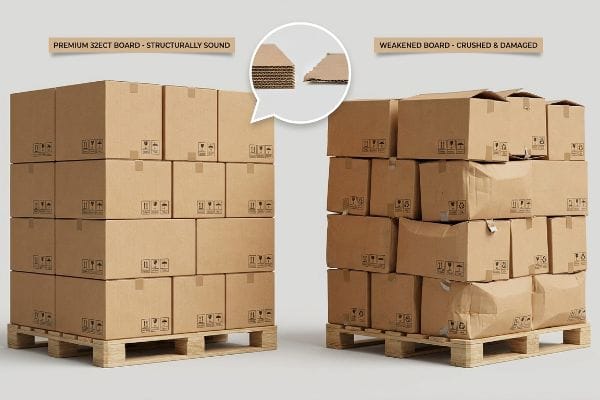
Memorizar estos cuatro pilares resulta útil para un examen, pero mantener el equilibrio durante una producción a alta velocidad requiere un enfoque intransigente en cuanto a la integridad estructural.
Sobreviviendo a la trampa del desequilibrio de las 4 C
Los departamentos de compras suelen centrarse exclusivamente en el factor "Costo" al solicitar embalajes para tiendas minoristas. Intentan reducir el grosor de los paneles estructurales para ahorrar unos céntimos por unidad, dando por sentado que el concepto de marketing general se mantendrá a pesar del proceso logístico.
Esta visión de túnel centrada en la reducción de costes crea un grave desequilibrio que destruye por completo los otros tres pilares. Imagínelo como comprar neumáticos baratos para un coche deportivo de alto rendimiento. Con frecuencia, recibo archivos donde los compradores han optado por una alternativa delgada y endeble, en lugar de un cartón resistente con una resistencia al aplastamiento de bordes (32ECT) . Cuando esa caja debilitada llega a un almacén húmedo, puedo oír literalmente cómo se doblan y se rompen las ondulaciones internas del papel bajo el peso de 68 kg (150 lb) del palé. El concepto físico se arruina, la facilidad de montaje se ve afectada por troqueles distorsionados y la comunicación en el lineal se pierde debido a gráficos dañados durante el transporte. Al vincular matemáticamente el coste estructural directamente con la conveniencia de la cadena de suministro, implemento una estrategia unificada que garantiza que su embalaje llegue intacto, eliminando por completo el riesgo de devoluciones catastróficas por parte de los minoristas.
| Error común de principiante | La solución profesional | Beneficio para el punto de venta |
|---|---|---|
| Reducción de la placa ECT para ahorrar costes | Mantener la línea base estructural virgen de 32ECT13 | Resiste cargas pesadas en la parte superior de los palés |
| Aislar el costo del material del transporte | Considerar la seguridad total de la logística inversa14 | Evita costosos contracargos por parte de los minoristas |
| Sacrificar la velocidad de ensamblaje por el precio | Diseñar con precisión las pestañas de bloqueo preencoladas15 | Acelera el trabajo de co-empaquetado en la parte posterior |
Jamás permito que los equipos de compras rebajen la base estructural solo para alcanzar un objetivo presupuestario local. Sacrificar la capacidad operativa para ahorrar unos céntimos al principio siempre conlleva pérdidas de beneficios devastadoras a largo plazo.
🛠️ Harvey's Desk: ¿Está perdiendo margen de beneficio en secreto porque la calidad de sus paneles de exhibición actuales es demasiado baja para el transporte? 👉 Obtenga una verificación de calidad de material ↗ — Sin formularios que generen interminables llamadas de ventas. Solo valor puro.
¿Por qué es importante tener una estrategia de marketing?
Sin un plan disciplinado, tu presentación se convierte en un caos visual. Una estrategia bien definida protege tu mensaje principal para que no se pierda entre el ruido visual.
Contar con una estrategia de marketing es fundamental porque impone una jerarquía visual y estructural estricta en el punto de venta. Obliga a las marcas a priorizar su propuesta de valor principal, evitando la sobrecarga cognitiva y asegurando que la exhibición física genere una acción inmediata por parte del consumidor en una fracción de segundo.
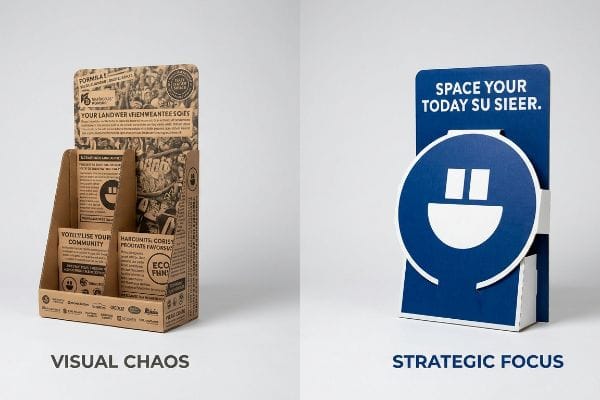
Pero conocer la teoría no basta cuando las máquinas empiezan a funcionar. En el momento en que una marca abandona la contención estratégica en la planta de producción, la comercialización física se derrumba por completo bajo su propio peso.
El fracaso de la asignación creativa 40-40-20
Los equipos de marketing suelen tratar los expositores de cartón corrugado como lienzos informativos en blanco, partiendo de la premisa de que más texto equivale a una mejor comunicación. Intentan imprimir todas las características del producto, los perfiles en redes sociales y las advertencias promocionales directamente en los paneles laterales estructurales.
Esto no es solo teoría: lo veo suceder en la práctica cuando un diseño sobrecargado no logra generar interacción. En mi empresa, intercepto con frecuencia diseños que violan la regla fundamental 40-40-20¹⁶,que establece que el éxito de una campaña depende en un 40 % de la segmentación del público, en un 40 % de la oferta del producto y solo en un 20 % de la ejecución creativa. Cuando saco una hoja laminada litográfica recién impresa de la imprenta y la veo cubierta con una fuente de 12 puntos, el olor a tinta fresca no puede ocultar el hecho de que provocará una sobrecarga cognitiva masiva. Los compradores apresurados simplemente no se detendrán a leer párrafos de texto mientras empujan un carrito pesado. Al eliminar sin piedad los mensajes secundarios durante la fase CAD (Diseño Asistido por Computadora) e imponer en su lugar un punto focal troquelado en 3D masivo, fuerzo matemáticamente la mirada del comprador hacia la oferta principal. Al imponer esta tolerancia visual estratégica, me aseguro de que la complejidad estructural disminuya, ahorrando a los clientes un estimado del 15 % en dolores de cabeza de alineación de preimpresión, al tiempo que garantizo que el desencadenante psicológico se active dentro de la dura ventana de interacción física de tres segundos17.
| Error común de principiante | La solución profesional | Beneficio para el punto de venta |
|---|---|---|
| Revoque de paneles laterales con texto largo | Limitar la mensajería a una oferta principal del 40 %18 | Acelera drásticamente las decisiones impulsivas |
| Utilizando arte de fondo complejo y recargado | Utilice colores planos sólidos de alto contraste19 | Obliga a que el producto destaque claramente |
| Tratar las pantallas como si fueran folletos impresos | Confíe en el enfoque estructural troquelado 3D20 | Capta la atención visual de inmediato |
Realizo una auditoría exhaustiva de los archivos de diseño que recibo para eliminar cualquier elemento visual innecesario. Si su expositor obliga al cliente a detenerse y leer durante diez segundos, su estrategia de marketing minorista ha fracasado por completo.
🛠️ Harvey's Desk: ¿Tu archivo de diseño actual sufre de sobrecarga cognitiva que ahuyentará a los compradores apresurados? 👉 Solicita tu auditoría estructural gratuita ↗ — Analizaré los cálculos antes de que malgastes tu presupuesto en producción en masa.
Conclusión
Puedes confiar en una estrategia débil y sustratos endebles, pero cuando esa placa 32ECT sobrecargada se dobla bajo el peso del palé, la fricción estructural resultante ralentiza la línea de montaje en un 30% aproximadamente, eliminando por completo tu retorno de la inversión. Esta es la hoja de especificaciones exacta que utilizan mis 10 principales clientes minoristas para garantizar cero rechazos de impresión. Deja de adivinar las realidades del comercio minorista y permíteme poner a prueba personalmente tu jerarquía visual con mi Auditoría Previa a la Producción Gratuita ↗ para detectar errores fatales antes de la producción en masa.
¿Qué es el embalaje listo para la venta al por menor? Una guía sencilla y clara – Contipack", https://contipackinc.com/what-is-retail-ready-packaging/. Las guías autorizadas sobre operaciones minoristas explican cómo las dimensiones del embalaje deben alinearse con los estándares de embalaje listo para el estante (SRP) y de palés para garantizar un almacenamiento y una distribución eficientes. Función de la evidencia: validación técnica; tipo de fuente: estándar de la industria de la cadena de suministro. Apoya: la necesidad de alineación entre embalaje y logística. Nota de alcance: aplicable al comercio minorista físico. ↩
"Las 5 R del marketing de moda: Producto, precio y momento adecuados…", https://www.iiad.edu.in/the-circle/what-are-the-5-rs-of-fashion-merchandising/. Los libros de texto académicos y de la industria sobre logística y gestión minorista definen las 5 R como un marco estándar para la eficiencia de la cadena de suministro y la distribución. Función de la evidencia: verificación conceptual; tipo de fuente: libro de texto de negocios. Apoya: la existencia y los componentes específicos del protocolo de las 5 R. Nota de alcance: las definiciones pueden variar ligeramente entre los contextos de logística y marketing minorista. ↩
"Mejores prácticas de comercialización: Cumplimiento", https://www.vanguardpkg.com/merchandising-best-practices-compliance/. Los estándares de gestión del espacio minorista describen cómo alinear las dimensiones de exhibición con formatos de tienda específicos evita el rechazo por parte de los gerentes de piso. Rol de evidencia: práctica de la industria; tipo de fuente: manual de operaciones minoristas. Apoya: la necesidad de mapeo de huella específico del formato para la colocación. Nota de alcance: Centrado en las limitaciones de comercialización física. ↩
"Estrategias de marketing de impulso en tiendas e índice de masa corporal – PMC", https://pmc.ncbi.nlm.nih.gov/articles/PMC4463383/. Una guía autorizada sobre el protocolo minorista de las 5 R explica cómo alinear la ubicación del producto con datos demográficos específicos impulsa la conversión. Rol de evidencia: definición técnica; tipo de fuente: marco de la industria. Apoya: la eficacia de las 5 R para aumentar las ventas dirigidas. Nota de alcance: Se aplica específicamente a los planes de activación minorista. ↩
"4 Soluciones para Afrontar los Desafíos de la Rotación de Inventario – Oliver Wyman", https://www.oliverwyman.com/our-expertise/insights/2023/aug/how-to-deal-with-inventory-turnover-challenges.html. La literatura sobre gestión de la cadena de suministro demuestra la correlación entre la optimización del número de SKU y mayores tasas de rotación de inventario. Función de la evidencia: principio operativo; tipo de fuente: libro de texto académico. Apoya: la afirmación de que la optimización de SKU elimina la ineficiencia de existencias. Nota de alcance: Aplicación general a la cadena de suministro minorista. ↩
«Diseño de locales comerciales para exhibiciones efectivas y atención al cliente…», https://www.business.qld.gov.au/industries/manufacturing-retail/retail-wholesale/retail-displays. Breve explicación de cómo una fuente externa autorizada respalda esta afirmación. Función de la evidencia: especificación técnica; tipo de fuente: manual de diseño minorista. Apoya: alturas estándar para zonas de interacción visual. Nota de alcance: la aplicabilidad puede variar según la industria. ↩
"Exhibiciones de mercancía minorista en la zona frontal", https://www.seattle.gov/transportation/permits-and-services/permits/applicant-guides/ag-1091a. Breve explicación de cómo una fuente externa autorizada respalda esta afirmación. Función de la evidencia: validación de métricas; tipo de fuente: estándar de comercialización. Respalda: la relación de visibilidad óptima para la conversión táctil. Nota de alcance: específico para estructuras de punto de venta. ↩
"Directrices de diseño comercial para tiendas minoristas", https://www.westminsterco.gov/DocumentCenter/View/4258. Breve explicación de cómo una fuente externa autorizada respalda la distancia visual estándar para los encabezados principales de las tiendas minoristas. Función de la evidencia: especificación técnica; tipo de fuente: manual de diseño para tiendas minoristas. Respalda: rango de interacción visual. Nota de alcance: Depende del tamaño de la fuente y del contraste de color. ↩
"Capítulo 2: Cómo elegir la altura de la pantalla para sus clientes", https://www.creativedisplaysnow.com/guides/understanding-the-retail-customer/chapter-2-how-to-choose-the-right-display-height-for-your-customers/. Breve explicación de cómo los datos ergonómicos respaldan las 50 pulgadas como la altura ideal para que los mensajes principales se alineen con el nivel de visión promedio del comprador. Rol de la evidencia: estándar ergonómico; tipo de fuente: estudio de diseño industrial. Apoyos: ubicación espacial para la interacción. Nota de alcance: Basado en la altura promedio de un adulto. ↩
"UBICACIÓN DE MARCA Y ELECCIÓN DEL CONSUMIDOR – PMC – NIH", https://pmc.ncbi.nlm.nih.gov/articles/PMC2741065/. Breve explicación de cómo la reducción de barreras físicas en las exhibiciones de productos aumenta la interacción táctil y la conversión. Función de la evidencia: análisis del comportamiento del consumidor; tipo de fuente: investigación de marketing. Apoya: etapa final de la jerarquía de interacción 3-3-3. Nota de alcance: Se aplica a exhibiciones minoristas de contenedores abiertos. ↩
"Cómo el diseño estructural del embalaje reduce los residuos y los costes", https://www.bcipkg.com/how-structural-packaging-design-reduces-waste-and-costs/. Una fuente autorizada en ingeniería de embalaje explica la práctica de reducir los grados de cartón para disminuir los costes unitarios y su efecto en la integridad estructural. Función de la evidencia: verificación técnica; tipo de fuente: estándar de la industria; respalda: la afirmación de que la adquisición reduce las especificaciones de los materiales para ahorrar costes. Nota de alcance: específicamente para expositores/embalajes minoristas. ↩
Guía de resistencia de cajas de cartón corrugado: grados de flauta, clasificaciones ECT y espesor de pared…, https://anchorbox.com/corrugated-box-strength/. Breve explicación del estándar de prueba de aplastamiento de bordes (ECT) y la capacidad de carga específica del cartón ECT 32. Función de evidencia: especificación técnica; tipo de fuente: estándar de la industria del embalaje. Apoya: la base técnica para elegir resistencias de cartón específicas. Nota de alcance: el rendimiento varía según la humedad y las dimensiones de la caja. ↩
"Explicación de las clasificaciones ECT: Qué significan para su embalaje de cartón ondulado", https://epackagesupply.com/blogs/packaging-guide/ect-ratings-explained-what-they-mean-for-your-corrugated-packaging?srsltid=AfmBOoqFzU2AWRvv5C1TPWLh7gttg2HtC-E_dJnAmcgJsjwK4T4UtgZe. Verificación de que 32 ECT (Edge Crush Test) es un estándar industrial reconocido para la integridad estructural bajo pesos superiores paletizados. Función de la evidencia: validación técnica; tipo de fuente: estándar de la industria del embalaje. Apoya: la afirmación de que 32 ECT es una base necesaria para la capacidad de carga. Nota de alcance: Específico para contenedores de envío de cartón ondulado. ↩
«¿Qué errores de embalaje por contrato provocan devoluciones en los minoristas…?», https://www.industrialpackaging.com/blog/copacker-mistakes-retailer-chargebacks. Documentación que muestra la correlación entre el embalaje inadecuado durante las devoluciones y las sanciones económicas (devoluciones) impuestas por los minoristas. Función de la evidencia: análisis del impacto económico; tipo de fuente: guía de gestión de la cadena de suministro. Apoya: el vínculo entre la seguridad del embalaje y la prevención de devoluciones. Nota de alcance: Se centra en la logística minorista B2B. ↩
"Cajas con fondo automático (cierre por presión) simplificadas", https://pmpackaging.com/product-catalog/boxes-and-cartons/auto-bottom-boxes. Evidencia que demuestra que los mecanismos de cierre preencolados reducen el tiempo de mano de obra y los errores de ensamblaje en entornos de co-empaquetado. Función de la evidencia: métrica de eficiencia operativa; tipo de fuente: estudio de ingeniería de fabricación. Apoya: la afirmación de que la ingeniería de ensamblaje acelera la mano de obra en la fase final. Nota de alcance: Aplicable a envases minoristas de alto volumen. ↩
"La regla 40/40/20 del marketing directo", https://www.metadata.io/resources/blog/the-40-40-20-rule-of-direct-marketing . Verificación del principio de marketing que atribuye el éxito de una campaña al 40% de la audiencia, al 40% de la oferta y al 20% de la creatividad. Función de la evidencia: verificación fáctica; tipo de fuente: estándar de la industria del marketing. Apoya: la afirmación de la asignación 40-40-20. Nota de alcance: tradicionalmente utilizada en el marketing de respuesta directa.
"Explorando el comportamiento de navegación y el nivel de atención de los compradores con…", https://pmc.ncbi.nlm.nih.gov/articles/PMC6895988/. Datos empíricos sobre la limitada capacidad de atención de los consumidores en entornos minoristas y el tiempo disponible para captar su interés. Función de la evidencia: especificación técnica; tipo de fuente: estudio de comportamiento del consumidor. Apoya: el marco temporal para la activación del desencadenante psicológico. Nota de alcance: específico para los pasillos de tiendas físicas. ↩
"Maximización de la visibilidad en el punto de venta: la guía esencial para la promoción…", https://popdisplay.me/maximizing-retail-visibility-the-essential-guide-to-promotional-display-stands-wholesale-for-competitive-marketing-strategies. Directrices de marketing autorizadas sobre la asignación de recursos creativos y la efectividad de las ofertas específicas en el punto de venta. Función de evidencia: especificación técnica; tipo de fuente: libro de texto de marketing o guía de la industria. Apoya: el porcentaje de asignación específico para una oferta principal. Nota de alcance: centrado en el merchandising visual en el punto de venta. ↩
"Por qué es importante la visibilidad en el diseño de envases de productos", https://www.thepkglab.com/blog/164/why-visibility-in-product-packaging-design-is-important. Estudios psicológicos y visuales sobre el contraste de color y su impacto en la atención del consumidor y la prominencia del producto. Rol de evidencia: hallazgo empírico; tipo de fuente: estudio de diseño o manual de teoría del color. Apoya: el uso de colores planos para aumentar la visibilidad. Nota de alcance: se aplica a exhibidores físicos en tiendas minoristas. ↩
"Evidencia de seguimiento ocular sobre cómo la estrategia visual del producto… – PMC", https://pmc.ncbi.nlm.nih.gov/articles/PMC13010595/. Investigación sobre la efectividad del diseño estructural y la tridimensionalidad en exhibidores de punto de venta (POP) para aumentar las tasas de detención. Función de la evidencia: referencia de la industria; tipo de fuente: estudio de caso de diseño minorista. Apoya: la afirmación de que el enfoque estructural capta la atención. Nota de alcance: específico para entornos minoristas físicos. ↩