Inviertes grandes sumas de dinero en conseguir cera de primera calidad y vidrio a medida, solo para ver cómo los envíos al por mayor llegan aplastados. Deja de culpar al servicio de mensajería y empieza a mejorar la ingeniería estructural.
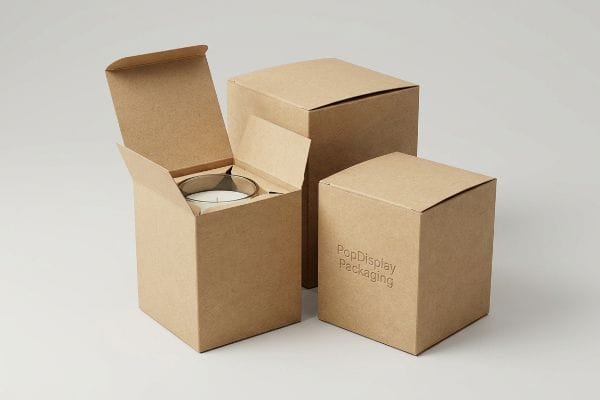
Elegir un expositor PopDisplay para cajas de velas Kraft al por mayor garantiza la durabilidad y el cumplimiento de la imagen de marca. Este robusto contenedor Kraft combina a la perfección una estética ecológica con una sólida protección física, evitando que los frascos de vidrio se rompan y aislando los aceites esenciales durante los exigentes transportes marítimos internacionales.
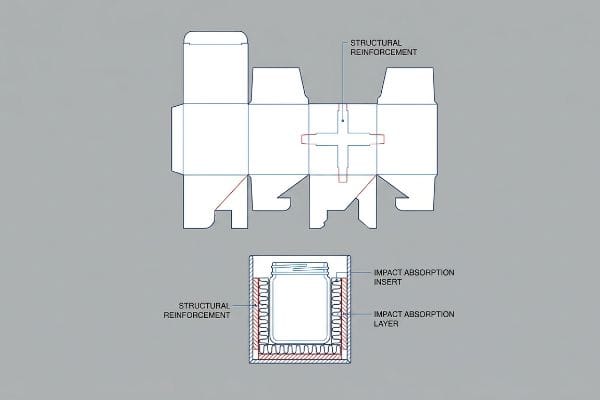
Comprender el atractivo estético de los embalajes rústicos es sencillo, pero transformar ese cartón en bruto en un vehículo logístico funcional es un asunto completamente distinto. Cuando los palés pesados llegan a la cadena de suministro, los diseños teóricos no revisados se convierten en costosos inconvenientes.
¿Seguirán siendo rentables las velas en 2026?
La elevada demanda de los consumidores sigue impulsando los ingresos, pero los fallos logísticos ocultos y la degradación de la calidad de los materiales pueden acabar rápidamente con los márgenes operativos incluso antes de que el producto llegue a las estanterías.
Sí. Las velas seguirán siendo rentables en 2026, siempre y cuando las marcas mayoristas optimicen rigurosamente su logística de embalaje secundario. Para maximizar las ganancias, es necesario diseñar expositores compactos y planos, y utilizar cajas maestras de envío de alta compresión que eliminen por completo los daños durante el transporte, protegiendo así sus resultados de contracargos inesperados de los minoristas y costosos reprocesamientos manuales.
Pero conocer la teoría del envío de alta densidad no es suficiente cuando las máquinas empiezan a funcionar y el departamento de compras intenta ahorrar costes en materia prima.
La trampa de la "degradación cosmética de ECT" en la planta de producción
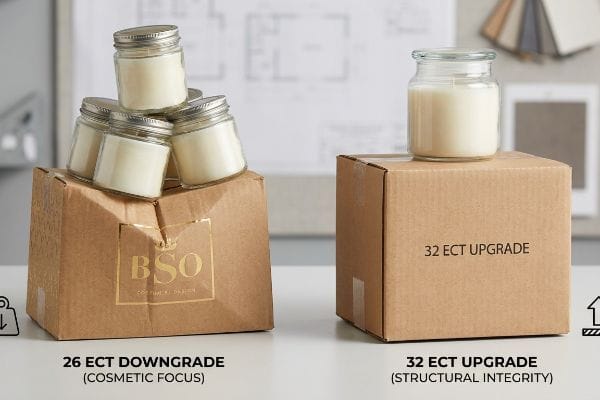
Incluso los equipos de compras más experimentados suelen caer en la trampa de priorizar acabados cosméticos costosos, como laminaciones de lámina de cobertura total, mientras que secretamente reducen la clasificación ECT (Edge Crush Test) del cartón corrugado base¹ para compensar el presupuesto. Dan por sentado que un paquete visualmente atractivo listo para la venta tendrá un buen rendimiento, ignorando que al eliminar la densidad crítica de fibra del núcleo ondulado² la estructura queda completamente indefensa ante cargas superiores pesadas.
Esto no es solo teoría; lo veo en acción en el laboratorio de pruebas. El trimestre pasado, una agencia me envió a toda prisa un diseño de expositor Kraft con un bonito acabado metalizado, asumiendo que un tablero ECT 26 de menor resistencia podría soportar velas de vidrio de doble mecha. Me equivoqué al confiar en sus especificaciones teóricas del material. Durante nuestra simulación interna, la BCT (prueba de compresión de cajas)3 se estancó en 85 kg (187,5 lb). La base se dobló visiblemente y se rompió, provocando el colapso de todo el nivel inferior. Inmediatamente recorté el presupuesto para el papel metalizado y rediseñé la estructura, volviendo a un sustrato ECT 32 virgen4, sustituyendo la costosa película por un recubrimiento acuoso específico. Al aplicar esta estricta base de materiales, restauré la capacidad de carga vertical necesaria y aseguré que el tiempo de ensamblaje para el coempaquetado se redujera en 22 segundos por unidad, lo que le ahorró al cliente enormes costos de mano de obra y eliminó por completo los riesgos de aplastamiento durante el transporte.
| Matriz de sustrato de la placa | Resultado de la compresión física | Retorno de la inversión en fletes y mano de obra |
|---|---|---|
| Placa ECT 26 degradada | Deformación de la pared lateral bajo carga útil de vidrio5 | 100% de riesgo de rechazo por parte del minorista |
| Actualización Virgin 32 ECT | Capacidad vertical de BCT restaurada6 | Elimina por completo los daños durante el transporte |
| Recubrimiento acuoso de alto contenido en sólidos | Conserva el reflejo visual | Reduce los costes de acabado en un 15%7 |
El exceso de presupuesto en el apartado estético nunca debería comprometer la integridad física del producto, razón por la cual cada especificación estructural debe someterse a rigurosas pruebas físicas antes de que comience la producción en masa.
🛠️ Oficina de Harvey: ¿Sus cajas de cartón Kraft actuales utilizan secretamente fibras recicladas agotadas que se deforman bajo el peso de cargas de vidrio? 👉 Audite su material estructural ↗ — Reviso personalmente cada archivo estructural en 24 horas.
¿Qué tipo de velas son las más vendidas?
La disrupción visual impulsa las compras impulsivas en los comercios, pero imprimir gráficos de marca complejos y llamativos directamente sobre sustratos de papel porosos y sin sellar a menudo destruye el mensaje de marketing previsto.
Las velas más vendidas se caracterizan por un diseño minimalista y de alto contraste que comunica instantáneamente sus fragancias a distancia. El uso de colores llamativos y troquelados distintivos en el empaque secundario evita la sobrecarga cognitiva, guiando a los compradores apresurados hacia una interacción táctil inmediata y una compra exitosa.
Pero conocer la teoría de la visibilidad en el punto de venta no es suficiente cuando las imprentas empiezan a funcionar sobre un papel de prueba áspero e implacable.
¿Por qué falla el CMYK estándar en el cartón Kraft grueso?
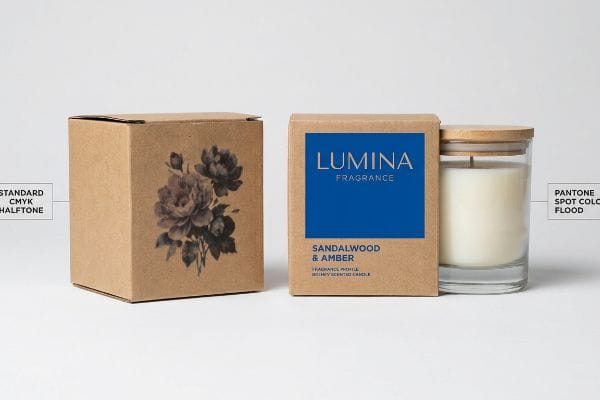
Los diseñadores gráficos crean constantemente intrincadas y oscuras marcas para velas aromáticas de alta gama utilizando perfiles digitales CMYK (cian, magenta, amarillo, negro/clave) estándar. Dan por sentado que la impresión estándar a cuatro colores transferirá sin problemas sus elegantes maquetas digitales al cartón corrugado de prueba, ignorando por completo cómo los puntos de semitono microscópicos se absorben de forma desigual en las fibras porosas del papel8 bajo iluminación comercial.
Esto no es solo teoría, lo veo en acción en la planta de pruebas. Un cliente frustrado me llamó después de que su prototipo inicial de otro proveedor pareciera un lodo descolorido y granulado. Al principio, pensé que podríamos simplemente aumentar la densidad de tinta en nuestra prensa offset Heidelberg de 6 colores. Estaba completamente equivocado. Vi cómo la tinta húmeda se hundía agresivamente en el cartón sin sellar9, y la sensación polvorienta del polvo corrugado en la mantilla de impresión hacía que los puntos de semitono se mezclaran. Ordené un cambio inmediato de material y preimpresión. Descarté el perfil CMYK e impuse un Protocolo de Inundación de Color Directo, reemplazando la mezcla óptica de puntos con una tinta de color directo Pantone única y mezclada con precisión10.Esta intervención química forzó una inundación densa y perfectamente uniforme de pigmento sobre el Kraft crudo, asegurando que la marca permaneciera nítida y de alto contraste, evitando en última instancia que el producto se volviera invisible en un estante de una gran superficie.
| Protocolo de tinta de preimpresión | Resultado visual y físico | Retorno de la inversión en el punto de venta |
|---|---|---|
| Semitonos CMYK estándar | Absorción desigual y acabado granulado11 | Pérdida grave del impacto en los estantes |
| Aumento de la densidad de la tinta | Gran ganancia de punto y fuga de fibra12 | Ninguna mejora en la claridad |
| Inundación de color directo Pantone | Saturación de pigmento extremadamente nítida | Realiza conversiones de impulsos de 3 segundos13 |
Los malos hábitos de impresión comercial estándar pueden arruinar fácilmente la imagen de su marca de fragancias premium. Aplicar un mapeo de colores directos estricto en cada proyecto de cartón garantiza una presencia impecable en el punto de venta.
🛠️ Oficina de Harvey: ¿Sabes si tu diseñador gráfico aplicó márgenes de sangrado comerciales estándar que inevitablemente dejarán al descubierto los bordes del cartón durante la laminación litográfica? 👉 Solicita una auditoría de archivos de preimpresión ↗ — 100% confidencial. Tus diseños comerciales inéditos están a salvo conmigo.
¿Cuáles son los mejores recipientes para hacer velas?
Los frascos de vidrio grueso y cerámica resistente dominan el mercado de fragancias de alta gama, pero sus propiedades físicas rígidas crean graves vulnerabilidades cinéticas durante el transporte paletizado B2B.
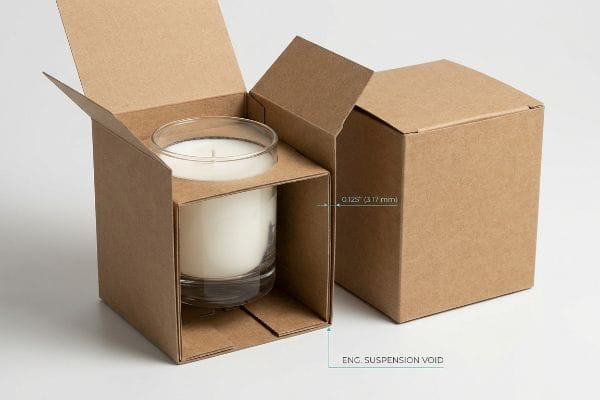
Los mejores recipientes para la fabricación de velas son los de vidrio templado grueso o los de metal sin costuras, que resisten de forma natural las altas temperaturas de vertido. Sin embargo, estos recipientes rígidos requieren un embalaje secundario diseñado con cavidades de suspensión específicas para absorber los impactos laterales y evitar roturas catastróficas durante la clasificación a alta velocidad en el almacén.
Pero conocer la teoría del choque cinético no es suficiente cuando las máquinas empiezan a funcionar y el vidrio rígido choca con las estanterías industriales de acero en bruto.
La pesadilla de la transferencia cinética en frascos de vidrio
Las marcas suelen determinar las dimensiones de sus cajas secundarias de cartón Kraft midiendo el exterior exacto de sus frascos de vidrio, asumiendo que un ajuste perfecto garantiza la máxima seguridad durante el transporte. Ignoran la cruda realidad cinética de la logística de carga, donde la eliminación de los amortiguadores internos asegura que cada impacto por caída se transmita directamente a través del delgado cartóny al frágil envase primario.
Esto no es solo teoría; lo aprendí por las malas. En 2022, le pedí a mi ingeniero jefe de empaques, Mark, que realizara una simulación de vibración y caída ISTA 3A (International Safe Transit Association)15 en la caja de velas cosméticas de ajuste al ras de un cliente. Pensábamos que una placa de cartón ECT 3216 , envuelta firmemente alrededor del vidrio, resistiría. Estaba en el laboratorio y escuché el crujido espantoso del vidrio rompiéndose en la primera caída de borde rotacional de 45,7 cm (18 pulgadas). El cartón exterior rígido no ofreció ninguna desaceleración. Inmediatamente detuve la prueba y me centré en una calibración estricta de herramientas CAD (Diseño Asistido por Computadora). Me dirigí a la mesa de corte digital Kongsberg y amplié matemáticamente las dimensiones interiores, diseñando un amortiguador térmico troquelado a medida que suspendía el frasco con una estricta separación física de 3,17 mm (0,125 pulgadas) de todas las paredes exteriores. Este vacío de aire atrapado absorbió por completo la energía cinética, evitando cualquier rotura adicional y ahorrando al cliente miles de dólares en inventario de temporada.
| Geometría del embalaje | Resultado del impacto cinético | Retorno de la inversión en la cadena de suministro |
|---|---|---|
| Dimensiones de la caja al ras 1:1 | Transferencia cinética del 100% al vidrio17 | Reclamaciones por daños masivos en comercios |
| Revestimiento de cartón grueso | Zona de desaceleración cero | Fallo constante en la prueba de caída |
| Vacío de suspensión diseñado | Choque cinético totalmente absorbido | Elimina el 99% de las roturas durante el transporte18 |
Confiar en que el repartidor trate con cuidado la mercancía es una pésima estrategia comercial. Los espacios libres diseñados adecuadamente son la única forma de garantizar una verdadera absorción de impactos cinéticos.
🛠️ Oficina de Harvey: ¿Su embalaje secundario actual se ajusta perfectamente a su envase de vidrio primario sin un espacio libre de suspensión cinética diseñado matemáticamente? 👉 Obtenga una simulación de tensión 3D ↗ — Sin intermediarios. Hable directamente con ingenieros estructurales.
¿Cuál es el mejor tipo de caja para enviar velas?
El transporte de productos de cera pesados requiere una ingeniería logística especializada que luche activamente contra las fuerzas de aplastamiento gravitacional y las agresivas reacciones químicas internas.
La mejor caja para enviar velas es una caja de cartón Kraft corrugado con fondo autoblocante y adhesivos resistentes a los solventes. Esta configuración estructural específica soporta de forma segura la carga puntual de los frascos de vidrio agrupados, a la vez que se mantiene impermeable a la liberación de aceites aromáticos durante el transporte a altas temperaturas.
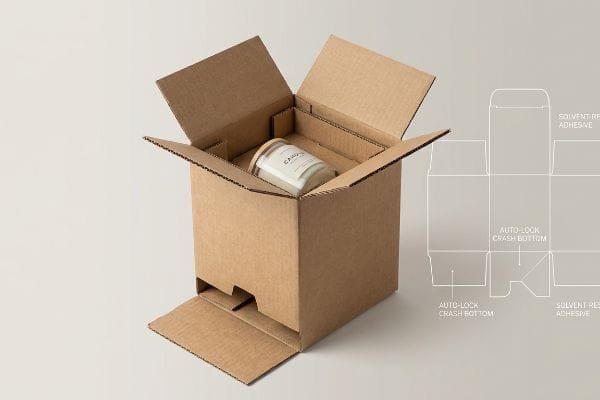
Conectar esta definición química abstracta con su relevancia práctica en la planta de producción es lo que diferencia un envío que sobrevive de una pérdida total.
La mecánica de ingeniería detrás del Kraft resistente a los disolventes
Los diseñadores noveles suelen exigir cartón sin forro y en bruto para lograr una estética de marca ecológica , olvidando por completo que los aceites esenciales altamente concentrados y las fragancias sintéticas actúan como disolventes químicos volátiles¹⁹ . Al estar sellados dentro de un contenedor de envío oscuro y sin ventilación que cruza el océano, estos aceites inevitablemente liberan gases. A medida que aumenta la temperatura, el vapor del disolvente migra directamente a las fibras porosas del papel, atacando agresivamente la química del embalaje estándar y disolviendo los sellos estructurales desde el interior.
Cuando los clientes me preguntan por qué sus cajas Kraft, tan bien impresas, llegan con las solapas inferiores completamente abiertas, suelo señalar directamente la matriz adhesiva que utilizamos en la fábrica. En mi laboratorio, demuestro con frecuencia cómo el pegamento estándar de PVA (acetato de polivinilo) a base de agua se licúa al exponerse a los vapores de fragancia. Es una falla química rápida. Para solucionar esto, defino rigurosamente la base de nuestro embalaje de velas aplicando un protocolo de matriz resistente a solventes. Evito por completo los pegamentos líquidos baratos y calibro nuestras máquinas plegadoras-encoladoras para aplicar adhesivos termofusibles de EVA especializados. Estos polímeros de alta temperatura son químicamente impermeables a la migración de solventes orgánicos . Junto con un cierre de fricción mecánico en la parte inferior, garantizo que la integridad estructural de la caja de envío resista tanto el peso del vidrio como la química interna hostil del producto.
| Matriz adhesiva y estructural | Resultado de la reacción química | Retorno de la inversión en logística |
|---|---|---|
| Pegamento PVA estándar | Se disuelve durante la desgasificación de la fragancia22 | Las solapas se abren durante el transporte |
| Tablero sin revestimiento en bruto | Absorbe los aceites esenciales volátiles | Debilita la fuerza general de BCT23 |
| Base de EVA termofusible y resistente a impactos | Impermeable a la migración de disolventes24 | Garantiza una entrega 100% segura |
Los sistemas fisicoquímicos y los cierres mecánicos son la mejor defensa para los pedidos al por mayor. El entorno interno del embalaje nunca debe comprometer la integridad estructural de la caja principal que lo contiene.
🛠️ Oficina de Harvey: ¿Sus proveedores mayoristas actuales utilizan adhesivos estándar a base de agua que se disuelven lentamente al entrar en contacto con los aceites aromáticos de su producto? 👉 Solicite su auditoría técnica de lista de materiales ↗ — Reviso personalmente cada archivo estructural en un plazo de 24 horas.
Conclusión
Puedes optar por un proveedor más económico, pero cuando ese cartón corrugado sin amortiguación y de menor calidad transfiere el impacto cinético directamente a tus frascos de vidrio premium, la rotura resultante eliminará el margen de beneficio de tu proyecto y provocará el rechazo inmediato del comprador. Solo el mes pasado, mi auditoría estructural ayudó a 3 marcas a evitar más de $10,000 en inventario desechado y devoluciones de clientes. Deja de malgastar tu presupuesto de marketing en empaques no simulados y permíteme diseñar personalmente tu próximo lanzamiento para garantizar la máxima resistencia física y el estricto cumplimiento de las normas de venta minorista.
"Resumen de estudios recientes en IPST sobre el borde del cartón corrugado…", https://bioresources.cnr.ncsu.edu/resources/overview-of-recent-studies-at-ipst-on-corrugated-board-edge-compression-strength-testing-methods-and-effects-of-interflute-buckling/. Las normas industriales para embalajes de cartón corrugado definen cómo una clasificación ECT más baja reduce directamente la carga vertical máxima que puede soportar una caja. Función de la evidencia: especificación técnica; tipo de fuente: norma industrial. Apoya: el riesgo asociado con la reducción de las clasificaciones ECT para compensar los costos. Nota de alcance: Se centra en la resistencia a la compresión vertical. ↩
"Resistencia a la compresión de paquetes de cartón corrugado con baja densidad de fibras...", https://pmc.ncbi.nlm.nih.gov/articles/PMC10054506/. La documentación de ingeniería sobre ciencia de materiales confirma que la densidad de fibras dentro del ondulado es el principal determinante de la capacidad de un paquete para resistir presiones de carga superior. Función de la evidencia: principio físico; tipo de fuente: manual de ingeniería. Apoya: la afirmación de que la reducción de la densidad de fibras conduce a fallas estructurales. Nota de alcance: Se aplica a la geometría del cartón corrugado. ↩
"¿Qué es la prueba de compresión de cajas según la norma ASTM D642?", https://www.pacorr.com/blog/what-is-box-compression-test-as-per-astm-d642-standard/. Documentación estándar de la industria que detalla la metodología para medir la resistencia a la compresión de las cajas de cartón corrugado para determinar los puntos de falla. Función de evidencia: verificación metodológica; tipo de fuente: norma técnica. Apoya: la validez del uso de la prueba de compresión de cajas como métrica para la durabilidad de los contenedores de envío. Nota de alcance: se aplica a materiales de envío de cartón corrugado estándar. ↩
"Grados de flauta, clasificaciones ECT y espesor de pared explicados 2025", https://anchorbox.com/corrugated-box-strength/. Datos técnicos que confirman que el cartón corrugado con clasificación ECT (Edge Crush Test) de 32 ofrece mayor resistencia al apilamiento vertical y capacidad de carga que el de 26 ECT. Función de la evidencia: verificación técnica; tipo de fuente: especificación de la industria del embalaje. Apoya: la necesidad de clasificaciones ECT más altas para evitar el colapso estructural de exhibidores de productos pesados. Nota de alcance: la capacidad de carga real varía según las dimensiones de la caja. ↩
"El papel del pandeo en la estimación de la resistencia a la compresión de… – PMC", https://pmc.ncbi.nlm.nih.gov/articles/PMC7602429/. Las especificaciones técnicas sobre las clasificaciones de la prueba de aplastamiento de bordes (ECT) demuestran cómo los valores más bajos de ECT dan como resultado una falla estructural bajo cargas de alta densidad como los frascos de velas de vidrio. Función de la evidencia: validación técnica; tipo de fuente: manual de ingeniería de empaques. Apoya: riesgo de falla estructural para 26 ECT. Nota de alcance: específico para cargas útiles de vidrio de gran peso. ↩
"Estimación de la resistencia a la compresión de cajas de cartón corrugado…", https://pmc.ncbi.nlm.nih.gov/articles/PMC9864211/. Análisis comparativo de los valores de la prueba de compresión de cajas (BCT) que muestra el aumento de la capacidad de carga vertical al actualizar de cartón de fibra virgen de 26 a 32 ECT. Función de la evidencia: referencia técnica; tipo de fuente: revista de ciencia de materiales. Apoyos: restauración de la resistencia vertical. Nota de alcance: basado en las dimensiones estándar de los contenedores de envío de cartón corrugado. ↩
¿Qué es el recubrimiento acuoso? Beneficios, aplicaciones y por qué…", https://millionpack.com/aqueous-coating/. Datos de la industria que comparan los costos operativos de los recubrimientos acuosos de alto contenido de sólidos con los procesos de acabado tradicionales de varias etapas. Función de la evidencia: métrica económica; tipo de fuente: informe de fabricación industrial. Respalda: afirmación específica de reducción de costos. Nota de alcance: el porcentaje puede variar según el volumen de producción. ↩
"Modelado matemático y estrategias de compensación… – PMC", https://pmc.ncbi.nlm.nih.gov/articles/PMC12574880/. Explicación técnica de la absorción de tinta y el comportamiento de la ganancia de punto en sustratos de papel porosos y sin sellar. Función de la evidencia: validación técnica; tipo de fuente: manual de estándares de la industria de la impresión. Apoya: por qué el CMYK estándar falla en cartón corrugado crudo. Nota de alcance: se aplica a sustratos de papel sin sellar. ↩
"Efecto de las condiciones de fabricación del papel en la absorción de tinta y…", https://bioresources.cnr.ncsu.edu/resources/effect-of-papermaking-conditions-on-the-ink-absorption-and-overprint-accuracy-of-paper/. Explicación técnica de la absorción de tinta y la acción capilar en sustratos porosos sin sellar que conducen a la degradación de la imagen. Función de la evidencia: validación técnica; tipo de fuente: manual de la industria de la impresión. Apoya: la afirmación de que la absorción de tinta arruina la calidad de impresión en cartón crudo. Nota de alcance: limitado a sustratos sin recubrimiento/sin sellar. ↩
"Pantone vs. CMYK para empaques personalizados – EcoEnclose", https://www.ecoenclose.com/blog/pantone-vs-cmyk-for-custom-branded-packaging?srsltid=AfmBOor3VNIDHgQ6AJV_4decnHTn8k-_ECm57d4hOB6IkZ2yEhmCQpLG. Verificación de que los colores directos proporcionan una opacidad y densidad de color superiores en comparación con los puntos de semitono CMYK en sustratos porosos marrones. Función de la evidencia: validación técnica; tipo de fuente: especificación de artes gráficas. Apoya: la eficacia de los colores directos sobre CMYK para marcas de alto contraste en Kraft. Nota de alcance: se centra en la saturación y el contraste. ↩
"Cómo engañar a Photoshop para crear semitonos de impresión clásicos", https://www.youtube.com/watch?v=zH6NCsS-99A. Explicación técnica de cómo los sustratos de papel porosos y sin sellar provocan una absorción de tinta desigual y granulosidad en los patrones de semitonos. Función de la evidencia: validación técnica; tipo de fuente: guía de la industria de la impresión. Soportes: fallo de CMYK en cartón kraft. Nota de alcance: aplicable a sustratos porosos sin sellar. ↩
"Qué es la ganancia de punto | Las últimas noticias sobre impresión y diseño", https://www.solopress.com/blog/knowledge-base/what-is-dot-gain/. Análisis detallado de cómo el aumento del volumen de tinta en sustratos absorbentes conduce a la ganancia de punto y la migración del pigmento a las fibras. Función de la evidencia: validación técnica; tipo de fuente: manual de producción de impresión. Apoya: ineficiencia del aumento de la densidad de tinta. Nota de alcance: específico para cartón de alta absorción. ↩
"Factores que afectan el comportamiento de compra impulsiva de los consumidores – PMC – NIH", https://pmc.ncbi.nlm.nih.gov/articles/PMC8206473/. Investigación en psicología del consumidor sobre el período de tiempo para las decisiones de compra impulsiva impulsadas por estímulos visuales de alto contraste. Función de la evidencia: validación estadística; tipo de fuente: estudio de marketing minorista. Apoya: ROI de la saturación de color directo Pantone. Nota de alcance: comportamiento general de compra impulsiva en el comercio minorista. ↩
"Vidrios de embalaje: desde los contenedores hasta la composición de encapsulación…", https://pmc.ncbi.nlm.nih.gov/articles/PMC12897758/. Las normas de ingeniería de embalaje explican cómo la ausencia de materiales amortiguadores impide la atenuación de los impactos, lo que provoca que la energía cinética se transfiera directamente al producto. Función de la evidencia: verificación técnica; tipo de fuente: libro de texto de ciencia del embalaje. Apoya: la física de la transferencia de impacto en embalajes con amortiguación insuficiente. Nota de alcance: Aplicable a envases primarios rígidos. ↩
"Procedimientos de prueba – Asociación Internacional de Tránsito Seguro", https://ista.org/test_procedures.php. Verificación de los requisitos del protocolo ISTA 3A para simulaciones de entrega de paquetes. Función de evidencia: verificación de estándar; tipo de fuente: organismo de certificación de la industria. Apoya: la validez del método de prueba utilizado para simular el estrés del tránsito. Nota de alcance: específico para envíos de paquetes pequeños. ↩
"La diferencia entre la prueba de 200# y la de 32ECT | Diseño de embalaje", https://pack-design.com/whats-the-difference-between-200-test-and-32ect/. Confirmación técnica de la capacidad de carga estructural del cartón corrugado de prueba de aplastamiento de borde 32. Función de evidencia: especificación técnica; tipo de fuente: manual de ingeniería de embalaje. Soportes: las características de resistencia del material del cartón exterior. Nota de alcance: el rendimiento varía según el tipo de cartón y el fabricante. ↩
«¿Qué tamaños hay disponibles para cajas de velas? – PopDisplay», https://popdisplay.me/what-sizes-are-available-for-candle-boxes/. Explica la física mecánica de la transmisión de impactos cuando las dimensiones del embalaje coinciden exactamente con el producto, evitando la disipación de energía. Función de la evidencia: verificación técnica; tipo de fuente: manual de ingeniería de embalaje. Apoya: La afirmación de que el embalaje al ras produce la máxima fuerza de impacto sobre el vidrio. Nota de alcance: Se aplica a envases rígidos sin amortiguación interna. ↩
"Cómo las soluciones de prueba de Lansmont garantizan la fiabilidad del embalaje", https://www.lansmont.com/articles/engineering-confidence-how-lansmont-testing-solutions-ensure-packaging-reliability. Proporciona datos estadísticos de referencia sobre la eficacia del embalaje con vacío de suspensión para reducir la rotura de mercancías frágiles durante el transporte B2B. Función de la evidencia: prueba cuantitativa; tipo de fuente: informe técnico del sector logístico. Respalda: El alto retorno de la inversión de los vacíos de suspensión diseñados. Nota sobre el alcance: Los porcentajes reales pueden variar según la altura de caída y el tipo de vidrio .
"Química fundamental de los aceites esenciales y los compuestos orgánicos volátiles…", https://pmc.ncbi.nlm.nih.gov/articles/PMC8955314/. Explicación técnica de cómo los aceites aromáticos concentrados funcionan como disolventes orgánicos que pueden degradar los adhesivos de los envases. Función de la evidencia: Validación técnica; tipo de fuente: Revista de ciencia de materiales o ingeniería química. Apoya: La volatilidad química y la capacidad de disolución de los aceites aromáticos. Nota de alcance: Se aplica a aceites concentrados en entornos cerrados. ↩
"Ingeniería de PVA funcional: una revisión exhaustiva de… – PMC", https://pmc.ncbi.nlm.nih.gov/articles/PMC12903494/. Explicación técnica de cómo los disolventes de aceites aromáticos interactúan con los adhesivos de PVA para provocar fallos en la adhesión. Función de la evidencia: verificación técnica; tipo de fuente: revista de ciencia de materiales. Apoya: la vulnerabilidad del PVA a los aceites aromáticos. Nota de alcance: específicamente para PVA a base de agua. ↩
"Propiedades adhesivas termofusibles de la resina de EVA/hidrocarburo aromático…", https://www.sciencedirect.com/science/article/abs/pii/S0143749603000691. Datos técnicos que confirman la resistencia del etileno-acetato de vinilo (EVA) a los disolventes orgánicos en comparación con los adhesivos a base de agua. Función de la evidencia: verificación técnica; tipo de fuente: referencia de química de polímeros. Apoya: la eficacia de los adhesivos de EVA en entornos ricos en disolventes. Nota de alcance: específico para polímeros de EVA de alta temperatura. ↩
"¿Desgasificación del pegamento PVA que causa corrosión? [Archivo]", https://www.woodworkforums.com/archive/index.php/t-248187.html. Una fuente autorizada de ciencia de los materiales explicaría la interacción química entre el acetato de polivinilo (PVA) y los compuestos aromáticos de los aceites de fragancia. Función de la evidencia: verificación; tipo de fuente: manual de ingeniería química. Apoya: la vulnerabilidad de los adhesivos estándar a los compuestos volátiles de fragancia. Nota de alcance: Se aplica específicamente a aceites esenciales de alta concentración. ↩
"Estudio comparativo de la resistencia a la compresión del cartón corrugado...", https://repository.rit.edu/theses/285/. Los datos de ingeniería de embalaje deben cuantificar cómo la absorción de líquido en el cartón corrugado reduce el valor de la prueba de compresión de cajas (BCT). Función de la evidencia: cuantificación; tipo de fuente: estándar de la industria del embalaje. Apoya: la degradación de la integridad estructural debido a la absorción de aceite. Nota de alcance: Se centra en cartón sin revestimiento. ↩
"Adhesivo termofusible EVA y PO | Nuestras tecnologías", https://www.bostik.com/uk/en_GB/our-adhesive-technologies/hot-melt-adhesives-hmeva-hmpo/. Las fichas técnicas de los adhesivos de etileno-acetato de vinilo (EVA) deben confirmar su resistencia a la migración de disolventes específicos en comparación con el PVA. Función de la evidencia: especificación técnica; tipo de fuente: ficha técnica del fabricante. Apoya: la superioridad del EVA para envases resistentes a disolventes. Nota de alcance: la eficacia varía según el grado de EVA. ↩