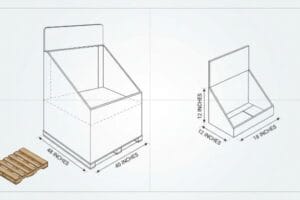
¿Te cuesta acomodar varios tamaños de productos en un mismo espacio comercial sin que parezca desordenado? Las estructuras escalonadas solucionan este problema, pero la distribución del peso es donde fallan la mayoría de las campañas.
Sí. Diseñamos expositores de suelo escalonados específicamente para comercializar múltiples líneas de productos de forma impecable. Estos expositores multinivel de cartón corrugado maximizan el espacio vertical de venta, organizan eficazmente los diferentes tamaños de envases y utilizan estantes reforzados para garantizar que los artículos voluminosos y pesados permanezcan elevados de forma segura y bien visibles para los clientes.

Permítanme explicarles con detalle cómo funcionan estas estructuras en el mundo real del comercio minorista a gran escala.
¿Cómo se llaman los escaparates de las tiendas?
Conocer la terminología exacta es la primera línea de defensa al comunicarse con un fabricante para evitar costosos malentendidos.
Los expositores de escaparate se conocen comúnmente como puntos de venta (POP o POS). En la industria del embalaje estructural, estos expositores independientes incluyen contenedores de suelo, cabeceras de góndola, expositores laterales y unidades de mostrador, todos diseñados específicamente para interrumpir el flujo de clientes e impulsar las compras impulsivas cerca de las entradas de mayor afluencia.
Aunque los nombres puedan parecer intercambiables, confundirlos en una orden de compra puede arruinar toda tu campaña incluso antes de que empiece.
Descifrando los escaparates en la planta de producción
Las marcas suelen usar el término "expositor de escaparate" como una frase genérica al solicitar presupuestos, dando por sentado que el fabricante sabe exactamente lo que necesitan. Sin embargo, en el ámbito de la ingeniería de espacios comerciales, existe una enorme diferencia logística entre un contenedor y un expositor de cabecera semipermanente. Si no se utiliza la terminología correcta, el equipo de compras podría aprobar un diseño genérico que incumpla por completo las limitaciones de espacio físico de la gran superficie comercial a la que se dirige.
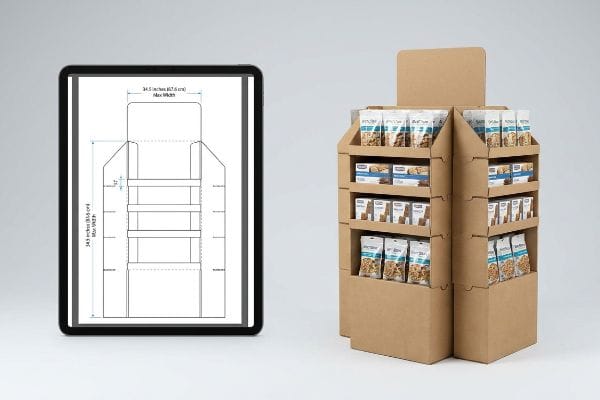
Incluso los diseñadores más experimentados a veces encargan expositores POP estándar asumiendo que encajarán a la perfección cerca de las puertas de entrada. Con frecuencia veo a dependientes sudando la gota gorda intentando encajar una enorme unidad de suelo de 101,6 cm (40 pulgadas) de ancho en un espacio estándar de cabecera de góndola (36 pulgadas) en EE. UU. Literalmente se oye el horrible crujido del cartón al intentar aplastar los laterales para que quepa. Para solucionar este problema, siempre impongo una regla estricta de ancho máximo de 87,6 cm (34,5 pulgadas) para las cabeceras de góndola, lo que garantiza una instalación sin problemas para el gerente de la tienda.
| Error común de principiante | La solución profesional | Beneficio para el punto de venta |
|---|---|---|
| Utilizar convenciones de nomenclatura vagas | Especificación de los tipos exactos de POP frente a POS | Evita costosos errores en las cotizaciones de fábrica |
| Ignorar los límites de los accesorios de la tienda | Límite de ancho de la tapa final de 34,5 pulgadas (87,6 cm)1 | Garantiza un ajuste perfecto al estante |
| Unidades de suelo reducibles para mostradores | Separación de las líneas de ingeniería de GMA y ADA2 | Evita los rechazos del gerente de la tienda |
Jamás permito que un cliente utilice terminología genérica en una hoja de especificaciones. Al ubicar sus estructuras en zonas comerciales específicas, eliminamos las conjeturas estructurales y garantizamos que sus productos lleguen a la tienda en lugar de terminar en el contenedor de basura.
🛠️ Oficina de Harvey: ¿Sus troqueles actuales están optimizados específicamente para las dimensiones estrictas de las tapas de extremo de EE. UU.? 👉 Revise sus especificaciones ↗ — Acceso directo a mi oficina. Sin spam de ventas automatizado, lo prometo.
¿Cuál es el propósito de un expositor?
Más allá de simplemente sostener cajas, un expositor bien diseñado actúa como un vendedor silencioso que defiende activamente el valor de su marca.
El objetivo principal de un expositor es elevar físicamente los productos hasta que el comprador los vea directamente. Estos elementos estructurales organizan eficazmente el inventario, comunican rápidamente el mensaje de la marca e interrumpen estratégicamente el flujo habitual de clientes en los pasillos del supermercado para convertir la simple ojeada en compras impulsivas inmediatas y de alto margen para las campañas de venta minorista.

Conocer esta teoría es estupendo, pero llevarla a la práctica requiere calcular con precisión la ergonomía humana y las limitaciones espaciales.
La función estructural de un expositor en el comercio minorista
Un error común que incluso los equipos de compras más experimentados cometen es suponer que la única función del expositor es transportar los productos del almacén al pasillo. Aprueban diseños atractivos, pero ignoran por completo la geometría física de cómo el consumidor interactúa con la caja plegada. Si el borde estructural de la bandeja oculta la etiqueta principal del producto³,todo el expositor incumple su objetivo principal.
El verdadero propósito de un merchandiser es eliminar las fricciones en la compra, lo que significa que el producto debe ser reconocible al instante y fácil de agarrar. A menudo reviso archivos de clientes donde el borde frontal del embalaje cubre la mitad del empaque primario, lo que obliga a los compradores a sacar los artículos con fuerza solo para leer la etiqueta. Se puede sentir la rigidez del cartón kraft virgen cuando un cliente se esfuerza por sacar una botella bien empaquetada de una bandeja profunda. Inmediatamente implemento la regla de "Primero el producto", bajando el borde frontal para garantizar al menos un 85 % de visibilidad, de modo que los compradores puedan escanear y sacar el artículotres segundos.
| Error común de principiante | La solución profesional | Beneficio para el punto de venta |
|---|---|---|
| Diseño exclusivamente para el transporte | Ingeniería para la disrupción visual | Aumenta las tasas de compras impulsivas |
| Labios de contención frontales altos | Aplicación de la regla de visibilidad de etiquetas del 85 % | Acelera la selección del comprador |
| Forzar ajustes de producto demasiado ajustados | Añadir espacio para facilitar la extracción | Elimina los daños en el embalaje del producto |
Construyo expositores para que vendan activamente, no solo para almacenar su inventario. Eliminar el cartón corrugado innecesario para que su producto quede a la vista crea una experiencia de compra fluida que los minoristas aprecian y los compradores valoran.
🛠️ Harvey's Desk: ¿El borde de tu bandeja actual oculta accidentalmente los elementos más importantes de tu marca? 👉 Solicita una auditoría de visibilidad ↗ — Descarga de forma segura. Mi bandeja de entrada está abierta si tienes alguna pregunta más adelante.
¿Cómo aumentan las ventas los expositores?
Los promotores de ventas impulsan los ingresos rompiendo físicamente el patrón monótono de los pasillos estándar de los supermercados.
Los expositores aumentan las ventas al atraer físicamente los productos fuera de las estanterías convencionales. Mediante el uso de formas troqueladas personalizadas, contrastes de color estratégicos y una ubicación fuera de la estantería, estas unidades independientes captan la atención del comprador en tan solo tres segundos, mejorando drásticamente las tasas de conversión para los lanzamientos de productos de consumo de alta rotación y gran margen de beneficio.

Sin embargo, captar esa atención requiere una alineación estructural precisa que la mayoría de las plantillas de diseño digital ignoran por completo.
La física detrás de cómo los expositores aumentan las ventas
Los responsables de marketing suelen creer que cubrir una caja cuadrada estándar con gráficos CMYK brillantes (cian, magenta, amarillo, negro) es suficiente para generar un aumento significativo en las ventas. Si bien el diseño es importante, una simple silueta rectangular se integra perfectamente en la geometría del pasillo. El ojo humano, de forma natural, ignora las formas predecibles⁵,lo que significa que su costoso expositor se vuelve prácticamente invisible para un comprador distraído que empuja un carrito.
Piensa en el pasillo de la tienda como en una autopista concurrida; si quieres que la gente reduzca la velocidad, tienes que crear una curva física. Para asegurar que estas unidades realmente aumenten las ventas, exijo curvas estructurales y cabeceras troqueladas asimétricas que rompan las rígidas líneas verticales de los estantes. He visto a empleados de tienda batallar con cabeceras rectas, baratas y endebles, lidiando con los residuos pegajosos y desordenados de cinta adhesiva transparente genérica solo para mantenerlas en pie. Al integrar formas personalizadas entrelazadas, obligamos a la mirada del comprador a detenerse instantáneamente, demostrando nuestra fórmula de "Elevación en 3 segundos" y acelerando la rotación de productos sin depender de la cinta adhesiva.
| Error común de principiante | La solución profesional | Beneficio para el punto de venta |
|---|---|---|
| Basándose estrictamente en gráficos planos | Utilizando formas troqueladas asimétricas8 | Rompe la monotonía visual del pasillo |
| Encabezados rectangulares estándar | Integración de curvas personalizadas entrelazadas | Capta la atención en 3 segundos9 |
| Componentes endebles unidos con cinta adhesiva | Pestañas de ajuste por fricción diseñadas10 | Mantiene una imagen de marca de alta gama |
Mido el éxito de un elemento publicitario estrictamente por su capacidad para captar la atención del público. Al pasar de una caja cuadrada básica a un diseño estructuralmente innovador, se fomenta la interacción del comprador y se impulsa un volumen de ventas cuantificable.
🛠️ Escritorio Harvey: ¿Tu mueble actual se confunde con el resto de las cajas genéricas en el pasillo? 👉 Solicita tu revisión estructural ↗ — Sin formularios que generen interminables llamadas de ventas. Solo valor puro.
¿Cuál es la mejor altura para exhibir un producto?
Lograr el punto óptimo visual es fundamental, pero soportar el peso a esa altura exacta determina la ingeniería estructural.
La altura ideal para exhibir un producto se encuentra dentro de la zona de impacto visual, ubicada exactamente entre 50 y 54 pulgadas (127 y 137,1 cm) del suelo. Esta elevación ergonómica óptima se alinea directamente con el nivel de visión natural de los compradores adultos, lo que garantiza el reconocimiento inmediato de la marca y un acceso físico sin obstáculos.
Pero conocer la teoría no es suficiente cuando las máquinas empiezan a funcionar y la gravedad se impone en la fábrica.
Por qué fallan las alturas estándar en la planta de producción
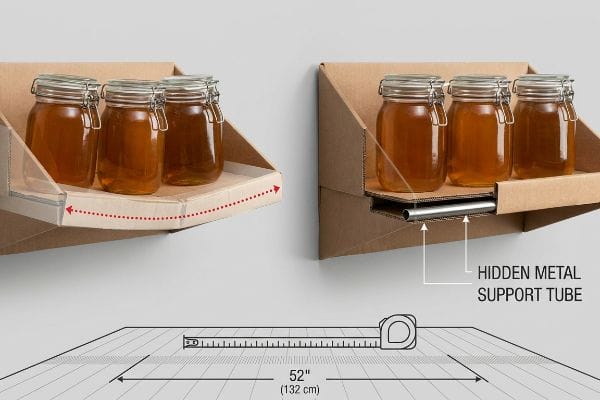
En mi taller, veo con frecuencia que los clientes exigen que sus frascos de vidrio más pesados se coloquen exactamente a 132 cm (52 pulgadas) para lograr la altura visual perfecta¹¹.Presentan diseños estándar con estantes de cartón corrugado largos y sin soporte, dando por sentado que la resistencia del cartón será suficiente. Ignoran por completo la cruda realidad de la distribución dinámica de la carga al elevar productos densos y pesados a esa altura.
Esto no es solo teoría: lo veo suceder en la planta de pruebas cuando un estante de 121,9 cm (48 pulgadas) de ancho cargado con productos líquidos comienza a deformarse bajo la presión. Cuando presiono el centro durante la prueba de carga, se puede sentir la inquietante deformación esponjosa de las estrías aplastadas mientras el estante se hunde 11,4 mm (0,45 pulgadas), lo que hace que los productos se inclinen visiblemente hacia adelante. Para mantener la altura óptima de forma segura, retiro las voluminosas capas adicionales de cartón e inserto un tubo de soporte de acero oculto justo debajo del borde frontal. Al reforzar esta integración metálica rígida de 1 mm (0,04 pulgadas) de espesor¹²,aseguro que el estante permanece perfectamente nivelado, evitando el pandeo de la base que ralentiza la línea de ensamblaje en un 30 % estimado¹³y evitando al cliente costosos daños a los productos en la tienda.
| Error común de principiante | La solución profesional | Beneficio para el punto de venta |
|---|---|---|
| Estantes largos sin soporte | Integración de barra de soporte metálica oculta | Elimina el hundimiento del estante central14 |
| Sobrecarga de niveles superiores | Distribución dinámica de carga diseñada15 | Evita el colapso estructural |
| Confiar únicamente en la resistencia del papel | Refuerzo estratégico de materiales mixtos16 | Garantiza la presentación de artículos pesados |
Me niego a que la estética comprometa la seguridad física en la tienda. Al reforzar matemáticamente los niveles superiores con tubos metálicos integrados, logramos una presentación perfecta a la altura de los ojos sin sacrificar la integridad estructural que exigen las grandes cadenas.
🛠️ Harvey's Desk: ¿Tus artículos más pesados están doblando los estantes de cartón corrugado de tu actual exhibición escalonada? 👉 Envíame tu archivo de troquelado ↗ — Haré una prueba de resistencia antes de que gastes tu presupuesto en producción en masa.
Conclusión
Puedes elegir un proveedor más económico, pero si ese estante superior de 132 cm (52 pulgadas) sin soporte se hunde y colapsa bajo una carga pesada, el minorista lo rechazará de inmediato y se esfumará por completo el margen de beneficio de la campaña. Más de 500 gerentes de marca utilizan mi lista de verificación de preimpresión para evitar estos errores fatales en las primeras etapas. Deja de adivinar las tolerancias de carga dinámica y permíteme auditar personalmente tus estructuras con mi Auditoría Gratuita de Troqueles ↗ para detectar vulnerabilidades físicas críticas antes de que comience la producción en masa.
"Dimensiones de los expositores de cabecera de góndola: Maximizando el impacto en el pasillo de caja", https://wzrack.com/end-cap-display-dimensions-maximizing-checkout-aisle-impact/. [Los estándares de la industria para accesorios o los manuales de diseño minorista verifican el ancho máximo común para los expositores de cabecera de góndola para asegurar su ajuste en estanterías estándar]. Función de la evidencia: especificación técnica; tipo de fuente: estándar de la industria. Apoya: requisitos exactos de ajuste al estante. Nota de alcance: pueden existir limitaciones según las dimensiones específicas de cada minorista. ↩
"Estándares ADA para el diseño accesible", https://www.ada.gov/law-and-regs/design-standards/. [Las directrices de la Asociación de Fabricantes de Alimentos (GMA) y la Ley de Estadounidenses con Discapacidades (ADA) establecen requisitos específicos para el tamaño estandarizado y las alturas de exhibición accesibles]. Función de la evidencia: cumplimiento normativo; tipo de fuente: directrices de la industria/gobierno. Apoya: separación de ingeniería para la aceptación en tiendas. Nota de alcance: aplicable principalmente a los mercados minoristas de América del Norte. ↩
"Mejora la presencia de tus productos en tienda con estos 5… – SPC Retail", https://spc-retail.com/5-tips-for-better-in-store-product-visibility/. [Una fuente autorizada sobre merchandising minorista o diseño industrial confirmaría que ocultar la etiqueta principal del producto impacta negativamente en el reconocimiento del consumidor y las tasas de conversión]. Función de la evidencia: soporte técnico; tipo de fuente: guía de diseño de la industria. Apoya: la importancia crítica de la geometría estructural en los accesorios minoristas. Nota de alcance: aplicable a exhibidores físicos en el punto de venta. ↩
"[PDF] Facilidad de compra en el comercio minorista: – Kelley School of Business", https://kelley.iu.edu/doc/bloomington/faculty-research/departments/marketing/shoppability.pdf. [Los estándares de la industria para el merchandising visual en el comercio minorista proporcionarían datos empíricos que correlacionan el porcentaje de visibilidad del producto con la velocidad de identificación y compra del consumidor]. Función de la evidencia: punto de referencia técnico; tipo de fuente: estudio de psicología del comercio minorista. Apoya: el objetivo de visibilidad específico para reducir la fricción en la compra. Nota de alcance: Las métricas pueden variar según la categoría del producto y la complejidad del empaque. ↩
«¿Qué subyace al desarrollo de la atención selectiva visual…? – PMC», https://pmc.ncbi.nlm.nih.gov/articles/PMC6983333/. [La investigación psicológica sobre la adaptación sensorial y la atención selectiva demuestra cómo el cerebro ignora los patrones visuales repetitivos para priorizar los estímulos novedosos]. Función de la evidencia: fundamento teórico; tipo de fuente: estudio de psicología cognitiva. Apoya: por qué las pantallas rectangulares no logran captar la atención. Nota de alcance: se aplica específicamente a entornos con alta estimulación, como los pasillos de las tiendas. ↩
"Perfeccionando tus interrupciones de patrones para llamar la atención – YouTube", https://www.youtube.com/watch?v=0IPHbzxAGx8. [Investigaciones sobre percepción visual y el efecto Von Restorff respaldan la afirmación de que los elementos que rompen un patrón visual consistente atraen mayor atención del comprador]. Rol de la evidencia: principio psicológico; tipo de fuente: estudio de ciencias del comportamiento. Apoya: la efectividad del diseño estructural no lineal. Nota de alcance: la efectividad varía según la densidad del diseño de la tienda. ↩
"La regla de los 3 segundos de los minoristas para la interacción con la audiencia – Data Axle", https://www.data-axle.com/resources/blog/the-retailers-3-second-rule-of-audience-engagement/. [Los estándares de la industria en neuromarketing y seguimiento de la mirada cuantifican la ventana de tiempo crítica disponible para captar la atención de un comprador antes de que ignore un expositor]. Función de la evidencia: validación de métricas; tipo de fuente: informe de análisis minorista. Apoya: la necesidad de una captura visual instantánea para la conversión. Nota de alcance: se aplica principalmente a zonas de compra impulsiva de alto tráfico. ↩
"El arte del merchandising visual: estrategias para – T-ROC", https://trocglobal.com/visual-merchandising/. La investigación psicológica sobre el efecto de aislamiento explica cómo los elementos que se desvían de un patrón monótono, como las formas asimétricas, aumentan la prominencia visual. Rol de la evidencia: marco teórico; tipo de fuente: investigación psicológica. Apoya: la afirmación de que la asimetría rompe la monotonía del pasillo. Nota de alcance: depende del contraste entre la exhibición y las estanterías circundantes. ↩
"Explorando el comportamiento de navegación y el nivel de atención del comprador con un…", https://pmc.ncbi.nlm.nih.gov/articles/PMC6895988/. Un estudio de comportamiento del consumidor proporcionaría datos empíricos sobre el lapso de tiempo específico que un comprador dedica a observar un expositor en el punto de venta antes de decidir detenerse. Función de la evidencia: validación de métricas; tipo de fuente: estudio académico. Apoya: la eficacia de las curvas personalizadas para atraer la atención. Nota de alcance: los resultados pueden variar según la categoría minorista y la densidad del tráfico peatonal. ↩
"DISEÑO ESTRUCTURAL DE EXHIBICIONES PARA COMERCIO MINORISTA INTERACTIVO…", https://www.bcipkg.com/display-structural-design-for-interactive-retail-displays/. Las guías de ingeniería para embalajes de cartón ondulado explican la estabilidad estructural y la física de la carga que proporcionan los mecanismos de ajuste por fricción en comparación con los adhesivos. Función de la evidencia: verificación técnica; tipo de fuente: estándar de diseño industrial. Soportes: uso de pestañas para mantener la integridad estructural. Nota de alcance: aplicable específicamente a materiales de cartón y cartón ondulado. ↩
"Diseño de locales comerciales para exhibiciones efectivas y flujo de clientes", https://www.business.qld.gov.au/industries/manufacturing-retail/retail-wholesale/retail-displays. [Una fuente sobre ergonomía minorista o ingeniería de factores humanos verificaría que aproximadamente 50-54 pulgadas se alinean con el nivel natural de los ojos de un adulto promedio para una visibilidad máxima]. Función de la evidencia: verificación fáctica; tipo de fuente: estudio ergonómico. Apoya: la afirmación de que 52 pulgadas es un punto óptimo visual. Nota de alcance: la aplicación puede variar según la altura del grupo demográfico objetivo. ↩
"Entendiendo la resistencia de las cajas de envío – EcoEnclose", https://www.ecoenclose.com/blog/understanding-shipping-box-strength/?srsltid=AfmBOopDLa2K0SvmRvwrPXwlcJKPcsbbsxuFNOA26WPbKD-FSXqT7kX8. [Los manuales de ingeniería técnica para exhibidores de punto de venta especificarían el espesor mínimo de acero requerido para evitar la deflexión en estantes corrugados anchos]. Función de evidencia: especificación técnica; tipo de fuente: estándar de ingeniería. Apoya: integridad estructural de exhibidores híbridos. Nota de alcance: la efectividad depende del peso total de la carga. ↩
"Mejora de la productividad mediante el equilibrado de la línea de montaje utilizando…", https://pmc.ncbi.nlm.nih.gov/articles/PMC10788436/. [Los parámetros de referencia de la industria en la producción ajustada o la producción de pantallas cuantificarían la pérdida de tiempo y la ineficiencia laboral causadas por el pandeo estructural durante el montaje]. Función de la evidencia: métrica de rendimiento; tipo de fuente: informe de la industria. Apoyos: coste operativo de la falla estructural. Nota de alcance: el porcentaje estimado puede variar según la escala de la instalación. ↩
"¿Cómo puedo reforzar algunos estantes para evitar que se comben bajo carga?", https://sawmillcreek.org/threads/how-can-i-reinforce-some-shelves-to-prevent-sagging-under-a-load.191533/. [Las directrices de ingeniería estructural para exhibidores comerciales confirman que los refuerzos metálicos reducen la deflexión en el punto medio de estantes largos]. Función de la evidencia: validación técnica; tipo de fuente: manual de ingeniería estructural. Soportes: la eficacia de los soportes metálicos para prevenir la comba. Nota de alcance: limitado a materiales de estanterías comerciales. ↩
"Optimización de la distribución de carga de estanterías de acero basada en…", https://researchconnect.suny.edu/en/publications/load-distribution-optimization-of-steel-storage-rack-based-on-gen/. [La literatura de ingeniería mecánica describe cómo la distribución de cargas dinámicas entre los elementos estructurales previene fallas localizadas y el colapso total]. Función de la evidencia: verificación técnica; tipo de fuente: libro de texto de ingeniería mecánica. Apoya: el papel de la distribución de carga en la prevención del colapso. Nota de alcance: se centra en la distribución de peso de alto nivel. ↩
"Barras de refuerzo multimateriales en placas traseras de exhibición para mejorar…", https://www.tdcommons.org/dpubs_series/6015/. [Estudios de ciencia del embalaje demuestran que la combinación de papel con materiales rígidos aumenta la capacidad de carga para exhibidores de productos pesados]. Función de la evidencia: verificación de materiales; tipo de fuente: estudio de ingeniería de embalaje. Apoya: la necesidad de refuerzo para la presentación de artículos pesados. Nota de alcance: se aplica específicamente a accesorios minoristas a base de papel. ↩