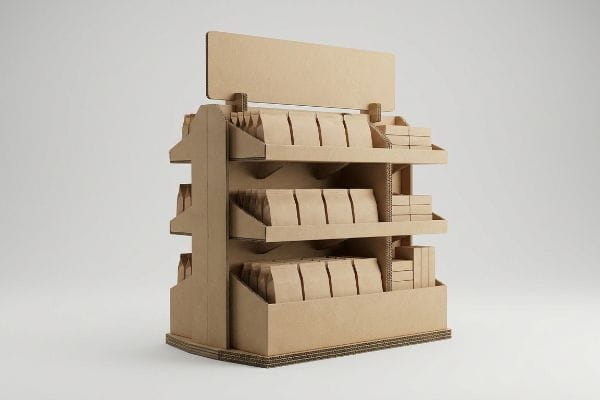
Lanzas una campaña publicitaria masiva, pero los clientes pasan de largo ante tu producto. El problema rara vez radica en tu marca; casi siempre se debe a una mala ejecución estructural en la tienda.
Sí. Los expositores personalizados aumentan las ventas de forma constante al interrumpir físicamente los patrones de compra y destacar los mensajes clave del producto. Un expositor bien diseñado reduce la fatiga en los pasillos, provocando una pausa cognitiva de tres segundos que impulsa las compras impulsivas y minimiza la costosa reposición de existencias para los empleados de las grandes superficies.

Lograr una estructura física adecuada requiere más que una plantilla gráfica atractiva. Exige una estricta adhesión a la ingeniería espacial y la psicología del consumidor.
¿Qué es la regla 3-3-3 en ventas?
Para detener con éxito a un comprador en movimiento, debes dominar la dinámica espacial antes de aplicar los gráficos.
La regla 3-3-3 en ventas define la interacción espacial con el comprador. Un expositor debe captar la atención visual desde treinta pies de distancia, despertar un interés específico a tres pies y propiciar la conversión final del producto físico a una distancia de tres pulgadas, lo que requiere elementos estructurales y gráficos distintos para cada umbral de proximidad objetivo.
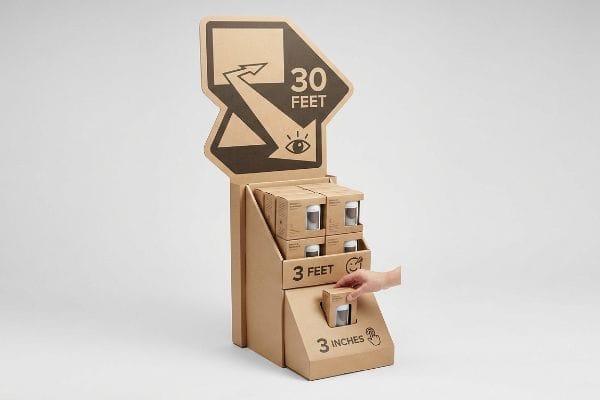
Comprender estos umbrales de distancia cambia la forma en que se diseña la silueta física de las unidades de punto de venta (POP).
Ingeniería para la regla 3-3-3 en el comercio minorista
Muchos diseñadores noveles tratan los expositores de suelo como si fueran gráficos planos para redes sociales. Dan por sentado que llenar una estructura de 121,9 cm de ancho con texto diminuto atraerá naturalmente a la gente a leerlo.
Veo este punto ciego cientos de veces al año. Una marca lanza un gráfico hermoso y con mucho texto, pero cuando me paro junto a él en el piso, el chirrido fuerte y caótico de un carrito de compras que pasa me distrae por completo y paso de largo. Si tu mensaje principal requiere que alguien se coloque exactamente a doce pulgadas (30.4 cm) de distancia, ya has fracasado. Debes construir para la regla 3-3-31.Usa encabezados estructurales enormes y troquelados para interrumpir visualmente el pasillo desde treinta pies. A tres pies, la agrupación de productos toma el protagonismo. A tres pulgadas (7.6 cm), el cliente busca el paquete físico. Nunca difumines estas zonas distintas.
| Error común de principiante | La solución profesional | Beneficio para el punto de venta |
|---|---|---|
| Imprimir pequeños párrafos en paneles base | Trasladar el texto principal al encabezado troquelado | Previene la sobrecarga cognitiva |
| Siluetas de pantalla planas y rectangulares | Utilizando paneles laterales curvos en 3D | Llama la atención desde 9 metros de distancia2 |
| Sobrecarga de la bandeja de productos | Aplicación del diseño de SKU asimétrico 3-5-73 | Simplifica la conversión de 3 pulgadas4 |
Siempre obligo a mis clientes a alejarse de sus pantallas. Si no pueden identificar la oferta principal desde lejos, la presentación está fallando y necesitamos rediseñar por completo su estructura de inmediato.
🛠️ Oficina de Harvey: ¿No está seguro de si su diseño es legible desde la zona de impacto de 9 metros en las tiendas? 👉 Solicite una auditoría gratuita de troquelado ↗ — Acceso directo a mi oficina. Sin spam de ventas automatizado, lo prometo.
¿Cuáles son las 4 formas generales de aumentar las ventas?
Para impulsar los ingresos, es necesario identificar con precisión qué métrica de comportamiento se desea influir en el punto de venta.
Incrementar las ventas se puede lograr mediante cuatro estrategias principales: captar nuevos clientes, aumentar el tamaño de las transacciones, mejorar la frecuencia de compra y subir los precios. En el comercio minorista, la presentación física de los productos influye directamente en estos indicadores al aumentar la visibilidad, agrupar artículos complementarios e impulsar las compras impulsivas durante las visitas habituales a las tiendas.
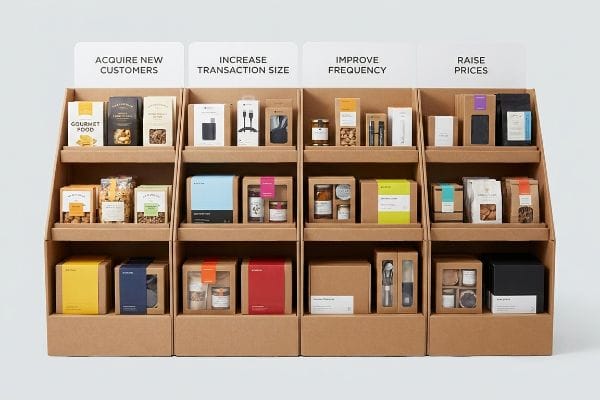
Traducir estos cuatro objetivos generales de ventas en una estructura física de cartón requiere una intensa disciplina visual.
Estructurando las 4 maneras de aumentar las conversiones de ventas
Los equipos de marketing a menudo quieren que su exhibición lo haga todo: atraer nuevos clientes, aumentar las ventas a los clientes actuales, impulsar el volumen de compra y justificar un precio más alto, todo a la vez. Intentan alcanzar los cuatro objetivos de ventas5 cubriendo cada superficie con textos promocionales contradictorios6.
Resulta increíblemente tentador aprovechar cada panel en blanco de un expositor para hablar de la historia de la empresa. Pero bajo la intensa y cegadora luz fluorescente de un almacén, los compradores apresurados experimentan una sobrecarga cognitiva instantánea. Siempre les recuerdo a mis clientes la regla 40-40-20 de la publicidad directa⁷.La estructura del expositor solo debe ocupar el 20 % del espacio cognitivo, dejando el resto para la oferta dirigida. Al sobrecargar un expositor con puntos complejos, en realidad se oculta la mercancía. Es necesario eliminar sin contemplaciones el texto secundario y utilizar colores sólidos y llamativos para destacar el artículo que se desea que el cliente elija.
| Error común de principiante | La solución profesional | Beneficio para el punto de venta |
|---|---|---|
| Revestir 7 afirmaciones de marketing diferentes | Aislar un objetivo promocional fundamental8 | Provoca compras impulsivas más rápidas |
| Utilizar el estándar CMYK (cian, magenta, amarillo, clave) para los fondos | Paneles de inundación con colores planos Pantone sólidos9 | Elimina el resplandor fluorescente |
| Ocultar objetos detrás de paredes laterales altas | Recortar amplias ventanas de visibilidad en los laterales10 | Maximiza el potencial de venta cruzada |
Elimino todo elemento visual innecesario durante la fase inicial de ingeniería. La estructura física debe actuar como un vendedor silencioso, presentando la mercancía de forma clara y concisa sin abrumar la limitada capacidad de atención del comprador.
🛠️ Harvey's Desk: ¿Tus obras de arte actuales sufren de sobrecarga cognitiva y mensajes contradictorios? 👉 Obtén una revisión de jerarquía visual ↗ — Descarga de forma segura. Mi bandeja de entrada está abierta si tienes preguntas más adelante.
¿Cuáles son las 4 P del merchandising visual?
Para lanzar una campaña con éxito, es fundamental comprender el marco comercial que determina la distribución de las tiendas.
El merchandising visual se basa en las 4 P: Producto, Precio, Distribución y Promoción. Este marco comercial determina cómo se colocan los artículos físicos en la tienda, asegurando que los productos seleccionados se adapten al entorno minorista, la arquitectura de exhibición y los mensajes promocionales adecuados para maximizar tanto la rotación de inventario como la rentabilidad en el punto de venta.
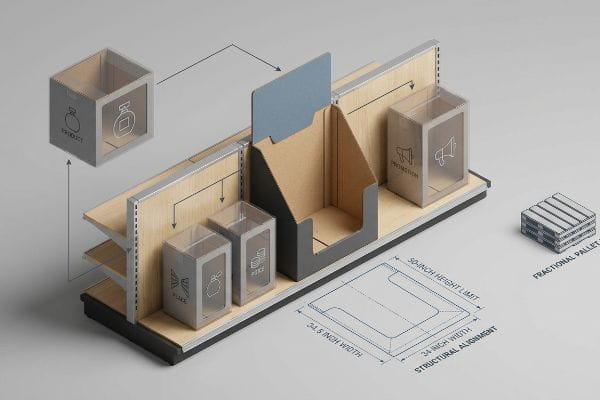
No alinear la estructura del edificio con estos cuatro pilares garantiza una fricción enorme durante la apertura de la tienda.
Mapeo de las 4 P del merchandising visual
El método habitual para lanzar una nueva campaña de venta minorista consiste simplemente en pedir un bloque genérico de tamaño predefinido y esperar que quepa en la tienda objetivo. Las marcas dan por sentado que un buen producto se venderá independientemente de su ubicación física en el pasillo.
Piensa en el merchandising visual como si compraras un traje a medida; no puedes usar un esmoquin para correr en la playa. Constantemente veo marcas que intentan encajar una unidad de cosméticos de alta gama en el diseño de una tienda de conveniencia de bajo costo. Cuando el dependiente intenta colocar una bandeja enorme en un estante estrecho, se puede oír literalmente la resistencia rígida e inflexible del grueso borde de cartón que la sujeta. Eso es un fallo en la alineación entre "Lugar" y "Producto". Como regla general, siempre mapea tu diseño estructural directamente al modelo operativo del minorista específico¹¹antes incluso de trazar el primer plano.
| Error común de principiante | La solución profesional | Beneficio para el punto de venta |
|---|---|---|
| Utilizar un tamaño genérico para todos los tipos de tiendas | Formatos de paletas fraccionadas específicos para ingeniería12 | Garantiza una colocación perfecta del pasillo |
| Ignorar las limitaciones de altura | Diseñando para la zona de impacto de 50 pulgadas13 | Se adapta a la ergonomía del comprador |
| Bloqueo de pasillos de tiendas con bases anchas | Limitar el ancho de las tapas de los extremos a 34,5 pulgadas14 | Supera las estrictas auditorías de los minoristas |
Me niego a diseñar una unidad hasta saber con exactitud en qué planta de la gran superficie comercial se ubicará. Alinear la estructura del local con el marco comercial del minorista elimina por completo los costosos cargos por devoluciones y los envíos rechazados.
🛠️ Harvey's Desk: ¿Te cuesta adaptar tu producto estrella a las estrictas dimensiones de una tienda de club? 👉 Solicita tu análisis de alineación estructural ↗ — Sin formularios que generen interminables llamadas de ventas. Solo valor puro.
¿El merchandising visual aumenta las ventas?
Cuando se ejecuta correctamente, la estructura física elimina activamente las barreras entre el consumidor y la compra.
Sí. El merchandising visual aumenta las ventas al eliminar la fricción física entre el producto y el cliente. La distribución estratégica del espacio y las bandejas personalizadas reducen la sobrecarga cognitiva, lo que garantiza que la mercancía de alto margen permanezca perfectamente visible y accesible, lo que se traduce directamente en una rotación de inventario más rápida y mayores tasas de conversión.
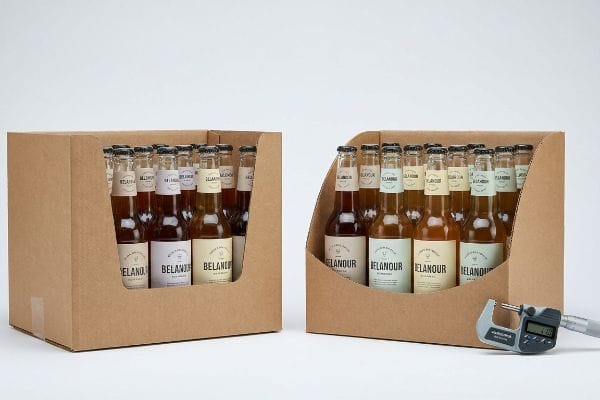
Pero conocer la teoría no basta cuando las máquinas empiezan a funcionar; la seguridad estructural suele chocar violentamente con la visibilidad de marketing.
Por qué el merchandising estándar falla en la planta de producción
Una suposición aparentemente razonable es que construir un borde de retención frontal más alto y grueso en una caja lista para el estante garantiza que el producto no se caerá durante el transporte. Los diseñadores priorizan la máxima estabilidad del material sobre la visibilidad para el consumidor15.
En mi centro, veo con frecuencia cómo esta red de seguridad teórica destruye por completo la conversión de ventas de una marca en el punto de venta. Esto no es solo teoría: lo veo suceder en el área de pruebas cuando un cliente trae una bandeja de bebidas. Usan un borde sobredimensionado para asegurar las botellas, pero ocultan por completo la etiqueta principal. Cuando saco mi micrómetro digital, sintiendo el clic preciso del medidor al fijarse a la lámina corrugada, mido la altura exacta del espacio libre. Si ese borde oculta el texto de cumplimiento crítico o la marca, el comprador lo ignora. Tomé las lecturas del micrómetro y demostré que no necesitábamos una pared enorme de cartón, solo necesitábamos una curva troquelada personalizada con un ajuste de tolerancia de 2,4 mm. Al aplicar este microajuste, restauramos la visibilidad del 100 % de la etiqueta, lo que históricamente evita los rechazos en el punto de venta del minorista16 y ahorra a los clientes un estimado de $4500 en costos de reempaquetado por envase17.
| Error común de principiante | La solución profesional | Beneficio para el punto de venta |
|---|---|---|
| Diseño de labios de retención excesivamente altos | Utilizando una curva troquelada mapeada matemáticamente | Garantiza una visibilidad del 100% de la etiqueta18 |
| Ignorando el texto legal del 75% de variedad19 | Bajando el panel frontal por debajo del logotipo principal | Evita las retenciones por cumplimiento legal |
| Confiando en frentes de bandeja planos y de corte recto | Diseño de ángulos de inclinación ergonómicos20 | Facilita la recuperación del producto sin esfuerzo |
Jamás sacrifico la visibilidad del producto por soluciones estructurales simplistas. Diseñar el borde de sujeción perfecto garantiza que la mercancía permanezca segura durante el transporte, a la vez que maximiza las conversiones por impulso en el momento en que llega al estante.
🛠️ Oficina de Harvey: No permita que un defecto estructural de 2 milímetros arruine el lanzamiento de 500 tiendas. 👉 Envíeme su archivo de troquelado ↗ — Analizaré los cálculos antes de que malgaste su presupuesto en la producción en masa.
Conclusión
Puedes elegir un proveedor más económico, pero cuando ese borde de retención genérico y sobredimensionado oculta por completo tu marca principal en el estante, genera una enorme fricción en el comprador y elimina por completo las tasas de conversión por impulso del proyecto. Esta es la hoja de especificaciones exacta que utilizan mis 10 principales clientes minoristas para garantizar cero rechazos de impresión. Deja de adivinar las tolerancias estructurales y permíteme revisar personalmente tus archivos con mi Auditoría Previa a la Impresión Gratuita ↗ para detectar obstrucciones fatales en las etiquetas antes de que gastes miles en producción en masa.
¿Has oído hablar de la regla 3-3-3? | Jacob Dubois – LinkedIn", https://www.linkedin.com/posts/jacobdubois_have-you-heard-of-the-3-3-3-rule-its-simple-activity-7313168585508483072-aVaC. Verificación de la regla 3-3-3 como principio de diseño minorista para la interacción escalonada con el comprador. Rol de evidencia: validación conceptual; tipo de fuente: manual de marketing o diseño minorista. Apoya: el uso de umbrales de distancia específicos para impulsar la conversión. Nota de alcance: aplicación principalmente en el comercio minorista físico. ↩
"Expositores de cartón ondulado para venta al por menor – The BoxMaker", https://www.boxmaker.com/retail-displays/. Los estándares de la industria para el merchandising visual verifican la distancia a la que siluetas estructurales específicas captan la atención del comprador. Función de la evidencia: verificación de la métrica técnica; tipo de fuente: guía de diseño para venta al por menor. Apoya: efectividad de los paneles laterales 3D. Nota de alcance: Varía según la iluminación de la tienda y el ancho del pasillo. ↩
"Servicios y estrategia de merchandising visual | T-ROC Global", https://trocglobal.com/visual-merchandising/. Los manuales de merchandising definen patrones específicos de distribución asimétrica de SKU para optimizar la visibilidad y el equilibrio del producto. Función de evidencia: definición técnica; tipo de fuente: especificación de planograma. Compatible con: estrategias de organización de bandejas de productos. Nota de alcance: específicamente para exhibidores de múltiples SKU. ↩
"Cómo aumentar las conversiones en tiendas minoristas – MRI Software", https://www.mrisoftware.com/blog/how-to-increase-conversions-in-retail/. Los estudios de psicología del consumidor sobre la "zona de conversión" explican la distancia crítica en la que un comprador pasa de caminar a interactuar con un producto. Función de la evidencia: validación de un término técnico; tipo de fuente: estudio de comportamiento del consumidor. Apoya: eficiencia de la disposición de SKU. Nota de alcance: Se centra en la transición física final a la interacción con el producto. ↩
"4 palancas que crean valor digital | MIT Sloan", https://mitsloan.mit.edu/ideas-made-to-matter/4-levers-create-digital-value. Los marcos empresariales estándar identifican la adquisición de clientes, el valor promedio del pedido, la frecuencia de compra y la fijación de precios como las cuatro palancas principales para el crecimiento de los ingresos. Rol de la evidencia: marco teórico; tipo de fuente: libro de texto de negocios. Apoya: la categorización de estos objetivos específicos como los objetivos principales para el crecimiento de las ventas. Nota de alcance: aplicación empresarial general. ↩
«¿Cuál es una buena tasa de conversión de SMS? – Mailchimp», https://mailchimp.com/resources/sms-conversion-rate/. La investigación en psicología del consumidor sugiere que los mensajes promocionales contradictorios o confusos aumentan la carga cognitiva y disminuyen la probabilidad de compra. Rol de la evidencia: evidencia empírica; tipo de fuente: revista académica. Apoya: la afirmación de que intentar alcanzar múltiples objetivos de ventas en una sola superficie de visualización es contraproducente. Nota de alcance: centrado en la comunicación visual. ↩
"La regla 40/40/20 del marketing directo | Metadata.io", https://metadata.io/resources/blog/the-40-40-20-rule-of-direct-marketing/. Una fuente autorizada de marketing define los componentes de la regla 40-40-20 para validar su aplicación a la ejecución creativa. Función de evidencia: definición de un estándar de la industria; tipo de fuente: guía de marketing. Apoya: la afirmación de que los elementos creativos representan el 20% del éxito. Nota de alcance: se aplica típicamente a campañas de respuesta directa. ↩
"Factores que afectan el comportamiento de compra impulsiva de los consumidores – PMC – NIH", https://pmc.ncbi.nlm.nih.gov/articles/PMC8206473/. Investigación sobre la carga cognitiva y la "paradoja de la elección" que muestra que los mensajes simplificados y de un solo objetivo aumentan las tasas de compra impulsiva. Función de la evidencia: Apoyo psicológico; tipo de fuente: Estudio de economía conductual. Apoya: El vínculo entre los objetivos promocionales enfocados y las compras impulsivas más rápidas. Nota de alcance: Se aplica a las exhibiciones en el punto de venta. ↩
"Color directo vs. color CMYK: Diferencias esenciales explicadas", https://unicopacking.com/en/new/spot-color-vs-process-color.html . Explicación técnica de cómo los colores directos sólidos proporcionan mayor saturación y menor dispersión de la luz en comparación con los puntos de proceso CMYK bajo iluminación fluorescente. Función de la evidencia: Validación técnica; tipo de fuente: Diseño gráfico o manual de iluminación. Apoya: La afirmación de que los colores Pantone reducen el deslumbramiento fluorescente. Nota de alcance: Se aplica específicamente a la señalización impresa para comercios.
"7 tipos de escaparates: ideas creativas para diseñadores de tiendas", https://unibox.co.uk/blog/7-types-of-window-display . Datos de merchandising que demuestran que mejorar la visibilidad y las líneas de visión en los expositores de cabecera de góndola o de pared lateral aumenta el descubrimiento de productos de diferentes categorías. Función de la evidencia: Mejores prácticas del sector; tipo de fuente: Guía de merchandising para minoristas. Apoya: La afirmación de que las ventanas de visibilidad maximizan el potencial de venta cruzada. Nota de alcance: Limitado a la distribución física de las tiendas.
"DISEÑO ESTRUCTURAL DE EXHIBICIONES PARA COMERCIO MINORISTA INTERACTIVO…", https://www.bcipkg.com/display-structural-design-for-interactive-retail-displays/. Breve explicación de cómo los estándares de la industria para exhibidores en el punto de venta exigen la alineación con la infraestructura de la tienda. Función de evidencia: validación técnica; tipo de fuente: manual de diseño minorista. Apoya: el requisito de adaptar las dimensiones de las exhibiciones a las limitaciones operativas. Nota de alcance: se aplica a los accesorios físicos de venta minorista. ↩
"Tipos de exhibición de palets: completos, medios y cuartos – GreenDot Packaging", https://greendotpackaging.com/understanding-pallet-display-types-full-half-and-quarter-pallet-displays/. Documentación técnica sobre el uso de tamaños de palets no estándar para optimizar la distribución de las tiendas y el flujo de pasillos. Función de evidencia: explicación técnica; tipo de fuente: informe técnico sobre logística. Apoya: el beneficio de los palets fraccionados para una colocación sin problemas. Nota de alcance: la efectividad depende del espacio específico de la tienda. ↩
"Diseño de locales comerciales para exhibiciones efectivas y flujo de clientes", https://www.business.qld.gov.au/industries/manufacturing-retail/retail-wholesale/retail-displays. Verificación del rango de altura óptimo para la visibilidad del producto y la accesibilidad del consumidor, conocido como zona de impacto. Función de la evidencia: validación; tipo de fuente: estudio de ergonomía minorista. Apoya: la afirmación de que una altura de 50 pulgadas se ajusta a la ergonomía del comprador. Nota de alcance: Puede variar ligeramente según la categoría del producto. ↩
¿Existen limitaciones de tamaño para los expositores de cabecera de góndola? – PopDisplay", https://popdisplay.me/are-there-any-size-limitations-for-endcap-displays/. Normas de cumplimiento de la industria para las dimensiones de los expositores de cabecera de góndola requeridas para mantener el espacio libre en el pasillo y pasar las auditorías de seguridad. Función de la evidencia: verificación; tipo de fuente: manual de cumplimiento minorista. Admite: la medida técnica específica de 34,5 pulgadas. Nota de alcance: Aplicable principalmente a entornos minoristas de grandes superficies. ↩
"5 Requisitos para Empaques Listos para Estantería", https://greatnorthernpackaging.com/2025/11/19/5-requirements-for-shelf-ready-packaging/. El análisis de los estándares de ingeniería de empaques verificaría la tendencia a priorizar la seguridad durante el transporte sobre la visibilidad en el punto de venta en los diseños estándar listos para estantería. Función de la evidencia: validación contextual; tipo de fuente: estudio de diseño industrial. Apoya: la afirmación de que el diseño de empaques estándar a menudo dificulta la comercialización visual. Nota de alcance: centrado en empaques listos para estantería (SRP). ↩
"Mejores prácticas de comercialización: Cumplimiento – Vanguard Companies", https://www.vanguardpkg.com/merchandising-best-practices-compliance/. Explicación de cómo los estándares de cumplimiento minorista con respecto a la visibilidad de las etiquetas impactan la aceptación de la exhibición en el punto de venta. Rol de evidencia: estándar de la industria; tipo de fuente: directrices minoristas/informes de logística. Apoya: El vínculo entre la visibilidad de la etiqueta y la aceptación minorista. Nota de alcance: Los estándares pueden variar según el minorista. ↩
"Reempaquetado para el cumplimiento de normativas en el sector minorista: Walmart, Costco y grandes superficies...", https://nautical-direct.com/retail-compliance-repackaging-walmart-costco-and-big-box-requirements-explained/. Análisis de los costes medios de logística y mano de obra asociados al reempaquetado de expositores minoristas que no cumplen con las normativas. Función de la evidencia: métrica financiera; tipo de fuente: análisis de costes logísticos. Apoya: El valor monetario de prevenir errores en los expositores. Nota de alcance: Los costes varían según el volumen y la región. ↩
"PERSPECTIVAS DEL PUNTO DE VENTA: EL IMPACTO DE LOS POP EN EL PUNTO DE VENTA…", https://www.bcipkg.com/point-of-purchase-insights-the-impact-of-retail-pop-displays-on-consumer-behavior/. Investigación de mercado que demuestra la correlación entre la visibilidad sin obstrucciones de la etiqueta y las tasas de conversión de compra del consumidor. Función de la evidencia: apoyo; tipo de fuente: estudio de análisis minorista. Apoya: La afirmación de que las curvas troqueladas mejoran los resultados de ventas en comparación con los bordes de retención altos. Nota de alcance: Contexto general de bienes de consumo envasados. ↩
"Etiquetado de vinos | TTB – Oficina de Impuestos y Comercio de Alcohol y Tabaco", https://www.ttb.gov/regulated-commodities/beverage-alcohol/wine/labeling. Verificación del requisito reglamentario de que un vino debe contener al menos un 75 % de una variedad de uva específica para poder ser etiquetado como tal. Función de la evidencia: validación; tipo de fuente: regulación gubernamental. Apoya: La necesidad de alturas de empaque específicas para evitar retenciones por incumplimiento legal. Nota de alcance: Específico de la TTB de EE. UU. y leyes de etiquetado internacionales similares .
"Embalaje ergonómico: mejora de la comodidad, la eficiencia y la seguridad", https://somewang.com/blog/ergonomic-packaging-enhancing-comfort-efficiency-and-safety/. Normas de diseño industrial que explican cómo ángulos e inclinaciones específicos reducen el esfuerzo físico necesario para que un consumidor retire un producto de una bandeja. Función de la evidencia: verificación; tipo de fuente: manual de ergonomía. Apoya: La afirmación de que los ángulos de inclinación facilitan la extracción del producto sin esfuerzo. Nota de alcance: Se aplica a estanterías físicas de venta al por menor. ↩