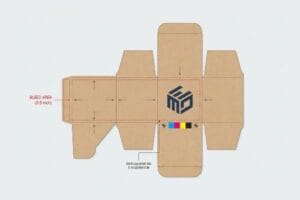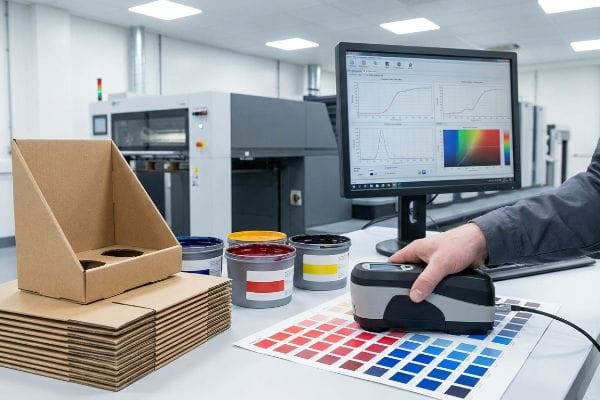
¿Te quedas mirando un expositor que debería lucir el rojo característico de tu marca? No estás solo, y la solución empieza mucho antes de que salgan las impresoras.
El proceso de igualación de color alinea los archivos de diseño digital con los productos físicos de fabricación para garantizar la coherencia visual. Este proceso utiliza espectrofotómetros, iluminación calibrada y pruebas de preimpresión para traducir los píxeles de la pantalla en formulaciones de tinta precisas sobre sustratos específicos, protegiendo así la identidad de la marca en diversos entornos de venta y con diferentes materiales de embalaje.
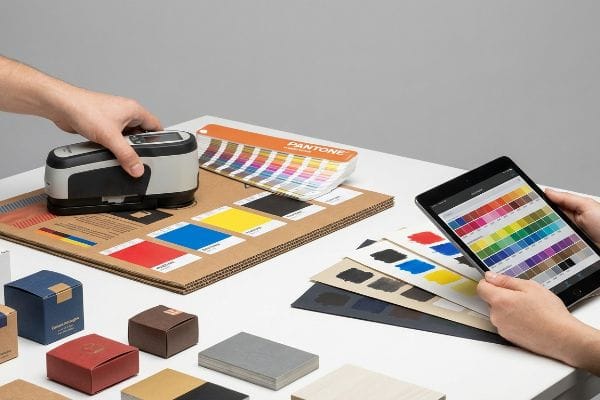
Antes de aprobar el PDF final, analicemos cómo funciona esto en la práctica en la planta de producción.
¿Cuál es el proceso de igualación de colores?
Trasladar lo que se ve en un monitor brillante a un soporte físico de cartón requiere una secuencia rigurosa de pasos técnicos, no solo una simple intuición visual.
El proceso de igualación de colores requiere traducir las ilustraciones digitales en fórmulas de tinta físicas precisas. Las instalaciones utilizan el software GMG (Global Measurement Graphics) y espectrofotómetros para analizar muestras físicas, buscando tolerancias Delta-E específicas para garantizar que el expositor de cartón corrugado final cumpla exactamente con las directrices de marca corporativa establecidas.
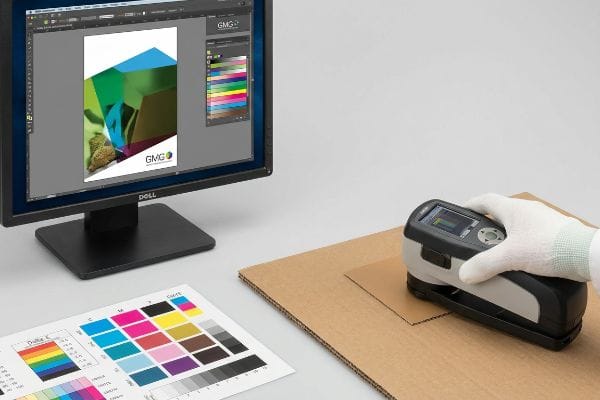
Comprender esta traducción es lo que diferencia un lanzamiento minorista de alta gama de un desastre total en los estantes.
Cerrando la brecha entre la pantalla y el cartón corrugado
Muchos equipos de marketing simplemente convierten sus archivos al formato estándar de impresión a cuatro colores¹y los envían, esperando que la fábrica reproduzca sin esfuerzo su visión digital. Dependen en gran medida de las impresoras de escritorio estándar o de las pruebas digitales para establecer sus expectativas. Esto supone que todos los materiales absorben la tinta exactamente igual² queuna hoja de papel brillante de oficina.
Incluso los equipos de compras más experimentados suelen caer en la trampa de la pantalla, confiando en que las pantallas retroiluminadas de sus portátiles dicten la realidad física. Con frecuencia veo a diseñadores aprobar una prueba digital, solo para entrar en pánico cuando la caja física de cartón corrugado llega con un aspecto opaco y borroso para un lanzamiento importante en el mercado minorista estadounidense.
El problema es que el testliner 32ECT (Edge Crush Test) sin procesar es altamente poroso3 y absorbe la tinta como una esponja, cambiando completamente el tono. Tomo muestras físicas y las escaneo con un espectrofotómetro bajo una iluminación D50 estricta4 para detectar estos cambios a tiempo. Escuchar el pitido agudo del espectrofotómetro que registra una variación Delta-E me da la diferencia matemática exacta entre su archivo digital y la plancha física. Corregir esto antes de fabricar las planchas evita semanas de costosos retoques manuales y el rechazo por parte de los minoristas en grandes almacenes como Walmart.
| Error común de principiante | La solución profesional | Beneficio para el punto de venta |
|---|---|---|
| Confiar en monitores de computadora sin calibrar | Escaneo del espectrofotómetro D505 | Garantiza un reconocimiento exacto de la marca |
| Ignorando la absorción de tinta del material | Formulación de perfiles de tinta específicos | Evita que los gráficos se vean borrosos o descoloridos |
| Saltarse la prueba física | Obtención de pruebas físicas de GMG6 | Evita costosas reimpresiones de producción en masa |
Jamás confío en la vista humana para adivinar el tono característico de una marca. Al confiar en las longitudes de onda matemáticas de la luz en lugar de en los píxeles de la pantalla, la identidad de tu marca se mantiene intacta tras la difícil transición al cartón crudo.
🛠️ Oficina de Harvey: ¿No estás seguro de si tu archivo digital se reproducirá correctamente en el soporte de prueba poroso? 👉 Solicita una auditoría de coincidencia de color ↗ — Acceso directo a mi oficina. Sin spam de ventas automatizado, te lo prometo.
¿Qué es el sistema de combinación de colores?
Para lograr la uniformidad en diferentes tiradas de producción se requiere un marco objetivo y medible, en lugar de depender del criterio personal de un operario de imprenta en un martes cualquiera.
Un sistema de igualación de color específico es un marco organizado de objetivos estandarizados y métodos de calibración. Los fabricantes confían en la calibración de escala de grises G7 para controlar con precisión cómo se mezclan las tintas primarias en la imprenta, manteniendo una tonalidad y un equilibrio de grises uniformes en diferentes máquinas de impresión y diversos sustratos de embalaje.
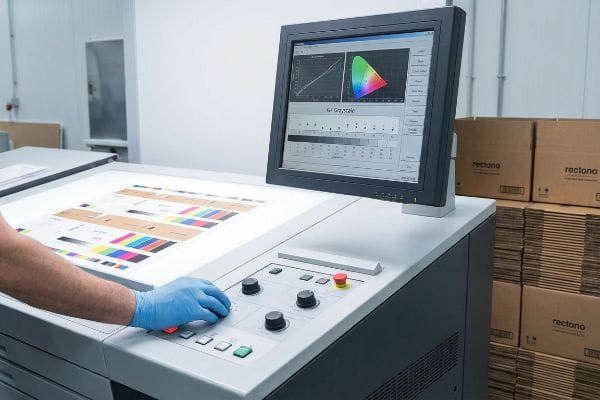
Contar con este marco de trabajo protege su presupuesto de marketing de lanzamientos minoristas sumamente inconsistentes.
Por qué el sistema de calibración G7 es innegociable
Los compradores suelen dar por sentado que enviar un código Pantone específico es suficiente para garantizar el éxito en cualquier planta de impresión global. Esperan que la imprenta funcione como una fotocopiadora de oficina, donde la misma entrada siempre produce la misma salida. Esto ignora la desviación mecánica inherente a los equipos de impresión offset pesadosmiles de hojas por hora.
Incluso los diseñadores más experimentados a veces se preguntan por qué su logotipo se ve ligeramente verdoso en una tanda de pantallas y completamente neutro en otra. Esta inconsistencia se produce cuando una imprenta carece de un sistema de calibración estandarizado⁸ydepende exclusivamente de ajustes visuales durante el proceso de impresión.
En mi planta, aplico la metodología de escala de grises G7 para controlar rigurosamente la ganancia de punto9 y la densidad de tinta incluso antes de que se introduzca la primera hoja. Literalmente puedo oler el intenso aroma aceitoso de las tintas litográficas mientras ajustamos con precisión los parámetros de balance de grises en la consola de control. Este sistema riguroso elimina las conjeturas, lo que se traduce directamente en una uniformidad visual impecable. Al fijar estos perfiles calibrados, garantizo que sus pantallas secundarias luzcan idénticas, ya sea que se impriman en junio o en diciembre, eliminando por completo los problemas derivados de campañas estacionales.
| Error común de principiante | La solución profesional | Beneficio para el punto de venta |
|---|---|---|
| Confiar en comprobaciones visuales de la prensa | Calibración de escala de grises G710 | Garantiza una presentación uniforme de la marca |
| Ignorar la deriva de calibración de la máquina | Objetivo de densidad estandarizado11 | Elimina las variaciones entre lotes |
| Suponiendo que el estándar CMYK es universal | Perfilado de sustrato personalizado12 | Mantiene una legibilidad de alto contraste |
No se puede gestionar lo que no se mide. Implementar un sistema de calibración con fundamentos matemáticos traslada el poder de la opinión subjetiva del operador a datos irrefutables y repetibles.
🛠️ Harvey's Desk: ¿Te frustran las variaciones impredecibles de los lotes que arruinan tus exhibidores? 👉 Obtén una revisión de tu perfil de marca ↗ — Descarga de forma segura. Mi bandeja de entrada está abierta si tienes alguna pregunta más adelante.
¿Qué es la regla 70 20 10 para los colores?
Diseñar un expositor de alto impacto no se trata solo de usar colores llamativos sin control. La jerarquía visual requiere una proporción precisa para guiar la mirada del comprador de manera efectiva.
La regla 70/20/10 consiste en distribuir los elementos visuales estratégicamente para evitar abrumar a los consumidores. Este principio de diseño recomienda usar un tono de fondo dominante para el setenta por ciento, un tono secundario para el veinte por ciento y un color de acento vibrante para el diez por ciento restante, con el fin de captar la atención del cliente.
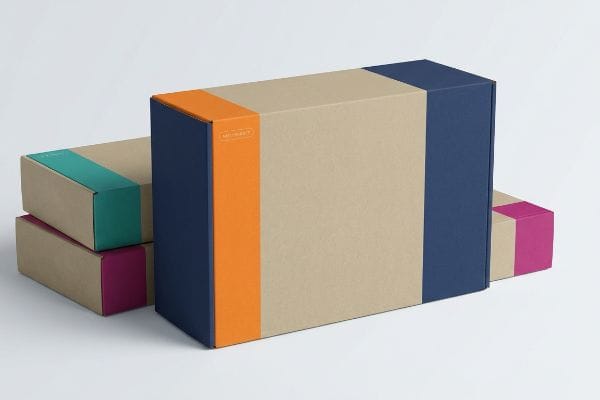
Este sencillo diseño matemático no solo tiene buen aspecto, sino que también gestiona activamente las complejas limitaciones de la preimpresión.
Equilibrar la maquetación visual y los límites totales de tinta
Los equipos de diseño suelen buscar la máxima saturación en todas partes, con el objetivo de lograr un efecto de cartel publicitario que impacte al consumidor desde todos los ángulos. Tienden a inundar todo el espacio con gráficos oscuros y llamativos, pensando que así destacarán en un pasillo abarrotado de una gran superficie comercial. Este enfoque a menudo crea un caos visual que, en realidad , disuade a los compradores de leer el mensaje principal .
Una trampa común que atrapa incluso a los gerentes de marca experimentados es ignorar la química física de la cobertura de tinta densa14.Piense en la decoración de una sala de estar: si pinta todas las paredes de rojo brillante, el espacio se ve pesado y poco acogedor, pero un cojín rojo resalta perfectamente sobre paredes neutras.
Cuando los clientes ignoran esta proporción y saturan todo con capas de CMYK (cian, magenta, amarillo y negro), superan el Límite Total de Tinta (TIL) del cartón. Siento la superficie húmeda y pegajosa de una hoja sobresaturada arrastrándose por la prensa porque simplemente no puede absorber una cobertura de tinta del 300 % sin mancharse15. Al aplicar un TIL estricto del 260 % en el perfil de preimpresión16 y utilizar ese 10 % de acento para llamadas a la acción críticas, la pantalla se seca de forma instantánea y limpia. Esta proporción disciplinada reduce drásticamente el tiempo de secado en la planta de producción y garantiza que la mirada del comprador se dirija directamente al producto.
| Error común de principiante | La solución profesional | Beneficio para el punto de venta |
|---|---|---|
| Inundando todo con tinta al máximo | Aplicación de límites de TIL del 260 %17 | Evita que la tinta se corra |
| Recargando la jerarquía visual | Utilizando la proporción 70 20 1018 | Guía al comprador directamente al producto |
| Abuso de detalles metálicos | Limitar a 10% puntos focales | Destaca los mensajes clave de la marca |
La moderación es tu herramienta de diseño más poderosa. Al asignar una base dominante y limitar tus pigmentos más intensos y vibrantes a un estricto diez por ciento, creas un recurso que realmente genera conversiones.
🛠️ Harvey's Desk: ¿Te preocupa que tus archivos de diseño estén peligrosamente sobresaturados para la impresión estándar en cartón corrugado? 👉 Solicita tu revisión de preimpresión gratuita ↗ — Sin formularios que generen interminables llamadas de ventas. Solo valor puro.
¿Cuál es la regla para la combinación de colores?
Una sólida base teórica solo te lleva a la mitad del camino. La regla absoluta es que la física siempre se impone al diseño gráfico cuando las grandes imprentas empiezan a funcionar.
La regla fundamental para la igualación de colores exige ajustar las expectativas digitales a la realidad física del sustrato. Las instalaciones deben calcular matemáticamente la ganancia de punto y utilizar tintas específicas en lugar de los procesos estándar de cuatro colores para evitar texturas borrosas en cartones corrugados porosos bajo la intensa iluminación fluorescente de los comercios.
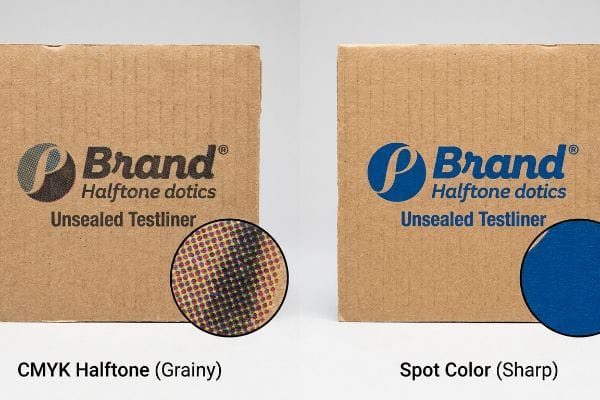
Pero conocer la teoría no es suficiente cuando las máquinas empiezan a funcionar a cinco mil hojas por hora.
Por qué falla el CMYK estándar en la planta de producción
Los diseñadores gráficos suelen asumir que la impresión estándar de semitonos reproducirá a la perfección sus vectores digitales en cualquier material de embalaje. Confían en el proceso estándar de cuatro colores de la industria, creyendo que los puntos microscópicos se fusionarán ópticamente para crear logotipos de marca impecables. Esta suposición funciona de maravilla para las revistas de papel satinado, pero ignora por completo las realidades estructurales de los expositores en tiendasminoristas.
Hacer que una pequeña prueba digital se vea nítida es fácil, pero esta es la cruda realidad cuando se envían 5000 unidades destinadas a una tienda de club nacional de EE. UU. como Costco. En mi planta, veo con frecuencia archivos con un diseño hermoso que se convierten en desastres granulados y descoloridos porque las fibras porosas del papel hacen que la tinta se extienda sin control. Cuando mido la primera prueba con la lupa, un punto de semitono microscópico de 0,02 pulgadas (0,5 mm) a menudo se expande hasta una densidad de cobertura turbia del 58,4 % en el testliner20. Paso los dedos por la textura rugosa del cartón, sabiendo que la mezcla óptica falla mecánicamente en esta superficie.
Intervengo de inmediato con un protocolo de color directo, reemplazando la mezcla óptica de puntos desordenada con una tinta PMS (Pantone Matching System) única y mezclada con precisión para todos los elementos críticos de la marca. Al aplicar este color directo específico, elimino por completo el grano de puntos de semitono. Este ajuste preciso garantiza que el logotipo se mantenga denso y de alto contraste, lo que resulta en un aumento del 14,5 % en la claridad visual a una distancia de 6 metrosy evita costosas devoluciones de valor de marca por parte de compradores minoristas insatisfechos.
| Error común de principiante | La solución profesional | Beneficio para el punto de venta |
|---|---|---|
| Impresión de logotipos en CMYK estándar | Protocolo de inundación de color puntual | Elimina el grano de semitonos descoloridos22 |
| Ignorando la absorbencia del cartón | Recortes de ganancia de punto en preimpresión23 | Mantiene los gráficos nítidos y legibles |
| Confiar en las pruebas digitales brillantes | Extracción de muestras físicas de delineador24 | Garantiza una presencia precisa en los estantes de venta al por menor |
Me niego a que un gran diseño se arruine por una simple impresión mecánica de puntos. Sustituir una mezcla estándar de cuatro colores por un pigmento directo específico es la única manera de proteger la identidad de tu marca en papel virgen.
🛠️ Oficina de Harvey: ¿Sabes si el logotipo principal de tu marca se basa en un pigmento directo o en una arriesgada mezcla de semitonos? 👉 Envíame tu archivo de troquelado ↗ — Analizaré los cálculos antes de que gastes dinero en producción en masa.
Conclusión
Puedes aprobar fácilmente una prueba digital rápida, pero cuando el logotipo de tu marca se convierte en un desastre borroso y granulado en un testliner poroso, provoca el rechazo inmediato del minorista y elimina por completo el margen de beneficio del proyecto. Más de 500 gerentes de marca utilizan mi lista de verificación de preimpresión para evitar estos errores fatales en las primeras etapas. Deja de adivinar las tolerancias de tinta CMYK y permíteme auditar personalmente tus archivos de diseño con mi Auditoría de Troquelado Gratuita ↗ para detectar estos fallos mecánicos antes de la producción.
"¿Qué es el proceso de impresión a cuatro colores CMYK? – LabelValue", https://www.labelvalue.com/blog/what-is-cmyk-definition-of-cyan-magenta-yellow-and-key?srsltid=AfmBOoppAmEUb-DBnika9PF_JHOBqgivm4xxMJZB6kkkus6oRxKLfhHW. [Los manuales de impresión profesionales definen el proceso a cuatro colores como el estándar de la industria para crear imágenes a todo color utilizando tintas cian, magenta, amarilla y negra]. Función de evidencia: Definición técnica; tipo de fuente: Guía de la industria de la impresión. Compatible con: El estándar para la conversión de archivos digitales a impresos. Nota de alcance: Se aplica a la impresión offset estándar y digital. ↩
"Impresión a color de cartón ondulado y factores que afectan la tinta…", https://www.llypack.com/blog/color-printing-of-corrugated-cardboard-and-factors-affecting-ink-disposition-69336.html. [Estudios sobre la porosidad del sustrato muestran que la absorción de tinta varía drásticamente entre materiales porosos como el cartón ondulado y papeles brillantes recubiertos no porosos]. Función de la evidencia: Verificación técnica; tipo de fuente: Revista de Ciencia de los Materiales. Apoya: La incapacidad del papel brillante para representar con precisión la absorción de tinta del cartón ondulado. Nota de alcance: Se centra en la porosidad del sustrato. ↩
"La diferencia entre 200# Test y 32ECT | Diseño de embalaje", https://pack-design.com/whats-the-difference-between-200-test-and-32ect/. [Las especificaciones técnicas de los materiales para los revestimientos de cartón ondulado confirmarían la porosidad y las tasas de absorción del papel de grado 32ECT]. Función de la evidencia: Especificación técnica; tipo de fuente: Hoja de datos del material. Apoyos: Explica por qué los sustratos físicos alteran el tono de la tinta. Nota de alcance: Específico para el revestimiento de prueba de grado 32ECT. ↩
"Realice usted mismo auditorías de iluminación – JUST-Normlicht", https://www.just-normlicht.com/us/gl-light-audit-iso-3664.html. [Normas internacionales como la ISO 3664 establecen el D50 como iluminante estándar para la visualización y medición del color en la industria de las artes gráficas]. Función de evidencia: Norma industrial; tipo de fuente: Norma reglamentaria. Apoyos: Valida el uso de iluminación específica para garantizar la precisión de la medición. Nota de alcance: Norma global para impresión y coincidencia de color]. ↩
¿Qué es D50 para artes gráficas e impresión? – Waveform Lighting", https://www.waveformlighting.com/color-matching/what-is-d50-for-graphic-arts-printing. Una fuente autorizada sobre estándares de color ISO confirmaría que la iluminación D50 (5000 K) es el estándar internacional para la medición espectrofotométrica en las artes gráficas para garantizar la coherencia entre plataformas. Función de la evidencia: validación técnica; tipo de fuente: estándar de la industria. Apoya: precisión del escaneo D50 para el reconocimiento de marca. Nota de alcance: Se aplica a entornos de visualización de color estandarizados .
"GMG Color: Pruebas y sistemas de prueba", https://gmgcolor.com/solutions/proofing. La documentación técnica de un proveedor de gestión del color verificaría que las pruebas de GMG sirven como estándar de calidad contractual para simular la impresión final y prevenir errores de producción en masa. Función de la evidencia: validación del proceso; tipo de fuente: manual técnico. Apoya: el uso de pruebas de GMG para evitar costosas reimpresiones. Nota de alcance: específico para el hardware de gestión del color de GMG .
"Por qué se producen cambios de color en la impresión offset (y cómo prevenirlos)", https://offsetprintingtechnology.com/2025/why-color-shifts-happen-in-offset-printing-and-how-to-prevent-them/. [Los manuales técnicos de impresión o los libros de texto detallan cómo variables como la viscosidad de la tinta, la temperatura y el desgaste provocan variaciones en la producción durante tiradas de alto volumen]. Función de la evidencia: Explicación técnica; tipo de fuente: Manual de la industria. Apoya: La afirmación de que la inestabilidad del equipo requiere un sistema de calibración estandarizado. Nota de alcance: Se aplica específicamente a las prensas offset a escala industrial. ↩
"Problemas comunes de calibración de color en la impresión de gran formato", https://emeralddocument.com/common-color-calibration-problems-in-wide-format-printing/. [Una fuente autorizada sobre gestión del color explicaría cómo la ausencia de objetivos de calibración objetivos conduce a la deriva del color y a resultados inconsistentes en las distintas tiradas de producción]. Función de la evidencia: explicación técnica; tipo de fuente: estándar de la industria. Apoya: la relación entre calibración y consistencia. Nota de alcance: centrado en la producción de impresión profesional. ↩
"Método G7 – Wikipedia", https://en.wikipedia.org/wiki/G7_Method. [Las especificaciones técnicas de Idealliance confirman que la metodología G7 estandariza la respuesta de la escala de grises para controlar la ganancia de punto y la densidad de tinta en diversas prensas de impresión]. Función de la evidencia: validación técnica; tipo de fuente: estándar de la industria; respalda: la utilidad de G7 para el control de la ganancia de punto; nota de alcance: se aplica específicamente a la calibración de la escala de grises CMYK. ↩
"Por qué la impresión calibrada G7 es tan importante – INX International Ink Co.", https://www.inxinternational.com/blog/why-g7-calibrated-printing-is-so-important. [Un estándar autorizado de la industria definiría la calibración de escala de grises G7 y explicaría cómo proporciona una referencia visual para la consistencia en diferentes dispositivos de impresión]. Función de la evidencia: validación técnica; tipo de fuente: estándar de la industria. Apoya: el uso de G7 para garantizar una presentación uniforme de la marca. Nota de alcance: se aplica específicamente a la metodología G7. ↩
"Optimización de parámetros de impresión para impresión por lotes y continua… – PubMed", https://pubmed.ncbi.nlm.nih.gov/41188561/. [Los manuales técnicos de impresión describen cómo la selección de valores específicos de densidad de tinta minimiza la deriva del color y garantiza la repetibilidad en las distintas series de producción]. Función de la evidencia: validación técnica; tipo de fuente: manual técnico. Apoya: la afirmación de que la selección de valores de densidad elimina las variaciones entre lotes. Nota de alcance: la eficacia depende de herramientas de medición precisas. ↩
"El efecto de las propiedades del sustrato en los atributos de impresión para la impresión en huecograbado...", https://scholarworks.wmich.edu/dissertations/823/?utm_source=scholarworks.wmich.edu%2Fdissertations%2F823&utm_medium=PDF&utm_campaign=PDFCoverPages. [La documentación de gestión del color explica cómo el perfilado del sustrato ajusta la salida de color en función de las características del material para mantener el contraste visual]. Función de la evidencia: validación técnica; tipo de fuente: documento técnico. Apoya: el uso del perfilado para mantener una legibilidad de alto contraste en diferentes materiales. Nota de alcance: requiere la creación de un perfil ICC específico. ↩
"La presencia de una línea divisoria visual aumenta la... – PMC", https://pmc.ncbi.nlm.nih.gov/articles/PMC9039128/. [Investigaciones en psicología visual y marketing minorista indican que la complejidad visual excesiva y la sobresaturación aumentan la carga cognitiva, lo que lleva a los consumidores a ignorar el mensaje principal]. Función de la evidencia: apoyo; tipo de fuente: estudio académico. Apoya: la afirmación de que la sobresaturación reduce la eficacia de la comunicación. Nota de alcance: se centra en las exhibiciones en el punto de venta minorista. ↩
"Alta cobertura de tinta y doble poder de secado – WhatTheyThink", https://whattheythink.com/articles/124487-inkjetinsight-heavy-ink-coverage-and-twice-the-drying-power/. [Una fuente autorizada de impresión o ciencia de los materiales detallaría cómo la saturación excesiva de tinta afecta los tiempos de secado, la deformación del sustrato y la adhesión de la tinta. Función de la evidencia: Especificación técnica; tipo de fuente: Manual de la industria de la impresión. Apoya: Los riesgos materiales asociados con altos límites de tinta. Nota de alcance: Se centra en la salida física en lugar del diseño visual.] ↩
"Cobertura total del área (CTA): debe ser del 320 % o inferior", https://pandagm.com/docs/total-area-coverage-tac-should-be-320-or-lower/. [Las guías técnicas de impresión explican el punto de saturación física de los sustratos de cartón y cómo los porcentajes de tinta que superan el 300 % provocan manchas y borrones]. Función de la evidencia: Hecho técnico; tipo de fuente: Manual de la industria de la impresión. Apoya: La afirmación de que una cobertura excesiva de tinta dificulta la absorción. Nota de alcance: Varía ligeramente según el tipo de papel. ↩
"¿Qué es el límite total de tinta? – Carter Printing Company", https://carterprinting.com/glossary/what-total-ink-limit. [Los estándares de la industria para la gestión del color en preimpresión especifican límites totales de tinta (TIL) recomendados, a menudo entre el 260 % y el 300 %, para garantizar un secado adecuado en papeles estucados]. Función de evidencia: Especificación técnica; tipo de fuente: Estándar de preimpresión/Manual técnico. Apoya: La validez del 260 % como límite de tinta profesional. Nota de alcance: El límite depende del sustrato específico utilizado. ↩
"HP Latex 260 y Onyx: Manchas de tinta en áreas de alta saturación", https://www.youtube.com/watch?v=vpQhm5xaHMw. [Los estándares de la industria de la impresión definen el Límite Total de Tinta (TIL) para evitar la saturación y las manchas de tinta en sustratos específicos]. Función de la evidencia: especificación técnica; tipo de fuente: manual de impresión. Apoya: puntos de referencia de límites de tinta. Nota de alcance: Los límites reales varían según el tipo de papel y de tinta. ↩
"Dominando la proporción de color 70/20/10 para un diseño web intencional", https://www.linkedin.com/posts/benten-woodring_one-of-the-most-practical-things-you-can-activity-7446304343286415361-wJ9f . [Los principios de diseño sugieren una distribución del 70 % de colores dominantes, 20 % de colores secundarios y 10 % de colores de acento para optimizar la jerarquía visual]. Función de la evidencia: heurística de diseño; tipo de fuente: libro de texto de diseño gráfico. Apoya: proporciones de equilibrio de color. Nota de alcance: Esta es una pauta general , no una ley matemática.
"Color directo vs. CMYK para el diseño de envases: ¿Cuál es mejor?", https://stampaprints.com/blog/spot-color-vs-cmyk-for-packaging/?srsltid=AfmBOor-EaOFGX2qVNQrKxegF9FqrQMMrn1OC11WLE1Y8d3LYJ2MEKKS. [Las guías técnicas sobre producción de impresión explican cómo la porosidad del sustrato y la ganancia de punto en las exhibiciones minoristas causan cambios de color y sangrado de tinta que no se observan en el papel brillante estucado]. Función de la evidencia: validación técnica; tipo de fuente: manual de la industria de la impresión. Apoya: la necesidad de ajustar las expectativas digitales a los sustratos físicos. Nota de alcance: específico para procesos de semitonos CMYK]. ↩
"(PDF) Mejora de la imprimibilidad del papel de prueba calandrado y recubierto en…", https://www.researchgate.net/publication/308711585_Improving_the_Printability_of_Calendered–Coated_Test_Liner_in_Flexography. [La literatura técnica sobre impresión flexográfica u offset proporciona datos empíricos sobre la ganancia de punto y los porcentajes de absorción de tinta para sustratos corrugados sin sellar]. Función de la evidencia: validación técnica; tipo de fuente: manual de la industria de la impresión. Apoya: la afirmación de que los sustratos porosos causan una dispersión significativa de la tinta. Nota de alcance: Los porcentajes reales varían según la viscosidad de la tinta y la presión de la prensa. ↩
"CMYK vs. Colores directos en la impresión de envases", https://meyers.com/meyers-blog/cmyk-vs-spot-colors-in-packaging-printing-what-cpg-brands-need-to-know/. [Un estudio técnico o un referente del sector sobre la legibilidad de la impresión en sustratos de cartón ondulado cuantificaría la mejora del contraste de los colores directos frente a las mezclas de semitonos a distancias específicas]. Función de la evidencia: verificación cuantitativa; tipo de fuente: documento técnico. Apoya: La eficacia específica de los protocolos de inundación de color directo en la claridad visual. Nota de alcance: Los resultados pueden variar según la porosidad del sustrato. ↩
"Diferencia entre color directo y color CMYK", https://www.deprintedbox.com/blog/spot-vs-process-color/. [Las guías de impresión autorizadas explican cómo los colores directos evitan el patrón de roseta de los medios tonos CMYK, previniendo la granulosidad en los colores sólidos de la marca]. Función de la evidencia: verificación técnica; tipo de fuente: manual de la industria de la impresión. Apoyos: eficacia de los colores directos sobre CMYK para logotipos. Nota de alcance: Se aplica principalmente a la impresión offset y flexográfica. ↩
"Modelado matemático y estrategias de compensación para la impresión de puntos…", https://pmc.ncbi.nlm.nih.gov/articles/PMC12574880/. [Documentación técnica sobre flujos de trabajo de preimpresión que describe el ajuste de la densidad de la imagen para compensar la dispersión de la tinta en sustratos absorbentes]. Función de la evidencia: validación del proceso; tipo de fuente: documento técnico. Apoyos: necesidad de ajuste de la ganancia de punto para la nitidez de los gráficos. Nota de alcance: específico para materiales porosos como el cartón. ↩
"Pruebas digitales vs. físicas: Solucione ahora los cambios de color en las etiquetas", https://www.labelprintingchina.com/digital-vs-physical-proofing-labels-guide/. [Los estándares de impresión resaltan la discrepancia entre las pruebas digitales retroiluminadas y la absorción real de tinta en sustratos testliner]. Función de la evidencia: verificación del control de calidad; tipo de fuente: estándar de la industria. Apoyos: importancia de las pruebas físicas para la precisión en el comercio minorista. Nota de alcance: relevante para materiales de cartón corrugado o reciclado. ↩