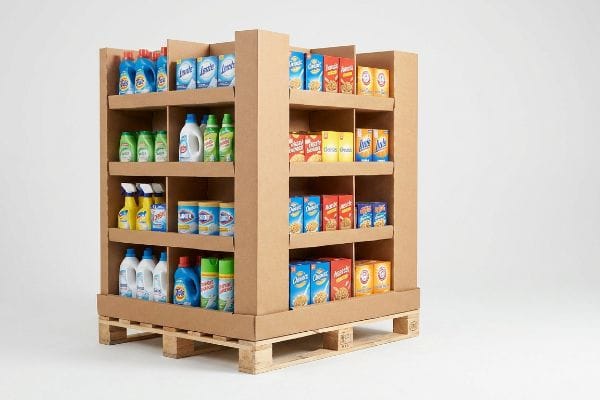
Lograr que tus productos lleguen a las grandes superficies comerciales cumpliendo con las estrictas normativas de los minoristas es como caminar sobre la cuerda floja. Analicemos cómo funciona realmente el merchandising de alto impacto en diferentes sectores.
Los expositores de cartón para palets son estructuras autoportantes para la venta a granel, diseñadas para el envío y la venta de productos de gran volumen directamente desde una base estándar de madera o cartón. Estas plataformas reforzadas estructuralmente maximizan el espacio en la tienda, eliminan la necesidad de reposición de existencias y ofrecen una visibilidad integral de la marca en los sectores de alimentación, electrónica y clubes mayoristas.
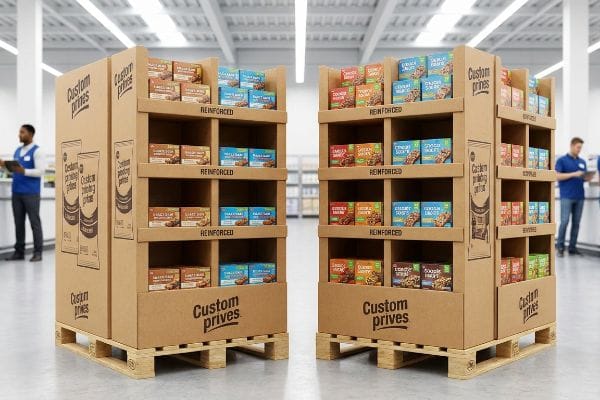
Comprender la definición básica es fácil, pero sobrevivir a las duras realidades de la logística minorista de alta velocidad requiere una inmersión mucho más profunda en la física estructural.
¿Cómo ganar dinero con palets viejos?
Deja de pagar a las empresas de gestión de residuos para que se lleven tus materiales de campaña.
Para obtener ganancias a partir de palés usados, es fundamental diseñar los expositores de venta al por menor específicamente para el reciclaje de cartón ondulado usado (OCC). Al utilizar sustratos 100 % reciclables y evitar los laminados de bioplástico sólido, las marcas permiten a los minoristas empacar y vender el cartón usado a las fábricas locales para obtener beneficios.

Convertir los residuos en ingresos suena muy bien en una sala de juntas, pero es necesario comprender la realidad química del embalaje antes de presentar esta idea a un minorista.
La economía circular de los flujos de OCC
Las marcas suelen exigir bioplásticos complejos o láminas metálicas pesadas para que sus expositores resulten visualmente atractivos¹,dando por sentado que estos acabados de alta calidad no afectarán a la eliminación al final de su vida útil. Diseñan pensando en el día del lanzamiento, pero ignoran por completo lo que sucede cuando finaliza el periodo promocional.
Veo que esto sucede constantemente: una marca presenta un diseño magnífico laminado con plásticos gruesos y sólidos. Cuando termina la campaña, un dependiente apresurado intenta meter la unidad en la compactadora de papel estándar. El fuerte crujido de la máquina se detiene cuando el plástico rígido atasca la línea de clasificación de OCC. Debido a esa película no reciclable, todo el lote es rechazado por la planta de reciclaje2 y enviado directamente a un vertedero. Es una trampa común que atrapa incluso a equipos de compras experimentados. Al cambiar a un recubrimiento acuoso a base de agua en lugar de laminados sólidos3, se mantiene el cartón 100 % reciclable. Esto significa que el minorista puede embalarlo legalmente y venderlo a una fábrica de papel, transformando un problema de eliminación en una fuente de ingresos limpia.
| Error común de principiante | La solución profesional | Beneficio para el punto de venta |
|---|---|---|
| Utilizando laminados de plástico sólido | Recubrimientos acuosos líquidos | Supera las estrictas auditorías de la OCC |
| Ignorar las tarifas de eliminación | Mezclas de kraft virgen SFI/FSC | Convierte los residuos en ingresos en forma de balas |
| Mezcla de materiales que no son papel | Pestañas entrelazadas de un solo material | Elimina el tiempo de clasificación manual |
Diseño cada unidad para que se deslice sin problemas en las cubas de reciclaje estándar, sin dejar residuos plásticos tóxicos. Esto garantiza que su embalaje genere valor de recuperación en lugar de provocar multas cuantiosas por eliminación de residuos peligrosos impuestas por los departamentos de cumplimiento normativo de las grandes superficies.
🛠️ El escritorio de Harvey: ¿Tus exhibidores actuales no cumplen con los estándares de sostenibilidad de las grandes superficies? 👉 Obtén una auditoría de materiales gratuita ↗ — Acceso directo a mi escritorio. Sin spam de ventas automatizado, lo prometo.
¿Qué es un expositor de palets?
Es más que una simple caja grande en el suelo. Es un activo estructural altamente regulado.
Un expositor de palets es una estructura de venta minorista de gran capacidad, que se instala en el suelo y se ajusta matemáticamente a las dimensiones estándar de la GMA (Asociación de Fabricantes de Alimentos) de 48 × 40 pulgadas (1219,2 × 1016 mm). Estos expositores de alta resistencia funcionan como escaparates independientes, llegando precargados con inventario para evitar la clasificación en el almacén y captar la atención de los clientes de inmediato en los pasillos de mayor afluencia.
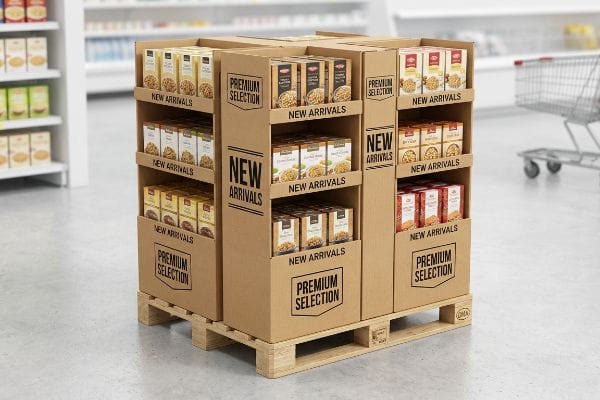
Conocer la huella del espacio es el primer paso, pero el verdadero desafío comienza cuando intentas adaptar ese diseño a diferentes formatos de tienda.
La huella geofísica y la física estructural de GMA
Las empresas comerciales suelen presentar un diseño escalable en el que una gran unidad de punto de venta puede reducirse matemáticamente en un 50 % para funcionar como mostrador de caja . Se basan en el escalado básico de software, ignorando las estrictas normas legales y logísticas que rigen estas dos zonas comerciales separadas⁴ .
En realidad, un palé debe ajustarse estrictamente al límite logístico de almacén GMA de 48 × 40 pulgadas (1219,2 × 1016 mm)⁵, mientras que las unidades de mostrador deben cumplir con la ventana de cumplimiento de alcance frontal de 15 a 48 pulgadas (381 a 1219,2 mm) de la ADA (Ley para Estadounidenses con Discapacidades)⁶. Cuando se reduce el tamaño de un expositor de suelo masivo, las gruesas ondulaciones del cartón corrugado no se pueden doblar lo suficiente para las dimensiones de los expositores en miniatura. Este error fundamental en la estrategia de venta minorista provoca problemas continuos de cumplimiento. Es imprescindible separar permanentemente los procesos de diseño para las unidades de suelo y de mostrador. Diseñar específicamente para la huella GMA exacta garantiza que la base se fije perfectamente a la plataforma de madera, resistiendo la compleja logística del almacén y asegurando aprobaciones fluidas en las tiendas.
| Error común de principiante | La solución profesional | Beneficio para el punto de venta |
|---|---|---|
| Reducción 1:1 para contadores | Tuberías separadas de ADA/GMA7 | Evita las devoluciones de cargo por parte de los minoristas |
| Ignorando el voladizo de la base | Cuadros delimitadores de voladizo cero | Detiene el aplastamiento del tránsito |
| Utilizando flauta E delgada para las bases | Doble pared de 32 ECT de alta resistencia8 | Sobrevive al manejo con montacargas |
Fije siempre las unidades de exhibición al marco logístico preciso de GMA. Esto garantiza una estabilidad estructural completa y evita que los gerentes de las tiendas rechacen sus entregas.
🛠️ Oficina de Harvey: ¿No está seguro de si las dimensiones de su local infringen las normas de cumplimiento para pasillos de grandes superficies? 👉 Solicite una verificación de espacio ↗ — Descargue de forma segura. Mi bandeja de entrada está abierta si tiene alguna pregunta más adelante.
¿Para qué se pueden utilizar los palets?
Desde cajas de bebidas energéticas hasta aparatos electrónicos voluminosos, estas enormes estructuras son los pilares fundamentales de las tiendas.
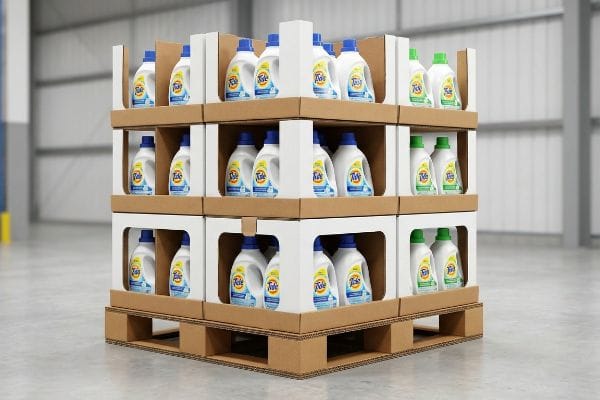
Los palets se pueden utilizar para la comercialización a granel de productos de consumo envasados (CPG) pesados en almacenes mayoristas y supermercados de alto tránsito. Están diseñados específicamente para soportar cargas dinámicas masivas, aprovechando las ventanas de acceso directo que permiten a varios clientes extraer productos simultáneamente desde los cuatro lados de la estructura.
Aunque la aplicación parezca sencilla, no comprender cómo interactúan realmente los consumidores con las pantallas de visualización masiva puede arruinar su campaña.
Ingeniería para el entorno de las tiendas de clubes
Las marcas suelen diseñar grandes expositores con paredes sólidas e imponentes para maximizar el espacio de impresión para su marca. Parten de la base de que cubrir toda la superficie con gráficos de gran tamaño atraerá de forma natural a los clientes de toda la tienda.
Piensa en una exhibición de productos a granel como una mesa de buffet abarrotada; si la gente solo puede acceder a la comida desde un lado, se forma un enorme cuello de botella. Incluso los diseñadores más experimentados suelen pasar por alto este punto ciego al construir fortalezas amuralladas. Cuando un comprador intenta coger un pesado bidón de detergente del nivel inferior de una unidad de paredes sólidas, las zonas oscuras impiden la visión y sus manos rozan dolorosamente contra el borde corrugado áspero y sin tratar. Siempre les recomiendo a mis clientes que utilicen una arquitectura de paso. Al diseñar soportes con ventanas y pilares estructurales abiertos, se permite que la luz ambiental de la tienda ilumine la mercancía y que cuatro compradores diferentes puedan coger productos simultáneamente. Esta sencilla regla de diseño reduce drásticamente la congestión en la tienda y acelera activamente la tasa de rotación del inventario⁹ .
| Error común de principiante | La solución profesional | Beneficio para el punto de venta |
|---|---|---|
| Muros de carga sólidos | Soportes con ventana para compras | Permite compras en 360 grados |
| Estantes interiores oscuros | Forros interiores reflectantes blancos | Destaca la visibilidad del producto |
| Base estándar de pared simple | Capacidad de carga dinámica de más de 2500 libras10 | Evita el aplastamiento de la capa inferior |
Diseño cada estructura a granel para maximizar la permeabilidad visual sin sacrificar ni un ápice de resistencia a la compresión. Al abrir los laterales, se elimina la fricción para el comprador y se garantiza que los productos se desplacen sin problemas desde la base directamente a sus carritos.
🛠️ Harvey's Desk: ¿Tus estantes inferiores son demasiado oscuros y hacen que los clientes ignoren tu inventario más pesado? 👉 Solicita tu render de iluminación 3D ↗ — Sin formularios que generen interminables llamadas de ventas. Solo valor puro.
¿Cuáles son las ventajas de los palets?
La verdadera ventaja de la transición a plataformas de cartón ondulado a gran escala reside en lograr una eficiencia masiva en la cadena de suministro.
Entre las principales ventajas de los palés se incluyen la consolidación de grandes volúmenes de carga, la rápida distribución en tienda y la eliminación total de la logística de hardware permanente. Al utilizar estructuras temporales de cartón corrugado plegables, las marcas reducen drásticamente el peso de los contenedores y evitan pagar elevados costes de transporte por el aire muerto a través de las cadenas de suministro globales.
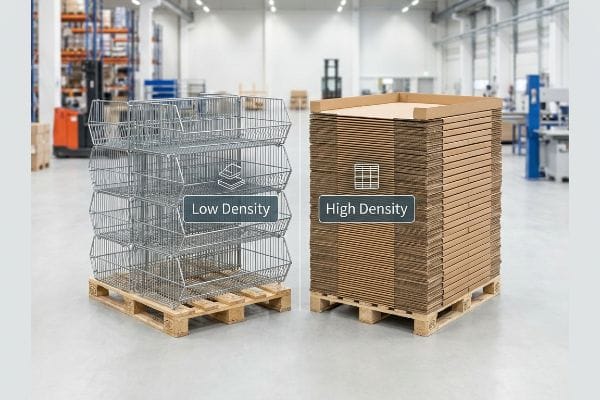
Pero conocer la teoría no es suficiente cuando las máquinas empiezan a funcionar y las facturas de logística internacional comienzan a acumularse.
Por qué el hardware permanente agota su presupuesto de logística
Los equipos de compras suelen optar por estanterías de alambre metálico soldadas permanentes para campañas minoristas a corto plazo, asumiendo que el acero de alta resistencia garantiza automáticamente un mayor retorno de la inversión. Se centran excesivamente en la vida útil del accesorio, ignorando las complejas realidades logísticas del envío de estructuras metálicas completamente ensambladas11.
En mis instalaciones, veo con frecuencia a clientes sorprendidos por sus facturas de flete marítimo porque eligieron acero soldado en lugar de cartón de ingeniería. El envío de hardware permanente implica enviar espacio vacío; solo caben unas 250 estanterías metálicas soldadas en un contenedor estándar de 40HQ¹²,sintiendo la pesada y fría rigidez del acero soldado al rozar contra las paredes del contenedor. Lo pruebo constantemente en el muelle de carga. Cuando mido un diseño temporal de cartón corrugado de alto rendimiento —utilizando flauta B de corte preciso que se pliega completamente— puedo embalar cómodamente hasta 1500 unidades en ese mismo contenedor de 40HQ¹³.La diferencia es asombrosa. El trimestre pasado revisé los manifiestos de envío y le demostré a un cliente que, al eliminar los soportes de acero rígidos, evitamos por completo la penalización por volumen. Esta simple transición a la ingeniería de embalaje plano redujo sus necesidades de contenedores, disminuyendo sus gastos de flete en un estimado del 80 % por envío.
| Error común de principiante | La solución profesional | Beneficio para el punto de venta |
|---|---|---|
| Envío de estanterías metálicas soldadas | Ingeniería de cartón corrugado de embalaje plano | Maximiza la densidad del contenedor |
| Pagar por enviar volumen vacío | Plegable multibisagra de flauta B | Reduce drásticamente los costos del transporte marítimo14 |
| Ensamblaje de hardware complejo | Cierres modulares a presión preencolados | Reduce el tiempo de montaje en 42 segundos15 |
Me niego a que las marcas malgasten su capital de trabajo en pérdidas. Calculando con precisión el peso volumétrico y optando por plataformas de cartón corrugado cortadas con exactitud, le garantizo que maximizará la densidad de los contenedores y reducirá drásticamente el costo unitario.
🛠️ Oficina de Harvey: No permita que un defecto estructural de 2 milímetros arruine el lanzamiento de 500 tiendas. 👉 Envíeme su archivo de troquelado ↗ — Analizaré los cálculos antes de que malgaste su presupuesto en la producción en masa.
Conclusión
Puedes optar por enviar estanterías metálicas soldadas de gran tamaño, pero cuando te des cuenta de que estás pagando un sobreprecio enorme solo por transportar aire muerto, esto eliminará por completo el margen de beneficio del proyecto. Esta es la hoja de especificaciones exacta que utilizan mis 10 principales clientes minoristas para garantizar cero rechazos de impresión. Deja de arriesgarte con penalizaciones por envío volumétrico y permíteme auditar personalmente tu estrategia logística a través de mi Auditoría Gratuita de Troqueles ↗ para garantizar la máxima densidad de contenedores antes de que comience la producción en masa.
"Análisis exhaustivo de bioplásticos: evaluación del ciclo de vida, residuos…", https://pmc.ncbi.nlm.nih.gov/articles/PMC11401513/. Documentación técnica sobre cómo los recubrimientos y láminas no repulpables contaminan el flujo de reciclaje de OCC. Función de la evidencia: verificación técnica; tipo de fuente: estándar de la industria del reciclaje. Apoya: la afirmación de que los acabados premium dificultan la eliminación. Nota de alcance: se centra en la repulpabilidad en la acera. ↩
¿Qué es la contaminación del reciclaje? | En Nuestra Naturaleza – Sostenibilidad de la UW", https://sustainability.uw.edu/blog/recycling-contamination. Las directrices de gestión de residuos confirman que los contaminantes plásticos no reciclables en las balas de OCC provocan el rechazo de la fábrica y su desvío al vertedero. Función de la evidencia: verificación del proceso; tipo de fuente: protocolo de gestión de residuos municipales. Apoya: la afirmación de que los laminados plásticos causan el rechazo de lotes. Nota de alcance: depende de los umbrales de contaminación de la fábrica .
"Recubrimiento de papel reciclable y biodegradable con… – PMC", https://pmc.ncbi.nlm.nih.gov/articles/PMC11948148/. Los estándares de la industria para el reciclaje de papel verifican que los recubrimientos acuosos son repulpables, mientras que los laminados plásticos sólidos contaminan el flujo de OCC. Función de la evidencia: validación técnica; tipo de fuente: revista de ciencia de materiales o estándar de la industria del reciclaje. Apoya: la afirmación de que los recubrimientos acuosos mantienen una repulpabilidad del 100 %. Nota de alcance: específico para sustratos a base de papel. ↩
"Exhibidores de mercancía minorista en la zona frontal", https://www.seattle.gov/transportation/permits-and-services/permits/applicant-guides/ag-1091a. Verificación de regulaciones legales y de seguridad específicas (por ejemplo, códigos de incendios, cumplimiento de la ADA o estándares específicos del minorista) que difieren entre exhibidores de punto de venta de pie y de mostrador. Función de la evidencia: validación de la restricción; tipo de fuente: directriz regulatoria. Apoya: la afirmación de que escalar un diseño ignora las reglas específicas de la zona. Nota de alcance: se centra en los estándares minoristas de EE. UU .
Palés GMA "48×40" | El mayor fabricante y proveedor de palés", https://www.palletone.com/products/gma-pallets/. Verificación de las dimensiones oficiales del estándar de palés de la Asociación de Fabricantes de Alimentos (Grocery Manufacturers Association). Función de la evidencia: especificación técnica; tipo de fuente: estándar de la industria. Respalda: la afirmación sobre la huella física exacta requerida para la compatibilidad con el almacén. Nota de alcance: Se aplica específicamente a la logística de América del Norte. ↩
"Capítulo 3: Partes Operables – Access-Board.gov", https://www.access-board.gov/ada/guides/chapter-3-operable-parts/. Verificación de las directrices de accesibilidad de la ADA con respecto a las profundidades máximas de alcance para mostradores y pantallas. Función de la evidencia: cumplimiento legal; tipo de fuente: reglamento gubernamental. Apoya: la afirmación con respecto a las medidas específicas para las unidades de mostrador. Nota de alcance: Limitado a la ley federal de accesibilidad de EE. UU.
"Tipos de expositores de palets: completos, medios y cuartos", https://greendotpackaging.com/understanding-pallet-display-types-full-half-and-quarter-pallet-displays/. Las directrices autorizadas para el sector minorista definen las dimensiones específicas y los requisitos de accesibilidad para los expositores que cumplen con las normas de la GMA (Asociación de Fabricantes de Alimentos) y la ADA (Ley de Estadounidenses con Discapacidades). Función de la evidencia: normas reglamentarias; tipo de fuente: asociación comercial. Apoyos: prevención de contracargos por parte de los minoristas. Nota de alcance: se aplica a las redes de distribución minorista de Norteamérica. ↩
"[PDF] Especificaciones de cartón ondulado – Fibre Box Association", https://www.fibrebox.org/assets/2025/09/Walmart_Corrugated-Board_Specifications_Automation_Packaging_Standards.pdf. Las especificaciones técnicas del cartón ondulado de doble pared 32 ECT confirman su capacidad de carga para bases de palés industriales. Función de evidencia: especificación técnica; tipo de fuente: estándar industrial. Apoyos: requisitos de resistencia del material para manipulación con montacargas. Nota de alcance: centrado en las clasificaciones de la prueba de aplastamiento de bordes del cartón ondulado. ↩
"Repensando el diseño minorista a medida que cambian los hábitos de los clientes", https://www.brrarch.com/rethinking-retail-design-as-customers-habits-change/. Un estudio de la industria o informe de análisis minorista que demuestra cómo las exhibiciones a granel de acceso abierto mejoran el flujo de compradores y aumentan la velocidad de ventas. Función de la evidencia: prueba causal; tipo de fuente: investigación de mercado/estudio académico. Apoya: la afirmación de que la disposición arquitectónica afecta las tasas de venta. Nota de alcance: Enfoque en entornos minoristas de clubes de almacén o grandes superficies. ↩
"¿Cuánta carga puede soportar mi palé?", https://unitload.vt.edu/education/white-papers/5-wp-load-carrying-capacity-of-pallets.html. Verificación de especificaciones técnicas para capacidades de carga de exhibición en almacenes/tiendas club para garantizar la integridad estructural. Función de evidencia: especificación técnica; tipo de fuente: norma de ingeniería. Apoyos: requisito de altas clasificaciones de carga para evitar aplastamientos. Nota de alcance: específico para bases minoristas de alta resistencia. ↩
"Planificación de embalaje y logística para expositores minoristas – Frank Mayer", https://www.frankmayer.com/blog/packaging-and-logistics-planning-for-retail-displays/. Datos logísticos autorizados que comparan los costos de envío y el peso volumétrico de marcos metálicos preensamblados con estructuras desmontadas. Función de la evidencia: verificación fáctica; tipo de fuente: análisis de la cadena de suministro. Apoya: Afirmación de que el envío de metal ensamblado es ineficiente. Nota de alcance: Enfoque en la logística de expositores minoristas. ↩
"Contenedor seco de gran capacidad de 40 pies | Especificaciones y dimensiones", https://www.bws.net/toolbox/container-specifications/40-foot-dry-high-cube. Verificación de la capacidad volumétrica estándar para estanterías metálicas rígidas en un contenedor de gran capacidad. Función de la evidencia: base fáctica; tipo de fuente: estándares de la industria logística. Apoya: la ineficiencia del volumen de hardware permanente. Nota de alcance: varía según las dimensiones de la estantería. ↩
"Flat Pack VS Contenedores de envío tradicionales", https://www.prefabex.com/our_galleries/flat-pack-vs-traditional-shipping-containers. Comparación de la densidad de envío de cartón plano frente a acero soldado en el transporte marítimo. Función de la evidencia: métrica de rendimiento técnico; tipo de fuente: estudio de caso de la cadena de suministro. Apoya: beneficios de consolidación de volumen de las plataformas de cartón ondulado. Nota de alcance: basado en un diseño específico de flauta B. ↩
"Cómo el embalaje ligero de cartón ondulado reduce los costes logísticos…", https://diapkg.com/blog/how-to-reduce-logistics-costs-with-lightweight-corrugated-packaging/. Análisis de cómo la reducción del volumen enviado mediante la ingeniería de flauta B plegable disminuye los gastos de transporte marítimo. Función de la evidencia: verificación económica; tipo de fuente: informe técnico sobre logística. Apoya: afirmación de ahorro de costes. Nota de alcance: se centra en el ahorro de peso volumétrico. ↩
¿Qué son los muebles de paquete plano? (Y por qué los mejores no tienen…), https://unfnshed.com/blogs/news/what-is-flat-pack-furniture-and-why-the-best-kind-has-no-hardware-at-all?srsltid=AfmBOop0hptg-HKlRGT9TkRBW2zOZodajBi992n_YxqcvkTZ8lxj-HeB. Datos técnicos que comparan el tiempo de montaje de cerraduras modulares corrugadas con el montaje de herrajes tradicionales. Función de la evidencia: validación cuantitativa; tipo de fuente: informe de referencia de la industria. Apoya: afirmación de reducción de tiempo. Nota de alcance: específico para sistemas de cierre a presión modulares. ↩