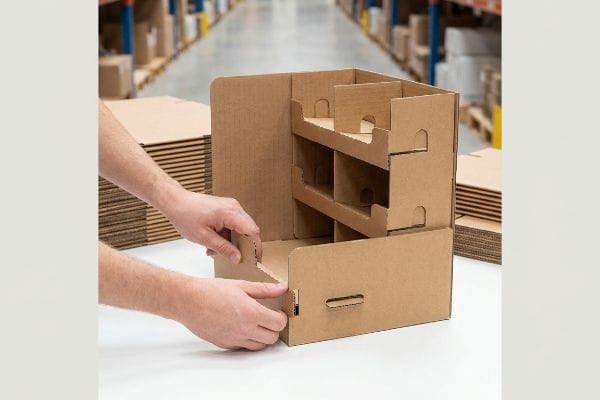
Sus 500 expositores de juguetes llegaron para su lanzamiento en el cuarto trimestre, pero el equipo del almacén está confundido. El montaje nunca debería ser un rompecabezas complicado.
El montaje de un expositor de juguetes de cartón consiste en doblar sistemáticamente los paneles base premarcados, encajar las pestañas y colocar los estantes modulares. Los procedimientos operativos estándar recomiendan empezar desde abajo para asegurar que la columna central de carga encaje correctamente en la estructura antes de añadir mercancía pesada.
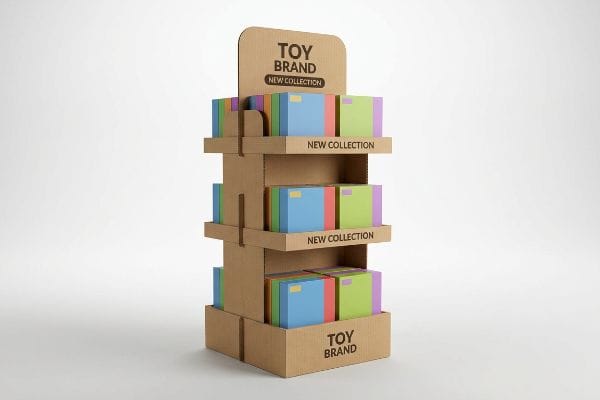
En teoría suena sencillo. Pero conocer la teoría no basta cuando las máquinas empiezan a funcionar y las placas 32ECT (Edge Crush Test) se enfrentan a la implacable realidad física del almacén.
¿Cómo montar una caja expositora?
Un diseño complejo de caja expositora puede verse fantástico en un monitor 3D, pero si se tardan 15 minutos en fabricar cada unidad, su presupuesto de logística se agotará al instante.
El montaje de una caja expositora requiere alinear las líneas de corte estructurales, plegar siguiendo las matrices de pliegue precalibradas y asegurar las pestañas de anclaje principales. Un montaje correcto depende en gran medida de tolerancias de ranura diseñadas con precisión para evitar que las fibras de cartón corrugado se rompan o se deformen durante los intensos procesos manuales de preparación de pedidos en el almacén.
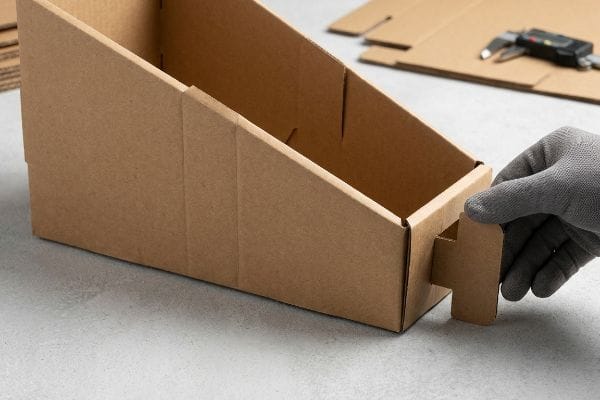
Lamentablemente, lo que encaja a la perfección en el espacio digital a menudo se convierte en una pesadilla física en la línea de envasado.
¿Por qué los troqueles CAD estándar provocan cuellos de botella en la línea de montaje?
Incluso los diseñadores veteranos suelen pasar por alto la realidad física del grosor del cartón corrugado al dibujar plantillas planas en Illustrator. Dibujan ranuras entrelazadas con el mismo ancho que la pestaña de inserción, asumiendo que una proporción digital uno a uno se traducirá sin problemas en una estructura 3D. Esto ignora por completo la ley física de que el papel plegado consume espacio estructural1.
Esto no es solo teoría; lo veo en acción en el laboratorio de pruebas cuando los clientes traen archivos sin calibrar. El trimestre pasado, una agencia me envió una caja de exhibición aparentemente perfecta, diseñada para ensamblarse en segundos. Al principio, supuse que sus ranuras troqueladas estándar aguantarían. Estaba completamente equivocado. Cuando mi equipo de co-empaquetado intentó forzar las pestañas en ranuras dimensionadas estrictamente para el calibre seco absoluto del cartón, la flauta B 32ECT se dobló por la fricción. La exhibición física se deformó gravemente y el tiempo de ensamblaje se disparó a unos desastrosos 4 minutos por unidad. Inmediatamente llevé el archivo de vuelta a la estación de trabajo CAD (Diseño Asistido por Computadora) y realicé un rediseño estructural paramétrico. Amplié matemáticamente cada ranura de recepción agregando una tolerancia de curvatura específica de 0,04 pulgadas (1 mm) para compensar el radio exterior del pliegue. Al aplicar esta microtolerancia, la fricción desapareció. Este ajuste de 1 mm redujo el tiempo de ensamblaje del co-empaquetado en 42 segundos por unidad, lo que supuso un ahorro considerable en los costes laborales para el cliente en su producción de 10.000 unidades.
| Solución de ingeniería | Resultado físico | Retorno de la inversión en la cadena de suministro |
|---|---|---|
| Tolerancia de curvatura paramétrica3 | Inserción de lengüeta sin fricción | Reduce la mano de obra en un 30%4 |
| Expansión de ranura de 0,04 pulgadas5 | Evita que la flauta se doble | Acelera el cumplimiento |
| Desplazamiento dinámico de la línea de troquelado | Ensamblaje perfectamente cuadrado | Evita cuellos de botella en la línea de producción |
Como ingeniero estructural, me niego a que un cálculo digital deficiente arruine un despliegue físico. Incluyo rigurosamente la compensación de tolerancias en cada pliegue antes incluso de que comience la fabricación.
🛠️ Oficina de Harvey: ¿Están sus ranuras de troquelado actuales compensadas matemáticamente para la expansión del radio de plegado de la flauta B? 👉 Audite sus tolerancias de embalaje ↗ — Reviso personalmente cada archivo estructural en 24 horas.
¿Cómo se monta un soporte para cartas?
Los expositores de mostrador deben soportar cientos de interacciones con los clientes cada semana. Si el material base se ve afectado químicamente, todo el expositor se deformará incluso antes de que finalice la campaña.
Para armar un soporte para tarjetas, basta con encajar el panel trasero rígido con la base frontal escalonada. Esta estructura de sobremesa utiliza cierres de papel a presión en lugar de pegamento, lo que garantiza que la base vertical se mantenga perfectamente alineada y completamente estable, incluso al sostener pilas pesadas de tarjetas de regalo.
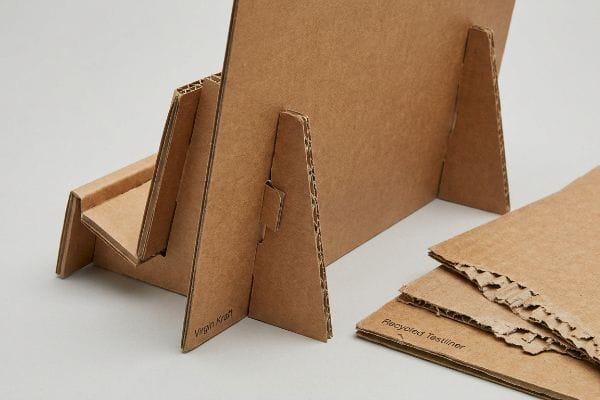
Pero las cerraduras de ajuste por fricción dependen por completo de la integridad química del papel en bruto, y es ahí donde las cosas suelen salir catastróficamente mal.
Por qué los cambios de materiales ocultos destruyen la geometría de la encimera
Es una trampa común que atrapa incluso a equipos de compras experimentados: asumir que todo el cartón corrugado del mismo grosor se comporta de manera idéntica. Muchos asumen que un testliner reciclado estándar proporcionará suficiente rigidez para un pequeño soporte de tarjetas, ignorando el hecho de que las fibras recicladas son físicamente más cortas y drásticamente más débiles bajo tensión6.
Esto no es solo teoría: lo veo en acción en el laboratorio de pruebas. Tuvimos un cliente cuyo prototipo inicial falló en una simulación de tránsito, y estaban en pánico por teléfono, gritando que el diseño tenía fallas fundamentales. Al principio, supuse que el cartón reciclado 32ECT7 que trajeron de su proveedor anterior resistiría la fricción básica del ensamblaje. Estaba completamente equivocado. Al ensamblar el prototipo en mi mesa de trabajo, sentí la resistencia blanda inmediata de las pestañas; las fibras de papel se rasgaban en lugar de encajar. La base se rompió con apenas 25 libras (11,3 kg) en la mesa vibratoria. Descarté el render de la agencia e hice los cálculos desde cero, centrándome por completo en una mejora del material físico. Reemplacé el testliner reciclado por un cartón kraft virgen de alta densidad8.Al pasar las manos por los nuevos bordes troquelados, la resistencia rígida y limpia de las fibras vírgenes era inconfundible. Esta mejora del material aumentó drásticamente la resistencia a la tracción de los cierres de papel, reduciendo el tiempo de ensamblaje del coempaquetado en 45 segundos por unidad y eliminando por completo el riesgo de colapso del mostrador de venta al público.
| Solución de ingeniería | Resultado físico | Retorno de la inversión en la cadena de suministro |
|---|---|---|
| Sustitución de Kraft virgen9 | Alta resistencia a la tracción de la lengüeta | Detiene el colapso de la base |
| Geometría de ajuste por fricción10 | Desgarro de pestañas cero | Acelera el montaje |
| Actualización de fibra química11 | Huella estructural rígida | Elimina el fallo del prototipo |
Jamás me fío de las especificaciones genéricas de los materiales que aparecen en una hoja de cálculo. Verifico la composición química exacta del papel antes de permitir que cualquier expositor de mostrador entre en producción en masa.
🛠️ Oficina de Harvey: ¿Sabe si su proveedor está sustituyendo discretamente el cartón kraft virgen por cartón reciclado de menor calidad para reducir costes? 👉 Auditoría estructural segura ↗ — 100 % confidencial. Sus diseños de venta al público aún no lanzados están a salvo conmigo.
¿Cómo hacer que un expositor de cartón se mantenga en pie?
Un expositor comercial de gran tamaño es una batalla física contra la gravedad. Si las paredes verticales pierden su resistencia a la compresión durante la fabricación, la gravedad siempre ganará.
Para que un expositor de cartón se mantenga en pie, es necesario alinear verticalmente las ondulaciones internas del cartón corrugado para maximizar la distribución del peso. La integridad estructural principal depende de unos paneles laterales correctamente plegados y un separador central equilibrado que soporte la carga, los cuales actúan conjuntamente para evitar que la unidad se vuelque bajo compresión dinámica.
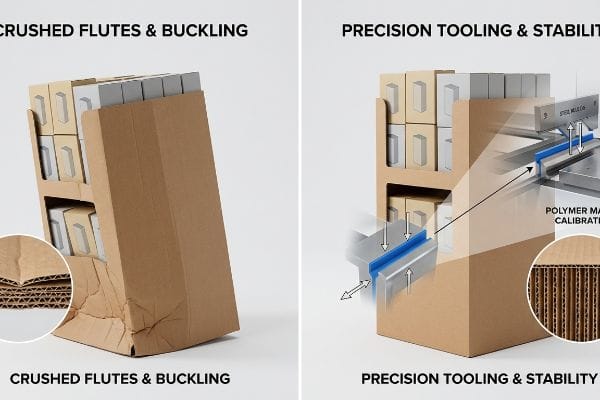
Saber alinear las ranuras verticalmente es una regla básica del embalaje, pero ese conocimiento no sirve de nada si la maquinaria de la fábrica destruye secretamente el cartón durante la producción.
Cómo la brutal presión del troquelado sabotea la carga vertical
Los diseñadores suelen dar por sentado que una simple línea de pliegue en una plantilla digital creará automáticamente un pliegue perfecto de 90 grados que soporta el peso estructural. Ignoran por completo la cruda realidad mecánica de una matriz de corte de acero que golpea con fuerza el grueso cartón corrugadoen la planta de producción.
Esto no es solo teoría; lo aprendí por las malas en mi propia fábrica. En 2022, le pedí a mi ingeniero jefe de empaques, Mark, que probara un nuevo de soporte de piso en nuestra troqueladora plana automatizada. El diseño presentaba un cabezal de exhibición de plástico "sobredimensionado" que ignoraba por completo la realidad logística de los contenedores de carga marítima. Pensamos que podríamos ahorrar tiempo omitiendo una calibración profunda de la matriz de pliegues. Tres días después, en la cámara climática, vi cómo se doblaba todo el palé. Todavía puedo recordar el crujido espantoso de la flauta B cediendo cuando la deflexión de carga estática superó las 1,5 pulgadas (38,1 mm). La falla se atribuyó directamente a la presión excesiva del troquelado que aplastó las flautas internas a lo largo de las líneas de pliegue, destruyendo la resistencia vertical BCT (prueba de compresión de caja) del cartón13 antes incluso de que saliera de la fábrica. De pie justo al lado de la ruidosa máquina en funcionamiento, implementé un ajuste mecánico urgente. Instalé canales de plegado hembra de polímero específicos en la placa del yunque14 para controlar con precisión cómo se estiraban las fibras del papel al impactar el acero, actuando como amortiguador mecánico. Esta microcalibración evitó que las ondulaciones internas se agrietaran y restauró instantáneamente la capacidad de carga de la unidad de 250 libras (113,4 kg), evitando así un gran número de rechazos por parte del cliente.
| Solución de ingeniería | Resultado físico | Retorno de la inversión en la cadena de suministro |
|---|---|---|
| Calibración de la matriz polimérica | Aplastamiento interno cero de la ranura | Restaura la capacidad de BCT |
| Ajuste de la presión del yunque | Pliegues limpios de 90 grados | Evita el palé se deforme |
| Estiramiento dinámico de fibras | Previene el agrietamiento por litografía | Elimina las devoluciones de cargo en tiendas minoristas |
Paso horas observando físicamente los impactos de la máquina porque los archivos CAD digitales no tienen en cuenta las ranuras aplastadas. El utillaje de precisión es la única manera de que un expositor resista el maltrato en el comercio minorista.
🛠️ Harvey's Desk: ¿Su proveedor actual utiliza troqueles de madera obsoletos que reducen gradualmente la capacidad de carga vertical de su expositor? 👉 Solicite una prueba de resistencia de herramientas ↗ — Sin intermediarios. Hablará directamente con ingenieros estructurales.
¿Cómo hacer un expositor giratorio con cartón?
Los expositores motorizados o giratorios captan al máximo la atención del consumidor, pero también introducen violentas fuerzas de cizallamiento cinéticas que el embalaje estándar simplemente no puede soportar.
La fabricación de un expositor giratorio de cartón implica anclar una estructura de acero resistente con rodamientos de bolas a una base de cartón corrugado de doble pared, aislada del resto de la estructura. Esta columna vertebral interna debe absorber de forma independiente toda la fricción rotacional y el par centrífugo, permitiendo que las paredes exteriores del expositor giren sin romperse.
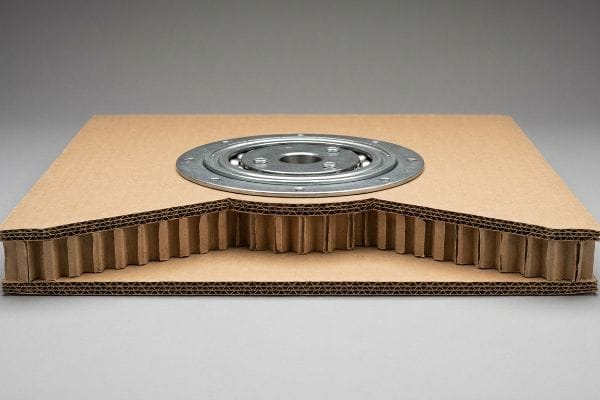
Pero atornillar una bandeja giratoria de metal a una caja de cartón es una receta para el desastre absoluto si se ignoran las leyes de la física rotacional.
La cizalladura cinética oculta que destruye las bases de los spinners
Los equipos de marca suelen solicitar expositores, dando por sentado que las bases planas de cartón corrugado estándar pueden soportar sin problemas el mecanismo giratorio. No se dan cuenta de que, cuando los compradores giran activamente un expositor muy cargado, el par centrífugo se transfiere directamente a la estructura de la base como fuerza de corte cinética¹⁵,desgarrando las costuras plegadas estándar.
Esto no es solo teoría; lo veo en acción en el laboratorio de pruebas cuando las empresas comerciales me envían diseños defectuosos. El año pasado, un cliente trajo una caja expositora que se había desintegrado por completo durante el montaje estándar de co-empaquetado de 3PL (Logística de Terceros). Al principio, supuse que un panel de prueba estándar 32ECT con pegamento adicional sostendría el hardware. Estaba completamente equivocado. Arranqué la lámina superior del prototipo dañado y sentí de inmediato los bordes dentados de las costuras corrugadas desgarradas; la base se había partido bajo 66 kg (145,5 lb) de tensión rotacional. Tomé las lecturas del micrómetro y demostré que no necesitábamos costosos clips de refuerzo de plástico; solo necesitábamos un protocolo estricto de cubo de torsión aislado. Rediseñé la geometría diseñando una columna vertebral corrugada interna de doble pared16 específicamente para anclar el hardware del rodamiento, aislando por completo la tensión cinética de las paredes cosméticas exteriores. Esta implacable corrección basada en datos eliminó el desperdicio de ingeniería excesiva, lo que permitió que la pantalla girara sin fricción mientras sostenía una carga útil de 200 libras (90,7 kg)17, lo que ahorró al cliente un porcentaje significativo en costos inflados de lista de materiales.
| Solución de ingeniería | Resultado físico | Retorno de la inversión en la cadena de suministro |
|---|---|---|
| Cubo de torsión aislado | Absorbe la fuerza de corte cinética | Recorta costos de hardware |
| Anclaje de doble pared | Protege las paredes exteriores cosméticas | Evita el desgarro de la base |
| Centrado rotacional | Giro suave de los rodamientos de bolas | Maneja cargas útiles masivas |
Mi única forma de trabajar es mediante pruebas en condiciones ambientales extremas, en lugar de basarme en suposiciones de hojas de cálculo. Si un producto no soporta el par de torsión máximo, no se envía.
🛠️ Escritorio Harvey: ¿Estás instalando a ciegas herrajes giratorios en bases débiles de cartón corrugado de una sola pared y arriesgándote a que tu tienda se derrumbe? 👉 Solicita tu simulación 3D gratuita ↗ — Reviso personalmente cada archivo estructural en 24 horas.
Conclusión
Puedes arriesgarte con proveedores más baratos que utilizan troqueles estándar, pero si esa placa 32ECT sin calibrar se dobla bajo un par de torsión intenso en un pasillo concurrido de una tienda, te arriesgas a que la tienda la rechace de inmediato y a semanas de costosos retoques manuales. Solo el mes pasado, mi auditoría estructural ayudó a 3 marcas a evitar más de 10 000 $ en inventario desechado y devoluciones de clientes. Deja de malgastar tu presupuesto de marketing del cuarto trimestre en prototipos fallidos y permíteme diseñar personalmente tu próximo lanzamiento para garantizar un rendimiento impecable en el punto de venta y el máximo retorno de la inversión.
"[PDF] Rigidez a la flexión del cartón ondulado", https://www.fpl.fs.usda.gov/documnts/pdf1992/luo92a.pdf. [Los manuales técnicos de ingeniería de embalaje explican el concepto de margen de flexión y cómo el grosor del material aumenta la dimensión exterior de un pliegue]. Función de la evidencia: validación técnica; tipo de fuente: manual de ingeniería. Apoya: la afirmación de que las relaciones digitales 1:1 fallan en el ensamblaje 3D. Nota de alcance: se aplica específicamente al cartón ondulado y al cartón de gran calibre. ↩
"Calculadora gratuita de tolerancia de doblado de chapa metálica | FIRGELLI Engineering", https://www.firgelliauto.com/blogs/engineering-calculators/sheet-metal-bend-allowance-calculator?srsltid=AfmBOoqj5CVqh7YGL_OCJwVVCYPRxwwso8uoWvejD-cQG3IymRiLDuvH. [Las normas de ingeniería de embalaje especifican la adición de una tolerancia de doblado basada en el calibre del material y el radio de plegado para garantizar la holgura de la ranura durante el montaje]. Función de evidencia: validación técnica; tipo de fuente: manual de ingeniería de embalaje. Apoya: la afirmación de que las microtolerancias específicas evitan el pandeo del material. Nota de alcance: Varía según el grado de la placa y el tipo de flauta. ↩
"Dominando el diseño de chapa metálica con factor K y doblado…", https://www.linkedin.com/posts/pushkar-suthar-92404566_engineering-mechanicalengineering-manufacturing-activity-7430228870928412672-2-fj. [Los manuales de ingeniería de embalaje describen el uso de variables paramétricas para calcular el estiramiento y la compresión del material durante el proceso de doblado]. Función de evidencia: metodología técnica; tipo de fuente: libro de texto de ingeniería. Apoyos: logro de la inserción de lengüetas con fricción cero. Nota de alcance: depende del calibre y la elasticidad del material. ↩
"Cómo calcular la tolerancia de doblez y la deducción por doblez – YouTube", https://www.youtube.com/watch?v=21Ky5ayg_q8. [Los puntos de referencia de la industria para la automatización del embalaje y el diseño paramétrico cuantifican la reducción del tiempo de ensamblaje manual por unidad]. Función de la evidencia: métrica cuantitativa; tipo de fuente: informe de la industria. Apoya: ganancias de eficiencia laboral gracias al diseño paramétrico. Nota de alcance: específico para contextos de ensamblaje de cajas de exhibición. ↩
"Métodos de ensayo y efectos del pandeo entre flautas – BioResources", https://bioresources.cnr.ncsu.edu/resources/overview-of-recent-studies-at-ipst-on-corrugated-board-edge-compression-strength-testing-methods-and-effects-of-interflute-buckling/. [Las normas técnicas para la fabricación de cartón ondulado especifican las tolerancias precisas de las ranuras necesarias para evitar la compresión y el pandeo del material]. Función de la evidencia: especificación técnica; tipo de fuente: norma de ingeniería. Apoyos: prevención del pandeo de las flautas. Nota de alcance: pueden existir variaciones según el tamaño de la flauta (A, B, C o E). ↩
"Cambio en la calidad del material de fibra reciclada. Parte 1. Factores que afectan…", https://bioresources.cnr.ncsu.edu/resources/changing-quality-of-recycled-fiber-material-part-1-factors-affecting-the-quality-and-an-approach-for-characterisation-of-the-strength-potential/. [Una fuente de ciencia de materiales o ingeniería de embalaje explicaría cómo el proceso de reciclaje degrada las cadenas de celulosa y acorta la longitud de la fibra, lo que conlleva una menor resistencia a la tracción en comparación con las fibras vírgenes]. Función de la evidencia: validación técnica; tipo de fuente: revista de ciencia de materiales o manual de la industria del embalaje. Apoya: la afirmación de que el testliner reciclado carece de la rigidez de las alternativas vírgenes. Nota de alcance: se aplica específicamente a la degradación de la fibra de celulosa durante el repulpado. ↩
"[PDF] Especificaciones de cartón ondulado – Fibre Box Association", https://www.fibrebox.org/assets/2025/09/Walmart_Corrugated-Board_Specifications_Automation_Packaging_Standards.pdf. [Los estándares de la industria para las clasificaciones de la prueba de aplastamiento de bordes (ECT) definen la resistencia a la compresión y las limitaciones estructurales del cartón ondulado reciclado. Función de evidencia: especificación técnica; tipo de fuente: estándar de la industria del embalaje. Apoyos: vulnerabilidad de referencia del material inicial. Nota de alcance: la prueba ECT mide la compresión vertical en lugar de la resistencia al bloqueo por tracción.] ↩
"Perspectivas para mantener la resistencia del papel y el cartón…", https://bioresources.cnr.ncsu.edu/resources/prospects-for-maintaining-strength-of-paper-and-paperboard-products-while-using-less-forest-resources-a-review/. [Investigaciones en ciencia de materiales sobre fibras de celulosa demuestran que las fibras kraft vírgenes son más largas y resistentes que las fibras recicladas, lo que aumenta significativamente la resistencia al desgarro de los cierres troquelados. Función de la evidencia: validación técnica; tipo de fuente: revista de ciencia de materiales. Apoya: superioridad estructural de las fibras vírgenes en geometría de ajuste por fricción. Nota de alcance: se refiere específicamente a la unión fibra a fibra en cartón.] ↩
"Relación entre la humectabilidad de las fibras de pulpa y la resistencia a la tracción…", https://pmc.ncbi.nlm.nih.gov/articles/PMC8799655/. [Documentación de ciencia de materiales sobre grados de cartón que explica cómo las fibras kraft vírgenes ofrecen mayor resistencia a la tracción y al desgarro que las alternativas recicladas, evitando la rotura de las pestañas]. Función de la evidencia: especificación técnica; tipo de fuente: revista de ciencia de materiales. Apoya: durabilidad del material y estabilidad de la base. Nota de alcance: específico para materiales de embalaje a base de celulosa. ↩
"Técnicas de unión de cartón | Recurso – Arc", https://arc.educationapps.vic.gov.au/learning/resource/92387/cardboard-joining-techniques. [Las normas de ingeniería de embalaje describen cómo las geometrías de ajuste por fricción distribuyen la tensión uniformemente a través de las uniones para evitar la fatiga y el desgarro del material durante el montaje]. Función de la evidencia: principio de diseño; tipo de fuente: manual de ingeniería de embalaje. Apoya: fiabilidad del montaje. Nota de alcance: se aplica a diseños de cajas plegables troqueladas. ↩
"(PDF) Tratamientos de fibras naturales como refuerzo en polímeros…", https://www.academia.edu/53338265/Treatments_of_Natural_Fibre_as_Reinforcement_in_Polymer_Composites_Short_Review. [Documentos técnicos sobre el tratamiento de fibras que describen cómo las mejoras químicas en las fibras de celulosa aumentan el módulo de elasticidad, lo que resulta en una estructura más rígida]. Función de la evidencia: propiedad química; tipo de fuente: documento técnico de fabricación industrial. Apoyos: integridad estructural. Nota de alcance: se refiere a cartulina tratada de alto rendimiento. ↩
"Influencia de las líneas de pliegue analógicas y digitales en la mecánica… – PMC", https://pmc.ncbi.nlm.nih.gov/articles/PMC9268991/. [Una guía técnica sobre la fabricación de embalajes de cartón ondulado detallaría la compresión física ejercida por los troqueles de acero durante el proceso de troquelado]. Función de la evidencia: verificación del proceso técnico; tipo de fuente: manual de ingeniería industrial. Apoya: la realidad mecánica del troquelado de cartón ondulado. Nota de alcance: aborda específicamente la fuerza física del troquel sobre el sustrato. ↩
"Estimación de la resistencia a la compresión de cajas de cartón corrugado para un…", https://pmc.ncbi.nlm.nih.gov/articles/PMC9864211/. [La literatura técnica sobre embalaje de cartón corrugado demuestra que la compresión excesiva durante el proceso de troquelado aplasta las ondulaciones internas, reduciendo significativamente el valor de la prueba de compresión de cajas (BCT).] Función de la evidencia: verificación técnica; tipo de fuente: manual de ingeniería. Apoya: el vínculo entre la presión de la herramienta y la falla estructural. Nota de alcance: aplicable principalmente a materiales de cartón corrugado de flauta B]. ↩
"Troquelado y hendido – MM Group", https://mm.group/packaging/technologies/die-cutting-creasing/. [Los estándares de la industria del embalaje describen el uso de canales de hendido a base de polímeros para regular la elongación de la fibra y evitar la rotura de la flauta durante el proceso de plegado]. Función de la evidencia: validación del proceso; tipo de fuente: especificación industrial. Apoya: el uso de amortiguadores mecánicos para mantener la capacidad de carga. Nota de alcance: específico para troqueladoras planas automatizadas de alta precisión]. ↩
"Estimación de la resistencia a la compresión de cajas de cartón corrugado…", https://pmc.ncbi.nlm.nih.gov/articles/PMC8467740/. [Los principios de ingeniería relativos a la mecánica rotacional explican cómo el par aplicado a una plataforma giratoria crea una tensión de corte lateral en el material de la base de soporte]. Función de la evidencia: Validación técnica; tipo de fuente: Manual de ingeniería estructural. Apoya: La afirmación de que las fuerzas rotacionales causan fallas estructurales en las uniones de cartón estándar. Nota de alcance: Se aplica a exhibidores minoristas de alta carga. ↩
"Diseño óptimo de embalajes de cartón corrugado de doble pared – PMC", https://pmc.ncbi.nlm.nih.gov/articles/PMC8950760/. [Los manuales de ingeniería de embalajes validarían el uso de estructuras internas corrugadas reforzadas para aislar la tensión mecánica de los paneles cosméticos externos]. Función de la evidencia: validación de la metodología; tipo de fuente: guía de ingeniería. Apoyos: técnica de aislamiento estructural. Nota de alcance: Se aplica específicamente a marcos internos portantes. ↩
"Qué tan resistentes son las cajas de cartón de doble pared y qué peso pueden soportar…", https://www.theboxery.com/blog/how-strong-are-double-wall-cardboard-boxes-and-what-weight-can-they-hold/?srsltid=AfmBOoqSOojThwmKy5xZB8SY8C6GrRI8yHkQP-Rzm5t2M_OOzeEtZuLT. [Los datos de ciencia de materiales sobre la resistencia a la compresión y al corte del cartón corrugado de doble pared verificarían la viabilidad de soportar una carga de 200 lb]. Función de evidencia: verificación fáctica; tipo de fuente: hoja de datos técnicos. Apoya: afirmación de capacidad de carga útil. Nota de alcance: Requiere geometría específica para la distribución de carga vertical. ↩