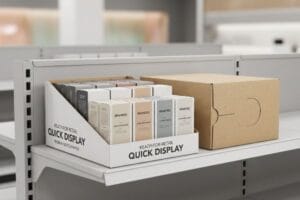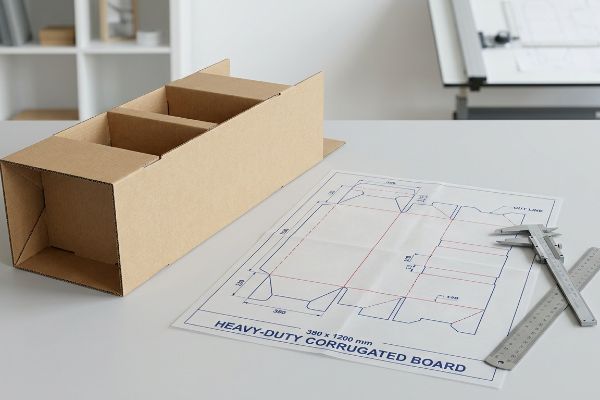
Diseñar un expositor de punto de venta no se trata solo de imprimir gráficos atractivos. Si la estructura falla, tu costosa campaña de venta minorista se desmorona por completo antes de que un solo cliente vea el producto.
El diseño de un expositor de punto de venta eficaz requiere un equilibrio entre la integridad estructural, la visibilidad de la marca y el estricto cumplimiento de las normativas del minorista. Un expositor exitoso utiliza cartón corrugado de alta resistencia, troqueles diseñados matemáticamente con compensación de calibre precisa y colores planos de alto contraste para garantizar su resistencia durante el transporte y, al mismo tiempo, impulsar las ventas por impulso en el punto de venta.
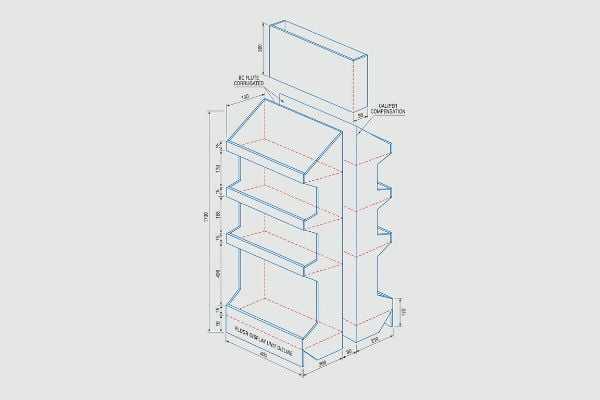
Conocer la teoría del marketing minorista es un buen comienzo, pero la fabricación real exige un nivel de precisión diferente.
¿Cuáles son los 5 pasos para crear una pantalla?
El proceso para llevar un expositor desde su concepción hasta su puesta en venta sigue una secuencia estricta. Si se omite un solo hito técnico, todo el proyecto se paraliza.
Los cinco pasos para crear un expositor son: conceptualizar la estrategia de venta minorista, diseñar el troquelado estructural, producir un prototipo físico en blanco, aplicar la impresión litográfica de alta fidelidad y realizar el ensamblaje final del co-empaquetado. Cada fase exige tolerancias físicas precisas para garantizar que la estructura de cartón corrugado final resista el transporte durante la cadena de suministro.
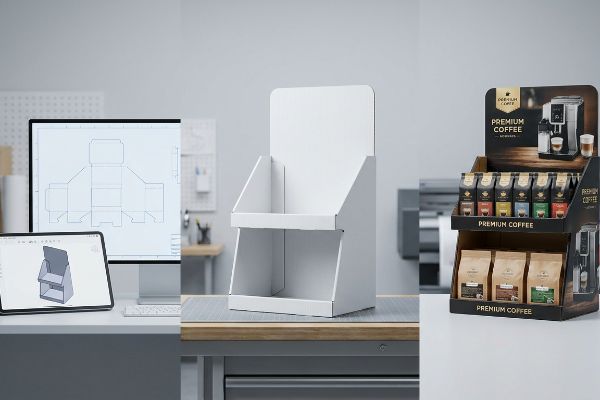
Planificar estas fases es sencillo sobre el papel, pero la transición de un archivo digital plano a una unidad física plegada es donde suelen fracasar las campañas.
El punto ciego estructural en la creación de pantallas
Incluso los equipos de marketing más experimentados suelen tratar la fase inicial de ingeniería estructural como una simple tarea de diseño gráfico. Se basan en herramientas estándar de dibujo vectorial 2D para crear sus pestañas de encaje y ranuras plegables, dando por sentado que las líneas digitales se adaptarán perfectamente a los paquetes planos de cartón corrugado 32ECT (Edge Crush Test)1.Este enfoque básico ignora por completo el grosor físico del cartón.
El problema llega a la planta de producción durante la etapa de prototipo físico. Con frecuencia veo troqueles digitales planos que no tienen en cuenta el grosor de 0,11 pulgadas (3 mm) del material de flauta B².Al doblar ese cartón grueso 90 grados, las fibras gruesas del papel ocupan espacio físico, creando una tensión mecánica innecesaria. Si la ranura de recepción no se ensanchó en el software CAD (Diseño Asistido por Computadora) para compensar ese radio exterior, las pestañas se bloquean. Los operarios de montaje tienen dificultades para unir las piezas, lo que ralentiza drásticamente el proceso de configuración en la línea. Al aplicar automáticamente algoritmos de compensación de calibre a cada pliegue, elimino esta fricción física, reduciendo el tiempo de coempaquetado manual en un 25 % estimado por unidad³y evitando costosos cuellos de botella en el montaje antes de la producción en masa.
| Error común de principiante | La solución profesional | Beneficio para el punto de venta |
|---|---|---|
| Utilizando software vectorial 2D plano | Ingeniería CAD 3D paramétrica4 | Garantiza un montaje de lengüetas sin fricción |
| Ignorando el grosor de la tabla | Agregar tolerancias de curvatura precisas5 | Evita que el papel se rompa durante la configuración |
| Omitir el prototipo sin imprimir | Prueba de una muestra física blanca6 | Elimina los errores de producción en masa |
En mi proceso, está estrictamente prohibido enviar el archivo a la imprenta hasta que el prototipo estructural sin imprimir se pliegue a la perfección. Si el tablero en blanco requiere una fuerza excesiva para su ensamblaje, la unidad laminada final inevitablemente fallará bajo presión.
🛠️ El escritorio de Harvey: ¿No estás seguro de si tu diseñador gráfico tuvo en cuenta el grosor del cartón en las pestañas plegables? 👉 Haz que auditen tu troquelado ↗ — Acceso directo a mi escritorio. Sin spam de ventas automatizado, te lo prometo.
¿Cómo crear una buena presentación?
Un local con una estructura sólida es inútil si no atrae clientes. La efectividad requiere combinar la psicología con las limitaciones físicas del comercio minorista.
Para crear una buena exhibición, es necesario diseñar un impacto visual visible desde nueve metros de distancia, posicionar el mensaje principal en una zona de interacción de un metro y optimizar la accesibilidad física del producto a siete centímetros. Una unidad de alto rendimiento utiliza cabeceras estructurales troqueladas, bordes de retención rebajados matemáticamente y colores llamativos para maximizar la conversión del cliente.
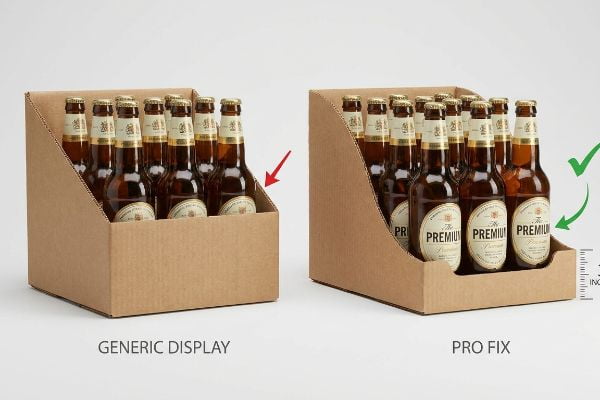
Puedes diseñar obras de arte preciosas, pero si la arquitectura física oculta el producto, la tasa de conversión se desploma.
Por qué la arquitectura de pantalla genérica oculta su marca
Los gerentes de marca experimentados suelen diseñar sus RRP , por sus siglas en inglés) para maximizar la capacidad interna, creando bandejas profundas con paredes frontales altaspara contener de forma segura la mayor cantidad de unidades posible. Revisan el diseño gráfico en una pantalla retroiluminada, partiendo de la base de que el consumidor verá la misma imagen de marca sin obstrucciones cuando el producto llegue al pasillo de la tienda.
La realidad física de una tienda de gran formato abarrotada expone rápidamente las deficiencias de esta mentalidad de priorizar la capacidad. Al auditar las unidades de exhibición genéricas, encuentro sistemáticamente bordes de retención frontales diseñados demasiado altos, que actúan como una barrera física que oculta la mitad inferior del empaque principal del producto. Es increíblemente frustrante deslizar una de bebida en una bandeja de exhibición y darse cuenta de que el borde frontal alto oculta por completo la etiqueta crucial del 75 % de la variedad. Los compradores que pasan no se agacharán para investigar el texto oculto. Impongo una regla estricta de visibilidad que prioriza el producto troquelando la pared de retención frontal para exponer al menos el 85 % de la mercancía⁸.Esta simple modificación estructural mejora drásticamente la visibilidad, impulsando la visibilidad de los productos de compra impulsiva y evitando activamente que el inventario obsoleto permanezca invisible en el estante inferior.
| Error común de principiante | La solución profesional | Beneficio para el punto de venta |
|---|---|---|
| Labios de retención altos y rectos | Paneles frontales ondulados troquelados9 | Maximiza la visibilidad del producto principal |
| Diseño para pantalla plana | Utilizando la regla espacial 3-3-310 | Captura el tráfico peatonal en los pasillos |
| Ocultar el texto clave al final | Desplazar el texto al encabezado | Garantiza la interacción inmediata con el comprador |
Para evaluar la eficacia de un expositor, es necesario situarse físicamente a exactamente un metro del prototipo cargado. Si el principal beneficio del producto no resulta evidente a simple vista desde esa distancia, la bandeja estructural debe reducirse drásticamente.
🛠️ Harvey's Desk: ¿Están sus paredes frontales de cartón corrugado ocultando accidentalmente las etiquetas de sus envases primarios más caros? 👉 Solicite una revisión de visibilidad ↗ — Descargue de forma segura. Mi bandeja de entrada está abierta si tiene alguna pregunta más adelante.
¿Cómo pueden la ubicación y el diseño de un expositor atraer la atención y aumentar las ventas?
Conseguir un local privilegiado en una gran superficie comercial es muy competitivo. El espacio que ocupa tu local debe justificarse de inmediato.
La ubicación y el diseño de la exhibición atraen la atención mediante el uso de palés de tamaño reducido para adaptarse a intersecciones de alto tránsito y la aplicación de un espaciado asimétrico de los productos. Los separadores modulares diseñados agrupan naturalmente los artículos en números impares, creando una tensión visual psicológica que capta la atención del comprador y, al mismo tiempo, facilita la tarea de reposición para los empleados.
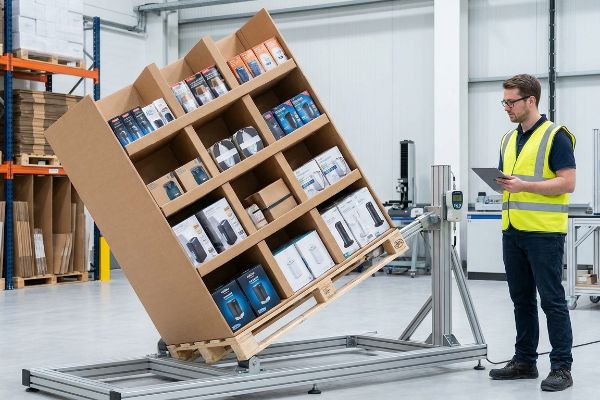
Pero conseguir esa ubicación privilegiada en el pasillo no es suficiente cuando la mecánica física del expositor cargado empieza a fallar ante la interacción real de los compradores.
El peligro de las huellas estrechas y las cuadrículas simétricas
Muchos equipos de compras se esfuerzan por reducir el tamaño de sus enormes expositores de suelo a geometrías más estrechas de un cuarto de palé, de aproximadamente 609 × 508 mm (24 × 20 pulgadas)¹¹, para que quepan en las estrechas intersecciones de las tiendas. Al mismo tiempo, llenan los estantes internos con una cuadrícula perfectamente simétrica de pared a pared de productos pesados para maximizar la capacidad de carga del inventario en esa base más pequeña.
En mis instalaciones, observo con frecuencia que esta combinación específica provoca fallas cinéticas peligrosas durante las pruebas de inclinación. Al apilar 68 kg (150 lb) de mercancía empaquetada simétricamente sobre una base estrecha de 609 mm (24 pulgadas) de ancho, se eleva considerablemente el centro de gravedad¹².Veo cómo estas unidades, con el centro de gravedad demasiado alto, se tambalean violentamente con un ligero empujón, sintiendo el inquietante cambio de peso a medida que toda la base de cartón corrugado amenaza con volcarse. Además, la cuadrícula simétrica y compacta crea una enorme fricción al reponer los productos; los empleados terminan rompiendo el cartón impreso al intentar forzar los artículos en los espacios sin espacio libre. Soluciono esto instalando divisores modulares que fuerzan un espaciado asimétrico de SKU (Unidad de Mantenimiento de Inventario)¹³ y, al mismo tiempo, bajan el centro de masa a un falso fondo reforzado. Este ajuste de ingeniería garantiza que la unidad supere fácilmente la prueba de inclinación de seguridad del minorista, eliminando por completo el riesgo de cargos adicionales en la tienda debido al peligro de un pasillo colapsado.
| Error común de principiante | La solución profesional | Beneficio para el punto de venta |
|---|---|---|
| Unidades altas sobre bases estrechas | Anclajes de falso fondo diseñados a medida | Evita riesgos de vuelco en los pasillos14 |
| Rejillas de productos de pared a pared | Espaciado asimétrico de 3-5-7 SKU15 | Llama la atención y facilita la reposición de existencias |
| Embalaje de estanterías sin espacio libre | Instalación de separadores modulares rígidos | Elimina las solapas de cartón rasgadas16 |
Es imprescindible realizar pruebas cinéticas rigurosas para detectar vulnerabilidades en la parte superior de los palets antes de que salgan del almacén. Un palet de tamaño reducido, , no sirve de nada si un carrito de la compra puede derribarlo fácilmente al suelo.
🛠️ Oficina de Harvey: No permita que un defecto estructural de 2 milímetros arruine el lanzamiento de 500 tiendas. 👉 Envíeme su archivo de troquelado ↗ — Analizaré los cálculos antes de que malgaste su presupuesto en la producción en masa.
Conclusión
Puedes intentar ahorrar presupuesto usando vectores digitales planos, pero cuando ese cartón grueso de flauta B se rompe porque nadie calculó las tolerancias de flexión físicas, la fricción resultante ralentiza la línea de montaje en un 25 % aproximadamente y arruina tu margen. Más de 500 gerentes de marca usan mi lista de verificación de preimpresión para evitar estos errores fatales en las primeras etapas. Deja de adivinar las tolerancias estructurales y permíteme auditar personalmente tu geometría con mi Auditoría Previa a la Impresión Gratuita ↗ para detectar costosos errores mecánicos antes de que comience la impresión.
"Especificaciones de cartón ondulado", https://www.fibrebox.org/assets/2025/09/Walmart_Corrugated-Board_Specifications_Automation_Packaging_Standards.pdf. Verificación de la prueba ECT 32 (Edge Crush Test) como estándar técnico de la industria para medir la resistencia al apilamiento del cartón ondulado utilizado en exhibidores de punto de venta. Función de evidencia: especificación técnica; tipo de fuente: estándar de embalaje industrial. Apoya: los requisitos técnicos para la integridad estructural del cartón ondulado. Nota de alcance: Específico para los estándares norteamericanos de cartón ondulado. ↩
"Cartón ondulado y grados de material – Packaging Strategies", https://www.packagingstrategies.com/articles/96269-corrugated-board-and-material-grades. Verificación de las dimensiones estándar de la industria para cartón ondulado de flauta B para garantizar la precisión técnica de las especificaciones del material. Función de la evidencia: verificación; tipo de fuente: estándar técnico de la industria. Apoyos: propiedades físicas del material. Nota de alcance: las mediciones pueden variar ligeramente según el fabricante. ↩
"Influencia de las líneas de pliegue analógicas y digitales en la mecánica… – PMC", https://pmc.ncbi.nlm.nih.gov/articles/PMC9268991/. Datos empíricos o estudios de caso que demuestran las ganancias de eficiencia logradas al aplicar la compensación del espesor del material en CAD para exhibidores minoristas. Función de la evidencia: validación del rendimiento; tipo de fuente: estudio de caso técnico. Apoya: afirmación de eficiencia operativa. Nota de alcance: el porcentaje puede variar según la complejidad del exhibidor. ↩
"Creo CAD Software: Habilite lo último en diseño", https://www.ptc.com/en/products/creo?srsltid=AfmBOorUoHIsYMUWkZZ0iEZgmw9Shky96Yfu7Ye2eESgqHUEGRdfbknK. La documentación técnica sobre diseño de embalajes explica cómo el modelado paramétrico garantiza tolerancias precisas para componentes entrelazados. Función de evidencia: validación técnica; tipo de fuente: manual de ingeniería. Apoya: la eficiencia del CAD 3D sobre los vectores 2D. Nota de alcance: Específico para estructuras de cartón cortadas con precisión. ↩
"Determinación analítica de la rigidez a la flexión de un cartón corrugado de cinco capas...", https://pmc.ncbi.nlm.nih.gov/articles/PMC8777652/. Las normas de ciencia de materiales para cartón corrugado detallan cómo el cálculo de la tolerancia de flexión previene fracturas por tensión y desgarros durante el plegado. Función de la evidencia: especificación técnica; tipo de fuente: norma industrial. Apoya: el vínculo entre la tolerancia de flexión y la integridad estructural. Nota de alcance: varía según el grado y el espesor del cartón. ↩
"La importancia de los prototipos de exhibición en puntos de venta – Frank Mayer", https://www.frankmayer.com/blog/why-retail-display-prototypes-are-an-important-stage-in-the-manufacturing-process/. Las mejores prácticas de la industria para exhibidores POP (punto de venta) enfatizan el uso de prototipos sin imprimir para verificar el ajuste estructural antes de la producción en masa. Función de la evidencia: validación del proceso; tipo de fuente: guía de fabricación. Apoya: la reducción de errores de producción mediante la creación de prototipos. Nota de alcance: se centra en la verificación estructural más que en la estética. ↩
"Diseño de producto innovador basado en una atención integral al cliente...", https://pmc.ncbi.nlm.nih.gov/articles/PMC4070414/. Las directrices de la industria para el embalaje listo para la venta minorista (RRP) describen la priorización de la seguridad del producto y la densidad de envío mediante diseños de bandejas de pared alta. Función de la evidencia: norma técnica; tipo de fuente: manual de la industria. Apoya: La afirmación de que el RRP se diseña frecuentemente para maximizar la capacidad y la seguridad. Nota de alcance: Se relaciona con unidades de exhibición de cartón corrugado. ↩
"AG 1091A: Exhibiciones de mercancía minorista en la zona frontal", https://www.seattle.gov/transportation/permits-and-services/permits/applicant-guides/ag-1091a. Las normas autorizadas de diseño minorista y merchandising visual proporcionan datos sobre la correlación entre los porcentajes de exposición del producto y las tasas de compra impulsiva. Función de la evidencia: validación técnica; tipo de fuente: guía de merchandising de la industria. Apoya: La afirmación de que los umbrales de alta visibilidad reducen el inventario obsoleto y aumentan las líneas de visión. Nota de alcance: La aplicabilidad puede variar según la altura del producto y la profundidad del estante. ↩
"14 Tipos de Exhibidores en Tiendas | Chicago, IL – Wertheimer Box", https://wertheimerbox.com/types-of-retail-displays/. Breve explicación de cómo los principios de merchandising visual demuestran que los paneles curvos o troquelados mejoran la visibilidad del producto en comparación con los bordes rectos. Función de la evidencia: Eficacia del diseño; tipo de fuente: Estudio de ergonomía en tiendas. Apoya: La afirmación de que formas específicas de paneles maximizan la visibilidad. Nota de alcance: Se aplica a exhibidores físicos de productos. ↩
"La regla de los 3 segundos: Diseño de un panel frontal de envase perfecto – ECRM", https://ecrm.marketgate.com/Blog/2022/04/The-3-Second-Rule-Designing-a-Perfect-Package-Front-Panel. Breve explicación de cómo un estándar de diseño profesional o una guía espacial para el comercio minorista define la regla 3-3-3 para la atracción de compradores. Rol de evidencia: Definición técnica; tipo de fuente: Manual de diseño de la industria. Apoya: El uso de reglas espaciales para capturar el flujo de personas en los pasillos. Nota de alcance: Específico para la arquitectura del punto de venta (POP) .
"Tipos de expositores de palets: completos, medios y cuartos – GreenDot Packaging", https://greendotpackaging.com/understanding-pallet-display-types-full-half-and-quarter-pallet-displays/. Especificaciones del sector para expositores de punto de venta minorista que confirman las dimensiones estándar de la base de un cuarto de palet. Función de la evidencia: verificación técnica; tipo de fuente: estándar de logística minorista. Soporte: la medición específica de bases estrechas. Nota de alcance: las dimensiones pueden variar ligeramente según el fabricante. ↩
"Garantizar la estabilidad y el soporte estructural en expositores temporales", https://www.ud-direct.com/blog/tips-and-tricks-to-ensure-stability-and-structure-support-in-temporary-displays. Una fuente de ingeniería que explica cómo la distribución del peso en bases estrechas afecta la estabilidad estructural y los umbrales de vuelco. Función de la evidencia: validación técnica; tipo de fuente: guía de ingeniería estructural. Apoya: la afirmación de que las bases estrechas con mucho peso aumentan el riesgo de vuelco. Nota de alcance: aplicable específicamente a accesorios de venta minorista de cartón corrugado .
"Estrategias efectivas de merchandising visual implican varias consideraciones críticas…", https://popdisplay.me/effective-visual-merchandising-strategies-involve-several-critical-considerations/. Una fuente de diseño o psicología del comercio minorista que detalla cómo el espaciado asimétrico interrumpe los patrones visuales para atraer la atención y mejorar la accesibilidad física para la reposición de existencias. Rol de evidencia: validación operativa; tipo de fuente: libro de texto de merchandising. Apoya: la afirmación de que los divisores asimétricos modulares optimizan la atención del comprador y reducen la fricción en la reposición de existencias. Nota de alcance: centrado en exhibidores de punto de venta (POP). ↩
"7 estilos de exhibición minorista en los que confían las empresas", https://www.packagingcorp.com/resource-hub/industry-insights/7-retail-display-styles-companies-rely-on/. Verificación de que la ingeniería de la base y los anclajes reducen el centro de gravedad para evitar vuelcos en pasillos de tiendas minoristas de alto tránsito. Función de la evidencia: verificación de seguridad; tipo de fuente: normas de seguridad de la industria. Apoyos: uso de anclajes de fondo falso para garantizar la estabilidad. Nota de alcance: se aplica específicamente a exhibidores altos y estrechos. ↩
"Servicios y estrategia de merchandising visual | T-ROC Global", https://trocglobal.com/visual-merchandising/. Análisis de patrones de merchandising visual que muestran cómo las agrupaciones asimétricas aumentan el tiempo de permanencia y la atención del consumidor en comparación con las cuadrículas simétricas. Función de la evidencia: validación psicológica; tipo de fuente: estudio de marketing minorista. Apoya: efectividad del espaciado de 3-5-7 SKU. Nota de alcance: la efectividad puede variar según la categoría del producto. ↩
"Separadores de estanterías para comercio minorista: plástico, alambre y magnéticos | siffron", https://siffron.com/product-categories/shelf-management/dividers/. Evidencia técnica de que los separadores rígidos evitan daños por fricción y compresión en el embalaje de los productos en entornos de venta minorista de alta densidad. Función de la evidencia: beneficio operativo; tipo de fuente: guía de logística o embalaje. Apoya: instalación de separadores modulares rígidos. Nota de alcance: centrado en el embalaje de cartón ondulado. ↩