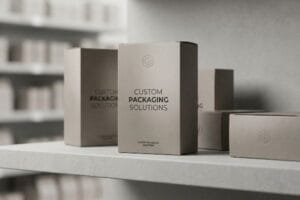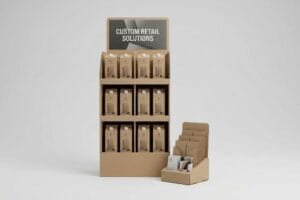
Conectar con los compradores requiere más que una simple caja de cartón. Un diseño estructural estratégico impulsa las compras impulsivas al alinear la presentación física de los productos directamente con la psicología humana.
Sí. La comunicación emocional mejora el rendimiento de la exhibición en el punto de venta (POP) al superar la indecisión lógica y generar un comportamiento de compra impulsiva inmediato. Cuando el empaque estructural combina acabados táctiles, diseños asimétricos y una disrupción visual espacial vibrante, los compradores interactúan intuitivamente con el vendedor, lo que aumenta drásticamente las tasas de conversión final en el pasillo de la tienda.

Pero la mayoría de las campañas fracasan por completo al traducir la teoría del marketing psicológico a una estructura física y estructural de un punto de venta.
¿Cómo mejoran las emociones la eficacia de la publicidad?
Los compradores no leen los folletos en el pasillo. Sienten una conexión inmediata o simplemente se marchan.
Sí. Las emociones potencian la eficacia publicitaria al reducir drásticamente la fricción cognitiva durante la rápida interacción en las tiendas. Cuando una exhibición física aísla un único desencadenante psicológico mediante formas troqueladas de alto contraste, evita la deliberación consciente, captando de inmediato la atención del comprador e impulsando decisiones por impulso incluso antes de que toque el producto.
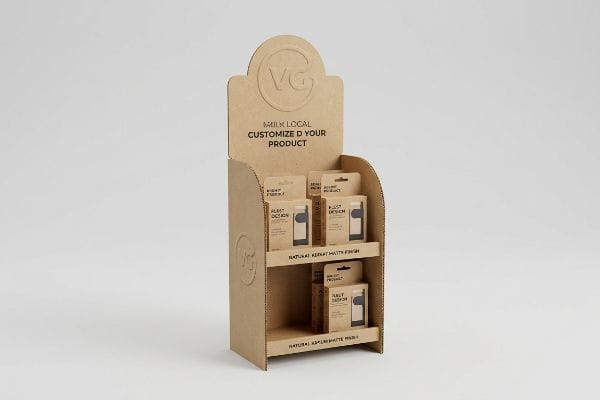
Captar la atención parece sencillo en una sala de juntas, pero lograrlo en la práctica requiere una edición implacable.
Cómo evitar la sobrecarga cognitiva en el marketing minorista
Los responsables de marketing de marca suelen recurrir a complejos marcos de comportamiento para analizar el comportamiento del consumidor¹en las campañas minoristas estacionales. A menudo intentan imprimir cada capa de esta investigación directamente en un expositor físico de cartón corrugado. Esto crea un diseño recargado y con demasiado texto que luce muy bien en una pantalla digital, pero que resulta totalmente ineficaz en una tiendafísica².
Los compradores tienen prisa. Si tu expositor les obliga a detenerse y leer un párrafo, ya los has perdido. Veo esta trampa común constantemente: un diseñador mete siete propuestas de valor diferentes en un pequeño encabezado, lo que resulta en un caos visual que obliga al dependiente a tapar con cinta adhesiva las instrucciones confusas solo para poder montar el producto. Debes destilar todo tu discurso de marketing emocional en un único punto focal estructural de alto contraste. Cuando paso el dedo por la superficie lisa y con recubrimiento UV de un logotipo limpio y troquelado, el contraste táctil por sí solo es suficiente para detener el tráfico³.Elimina el texto secundario y deja que un elemento 3D masivo se dirija a la ocasión de compra principal.
| Error común de principiante | La solución profesional | Beneficio para el punto de venta |
|---|---|---|
| Imprimir párrafos de marketing extensos | Aislar un único punto focal estructural | Capta la atención en menos de 3 segundos4 |
| Utilizando tarjetas de encabezado cuadradas genéricas | Ingeniería de formas troqueladas de alto contraste5 | Rompe la monotonía visual del pasillo |
| Llenar la base de texto | Colocar los desencadenantes primarios a la altura de los ojos6 | Impide que los compradores pasen de largo |
Me niego a que las marcas diluyan su mensaje con una sobrecarga cognitiva. Al obligar a los clientes a identificar su principal desencadenante emocional, me aseguro de que sus exhibidores realmente atraigan clientes en lugar de pasar desapercibidos en una tienda concurrida.
🛠️ El escritorio de Harvey: ¿No estás seguro de si el diseño de tu encabezado es demasiado recargado para un comprador con prisa? 👉 Obtén una revisión gratuita de tu troquel ↗ — Acceso directo a mi escritorio. Sin spam de ventas automatizado, lo prometo.
¿Cómo influyen las normas de expresión en las emociones?
No se puede despertar una emoción si el cliente no puede ver físicamente la estructura. La distancia lo determina todo.
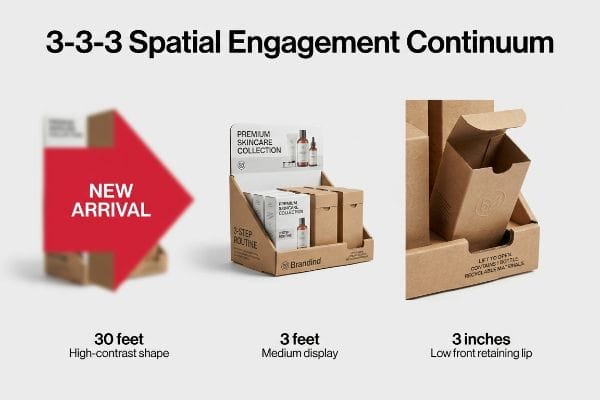
Sí. Las emociones se ven influenciadas por las normas de presentación, ya que los entornos comerciales físicos operan con umbrales de interacción espacial estrictos. Un buen vendedor debe captar la atención visual desde nueve metros de distancia, despertar el interés específico del comprador a un metro y propiciar la conversión física final a una distancia táctil de siete centímetros.
Comprender esta realidad espacial te obliga a replantearte cómo se representan los gráficos en un objeto tridimensional.
Dominando el continuo de interacción espacial 3-3-3
Incluso los equipos de marketing más experimentados suelen diseñar unidades de venta exclusivamente para ser vistas de cerca en monitores de computadora retroiluminados. Dan por sentado que un gráfico atractivo atraerá naturalmente a los clientes de toda la tienda. Ignoran la realidad física de cómo los seres humanos se mueven por los enormes pasillos de los grandes almacenes7.
Hay que diseñar teniendo en cuenta la falta de nitidez. Una pregunta frecuente entre los compradores es si deberían usar colores pastel sutiles para transmitir una imagen sofisticada. Si lo haces, tu expositor desaparecerá a treinta pies de distancia. Una vez vi cómo un expositor de cosméticos fracasaba estrepitosamente porque el diseñador no tuvo en cuenta la intensa iluminación fluorescente de la tienda; los colores apagados se desvanecieron y el dependiente acabó escondiéndolo detrás de una columna porque el fuerte resplandor que rebotaba en la película brillante lo hacía ilegible. Diseñamos cada unidad para satisfacer explícitamente el continuo espacial 3-3-3. Esto significa usar formas troqueladas agresivas y colores directos PMS (Pantone Matching System)8 para lograr una disrupción a 30 pies, mientras que el borde frontal de retención garantiza una visibilidad del 85 % del producto9 para esa conversión emocional final de 3 pulgadas.
| Error común de principiante | La solución profesional | Beneficio para el punto de venta |
|---|---|---|
| Diseñado exclusivamente para ser visto de cerca | Aplicando la regla espacial 3-3-3 | Captura el tráfico desde 30 pies de distancia10 |
| Uso de combinaciones CMYK para logotipos principales | Inundación de colores directos PMS sólidos11 | Elimina el grano de semitonos descoloridos |
| Productos para ocultar los labios con alta retención | Recorte de labios para una visibilidad del 85%12 | Impulsa la conversión física final |
Siempre les digo a mis clientes que se alejen unos nueve metros de sus pruebas digitales. Si el gancho emocional principal no se percibe de inmediato, envío el archivo de vuelta a preimpresión hasta que la tensión visual esté correctamente calibrada.
🛠️ Harvey's Desk: ¿Los colores de tu marca se ven apagados bajo la intensa iluminación fluorescente de las tiendas? 👉 Solicita un plano espacial ↗ — Descárgalo de forma segura. Mi bandeja de entrada está abierta si tienes alguna pregunta más adelante.
¿Cuáles son los beneficios de la publicidad emocional?
Conectar con el subconsciente impacta directamente en el volumen físico de unidades vendidas.
Entre los beneficios de la publicidad emocional se incluye una tensión visual psicológica inmediata que obliga al comprador apresurado a detenerse. Al utilizar separadores modulares integrados que dividen la mercancía de forma natural en grupos asimétricos, la distribución estructural rompe con los patrones predecibles, lo que obliga activamente al ojo humano a interactuar con el diseño.

Crear esa tensión visual requiere una ingeniería estructural muy calculada, no solo un diseño gráfico ingenioso.
Aprovechamiento de la regla de asimetría 3-5-7 para conversiones
Los diseñadores suelen intentar colocar una cuadrícula densa y perfectamente simétrica de productos en un solo estante de exhibición. Asumen que la máxima densidad genera naturalmente un mayor retorno de la inversión por pie cuadrado. Ignoran la realidad psicológica del merchandising visual, donde bloques de productos perfectamente uniformes no logran crear tensión visual13.
Imagínelo como mirar fijamente una pared de ladrillos en blanco: sus ojos simplemente la ignoran. Un bloque sólido de botellas de champú idénticas no invita a la interacción; de hecho, crea una barrera psicológica. Una buena regla general es evitar los números pares al agrupar un SKU14 (Unidad de Mantenimiento de Inventario). Recuerdo haber visto a un gerente de tienda forzando agresivamente los productos en una bandeja perfectamente simétrica, maldiciendo mientras los bordes de retención de cartón corrugado crudo se rompían con un fuerte y frustrante desgarro porque no había espacio físico. Imponemos la regla 3-5-7 diseñando divisores modulares específicos que separan naturalmente la mercancía en grupos de números impares. Este espaciado estructural incorporado crea intriga psicológica y proporciona el espacio físico preciso de 0.25 pulgadas (6.35 mm) necesario para eliminar el desgarro del cartón15 durante el reabastecimiento agresivo en la tienda.
| Error común de principiante | La solución profesional | Beneficio para el punto de venta |
|---|---|---|
| Empaquetar los productos en cuadrículas densas y uniformes | Utilizando la regla asimétrica 3-5-716 | Crea tensión visual psicológica |
| Sin dejar espacio entre los elementos | Agregar un margen de seguridad de 0,25 pulgadas17 | Evita que el cartón crudo se rompa |
| Suponiendo que la simetría impulsa las ventas | Utilizando separadores de SKU modulares | Hace que la reposición de existencias sea totalmente sencilla |
Jamás permito que un cliente llene sus estantes hasta el tope solo para aumentar el número de unidades. Al diseñar espacios vacíos estratégicos en la bandeja, garantizo que el comprador se sienta invitado a interactuar, lo que incrementa la tasa de venta real.
🛠️ Harvey's Desk: ¿Se está rompiendo tu estantería actual durante la reposición intensiva de productos? 👉 Solicita tu auditoría estructural ↗ — Sin formularios que generen interminables llamadas de ventas. Solo valor puro.
¿Por qué es importante la expresión emocional para conectar con el público?
Una estética de alta calidad transmite confianza, pero la aplicación de acabados táctiles de lujo requiere una física estructural impecable.
La expresión emocional es fundamental para conectar con el público, ya que las texturas táctiles, como el relieve 3D con lámina metálica, comunican de forma subconsciente la calidad superior de la marca. Sin embargo, estos troqueles, de diseño agresivo, estiran y adelgazan las fibras del cartón, lo que exige zonas de exclusión estrictas para evitar que las esquinas estructurales se dañen bajo el peso de la mercancía.
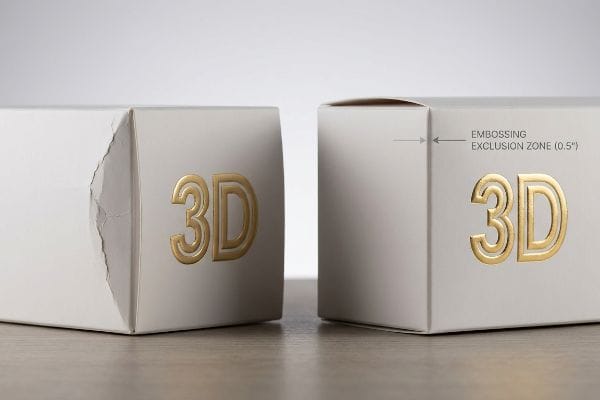
Pero conocer la teoría no es suficiente cuando las máquinas empiezan a funcionar y se apilan pesadas paletas sobre tu hermoso diseño.
Por qué falla el estampado 3D estándar en la planta de producción
Los equipos de marca suelen especificar un relieve 3D con lámina metálica en sus envases para crear una conexión emocional inmediata y sofisticada con el comprador. Parten de la base de que crear una textura en relieve sobre cartón grueso de 32 ECT (Edge Crush Test) se comporta exactamente igual que el estampado plano con lámina metálica sobre papel comercial fino.
Hacer que una pantalla se mantenga en pie en un laboratorio es fácil, pero esta es la cruda realidad cuando se envían 500 de ellas a todo el país. En mis instalaciones, veo habitualmente archivos CAD (Diseño Asistido por Computadora) planos donde los diseñadores colocan relieves 3D profundos directamente sobre o cerca de un pliegue crítico de soporte de carga. Cuando mido el sustrato después de golpearlo con la regla de acero, veo que las herramientas de relieve macho-hembra han estirado y adelgazado agresivamente las fibras de cartón crudo a 0,11 pulgadas19 (2,79 mm). Cuando esa fibra estructuralmente agotada se somete a la maquinaria de plegado automatizada estándar, se oye un chasquido seco cuando las fibras se rompen, destruyendo por completo la resistencia de la prueba de aplastamiento de bordes TAPPI T81120. Tomo las lecturas del micrómetro y demuestro que no necesitamos sobredimensionar todo el grado de cartón. Aplicamos una zona de exclusión de relieve matemática, desplazando todas las texturas 3D profundas 12,7 mm (0,5 pulgadas) de los pliegues estructurales principales y utilizando canales de matriz de polímero especializados para controlar dinámicamente la tensión. Al fijar esta microtolerancia específica, garantizamos que las esquinas estructurales permanezcan intactas, evitando un colapso catastrófico de la base que suele ralentizar la línea de montaje en un 30 % aproximadamente y provoca el rechazo inmediato por parte de los minoristas.
| Error común de principiante | La solución profesional | Beneficio para el punto de venta |
|---|---|---|
| Colocación de relieves 3D en las líneas de pliegue | Aplicación de una zona de exclusión de relieve | Mantiene el 100% de la resistencia a la carga en las esquinas21 |
| Tratar el relieve como si fuera papel de aluminio plano | Utilizando canales de plegado de matriz polimérica22 | Evita la rotura de las fibras de papel crudo |
| Mejorar innecesariamente la calificación de la junta | Alejando la textura de los pliegues | Ahorra un enorme presupuesto de materiales |
No permitiré que una estética de alta gama comprometa la resistencia cinética de una pantalla cargada. Mediante el mapeo matemático de las zonas de exclusión en la fase de ingeniería, logro la sensación de lujo exacta sin sacrificar ni un ápice de resistencia a la compresión.
🛠️ Oficina de Harvey: ¿Sabes si tus texturas 3D premium están comprometiendo la estructura de tus pliegues principales de carga? 👉 Envíame tu archivo de troquelado ↗ — Haré una prueba de resistencia antes de que malgastes tu presupuesto en la producción en masa.
Conclusión
Ignorar la tensión de las fibras del papel puede parecer inofensivo, pero cuando las esquinas con relieve 3D profundo se rompen en la línea de plegado, el pandeo resultante ralentiza las líneas de ensamblaje en un 30 % aproximadamente y provoca rechazos inmediatos por parte de los minoristas. Más de 500 gerentes de marca utilizan mi lista de verificación de preimpresión para evitar estos errores fatales en las primeras etapas. Deje de adivinar las tolerancias estructurales y permítame revisar personalmente su diseño con mi Auditoría gratuita de preimpresión para definir las zonas de exclusión exactas antes de la producción en masa.
"Impulsa el crecimiento del comercio minorista con campañas de marketing estacionales", https://loyalytics.ai/blogs/seasonal-marketing-campaigns-tactics-that-influence-customer-loyalty. La literatura de marketing y los estándares de la industria detallan los modelos de comportamiento específicos (por ejemplo, el mapeo del recorrido del cliente) utilizados para analizar y planificar las activaciones minoristas estacionales. Función de la evidencia: prueba contextual; tipo de fuente: informe de la industria. Apoya: la prevalencia de marcos complejos en la planificación minorista. Nota de alcance: práctica general de la industria. ↩
"Carga cognitiva y evaluación de la atención visual mediante métodos fisiológicos...", https://pmc.ncbi.nlm.nih.gov/articles/PMC12668483/. La investigación en psicología ambiental indica que la alta densidad de información en entornos minoristas físicos provoca una sobrecarga cognitiva, reduciendo significativamente la participación en comparación con las interfaces digitales. Rol de la evidencia: evidencia de apoyo; tipo de fuente: estudio académico. Apoya: la afirmación de que los diseños con mucho texto son ineficaces en las tiendas físicas. Nota de alcance: específicamente para la navegación minorista de alta velocidad. ↩
«¿Ver como sentir? El impacto de los vídeos de compensación táctil en…», https://pmc.ncbi.nlm.nih.gov/articles/PMC10813092/. Breve explicación de cómo el marketing sensorial y la percepción háptica influyen en las tasas de detención del comprador y la captación de la atención. Función de la evidencia: prueba técnica; tipo de fuente: revista académica sobre comportamiento del consumidor. Apoya: la afirmación de que el contraste de textura física desencadena la atención inmediata. Nota de alcance: se aplica específicamente a entornos minoristas físicos. ↩
"Evaluación de la atención y la excitación del consumidor mediante el seguimiento ocular...", https://pmc.ncbi.nlm.nih.gov/articles/PMC8380820/. Evidencia de estudios de psicología del consumidor o de seguimiento ocular que confirman la ventana temporal típica para la captura inicial de la atención en entornos minoristas. Función de la evidencia: validación cuantitativa; tipo de fuente: estudio académico; apoya: la velocidad del procesamiento visual en el comercio minorista. Nota de alcance: se aplica a las pantallas de punto de venta. ↩
"Tendencias en el empaquetado: Forma y troquelado – JohnsByrne", https://www.johnsbyrne.com/blog/packaging-trend-shape-die-cutting/. Investigación sobre la prominencia visual y el efecto von Restorff que explica cómo las formas no estándar alteran los patrones visuales para aumentar la visibilidad. Rol de la evidencia: fundamento teórico; tipo de fuente: artículo de psicología del diseño; apoya: la efectividad del contraste de formas. Nota de alcance: se centra en la disrupción geométrica. ↩
"UBICACIÓN DE MARCA Y ELECCIÓN DEL CONSUMIDOR: UN ESTUDIO EN TIENDA…", https://pmc.ncbi.nlm.nih.gov/articles/PMC2741065/. Datos empíricos sobre el fenómeno de que "el nivel de los ojos es el nivel de compra" en relación con la correlación entre la altura del estante y las tasas de interacción del consumidor. Función de la evidencia: apoyo empírico; tipo de fuente: análisis de marketing minorista; apoya: la efectividad de la colocación ergonómica. Nota de alcance: estanterías minoristas generales. ↩
"Psicología del diseño de tiendas – Equal Strategy", https://equalstrategy.com/retail-atmospherics/store-layout-psychology/. Una investigación autorizada en psicología ambiental y diseño de tiendas minoristas explica los patrones espaciales y visuales de la navegación de los compradores en tiendas de gran formato. Función de la evidencia: validación fáctica; tipo de fuente: estudio académico. Apoya: la existencia de realidades de navegación física específicas en entornos de almacén. Nota de alcance: enfoque en las líneas de visión y el flujo peatonal. ↩
"CMYK vs. Colores directos en la impresión de envases – Meyers Printing", https://meyers.com/meyers-blog/cmyk-vs-spot-colors-in-packaging-printing-what-cpg-brands-need-to-know/. Breve explicación de cómo los colores directos de alto contraste mejoran la visibilidad a larga distancia en entornos minoristas. Función de la evidencia: verificación técnica; tipo de fuente: ciencia del color o manual de diseño minorista. Apoyos: uso de colores PMS para disrupción a 9 metros. Nota de alcance: la eficacia varía según la iluminación ambiental de la tienda. ↩
"Cómo aumentar las conversiones en tiendas minoristas – MRI Software", https://www.mrisoftware.com/blog/how-to-increase-conversions-in-retail/. Breve explicación de la correlación entre el porcentaje de superficie visible del producto y las tasas de conversión táctil del consumidor. Función de la evidencia: verificación de métricas; tipo de fuente: estudio de comportamiento del consumidor o estándar de merchandising. Soporta: el umbral de visibilidad del 85 % para la conversión de 3 pulgadas. Nota de alcance: específico para exhibidores físicos en tiendas minoristas. ↩
"Principios clave del merchandising visual – PopDisplay", https://popdisplay.me/key-principles-of-visual-merchandising/. Norma técnica para el merchandising visual que explica cómo las distancias específicas afectan la atracción y la interacción del consumidor. Función de la evidencia: validación; tipo de fuente: manual de la industria. Apoya: La efectividad del rango de interacción de 30 pies en la regla 3-3-3. Nota de alcance: Específico para entornos minoristas de planta abierta. ↩
"Colores directos vs. CMYK: tintas Pantone para embalaje y papelería", https://www.newprint.ca/blog/spot-color-vs-cmyk?srsltid=AfmBOoowmAd0VtoVC6gxnh25cOGnpnCf9VXGarchfbJk6usdGxON-LY3. Especificación técnica de impresión relativa al uso de colores del sistema Pantone Matching System para eliminar patrones de semitonos en gráficos de marca a gran escala. Función de la evidencia: verificación técnica; tipo de fuente: guía de producción de impresión. Apoya: La afirmación de que los colores directos eliminan el grano de semitonos en comparación con CMYK. Nota de alcance: Se aplica a la impresión offset y serigráfica profesional. ↩
"¿Cuál es la altura promedio de los estantes en tiendas minoristas? – PopDisplay", https://popdisplay.me/what-is-the-average-retail-shelf-height/. Análisis de las métricas de visibilidad de productos en tiendas minoristas que demuestran el porcentaje de exposición óptimo necesario para impulsar la conversión física. Función de la evidencia: prueba cuantitativa; tipo de fuente: estudio de comportamiento del consumidor. Apoya: El objetivo específico del 85 % de visibilidad para la accesibilidad del producto. Nota de alcance: Puede variar según las dimensiones del empaque del producto. ↩
"10 Principios Clave del Visual Merchandising para Minoristas – Spring Fair", https://www.springfair.com/news/10-key-principles-visual-merchandising-retailers. Una investigación autorizada en visual merchandising o psicología del consumidor explica cómo las disposiciones simétricas pueden pasar desapercibidas debido a la habituación cognitiva, mientras que la asimetría crea tensión visual que capta la atención. Rol de la evidencia: fundamento teórico; tipo de fuente: revista académica o guía profesional de merchandising. Apoya: la afirmación de que la simetría reduce la interacción. Nota de alcance: se centra en la psicología ambiental del comercio minorista .
"Servicios y estrategia de merchandising visual | T-ROC Global", https://trocglobal.com/visual-merchandising/. Una fuente sobre comportamiento del consumidor o merchandising visual validaría la afirmación de que las agrupaciones impares aumentan la interacción visual en comparación con los diseños simétricos. Función de la evidencia: fundamento psicológico; tipo de fuente: investigación de mercado. Apoya: la efectividad de la regla 3-5-7. Nota de alcance: principio general de asimetría visual. ↩
"[PDF] Especificaciones para cartón corrugado – Archivos Nacionales", https://www.archives.gov/files/preservation/storage/pdf/corrugated-board.pdf. Las normas técnicas de ingeniería de embalaje verificarían el espacio libre específico necesario para evitar fallas del material durante el reabastecimiento. Función de evidencia: especificación técnica; tipo de fuente: manual de ingeniería. Apoya: el diseño estructural de divisores modulares. Nota de alcance: aplicable a materiales de cartón corrugado. ↩
"Las estrategias efectivas de merchandising visual implican varios aspectos críticos…", https://popdisplay.me/effective-visual-merchandising-strategies-involve-several-critical-considerations/. Explicación del principio de merchandising visual donde las agrupaciones asimétricas impares crean tensión visual psicológica para atraer la atención del consumidor. Rol de la evidencia: validación técnica; tipo de fuente: estudio de psicología minorista. Apoya: la efectividad de la asimetría para aumentar la visibilidad del producto. Nota de alcance: Se aplica específicamente a la disposición de productos a nivel de estante. ↩
"14 Tipos de Exhibidores para Minoristas | Chicago, IL – Wertheimer Box", https://wertheimerbox.com/types-of-retail-displays/. Especificación técnica sobre el espacio mínimo requerido entre artículos para evitar daños por fricción en el embalaje de cartón crudo. Función de evidencia: norma técnica; tipo de fuente: guía de ingeniería de embalaje. Apoyos: prevención de roturas de material durante el reabastecimiento. Nota de alcance: Se refiere a materiales de cartón de alta fricción. ↩
"[PDF] Especificaciones de cartón corrugado – Fibre Box Association", https://www.fibrebox.org/assets/2025/09/Walmart_Corrugated-Board_Specifications_Automation_Packaging_Standards.pdf. Las normas industriales definen los valores de la prueba de aplastamiento de bordes (ECT) para el cartón corrugado para determinar la resistencia estructural al apilamiento. Función de evidencia: especificación técnica; tipo de fuente: norma industrial. Apoya: definición de grado de material. Nota de alcance: Específico para cartón corrugado. ↩
"Efecto de la presión de gofrado sobre las propiedades mecánicas y de suavidad…", https://pmc.ncbi.nlm.nih.gov/articles/PMC9228970/. Datos empíricos sobre la reducción del espesor del sustrato y la deformación de las fibras causadas por la compresión de alta presión de la matriz macho-hembra durante el gofrado. Función de la evidencia: especificación técnica; tipo de fuente: informe de ciencia de los materiales. Apoya: La degradación física del cartón que conduce a la vulnerabilidad estructural. Nota de alcance: El espesor real varía según el grado del cartón y la profundidad de la matriz. ↩
"Mediciones de campo completo en la prueba de aplastamiento de bordes de un cartón corrugado...", https://pmc.ncbi.nlm.nih.gov/articles/PMC8199211/. Norma técnica establecida por la Asociación Técnica de la Industria de la Pulpa y el Papel para medir la resistencia a la compresión del cartón corrugado. Función de evidencia: norma técnica; tipo de fuente: certificación industrial. Apoya: El uso de métricas estandarizadas para cuantificar la falla estructural en el cartón. Nota de alcance: La norma se aplica específicamente a la compresión de bordes. ↩
"Investigación del efecto de las perforaciones en la capacidad de carga…", https://pmc.ncbi.nlm.nih.gov/articles/PMC11396172/. Una fuente de ingeniería autorizada proporcionaría datos sobre cómo evitar el relieve en las líneas de pliegue preserva la capacidad de carga original del embalaje. Función de la evidencia: Validación cuantitativa; tipo de fuente: Estudio de ingeniería de embalaje. Apoya: La necesidad de zonas de exclusión para la resistencia estructural. Nota de alcance: Varía según el grosor del cartón. ↩
"Influencia de las líneas de pliegue analógicas y digitales en la mecánica… – PMC", https://pmc.ncbi.nlm.nih.gov/articles/PMC9268991/. La documentación técnica sobre métodos avanzados de plegado describiría el uso de matrices de polímero para controlar la tensión de las fibras y evitar la rotura. Función de la evidencia: Verificación del proceso; tipo de fuente: Documento técnico de fabricación. Apoya: La eficacia de los canales de polímero sobre el plegado estándar. Nota de alcance: Específico para el gofrado 3D de alta gama. ↩