¿Tienes problemas para instalar tu nuevo expositor sin romper el cartón? Una instalación defectuosa arruina tanto la presentación de tus productos como el cumplimiento de las normas de los pasillos.
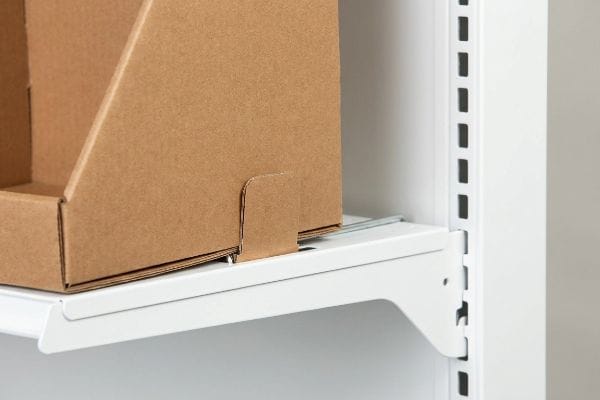
Para instalar un expositor de alas eléctricas, es necesario fijar un soporte metálico o clips de plástico en forma de S a la estantería tipo góndola. Simplemente alinee las ranuras de montaje corrugadas precortadas, deslice la unidad hacia abajo hasta que quede bien encajada y asegúrese de que la base quede al ras con el extremo del pasillo.
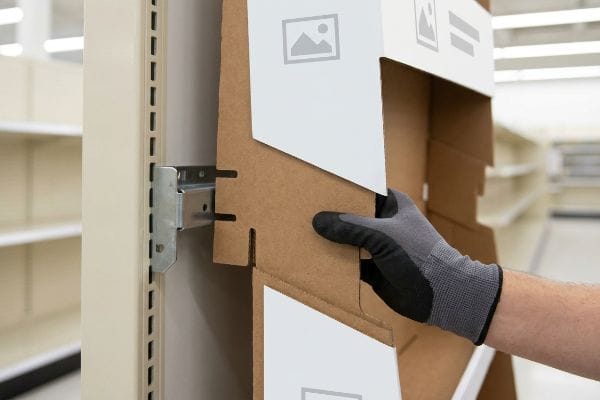
Dominar esta conexión de hardware es solo el punto de partida. Para comprender por qué estos expositores auxiliares dominan los pasillos de las tiendas, debemos analizar los requisitos estructurales subyacentes.
¿Qué es una pantalla Power Wing?
Tienes solo unos segundos para interrumpir el paso de un comprador. Si tu expositor auxiliar no encaja perfectamente en la góndola, ni siquiera llegará a la zona de ventas.
Un expositor lateral, también conocido como expositor de cabecera, es un mostrador vertical de cartón corrugado diseñado para colgarse de los laterales de los góndolas de las tiendas. Estas unidades maximizan el espacio de los pasillos, ya que cumplen estrictamente con las dimensiones estandarizadas para garantizar que se adapten a la perfección a las distintas estanterías de las grandes superficies.
Pero un expositor colgante solo es bueno si su geometría es compatible con la del mobiliario de la tienda.
La restricción espacial de "ajuste universal"
Las marcas suelen dar por sentado que cualquier expositor colgante se puede colocar fácilmente en la cabecera de un pasillo comercial. Priorizan los gráficos llamativos y las formas estructurales únicas, creyendo que captar la atención del comprador con una gran presencia es el único obstáculo para el éxito de las promociones en tienda.
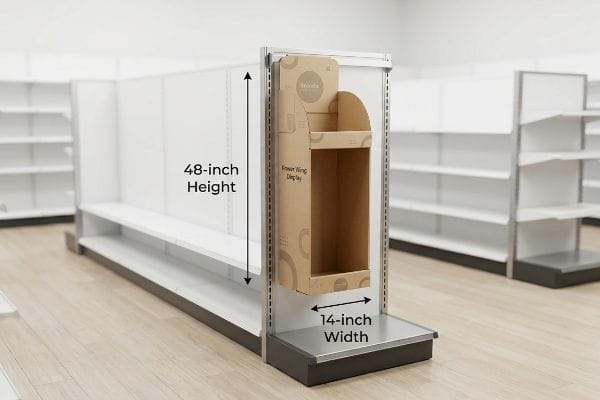
La realidad de la ejecución en el comercio minorista es mucho más estricta en cuanto al espacio que ocupan los expositores. Estos deben ajustarse a directrices estandarizadas, generalmente con una altura máxima de 48 pulgadas y un ancho de 14 pulgadas¹.Si una unidad excede estas dimensiones mínimas, dificulta el paso de los clientes y obstruye el tránsito de los carritos de compra por los pasillos principales. Los minoristas rechazan de inmediato los expositores que no cumplen con las normas para mantener un flujo de pasillos estándar, lo que convierte el cumplimiento de las dimensiones básicas en el paso más crucial para el éxito de cualquier campaña de expositores auxiliares.
| Métrica/Característica | Enfoque genérico | Realidad diseñada |
|---|---|---|
| Perfil de ancho | Tamaños personalizados arbitrarios | Límite fijo de 14 pulgadas2 |
| Huella vertical | Más de 50 pulgadas | Limitado a 48 pulgadas3 |
| Espacio libre en el pasillo | Alto riesgo de colisión | Flujo de tráfico fluido |
El cumplimiento estricto de las directrices de venta minorista garantiza la aceptación en todas las tiendas. Una planificación espacial adecuada protege su campaña de rechazos frustrantes en los pasillos.
🛠️ Harvey's Desk: ¿Los gerentes de las tiendas rechazan constantemente sus unidades auxiliares por obstruir el pasillo principal? 👉 Solicite una auditoría gratuita de compatibilidad espacial ↗ — Reviso personalmente cada archivo estructural en 24 horas.
¿Qué es un ala motorizada?
Las convenciones de nomenclatura varían a lo largo de la cadena de suministro minorista, pero la realidad básica del hardware sigue siendo la misma. Una campaña publicitaria complementaria exitosa requiere un anclaje mecánico adecuado.
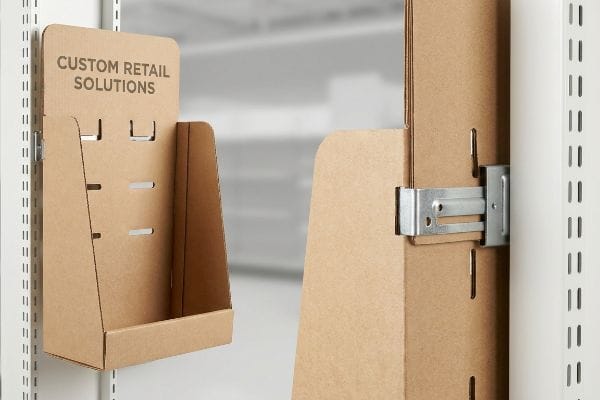
Un expositor lateral es simplemente otro término del sector para referirse a un expositor de cabecera o de extremo de góndola. Utiliza soportes metálicos estandarizados o clips en forma de S de plástico para anclar de forma segura cartón corrugado ligero directamente al panel perforado rígido o a los montantes ranurados de las estanterías estándar de las tiendas minoristas.
Comprender la terminología es fácil, pero para colgar la unidad correctamente se requiere compatibilidad de hardware específica.
Garantizar la compatibilidad adecuada del hardware
Los equipos de marketing suelen centrarse exclusivamente en el diseño y los mensajes promocionales de sus expositores colgantes. Dan por sentado que los orificios troquelados básicos y las bridas de plástico genéricas bastarán para sujetar sus productos de marca durante el tiempo que dure una promoción comercial estándar.
En el entorno comercial real, la compatibilidad adecuada del hardware es fundamental para el éxito. Los encargados de merchandising necesitan soportes metálicos universales o clips en S de alta resistencia que se adapten al sistema de estanterías de la tienda. El panel trasero corrugado debe diseñarse con ranuras específicas para alojar perfectamente estos soportes estándar . El uso del hardware comercial correcto garantiza que el expositor soporte de forma segura el peso de los productos sin deformarse, manteniendo una presentación profesional y accesible para los compradores durante todo el ciclo de la campaña.
| Métrica/Característica | Enfoque genérico | Realidad diseñada |
|---|---|---|
| Herrajes de montaje | Bridas de plástico débiles | Soporte metálico universal6 |
| Diseño de ranuras | Troquelados sueltos y toscos | Ranuras de hardware mapeadas7 |
| Presentación | Se deforma con el tiempo | Profesional y seguro |
Priorizar el sistema de montaje estándar adecuado garantiza que su promoción permanezca visible y segura. Un expositor bien sujeto impulsa las ventas por impulso a lo largo de todo su ciclo de vida en el punto de venta.
🛠️ Harvey's Desk: ¿El sistema de montaje de tus expositores colgantes está dañando tus placas traseras de cartón corrugado y provocando el colapso prematuro de tu tienda? 👉 Solicita tu prueba de resistencia gratuita ↗ — 100% confidencial. Tus diseños de venta al público aún no lanzados están a salvo conmigo.
¿Cuáles son las alternativas a las pantallas Powerwing?
La capacidad de almacenamiento tiene límites prácticos. Cuando tu línea de productos es demasiado voluminosa para un soporte auxiliar, necesitas optar por estrategias de colocación a nivel del suelo.
Entre las alternativas a los expositores Powerwing se encuentran los expositores de suelo fraccionados, como los de un cuarto o medio palé. En lugar de colgar de un extremo del estante, estas unidades compactas e independientes se apoyan directamente en el suelo, ofreciendo una mayor capacidad de carga y encajando perfectamente en las intersecciones de pasillos de alto tránsito.
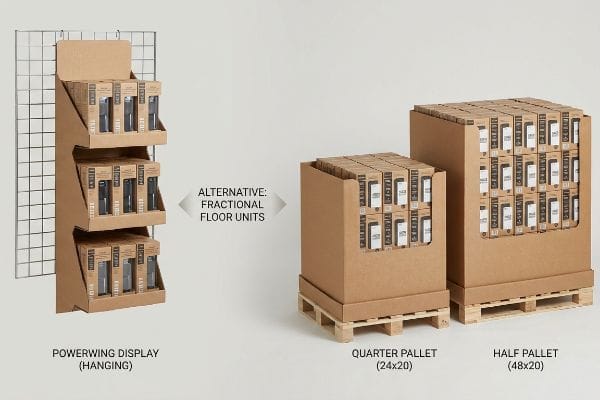
El cambio de la estantería al suelo resuelve las limitaciones de carga útil, pero requiere una planificación precisa del espacio que ocupa.
El pivote de paleta fraccional
Al dejar de usar expositores colgantes, los responsables de marca suelen solicitar expositores de suelo de gran tamaño. Dan por sentado que un mayor espacio generará automáticamente una mayor visibilidad de la marca y permitirá mostrar todo su inventario para lograr el máximo impacto en el punto de venta.
Los minoristas protegen celosamente su espacio en tienda y rara vez aprueban superficies completas de 48 × 40 pulgadas para los ciclos promocionales estándar. En cambio, para lograr transiciones exitosas en la tienda, se requiere el uso de palés fraccionados estandarizados, como cuartos de palé (24 × 20 pulgadas) o medios palés (48 × 20 pulgadas). Subdividir la superficie para cumplir con las directrices de la Asociación de Fabricantes de Alimentos (Grocery Manufacturers Association) se integra perfectamente con la estricta planificación espacial del minorista. Esta estrategia asegura un espacio en tienda muy codiciado, garantiza una rápida aprobación a nivel de tienda y simplifica drásticamente la logística de envío para la marca.
| Métrica/Característica | Enfoque genérico | Realidad diseñada |
|---|---|---|
| Dimensiones del piso | Dimensionamiento arbitrario | Palets fraccionados exactos9 |
| Utilización de palés | Anidamiento ineficiente | Subdivisión perfecta10 |
| Aprobación de venta minorista | Alta tasa de rechazo11 | Aprobación espacial rápida |
Adoptar formatos estándar con dimensiones fraccionadas garantiza una buena ubicación en zonas de mucho tránsito cuando no es posible instalar unidades colgantes. Ofrecer dimensiones que se adapten a las necesidades del minorista es la vía más rápida para obtener la aprobación del espacio de venta.
🛠️ Oficina de Harvey: ¿Rechazan tus productos pesados porque tus enormes exhibidores ocupan demasiado espacio en la tienda? 👉 Obtén una auditoría gratuita de cálculo de palés fraccionados ↗ — Sin intermediarios. Habla directamente con ingenieros estructurales.
¿Es Power Wing una empresa legítima?
Es comprensible el escepticismo al colocar mercancía costosa en expositores temporales. ¿Puede el cartón corrugado soportar realmente el peso de su material promocional durante todo un ciclo de venta?
Sí. Un soporte lateral de alta resistencia es muy eficaz si se planifica correctamente, ya que soporta sin esfuerzo cargas considerables en tiendas. Gracias al uso de cartón corrugado de alta calidad, pliegues estratégicos en la cabecera y soportes universales, estos soportes laterales sujetan los productos de forma segura sin ceder ni fallar en las condiciones habituales de una tienda.
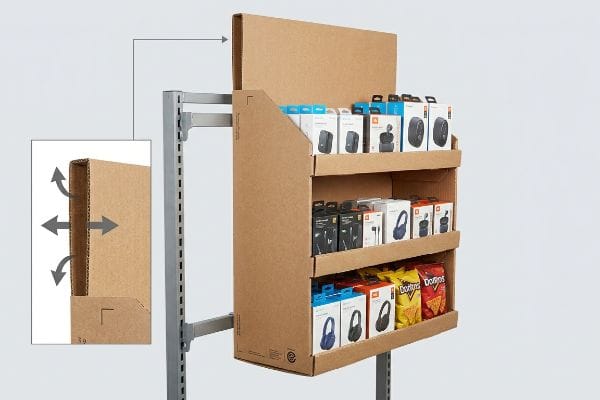
Funciona a la perfección en la práctica, pero solo si te preparas para las interacciones diarias con los clientes.
Construyendo para la perdurabilidad del comercio minorista
Los vendedores novatos a veces descartan los expositores colgantes de cartón corrugado por considerarlos endebles, asumiendo que solo son adecuados para artículos ligeros de compra impulsiva, como caramelos en bolsa. Creen que no se puede confiar en el embalaje estándar de venta al por menor para productos pesados en un soporte temporal de cartón .
Cuando se especifican correctamente, los expositores laterales de cartón corrugado son increíblemente robustos y totalmente adecuados para una amplia gama de productos de consumo. El éxito depende de una planificación que tenga en cuenta las interacciones habituales en el comercio minorista, donde los clientes examinan y retiran artículos constantemente. Al incorporar mejoras estructurales sencillas, como un cabezal de doble paredplegado¹², el expositor adquiere la solidez necesaria para soportar el uso diario por parte de los consumidores. Esta cuidadosa preparación garantiza que la unidad se mantenga impecable, protegiendo de forma segura los artículos de mayor peso y demostrando su valor a largo plazo como una herramienta promocional altamente eficaz.
| Métrica/Característica | Enfoque genérico | Realidad diseñada |
|---|---|---|
| Capacidad de carga útil | Supone únicamente que es ligero | Admite diversos productos |
| Estructura del encabezado | Tablero básico de pared simple13 | Cabecera de doble pared plegada14 |
| Resistencia en el comercio minorista | Percepción frágil | Rendimiento diario robusto |
Especificar la resistencia adecuada del panel transforma una simple unidad colgante en un elemento de merchandising de primera calidad. Una planificación correcta garantiza que su expositor soporte con seguridad productos de alto valor.
🛠️ Harvey's Desk: ¿Los compradores agresivos están arrancando sus exhibidores colgantes de los soportes metálicos de los extremos? 👉 Solicite su auditoría gratuita de encabezados cinéticos ↗ — Reviso personalmente cada archivo estructural en 24 horas.
¿Cuáles son los beneficios de las alas motorizadas?
¿Para qué molestarse en colgar un expositor si existen estanterías tipo góndola estándar? Porque, matemáticamente, fijar el producto en la línea de visión natural del comprador determina la velocidad de la compra impulsiva.
Entre los principales beneficios de los expositores colgantes se incluyen la captación de compras impulsivas, la maximización del espacio no utilizado en los extremos de los pasillos y el fomento de oportunidades de venta cruzada. Al colocar los productos a la altura exacta de la línea de visión natural del comprador, estos expositores interrumpen físicamente el flujo de personas y aumentan drásticamente las tasas de conversión en las tiendas.
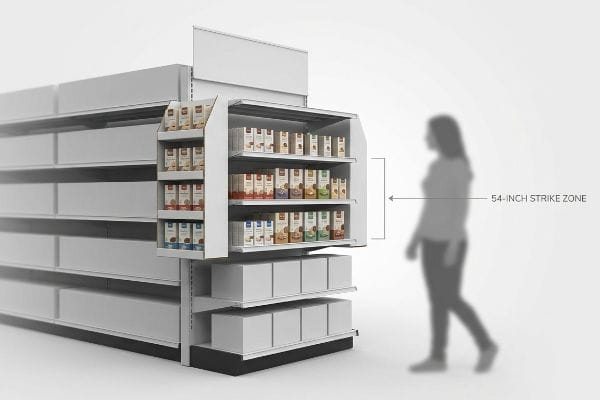
Lograr esa venta impulsiva no es casualidad; es el resultado directo de la segmentación biológica y la alineación con la altura estructural.
Zona de golpeo ergonómica de 54 pulgadas
En mi establecimiento, veo habitualmente renders 3D teóricos que dan por sentado que cualquier expositor colgante generará ventas automáticamente con solo retirarlo del estante principal. No tienen en cuenta la geometría ergonómica de la carga útil15, lo que provoca que los productos básicos se coloquen arbitrariamente en el nivel inferior y obliga a los compradores apresurados a romper su plano visual natural16 solo para leer el embalaje.
Esto no es solo teoría: lo veo fallar estrepitosamente en la planta de pruebas CNC cuando montamos prototipos en los soportes estándar de las góndolas. Durante una reciente auditoría de visibilidad, el producto estrella de un cliente estaba anclado a 965,2 mm (38 pulgadas) del suelo, quedando completamente fuera del alcance visual de un adulto promedio. Detuve la producción de inmediato y, mediante cálculos, moví los niveles estructurales troquelados principales directamente al estricto corredor vertical de 1270 a 1371,6 mm (50 a 54 pulgadas). Al modificar el centro de gravedad y elevar matemáticamente el punto focal sin aumentar la superficie de material, generamos una disrupción táctil inmediata y aceleramos las ventas diarias.
| Métrica/Característica | Enfoque genérico | Realidad diseñada |
|---|---|---|
| Enfoque del producto | Colocación aleatoria en los estantes | Objetivo de 50-54 pulgadas (1270-1371,6 mm)17 |
| Plano visual | Obliga al comprador a agacharse | Se adhiere a la línea natural de los ojos18 |
| Frecuencia de impulso | Ventana de compromiso perdida | Conversión táctil inmediata |
Diseñar líneas de visión estructurales que se adapten a la biología humana produce resultados mucho mejores que simplemente rellenar espacios vacíos. Elevar sus productos estrella garantiza matemáticamente el máximo impacto visual y los mayores ingresos.
🛠️ Escritorio de Harvey: ¿Tus artículos de alto margen están ocultos en la parte inferior de tu escritorio auxiliar, completamente fuera del alcance visual del cliente? 👉 Obtén un análisis ergonómico gratuito de la línea de visión ↗ — 100% confidencial. Tus diseños de venta minorista aún no lanzados están a salvo conmigo.
Conclusión
Dominar la instalación de un soporte de elevación no sirve de nada si la mecánica corrugada subyacente no soporta el peso dinámico o no se ajusta a la línea de visión natural del comprador. Esta misma revisión de ingeniería detectó recientemente un error de tolerancia fatal de 2 mm en una ranura de soporte de suspensión para un lanzamiento nacional importante antes de que comenzara la producción. Si desea asegurarse de que sus soportes auxiliares resistan la fricción del pasillo, permítame someter personalmente sus archivos estructurales a una Auditoría Gratuita de Hardware Cinético ↗ para garantizar matemáticamente que su carga útil permanezca fija a la tapa del extremo.
"Expositor lateral de cartón personalizado, Powerwing…", https://grandfly.com/cardboard-display/sidekick-powerwing-display/. Las especificaciones de comercialización de la industria o las directrices del minorista verifican las dimensiones máximas permitidas para los expositores laterales para garantizar la seguridad y el cumplimiento. Función de la evidencia: especificación técnica; tipo de fuente: manual de la industria. Apoya: restricciones espaciales estandarizadas para alas de potencia. Nota de alcance: las dimensiones específicas pueden variar según la cadena de grandes almacenes. ↩
"Expositores laterales Power Wing personalizados", https://www.creativedisplaysnow.com/display/power-wing-sidekick-displays/. Verificación de las restricciones de ancho estándar de la industria para expositores laterales o Power Wing para garantizar la compatibilidad universal con góndolas. Función de la evidencia: especificación técnica; tipo de fuente: manual de mobiliario comercial. Soportes: limitaciones de perfil de ancho. Nota de alcance: puede variar según las directrices específicas del minorista. ↩
"14 Tipos de Exhibidores Minoristas | Chicago, IL", https://wertheimerbox.com/types-of-retail-displays/. Verificación de la huella vertical máxima permitida para exhibidores laterales en el punto de venta para evitar la obstrucción del pasillo. Función de evidencia: especificación técnica; tipo de fuente: directrices de comercialización minorista. Apoya: restricciones de huella vertical. Nota de alcance: se refiere a la altura física del exhibidor. ↩
"Clip de montaje, clip en J lateral, soporte Powerwing", https://www.shopangolawire.com/Sidekick-Shelf-J-Clip-p/c-skjclp.htm. Verificación de los componentes de hardware estándar utilizados para fijar los expositores laterales a las estanterías de venta al por menor. Función de la evidencia: especificación técnica; tipo de fuente: catálogo del fabricante o guía de equipos de venta al por menor. Soportes: requisitos de hardware para Powerwings. Nota de alcance: se centra en los estándares comunes de la industria. ↩
"Expositores Power Wing y Sidekick", https://brownpackaging.com/custom-packaging-products/pop-displays/corrugated/power-wing-sidekick/. Confirmación de que los expositores de cartón corrugado requieren ranuras troqueladas precisas para la integración del soporte. Función de la evidencia: especificación de diseño; tipo de fuente: guía de ingeniería de embalaje. Apoya: requisitos de diseño estructural para Power Wings. Nota de alcance: se aplica a expositores de cartón corrugado. ↩
"Diseño personalizado de expositor Power Wing", https://pack-design.com/custom-power-wing-display-design/. Las guías autorizadas de expositores para minoristas verifican el uso de soportes metálicos en lugar de plástico para una mayor integridad estructural y estabilidad. Función de la evidencia: especificación técnica; tipo de fuente: manual de la industria. Apoya: el uso de soportes metálicos como estándar profesional para el montaje. Nota de alcance: se refiere al hardware Sidekick diseñado. ↩
"7 Beneficios de los Exhibidores Sidekick – PopDisplay", https://popdisplay.me/7-benefits-of-sidekick-displays/. Las especificaciones de fabricación para accesorios de venta minorista de alta gama detallan el uso de ranuras mapeadas con precisión para garantizar la compatibilidad y el ajuste del hardware. Función de evidencia: estándar de diseño; tipo de fuente: especificación de fabricación. Apoya: la ventaja técnica de las ranuras mapeadas sobre los troquelados toscos. Nota de alcance: específico para hardware de exhibición de ingeniería. ↩
"Tipos de exhibición de palets: completos, medios y cuartos", https://greendotpackaging.com/understanding-pallet-display-types-full-half-and-quarter-pallet-displays/. Documentación de los estándares de la industria establecidos por la GMA con respecto a la planificación espacial y la huella de los palets. Función de evidencia: estándar de la industria; tipo de fuente: directrices de la asociación profesional. Apoya: la afirmación de que la aprobación minorista se alinea con directrices institucionales específicas. Nota de alcance: se aplica principalmente a los sectores de comestibles y bienes de consumo de alta rotación. ↩
"Exhibidores atractivos para tiendas de clubes para minoristas de almacenes", https://www.qpack.com/retail-displays/pallet/club-store. Verificación de las dimensiones estandarizadas para palets fraccionados utilizados para optimizar el espacio en la tienda. Función de evidencia: especificación técnica; tipo de fuente: manual de logística. Apoya: la precisión del dimensionamiento de palets fraccionados. Nota de alcance: centrado en los estándares minoristas norteamericanos. ↩
"Expositores de palets", https://www.smurfitwestrock.com/products/retail-displays-and-signage/retail-displays/pallet-displays. Análisis de las tasas de utilización del espacio al utilizar huellas de palets subdivididas frente a una colocación arbitraria. Función de la evidencia: métrica comparativa; tipo de fuente: investigación de la cadena de suministro. Apoya: la afirmación de una utilización optimizada de los palets. Nota de alcance: limitado a colocaciones a nivel del suelo. ↩
"7 características de un expositor de venta minorista de alto impacto", https://www.smurfitwestrock.com/blog/7-features-of-a-high-impact-retail-display. Datos estadísticos sobre la frecuencia de rechazos de expositores de venta minorista debido a la no conformidad o a una distribución arbitraria del espacio. Función de la evidencia: evidencia estadística; tipo de fuente: informe de gestión minorista. Apoya: la afirmación de que los enfoques genéricos conllevan un mayor número de rechazos. Nota de alcance: se refiere a entornos de grandes superficies comerciales. ↩
"DISEÑO ESTRUCTURAL DE EXHIBICIONES INTERACTIVAS…", https://www.bcipkg.com/display-structural-design-for-interactive-retail-displays/. Verificación técnica de cómo la construcción de cartón corrugado de doble pared aumenta la resistencia a la compresión vertical y la rigidez de un cabezal de exhibición minorista. Función de la evidencia: especificación técnica; tipo de fuente: guía de ingeniería de empaques. Apoya: la afirmación de que los cabezales de doble pared proporcionan resistencia fundamental. Nota de alcance: los resultados varían según el tipo de ondulación. ↩
"Especificaciones de cartón ondulado", https://www.fibrebox.org/assets/2025/09/Walmart_Corrugated-Board_Specifications_Automation_Packaging_Standards.pdf. Los estándares de la industria para el embalaje de cartón ondulado definen las limitaciones de carga y las tasas de deformación del cartón de pared simple en entornos minoristas. Función de evidencia: Punto de referencia comparativo; tipo de fuente: Manual de ciencia de materiales. Apoya: La tendencia del cartón básico a fallar bajo cargas promocionales más pesadas. Nota de alcance: Aplicación general a expositores de cartón. ↩
"Material destacado: Explorando los beneficios del cartón ondulado…", https://wicpackaging.com/material-spotlight-exploring-the-benefits-of-corrugated-cardboard/. La documentación técnica sobre el ondulado explica cómo las construcciones de doble pared aumentan significativamente la resistencia a la compresión vertical y la rigidez. Función de la evidencia: Especificación técnica; tipo de fuente: Guía de ingeniería de embalaje. Apoya: La superioridad estructural de los cabezales diseñados sobre los básicos. Nota de alcance: Específicamente en relación con el cartón ondulado. ↩
"Un marco de factores humanos para el diseño de exhibidores de carga útil", https://ntrs.nasa.gov/api/citations/19990009348/downloads/19990009348.pdf. Las normas de diseño industrial para accesorios de venta minorista proporcionan directrices sobre la geometría de la carga útil para garantizar la estabilidad estructural y la accesibilidad óptima para los consumidores. Función de la evidencia: especificación técnica; tipo de fuente: manual de diseño industrial. Apoya: la necesidad de calcular la geometría de la carga útil para exhibidores. Nota de alcance: específico para accesorios de venta minorista colgantes. ↩
"La ciencia del merchandising a la altura de los ojos", https://www.nexgenus.com/company/blog/the-science-of-eye-level-merchandising-does-it-really-drive-more-revenue. La investigación en psicología del comercio minorista y ergonomía establece la altura promedio a la altura de los ojos (zona de impacto) que maximiza la visibilidad del producto y las tasas de compra impulsiva. Función de la evidencia: respaldo fáctico; tipo de fuente: estudio minorista revisado por pares. Apoya: la existencia e importancia del plano visual natural. Nota de alcance: Aplicable a compradores adultos. ↩
"Diseño de locales comerciales para exhibiciones efectivas y la experiencia del cliente...", https://www.business.qld.gov.au/industries/manufacturing-retail/retail-wholesale/retail-displays. Un estándar de la industria o un estudio ergonómico que confirma la ubicación vertical óptima para la visibilidad del producto en entornos minoristas. Función de la evidencia: especificación técnica; tipo de fuente: estudio de ergonomía minorista. Apoya: el rango de altura específico para una visibilidad máxima. Nota de alcance: las alturas promedio pueden variar según la demografía. ↩
"¿Por qué los minoristas colocan los productos a la altura de los ojos? – PopDisplay", https://popdisplay.me/why-do-retailers-place-products-at-eye-level/. Investigación sobre merchandising visual y comportamiento del comprador que demuestra la correlación entre la colocación a la altura de los ojos y el aumento de las tasas de interacción. Función de la evidencia: validación del comportamiento; tipo de fuente: revista de psicología del consumidor. Apoya: la afirmación de que el posicionamiento a la altura de los ojos optimiza la visibilidad. Nota de alcance: se centra en los promedios de compradores adultos. ↩