
Lograr que un producto llegue a los estantes de una tienda es solo la mitad de la batalla; la verdadera lucha consiste en detener en seco a un comprador distraído.
Para aumentar las ventas mediante exhibidores, es necesario impulsar las compras impulsivas a través de la disrupción visual y la ubicación estratégica. Las estructuras efectivas en el punto de venta rompen la monotonía de los pasillos, mejoran la visibilidad del producto y guían físicamente la mano del consumidor, transformando el tránsito pasivo en ingresos inmediatos y cuantificables antes de que lleguen a la caja.

Pero captar esa atención no se trata solo de gráficos llamativos; es una ciencia calculada de ingeniería espacial y psicología del consumidor.
¿Qué es la regla 3-3-3 en ventas?
Los compradores ya no curiosean tranquilamente en las grandes superficies; ahora corren a través de ellas con una misión clara.
La regla 3-3-3 en ventas establece que un vendedor minorista debe captar la atención visual desde treinta pies de distancia, despertar el interés específico del comprador a tres pies y lograr la conversión física final a tres pulgadas. Este marco espacial garantiza que la disposición del empaque se alinee perfectamente con el movimiento humano.
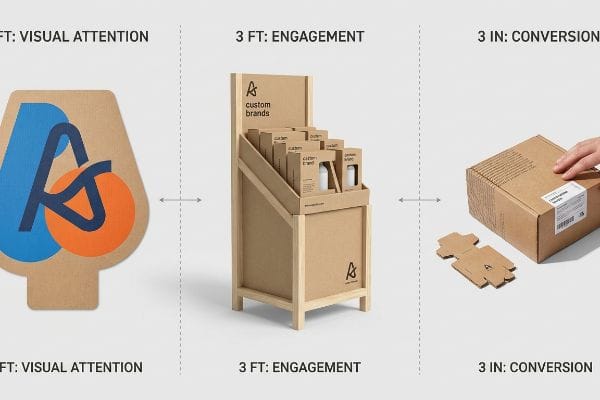
Comprender esta fórmula de interacción espacial cambia la forma en que abordas cada pliegue y elemento gráfico de tu estructura.
Dominando la regla 3-3-3 para exhibidores en tiendas
Los equipos de marketing junior suelen diseñar expositores para tiendas exclusivamente para su visualización de cerca en monitores de ordenador retroiluminados. Se centran en la lectura de texto pequeño, dando por sentado que el consumidor se detendrá frente al expositor como si fuera una pieza de museo. Este enfoque plano y localizado ignora la realidad física de cómo el tráfico humano recorre los pasillos de lastiendas¹.
Constantemente veo este error común cuando las marcas intentan incluir toda la información de su sitio web en el encabezado de un expositor de punto de venta (POP). Piénsalo como una valla publicitaria en la carretera; si no se puede leer a 96,5 km/h, es inútil. Como regla general, usa formas troqueladas llamativas para la marca de 9,1 m²yreserva la letra pequeña exclusivamente para la zona de interacción de 76,2 mm. Una vez vi a un dependiente forcejeando para colocar los productos en una bandeja abarrotada de texto; la resistencia del cartón corrugado grueso rozaba violentamente los frascos de cosméticos porque el borde frontal era demasiado alto. Al recortar ese borde para garantizar una visibilidad del 85 % del producto³,evitamos el esfuerzo físico del dependiente y dejamos que el producto impulsara la compra.
| Error común de principiante | La solución profesional | Beneficio para el punto de venta |
|---|---|---|
| Imprimir párrafos de texto en el encabezado superior | Utilizando un enorme logotipo troquelado en 3D y un baño de color directo | Llama la atención desde 9,1 metros (30 pies) de distancia4 |
| Labios de retención frontales altos que ocultan el producto | Inclinar el estante y bajar el borde | Aumenta la conversión táctil final de 3 pulgadas (76,2 mm)5 |
| Diseño exclusivamente para pantallas de ordenador planas en 2D | Diseñar una inclinación del producto de 15 grados hacia arriba6 | Se alinea perfectamente con la línea de visión del comprador |
Siempre obligo a mis clientes a alejarse bastante de sus prototipos físicos antes de dar su aprobación. Si la idea principal no resulta evidente a simple vista desde cualquier punto del almacén, el producto se volverá prácticamente invisible en un pasillo abarrotado.
🛠️ Escritorio de Harvey: ¿No estás seguro de si tu gráfico de encabezado es lo suficientemente llamativo como para superar la prueba de distancia visual? 👉 Solicita un render 3D gratuito ↗ — Acceso directo a mi escritorio. Sin spam de ventas automatizado, lo prometo.
¿Cuáles son las 4 formas generales de aumentar las ventas?
Lanzar un producto al mercado sin una estructura definida es como lanzar dardos con los ojos vendados.
Las cuatro estrategias principales para aumentar las ventas se basan en dominar la combinación fundamental del marketing de producto: optimizar la oferta de productos, ajustar la estructura de precios, mejorar los canales de distribución y potenciar la promoción dirigida. La alineación de estos elementos garantiza que la comercialización física se integre a la perfección con el modelo operativo del minorista objetivo.

Plasmar estos cuatro pilares en papel es fácil, pero ponerlos en práctica en un club de almacén es donde la mayoría de las marcas tropiezan.
Alinear la estrategia con las limitaciones de la comercialización física
Las nuevas marcas suelen lanzar productos asumiendo que un buen artículo se venderá solo. Consideran los expositores de venta al público simplemente como cajas de cartón para almacenar inventario, separando su estrategia promocional de alto nivel de la ubicación física. Sin adaptar la logística específica al modelo operativo del minorista, la estrategia de comercialización finalmente no logra llegar alconsumidor⁷.
Con frecuencia veo a equipos de marketing experimentados caer en esta trampa al diseñar estructuras de piso enormes sin preguntar si la ubicación específica lo permite. Si construyes una exhibición promocional gigante para una tienda de conveniencia que exige estrictamente mostradores de punto de venta pequeños que cumplan con la normativa ADA⁸ , los gerentes de la tienda la rechazarán de inmediato. Debes comunicar con anticipación a tu equipo a qué canales de venta minorista específicos te diriges. Por ejemplo, intentar forzar una paleta promocional de 48 pulgadas de ancho en un pasillo estrecho de farmacia simplemente frustra al personal y detiene el lanzamiento de tu producto. Cambiar a una estrategia de cabecera de góndola compacta garantiza el cumplimiento y la colocación inmediata.
| Error común de principiante | La solución profesional | Beneficio para el punto de venta |
|---|---|---|
| Ignorar los estrictos límites de tamaño de los pasillos del minorista | Diseño de geometrías específicas de paletas fraccionarias9 | Garantiza la ubicación en zonas de alto tránsito |
| Separar el marketing del diseño de envases | Integrar la promoción en la estructura física10 | Desencadena compras impulsivas inmediatas |
| Suponiendo que una sola pantalla se adapta a todos los tipos de tiendas | Mapeo de las restricciones de alcance exactas por canal11 | Evita costosos rechazos por parte del gerente de la tienda |
Una estrategia de precios brillante resulta inútil si el espacio físico ocupado infringe las normas de distribución del gerente de la tienda. Identifique siempre las limitaciones específicas del entorno comercial antes de aprobar cualquier diseño de exhibición promocional.
🛠️ Harvey's Desk: ¿Estás adivinando a ciegas si la distribución de tu local pasará la estricta auditoría de un gerente de una gran superficie comercial? 👉 Obtén tu plano de tienda ↗ — Descárgalo de forma segura. Mi bandeja de entrada está abierta si tienes alguna pregunta.
¿Qué es la regla 80/20 en el marketing?
Exhibir todas las variantes de un producto en una cabecera de góndola de primera categoría es una forma segura de paralizar al consumidor.
La regla 80/20 en comercialización establece que aproximadamente el ochenta por ciento de los ingresos totales provienen de tan solo el veinte por ciento de las referencias de productos. Los minoristas aplican este principio dedicando su espacio físico de exhibición más visible y de mayor calidad exclusivamente a los artículos de mayor rendimiento y eficacia comprobada, con el fin de maximizar la rentabilidad.
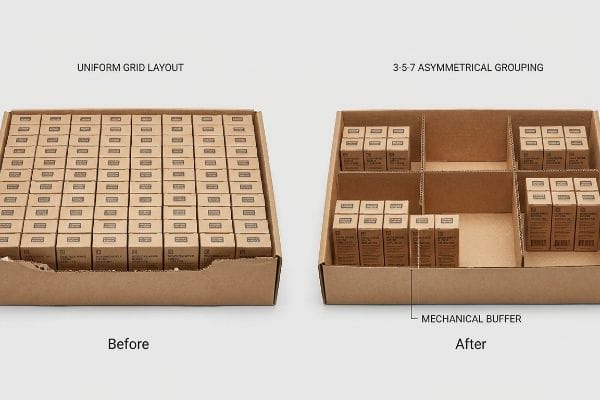
Dedicar un espacio a tus productos más vendidos es el primer paso, pero la forma en que organices físicamente esa fracción crucial del inventario determinará si realmente se venden.
La psicología de los diseños visuales de SKU
Los diseñadores junior suelen intentar colocar una cuadrícula densa y perfectamente simétrica de productos en un solo estante. Suponen que concentrar la máxima densidad de sus SKU (unidades de mantenimiento de existencias) más populares se traduce en mayores ventas. Ignoran la realidad psicológica del merchandising visual, donde bloques perfectamente uniformes no generan tensióny hacen que los compradores apresurados los ignoren por completo.
Piensa en la disposición de tus estantes como en un plato; si toda la comida está amontonada en un solo bloque, pierde su atractivo visual. Una regla práctica muy útil es la regla de asimetría 3-5-7¹³,que separa naturalmente la mercancía en grupos impares. Este espaciado estructural incorporado crea una tensión psicológica que obliga activamente al ojo humano a interactuar¹⁴.He visto a empleados intentando con vehemencia encajar productos en una disposición de bandejas. El sonido abrasivo del borde de retención corrugado al romperse por falta de espacio físico es un desastre totalmente evitable. Al diseñar divisores modulares específicos que crean agrupaciones de productos diferenciadas, les proporcionamos a los empleados el margen mecánico exacto de 0,25 pulgadas (6,35 mm) que necesitaban para reabastecer sin problemas y sin dañar la imagen de la marca.
| Error común de principiante | La solución profesional | Beneficio para el punto de venta |
|---|---|---|
| Empaquetar los productos en filas densas y uniformes | Aplicando la regla de agrupación asimétrica 3-5-715 | Fuerza el atractivo visual y la tensión en el comprador |
| Proporcionar espacio libre cero para el reabastecimiento manual | Agregar un amortiguador mecánico de 0,25 pulgadas (6,35 mm)16 | Elimina los labios de cartón rasgados |
| Combinar artículos de bajo volumen con los más vendidos | Los separadores modulares se destinan exclusivamente a los mejores modelos17 | Maximiza los ingresos por pie cuadrado |
Siempre les digo a las marcas que dejen de tratar sus exhibidores premium como si fueran almacenes. Al limitar artificialmente la densidad de los estantes con separadores diseñados a medida, obligo al consumidor a fijarse realmente en el producto.
🛠️ Harvey's Desk: ¿Sus productos están tan apretados que los empleados rompen las bandejas para reponerlos? 👉 Solicite su auditoría estructural ↗ — Sin formularios que generen interminables llamadas de ventas. Solo valor puro.
¿Cuál es la finalidad de los expositores de ventas?
Una representación gráfica atractiva puede verse increíble en una presentación en una sala de juntas, pero la estética no protegerá su inventario.
El objetivo principal de los expositores de venta es proteger físicamente la mercancía durante el transporte, facilitar el montaje en tienda y comunicar la propuesta principal de la marca al consumidor. Un expositor eficaz actúa tanto como soporte estructural para el envío como vendedor discreto y altamente especializado en el punto de venta.
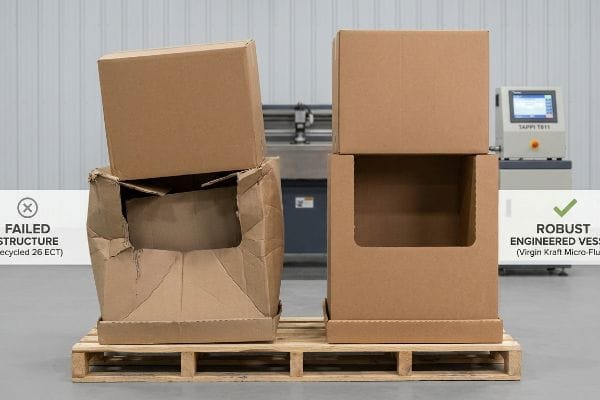
Pero conocer la teoría no es suficiente cuando las máquinas empiezan a funcionar y la cadena de suministro comienza a ejercer miles de libras de presión cinética.
Por qué los comerciantes teóricos fracasan en la fábrica
Los equipos de marca suelen utilizar el marco estándar de las 4 C del empaquetado(Costo, Concepto, Conveniencia y Comunicación) para guiar sus lanzamientos en tiendas físicas. Sin embargo, los departamentos de compras a menudo se centran exclusivamente en el costo principal. Suponen que pueden reducir el grosor de los paneles estructurales para ahorrar unos centavos al principio, creyendo que el expositor cumplirá su propósito final de todos modos.
En mis instalaciones, veo con frecuencia las consecuencias de esta trampa de adquisición. Los clientes me traen un archivo donde secretamente degradaron el material base, pasando de papel kraft virgen de alta densidad a un sustituto reciclado barato de 26 ECT (Edge Crush Test). Asumen erróneamente que el único propósito de un expositor es sostener gráficos impresos. Pero cuando mido el sustrato en bruto con mi TAPPI T811 Edge Crush Test19 , la realidad golpea con fuerza. Esas fibras de papel reciclado y agotado carecen de la resistencia dinámica BCT (Box Compression Test)20 necesaria para soportar la física del transporte. Cuando una carga superior de palés de 85 kg (187,5 lb) impacta esa geometría comprometida, las ondulaciones internas se cortan con un crujido espantoso y la unidad se arquea visiblemente hacia afuera. Al aplicar un estricto protocolo de cero degradación y volver matemáticamente a la arquitectura de microondulaciones adecuada, garantizo que la integridad estructural resista el transporte marítimo de doble apilamiento. Este ajuste de ingeniería preciso evita un colapso catastrófico, lo que ahorra a mis clientes miles de dólares en contracargos inmediatos de grandes minoristas y evita por completo el costoso reempaquetado manual.
| Error común de principiante | La solución profesional | Beneficio para el punto de venta |
|---|---|---|
| Reducir la calificación de ECT para ahorrar dinero por adelantado | Obligatoriedad del uso de papel kraft virgen para las flautas portantes21 | Evita daños durante el transporte y contracargos masivos |
| Ignorar los límites dinámicos de BCT | Validación con los protocolos de prueba TAPPI T81122 | Sobrevive al apilamiento doble de contenedores de 40HQ23 |
| Tratar la pantalla simplemente como un lienzo gráfico | Diseñar toda la estructura como si fuera un buque de carga | Garantiza una llegada 100% intacta a las tiendas minoristas |
No me importa lo brillante que sea el texto publicitario; si el expositor llega a la tienda destrozado porque alguien ahorró dos céntimos en cartón, ha fracasado por completo en su propósito fundamental.
🛠️ Oficina de Harvey: No permita que un defecto estructural de 2 milímetros arruine el lanzamiento de 500 tiendas. 👉 Envíeme su archivo de troquelado ↗ — Analizaré los cálculos antes de que malgaste su presupuesto en la producción en masa.
Conclusión
Puedes intentar acortar tu cadena de suministro, pero cuando esa placa 26ECT de menor calidad se derrumba bajo el peso de un almacén húmedo, ralentiza la línea de montaje en un 30 % aproximadamente y elimina por completo el margen de beneficio del proyecto. Esta es la hoja de especificaciones exacta que utilizan mis 10 principales clientes minoristas para garantizar cero rechazos de impresión. Deja de adivinar la resistencia del material y permíteme revisar personalmente tus archivos estructurales con mi Auditoría Previa a la Producción Gratuita ↗ para detectar errores de compresión fatales antes de la producción en masa.
"Flujo del comprador: 4 patrones de diseño que todo minorista debería conocer", https://www.ariadne.inc/resources/blogs/shopper-flow/. La investigación académica sobre psicología ambiental en el comercio minorista y mapas de calor respalda la afirmación de que los compradores recorren los pasillos utilizando señales visuales específicas basadas en la distancia. Rol de la evidencia: Hecho fundamental; tipo de fuente: Estudio de la industria minorista. Apoya: La afirmación de que el diseño estático y de primer plano no se alinea con el movimiento. Nota de alcance: Se aplica a entornos minoristas de grandes superficies en general. ↩
"Los mejores tipos de expositores para el marketing de colocación de productos en el comercio minorista", https://popdisplay.me/the-best-types-of-displays-for-product-placement-marketing-in-retail/. Verificación de las señales visuales necesarias para atraer clientes a distancia en entornos minoristas. Función de la evidencia: Norma técnica; tipo de fuente: Manual de merchandising. Apoya: La fase de "atención" de la regla 3-3-3. Nota de alcance: Específico para entornos minoristas de alto tráfico. ↩
"Cómo aumentar la visibilidad en el punto de venta con expositores", https://www.industrialpackaging.com/blog/increased-retail-visibility. Estándares de la industria para el área visible mínima de un producto para garantizar el reconocimiento y la accesibilidad del consumidor. Función de la evidencia: Validación de métricas; tipo de fuente: Especificación de diseño de empaque. Apoya: La relación entre la construcción del expositor y la conversión. Nota de alcance: Varía según la categoría del producto. ↩
"[PDF] Directrices de diseño comercial para tiendas minoristas – Westminster, CO", https://www.westminsterco.gov/DocumentCenter/View/4258. Una guía del sector sobre merchandising visual confirma la distancia efectiva para la señalización de cabecera de alto contraste para atraer a los compradores. Función de la evidencia: validación; tipo de fuente: manual de diseño para tiendas minoristas. Apoya: visibilidad de largo alcance de logotipos 3D. Nota de alcance: la efectividad puede variar según la iluminación ambiental de la tienda. ↩
¿Cuál es la altura promedio de los estantes en tiendas minoristas? – PopDisplay, https://popdisplay.me/what-is-the-average-retail-shelf-height/. La investigación sobre el comportamiento del consumidor en la interacción física de la "última milla" respalda la afirmación de que eliminar las barreras aumenta la probabilidad de que un cliente toque un producto. Rol de la evidencia: especificación técnica; tipo de fuente: estudio de neuromarketing. Apoya: el vínculo entre los labios bajos y la conversión táctil. Nota de alcance: específico para la interacción física con el producto. ↩
"Cómo mejorar la visibilidad de los productos en vitrinas de exhibición en tiendas", https://www.onidisplay.com/how-to-improve-product-visibility-retail-display-cabinets/. Los estudios ergonómicos sobre la línea de visión del comprador proporcionan datos sobre el ángulo de inclinación óptimo para que los productos se vean con claridad sin necesidad de inclinarse. Función de la evidencia: especificación técnica; tipo de fuente: estándar de diseño industrial. Soportes: alineación óptima de la línea de visión para exhibidores. Nota de alcance: Basado en mediciones promedio del nivel de los ojos de un adulto. ↩
"Soluciones para tiendas minoristas: Alineando las operaciones para la capacidad de respuesta al mercado", https://r4.ai/retail-store-solutions-aligning-operations-market-responsiveness/. La investigación del sector sobre la ejecución en el comercio minorista demuestra que una desconexión entre la estrategia promocional y la logística operativa conduce a una visibilidad y accesibilidad deficientes del producto. Función de la evidencia: validación empírica; tipo de fuente: estudio de gestión minorista. Apoya: el vínculo entre el mapeo operativo y el alcance al consumidor. Nota de alcance: limitado a la ubicación física en tiendas minoristas. ↩
"Capítulo 9 – Access-Board.gov", https://www.access-board.gov/ada/ada-ibc-comparison/chapter-9/. Verificación de las directrices de la ADA con respecto a la altura y el ancho de los mostradores de servicio accesibles en entornos minoristas. Función de la evidencia: especificación técnica; tipo de fuente: directriz reglamentaria. Apoya: la afirmación de que las tiendas de conveniencia deben cumplir con tamaños de mostrador específicos que cumplan con la ADA. Nota de alcance: específico de las normas ADA de EE. UU.
"Tipos de exhibición de palets: completos, medios y cuartos – GreenDot Packaging", https://greendotpackaging.com/understanding-pallet-display-types-full-half-and-quarter-pallet-displays/. Las directrices logísticas autorizadas explican cómo las dimensiones personalizadas de los palets permiten que los productos se ajusten a espacios reducidos, aumentando la probabilidad de una colocación en zonas de alto tránsito. Función de la evidencia: validación técnica; tipo de fuente: estándar de la industria/manual de logística. Apoya: el vínculo entre la geometría del palet y la probabilidad de colocación. Nota de alcance: la efectividad varía según el minorista. ↩
"El papel del empaque del producto en el comportamiento y la compra…", https://www.academia.edu/127632817/The_role_of_product_packaging_in_the_behaviour_and_purchase_decision_of_impulsive_buyers. La investigación de marketing demuestra que las señales visuales integradas directamente en la estructura de exhibición física del producto aumentan la tasa de conversión de las compras impulsivas. Rol de la evidencia: apoyo empírico; tipo de fuente: revista de marketing revisada por pares. Apoya: la correlación entre las promociones integradas en la estructura y la compra impulsiva. Nota de alcance: específico para exhibidores en el punto de venta (POP). ↩
"Las limitaciones estructurales que restringen los medios de venta minorista en tienda – eMarketer", https://www.emarketer.com/content/structural-constraints-limiting-in-store-retail-media. Los estudios de gestión minorista indican que alinear las dimensiones de la exhibición con las limitaciones físicas específicas del canal reduce la tasa de rechazos por parte de los gerentes de tienda. Rol de evidencia: prueba operativa; tipo de fuente: estudio de caso de gestión de la cadena de suministro. Apoya: el impacto del mapeo de restricciones en el éxito de la distribución. Nota de alcance: se refiere a los límites de la huella física. ↩
"Evaluación de la atención y la excitación del consumidor mediante el seguimiento ocular...", https://pmc.ncbi.nlm.nih.gov/articles/PMC8380820/. Breve explicación de cómo los estudios en psicología visual y seguimiento ocular demuestran que romper la simetría crea puntos focales que atraen la atención del consumidor. Función de la evidencia: validación técnica; tipo de fuente: investigación de mercado o estudio de psicología cognitiva. Apoya: La afirmación de que las cuadrículas simétricas son menos efectivas para captar la atención. Nota de alcance: Se aplica específicamente a los comportamientos de escaneo rápido en entornos minoristas. ↩
"La regla de tres en el merchandising visual: una forma sencilla pero eficaz…", https://www.linkedin.com/posts/visual-merchandiser_visualmerchandising-retaildesign-vmdisplaytips-activity-7387144667760439296-9fEU. Breve explicación de la regla 3-5-7 como estándar de merchandising visual para la agrupación de elementos con un número impar de elementos para mejorar la estética. Rol de evidencia: marco teórico; tipo de fuente: guía de diseño minorista. Apoya: el uso de agrupaciones asimétricas para mejorar el atractivo visual. Nota de alcance: práctica estándar en merchandising visual. ↩
"[PDF] La simetría del frente del paquete influye en la atención visual – ScienceDirect.com", https://www.sciencedirect.com/science/article/am/pii/S0969698919303893. Evidencia académica sobre cómo los diseños asimétricos crean tensión visual y aumentan la interacción del consumidor a través del movimiento ocular. Función de la evidencia: validación científica; tipo de fuente: estudio psicológico/investigación de seguimiento ocular. Apoya: el efecto psicológico del espaciado estructural. Nota de alcance: principios generales de la psicología de la Gestalt. ↩
"Servicios y estrategia de merchandising visual | T-ROC Global", https://trocglobal.com/visual-merchandising/. Una guía autorizada de diseño para el sector minorista validaría la regla de agrupación 3-5-7 como técnica para prevenir la ceguera visual y fomentar la interacción del comprador. Rol de la evidencia: especificación técnica; tipo de fuente: manual de diseño para el sector minorista. Apoya: el beneficio de la agrupación asimétrica para la interacción visual. Nota de alcance: específico para el merchandising visual. ↩
"Planificación de embalaje y logística para expositores minoristas – Frank Mayer", https://www.frankmayer.com/blog/packaging-and-logistics-planning-for-retail-displays/. Las especificaciones técnicas para expositores de cartón suelen recomendar un margen de seguridad específico para evitar la fatiga y el desgarro del material durante el reabastecimiento. Función de la evidencia: medición técnica; tipo de fuente: guía de fabricación de expositores. Apoya: el margen de 0,25 pulgadas para eliminar los bordes desgarrados. Nota de alcance: se aplica a expositores de cartón para puntos de venta. ↩
"14 Tipos de Exhibidores Minoristas | Chicago, IL – Wertheimer Box", https://wertheimerbox.com/types-of-retail-displays/. Los estudios económicos sobre la optimización del espacio minorista respaldan la asignación de zonas premium de alta visibilidad a los SKU de mejor rendimiento para maximizar la densidad de ventas. Rol de evidencia: métrica empresarial; tipo de fuente: estudio de gestión minorista. Respalda: la afirmación de que segregar los productos de mejor rendimiento maximiza los ingresos. Nota de alcance: basado en la distribución de Pareto/regla 80-20. ↩
"Cómo las 4 C del empaque impulsan el crecimiento empresarial – LinkedIn", https://www.linkedin.com/posts/gauravchheda-thebaxsaaco_what-are-the-4-cs-of-packaging-the-baxsaa-activity-7307752054314229762-sr8h . Los estándares externos de la industria para el diseño de empaques verifican la aplicación de las 4 C (Costo, Concepto, Conveniencia y Comunicación) para evaluar la efectividad del empaque minorista. Rol de evidencia: definición fundamental; tipo de fuente: libro de texto de la industria o guía de asociación profesional. Apoya : la existencia y los componentes del marco citado. Nota de alcance: pueden existir variaciones específicas de las 4 C dependiendo de la escuela de pensamiento de marketing.
"Mediciones de campo completo en la prueba de aplastamiento de bordes de un cartón corrugado...", https://pmc.ncbi.nlm.nih.gov/articles/PMC8199211/. Verificación de TAPPI T811 como método industrial estandarizado para medir la prueba de aplastamiento de bordes (ECT) de cartón corrugado. Función de la evidencia: verificación técnica; tipo de fuente: estándar industrial; respalda: la validez del proceso de medición descrito. Nota de alcance: limitado a pruebas de cartón corrugado. ↩
"[PDF] TARJETAS VIRGENES VERSUS RECICLADAS Por L. Lisa Zhao Tesis …", https://vuir.vu.edu.au/18233/1/ZHAO_1993compressed.pdf. Comparación técnica que demuestra que las fibras kraft vírgenes proporcionan una resistencia a la compresión (BCT) superior en comparación con las fibras recicladas en embalajes de cartón ondulado. Función de la evidencia: corroboración fáctica; tipo de fuente: estudio de ciencia de los materiales; Apoya: la afirmación de que los sustitutos reciclados comprometen la integridad estructural. Nota de alcance: Se centra en las capacidades de carga de los embalajes de cartón ondulado. ↩
"[PDF] Un examen comparativo de las propiedades físicas del material reciclado…", https://repository.rit.edu/cgi/viewcontent.cgi?article=1299&context=theses. Explicación técnica de cómo las fibras kraft vírgenes proporcionan una resistencia al apilamiento y una resistencia al estallido superiores en comparación con las alternativas recicladas. Función de la evidencia: especificación técnica; tipo de fuente: manual de ciencia de los materiales. Apoya: la eficacia del kraft virgen para prevenir el aplastamiento durante el transporte. Nota de alcance: Se aplica a los envases de cartón ondulado. ↩
"Métodos de ensayo de aplastamiento de bordes y modelado de compresión de cajas, TAPPI…", https://www.tappi.org/publications-standards/tappi-journal/home/2022/aug/edge-crush-testing-methods-and-box-compression-modeling-tappi-journal-august-2022/. Norma oficial de la industria para medir la resistencia a la compresión de cajas de cartón corrugado para determinar los límites de BCT. Función de evidencia: norma de la industria; tipo de fuente: norma técnica (TAPPI). Apoya: método de validación para límites de BCT. Nota de alcance: Método de ensayo estandarizado para cartón corrugado. ↩
"Contenedor seco de gran capacidad de 40 pies | Especificaciones y dimensiones", https://www.bws.net/toolbox/container-specifications/40-foot-dry-high-cube. Especificaciones logísticas relativas a la presión vertical y la distribución de la carga para el apilamiento doble dentro de contenedores de gran capacidad de 40 pies. Función de la evidencia: métrica logística; tipo de fuente: guía de envío/transporte. Apoya: requisitos de supervivencia para los límites de BCT. Nota de alcance: específico para las dimensiones del contenedor de gran capacidad. ↩